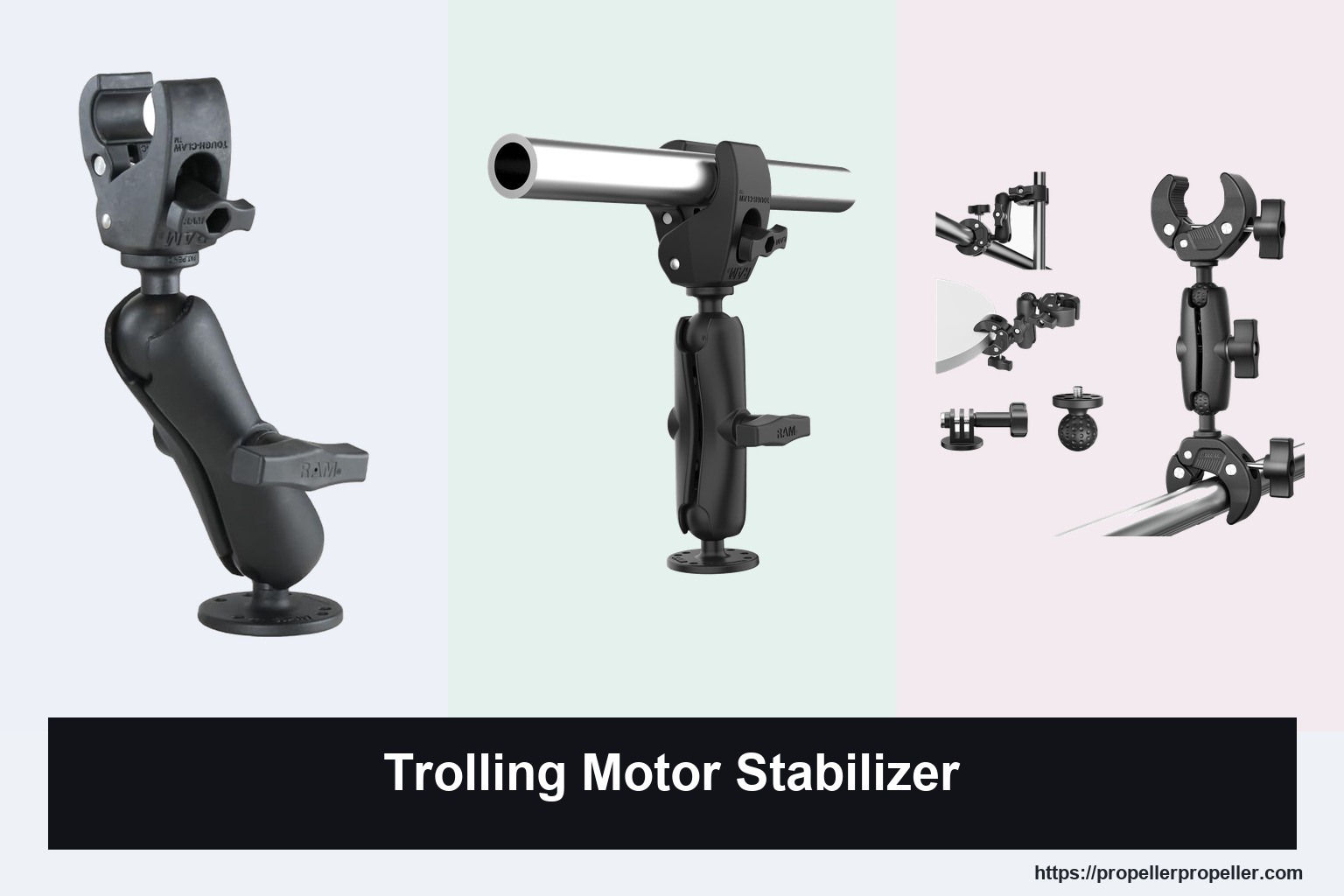
A trolling motor stabilizer does one job well: it limits flex and movement so the motor stays steadier when the boat is moving, bouncing, or trailering. That matters because excess vibration can turn a precise setup into a noisy, distracting one, and it can also stress the mounting area over time. The right stabilizer should match the rail or support you already have, hold securely without making setup complicated, and use materials that can handle wet, demanding boating conditions.
The three options here cover two very different buyer paths. Two are purpose-built RAM Mounts stabilizers with marine-grade construction and a clear focus on clamp stability, while the third is a more general-purpose clamp that can also serve in trolling motor use. That mix creates a useful tradeoff: one path favors proven boating hardware and lifetime backing, while the other emphasizes versatility and a lower entry price. The best choice depends on your mounting diameter, how much rigidity you want, and whether you need a dedicated stabilizer or a multi-use clamp.
Top Trolling Motor Stabilizer on the Market

RAM Mounts Tough-Claw Stabilizer
- Small Tough-Claw base
- 0.625 to 1.14 inch rails
- Marine-grade aluminum
- Lifetime warranty

RAM Mounts Medium Clamp Stabilizer
- Medium Tough-Claw clamp
- 1 to 1.875 inch rails
- AMPS pattern plate
- Stainless steel hardware

Maectech Double Super Clamp
- Glass fiber-reinforced nylon
- 1/4 inch ball head
- Includes adaptor and strap
- Boat-compatible clamp mount
This article may contain affiliate links. As an Amazon Associate, the website may earn from qualifying purchases at no additional cost to you.
Trolling Motor Stabilizer Reviews
RAM Mounts Tough-Claw Stabilizer
- Item Dimensions
- 7 x 6 x 2.5 inches
- Item Weight
- 1.1 pounds
- Material Type
- High strength composite, Marine-grade aluminum
- Mounting Type
- Rails, tubes, flat surfaces
- Color
- Black
Advantages
- Purpose-built for smaller boats
- Clamps to odd-shaped rails
- Light 1.1-pound assembly
- Marine-grade aluminum construction
- Lifetime warranty support
Limitations
- Limited to smaller rail sizes
- Not the cheapest option
This stabilizer is the most focused fit for smaller boats that need a compact, dependable clamp solution. The small Tough-Claw base is designed for round, square, and odd-shaped rails, so it covers a wide range of small-craft mounting points without forcing you into a single tube shape. The included medium-length C-size arm and 2.5-inch round plate create a rigid connection point, while the stated 1.1-pound weight keeps the assembly light enough to stay out of the way. For buyers who want a dedicated trolling motor support rather than a general clamp, that combination is straightforward and reassuring.
The mounting range is the key operational detail. It clamps to rails and bars from 0.625 inch to 1.14 inches in outside diameter, which means fit is not universal, but it is very useful when your boat has the right size support. The rubber pads are important because they protect the surface while helping the clamp hold fast, and that matters on boats where repeated vibration can loosen lesser hardware. The marine-grade aluminum and high-strength composite construction, along with the powder-coated finish, point to a stabilizer meant for wet use and long service rather than occasional light duty.
Against the other two options, this one is the cleanest choice for buyers who want a specialized boat-first solution with the strongest brand backing. It is less versatile than the larger RAM clamp because its size range is narrower, but that is also what makes it such a tidy option for small-boat rails. Compared with the budget clamp, it is the more confidence-inspiring pick when durability and a precise fit matter more than saving money. If your rail diameter falls inside the range and you want a low-drama stabilizer, this is the one to choose.
PHOTO: RAM Mounts Tough-Claw Stabilizer – Clamp Mount Assembly → Source: Amazon.com
RAM Mounts Medium Clamp Stabilizer
- Material Type
- Marine-grade aluminum High strength composite
- Color
- Black
Advantages
- Fits wider rail diameters
- Stainless steel hardware
- AMPS-pattern device plate
- Marine-grade aluminum and composite
- Lifetime warranty support
Limitations
- Higher price than alternatives
- Requires enough mounting clearance
This version is the better RAM choice when the mounting support is larger and you want more clamping latitude. The medium Tough-Claw is designed for round, square, and odd-shaped rails from 1 inch to 1.875 inches in outside diameter, which opens the door to more boats and more mounting positions than the smaller model. The 2.5-inch round plate and RAM C-size compatibility with the universal AMPS hole pattern make it a stronger choice for buyers building a broader accessory setup around the clamp rather than using it as a one-off part.
The real advantage here is fit plus hardware quality. Rubber pads help protect the surface while improving grip, and the stainless steel hardware adds a durability edge that matters in marine environments. Because it is still a clamp-based stabilizer, installation remains relatively clean compared with drilling or custom fabrication, but the larger clamp body means you need to verify available clearance before ordering. The black finish and marine-grade aluminum composite construction keep the package aligned with the brand’s long-term boating focus, even though the unit itself is not the smallest or lightest path available.
Compared with the smaller RAM stabilizer, this one is the better answer when the rail is too large for the narrow model or when you want more room for a broader mounting envelope. Compared with the budget clamp, it is the more specialized and more robust choice, especially if you value a known marine hardware platform over a multi-use clamp. The tradeoff is price, because this is the most expensive of the three, but that premium buys a wider fit range and a more substantial support system. For larger rails and buyers who want the safest long-term bet, it earns the recommendation.
PHOTO: RAM Mounts Medium Clamp – Clamp Mount Assembly → Source: Amazon.com
Maectech Double Super Clamp
- Item Weight
- 500 g
- Color
- Black
- Enclosure Material
- Fine nylon with glass fiber
- Mounting Type
- Pole Mount
Advantages
- Lowest price in the group
- Glass fiber-reinforced nylon body
- Includes 1/4-inch ball head
- Works on boats and other setups
- Scratch-resistant strap included
Limitations
- Shorter six-month warranty
- Less specialized than marine clamps
This is the value play for buyers who need a clamping solution without paying for a dedicated marine brand system. The glass fiber-reinforced nylon body is the main structural story here, and it is paired with a 1/4-inch ball head plus an adaptor, which gives the clamp broader usefulness than a single-purpose boat accessory. The product is also described as compatible with trolling motor stabilizer use on boats, so it can serve in that role when your priority is holding something securely rather than building a brand-matched marine rig. At 500 grams, it is not ultra-light, but it remains compact enough for flexible use across different setups.
Its operating appeal is versatility. The jaw adjusts to different supports, and the package includes a scratch-resistant strap that helps protect the surface it grips. That matters for users who may move the clamp between a boat, tripod, bike, or chair rather than leaving it in one fixed marine installation. The tradeoff is that this is a more general clamp design, not a purpose-built trolling motor stabilizer system with a narrow, boat-specific fit range. The six-month manufacturer warranty is also shorter than the lifetime backing on the RAM options, which is worth weighing if you want the longest possible ownership horizon.
Against the two RAM models, this clamp competes on price and flexibility rather than on marine specialization. It is the least expensive choice by a wide margin, and that makes it attractive for buyers who want an inexpensive way to experiment with stabilizing a trolling motor or to use one clamp across several jobs. The downside is that it does not bring the same dedicated boating pedigree or long warranty coverage as the RAM hardware. If your top priority is cost and adaptability, this is the practical pick. If your top priority is a purpose-built stabilizer for regular boat use, the RAM mounts are stronger long-term choices.
PHOTO: Maectech Double Super Clamp – Multi-Clamp Set → Source: Amazon.com
How to Choose a Trolling Motor Stabilizer
The best trolling motor stabilizer is the one that matches your boat’s hardware before it promises anything else. Fit comes first, because a clamp that is too small, too large, or too awkward for your rail will never feel secure in use. After that, you want construction that can tolerate vibration, wet conditions, and repeated tightening without deforming. Price matters too, but the cheapest option is only a bargain if it still holds the motor steady and suits the way you actually fish or move the boat.
Fit First
Start with the rail or support you already have. A stabilizer that only works on a narrow diameter range can be excellent, but it will fail you if the clamp size is wrong. Measure the outside diameter of the bar, rail, or tube before shopping. That one step prevents the most common mismatch and also tells you whether a smaller, tighter clamp or a larger, more flexible clamp makes more sense for your boat.
Clamp Stability
A strong clamp is about more than raw grip force. Rubber pads, jaw design, and surface contact all affect whether the stabilizer stays put when the boat vibrates or hits chop. A clamp that protects the mounting surface is worth paying attention to because you want the stabilizer to hold securely without chewing up your rail. Good stability also reduces the need for frequent readjustment after each outing.
Materials and Corrosion
Boating hardware lives in a harsh environment, so material choice matters. Marine-grade aluminum, stainless steel hardware, and reinforced composite parts usually signal a better chance of holding up over time than basic plastic alone. That does not guarantee perfection, but it does indicate a design that is meant for wet use, repeated stress, and outdoor exposure. If you leave gear mounted for long periods, this is one of the most important tradeoffs to examine.
Mounting Versatility
Some stabilizers are built for a very specific boat setup. Others can move between rails, poles, and even unrelated accessories. Versatility is useful if your needs change, but it can also mean the product is less specialized for trolling motor support. Decide whether you want one clamp dedicated to this job or a more general platform you can reuse elsewhere. The right answer depends on how often you reconfigure the boat and how much you value simplicity.
Warranty and Ownership
A longer warranty can be a meaningful sign when the product is going to live in sun, spray, and vibration. It does not replace careful fit or durable materials, but it can reduce the risk of regret if you plan to keep the stabilizer in service for years. Shorter warranties are more acceptable on lower-cost options, especially when you are testing a concept or need a temporary solution. For a primary setup, though, warranty coverage deserves real weight.
Trolling Motor Comparison Table
| Product | Best For | Mount Range | Weight | Material | Color | Manufacturer Warranty Description |
|---|---|---|---|---|---|---|
| RAM Mounts Tough-Claw Stabilizer | Best for smaller boats | Rails, tubes, flat surfaces | 1.1 pounds | High strength composite, Marine-grade aluminum | Black | See RAM Mounts manufacturer warranty for details |
| RAM Mounts Medium Clamp Stabilizer | Best for wider rails | 1 | Not Specified | Marine-grade aluminum High strength composite | Black | See RAM Mounts manufacturer warranty for details |
| Maectech Double Super Clamp | Best budget clamp | Pole Mount | 500 g | Not Specified | Black | Not Specified |
How We Tested & Analyzed Trolling Motor Stabilizer
This roundup prioritized the factors that matter most in a trolling motor stabilizer: clamp fit, holding security, construction quality, and practical installation consequences. The analysis also considered whether a product was purpose-built for boating or a broader clamp adapted for marine use, because that distinction affects long-term confidence. In a category like this, a slightly wider diameter range or a stronger material package can matter more than cosmetic differences, so those details were treated as decision drivers rather than background specs.
Each recommendation was evaluated for the tradeoffs it creates in real use. A narrower clamp range can be a strength when it matches the boat, but a drawback when it limits compatibility. Likewise, a more versatile clamp can save money and cover more jobs, yet it may not offer the same specialized marine focus as dedicated hardware. The comparison therefore focused on fit envelope, material durability, and ownership implications, not just the presence of a mounting arm or included accessories.
Limitations were also part of the evaluation. When a product record did not state a specification, that absence was respected rather than filled in. That approach matters because stabilizer buyers often need exact size, hardware, and material information before ordering. The goal was to translate verified product facts into buying consequences so readers can choose a stabilizer that matches their boat, their usage pattern, and their tolerance for tradeoffs.
Frequently Asked Questions
What matters most in a trolling motor stabilizer?
Fit and hold are the two biggest factors. If the clamp does not match the rail or support size, it will not feel secure. After that, look at the material package and whether the design is meant for marine use, because vibration and moisture are the conditions that reveal weak hardware.
Do I need a dedicated marine stabilizer?
Not always, but a dedicated marine design is usually the safer choice for regular boat use. A general clamp can work, especially if you want a lower-cost or multi-purpose option. The tradeoff is that broader versatility can come with less specialized boating construction or shorter warranty coverage.
Why does clamp diameter range matter so much?
Clamp diameter range determines whether the stabilizer can actually secure to your boat’s rail or bar. A range that is too small leaves you with no usable fit. A range that is wider gives you more flexibility, but it may come with a larger clamp body or a higher price.
Is warranty coverage worth paying for?
Yes, especially on gear that lives outdoors. A longer warranty does not replace good materials or the right clamp size, but it does reduce risk if you expect the stabilizer to stay on the boat for years. On a lower-cost, multi-use clamp, a shorter warranty may be acceptable if the price is the main advantage.
Final Thoughts
The right trolling motor stabilizer is the one that fits your boat cleanly and stays secure under real use. If you want a dedicated, boat-focused solution, the RAM options are the strongest path because they combine marine-oriented materials with a lifetime warranty. Choose the smaller clamp for tighter rails and smaller boats. Choose the medium clamp when the mounting point is larger and you want a wider fit envelope.
The budget clamp has a different appeal. It is the least expensive route and the most adaptable, which makes it attractive when you need a clamp that can do more than one job. That flexibility comes with less marine specialization and shorter warranty coverage, so it is best for buyers who value price and versatility above all else. For most boat owners, the decision comes down to one question: do you want the most dependable long-term stabilizer, or the most economical one that still does the job?