As an Amazon Associate, we earn a commission on qualifying purchases made through the affiliate links in this article — at no extra cost to you.
Menu
Propeller Propeller
Rotate with Power, Conquer with Speed
Find the perfect propeller for your boat. Compare top options for speed, efficiency, and power. Get the best performance on the water with expert-engineered designs.
Prop By Engine
Get the Best Propellers by Engine
[specific_posts]
Marine Circle
Join the Propeller Community
Connect with fellow boaters, share tips, and stay updated on the latest propeller reviews and upgrades. Get expert advice and exclusive offers to enhance your boating experience!
Pre-Purchase Guide
for your success
How to Choose the Right Propeller?
Choosing the right propeller is essential for optimal performance. The right propeller enhances speed, efficiency, and handling. Consider your boat type and usage to find the perfect fit for optimal performance.
Boat Type Matters
Sailboats need smaller propellers for minimal drag, powerboats require larger ones for speed and efficiency, and PWCs use high-performance propellers for agility and quick acceleration.
Pitch & Diameter
Pitch controls speed and efficiency, while diameter affects power and thrust. A higher pitch gives more speed but less acceleration, while a larger diameter adds power but can slow you down.
Material Choice
For casual boating, aluminum propellers good as they are affordable and easy to replace. Stainless steel propellers last longer, handle rough conditions better, and offer consistent performance.
Blade Count
A 3-blade prop offers good speed and efficiency, with less drag. A 4-blade prop provides better stability, smoother rides, and improved low-speed handling but may sacrifice some top speed.
Purpose of the Boat
For recreational activities, a medium-pitch, moderate-diameter prop provides smooth handling and quick acceleration. For commercial use, a larger, high-pitch prop delivers the power and performance
Weight and Load Capacity
Heavier boats need a lower-pitch, larger-diameter prop for more thrust. On the other hand, lighter boats use a higher-pitch, smaller-diameter prop for speed and efficiency.
Purchase Follow-Up
What’s Next After Buying a New Prop?
Purchasing the propeller is just the beginning. There are a few more tasks to complete, including:
Installation
Ensure the prop is correctly installed by a professional or follow manufacturer instructions to avoid any damage
Test Run
Take the boat out for a test to make sure the prop performs well. Monitor the engine’s response, speed, and handling.
Maintenance
Regularly inspect the prop for damage, clean it after each use, and check for any debris that could affect performance.
Explore the most common questions we receive to understand better how everything works and how to get the best experience with your propeller.
What does a propeller do on a boat?
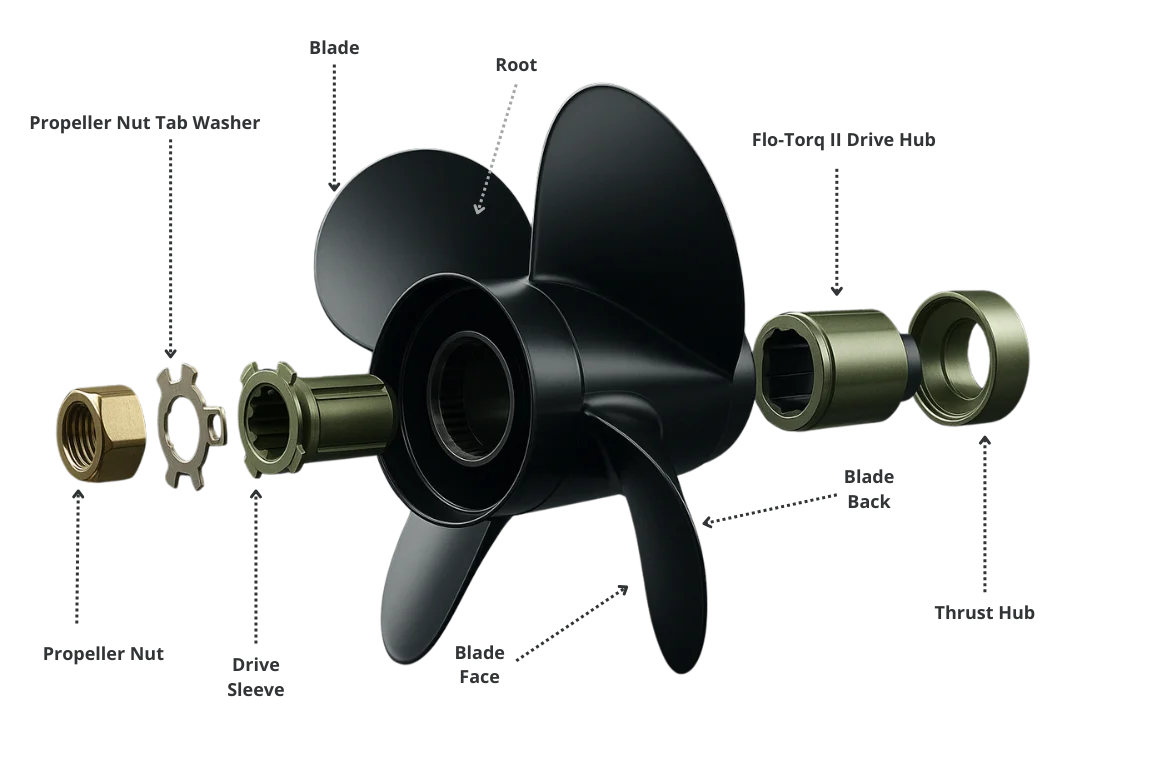
A propeller converts engine power into powerful thrust to move the boat through water. The exact shape, pitch, blade, and rotation vary in the force needed for the boat to move.
Can any propeller fit any boat?
No, a one-size propller doesn’t match all boat engine types. It depends on the boat’s purpose, horsepower, pitch, and hull design. If you get the wrong fit, it can cause performance issues.
What do 'pitch' and 'diameter' mean in propellers?
Pitch means how far the propeller moves in one full rotation, and diameter refers to the width of the circle the blades make. Both of these aspects severely affect the boat speed, acceleration, and fuel efficiency.
What’s the difference between aluminum and stainless steel propellers?
Aluminum propellers are more affordable and ideal for casual use. Stainless steel propellers offer greater strength, performance, and durability. What material is ideal for your boat depends on your boat’s purpose.
Can the wrong propeller damage my engine?
Yes. An improperly sized or poorly matched propeller can overwork the engine, reduce efficiency, and lead to premature damage over time.
How often should I inspect or replace my propeller?
Inspect your propeller before and after every boating trip. Replace it if you notice damage, excessive wear, or a decline in performance. Routine checks help prevent larger issues.