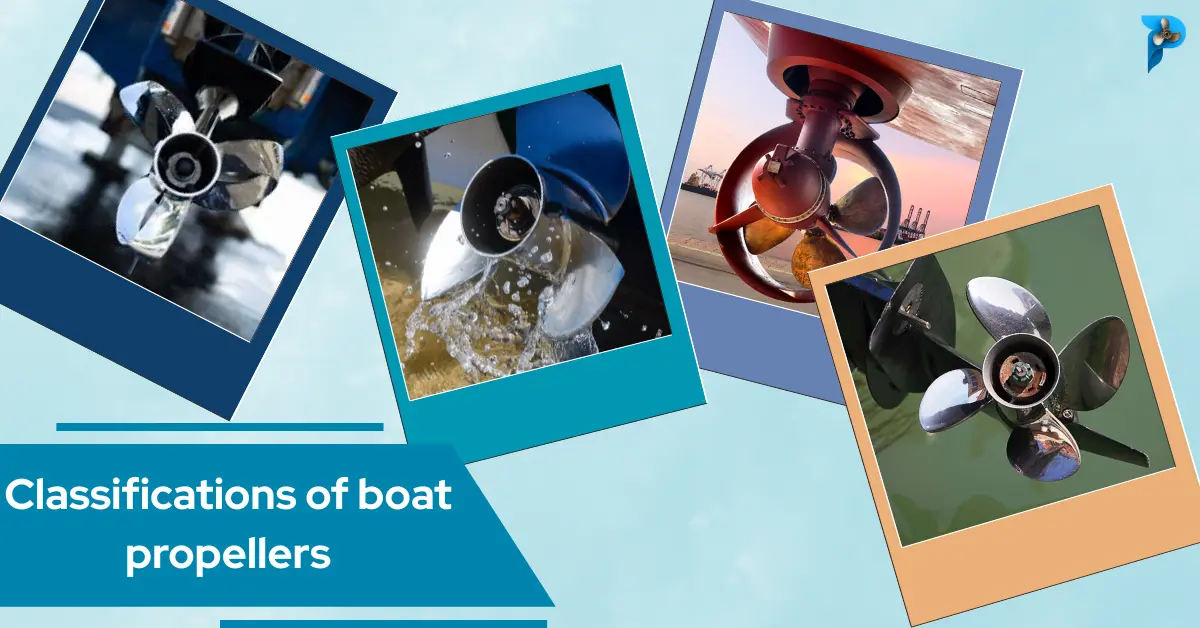
A propeller hub is a small but essential component of your boat’s propulsion system that connects the propeller blades to the engine shaft.
Think of it as the “cushion” or “shock absorber” that ensures smooth power transfer while protecting your engine and prop from sudden impacts.
When this hub wears out or spins, your boat loses thrust, struggles with acceleration, and risks serious engine or lower-unit damage.
That’s why propeller hub replacement is essential for performance, safety, and avoiding costly repairs.
A worn hub can cause symptoms like poor speed, slipping at high RPMs, vibration, or even leaving you stranded on the water.
In this complete guide, you’ll discover everything you need to know about boat propeller hub replacement: what a hub is, the different types (rubber, Flo-Torq II, pressed-in), signs it’s failing, and the exact tools and step-by-step process to replace it.
By the end, you’ll have all the knowledge to keep your prop spinning perfectly and your boating experience safe. Therefore, let’s dive in!
Why Propeller Hub Replacement is Important?
A bad hub can lead to a “spun hub,” where the propeller spins uncontrollably out of the engine. Eventually, it causes a loss of power and potential engine damage.
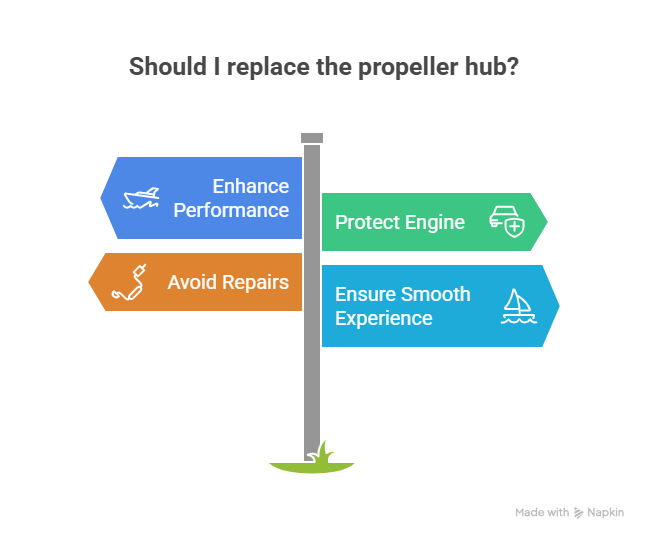
Replacing a worn or damaged hub ensures optimal performance, prevents costly repairs, and maintains safety on the water.
Understanding why propeller hub replacement matters will help you protect your investment and improve performance.
1. Increases Performance and Safety
A well-maintained propeller hub ensures optimal power transfer from the engine to the propeller. It keeps the constant acceleration and fuel efficiency.
Additionally, it enhances safety by reducing the likelihood of unexpected failures that could lead to accidents or stranding.
2. Protects the Engine and Propeller
The propeller hub acts as a protective buffer between the engine’s driveshaft and the propeller blades.
By absorbing shocks and vibrations, it prevents direct impact on the engine and propeller, reducing the risk of costly damage.
When a hub fails, it can lead to a “spun prop,” where the propeller no longer engages with the engine.
3. Avoids Costly Repairs
Neglecting a worn or damaged propeller hub can lead to more severe issues, such as damage to the lower unit or driveshaft.
Replacing the hub promptly is a cost-effective measure that can prevent extensive repairs.
4. Ensures a Smooth Boating Experience
A compromised propeller hub can result in increased vibrations, noise, and erratic boat handling.
Replacing a faulty hub restores smooth operation, enhances comfort and control.
Types of Propeller Hubs
Below are the most common types and what you should know about each.
1. Rubber Hubs
Rubber hubs are the most traditional design. It has a rubber component that is placed between the propeller and the driveshaft of the engine.
The rubber cushions are flexible and shock-absorbing. They reduce vibration and protect the lower unit if you strike an object. There are two types of styles available,
First, interchangeable rubber hubs with aluminum splines, such as Solas Rubex, are easy to swap out with basic tools.
This one is compatible with Mercury/Mariner/MerCruiser 40-300 HP, Yamaha 80-175 HP (various years), Honda BF 75-90, Force 75-150 HP, and more. In addition, it supports 15-tooth splines with 10° deflection for impact absorption.
Second, pressed-in rubber hubs are permanently seated in the prop and require a hydraulic press at a propeller repair shop for replacement.
2. Flo-Torq II / Cushioned Hubs
The Mercury Flo-Torq II hub system is a versatile, high-efficiency option that allows for simple replacement and protection.
In case the hub spins, you can easily replace it yourself using a kit that requires no specialized tools.
Its cushioned construction guarantees smooth energy transfer while protecting the drivetrain.
That’s why it’s a dependable choice for Mercury and MerCruiser configurations, as well as compatible aftermarket options such as the Michigan XHS II.
3. Solid Hubs
Some stainless-steel and heavy-duty propellers feature pressed-in hubs that aren’t DIY-friendly, since removal and installation require precision tools and a hydraulic press.
These hubs offer a durability advantage and are ideal for high-horsepower applications where extra strength is needed.
If your stainless prop has a pressed-in hub, the safest option is to rely on a professional propeller repair shop.
4. Hub Material Considerations
The material of your propeller, whether aluminum or stainless steel, affects both performance and durability, and indirectly influences the hub type.
- Aluminum props: Affordable, lightweight, and more forgiving in minor impacts, but more prone to bending.
- Stainless-steel props: Stronger, longer-lasting, and ideal for high-performance boating, but paired with pressed-in or cushioned hubs that may need professional servicing.
Signs You Need Propeller Hub Replacement
A damaged propeller hub can quickly compromise your boat’s performance, fuel efficiency, and safety. Here are the main warning signs to watch for:
1. Acceleration Dropping and Propeller Slipping
Slipping prop at higher speeds, slow planing, or delayed throttle response are classic propeller hub failure signs.
These symptoms often result from wear or deformation in the hub. Understanding propeller hub slipping causes, such as worn rubber inserts or damaged Flo-Torq II modules, can help you prevent future failures.
2. Engine Revving Without Acceleration
One of the most common prop hub slipping symptoms is when the engine RPM rises, but the boat fails to accelerate.
This indicates a spun or damaged propeller hub, where the propeller is spinning freely without transferring power effectively.
3. Burnt Rubber Smell
A hot, rubbery odor after hard acceleration is a sign of hub slippage.
While it can sometimes involve the coupler, it is most commonly caused by hub wear and friction.
4. Visible Wear or Damage
When inspecting your propeller, look for melted rubber, torn inserts, or misaligned marks. These propeller hub failure signs confirm the need to replace your boat prop hub.
5. Strange Vibrations and Noises
Unusual vibration, buzzing, or rattling under the throttle is another prop hub slipping symptom.
These sounds usually indicate hub misalignment, worn inserts, or damage to the prop blades, all of which may require marine propeller repair.
Causes of Propeller Hub Failure
Propeller hubs fail due to excessive heat during installation, impact from submerged objects, material fatigue, improper key and shaft fit, overloading the boat, and corrosion from harsh marine environments. These factors weaken the hub’s integrity, causing slippage, cracks, or complete failure.
Keep reading to learn more about these and other causes in detail.
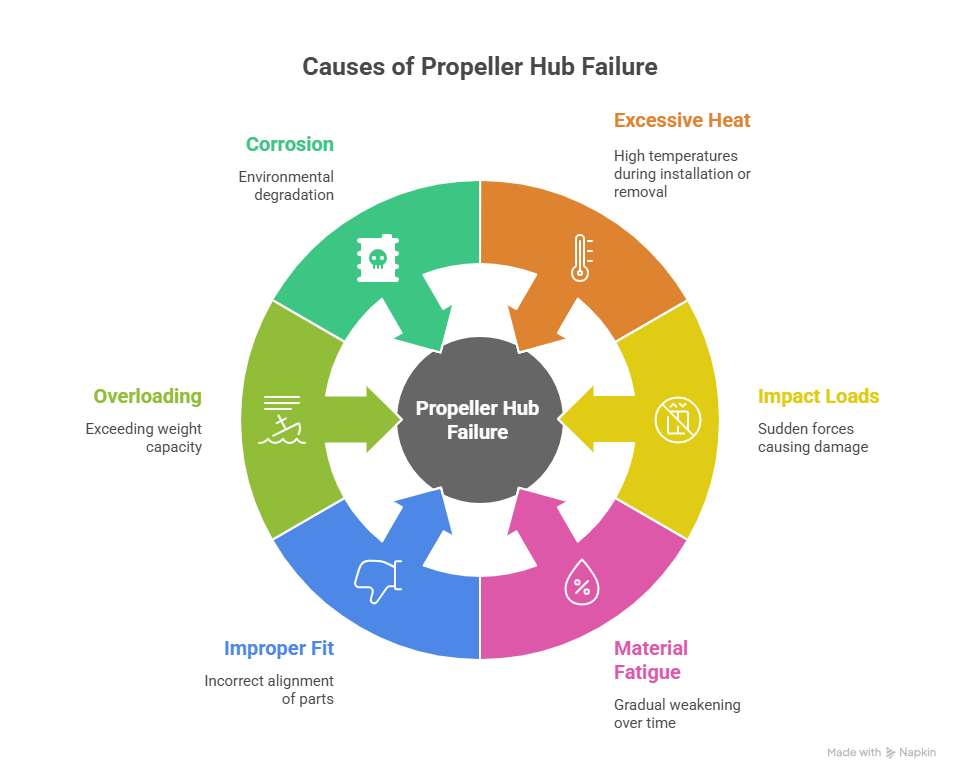
1. Excessive Heat During Installation or Removal
Applying excessive heat during the installation or removal of the propeller can cause uneven expansion of the hub material. Eventually, it leads to cracking.
Improper heating techniques can also result in residual stresses that compromise the hub’s integrity.
2. Impact and Shock Loads
Striking submerged objects like rocks or debris can exert sudden shock loads on the propeller hub.
While hubs are designed to absorb these impacts, repeated or severe shocks can weaken the rubber bushing. It results in a spun propeller hub.
3. Material Fatigue Over Time
Continuous exposure to operational stresses, including torque variations and vibration, can lead to material fatigue in the hub.
Over time, this fatigue can cause the rubber bushing to deteriorate, which results in slippage and eventual failure.
4. Improper Fit of Key and Shaft
An improperly sized key or misalignment between the key and keyway can introduce stress concentrations in the hub.
Ensuring a proper fit is essential to maintain the hub’s structural integrity.
5. Overloading the Boat
Operating the boat beyond its recommended weight capacity increases the load on the propeller and hub.
Consistent overloading accelerates wear and can lead to premature failure of the propeller hub.
6. Corrosion and Environmental Factors
Exposure to harsh marine environments can lead to corrosion of the propeller hub and associated components.
Corrosion weakens the structural integrity of the hub and makes it more susceptible to failure under load.
Tools & Materials for Propeller Hub Replacement
Here come the tools and materials necessary for the prop hub replacement.
1. Prop Puller or Hub Press Tool
A prop puller is crucial for safely removing the propeller without causing damage. Based on your propeller type, a hub press tool may be necessary to install the new hub securely.
Top Picks
- RoloTippi 3 & 4 Blade Propeller Puller: Designed for 3 and 4-blade propellers, this puller is suitable for hub sizes up to 4-1/8″ for 4-blade and 3-3/4″ for 3-blade propellers.
2. Torque Wrench and Grease
Standard wrenches and sockets are essential for removing the propeller nut and other components.
Marine-grade grease is recommended to prevent corrosion and ensure smooth operation.
Top Picks:
- Tekton 1/2-Inch Drive Torque Wrench: Provides accurate torque settings to prevent over-tightening.
- Lucas Oil Marine Grease: Offers excellent water resistance and protection against corrosion.
3. Replacement Hub Kit (OEM or Aftermarket)
Choosing the right hub kit is crucial for compatibility and performance. Ensure the kit matches your engine specifications.
Top Picks
- Quicksilver 835257Q1 Flo-Torq II Hub Kit: This is a reliable Mercury prop hub replacement, designed for Mercury/Mariner and MerCruiser engines. It offers excellent durability, easy installation, and effective drivetrain protection.
- Marine Upgrade 835257K1 Flo-Torq II Hub Kits: Provide exceptional performance by minimizing shifting noise and propeller rattle. Its Soft-Shift rubber hub ensures a quieter and smoother delivery of engine power to the propeller.
5. Safety Gloves and Protective Gear
Protective gloves and eyewear will safeguard against sharp edges and debris.
Top Picks
- HANDLANDY Work Gloves: Offers excellent dexterity and protection.
Step-by-Step Guide: How to Replace A Prop Hub
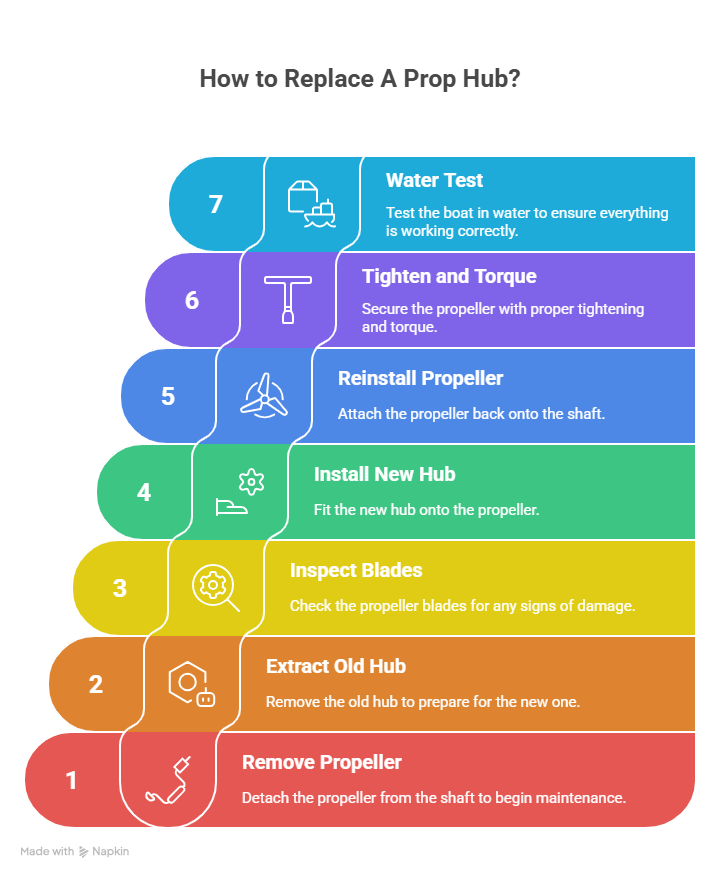
This guide provides a comprehensive approach to ensure a successful DIY prop hub replacement, whether you’re working on an outboard propeller hub replacement or a press-in prop hub installation.
Step 1: Remove the Propeller from the Shaft
Use the propeller wrench to hold the propeller in place. Loosen and remove the propeller nut with a socket wrench.
If the propeller is stuck, gently tap it with a rubber mallet or use a prop puller to remove it safely. This step is crucial for a smooth prop shaft hub replacement.
Step 2: Extract the Old Hub
For press-in hubs, use a hub press tool to remove the old hub. For propeller rubber hub replacement, gently tap it out using a hammer and drift.
Take care not to damage the propeller during extraction. Proper removal is key to a successful boat propeller hub repair.
Step 3: Inspect the Propeller Blades for Damage
Examine the propeller blades for any visible cracks, bends, or other damage. If any issues are found, consider replacing the propeller to ensure optimal performance.
Step 4: Install the New Hub
Apply a thin layer of grease to the inside of the propeller hub cavity and the outside of the new hub.
Press the new hub into the propeller and ensure it seats evenly and securely. For press-fit hubs, use a hub press tool to install the new hub.
Step 5: Reinstall the Propeller on the Shaft
Align the propeller’s keyway with the shaft’s key. Slide the propeller onto the shaft, ensuring it fits snugly. Reinstall the thrust washer and propeller nut.
Step 6: Tighten and Torque Properly
Using a torque wrench, tighten the propeller nut to the manufacturer’s specified torque setting. This ensures the propeller is securely attached without over-tightening.
Step 7: Water Test the Boat
Take the boat for a test run at low speeds to ensure the propeller functions correctly.
Listen for any unusual noises or vibrations. If issues persist, recheck the installation or consult a professional for boat propeller hub repair.
How Much Does Propeller Hub Replacement Cost?
The total expense depends on whether you go the DIY route or hire a professional service, plus factors like hub type, boat size, and labor rates.
| Option | Typical Cost |
| DIY | $40 – $200 |
| Professional | $150 – $400+ |
DIY Prop Hub Replacement Costs
- Hub Kit Price: Interchangeable hub kits (like Flo-Torq II, Solas Rubex, or Michigan XHS) typically cost $25 – $80 based on brand and engine fit.
- Tools & Supplies: If you already own sockets and a torque wrench, you’ll only need extras like marine grease or gloves ($15 – $40). But if you need a prop puller or hub press, add $50 – $200.
- DIY Total Estimate: Most boaters spend $40 – $200 for a complete DIY prop hub replacement.
Professional Prop Hub Replacement Costs
- Labor Rates: Marinas and prop shops charge $75 – $150 per hour, with most jobs taking 1 – 2 hours.
- Total Service Cost: Including parts and labor, expect $150 – $300 for standard rubber or interchangeable hubs. Stainless steel props or press-in prop hub installation may cost $ 200-$400+ due to shop press work.
Hub Compatibility Guide (By Popular Engine Brands)
Below is a curated list of recommended hub kits compatible with popular outboard engine brands.
Each product is selected based on compatibility, customer reviews, and expert recommendations.
Mercury Outboards
1. Quicksilver Flo-Torq II Hub Kit
This one is designed for Yamaha 50 – 100 HP outboards with a 15-spline shaft and a splined forward washer.
The Flo-Torq II system of this amazing hub kit allows for quick propeller changes without tools. It’s highly rated for its durability and ease of installation.
This hub kit is compatible with Yamaha 8 – 20 HP engines with an 8-spline shaft and a 2.5″ gearcase.
It offers a 5-piece set for comprehensive replacement needs. This one is also appreciated for its cost-effectiveness and reliable performance.
Yamaha Outboards
1. Rareelectrical Propeller Hub Kit 11100501
This amazing propeller hub fits Yamaha 8-20 HP models from 1984 to 2021 with an 8-spline, 2.5″ gearcase. The OEM replacement part ensures optimal fit and performance.
2. Turning Point Propellers MasterGuard Hub Kit
This is compatible with Yamaha outboards featuring a 15-spline shaft and gearcases of 4.25″ or 4.75″, covering engines from 40 – 150 HP and 90 – 300+ HP, respectively.
Its durable marine bronze construction over-molded with glass-filled nylon provides excellent shock absorption, vibration reduction, and long-lasting performance.
The kit is reusable after a prop strike, helping save on replacement costs.
Honda Outboards
1. Rareelectrical Propeller Hub Kit 11200800
Suitable for Honda/Mariner/Mercury/Nissan/Tohatsu 25-30 HP engines from 1985 to 2018 with a 10-spline, 3″ gearcase. It ensures a secure fit and efficient power transfer.
2. SOLAS RBX-102 Rubex Hub Kit
This one fits Honda BF 75 – 90 HP outboards (model years 1995 – 1998) with a 15-spline shaft and a 4¼″ gearcase. It provides a durable, field-serviceable solution for Honda outboard propeller hub replacement.
Constructed entirely from rubber with anodized aluminum splines, this hub minimizes chatter and vibration and delivers a clean 10° deflection when shifting or after impact.
OEM vs. Aftermarket Propeller Hubs
Understanding the pros, cons, and when to opt for interchangeable hub systems helps ensure a smooth and reliable boating experience.
1. OEM (Original Equipment Manufacturer) Hubs
Pros
- Precision Fit: Designed specifically for your engine model, ensuring optimal performance and compatibility.
- Manufacturer Support: Backed by the engine manufacturer’s warranty and support services.
- Quality Assurance: Manufactured to meet the original specifications. It ensures reliability and durability.
Cons
- Higher Cost: Typically more expensive due to brand and quality assurance premiums.
- Limited Variety: Fewer options for customization or performance enhancements.
2. Aftermarket Hubs
Pros
- Cost-Effective: Generally less expensive, offering savings for boat owners.
- Variety: A wide range of options available and allowing for customization based on performance needs.
- Performance Enhancements: Some aftermarket hubs offer improved materials or designs for better performance.
Cons
- Compatibility Issues: Not all aftermarket hubs may be compatible with your engine model.
- Variable Quality: Quality can vary between manufacturers; some may not meet OEM standards.
- Limited Support: May not be backed by the engine manufacturer’s warranty or support services.
How to Prevent Future Propeller Hub Damage?
Implementing these preventive measures can significantly extend the lifespan of your propeller system.
1. Regular Inspection
Conduct thorough inspections of your propeller hub at least every 4,000 hours of use or after any significant impact.
Look for signs of wear such as cracks, corrosion, or excessive play. Regular checks can help identify issues before they lead to complete failure.
2. Avoid Running Aground
Navigating in shallow waters or over submerged obstacles can cause severe damage to the propeller hub.
Always be aware of your surroundings and avoid areas where grounding is possible. If you must operate in such conditions, reduce speed and proceed cautiously.
3. Don’t Over-Torque Propeller Nut
Excessive torque during installation can stress the propeller hub, leading to cracking or deformation.
Use a torque wrench to apply the manufacturer’s recommended torque specifications to ensure proper installation without overstressing the hub.
4. Use Correct Propeller Size
Choosing a propeller with the appropriate diameter and pitch for your engine and boating conditions is crucial.
An incorrect propeller can cause the hub to slip or wear prematurely. Consult your boat’s manual or a marine professional to select the optimal propeller size.
Common Mistakes to Avoid During Propeller Hub Replacement
Avoiding these common mistakes can save you time, money, and prevent further damage.
1. Over-Tightening or Under-Tightening the Prop Nut
Incorrect torque can damage the hub or allow the propeller to slip. Use a calibrated torque wrench and follow manufacturer specifications.
2. Hammering the Hub Unevenly
Applying uneven force when installing the hub can cause misalignment or cracking. Always use a proper hub press tool or ensure even pressure when tapping with a mallet.
3. Skipping Shaft Grease
Failing to grease the propeller shaft before reinstalling the hub can lead to corrosion and difficulty in future removal. Marine-grade grease ensures smooth installation and long-term protection.
4. Misdiagnosing the Issue
Sometimes, what seems like a damaged propeller hub may actually be caused by a bent propeller shaft or other drivetrain issues. Inspect all components carefully before deciding to replace the hub.
FAQs
1. What is the lifespan of a propeller hub?
A propeller hub lasts between 3 to 5 years, based on usage, boating conditions, and maintenance. Regular inspections and avoiding impacts can extend its lifespan significantly.
2. Can you replace just the hub instead of the whole propeller?
Yes, you can replace just the hub instead of the whole propeller. Many propellers feature replaceable hubs, which allow you to swap out a worn or damaged hub without replacing the entire propeller. This saves money and keeps your existing propeller blades in use. However, some stainless steel and heavy-duty props may require full replacement.
3. How do I know which hub kit fits my boat?
Choosing the right hub kit requires checking your engine brand, model, and propeller type. OEM hub kits like VIF 835257Q1 are specifically designed for Mercury, MerCruiser, or Mariner engines, while aftermarket kits like Flo-Torq II offer interchangeable options.
4. Can a damaged hub damage the engine?
Yes, a damaged or slipping hub can damage the engine. It can transmit irregular forces to the lower unit and engine, potentially causing drivetrain issues, excessive vibrations, and reduced performance.
5. Is propeller hub replacement the same for outboard and inboard motors?
The basic process is similar – removing the prop, extracting the old hub, and installing a new one, but tools and hub types may differ. Outboards often use Flo-Torq or rubber hubs, while inboards may require specialized press-fit hubs.
6. Do all propellers have replaceable hubs?
No, not all propellers have replaceable hubs. Aluminum props commonly feature replaceable hubs, while stainless steel or precision-molded props may have integrated hubs, which require full propeller replacement if damaged.
Bottom Line
Replacing a worn or damaged propeller hub is crucial for maintaining your boat’s performance, safety, and fuel efficiency.
A slipping or failing hub can lead to poor acceleration, vibrations, and even engine damage if left unchecked.
Regular inspection and timely replacement protect your investment and ensure smooth, enjoyable boating experiences.
Make it a habit to inspect your propeller hub, use the correct tools, and follow proper installation practices.
Preventive maintenance not only extends the lifespan of your propeller but also avoids costly repairs in the long run.
Best of luck!