
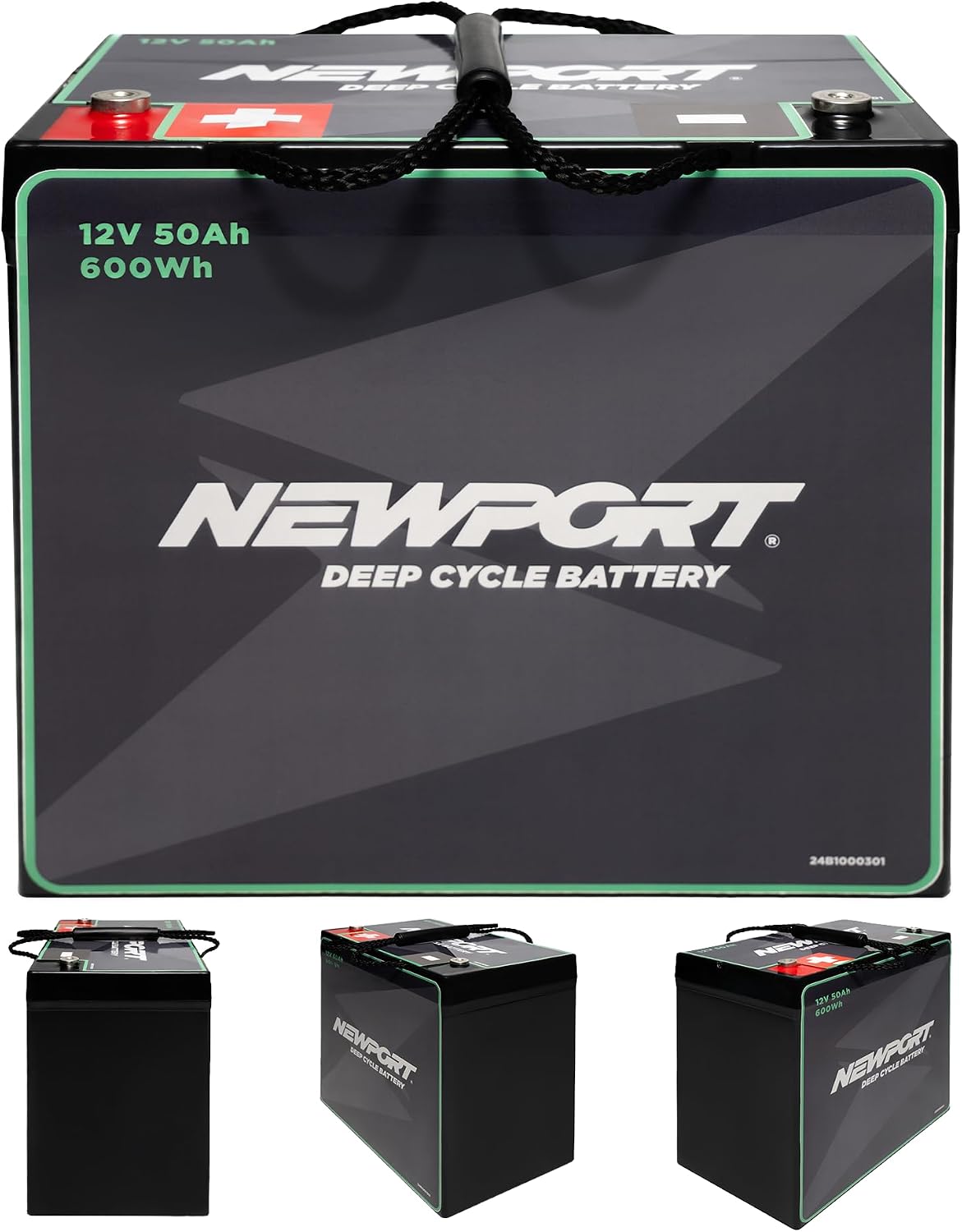
Choosing a deep cycle marine battery starts with matching voltage, capacity, and battery chemistry to the electrical system already on your boat. The options here range from compact 12V packs for fish finders and small electronics to 24V lithium batteries for larger battery banks, plus a dual-purpose AGM model that can also provide engine-starting power.
AGM batteries offer sealed, maintenance-free lead-acid construction, while LiFePO4 choices bring different charging requirements, built-in battery management systems, and expansion options. I would first decide whether you need a dedicated house battery, a lightweight portable power source, or a battery that must start an engine as well as run accessories.
Top Deep Cycle Marine Batteries on the Market
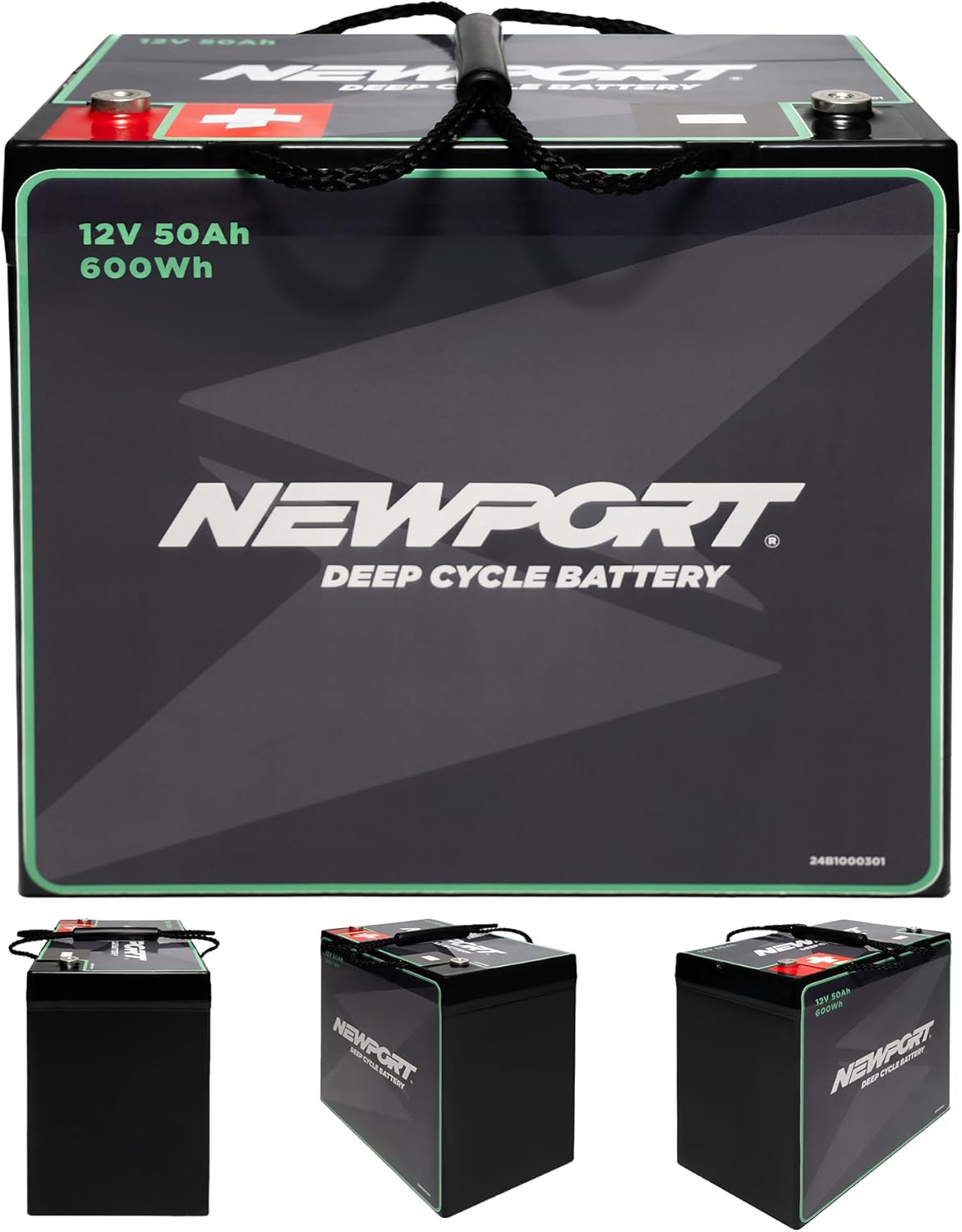
Newport 12V 50Ah AGM Marine Battery
- 12V 50Ah capacity
- Sealed AGM construction
- Designed for 12V electronics
- Suitable for small watercraft

Dyness 24V 100Ah LiFePO4 Battery
- 25.6V nominal voltage
- 100Ah LiFePO4 capacity
- 100A smart BMS
- Up to 4P2S expansion
- Low-temperature cut-off

VEVOR 12V 100Ah AGM Battery
- 12V 100Ah capacity
- AGM maintenance-free design
- 13.0 x 6.7 x 8.4 inches
- 800A maximum discharge current
- For energy storage systems

VEVOR 12V 40Ah AGM Battery
- 12V 40Ah capacity
- AGM maintenance-free design
- 7.8 x 6.5 x 6.7 inches
- 400A maximum discharge current
- For light electric vehicles

Eiiev 12V 100Ah Group 31 Battery
- 12V 100Ah LiFePO4 battery
- Group 31 size
- Built-in 100A BMS
- 24.25 lb stated weight
- Max 4P4S expansion
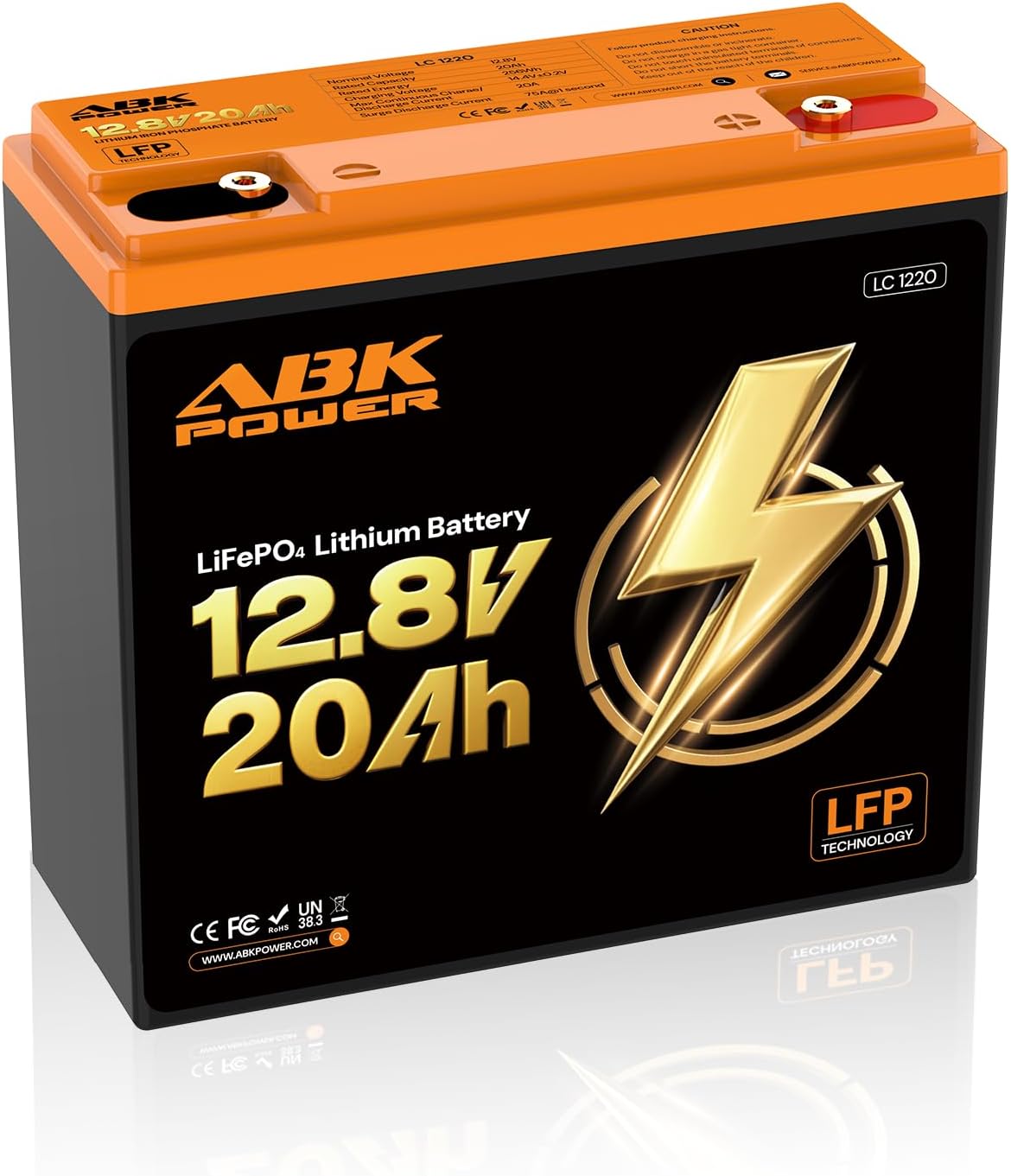
ABKpower 12V 20Ah LiFePO4 Battery
- 12V 20Ah LiFePO4 battery
- 256Wh energy capacity
- 20A BMS
- 5 lb stated weight
- 7.17 x 3.03 x 6.69 inches

Feuruetc 12V 100Ah Solar Battery
- 12V 100Ah LiFePO4 battery
- 15000+ stated cycles
- For 200W to 400W panels
- 14.4V LiFePO4 charger
- Marine and RV applications

Mighty Max MM-G24M Marine AGM Battery
- 12V 90Ah AGM battery
- Group Size 24M
- 550 CCA starting power
- 700 MCA marine cranking power
- 145 RC reserve capacity
Detailed Product Reviews
Newport 12V 50Ah AGM Marine Battery
- Voltage
- 12V
- Capacity
- 50Ah
- Battery Chemistry
- AGM
- Battery Design
- Sealed Lead Acid
Advantages
- 12V system compatibility
- 50Ah deep-cycle capacity
- Sealed AGM battery design
- Suited to kayaks and jon boats
- Supports compatible trolling motors
Limitations
- Not a 24V battery
- Lower capacity than 100Ah options
I would choose the Newport for a kayak, inflatable, jon boat, or similarly compact vessel that needs a dedicated 12V battery without stepping into a larger bank. Its 12V 50Ah capacity suits compatible trolling motors and 12V marine electronics. That makes it a focused choice for portable boat setups rather than a battery intended to cover high-demand, multi-battery systems.
The sealed AGM construction matters when the battery will travel between a vehicle, dock, and boat. AGM is a sealed lead-acid design, so there is no liquid top-up routine described here. Confirm that your motor and electronics are 12V before buying, since capacity alone cannot make a 12V battery compatible with a 24V system.
Compared with the 12V 100Ah VEVOR AGM model, Newport supplies half the stated capacity. The Newport is the better match when a compact small-watercraft role is the priority. Choose the VEVOR instead when your 12V setup calls for 100Ah capacity and you can accommodate its stated dimensions.
Dyness 24V 100Ah LiFePO4 Battery
- Voltage
- 24V
- Capacity
- 100Ah
- Battery Chemistry
- LiFePO4
- Nominal Voltage
- 25.6V
- BMS Rating
- 100A smart BMS
Advantages
- 24V battery platform
- 100Ah stated capacity
- Built-in 100A smart BMS
- Low-temperature cut-off
- Supports 4P2S expansion
Limitations
- Not for engine starting
- Not for high-drain golf carts
The Dyness is the selection for a boat or off-grid system built around 24V power rather than a conventional 12V accessory circuit. It combines 25.6V 100Ah with LiFePO4 chemistry, so it should be planned as part of a 24V electrical design. Its stated uses include marine systems, RVs, solar, and trolling motors.
A 100A smart BMS is built in, with listed protections including low-temperature cut-off, overcharge, over-discharge, overcurrent, short-circuit, and overheating protection. The battery supports series or parallel configurations up to 4P2S, with a stated maximum bank of 51.2V 400Ah. It is not specified for engine starting or high-drain uses such as golf carts.
The Eiiev is the more direct alternative for a 12V trolling-motor or marine setup because it is a 12V Group 31 battery. Dyness makes more sense when 24V is already the system voltage or when its 4P2S expansion format fits the planned bank. Do not treat either voltage as interchangeable without the proper system design.
VEVOR 12V 100Ah AGM Battery
- Voltage
- 12V
- Capacity
- 100 AH
- Battery Chemistry
- AGM
- Dimensions
- 13.0” x 6.7” x 8.4”
- Maximum Discharge Current
- 800A within 5 seconds
Advantages
- 100Ah 12V capacity
- Maintenance-free AGM technology
- Dimensions are stated
- 800A maximum discharge specification
- Suitable for energy-storage applications
Limitations
- Professional charging equipment required
- Not for car ignition
This VEVOR model is for buyers building a 12V energy-storage battery around a full 100 AH capacity. Its stated dimensions are 13.0” x 6.7” x 8.4”, so measure the battery compartment and allow room for terminal connections before committing. It is positioned for marine, RV, solar, off-grid, and UPS roles.
AGM construction means no liquid top-up is required during use. The manufacturer calls for professional charging equipment and identifies this as an energy-storage battery, not a power battery or car-ignition starting battery. Although a maximum discharge current of 800A within five seconds is stated, that does not override the stated no-starting application constraint.
Against the Newport 12V 50Ah AGM battery, VEVOR offers twice the listed capacity and supplies dimensions for installation planning. I would pick Newport for its explicitly small-watercraft-oriented role. Pick this VEVOR when the priority is a 12V 100Ah storage battery and your installation can accept its stated size.
VEVOR 12V 40Ah AGM Battery
- Voltage
- 12V
- Capacity
- 40AH
- Battery Chemistry
- AGM
- Dimensions
- 7.8” x 6.5” x 6.7”
- Maximum Discharge Current
- 400A within 5 seconds
Advantages
- 40Ah 12V capacity
- Compact stated dimensions
- Maintenance-free AGM design
- 400A discharge specification
- Listed for light electric vehicles
Limitations
- Professional charging equipment required
- Marine use is not specifically listed
This compact VEVOR fits a 12V deep-cycle role where 40Ah capacity is sufficient and installation space is limited. Its 7.8” x 6.5” x 6.7” dimensions give a concrete fit check for a battery tray or enclosed equipment space. Its listed applications focus on mobility scooters, wheelchairs, small motorcycles, bicycles, go-karts, and e-bikes.
The sealed AGM format avoids liquid top-up during normal use. VEVOR specifies professional charging equipment and lists a 400A within 5 seconds maximum discharge current. Those facts help define the electrical envelope, but they do not establish compatibility with every motor or marine electrical system. Check voltage, connectors, charging equipment, and the equipment manufacturer’s requirements.
The ABKpower 12V 20Ah LiFePO4 battery is the relevant alternative when you need a much lighter listed battery for a smaller energy reserve. This VEVOR offers double the stated capacity, while ABKpower lists a 5 lb weight and 256Wh energy capacity. Choose based on the reserve you need and the physical installation constraints, not capacity alone.
Eiiev 12V 100Ah Group 31 Battery
- Voltage
- 12V
- Capacity
- 100Ah
- Battery Chemistry
- LiFePO4
- BMS Rating
- 100A BMS
- Weight
- 24.25 lbs
Advantages
- 100Ah 12V lithium capacity
- Group 31 designation
- Built-in 100A BMS
- 24.25 lb stated weight
- Maximum 4P4S expansion
Limitations
- Requires specified 14.6V charger
- Not for engine starting
The Eiiev is a strong candidate for a 12V boat that has room for a Group 31 battery and needs 100Ah of lithium storage. Its stated 24.25 lb weight can matter when the battery must be moved aboard or when weight distribution is a concern. The manufacturer lists trolling motors, yachts, marine, RV, and energy-storage uses.
This battery includes a 100A BMS and can be expanded to a maximum 4P4S configuration. Its charging instructions specify a 14.6V 20A charger with pulse function and state that standard lead-acid, non-pulse lithium, automotive, and auto chargers are not supported. It is designed for energy storage, not engine starting, and batteries of different brands or types should not be mixed in series or parallel.
Compared with the Feuruetc 12V 100Ah LiFePO4 battery, Eiiev gives you a Group 31 designation, stated weight, BMS rating, and 4P4S expansion information. Feuruetc is the better fit when a system uses 200W to 400W solar panels and its stated 14.4V LiFePO4 charging requirement aligns with your charging plan.
ABKpower 12V 20Ah LiFePO4 Battery
- Voltage
- 12V
- Capacity
- 20Ah
- Battery Chemistry
- LiFePO4
- Energy Capacity
- 256Wh
- BMS Rating
- 20A BMS
Advantages
- 256Wh stated energy capacity
- 5 lb stated weight
- Built-in 20A BMS
- Compact stated dimensions
- Up to four parallel batteries
Limitations
- 20Ah capacity suits modest loads
- Not for starting batteries or golf carts
For a fish finder, lighting circuit, or other modest 12V load, the ABKpower offers a compact lithium option with 256Wh energy capacity. It has 20Ah capacity and a stated weight of 5 lbs, which is useful when carrying the battery is part of the routine. The listed uses also include marine, solar, RV, home backup, and lighting applications.
A built-in 20A BMS provides listed over-charge, over-discharge, short-circuit, and overheating protection. The manufacturer also lists 75A peak discharge, IP65 protection, and operation from -4°F to 140°F. Its expansion information is specific: up to four batteries in parallel for a stated 12.8V 80Ah system. It is intended for deep-cycle energy storage, not starting batteries, golf carts, or jacks.
The Newport 12V 50Ah AGM battery is the better comparison point for a small boat needing more stated capacity for a compatible trolling motor. ABKpower trades that larger 50Ah reserve for a 20Ah, 5 lb package. I would choose ABKpower when compact fish-finder-scale power matters more than extended trolling-motor runtime.
Feuruetc 12V 100Ah Solar Battery
- Voltage
- 12V
- Capacity
- 100Ah
- Battery Chemistry
- LiFePO4
- Cycle Life
- 15000+ Cycles
- Solar Panel Compatibility
- 200W to 400W
Advantages
- 100Ah 12V lithium capacity
- Solar panels rated 200W to 400W
- Dedicated charger voltage stated
- Marine and RV applications listed
- 15000+ stated cycle life
Limitations
- Requires 14.4V LiFePO4 charger
- Maximum continuous discharge rating not stated
The Feuruetc is the most targeted choice here for a 12V marine battery that will be charged by a defined solar array. It pairs 12V 100Ah LiFePO4 storage with stated compatibility for 200W to 400W solar panels. That makes it worth considering for boats, RVs, or off-grid systems where panel output is central to the charging plan.
The manufacturer calls for a dedicated 14.4V LiFePO4 charger and advises against mixed lead-acid chargers. Its troubleshooting guidance also says a load exceeding the maximum continuous discharge current can trigger BMS protection, but a continuous-discharge rating is not stated here. Plan the charger, controller, and loads as one system rather than assuming any existing 12V charging hardware will work.
Eiiev is the stronger alternative when you specifically need a Group 31 designation, a stated 100A BMS, or the documented 4P4S expansion format. I would select Feuruetc when the 200W to 400W solar-panel range is the deciding installation detail. Both are 12V 100Ah LiFePO4 batteries, so charging compatibility is the meaningful separator.
Mighty Max MM-G24M Marine AGM Battery
- Voltage
- 12V
- Capacity
- 90Ah
- Battery Chemistry
- AGM
- Group Size
- Group Size 24M
- Cold Cranking Amps
- 550 CCA
Advantages
- Dual-purpose starting and deep-cycle role
- 90Ah 12V capacity
- 550 CCA rating
- 700 MCA rating
- Maintenance-free spill-proof AGM
Limitations
- 52.20 lb stated weight
- Lower capacity than 100Ah options
The Mighty Max MM-G24M is the pick for boaters who need one AGM battery to provide both engine-starting capability and deep-cycle power for onboard gear. It combines 550 CCA with 90Ah capacity, unlike the dedicated energy-storage batteries in this group. Its Group Size 24M designation should be matched to your boat’s battery tray and cable layout.
The battery also lists 700 MCA and 145 RC, which are especially relevant to marine starting and reserve-power planning. It uses spill-proof, maintenance-free AGM construction and has a stated weight of 52.20 lb. The manufacturer also lists dimensions of 10.25 x 6.63 x 8.63 inches, a total height of 9.38 inches, and a two-year limited warranty.
The VEVOR 12V 100Ah AGM is the better alternative for a dedicated 12V energy-storage installation that needs the larger listed capacity. Mighty Max is the appropriate choice when engine cranking is part of the requirement, because it explicitly supplies CCA and MCA ratings and is described as dual-purpose. Do not substitute a storage-only battery for a starting role without confirmation from the equipment requirements.
How to Choose a Deep Cycle Marine Battery
A marine battery is part of an electrical system, not a standalone upgrade. Start with the voltage and electrical role your boat requires, then choose capacity, chemistry, charging equipment, and physical fit around that foundation.
Match System Voltage
A 12V battery belongs in a compatible 12V system. A 24V battery belongs in a 24V system or a properly engineered battery bank. Capacity does not change voltage, so a large 12V battery cannot directly replace a 24V battery. Verify the trolling motor, charger, electronics, and wiring before selecting a battery.
Separate Starting From Storage
A deep-cycle house battery is intended to supply stored energy to electronics, lighting, and compatible motors over time. Engine starting requires a battery explicitly rated and intended for that role. If one battery must do both jobs, look for a dual-purpose model with appropriate cranking specifications rather than assuming an energy-storage battery can start an engine.
Size Capacity Realistically
Amp-hours indicate stored capacity at a stated voltage, but runtime depends on the load and operating conditions. A 20Ah battery can make sense for a fish finder or lighting, while a 100Ah battery is more appropriate for longer-running 12V loads or larger energy reserves. Add the expected loads before choosing a battery solely by its amp-hour figure.
Choose Charging Compatibility
AGM and LiFePO4 batteries can require different charging equipment and settings. Use the battery maker’s stated charger requirements, and do not assume an automotive or lead-acid charger is suitable for a lithium battery. A solar installation also needs a controller and charging profile compatible with the selected battery chemistry and voltage.
Measure the Battery Space
Check length, width, height, terminal clearance, tray format, hold-down hardware, and cable reach. Group size can help identify a conventional footprint, but it does not replace measuring the available space. Weight also affects whether the battery can be safely moved and where it should sit in a small boat.
Plan Bank Expansion
Some lithium batteries permit parallel or series expansion, but the allowed configuration varies by model. Expansion should use matching batteries and follow the manufacturer’s limits. Plan the final voltage and capacity before purchase, because mixing battery types, brands, or incompatible charging methods can create an unsuitable system.
Deep Cycle Marine Battery Comparison Table
| Product | Best For | Voltage | Capacity | Battery Chemistry |
|---|---|---|---|---|
| Newport 12V 50Ah AGM Marine Battery | For Small Watercraft | 12V | 50Ah | AGM |
| Dyness 24V 100Ah LiFePO4 Battery | For 24V Battery Banks | 24V | 100Ah | LiFePO4 |
| VEVOR 12V 100Ah AGM Battery | For 12V Energy Storage | 12V | 100 AH | AGM |
| VEVOR 12V 40Ah AGM Battery | For Compact 12V Loads | 12V | 40AH | AGM |
| Eiiev 12V 100Ah Group 31 Battery | For Group 31 Replacement | 12V | 100Ah | LiFePO4 |
| ABKpower 12V 20Ah LiFePO4 Battery | For Fish Finder Power | 12V | 20Ah | LiFePO4 |
| Feuruetc 12V 100Ah Solar Battery | For Solar-Charged Boats | 12V | 100Ah | LiFePO4 |
| Mighty Max MM-G24M Marine AGM Battery | For Starting and House Power | 12V | 90Ah | AGM |
How We Evaluated Deep Cycle Marine Batteries
I compared the selected batteries by their stated system voltage, capacity, chemistry, electrical role, charging constraints, physical fit information, and expansion provisions. Marine relevance also depended on whether a model was specified for trolling, onboard electronics, solar storage, or engine starting. Recommendations distinguish documented roles such as dedicated storage and dual-purpose starting rather than treating every deep-cycle battery as interchangeable.
Frequently Asked Questions
Can I use a deep-cycle battery to start my boat engine?
Only use one for engine starting when the battery is explicitly intended and rated for that job. Many deep-cycle batteries are designated for energy storage only. A dual-purpose marine battery combines starting capability with deep-discharge use, but it still must suit the engine’s requirements.
What is the difference between AGM and LiFePO4 marine batteries?
AGM is a sealed lead-acid format commonly used for maintenance-free marine batteries. LiFePO4 is a lithium chemistry often paired with a battery management system and model-specific charging requirements. The correct choice depends on your system voltage, charger, physical space, and intended electrical role.
How many amp-hours do I need for a trolling motor?
There is no universal figure because runtime depends on motor voltage, current draw, speed setting, water conditions, and trip length. Match the battery voltage to the motor first. Then calculate your expected electrical demand and select capacity with an appropriate reserve for the outing.
Can I charge a lithium marine battery with my old charger?
Not automatically. Follow the battery manufacturer’s specified charging voltage and charger type. Some lithium batteries specifically exclude standard lead-acid or automotive chargers. Using compatible charging equipment is particularly important when replacing an AGM battery with LiFePO4.
Does a larger amp-hour rating mean a battery will fit my boat?
No. Amp-hours describe capacity, not physical dimensions, terminal position, group size, or weight. Measure the compartment and check cable clearance and hold-down arrangements. A higher-capacity battery may require substantially different installation space than the battery it replaces.
Can I connect marine batteries in parallel or series?
Only if the battery manufacturer allows the intended configuration. Parallel connections increase capacity while retaining nominal voltage. Series connections increase voltage. Use matching batteries and observe the documented limits, because some models allow expansion only in specific arrangements.
Final Thoughts
My recommendation for a conventional 12V boat that needs both engine starting and onboard power is the Mighty Max MM-G24M because it is explicitly dual-purpose and includes CCA and MCA specifications. For dedicated 12V energy storage, choose between the VEVOR 100Ah AGM and Eiiev 100Ah LiFePO4 based on chemistry and charging requirements. The Dyness is the better match when the boat is already built around a 24V battery system.



