
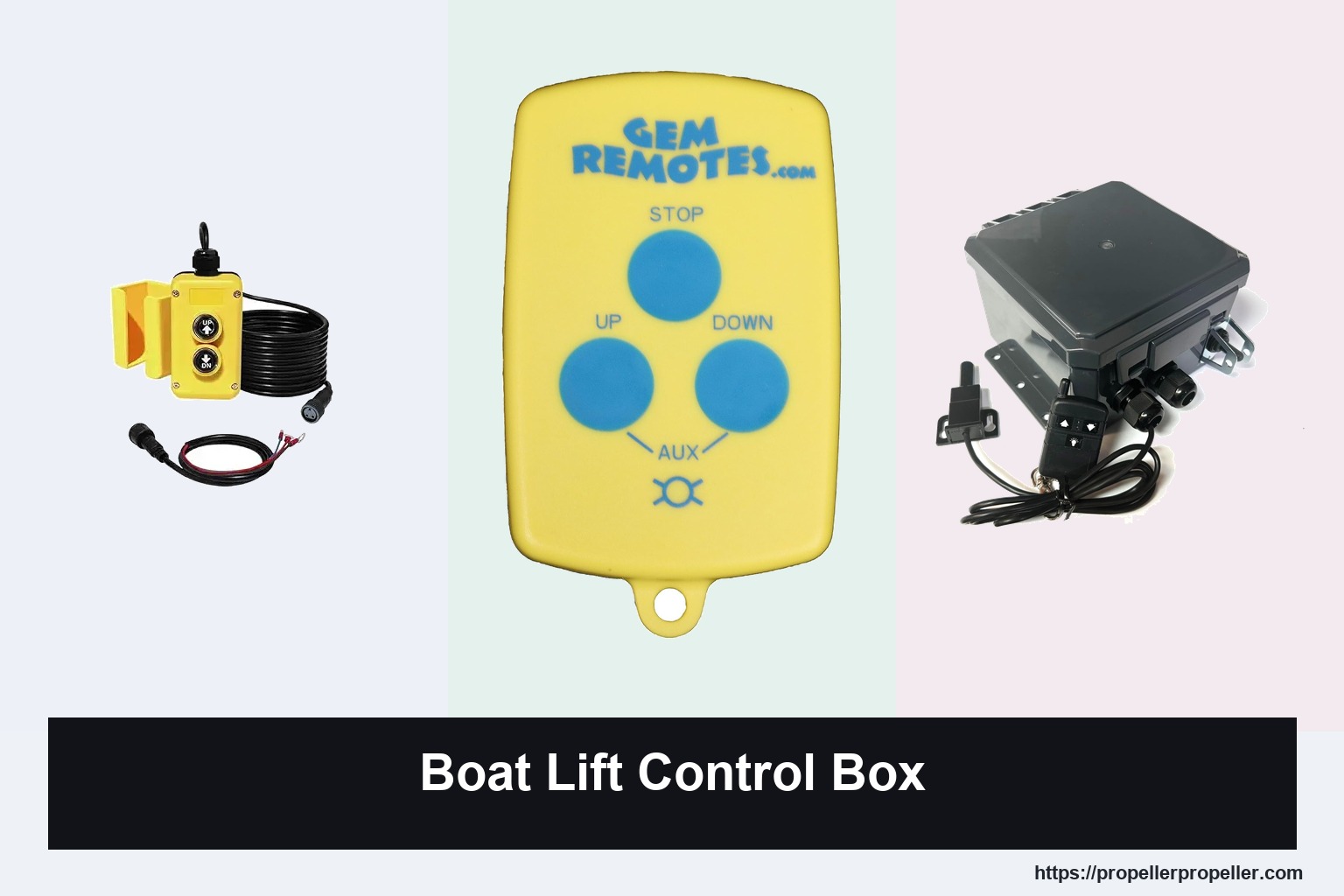
Choosing a boat lift control box is less about novelty and more about getting the right control path for the lift you already own. The category spans wired pendants, wireless transmitters, reversing control systems, and rotary switch assemblies, so the right pick depends on how your lift is powered, how much distance you want between you and the dock hardware, and how much electrical integration you are ready to manage. A good control solution should match the motor type without creating extra complexity at launch time.
The strongest options in this group separate clearly by use case. Some are designed for straightforward single-acting hydraulic operation, while others are meant to bring wireless convenience to a compatible dock lift setup or provide a manual selector for heavier-duty electrical control. That distinction matters because the wrong control style can be inconvenient at best and incompatible at worst. The selections below focus on practical fit, usable controls, and the tradeoffs that matter when you want reliable lift operation season after season.
Top Boat Lift Control Box on the Market

Pumplus 3-Wire Hydraulic Remote
- 12V DC single-acting control
- 15-foot pendant cord
- Mounting holster included
- Magnetic back attachment
- ABS protective shell

Gem 7240 Wireless Transmitter
- Wireless dock lift control
- 3-button layout
- Works with newer Gem boxes
- Battery included
- Waterproof transmitter

GAMA RF Lift Control System
- 120VAC single phase
- 4-wire AC motor reversing
- Limit switches supported
- Battery included
- Compact control enclosure

Keymoo 40A Rotary Switch Box
- 40A current rating
- IP65 enclosure
- 3-position ON-OFF-ON
- 3-phase 12 terminals
- Mounting accessories included
This article may contain affiliate links. As an Amazon Associate, the website may earn from qualifying purchases at no additional cost to you.
Boat Lift Control Box Reviews
Pumplus 3-Wire Hydraulic Remote
- Material Type
- Acrylonitrile Butadiene Styrene (ABS), Metal, Plastic
- Item Dimensions
- 4 x 4 x 10 inches
- Item Weight
- 1.7 pounds
Advantages
- Simple 2-button operation
- 15-foot working cord
- Magnetic back and holster
- Compact storage footprint
- Built for 12V hydraulic use
Limitations
- Limited to 3-wire single-acting setups
- Not a wireless solution
This Pumplus remote is aimed at buyers who want a simple wired control path for a 12V DC single-acting hydraulic pump. Its role is narrow and useful. The 2-button pendant layout keeps operation straightforward, which matters when you want to raise or lower a lift without sorting through extra functions. The included 15-foot cord adds working distance between the operator and the power unit, and that can reduce awkward reach when the controller is mounted away from the most convenient standing point.
The build details support that use case. The shell uses ABS protective material, while the overall construction mixes ABS, metal, and plastic. That combination points to a controller meant to survive routine handling rather than be treated as a delicate accessory. The mounting holster and magnetic back are practical additions because they give you two ways to keep the pendant accessible instead of letting it dangle or disappear into storage. At 4 x 4 x 10 inches and 1.7 pounds, it is compact enough to store without taking over a toolbox or console area.
Compared with the wireless and higher-voltage options in this group, this one is the most direct path to control if your lift uses the correct three-wire single-acting setup. It does not try to solve compatibility beyond that scope, and that restraint is part of the appeal. If your priority is dependable basic operation with minimal complexity, this is the most focused pick here. It is the one I would choose for buyers who already know they need a wired hydraulic remote and value straightforward control over extra features.
PHOTO: Pumplus 3-Wire Hydraulic Remote – Wired Pendant Control → Source: Amazon.com
Gem 7240 Wireless Transmitter
- Warranty Description
- 1 Year
- Package Weight
- 0.04 kg
- Material
- Plastic
Advantages
- Wireless operation from a distance
- Three-button user interface
- Battery included
- Lightweight handheld format
- 1-year warranty description
Limitations
- Only for compatible Gem boxes
- Requires existing receiver system
This DOCK SOLUTIONS transmitter is built for boat owners who want lift control from a distance rather than at the dockside control point. The 3-button remote format keeps the interface easy to understand, which is important when the system is used around water, guests, or casual operators. The compatibility note matters just as much as the convenience claim, because the transmitter is intended for Gem Remote boxes newer than 2007 models. That makes it a targeted replacement or upgrade rather than a universal wireless cure-all.
The compact body and included battery reinforce the idea that this is meant to be a ready-to-use handheld transmitter. Its package dimensions are 3.74 x 2.83 x 0.98 inches, and it weighs only 0.04 kg, so it is easy to keep in a pocket, dry bag, or dock storage compartment. The product also carries a 1-year warranty description, which adds a useful baseline for buyers weighing a remote control that will live outdoors. Because it is a plastic transmitter, the practical expectation should be light weight and easy handling rather than rugged industrial heft.
Against the wired pendant and the more involved reversing-control hardware, this transmitter wins on convenience and day-to-day ease. It is the most natural fit for a compatible Gem system where distance and simplicity matter more than electrical retrofit scope. The tradeoff is that it is only the front end of the control chain, so compatibility is the key decision point. For buyers who already have the right Gem Remote box and want the least fussy way to operate a lift, this is the cleanest recommendation in the group.
PHOTO: Gem 7240 Wireless Transmitter – Three-Button Remote → Source: Amazon.com
GAMA RF Lift Control System
- Voltage
- 120 volts
- Item Weight
- 2.57 pounds
- Product Dimensions
- 8 x 8 x 3.97 inches
- Batteries
- 1 12V batteries required. (included)
Advantages
- Complete RF control system
- Supports motor reversing
- Limit-switch capability
- Battery included
- Compact enclosure size
Limitations
- Requires matching 4-wire setup
- Higher-installation complexity
This GAMA Electronics system serves a different buyer than the handheld transmitters. It is intended for a 120VAC single phase boat lift motor setup with capacitor-start, 4-wire AC reversing and limit switches. That combination points to a more complete control solution rather than a simple remote accessory. Buyers who need actual motor control infrastructure will care about that distinction, because the system is not just adding convenience. It is built to manage the direction and stopping behavior of the lift motor itself.
The hardware footprint is still manageable. The enclosure measures 8 x 8 x 3.97 inches and weighs 2.57 pounds, so it is not tiny, but it is compact enough to fit into a planned electrical installation. The included 12V battery is another useful detail because it avoids a separate immediate sourcing step. Since this is a reversing control system with limit-switch support, installation discipline matters more than with a simple pendant. The buyer needs the right motor configuration and the willingness to integrate the system into the lift’s electrical setup.
Relative to the other products here, this is the most technically complete option and the one with the broadest control responsibility. It is not the easiest buy, and it is not meant to be. Its value comes from aligning with more serious lift control requirements where reversing, limits, and 120V operation are part of the job. If your system matches those requirements, this is the strongest recommendation for a true control-box style solution. If not, the compatibility hurdle makes the simpler remote products a better use of money.
PHOTO: GAMA RF Lift Control – Boat Lift Control Box → Source: Amazon.com
Keymoo 40A Rotary Switch Box
- Current Rating
- 40 A
- Operation Mode
- ON-OFF-ON
- Number of Positions
- 3
- International Protection Rating
- IP65
- Item Dimensions
- 4.3 x 4.3 x 5.3 inches
Advantages
- 40A current capacity
- IP65 protected enclosure
- Three-position selector
- Compact enclosed format
- Mounting accessories included
Limitations
- Manual operation only
- Not a dedicated wireless remote
The Keymoo switch box is the most manual option in this group, and that makes it valuable for buyers who want direct selection rather than remote signaling. Its 40A current rating and ON-OFF-ON operation place it in a heavier-duty electrical control lane than the handheld remotes. The 3-position layout, 3 poles, and 12 terminals show that this is meant for structured circuit control rather than casual consumer use. The included box and accessories also matter because they reduce the odds of piecing together a compatible enclosure separately.
Environmental protection is one of its strongest selling points. The enclosure carries an IP65 rating, which is meaningful for dock-adjacent equipment where spray, dust, and outdoor exposure are part of normal life. The switch uses flame-retardant PC housing with copper parts and silver alloy points, which suggests a design built around contact reliability and material resilience. The size, 4.3 x 4.3 x 5.3 inches, keeps the assembly contained, and the 1.2-pound weight makes it easy to mount without feeling flimsy.
Compared with the remote-control products, this one sacrifices convenience for directness and robustness. It is not the easiest route for someone who wants stand-back wireless operation, but it can be the better choice where manual selector control and an enclosed switch assembly are preferred. It also stands apart from the GAMA system because it is not trying to be a complete RF lift controller. For buyers who need a compact, protected selector box and value manual control over remote convenience, this is the most defensible choice in the lineup.
PHOTO: Keymoo 40A Rotary Switch – Rotary Switch Box → Source: Amazon.com
How to Choose a Boat Lift Control Box
The right control box is the one that matches the lift you already own and the way you actually use it. Boat lift systems differ in motor type, wiring count, power requirements, and how much control distance you want between the operator and the dock hardware. Once you know those basics, the choice becomes much easier. The main question is not which option looks most advanced. It is which one fits the electrical setup cleanly and gives you the most reliable control with the least unnecessary complexity.
Motor Compatibility
The first filter is always the motor and wiring format. Some control solutions are built for single-acting hydraulic pumps, while others are intended for AC reversing motors or specific receiver-box ecosystems. That matters because a control box can be perfectly well made and still be wrong for the lift. Before you focus on convenience features, confirm whether you are dealing with 12V hydraulic operation, 120VAC single-phase reversing, or a manual selector arrangement. Matching the control path to the motor is what prevents expensive missteps.
Wired Versus Wireless
Distance from the dock is a major usability decision. Wired pendants keep operation simple and direct, and they can be excellent when you want a controller in hand without worrying about pairing or receiver compatibility. Wireless transmitters reduce walking and can be easier when the dock layout is awkward or the operator wants to stay off wet surfaces. The tradeoff is obvious: wireless convenience depends on the right receiver, while wired controls depend on cable length and the physical path you can manage safely.
Electrical Load
Current and voltage are not background details. They determine whether the control assembly can safely handle the lift’s demand. A higher current rating matters when the switch is expected to carry heavier loads without overheating or contact wear. Voltage compatibility matters just as much because a control made for one operating range may not belong anywhere near another. For buyers comparing manual selector boxes or motor control assemblies, this is where the decision stops being about convenience and starts being about electrical fit.
Outdoor Protection
Boat lift hardware lives near water, sunlight, and airborne grime, so enclosure quality has real consequences. An enclosed control box with a protective rating is easier to trust in exposed locations than a bare switch or an unprotected handheld device left on the dock. Materials matter too. Tough plastics, sealed housings, and corrosion-resistant contact parts can extend useful life and reduce nuisance problems. If your equipment sits in a harsh environment, prioritize protection before you get distracted by extra buttons or features.
Installation Complexity
Some control options are closer to plug-in accessories, while others require more serious electrical integration. A simple pendant or compatible transmitter can be straightforward if the existing system already matches. A reversing control system or enclosed selector box usually demands more planning, correct wiring, and confidence in the lift’s configuration. The practical takeaway is simple. Choose the least complicated control that still satisfies your setup. Extra complexity should only be accepted when the lift genuinely needs it.
Convenience Tradeoffs
The most convenient control is not always the best purchase. A wireless transmitter is appealing because it saves steps and keeps the operator at a distance. A manual selector can be attractive because it is direct and self-contained. A wired pendant can be the simplest path when you want predictable operation and easy storage. Think about who will use the lift, how often it will be operated, and whether one-handed simplicity or full system control is more valuable in daily use.
Boat Lift Control Box Comparison Table
| Product | Best For | Dimensions | Weight | Color | Material Type | Model |
|---|---|---|---|---|---|---|
| Pumplus 3-Wire Hydraulic Remote | Best Wired Pendant | 4 x 4 x 10 inches | 1.7 pounds | Not Specified | Acrylonitrile Butadiene Styrene (ABS), Metal, Plastic | L11020101009-1 |
| Gem 7240 Wireless Transmitter | Best Wireless Option | Not Specified | Not Specified | yellow | Not Specified | Not Specified |
| GAMA RF Lift Control System | Best Full Control System | Not Specified | 2.57 pounds | Not Specified | Not Specified | Not Specified |
| Keymoo 40A Rotary Switch Box | Best Manual Selector | 4.3 x 4.3 x 5.3 inches | Not Specified | Grey | Plastic | SZW26-40/D303.3D |
How We Tested & Analyzed Boat Lift Control Box
This roundup was built around compatibility, control style, power requirements, and enclosure quality. Those are the factors that most directly determine whether a boat lift control box will work in the real world. The comparison also weighed how much setup each option implies, because a convenient controller is not actually convenient if it requires more infrastructure than the lift has available. Where possible, the analysis favored exact electrical and physical specifications because those are the details that determine fit.
The products were compared as different answers to the same buyer problem rather than as interchangeable gadgets. That is important in this category because wired pendants, wireless transmitters, reversing systems, and selector boxes solve different operational needs. The evaluation therefore focused on use-case alignment, not on trying to force a single winner across incompatible designs. A strong choice here is the one that matches motor type, environmental exposure, and operator preference with the least compromise.
Limitations were treated as part of the decision, not as afterthoughts. A compact remote can be appealing, but only if the right receiver exists. A fully enclosed selector can be robust, but it may demand a more involved installation. A remote pendant can be simple, but only if the wiring format matches. That kind of tradeoff matters in boat lift hardware because misfit is more costly than paying attention up front. The final recommendations therefore emphasize practical fit over feature count.
Frequently Asked Questions
What matters most when choosing a boat lift control box?
Compatibility matters first. You need the control style to match the lift’s motor type, voltage, and wiring configuration. After that, consider whether you want wired, wireless, or manual control. The best-looking option is still the wrong one if it does not fit the existing system cleanly.
Is wireless always better than wired control?
Not always. Wireless is convenient because it removes the need to stand at the control point, but it depends on a compatible receiver and a supported system. Wired controls can be simpler, more direct, and easier to trust in a basic setup. The better choice depends on how your lift is built and how much simplicity you want.
Why does enclosure protection matter near a dock?
Dock hardware is exposed to moisture, spray, dust, and sun. A more protected enclosure is less likely to suffer nuisance failures from the environment. That does not eliminate maintenance, but it does reduce the chance that everyday outdoor exposure becomes the weak link in the system.
Should I choose the most powerful control available?
Not automatically. Power rating only matters when it matches the lift’s electrical load and operating design. A higher-rated unit is useful when the application needs it, but it is not a substitute for compatibility. The safest choice is the one that meets the load requirements without adding unnecessary complexity.
Final Thoughts
A good boat lift control box should do one job well: control the lift in a way that matches the motor, the installation, and the way you use the dock. That is why the category splits so cleanly between wired pendants, wireless transmitters, full reversing systems, and manual selector boxes. Each one can be the right answer in the right setup. The mistake is assuming they are interchangeable. They are not, and that is exactly why a careful fit check pays off.
The best decision comes from being honest about what you need most. If you want the simplest direct control, choose a wired solution matched to the lift’s wiring. If you want distance and convenience, look for a compatible wireless transmitter or receiver system. If you need an enclosed manual selector, prioritize load rating and environmental protection. The right pick is the one that reduces friction every time the lift is used, not the one that adds the most features on paper.



