
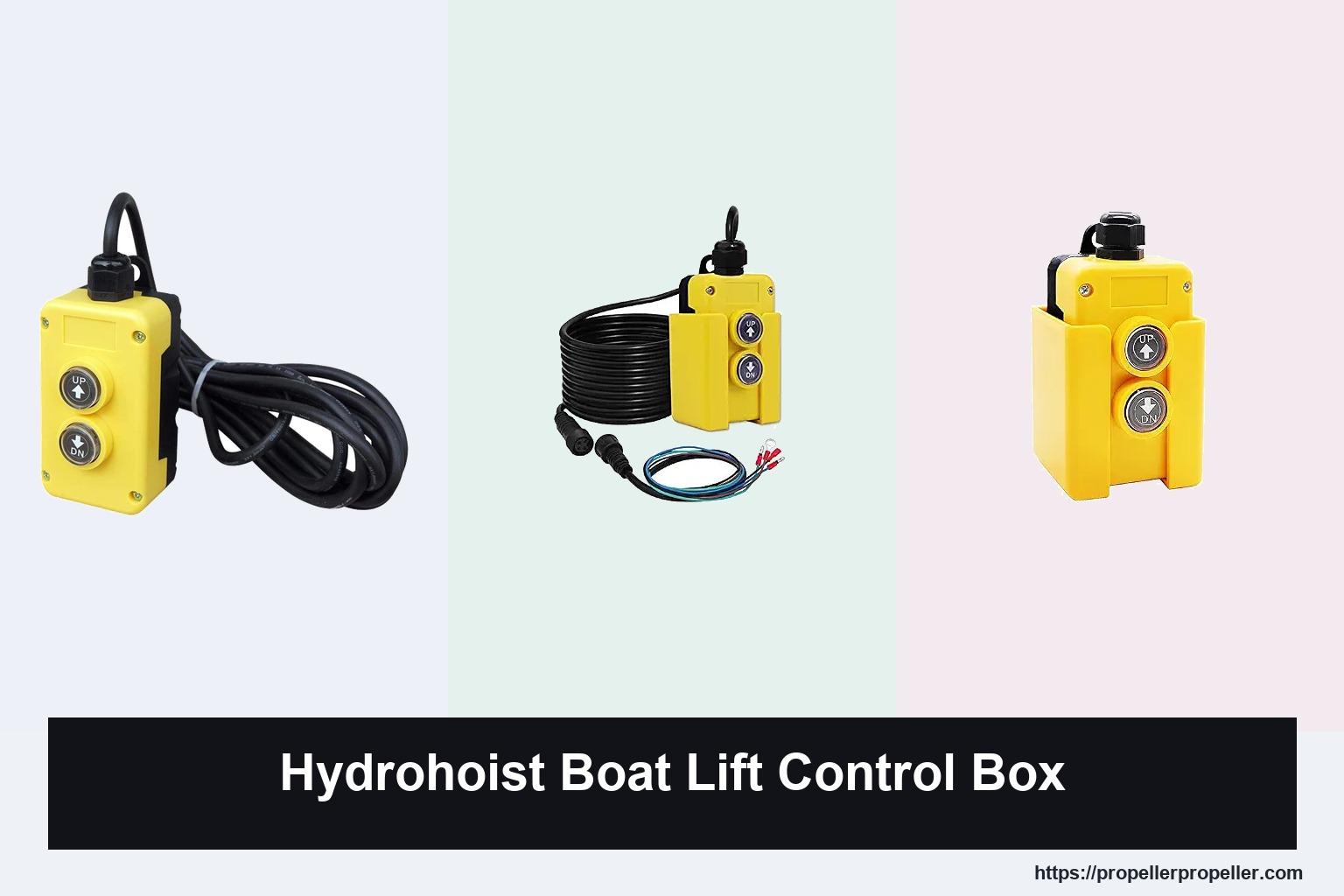
A reliable boat-lift control box has to do more than simply send power to a motor. It needs to be easy to operate under pressure, tolerate damp conditions, and give you enough control confidence to raise or lower the lift without second-guessing the wiring or the switch behavior. For buyers comparing remote control boxes in this category, the real questions are usually about voltage, wiring complexity, mounting style, and whether the control matches the hydraulic setup already in place.
The five options below are all wired remote-style controls built around 12V hydraulic systems, but they are not interchangeable in every installation. Some emphasize a simple two-button pendant and a long cord. Others add magnetic mounting, a holster, a bracket, or a more rugged housing. The most useful choice depends on how your lift is wired, how far you need to stand from the mechanism, and whether you need a compact replacement or a more durable outdoor-friendly control.
Top Hydrohoist Boat Lift Control Box on the Market

USLICCX 4-Wire 12V Remote Switch

Zinger 4-Wire Hydraulic Remote

mankk 12V Up-Down Remote
- 12V DC control
- Dustproof and waterproof
- Magnetic back
- Wall bracket included

Briidea 4-Wire Hydraulic Remote

mankk 4-Wire Hydraulic Switch
- 12V DC control
- 4-meter wire length
- IP54 protection
- Brass contact material
This article may contain affiliate links. As an Amazon Associate, the website may earn from qualifying purchases at no additional cost to you.
Hydrohoist Boat Lift Control Box Reviews
USLICCX 4-Wire 12V Remote Switch
- Operating Voltage
- 12 volts
- Current Rating
- 5 A
- Circuit Type
- 4-way
- Mounting Type
- Magnetic Mount
- Material Type
- Acrylonitrile Butadiene Styrene
Advantages
- 15-foot operating reach
- Simple two-button control
- Magnetic mounting support
- ABS protective shell
- Compact and portable
Limitations
- No stated weather rating
- Limited to basic pendant control
The USLICCX remote is built around the basic control pattern many hydraulic lift systems need, with a 12V DC operating requirement and a 4-way circuit layout. That makes it a practical replacement when the existing setup expects a simple raise-and-lower pendant rather than a more complex controller. The 2-button format keeps operation straightforward, and the included 15-foot cord gives you enough reach to stand clear of the load while still staying close enough to monitor movement.
Its compact, portable design matters if you need a control that can travel between jobs or be stowed when not in use. The magnetic back adds placement flexibility, and the ABS shell is a sensible choice for a tool that may be handled often. The specification set also points to a low-power control role rather than a heavy load-bearing one, so this is best treated as the operator interface for a hydraulic power unit, not as an all-purpose electrical switch.
Among the five controls here, this one stands out for buyers who value a long cable and a familiar pendant-style layout over extra mounting hardware. It is less specialized in protection features than the more weather-focused options, but it is easy to understand and easy to position. That makes it a strong pick when you want a direct replacement-style control and do not need additional enclosure or installation features. I would recommend it for straightforward hydraulic lift control where cable reach is the main concern.
PHOTO: USLICCX 4-Wire 12V Remote – UP Down Buttons → Source: Amazon.com
Zinger 4-Wire Hydraulic Remote
- Operating Voltage
- 12 volts
- Circuit Type
- parallel
- Mounting Type
- Plug In Mount
- International Protection Rating
- IP65
- Compatible Devices
- Monarch, Bucher Dyna-Jack, MTE, Bosch, SPX, KTI
Advantages
- IP65-rated protection
- 15-foot cord length
- Magnetic back included
- Mounting holster included
- Broad pump compatibility
Limitations
- Only for double-acting units
- More expensive than basic options
The Zinger control is the most protection-minded option in this group, and that matters if your lift hardware lives outdoors or is exposed to frequent spray. Its IP65 rating is the key differentiator, because it signals a more guarded build than the basic indoor-style pendants. The controller is designed for 12V DC double-acting hydraulic power units, so it fits the standard operating pattern most buyers are trying to replace.
The control package includes a mounting holster and magnetic back, which gives you two practical storage and placement options. That flexibility is useful when the pendant needs to stay close to the work area but not dangle where it can be damaged. The 15-foot cord is long enough to let the operator stand at the rear of a trailer or lift while watching the load, which improves control during dumping or lifting operations.
Relative to the other controls here, this model is the one to favor when environment is a bigger concern than price or minimalism. It does not rely on a bare-bones approach to storage, and its compatibility list is broad enough to cover common hydraulic pump brands. For buyers who want the most confidence in outdoor use and a simple wired remote format, this is the most defensible recommendation in the set.
PHOTO: Zinger 4-Wire Hydraulic Remote – Wired Control Pendant → Source: Amazon.com
mankk 12V Up-Down Remote
Advantages
- Compact control body
- Dustproof and waterproof design
- Magnetic placement support
- Separate wall bracket
- Works with single or double acting
Limitations
- No published IP rating
- Cord length not stated
This mankk remote is the smallest-feeling control in the group, and that compactness can be a genuine advantage when you want the operator interface out of the way until needed. The 12VDC rating keeps it aligned with standard hydraulic pump systems, while the two-position up-and-down layout preserves the simplicity that matters most during lift or dump operation. It is also presented as suitable for both single- and double-acting setups, which broadens its reach beyond narrower replacement parts.
The housing is ABS, and the design adds dustproof and waterproof protection. That combination is worth attention if the control will live near an open worksite or outside storage area. Magnetic placement is helpful for temporary positioning, but the separate mounting bracket is what improves day-to-day organization because the control can be fixed where it is easy to find instead of being left loose in a compartment or cab.
Compared with the other products here, this one is less about a long, dedicated operator reach and more about compact storage and flexible placement. It is the easiest to imagine moving between tasks or keeping mounted in a tight space. Buyers who want a smaller remote and value the extra mounting bracket over cord length should look here first. It is a sensible recommendation when control size and placement flexibility matter more than the most rugged IP-rated claim.
PHOTO: mankk 12V Up-Down Remote – Up Down Controller → Source: Amazon.com
Briidea 4-Wire Hydraulic Remote
- Operating Voltage
- 12 volts
- Current Rating
- 10 A
- Circuit Type
- 2-way
- Mounting Type
- Panel Mount or Surface Mount
Advantages
- 15-foot operating cord
- Magnetic backing with cradle
- CE marked
- Compact housing
- Standard 4-wire layout
Limitations
- No weather rating listed
- Not the cheapest option
The Briidea remote sits in the middle of the pack in a useful way. It combines the familiar 4-wire layout with a 15′ cord, so the operator can work from the rear of the trailer without crowding the load. That is the kind of detail that matters in real use because remote reach affects both comfort and visibility. The 12V DC supply and two-button pendant format keep the control role straightforward rather than overcomplicated.
Installation is helped by the included wiring labels and the magnetic backing with mounting cradle. Those details reduce the friction that often turns a simple replacement into a frustrating one. The ABS construction and CE marking point toward a conventional utility-grade build, and the compact body helps when there is not much room around the control area. It is not the most rugged-seeming option here, but it does pair basic durability with clean installation support.
In comparison with the others, this model does not chase the highest protection rating or the smallest footprint. Instead, it aims for a balanced blend of reach, mounting convenience, and standard compatibility with common hydraulic pump brands. That makes it a strong all-around recommendation for buyers who want a familiar remote with enough installation support to feel manageable without paying for extra specialization they may not need.
PHOTO: Briidea 4-Wire Hydraulic Remote – Wired Control Pendant → Source: Amazon.com
mankk 4-Wire Hydraulic Switch
- Operating Voltage
- 12 volts
- Current Rating
- 10 A
- International Protection Rating
- IP54
- Material Type
- Acrylonitrile Butadiene Styrene
- Contact Material
- Brass
Advantages
- Lowest price in this group
- IP54 protection rating
- Brass contact material
- 4-meter wire length
- ABS housing
Limitations
- Shorter cord than some rivals
- Fewer mounting extras
This mankk model is the strongest value play in the group because it pairs a low entry price with a feature set that is still practical for regular use. The 12V DC operating requirement keeps it within the standard range for hydraulic power units, and the IP54 rating adds a useful layer of protection that many bare-basic remotes do not clearly state. The brass contact material is another meaningful detail because it suggests a more durable electrical interface than an all-plastic contact path.
The 4-meter wire length is shorter than the longest corded options here, but it still gives enough working distance for many trailer and lift-gate setups. That shorter reach can actually be an advantage in tighter garages or compact work zones where excess cord becomes a hassle. The ABS body and surface-mount design reinforce the idea that this is intended as a fixed, practical control rather than a bulky carried accessory.
Against the rest of the field, this one trades premium convenience features for a clean balance of durability and price. It lacks the holster-and-cradle polish of some competitors, and it does not advertise the same protection level as the IP65 unit. Even so, it is the model I would point to for buyers who want a lower-cost remote that still brings meaningful build confidence. It is the best fit when budget matters but you do not want to step all the way down to the simplest option.
PHOTO: mankk 4-Wire Hydraulic Switch – Control Pendant Kit → Source: Amazon.com
How to Choose a Boat Lift Control Box
The right control box for a hydraulic lift or hoist is the one that matches the electrical system you already have, keeps the operator in a safe position, and survives the environment around the lift. On paper, many of these remotes look similar because they all manage up-and-down motion on 12V systems. In use, the important differences are usually wire count, cable reach, mounting method, and how much protection the housing offers against moisture and handling.
Voltage and Wiring Match
Start with the electrical system before anything else. A control that is meant for 12V DC equipment will not be a comfortable fit for a different operating voltage, and the same is true for the wiring layout. Double-acting hydraulic setups commonly depend on a 4-wire pattern because raise, lower, power, and start functions must be directed correctly. If the wiring logic does not match, the remote may be awkward at best and unusable at worst. Matching the control to the system saves installation time and avoids confusion at the terminals.
Cord Length and Reach
Reach is a safety and convenience decision, not just a comfort feature. A longer cord lets you stand farther from the moving load while still maintaining visual control, which is especially useful when dumping or lifting in the open. Shorter cords can work well in compact spaces, where too much cable becomes clutter. The right length depends on where you need to stand, how far the operator must stay from the mechanism, and whether the control will be used from the ground, a platform, or beside a trailer.
Mounting and Storage
A remote that always has a place is easier to live with than one that gets tossed into a compartment. Magnetic backs, holsters, brackets, and cradle-style mounts all improve day-to-day organization, but they do so in different ways. Magnetic placement is quick and flexible. A fixed bracket or holster is better when you want the control to stay accessible and not dangle around moving parts. Think about how often the control will be moved, and choose the storage style that keeps it protected without slowing you down.
Outdoor Protection
Moisture, dust, and handling abuse are the main environmental threats for a lift control. If the system is installed where spray, rain, or debris is common, a protection rating becomes more than a spec line. A better-sealed housing can reduce the chance of problems from wet storage or outdoor use. ABS shells are common because they are light and durable enough for utility controls, but the whole design matters, not just the plastic. When the lift lives outside, prioritize the most protective build you can justify.
Ease of Installation
Simple wiring is valuable because it shortens downtime and lowers the chance of a mistake. Controls that clearly separate power, raise, lower, and start leads are easier to install correctly than designs that leave you guessing. A compact pendant with labeled conductors is often the fastest path to a working replacement. If you are doing the work yourself, look for a controller that comes with enough guidance to make the connection order obvious. A clean install is not only faster. It also makes later troubleshooting much easier.
Durability and Value
Price only matters after the control is usable in your setup. A lower-cost remote can be a smart buy if it still matches the electrical system, offers enough cable, and has a housing that suits the environment. More expensive options usually justify themselves with better protection, better mounting accessories, or more convenient storage. Think about how often the lift is used and how much downtime would cost if the remote failed. The best value is the one that balances replacement cost with the practical demands of your worksite.
Control Box Comparison Table
| Product | Best For | Voltage | Current | Circuit | Mounting | Actuator Type |
|---|---|---|---|---|---|---|
| USLICCX 4-Wire 12V Remote Switch | Best Long-Cord Option | 12 volts | 5 A | 4-way | Magnetic Mount | Pendant |
| Zinger 4-Wire Hydraulic Remote | Best Weather Protection | 12 volts | Not Specified | parallel | Plug In Mount | Hinge Lever |
| mankk 12V Up-Down Remote | Best Compact Control | Not Specified | Not Specified | Not Specified | Not Specified | Not Specified |
| Briidea 4-Wire Hydraulic Remote | Best Balanced Pick | 12 volts | 10 A | 2-way | Panel Mount or Surface Mount | hydraulic |
| mankk 4-Wire Hydraulic Switch | Best Budget Durable | 12 volts | 10 A | 2-way | Surface Mount | Push Button |
How We Tested & Analyzed Hydrohoist Boat Lift Control Box
These recommendations were built by comparing the category-level traits that matter most for hydraulic lift controls. Voltage, circuit layout, wire count, cord length, mounting style, and enclosure protection carried the most weight because they determine whether a remote will function correctly and remain practical after installation. The analysis also considered whether each control was clearly aimed at a standard two-button up-and-down workflow, since that is the core use pattern for many lift and hoist applications.
The comparison also emphasized operational consequences rather than feature counts. A long cord matters because it affects how safely you can stand relative to the moving load. A magnetic back matters because it changes where the control can be kept between uses. A weather rating matters because it changes the likelihood of trouble in outdoor storage or wet work areas. That approach separates meaningful utility from marketing noise and keeps the ranking tied to real-world buying decisions.
Limits matter here as much as strengths. Many remotes in this category are broadly compatible, but broad compatibility still depends on the exact hydraulic setup and wiring arrangement. Because of that, the article avoids assuming fit where the electrical details are not explicit. Where a product record did not include a meaningful protection rating, warranty, or other concrete specification, that absence was treated as a meaningful tradeoff rather than filled in with speculation. The result is a practical shortlist, not a promise that every control suits every system.
Frequently Asked Questions
What matters most when choosing a hydraulic remote control box?
The most important factors are voltage match, wire count, cord length, and housing protection. If those four points line up with your system, the remote is much more likely to work smoothly and stay convenient in daily use. Mounting style also matters if you want the control to stay organized instead of getting in the way.
Do all 12V hydraulic remotes work the same way?
No. They may share the same operating voltage but still differ in circuit layout, mounting, and wire assignments. Some are built for double-acting systems only, while others can handle both single- and double-acting arrangements. A correct voltage match is necessary, but it is not enough by itself to guarantee compatibility.
How important is cord length for a lift control?
Cord length affects both safety and ease of use. A longer cord lets you stand farther from the moving load, which can improve visibility and keep you out of the work zone. Shorter cords can still be fine in tight garages or compact setups where excess cable would be awkward.
Is weather protection worth paying more for?
Usually yes if the control will live outdoors or near moisture. A better-sealed housing can reduce the chance of damage from rain, spray, dust, or rough handling. If the control stays inside a protected cab or enclosure, you may not need the highest protection level, but outdoor use makes it much more valuable.
Final Thoughts
A good control box for a hydraulic lift is really a mix of compatibility and convenience. The best choice is the one that matches the wiring you already have, gives you enough reach to operate safely, and survives the conditions around the lift. Once those basics are satisfied, the differences become more specific: weather protection, mounting flexibility, and how cleanly the control fits into your daily workflow.
That is why this category rewards careful matching more than flashy features. The right remote should feel obvious to operate, not fussy. If you value reach, protection, compact storage, or low price, there is a clear path to the right pick. Focus on the electrical match first, then choose the housing and mounting style that will make the lift easier and safer to use every time.



