
A marine starting battery has one non-negotiable job: it must match the boat’s voltage, physical battery space, and engine cranking demand. The five options here divide into 12V and 24V systems, compact cranking-focused batteries, and dual-purpose batteries that also support onboard electronics or trolling use.
I would start with the electrical system rather than the biggest CCA number. A 24V battery cannot substitute for a 12V setup, and group size still matters at installation. From there, decide whether you need a dedicated engine starter or enough stored energy to combine starting and house-battery duties.
Top Marine Starting Batteries on the Market

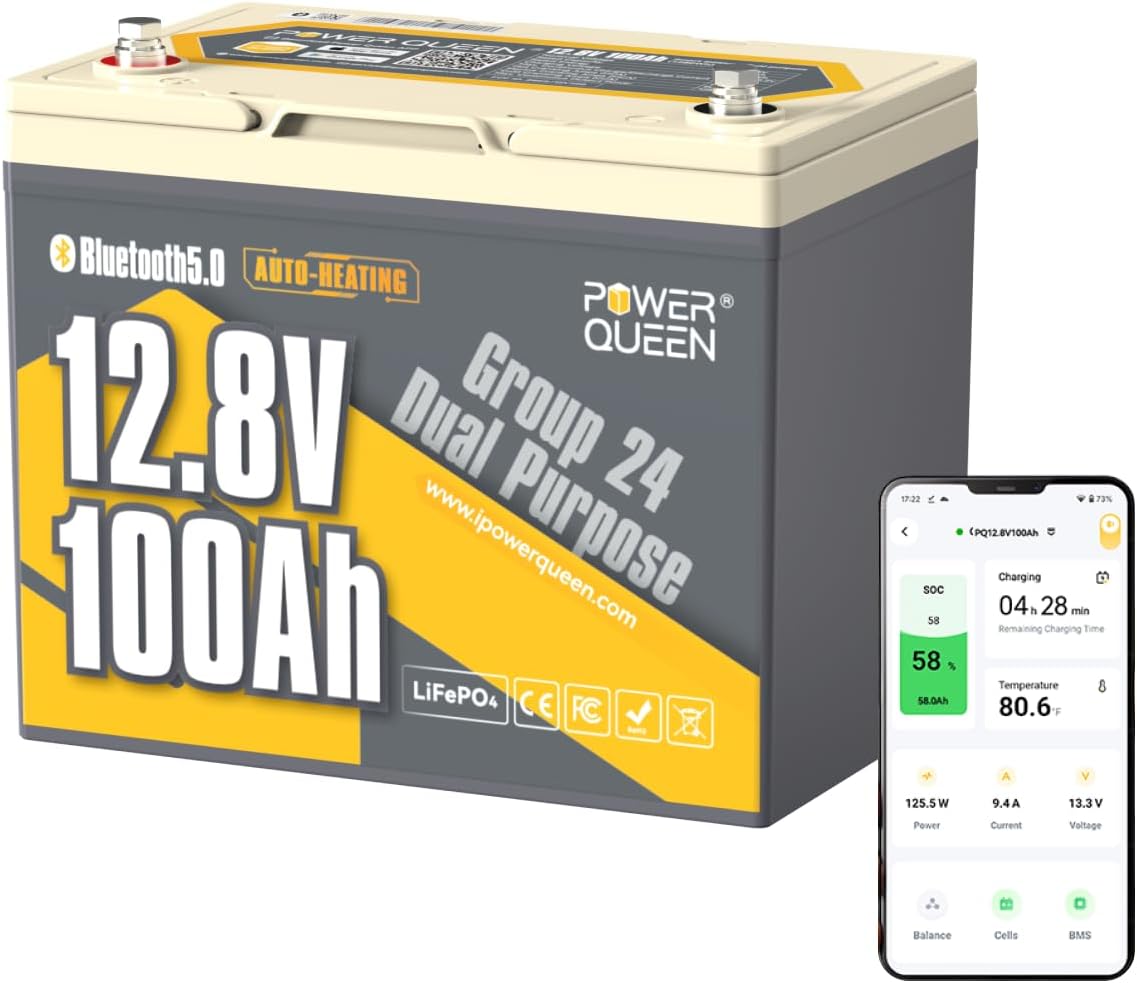
Power Queen 12V 100Ah Dual Purpose
- 12V 100Ah LiFePO4 battery
- 900CCA cranking output
- Group 24 case size
- 15% emergency reserve
- IP67 protection rating

HumsiENK 24V 230Ah Dual Purpose
- 24V 230Ah LiFePO4 battery
- 1800CCA cranking output
- 5888Wh stated energy
- 200A BMS
- 5120W continuous output

Renogy 12V 70Ah AGM Group 48
- 12V 70Ah AGM battery
- 720 CCA starting output
- Group 48 / H6 fitment
- 120-minute reserve capacity
- -22°F to 158°F operation
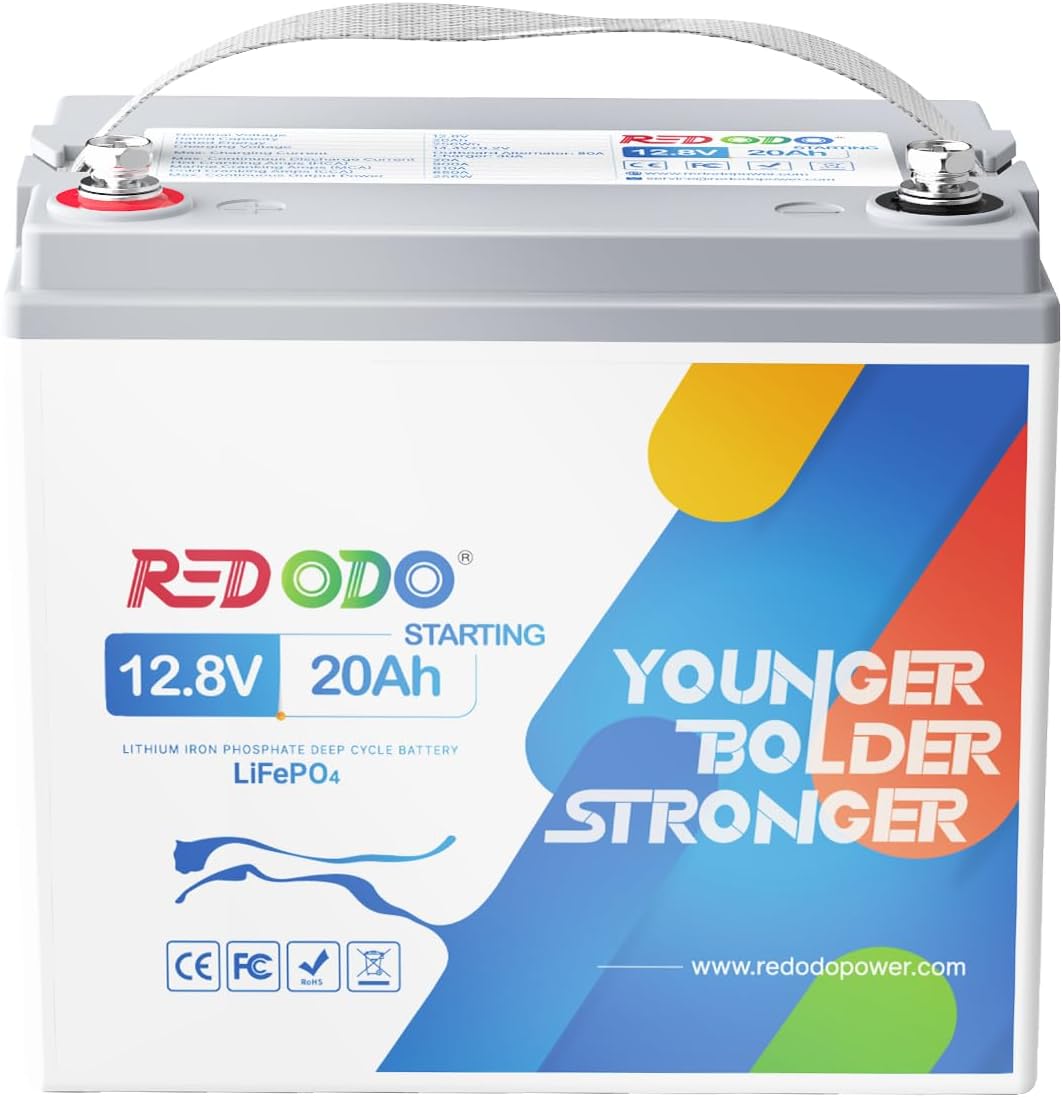
Redodo 12V 20Ah Group U1
- 12V 20Ah lithium battery
- 800 CCA at 14°F
- Group U1 case design
- 810A MCA rating
- IP67 protection rating
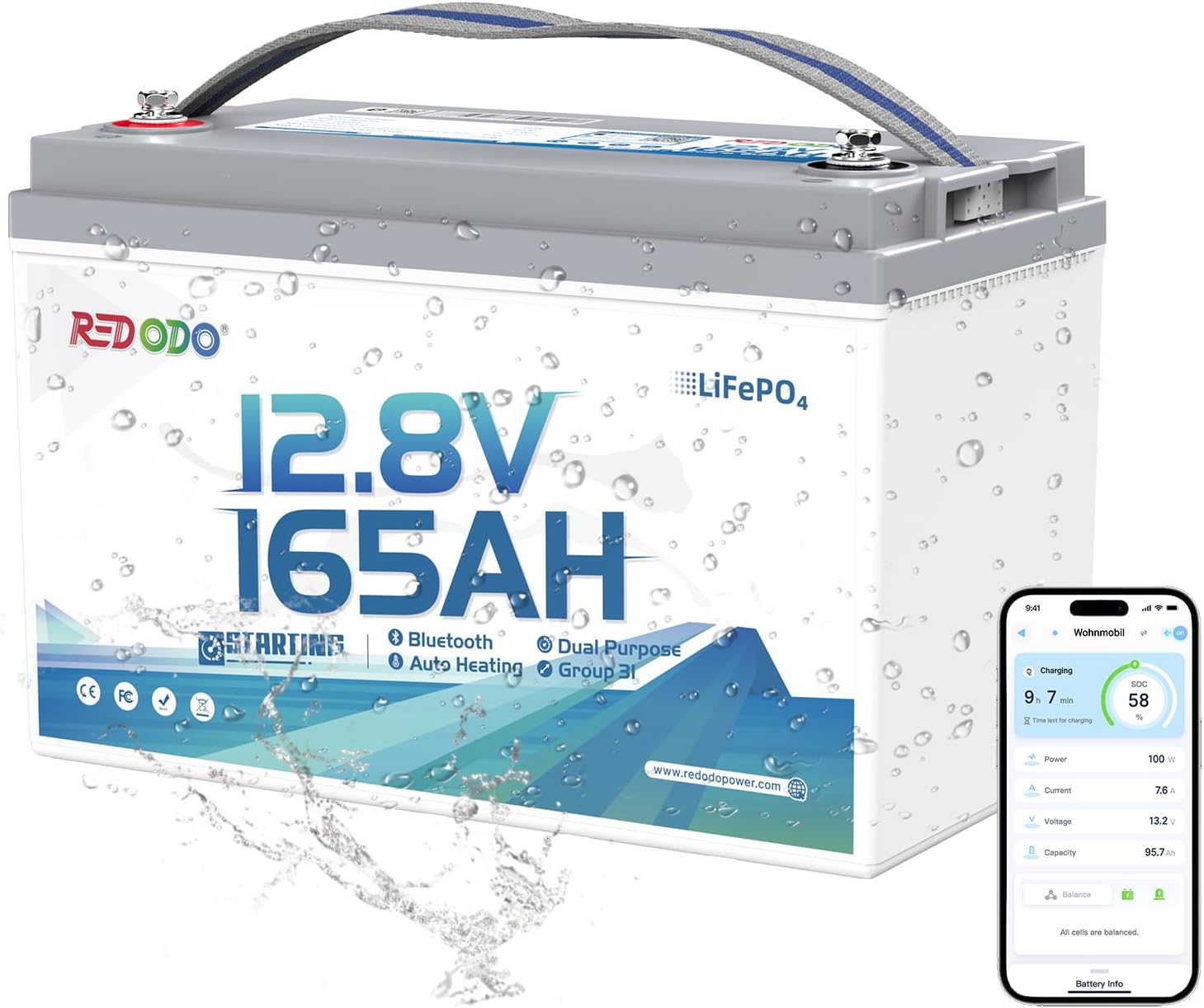
Redodo 12V 165Ah Dual Purpose
- 12V 165Ah lithium battery
- 1200 CCA at 14°F
- Group 31 case size
- 2112Wh stated energy
- 15% emergency reserve
Detailed Product Reviews
Power Queen 12V 100Ah Dual Purpose
- Battery Voltage
- 12V
- Battery Capacity
- 100Ah
- Cold Cranking Amps
- 900CCA
- Group Size
- group 24
- Emergency Reserve
- 15% emergency reserve
Advantages
- 900CCA specified cranking power
- 100Ah dual-purpose capacity
- 15% emergency reserve
- Bluetooth status monitoring
- IP67 water and dust protection
Limitations
- Requires a Group 24 battery space
- Designed for 12V systems
I would choose the Power Queen for a 12V Group 24 installation where one battery needs to start an outboard and support electronics through the day. Its 900CCA cranking performance is specified for fuel outboards up to 250HP, while the 100Ah LiFePO4 capacity gives it a stated dual-purpose role. That makes it more relevant to an angler combining engine starting with fish-finder or trolling loads than a small, cranking-only battery.
The practical advantage is its 15% emergency reserve, intended to hold back power for an engine start after accessory use. Bluetooth monitoring can display capacity, operating current, estimated remaining runtime, and fault alerts. For cold-weather charging, the battery has self-heating and stops charging below 32°F. Its IP67 rating and stated salt-spray resistance suit a battery compartment exposed to marine moisture.
Compared with the Redodo 12V 20Ah, the Power Queen offers far more stated capacity and an integrated emergency reserve, but it uses a different Group 24 format rather than Group U1. Pick the Power Queen when your boat can accept Group 24 and you genuinely want one battery for starting plus onboard loads. The smaller Redodo is the more targeted option when cranking is the priority and the installation calls for Group U1.
HumsiENK 24V 230Ah Dual Purpose
- Battery Voltage
- 24V
- Battery Capacity
- 230Ah
- Cold Cranking Amps
- 1800CCA
- Energy
- 5888Wh
- Continuous Output
- 5120W continuous load
Advantages
- 24V dual-purpose design
- 1800CCA specified cranking output
- 5888Wh stated energy
- 200A BMS included
- Bluetooth monitoring and self-heating
Limitations
- Requires a 24V system
- 95-pound battery requires planned placement
The HumsiENK belongs on a boat that already has a 24V electrical system and needs one battery for starting plus substantial stored energy. It pairs 1800CCA cranking power with 230Ah capacity and 5888Wh of stated energy. That is a very different buying case from a conventional 12V engine-start battery, especially if a 24V trolling motor, inverter, or other 24V loads are part of the system.
Its 200A BMS is paired with a stated 5120W continuous load, while Bluetooth monitoring covers state of charge, voltage, current, and temperature. The self-heating function is intended to enable charging in sub-freezing conditions. An IP65 enclosure adds dust and moisture protection. At 20.63 by 14.37 by 9.15 inches and 95 pounds, this is a battery to measure for carefully before planning a compartment installation.
Against the Power Queen, HumsiENK brings much higher voltage, capacity, cranking output, and stated energy, but it is only appropriate for a 24V system. Do not choose it as an upgrade for a 12V boat. I would reserve it for a 24V marine setup that needs both engine-start capability and a large battery bank in a single unit.
Renogy 12V 70Ah AGM Group 48
- Battery Voltage
- 12V
- Battery Capacity
- 70Ah
- Cold Cranking Amps
- 720 CCA
- Group Size
- Group 48 / H6
- Reserve Capacity
- 120 minutes Reserve Capacity (RC)
Advantages
- 720 CCA starting rating
- 70Ah AGM capacity
- Group 48 / H6 fitment
- 120-minute reserve capacity
- Wide stated operating range
Limitations
- Requires Group 48 / H6 fitment
- AGM chemistry differs from lithium options
The Renogy is the pick for a boat requiring a 12V AGM battery in the Group 48 / H6 footprint. Its 70Ah capacity, 720 CCA rating, and 120-minute reserve capacity suit a conventional starting-battery role. It is also designed for start-stop vehicle systems, which indicates a different intended use from the lithium dual-purpose batteries in this guide.
AGM construction is sealed lead-acid construction, and Renogy describes it as minimizing acid-leak and corrosion risk. The specified operating range is –22°F to 158°F, which is useful context for boats stored or launched in severe seasonal temperatures. Fitment remains the key check. A Group 48/H6 battery should replace a Group 48/H6 battery rather than being selected by CCA alone.
The Redodo 12V 20Ah has a higher listed 800 CCA figure and a Group U1 case, while the Renogy provides 70Ah and Group 48/H6 fitment. Neither group size is interchangeable by assumption. Choose the Renogy when Group 48/H6 is the documented battery tray and AGM is the battery chemistry you intend to retain.
Redodo 12V 20Ah Group U1
- Battery Voltage
- 12V
- Battery Capacity
- 20Ah
- Cold Cranking Amps
- 800 CCA
- Group Size
- Group U1
- Marine Cranking Amps
- 810A MCA
Advantages
- 800 CCA at 14°F
- Group U1 case design
- 810A MCA rating
- IP67 protection rating
- 20A BMS included
Limitations
- 20Ah capacity limits dual-purpose use
- Not compatible with unregulated outboards
The Redodo 12V 20Ah is a dedicated cranking-focused choice for a boat with a Group U1 battery space. It is specified at 800 CCA at 14°F for one second and 810A MCA. Redodo positions it for outboards up to 200HP, so the engine’s stated requirement should be checked against those numbers before purchase.
This battery has only 20Ah of listed capacity, which makes its role different from a large dual-purpose model. It includes a 20A BMS, IP67 water and dust protection, and a stated 30A charging current with a 40-minute charge claim. The manufacturer also says it is not for outboards made before 2005 or models without voltage regulators. Those compatibility limits deserve attention before installation.
The Power Queen 12V 100Ah shares 12V lithium chemistry and IP67 protection, but it adds 100Ah capacity, a Group 24 case, and a reserve feature for all-day accessory use. I would select the Redodo when Group U1 fitment and engine cranking are the immediate needs. For a boat that must run electronics or a trolling motor from the same battery, the Power Queen has the more suitable stated capacity.
Redodo 12V 165Ah Dual Purpose
- Battery Voltage
- 12V
- Battery Capacity
- 165Ah
- Cold Cranking Amps
- 1200 CCA
- Group Size
- Group 31
- Energy
- 2112Wh
Advantages
- 1200 CCA at 14°F
- 165Ah dual-purpose capacity
- 2112Wh stated energy
- 15% emergency reserve
- Bluetooth 5.0 monitoring
Limitations
- Requires a Group 31 battery space
- Not compatible with unregulated outboards
For a 12V boat that needs serious starting capacity and a larger energy reserve in one case, I would look first at the Redodo 165Ah. It combines 1200 CCA at 14°F with 165Ah capacity and 2112Wh of stated energy in a Group 31 battery. Its stated role covers outboard starting alongside fish finders and trolling motors, so it is aimed at replacing separate starting and accessory batteries where the installation allows.
A 15% emergency reserve is intended to preserve enough stored power for starting, while Bluetooth 5.0 monitoring can report battery status and manage discharge remotely. The battery auto-heats for charging below 32°F and has IP67 protection. Redodo says discharge is disabled below 4°F. It is not compatible with outboard models without a voltage regulator, and it excludes Mercury Optimax and Black Max models from its stated compatibility.
The Power Queen has the same 12V dual-purpose concept and emergency reserve, but it is a Group 24, 100Ah, 900CCA battery. Redodo’s Group 31 format, 165Ah capacity, and 1200 CCA rating make more sense when the boat has the physical space and the electrical demand to justify them. The Power Queen is better aligned with a Group 24 installation.
How to Choose a Marine Starting Battery
A correct replacement starts with the boat, engine, and battery tray. Use the owner documentation for the engine’s required cranking specification and the existing battery’s voltage and group size before narrowing the options.
Match System Voltage
A 12V battery serves a 12V charging and starting system, while a 24V battery requires a 24V system. This is not a performance upgrade decision. It is an electrical-compatibility requirement. Confirm the boat’s nominal system voltage and charging arrangement before comparing capacity, CCA, or battery chemistry.
Confirm Engine Starting Needs
CCA describes starting output under a defined cold-temperature condition, while MCA is another marine cranking measure. Use the engine manufacturer’s requirement as the threshold. A high number alone does not establish compatibility, because the engine, cable condition, terminals, and charging system also need to be appropriate.
Measure Group Size
Battery group size is a fitment standard, not a casual label. It affects the case footprint and may affect hold-down hardware and terminal placement. Confirm the battery tray and restraint can accept the chosen group size. Do not assume a Group U1, Group 24, Group 31, or Group 48/H6 case can replace another without changes.
Choose Starting or Dual Purpose
A cranking-focused battery suits a boat where a separate house bank handles electronics and trolling loads. A dual-purpose battery combines starting output with stated stored capacity for accessories. That simplification can be useful, but calculate the accessory draw and leave enough energy to start the engine rather than treating all battery capacity as available house power.
Check Charging Conditions
Lithium and AGM batteries have different charging considerations, so make sure the boat’s charging equipment is suitable for the selected chemistry. For lithium models, confirm whether the engine has a voltage regulator when required and consider low-temperature charging limits. Built-in heating can address specified cold-charge conditions, but it does not remove the need for a compatible charging system.
Marine Starting Battery Comparison Table
| Product | Best For | Voltage | Capacity | Cold Cranking | Chemistry | Group Size |
|---|---|---|---|---|---|---|
| Power Queen 12V 100Ah Dual Purpose | For Group 24 Dual Use | 12V | 100Ah | 900CCA | LiFePO4 | group 24 |
| HumsiENK 24V 230Ah Dual Purpose | For 24V High-Capacity Systems | 24V | 230Ah | 1800CCA | LiFePO4 | Not Specified |
| Renogy 12V 70Ah AGM Group 48 | For Group 48 Fitment | 12V | 70Ah | 720 CCA | AGM | Group 48 / H6 |
| Redodo 12V 20Ah Group U1 | For Group U1 Cranking | 12V | 20Ah | 800 CCA | Lithium | Group U1 |
| Redodo 12V 165Ah Dual Purpose | For Group 31 Dual Purpose | 12V | 165Ah | 1200 CCA | Lithium | Group 31 |
How We Evaluated Marine Starting Batteries
These recommendations prioritize the stated battery voltage, cold-cranking output, group size, capacity, chemistry, and dual-purpose capability. I also considered marine-relevant protection ratings, reserve features, temperature-related functions, and explicit compatibility limits. The goal is to match each battery to a distinct installation and power-use case rather than rank batteries solely by capacity or cranking output.
Frequently Asked Questions
Can I use a 24V battery in a 12V boat?
No. A 24V battery is for a 24V electrical system. Installing one in a 12V starting system can create compatibility problems with the engine, charging equipment, and onboard electronics. Match the battery’s nominal voltage to the boat’s documented system voltage.
What is the difference between CCA and MCA?
CCA measures starting output under a colder test condition than MCA. Both help describe cranking capability, but the engine manufacturer’s stated requirement should guide the selection. Compare values only when you understand the test label attached to each number.
Does a larger Ah rating always make a better starter battery?
Not necessarily. Ah describes stored capacity, while a starting battery also needs sufficient cranking output and the correct physical fit. More capacity can be useful for electronics and trolling loads, but it does not override the engine’s CCA requirement or the battery tray’s group-size limit.
What does battery group size mean?
Group size identifies a battery case standard used for fitment. It helps determine whether the battery will fit the tray and work with the hold-down arrangement. Check the existing battery group, tray dimensions, terminal clearance, and cable reach before ordering.
Can one dual-purpose battery run accessories and start the engine?
It can when the battery is designed for both duties and its capacity suits the expected accessory load. Reserve features can help preserve starting power, but they do not replace load planning. Keep enough energy available for the engine start after using electronics or trolling equipment.
Do lithium marine batteries need special cold-weather attention?
Yes. Lithium batteries may have charging restrictions at low temperatures. Some models include self-heating or low-temperature charging protection, but the exact behavior differs by battery. Review the battery’s stated temperature functions and confirm that the boat’s charging system is compatible.
Final Thoughts
My main 12V dual-purpose recommendation is the Power Queen 12V 100Ah for a Group 24 boat that needs strong stated cranking output, accessory capacity, and a reserve feature in one battery. Choose the Redodo 12V 165Ah when a Group 31 installation needs substantially more stated capacity, or the HumsiENK only for a properly configured 24V system. For a dedicated Group U1 starter, the compact Redodo 12V 20Ah is the more focused fit.



