
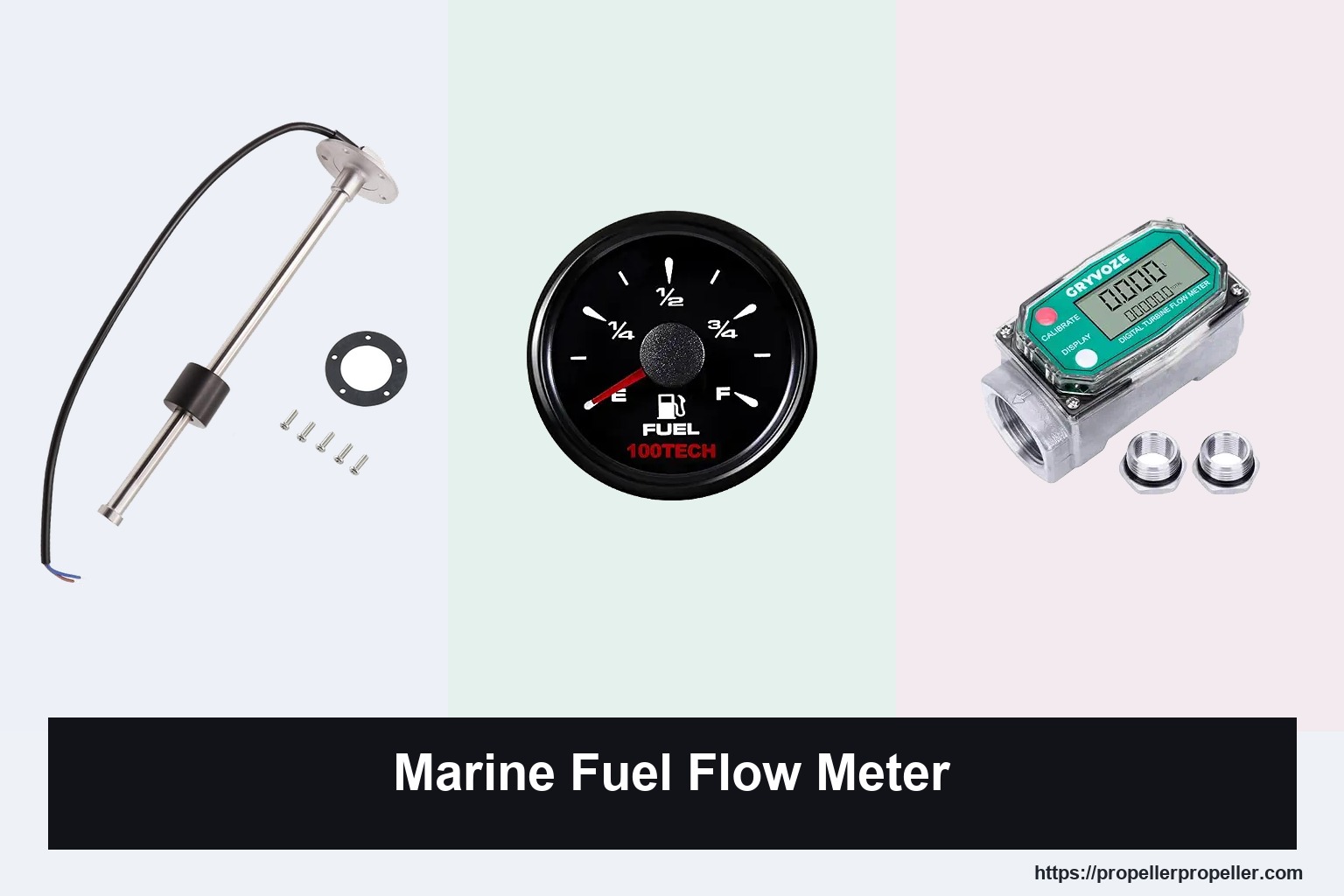
Choosing a marine fuel flow meter is really about control. On the water, small measurement errors become expensive surprises, and installation choices matter because vibration, moisture, fuel type, and hose size all change how well a meter performs. A good meter should do more than count gallons. It should stay readable, survive marine use, and match the way your system actually moves fuel.
The five products below cover the most common buying scenarios, from sender units and dashboard gauges to in-line turbine meters and mechanical transfer meters. Some are better for tank monitoring, while others are built to track fuel transfer at the hose or pump. The key questions are compatibility, accuracy, durability, and whether you need a display, a mechanical counter, or a sender that talks to an existing gauge system.
Top Marine Fuel Flow Meter on the Market

100TECH 5-inch Fuel Sender
- 240-33 ohm output
- 316 stainless steel build
- 5-hole flange mount
- No moving parts
- 2-year warranty

100TECH Adjustable Marine Fuel Gauge
- 240-33 to 10-180 ohm support
- 2-1/16 inch opening
- IP67 waterproof rating
- 8-color backlight modes
- 9-32V DC operation

1-Inch Digital Fuel Flow Meter
- ±1% accuracy
- 1-inch with 3/4-inch adapters
- 2.6-26 GPM range
- LCD total and instant readout
- Dry environment only

Fill-Rite 807C1 Mechanical Meter
- 5-20 GPM range
- ±1% accuracy
- Cast-aluminum body
- 5-digit lifetime counter
- NPT threads

GPI 01A Digital Fuel Meter
- 3-30 GPM range
- Battery-powered LCD display
- FM approved intrinsically safe
- 3/4-inch reducers included
- Works with gasoline and diesel
This article may contain affiliate links. As an Amazon Associate, the website may earn from qualifying purchases at no additional cost to you.
Marine Fuel Flow Meter Reviews
100TECH 5-inch Fuel Sender
- Output Type
- resistance
- Material Type
- Stainless Steel
- Mounting Type
- Flange Mount
- Warranty Description
- 2 Years Warranty
- Style Name
- 240-33 ohms Sender
Advantages
- Direct replacement for arm-type senders
- Corrosion-resistant stainless steel construction
- No moving parts to wear
- Includes gasket and mounting hardware
- Two-year limited warranty
Limitations
- Must match tank depth carefully
- Not a fuel flow meter
This sender is the right kind of part for a buyer replacing a tank-level arm unit with something more stable. The 240-33 ohm output matches a common American gauge pattern, so the electrical side is straightforward when the gauge expects that resistance range. The 316 stainless steel build is the more important marine detail. It points to a sender that is designed to hold up better in wet, corrosive environments than basic light-duty hardware, which matters when the sender lives at the tank for years.
Installation is where this unit earns practical points. The flange mount and 5-hole pattern are easy to plan around, and the included gasket, screws, and illustrated instructions reduce the number of extra parts you need to source before the job starts. The no-moving-parts design also removes one of the usual failure points found in arm-style senders. There is still one critical setup detail to respect. The sender length has to be matched carefully to tank depth, and the stated measurement guidance means you need to size it before drilling or mounting.
Compared with the other products here, this one is not trying to measure flow through a line. It is built to report tank level, which makes it the better choice when your real goal is knowing how much fuel remains rather than how much passed through a hose. The two-year warranty adds confidence for a fixed installation. Buyers who want a marine tank sender with a durable construction and a conventional resistive signal should put this near the top of the list.
PHOTO: 100TECH 5-inch Fuel Sender – Marine sender unit → Source: Amazon.com
100TECH Adjustable Marine Fuel Gauge
- Item Dimensions
- 2.5 x 2.5 x 2.5 inches
- Material Type
- Stainless Steel
- Warranty Description
- 2 Years
- Item Weight
- 3.53 ounces
- Thread Style
- Npt
Advantages
- Supports multiple sender resistances
- Standard 2-1/16 inch size
- IP67 waterproof and dustproof
- Backlight color options
- Works on 12V and 24V systems
Limitations
- Requires compatible resistive sender
- Needs signal setup during installation
This is the piece that completes a tank-monitoring setup when you already have a compatible sender. The adjustable signal support is the key strength because it covers several common resistive outputs, including 240-33 ohm and 0-190 ohm ranges. That flexibility matters if you are matching an older gauge ecosystem or replacing an existing dashboard unit. The IP67 waterproof rating also makes this more appropriate for a boat console than a generic automotive gauge, since splash resistance and dust protection are not optional in marine use.
The 2-1/16 inch installation diameter is the standard size many dash layouts already expect, so it is less likely to force a custom panel job. Working voltage from 9-32V DC broadens its compatibility across 12V and 24V systems, which is useful in mixed vehicle and marine applications. The gauge is also calibrated through button-controlled signal settings, so the setup is not purely plug-and-forget. That is a benefit when you need flexibility, but it also means the installer needs to take the time to set the correct resistance range before relying on the reading.
Against the sender above, this product fills a different role. It reads the tank instead of measuring transfer, so it belongs in the cockpit, not the fuel line. The tradeoff is clear. You gain adjustable compatibility and a sealed, backlit display, but you still need a sender that matches one of its supported resistive ranges. For buyers building or repairing a marine fuel level system, this is the stronger dashboard-facing companion.
PHOTO: 100TECH Adjustable Marine Fuel – Fuel gauge dial → Source: Amazon.com
1-Inch Digital Fuel Flow Meter
- Product Dimensions
- 4.65 x 2.17 x 2.44 inches
- Item Weight
- 15.8 ounces
Advantages
- ±1% measurement accuracy
- Shows instantaneous and total flow
- Includes 3/4-inch adapters
- Wide liquid compatibility
- Auto display shutoff
Limitations
- Dry-location use only
- Not intended for exposure
This meter is aimed at buyers who need real transfer data, not tank level estimates. The ±1% accuracy claim is the standout specification, because that level of precision is useful when you care about how much fuel actually moved through a line. The LCD display shows instantaneous flow and accumulated totals, which makes it easier to watch a transfer in real time or document usage after the fact. The unit also supports several liquids, including diesel, gasoline, kerosene, and water, so it can work in more than one setup.
The practical catch is environmental. It is marked for dry environments only, so it should be mounted where rain, spray, humidity, and condensation are controlled. That is a major buying filter for marine users, because a meter can be technically suitable for fuel yet still poorly suited to an exposed location. The flow range of 2.6-26 GPM and pressure rating of 87 psi fit many transfer situations, and the included 3/4-inch adapters broaden installation options when line sizes do not match perfectly. The temperature range also adds flexibility for seasonal use.
Among the meters in this roundup, this one is the most directly about measuring transferred volume with a digital display. It sits between the more expensive mechanical Fill-Rite unit and the lighter-duty GPI meter by offering strong accuracy and a broad liquid list without the premium price of the heavy mechanical option. Buyers who want an in-line meter with clear numbers and adapter flexibility should take a close look here, as long as the installation location stays protected from moisture.
PHOTO: 1-Inch Digital Fuel Flow – Digital turbine meter → Source: Amazon.com
Fill-Rite 807C1 Mechanical Meter
- Product Dimensions
- 4.9 x 6.9 x 5.9 inches
- Item Weight
- 4.2 pounds
Advantages
- Rugged cast-aluminum body
- Handles debris better than many meters
- Accurate to +/-1%
- Lifetime total counter
- Designed for repeated transfer use
Limitations
- Highest price in this group
- Heavier than compact meters
This is the most industrial-feeling option in the group and the one most likely to suit recurring fuel transfer work. The 5-20 GPM range is a useful indicator of where it performs best, and the 5-digit non-resettable counter gives long-term accountability that matters for fleet, shop, or equipment fueling. The mechanical three-wheel register keeps the readout simple, so there is no screen to power and no display to interpret in bright sun or rough service conditions. That simplicity is part of the appeal when durability matters more than bells and whistles.
The cast-aluminum construction and nutating disc design are the core reasons this model sits above lower-cost meters. The aluminum body is built for corrosion resistance, and the disc design is intended to tolerate rust and small debris better than meters that are more sensitive to contamination. That does not make it invincible, but it does make it better suited to real-world fuel systems where cleanliness is never perfect. NPT threading is another practical plus if your plumbing already uses standard threaded connections. On the other hand, this is also the heaviest and most expensive meter in the group, so it is not the casual pick for a light-duty setup.
Compared with the digital inline meters here, the Fill-Rite trades display convenience for toughness and lifetime counting. It is the better fit when the meter will stay installed and see repeated use over years rather than occasional monitoring. Buyers who want a rugged mechanical meter for routine transfer work should view this as the premium, long-service option.
PHOTO: Fill-Rite 807C1 Mechanical Meter – Mechanical meter face → Source: Amazon.com
GPI 01A Digital Fuel Meter
- Product Dimensions
- 4 x 2 x 2.5 inches
- Item Weight
- 0.01 ounces
- Batteries
- 2 AAA batteries required.
Advantages
- Portable nozzle-mount design
- Battery-powered display
- FM approved for safety
- Adapters and batteries included
- Lightweight at 12 ounces
Limitations
- Not for water or chemicals
- Fuel-only compatibility
This model targets buyers who want a portable, hose-end style fuel meter without moving into the heavier industrial class. The 3-30 GPM range is broad enough for many gravity-feed and pump-assisted transfer jobs, and the battery-powered LCD display keeps the readout self-contained. That matters when you want a meter that mounts directly to the nozzle and stays easy to read without building a more permanent installation. The intrinsically safe approval is another major differentiator. For fuel transfer environments where electrical safety matters, that certification carries real weight.
The included reducers, pipe fitting, batteries, and manual lower the barrier to getting it running. That package is especially useful when line sizes vary, because the meter can adapt to either 1-inch or 3/4-inch setups. Its 12-ounce weight also supports the case for portable use, since it is easier to handle at the end of a hose than a bulkier meter. The limitation is straightforward. It is not for water or chemicals, and it is calibrated for fuel use. That narrower focus is good for fuel transfer but less versatile than some broader industrial meters.
Relative to the Fill-Rite, this GPI meter is easier to carry and easier to mount at the nozzle, while giving up some of the heavy-duty permanence and lifetime counter emphasis. Relative to the digital inline meter above, it brings a stronger safety certification and a more purpose-built fuel-transfer design. Buyers who want a lightweight, battery-powered meter for gasoline, diesel, or kerosene should consider this the most travel-friendly choice in the set.
PHOTO: GPI 01A Digital Fuel – Compact digital meter → Source: Amazon.com
How to Choose a Marine Fuel Flow Meter
The right marine fuel meter depends on where you need the reading and how exposed the installation will be. Tank senders and dashboard gauges solve a different problem from inline transfer meters, so the first step is deciding whether you want to monitor remaining fuel or measure fuel moving through a hose. Once that is clear, the next filters are compatibility, environmental protection, and whether you need a display, a mechanical counter, or a sender signal that matches an existing gauge.
Tank Monitoring vs Transfer
A tank-level sender answers the question, “How much fuel is left?” An inline flow meter answers, “How much fuel moved?” Those are not interchangeable. On a boat, the first is usually about planning range and avoiding surprises at the dock. The second is about recordkeeping, refueling, or managing fuel drawn from a portable source. If you choose the wrong type, the hardware may install correctly but still fail your actual use case.
Signal Compatibility
For tank senders and gauges, the resistance range has to match the rest of the system. If the gauge expects one sender curve and you install another, the needle may read incorrectly even though everything looks connected properly. That is why supported ohm ranges matter so much. For inline meters, compatibility shifts to line size, fluid type, and pressure limits. A good fit on paper still has to match the plumbing and the liquid you plan to measure.
Exposure and Environment
Marine use punishes weak housings. Salt spray, humidity, vibration, and condensation all affect whether a meter stays legible and reliable. For exposed locations, waterproofing and corrosion-resistant materials matter more than a flashy display. For protected cabins or sheltered panels, a dry-location meter can be acceptable if you can keep it away from spray and moisture. Always choose the meter based on where it will actually live, not where it will be easiest to imagine mounting it.
Installation Fit
Mounting size is more than a detail. A standard dash opening, a flange sender pattern, or a threaded inline connection can make the difference between a fast install and a custom job. Check the opening diameter, thread style, included adapters, and whether the product needs extra hardware before you start. When a meter includes fittings or mounting parts, that often saves time. When it does not, you should budget for a more complete installation kit.
Readout Style
Mechanical counters, digital LCDs, and dashboard needles each solve a different problem. Mechanical meters are simple and durable, especially when the unit will see repeated use or rough handling. Digital units are easier to read at a glance and often show more than one value, such as flow rate and total volume. Needles are best when you want a quick fuel-level glance from the helm. Pick the readout style that matches how often you will check the number and how precise that number needs to be.
Long-term Value
Price alone does not tell you which meter is cheapest over time. A higher-priced meter can be the better value if it avoids replacement, tolerates contamination, or gives you a more usable readout. A lower-cost meter can also be the smarter choice if your application is light and sheltered. Judge value by the cost of failure, not just the shelf price. In fuel systems, the expensive mistake is usually choosing a meter that cannot survive the environment or cannot read the way you need it to.
Fuel Meter Comparison Table
| Product | Best For | Item Weight | Product Dimensions |
|---|---|---|---|
| 100TECH 5-inch Fuel Sender | Best Tank Sender | Not Specified | Not Specified |
| 100TECH Adjustable Marine Fuel Gauge | Best Dashboard Gauge | 3.53 ounces | Not Specified |
| 1-Inch Digital Fuel Flow Meter | Best Digital Inline Meter | 15.8 ounces | 4.65 x 2.17 x 2.44 inches |
| Fill-Rite 807C1 Mechanical Meter | Best Heavy-Duty Meter | 4.2 pounds | 4.9 x 6.9 x 5.9 inches |
| GPI 01A Digital Fuel Meter | Best Lightweight Meter | 0.01 ounces | 4 x 2 x 2.5 inches |
How We Tested & Analyzed Marine Fuel Flow Meter
This roundup was built around the practical decisions buyers make before purchase: whether the job is tank monitoring or fuel transfer, what kind of readout is useful, and how the meter will be mounted and protected. The analysis prioritized compatibility details, usable measurement ranges, construction materials, power requirements, and sealing or environmental limits. Those are the factors most likely to affect real installation success and day-to-day confidence after the purchase.
When comparing products, the strongest differences came from how each meter handles the problem it is designed to solve. Some units are focused on resistance-based tank signaling, while others are built for inline measurement with adapters, counters, or display screens. The comparison also weighed whether the product includes the parts that matter for setup, because a meter that needs additional fittings or calibration has a different ownership burden than one that is ready to install out of the box.
The analysis also kept a close eye on limitations that change where a product should be used. Dry-location-only meters, sender-length constraints, fuel-only compatibility, and line-size dependencies are not minor notes. They define the scope of each product. A good buying guide has to separate useful versatility from false flexibility, because a meter that fits many systems on paper can still be wrong for the actual environment or plumbing layout.
Frequently Asked Questions
What is the difference between a fuel sender and a flow meter?
A fuel sender measures the level inside a tank, while a flow meter measures fuel moving through a line. Use a sender when you want remaining-capacity information. Use a flow meter when you need transfer volume or usage data. They solve different problems and are not direct substitutes.
How important is resistance compatibility for a marine gauge?
It is critical. Tank gauges and senders need matching resistance ranges for the needle or display to read correctly. If the ranges do not match, the system may still power up, but the fuel level reading can be inaccurate or unusable. Always confirm the supported ohm range before buying.
Can I mount a flow meter anywhere on a boat?
No. Location matters a lot. Some meters are meant for dry, sheltered spaces only, while others are built for harsher environments or portable hose-end use. Moisture, spray, and vibration can shorten life or affect readability, so the mounting location should be chosen as carefully as the meter itself.
What matters more, accuracy or durability?
It depends on how you use the meter. If you need precise transfer records, accuracy should lead the decision. If the meter will live in a rough or exposed space, durability may matter more because a slightly less convenient meter that lasts is usually a better value than a delicate one that fails early.
Final Thoughts
Marine fuel measurement is one of those categories where the right tool depends on the job in front of you. Tank senders and gauges serve the helm, while inline meters serve transfer lines and fueling equipment. Once you separate those two jobs, the rest of the decision becomes much easier. You can focus on resistance ranges, sealing, mounting style, and the type of readout that will actually help you on the water.
The best choice is the one that matches your system without forcing compromises in the wrong place. Prioritize compatibility first, then durability, then convenience features like display style or included adapters. If you keep the installation environment in mind and choose the meter type that matches the measurement you really need, you will end up with a setup that is easier to trust and easier to live with over time.



