
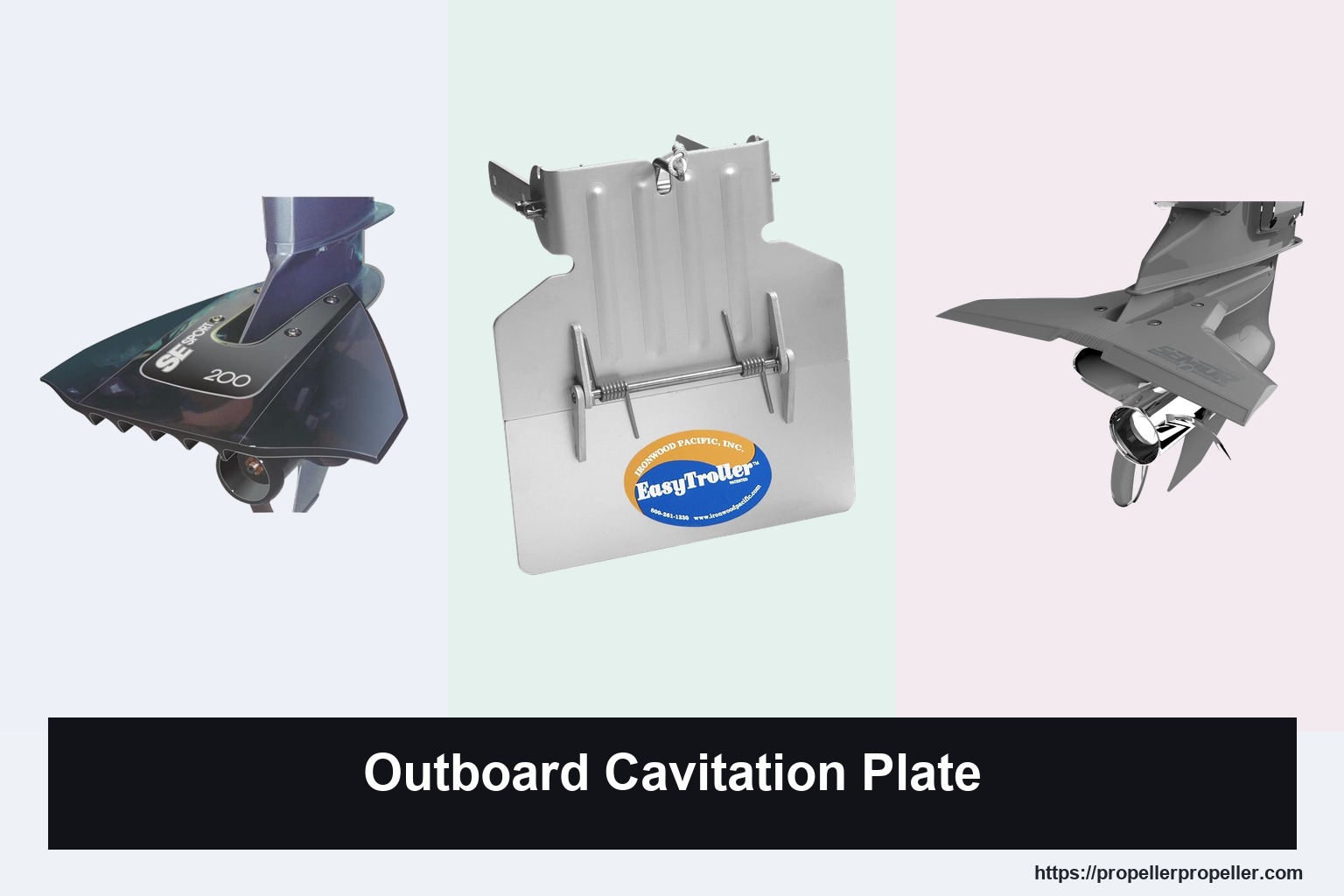
An outboard cavitation plate hydrofoil is one of the few small accessories that can change how a boat feels across a wide part of the speed range. The right unit can help the hull lift sooner, settle the ride, and reduce the wandering or bow rise that makes slow acceleration annoying and uneven water more tiring. For many buyers, the decision comes down to fit, motor size, mounting style, and whether the accessory is aimed more at general stability or at trolling control.
That makes comparison important. Some options are light, simple stabilizers that prioritize easier installation and broad compatibility. Others are more specialized plates that target low-speed control or broader horsepower ranges. In the roundup below, the focus stays on verified fit range, mounting method, included hardware, construction, and the practical consequences of each design so you can match the right cavitation-plate solution to your engine and the way you use your boat.
Top Outboard Cavitation Plate on the Market

SE Sport Hydrofoil 200
- Up to 40 HP
- Drilling template included
- Salt water use
- Aluminum or composite

Ironwood Pacific EasyTroller Standard
- 50 to 300 HP
- Cavitation plate mount
- 2-year warranty
- Anodized aluminum and stainless steel

StingRay Classic Senior 2

Davis Instruments Whale Tail XL
- Anti-cavitation plate mount
- 15-minute install
- Anodized aluminum
- 15.5 x 13.5 x 1.25 inches

QuickMariner Hydrofoil Stabilizer
- 5 to 150 HP
- UV-resistant PA66 plastic
- Includes drill bit
- Universal outboard use
This article may contain affiliate links. As an Amazon Associate, the website may earn from qualifying purchases at no additional cost to you.
Outboard Cavitation Plate Reviews
SE Sport Hydrofoil 200
- Maximum Horsepower
- 40 hp
- Mounting Type
- Engine Mount
- Recommended Uses For Product
- For Salt Water
- Material Type
- Aluminum or Composite
- Item Weight
- 4.54 g
Advantages
- Sized for smaller outboards
- Hardware and template included
- Simple manual mount
- Saltwater-oriented use
- Compact footprint
Limitations
- Not for higher horsepower
- Requires drilled installation
The SE Sport Hydrofoil 200 is aimed at smaller outboards that need help getting the boat lifted sooner without adding much complexity. Its verified limit of up to 40 HP makes it a focused match for compact rigs rather than a universal one, and that narrower scope usually matters more than broad claims. The stated use on salt water and the aluminum-or-composite construction suggest a design built for routine marine exposure, while the included screws, nuts, washers, and drilling template reduce the number of parts you need to source before mounting.
Setup is straightforward in concept, but it is still a drilled engine-mount accessory, so measurement matters. The listed dimensions and hole spacing give you a real check on whether the plate will sit cleanly on the cavitation area of your motor. That matters because small accessories can create big headaches if the geometry is wrong. The manual operation mode also implies no moving controls once installed, which keeps the maintenance burden low. In use, the promise is a steadier running attitude and earlier planing rather than a complicated tuning exercise.
Among the five products here, this one is the most clearly sized for smaller horsepower and the least suitable for buyers trying to cover a wide fleet of engines. That is also its strength. It avoids the bulk and overbuilt feel of larger stabilizers, and it is easier to justify when your goal is simply to improve lift and balance on a modest outboard. If your motor is within the stated range, this is the clearest compact choice and the one I would put first for light-duty, saltwater-capable use.
PHOTO: SE Sport Hydrofoil 200 – Hydrofoil Stabilizer → Source: Amazon.com
Ironwood Pacific EasyTroller Standard
- Maximum Horsepower
- 300 hp
- Mounting Type
- cavitation plate mount
- Item Weight
- 2.7 pounds
- Material Type
- Aluminum
- Manufacturer Warranty Description
- 90 days
Advantages
- Wide 50 to 300 HP range
- Slows boat to trolling speed
- Hinged plate resists damage
- Durable metal construction
- Two-year manufacturer warranty
Limitations
- More specialized than lift fins
- Heavier than simple stabilizers
The EasyTroller Standard is built for a very different job than a typical lift-focused hydrofoil. Its core value is speed control, especially when a boat needs to slow down to trolling pace instead of just run more level. The stated range from 50 to 300 HP makes it useful for a much wider set of engines, and the cavitation plate mount places it directly behind the propeller where that kind of braking effect can matter most. For anglers, that means more control over presentation without needing to fight the throttle all day.
The hinged plate design is the detail that separates it from passive fins. Because the plate flexes upward under accidental acceleration, it is better suited to real-world use where throttle changes happen and mistakes are possible. That matters if you want a trolling plate that can tolerate normal fishing-day behavior rather than just perfect operation. The fact that it is made from marine-grade anodized aluminum and stainless steel also points to a more durable build than cheaper plastic alternatives, and the two-year manufacturer warranty strengthens the case for long-term use.
Compared with the other products here, this is the most specialized option. It is not trying to be the all-purpose lift enhancer or the cheapest stabilizer. Instead, it solves a narrower problem very well, and that makes it the best pick for boaters who care most about slow-speed control. The only real caution is that this is not a universal stabilizer for every use case. If you want trolling precision, this is the standout. If your priority is helping a boat plane sooner, the hydrofoil-style choices above and below it make more sense.
PHOTO: Ironwood Pacific EasyTroller Standard – Trolling Plate → Source: Amazon.com
StingRay Classic Senior 2
- Maximum Horsepower
- 300 hp
- Mounting Type
- Engine Mount
- Item Weight
- 3.3 pounds
- Material Type
- Aluminum
- Manufacturer Warranty Description
- Please contact us if you experience any issues within 30 days of receipt.
Advantages
- Broad horsepower coverage
- Single-piece stabilizer design
- Four-bolt installation
- Made in USA
- Strong general boating use
Limitations
- Higher price than budget options
- Not a trolling-specific tool
The StingRay Classic Senior 2 is the broadest all-around stabilizer in this group. Its 40 to 300 hp range covers everything from mid-size outboards to larger engines, which makes it a practical option when the goal is one accessory that can serve a wide range of boating styles. The gray aluminum build keeps it in the familiar metal category, and the reputation of a single-piece hydrofoil matters because fewer parts generally mean fewer complications once the plate is bolted on.
This model is also one of the more installation-conscious designs, because it is described as a no-drill hydrofoil that still uses a four-bolt installation method. That combination can be appealing if you want a secure fit without committing to an overly complicated setup path. The specifications also show a 3.3-pound weight, which is substantial enough to feel like a serious marine part without becoming unwieldy. For boaters who want a direct stabilizing effect rather than a niche trolling function, that balance is useful.
Against the other selected products, the StingRay sits in the middle of the market in the best sense. It covers a broader horsepower band than the smaller SE Sport unit and is far more purpose-built for stabilization than the EasyTroller. It is also more expensive than the budget polymer option, but the tradeoff is a metal construction and a wider operating range. For buyers who want one stabilizer that can serve general boating well, this is the most convincing compromise and the safest recommendation in the set.
PHOTO: StingRay Classic Senior 2 – Gray Hydrofoil Stabilizer → Source: Amazon.com
Davis Instruments Whale Tail XL
- Mounting Type
- Bow
- Item Dimensions
- 15.5 x 13.5 x 1.25 inches
- Item Weight
- 3.4 pounds
- Material Type
- Aluminum
- Finish Types
- Anodized
Advantages
- Fast stated installation
- Includes stainless hardware
- Marine-grade aluminum build
- Broad I/O and outboard use
- Large stabilizing surface
Limitations
- Requires anti-cavitation plate fit
- Not the cheapest option
The Whale Tail XL is a straightforward stabilizer for buyers who want a familiar hydrofoil format and clear install expectations. Its anti-cavitation plate mounting approach and stated 15-minute install time make it one of the least intimidating options in the group. The 15.5 x 13.5 x 1.25 inches dimensions show that it is not a tiny clip-on part, so the payoff is a more substantial stabilizing surface. For many boaters, that larger footprint is exactly what they want when dealing with porpoising and bow-light handling.
The material stack is also reassuring. Marine-grade aluminum with a durable anodized finish is a solid combination for wet exposure, and the included stainless steel hardware means the fasteners are in step with the rest of the design. The product is described for both inboard/outboard and outboard use, which broadens its appeal to owners who are not working with a single narrow motor type. That said, the mount is still tied to the anti-cavitation plate, so fit and clearance around the prop area remain the main checks before buying.
Relative to the other products here, this one trades specialization for simplicity. It is not aimed at trolling control, and it is not the cheapest stabilizer in the roundup, but it offers a very clear installation path and a proven-style aluminum build. That makes it attractive for boaters who value quick setup and steady all-around handling. If your main priority is getting a dependable foil on the motor without a complicated project, this is the most approachable choice and the easiest one to recommend for broad use.
PHOTO: Davis Instruments Whale Tail – Aluminum Hydrofoil → Source: Amazon.com
QuickMariner Hydrofoil Stabilizer
- Maximum Horsepower
- 150 hp
- Mounting Type
- Engine Mount
- Item Weight
- 1.2 kg
- Material Type
- Marine Grade UV-Resistant Reinforced Nylong PA66 Plastic
Advantages
- Lowest price in group
- Wide 5 to 150 HP range
- Includes drill bit
- UV-resistant plastic build
- Stainless mounting hardware
Limitations
- Plastic body, not metal
- Short 30-day warranty
The QuickMariner stabilizer is the most budget-friendly option in this group, and its appeal starts with range. A stated fit of 5 to 150 HP gives it a wider ceiling than the smallest hydrofoil here and enough reach for many common outboards and sterndrives. The reinforced PA66 plastic construction keeps weight down and can be appealing for buyers who do not want to pay for a metal body when the goal is simply to improve ride feel and reduce cavitation at a lower entry cost.
Installation support is stronger than you might expect at this price. The package includes stainless screws and nuts, a 6.5 mm drill bit, and instructions, so you are not left assembling the kit from scratch. That matters because low-cost marine parts often save money up front but cost time later if they arrive incomplete. The material is also described as UV-resistant, which is a practical detail for boats that sit in the sun. Its engine-mount format and manual operation keep the design simple, but it still depends on drilling and a decent fit to the cavitation area.
This is the best value play among the selected products because it covers a wide horsepower band while staying far below the price of the more specialized metal options. The tradeoff is obvious. Plastic construction is not the same as marine aluminum, and the warranty is shorter than the premium alternatives. Even so, for a buyer who wants a low-cost hydrofoil for broad compatibility and does not need a trolling plate or a heavy-duty metal stabilizer, this is the easiest recommendation. It is the most economical way into the category without looking like an incomplete kit.
PHOTO: QuickMariner Hydrofoil Stabilizer – Gray Fin Set → Source: Amazon.com
How to Choose an Outboard Cavitation Plate
The best cavitation plate accessory is the one that matches your engine, your water conditions, and the kind of control you actually need. Some buyers want earlier planing and a steadier bow. Others care more about slow-speed handling, trolling control, or simply getting a stable ride without spending too much. Because the category includes both metal stabilizers and plate-style trolling accessories, it is worth separating general lift, low-speed control, and fit compatibility before you buy.
Horsepower Range
Start with the engine rating before anything else. A cavitation plate accessory that is too small for your motor may not deliver enough lift or control. One that is rated too broadly can be overkill for a compact outboard, especially if you only need a simple planing assist. Matching the accessory to the engine’s horsepower band is the fastest way to narrow the field and avoid awkward installation choices later.
Mounting Style
The mount determines how much work the upgrade will be and how permanent it feels once installed. Engine-mount and anti-cavitation plate designs are common, but they do not behave the same during setup. A drilled installation usually takes longer and demands careful alignment, while a simpler plate mount can be easier to position. If you are not comfortable drilling into your motor hardware, that is a meaningful tradeoff to weigh before you compare any other detail.
Material and Durability
Material affects more than appearance. Aluminum usually signals a more rigid, marine-oriented build, while reinforced plastic can lower cost and weight. The better choice depends on how often the boat sees water, sun, and trailer time. If you store the boat outdoors or run in harsh conditions, a corrosion-resistant metal finish can be reassuring. If you mainly want an affordable stability upgrade, a strong polymer body may be the smarter compromise.
Trolling or Lift
A trolling plate and a lift-focused hydrofoil solve different problems. A trolling plate is designed to slow the boat and give you finer control at very low speed. A hydrofoil is meant to help the hull climb, settle, and run more level. Mixing those goals usually leads to disappointment. Decide which behavior matters more on the water. If your ideal day involves precise bait control, choose for speed reduction. If you want earlier planing and less bow rise, choose for lift and stability.
Included Hardware
Small accessories are only convenient when the package includes the parts you need to install them cleanly. Screws, nuts, washers, drill bits, and templates can save time and reduce guesswork. That matters because the difference between a smooth afternoon project and a frustrating one is often found in missing hardware, not in the foil itself. A more complete kit is especially useful if you plan to install the unit once and leave it in place for the season.
Water Conditions
Think about where the boat struggles most. Rough water, bow-light handling, porpoising, and low-speed wandering all point to different strengths in the category. Some accessories are better at settling the hull after takeoff, while others are built to keep speed under control during fishing. If you often run with passengers or gear shifting around the boat, a stabilizer with a stronger lift profile may help more than a narrow trolling solution.
Hydrofoil Comparison Table
| Product | Best For | Horsepower | Mount Type | Material | Weight | Warranty |
|---|---|---|---|---|---|---|
| SE Sport Hydrofoil 200 | Best for small outboards | 40 hp | Engine Mount | Aluminum or Composite | 4.54 g | Not Specified |
| Ironwood Pacific EasyTroller Standard | Best for trolling control | 300 hp | cavitation plate mount | Aluminum | 2.7 pounds | 90 days |
| StingRay Classic Senior 2 | Best all-around stabilizer | 300 hp | Engine Mount | Aluminum | 3.3 pounds | Please contact us if you experience any issues within 30 days of receipt. |
| Davis Instruments Whale Tail XL | Best easy install | Not Specified | Bow | Aluminum | 3.4 pounds | Warranty |
| QuickMariner Hydrofoil Stabilizer | Best budget pick | 150 hp | Engine Mount | Marine Grade UV-Resistant Reinforced Nylong PA66 Plastic | 1.2 kg | 30 days |
How We Tested & Analyzed Outboard Cavitation Plate
This roundup focused on the decision points that matter most in the category: horsepower compatibility, mounting method, construction material, included installation hardware, and the intended use of each accessory. Those factors determine whether a cavitation plate product will actually solve the problem a buyer has, whether that problem is earlier planing, steadier handling, or slower trolling speed. The comparison was built around practical fit and use rather than marketing language.
I also weighed how much installation effort each option implies. A product that needs drilling, alignment, and hardware should be judged differently from one that is designed for a simpler mount or a more complete kit. Durability and finish were treated as important because these accessories live in a wet, vibrating environment. Where a product showed a narrower purpose, such as trolling control, that specialization was treated as a strength rather than a drawback.
Finally, value was considered as a balance of price, range, and construction. A lower-cost plastic stabilizer can be attractive if it includes the necessary hardware and covers the right horsepower band. A more expensive aluminum or stainless option earns its place if it offers broader compatibility or a clearer performance advantage. The goal was to help readers choose the accessory that best matches their motor and boating style, not simply the one with the most features.
Frequently Asked Questions
What does a cavitation plate accessory actually do?
It changes how the boat runs by influencing lift, drag, and low-speed stability near the propeller area. In practice, that can mean earlier planing, less bow rise, or better control when the boat is running slowly. Some versions are tuned for general stabilization, while others are designed specifically to slow the boat for trolling.
How do I know if one will fit my motor?
Check the horsepower range first, then confirm the mount type and available room on the anti-cavitation plate or engine mount. Fit is not just about engine size. The accessory also has to clear the propeller area and sit correctly on the motor hardware. If dimensions are provided, compare them against your transom and cavitation plate space.
Is metal better than reinforced plastic?
Not always. Metal is often the better pick when you want a stiffer, more durable marine feel and expect regular exposure to water and sun. Reinforced plastic can be a smarter value choice when you want lower cost and less weight. The best option depends on whether your priority is long-term durability or budget-friendly performance improvement.
Do I need a trolling plate or a hydrofoil?
Choose a trolling plate if your main goal is to slow the boat and hold a controlled low speed. Choose a hydrofoil if you want the hull to lift sooner, settle better, and reduce porpoising or cavitation. They solve different problems, so the right choice depends on how you use the boat more often.
Final Thoughts
A good outboard cavitation plate accessory should do one job clearly. The best choice depends on whether you need earlier planing, steadier handling, or better slow-speed control. Horsepower fit and mounting style should lead the decision, because the wrong match can create more frustration than benefit. Construction and included hardware matter next, especially if you want a cleaner install and better long-term durability.
Once those basics are clear, the right pick usually becomes obvious. Budget buyers can lean toward simpler polymer options, while buyers who want broader compatibility or a more substantial marine build may prefer aluminum. Trolling-focused boaters should choose the accessory built for speed control instead of lift. Match the product to the way you run the boat, and the category becomes much easier to shop with confidence.



