A good kayak trolling setup does more than add speed. It changes how long you can stay on the water, how precisely you hold position, and how much effort you spend fighting wind, current, and distance. The best choices in this category are not interchangeable. A complete motor, a kayak-specific motor, and a dedicated mount solve different problems, and the right one depends on whether you are upgrading an existing transom motor or starting from scratch with a kayak-first rig.
This roundup focuses on the practical details that matter on the water. Shaft length, thrust, mounting style, battery setup, corrosion resistance, and control feel all affect whether a motor or mount actually works with your kayak instead of just attaching to it. The strongest options here trade off power, simplicity, and installation complexity in different ways. The result is a short list that should help you decide whether you need a ready-to-run propulsion system or the hardware that lets an electric motor sit properly on a kayak stern.
Top Trolling Motor Mount For Kayak on the Market

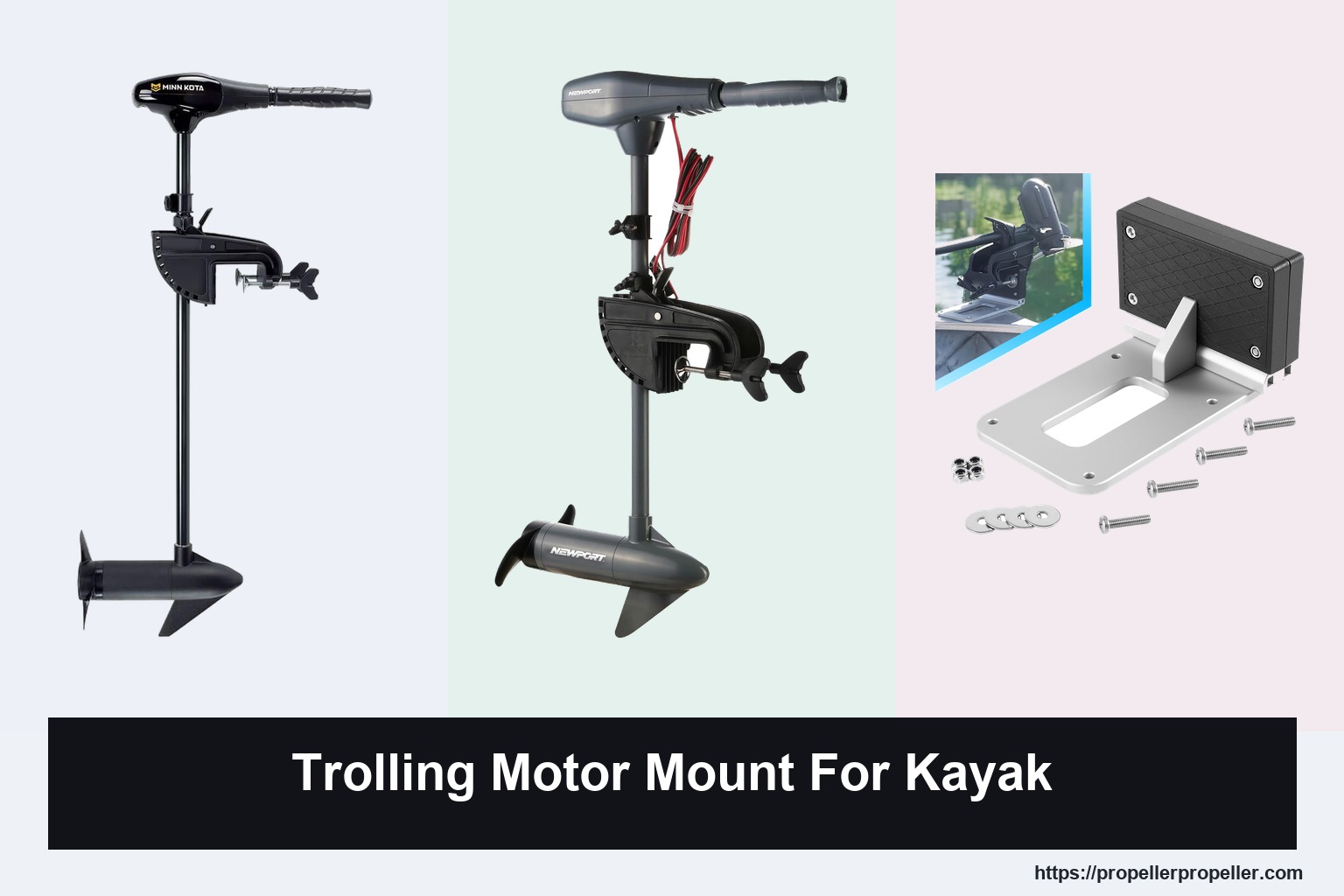
Minn Kota Endura C2 30 lb Thrust Motor
- 30 lb thrust
- 30-inch shaft
- 12-volt electric
- Telescoping tiller
- Forward and reverse speeds

Newport Kayak Series 55 lb Motor
- 55 lb thrust
- 24-inch fiberglass shaft
- Saltwater rated
- 8 speeds
- LED battery indicator
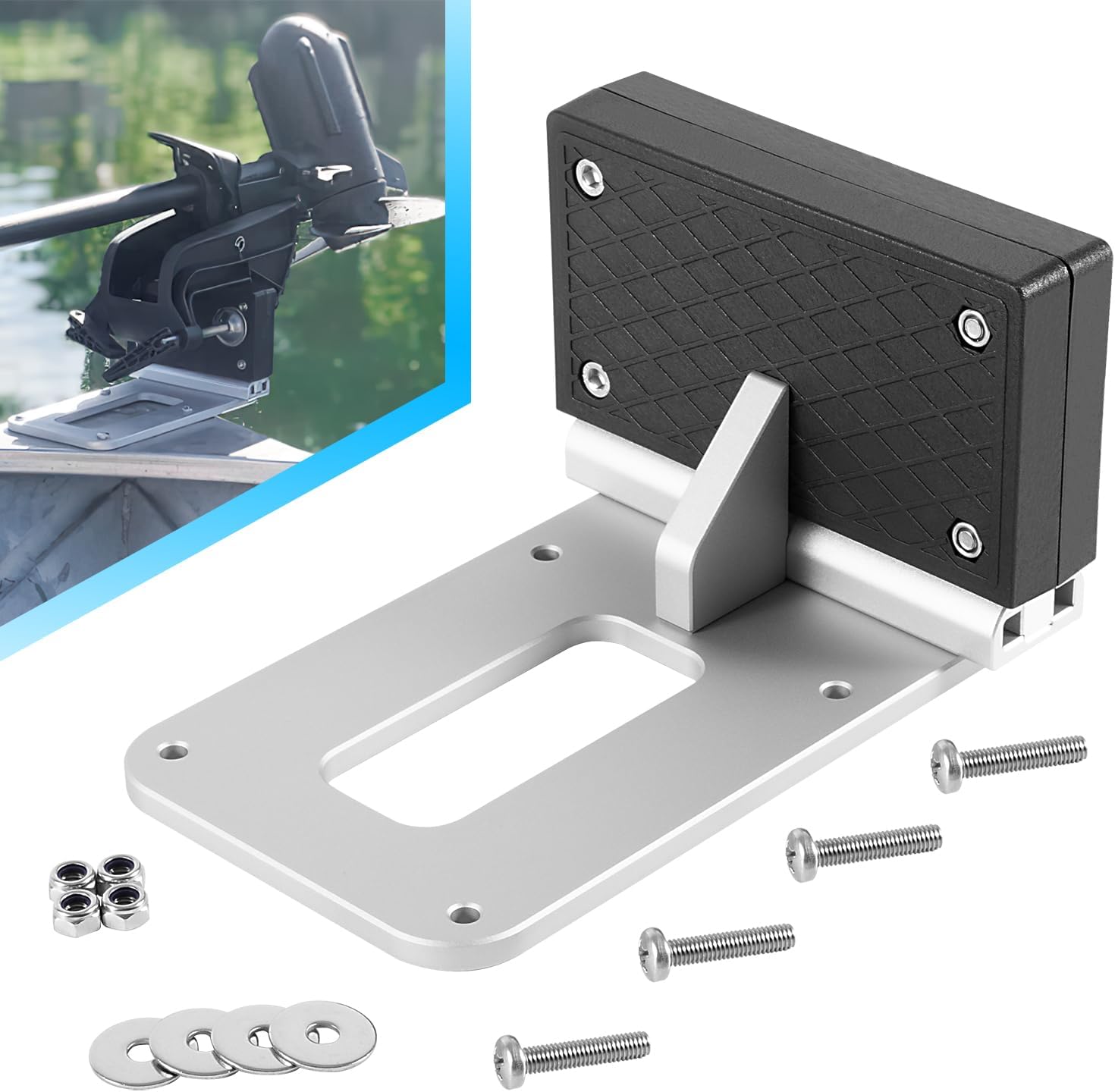
besttruck Universal Kayak Motor Mount
- Fits clamp-on electric motors
- Up to 3 HP
- Stainless steel hardware
- Four-hole installation
- 1-year warranty
This article may contain affiliate links. As an Amazon Associate, the website may earn from qualifying purchases at no additional cost to you.
Trolling Motor Mount For Kayak Reviews
Minn Kota Endura C2 30 lb Thrust Motor
- Voltage
- 12 volts
- Mounting Type
- Transom Mount
- Maximum Horsepower
- 30 hp
- Item Weight
- 17 pounds
- Manufacturer Warranty Description
- 2 year Manufacturer
Advantages
- Compact 30-inch shaft
- Telescoping tiller control
- Vegetation-ready power prop
- Composite bracket construction
- Two-year manufacturer warranty
Limitations
- Freshwater-focused positioning
- Lower thrust than kayak-specific motor
The Endura C2 is the most straightforward choice here for a boater who wants a complete motor rather than a separate mounting solution. Its 30 lb. Thrust and 30 in. Shaft keep the package compact enough for lighter freshwater rigs while still giving you enough authority for steady trolling and controlled repositioning. The telescoping tiller also matters because it keeps steering within easy reach without forcing you to lean or overreach. For anglers who value uncomplicated control, that kind of physical comfort is often what keeps the motor pleasant to use over a long day.
Several details point to a motor built for practical, repeatable use. The 10-position lever lock bracket gives you quick angle adjustment, which is useful when you need to dial in trim or remove the motor between trips. The composite construction is described as resisting flexing, warping, and UV damage, so it is aimed at durability rather than flashy refinement. The power prop is meant for heavier vegetation, which is relevant if you fish weedy water and want the motor to keep pushing instead of bogging down. The push-to-test battery meter also adds a simple run-time check at the head, reducing guesswork before you commit to a longer run.
Compared with the other two products, this is the least specialized and the most self-contained. It does not require you to piece together a mount-and-motor system, and that simplicity is a real advantage if you already know you want a transom-mount electric motor. It is also the lightest-duty propulsion option in this group, so buyers expecting kayak-specific shaft management or a dedicated mounting bracket should look elsewhere. For freshwater anglers who want dependable basic control and low setup complexity, this is the clearest recommendation.
PHOTO: Minn Kota Endura C2 – Trolling Motor → Source: Amazon.com
Newport Kayak Series 55 lb Motor
- Voltage
- 12 volts
- Mounting Type
- Transom Mount
- Maximum Horsepower
- 0.83 hp
- Item Weight
- 23 pounds
- Manufacturer Warranty Description
- 2 Year Warranty
Advantages
- Kayak-specific 24-inch shaft
- Saltwater corrosion-resistant build
- Five forward speeds
- Three reverse speeds
- LED battery indicator
Limitations
- Heavier than basic motor
- Requires separate 12V battery
This is the most purpose-built propulsion choice in the group. The 55 lb. Thrust rating gives it a much stronger reserve than a light freshwater motor, and the 24-inch fiberglass shaft is specifically tuned for kayak depth placement. That matters because kayaks sit lower and behave differently than larger boats. A shaft that can be positioned properly without feeling improvised is one of the biggest practical differences between a kayak-specific motor and a general-purpose transom unit. The 6-inch telescoping handle and eight speeds also give the operator finer control, which is useful when you want smooth motion instead of abrupt bursts.
The saltwater-rated head and corrosion-resistant hardware are important if your routes cross brackish or salt water, where a casual freshwater-only motor would be a liability. Aluminum construction, magnesium, zinc, and stainless-steel hardware together point to a package built around environmental resistance rather than minimal weight. The extra-long 5’6″ battery cables create more flexibility in battery placement, which can help you balance the kayak instead of forcing the battery into the nearest available spot. The included LED battery indicator is another practical touch, because battery awareness matters more when you are far from the launch and depending on an electric return trip.
Against the Minn Kota, this is the more aggressive and more kayak-specific option. It brings substantially more thrust and better shaft geometry, but it also weighs more and asks for a deeper commitment to a powered kayak setup. Compared with the dedicated mount from besttruck, it is the complete solution rather than the hardware only, so it suits buyers who want to buy once and start running. For kayak anglers who need stronger propulsion, saltwater tolerance, and better battery management, this is the standout pick.
PHOTO: Newport Kayak Series 55 – Kayak Motor → Source: Amazon.com
besttruck Universal Kayak Motor Mount
- Maximum Horsepower
- 3 hp
- Item Weight
- 1.48 kg
- Material Type
- Alloy Steel, Black Nylon Plastic
- Manufacturer Warranty Description
- 1 year warranty
Advantages
- Fits clamp-on electric motors
- Stainless steel hardware
- Compact mount dimensions
- Four-hole installation
- One-year warranty
Limitations
- Mount only, no motor
- Not for outboard engines
This product serves a different role from the two motors above. It is the hardware that lets a clamp-on electric trolling motor sit on a kayak stern, so it is the right choice only if you already own a compatible motor or want to build a custom setup. The key limit is the 3 hp maximum capacity, which keeps it in the small-motor category and makes it unsuitable for outboard engines. That constraint is actually useful because it narrows the field to lightweight electric applications where kayak balance and transom fit matter more than brute force.
Installation is the main reason to consider this mount. It requires four drilled holes, so the setup is not tool-free, but it is also direct and understandable for a DIY install. The stainless steel hardware and black nylon plastic are there for moisture and corrosion resistance, which is exactly what a kayak stern environment demands. At 8.5 by 5 by 6.8 inches, the mount stays physically compact, which helps reduce clutter on a platform where every inch counts. The 1.48 kg weight also keeps the added hardware from becoming an excessive burden before the motor is even attached.
Relative to the two propulsion products, this is the most economical path and the least complete one. You gain flexibility if you already have a clamp-on motor, but you also assume responsibility for compatibility and installation. It does not replace a motor, and it does not provide thrust on its own. For budget-minded kayak owners who need a reliable way to attach an existing small electric motor, this is the right recommendation. Anyone starting from zero should compare total system cost before choosing it.
PHOTO: besttruck Universal Kayak Motor – Kayak Mount Kit → Source: Amazon.com
How to Choose a Kayak Trolling Motor Setup
Choosing the right kayak trolling setup starts with deciding whether you need propulsion, mounting hardware, or both. That sounds obvious, but it is the most important fork in the road because a motor and a mount solve different problems. Once you know which job you are trying to solve, the rest comes down to fit, power, battery management, corrosion resistance, and how much installation work you are willing to take on. A kayak is a small platform, so every choice has a consequence in balance, run time, and maneuverability.
Motor or Mount
Start with the system you actually need. A complete motor is the right answer when you want an all-in-one propulsion solution and do not already own a compatible electric motor. A separate mount is the better path when you already have the motor and only need a stable way to attach it to a kayak stern. That distinction affects cost, installation time, and how much setup risk you take on before your first launch.
Shaft Length Matters
Shaft length is one of the most important fit factors for kayaks because the hull sits low and can move differently than a canoe or skiff. Too short, and the prop can ride awkwardly in changing chop or when the stern shifts under load. Too long, and the motor can feel clumsy or intrusive. A kayak-friendly shaft should let the prop stay in the water at useful angles without creating extra drag or making steering awkward.
Thrust and Control
Thrust determines how much authority the motor has against wind, current, and added gear weight. Lower-thrust setups are easier to keep simple, but they can struggle once you load the kayak with tackle, battery, and a full day’s gear. Control range matters too. Multiple forward and reverse speeds are useful because they let you fine-tune movement instead of toggling between too slow and too fast. That matters when you are making quiet adjustments near structure or docking in a crosswind.
Battery Placement
Electric kayak setups are heavily influenced by battery placement. Longer battery cables can make the difference between an organized layout and a cramped one, because the battery does not always belong directly beside the motor or seat. Good cable reach can help you balance the kayak and keep weight centered where it handles best. Battery indicators are also worth paying attention to, since return trip planning becomes much more important when your propulsion depends on a single charge.
Corrosion Resistance
Kayaks often encounter wet launches, spray, rain, and in some cases saltwater. That makes material choice more than a cosmetic issue. Corrosion-resistant hardware, reinforced brackets, fiberglass shafts, and stainless-steel components can improve long-term reliability by reducing the chance that moving parts seize up or fasteners degrade. If you paddle in freshwater only, that still matters. If you fish brackish or saltwater regularly, it becomes a primary buying criterion rather than a bonus feature.
Installation Tradeoffs
Installation complexity should match your comfort level and how often you plan to remove the system. A mount that requires drilling can be perfectly sensible if you want a secure, permanent setup. A more complete motor package may still be easier overall because it removes the need to source compatible parts separately. The right choice is usually the one that fits both your kayak and your tolerance for setup work without forcing compromises in balance or reliability.
Kayak Mount Comparison Table
| Product | Best For | Thrust | Mount Type | Voltage | Weight | Warranty |
|---|---|---|---|---|---|---|
| Minn Kota Endura C2 30 lb Thrust Motor | Best simple freshwater option | 30 hp | Transom Mount | 12 volts | 17 pounds | 2 year Manufacturer |
| Newport Kayak Series 55 lb Motor | Best kayak-ready motor | 0.83 hp | Transom Mount | 12 volts | 23 pounds | 2 Year Warranty |
| besttruck Universal Kayak Motor Mount | Best budget mount only | 3 hp | Transom Mount | Not Specified | 1.48 kg | 1 year warranty |
How We Tested & Analyzed Trolling Motor Mount for Kayak
This roundup was built around decision factors that matter most for kayak use, including mounting style, shaft geometry, thrust level, electrical setup, corrosion resistance, and operator control. Those criteria separate a true kayak-ready system from hardware that only looks similar on paper. The goal was to compare what each option actually changes on the water, not to reward the longest feature list or the most aggressive marketing language.
The analysis also weighed practical ownership issues such as installation effort, battery placement, material durability, and whether a product is a complete propulsion solution or only part of one. Those distinctions matter because a kayak setup has less margin for excess weight and awkward hardware than a larger boat. Where products targeted different use cases, the comparison focused on the buyer consequences of those differences instead of flattening them into one generic ranking.
Limitations were handled conservatively. When a record did not support a claim, the article avoided it rather than filling gaps with assumptions. That means the recommendations lean on verified construction details and stated operating characteristics. It also means the best choice depends on your own kayak, water type, and whether you need a motor, a mount, or a combination of both.
Frequently Asked Questions
Do I need a kayak-specific motor?
Not always. If your kayak can accept a general transom-style electric motor and the shaft length works, a standard motor can be enough. A kayak-specific motor becomes more attractive when you want better depth placement, easier battery routing, or a package designed around smaller hulls and tighter space.
How important is saltwater rating?
Very important if you launch in saltwater or brackish water. Corrosion-resistant hardware and saltwater-rated components can extend useful life and reduce maintenance headaches. For freshwater-only use, the need is less urgent, but durable materials still help if the motor or mount lives in a wet environment.
Is drilling required for a kayak mount?
Some mounts require drilling, and that is common for a secure stern installation. Drilling is not necessarily a drawback if you want a fixed setup, but it does mean you should be sure about fit and placement before you commit. If you want a removable system, look closely at how the mount attaches and whether your kayak stern shape supports it.
What matters more, thrust or battery setup?
Both matter, but they solve different problems. Thrust determines how confidently the kayak moves against wind and current. Battery setup determines how practical that movement is over time. A well-matched battery layout and cable reach can improve balance and range planning, while too little thrust can leave you underpowered even with a good battery arrangement.
Final Thoughts
The best kayak trolling choice is the one that matches your starting point. If you want a simple freshwater motor, the compact option is easy to understand and easy to live with. If you need stronger kayak-oriented propulsion and better environmental resistance, the kayak-specific motor is the most capable overall system. If you already own a compatible electric motor, the dedicated mount is the most economical way to put that hardware to work on a kayak stern.
Think in terms of total setup, not just the headline product. Shaft length, battery routing, installation effort, and water conditions all shape whether the system feels natural or awkward once you are on the water. Make the choice that fits your kayak, your launch environment, and how much assembly you want to do before the first trip. That approach will do more for long-term satisfaction than chasing the biggest number on the box.