A good transom saver bracket is not a luxury piece of trailer hardware. It is the part that helps keep an outboard from turning road shock, bounce, and leverage into transom stress on the way to and from the ramp. The right choice depends on how your motor supports itself, how your trailer is set up, and how much adjustment you need to get a stable fit without awkward improvisation.
That is why the strongest options in this category are not just judged by price. Length range, mounting style, engine support design, material choice, and compatibility with power trim or specific tilt systems all matter in the real world. The best pick is the one that matches your boat and trailer with the least compromise, while still giving you enough support to reduce movement and simplify loading day after day.
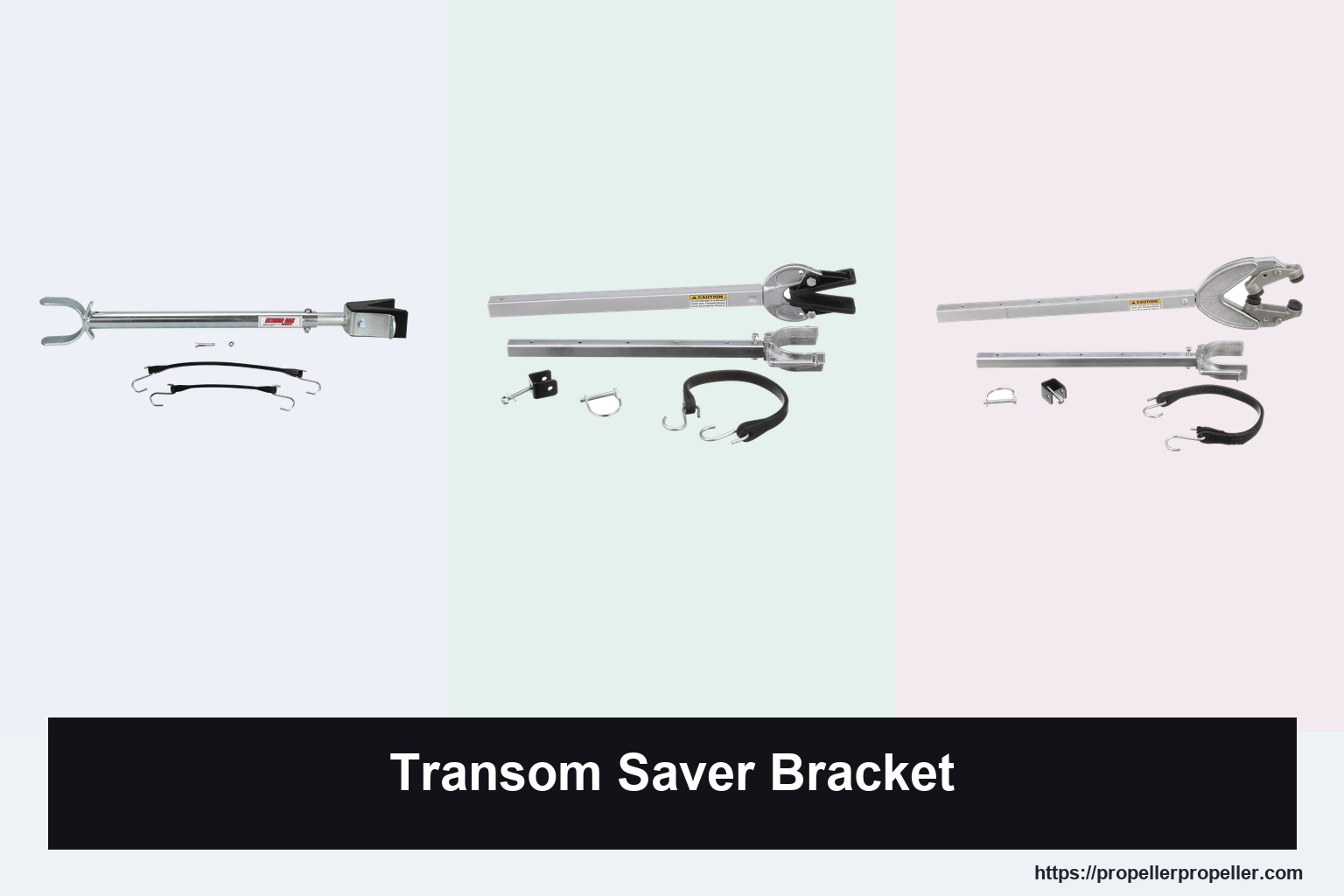
Top Transom Saver Bracket on the Market

Extreme Max Straight Transom Saver
- 21 to 31 inch adjustment
- Roller-mounted trailer support
- Steel construction
- Up to 150 HP

Attwood Adjustable Transom Saver
- 23 to 35 inch range
- Roller and trailer mounts
- Composite head grip
- Up to 100 HP

Attwood Heavy-Duty Transom Saver
- 24 to 36 inch range
- Heavy-duty aluminum and rubber
- Replaceable rubber pads
- Dual trailer mounts

Mangrove Transom Saver Wedge
- Single-ram tilt support
- EPDM rubber wedge
- 2000 lb compression testing
- No drilling required
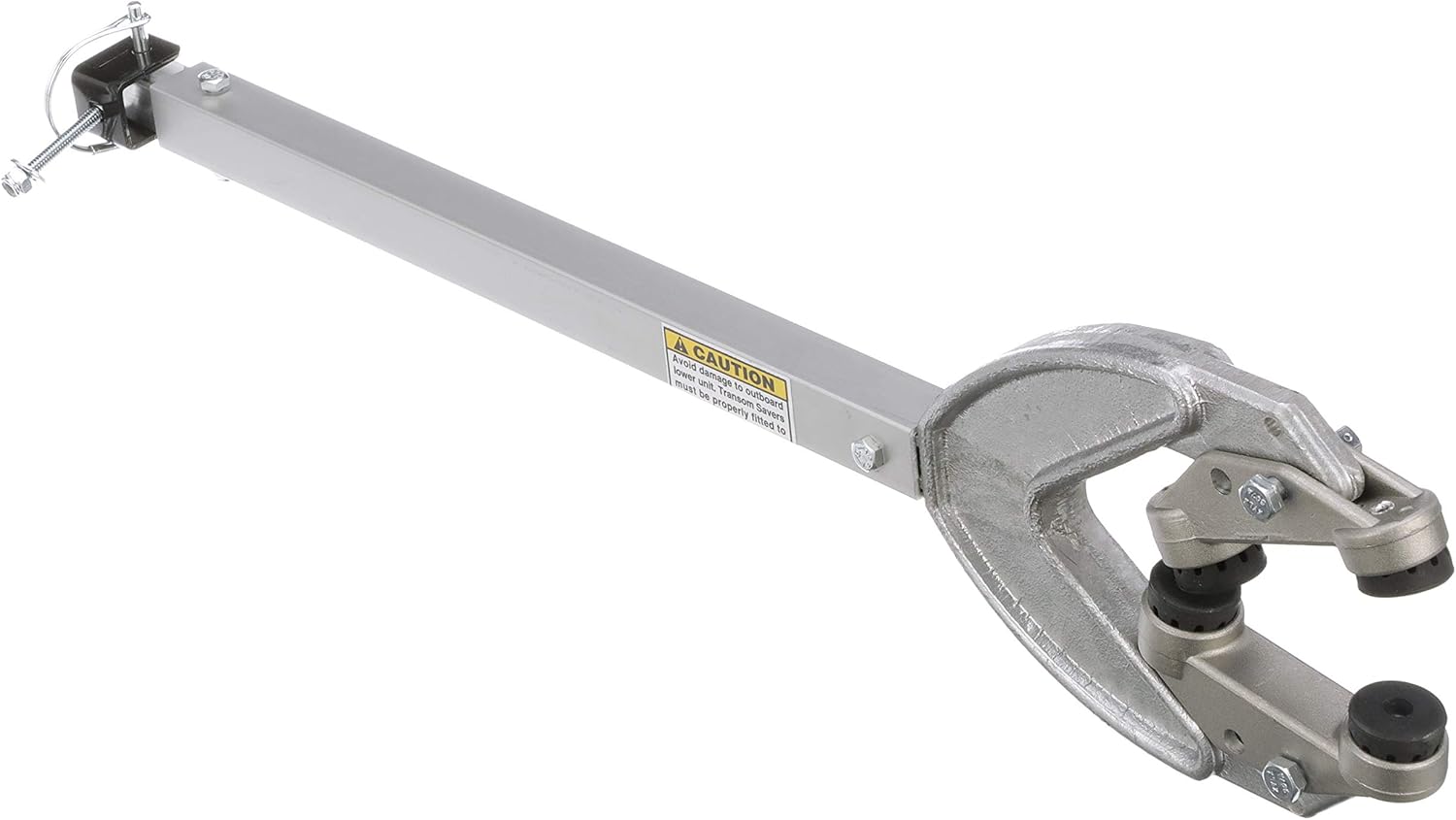
Attwood Heavy-Duty Transom Saver
- 24 to 36 inch range
- Heavy-duty support
- Rough-road stability
- Adjustable trailer fit

Adjustable Shock-Absorbing Transom Saver
- 23 to 35 inch range
- Composite engine head
- Aluminum shaft
- Trailer mount hardware included
This article may contain affiliate links. As an Amazon Associate, the website may earn from qualifying purchases at no additional cost to you.
Transom Saver Bracket Reviews
Extreme Max Straight Transom Saver
- Item Weight
- 5.69 pounds
- Product Dimensions
- 22.25 x 6.25 x 2.5 inches
- Voltage
- 12 volts
Advantages
- 21 to 31 inch range
- Roller-mount trailer interface
- Steel construction
- Rubber V-block support
- Two-year replacement warranty
Limitations
- Not a universal mounting solution
- 150 HP limit
The Extreme Max 3005.3852 is the straightforward choice for buyers who want a traditional transom saver with a broad fit range and a clean setup path. Its 21″ to 31″ extension covers many common boat and trailer combinations, while the roller mount keeps the trailer interface simple when the rear roller is the natural support point. The steel build and rubber V-block add the kind of stability that matters when an outboard is bouncing over imperfect roads, and the 150 HP rating gives the bracket a clear working ceiling for moderate-size rigs.
What stands out here is how little fuss the design asks for once the trailer setup matches the roller mount format. The unit is not trying to solve every possible mounting scenario, which is often a benefit for buyers who already know their trailer geometry. At 5.69 pounds, it is substantial enough to feel like real hardware without becoming awkward to handle, and the two-year replacement warranty adds a useful ownership buffer for a piece that will see repeated loading and unloading.
Against the rest of this group, the Extreme Max sits in the middle on flexibility but near the top on straightforward trailer-side support. It is more specialized than the strapless wedge style and less broad in reach than the longest adjustable braces, but that tradeoff also keeps the installation path cleaner. Choose it if your trailer has the rear roller arrangement it expects and your outboard falls within its stated range. It is the strongest all-around pick for a conventional trailer-based transom saver bracket setup.
PHOTO: Extreme Max Straight Transom – Straight Transom Saver → Source: Amazon.com
Attwood Adjustable Transom Saver
- Item Dimensions
- 25 x 6 x 3 inches
- Item Weight
- 2.6 pounds
- Material Type
- Aluminum
- Mounting Type
- Transom Mount
- Manufacturer Warranty Description
- Please contact us if you experience any issues within 30 days of receipt.
Advantages
- 23 to 35 inch range
- Two mounting options
- Composite engine head
- Lightweight at 2.6 pounds
- Aluminum construction
Limitations
- Limited to 100 HP
- Short warranty window
This Attwood adjustable saver is built for buyers who want more installation flexibility than a single-mount design can offer. The 23 to 35 inches adjustment range gives it useful reach across different trailer geometries, and the included roller and trailer mount brackets reduce the odds that a hardware mismatch will stop the job before it starts. The composite head is aimed at holding the engine securely, and the 100 HP rating makes the intended role clear: support smaller to mid-size outboards with enough restraint to limit cantilevered movement.
The practical advantage of this model is that it covers more setup combinations without pushing into an overly complex design. It weighs 2.6 pounds, so it should be easier to handle than heavier metal-braced options while still feeling like a serious support component. The aluminum material and composite head point to a lighter-duty build than the heavy-duty sibling in this roundup, which is worth considering if you value easier handling over maximum ruggedness. The stated 30-day issue window is also a factor for buyers who want confidence at the point of purchase.
Compared with the Extreme Max, this Attwood gives up the roller-only simplicity in exchange for a wider fit envelope and two mounting paths. That makes it the more adaptable choice when you are not certain which trailer attachment will work best. It is less compelling than the heavier-duty Attwood if you routinely tow rough roads or have a larger motor, but it is a smart middle-ground buy for common recreational rigs. For buyers prioritizing fit and mounting versatility, this is the most accommodating conventional brace here.
PHOTO: Attwood Adjustable Transom Saver – Adjustable Transom Saver → Source: Amazon.com
Attwood Heavy-Duty Transom Saver
- Item Dimensions
- 36.22 x 6.3 x 0.98 inches
- Item Weight
- 1 kg
- Material Type
- Heavy Duty Aluminum / Rubber
- Manufacturer Warranty Description
- 90 days
- Color
- Silver / Black
Advantages
- 24 to 36 inch range
- Heavy-duty aluminum and rubber
- Replaceable rubber pads
- Dual mounting options
- Reinforced head
Limitations
- Higher price
- 90-day warranty
The Attwood Heavy-Duty Transom Saver is the most convincing option in this group when the priority is sturdier trailering support. Its 24 to 36 inch adjustment range gives it slightly more reach than the standard adjustable version, and the heavy-duty aluminum / rubber construction is the clue that this model is meant for tougher hauling conditions. The reinforced head and replaceable rubber pads also matter because the contact point is where wear usually shows up first. That makes this version more attractive for repeated travel over rough roads or for owners who simply want the strongest conventional brace in the lineup.
There is a practical difference between durable-looking hardware and hardware built to absorb repeated punishment, and this model sits closer to the latter. At 1 kg, it is not light, but the weight is appropriate for a brace intended to stay planted under load. The included roller and trailer mount brackets keep compatibility broad, so the strength does not come at the cost of awkward mounting choices. The 90-day warranty is not generous, though the replaceable pads soften the maintenance burden over time.
Against the other conventional transom savers here, this one is the best match for buyers who expect harsher towing conditions and want more confidence in the head assembly. It gives up the lower price of lighter-duty options, but it earns that premium with a heavier build and a more robust support profile. Choose it if you want one of the most durable adjustable braces in the field and do not mind paying a bit more for it. For demanding trailering, this is the clearest heavy-duty recommendation.
PHOTO: Attwood Heavy-Duty Transom Saver – Adjustable Support Bracket → Source: Amazon.com
Mangrove Transom Saver Wedge
- Item Dimensions
- 5.2 x 2.13 x 2.13 inches
- Item Weight
- 0.38 kg
- Material Type
- Mangrove Products EPDM Rubber Formula
- Mounting Type
- Outboard Motors with Single-RAM Tilt/Trim Units
- Finish Types
- Textured Semi-Gloss
Advantages
- Single-ram tilt support
- No drilling required
- EPDM rubber material
- 2000 lb compression testing
- Safe for saltwater use
Limitations
- Requires specific fitment
- Not a universal bracket
The Mangrove Products wedge is the outlier in this roundup, and that is exactly why it matters. Instead of using a bracketed support arm, it works as a single-ram tilt support for outboards with compatible hydraulic systems. The EPDM rubber construction and the compression testing over 2000 pounds are the two facts that matter most here, because they explain how a small insert can stay functional under serious load. For the right motor, that means less trailering movement without the bulk of a traditional transom saver bracket.
Its value comes from simplicity. There is no drilling and no special installation, and the design avoids metal-to-skeg contact that can happen with traditional braces. That also means no corrosion concern from a metal support piece, which is useful for saltwater and freshwater use alike. The wedge’s small footprint and low weight make storage easy, but its fitment is the decisive issue. It is designed for single ram hydraulic tilt systems, so it is only sensible when that specific configuration matches the outboard.
Compared with the adjustable bracket-style options, this is the fastest and cleanest support solution when compatibility lines up. It does not replace a conventional brace for every motor, and that limitation is the whole story. When the fit is right, though, the wedge avoids extra hardware at the trailer end and reduces the setup work before transport. Choose this if your outboard uses the required single-ram system and you want the least intrusive support option in the group. It is the most specialized but also the easiest to live with.
PHOTO: Mangrove Transom Saver Wedge – Transom Saver Wedge → Source: Amazon.com
Attwood Heavy-Duty Transom Saver
Advantages
- 24 to 36 inch range
- Lower price
- Heavy-duty support
- Stabilizes outboards
- Broad trailering use
Limitations
- Fewer published details
- Less transparent specifications
This Attwood heavy-duty saver is aimed at buyers who want a cost-conscious version of a conventional adjustable brace. It keeps the core idea simple: reduce vibration and shock loads that can work against the engine and transom during transport. The 24 to 36 inch length range is wide enough to cover many rigs, so the value proposition is not just price. It is a practical support component for anglers and recreational boat owners who want a recognizable heavy-duty format without stepping into the higher-priced or more feature-rich end of the category.
Because the available details are leaner than on the other bracket-style options, the appeal here is mostly about the fundamentals. You get a heavy-duty component intended for long-distance towing and a design meant to stabilize outboards over uneven terrain. That is enough for many common trailering jobs, especially when you already know your trailer and outboard fall into the standard adjustable range. The downside is that the record does not spell out the attachment details or construction specifics as clearly as some rivals, so it is less transparent for buyers comparing fit and materials.
Compared with the more fully documented Attwood options, this one asks you to trade a little clarity for a lower cost. That makes sense if your main goal is getting dependable trailering support without paying for extra specification detail you may not need. It is less compelling than the premium heavy-duty version for hard-use towing, but it still covers the same broad adjustable range. If you want a reasonably priced conventional transom saver bracket and do not need the finer-grained build details, this is the value-oriented choice in the roundup.
PHOTO: Attwood Heavy-Duty Transom Saver – Adjustable Support Bracket → Source: Amazon.com
Adjustable Shock-Absorbing Transom Saver
Advantages
- 23 to 35 inch range
- Composite head
- Aluminum shaft
- Trailer hardware included
- Lower purchase price
Limitations
- 100 HP limit
- Less established brand
This adjustable saver is the most price-accessible conventional bracket in the group, and that immediately changes its appeal. It combines a telescoping design with a 23″ to 35″ shaft and a composite head, so the basic support formula is familiar even though the brand is less established here. The materials matter because aluminum keeps the shaft lightweight while the composite head is intended to protect the engine contact point. For buyers who need a functional brace more than a brand-name package, the value equation is strong.
The included trailer mount bracket, bolt, gasket, acorn nut, rubber string, S-hooks, and clevis pin show that this is meant to arrive as a usable hardware kit rather than a bare component. That is helpful when a buyer wants the parts needed for a conventional trailer setup in one place. It is also limited to motors 100 HP and under, so the savings make more sense on smaller engines. The price advantage matters most when you do not need the widest brand pedigree or the heaviest-duty construction.
Compared with the better-known adjustable options, this model wins on starting cost and loses on reassurance. The fit range is competitive, and the hardware list is useful, but the overall package is still best treated as a budget-friendly alternative rather than the top confidence pick. It makes the most sense for smaller outboards, straightforward trailering, and buyers who are comfortable prioritizing utility over premium refinement. If your goal is to get into a conventional transom saver bracket at the lowest practical cost, this is the one to consider first.
PHOTO: Adjustable Shock-Absorbing Transom Saver – Adjustable Transom Saver → Source: Amazon.com
How to Choose a Transom Saver Bracket
The right transom saver bracket depends on the way your outboard is supported during transport, not just on price or brand recognition. Some boats need a conventional brace that reaches from the engine to the trailer, while others work better with a wedge-style support tied to a specific tilt system. The important part is matching the support style to the motor and trailer so the bracket is holding the load where it belongs instead of creating a forced fit.
Support Style
Start by deciding whether you need a bracketed support arm or a wedge-style insert. A conventional transom saver usually spans from the engine to the trailer and suits a wide range of general trailering setups. A wedge can be simpler and cleaner, but only when the outboard uses the right hydraulic tilt arrangement. That choice matters because the wrong support style can be inconvenient at best and unusable at worst. The safest path is to match the hardware to the exact way your motor travels on the trailer.
Length and Fit
Adjustment range is one of the most important details in this category because it determines whether the saver can seat properly without forcing the motor or trailer into a bad angle. A shorter range can still be fine if your setup is consistent, but a wider range gives you more room to work with varied trailer geometry. You want enough adjustment to land the support securely, not so much slack that the brace feels improvised. Measure before buying, then compare the usable span to your actual rig.
Mounting Compatibility
The trailer-end connection is where many buyers run into problems. Some braces are made for roller mounts, while others include both roller and trailer brackets. That difference matters because the best support is the one that connects cleanly to the hardware already on the trailer. If you are not sure which style you need, look closely at the trailer’s rear support point before choosing. A flexible bracket can save time, but only if the included mounting path actually matches the trailer layout.
Motor Rating
Outboard support hardware is not universal across engine sizes. Some braces are intended for smaller motors, while others are rated for heavier engines. That rating is not just a formality. It tells you how much support the design is meant to manage without putting excess stress on the hardware or the transom. If your motor sits near the top of a stated limit, it is usually smarter to choose a stronger category of support rather than hoping a lighter unit will be enough.
Materials and Wear
Material choice affects more than appearance. Steel, aluminum, composite, and rubber each change how the support handles weight, corrosion, and contact with the engine. Metal can be reassuring for strength, while composite heads and rubber contact points can reduce scuffing and wear. A replaceable pad or a corrosion-resistant construction is worth paying attention to if you trailer often or expose the gear to harsh conditions. The goal is not the toughest-looking part. It is the one that survives repeated use without creating extra maintenance.
Setup Convenience
A transom saver should reduce work, not add it. Simple installation, quick removal, and clearly included hardware can save time every launch day and every return trip. That matters even more if you travel often, because a support that is annoying to fit will eventually get used less consistently. If you trailer frequently, favor a design that matches your routine and does not require awkward positioning, extra tools, or repeated guesswork. Convenience is part of the protection because it helps ensure the support actually gets used.
Transom Saver Comparison Table
| Product | Best For | Adjust Range | Weight | Material | Color |
|---|---|---|---|---|---|
| Extreme Max Straight Transom Saver | Best overall | Not Specified | 5.69 pounds | Not Specified | Not Specified |
| Attwood Adjustable Transom Saver | Best flexible fit | 25 x 6 x 3 inches | 2.6 pounds | Aluminum | Silver / Black |
| Attwood Heavy-Duty Transom Saver | Best heavy-duty pick | 36.22 x 6.3 x 0.98 inches | 1 kg | Heavy Duty Aluminum / Rubber | Silver / Black |
| Mangrove Transom Saver Wedge | Best wedge option | 5.2 x 2.13 x 2.13 inches | 0.38 kg | Mangrove Products EPDM Rubber Formula | Black |
| Attwood Heavy-Duty Transom Saver | Best budget heavy-duty | Not Specified | Not Specified | Not Specified | Not Specified |
| Adjustable Shock-Absorbing Transom Saver | Best value alternative | Not Specified | Not Specified | Not Specified | Not Specified |
How We Tested & Analyzed Transom Saver Bracket
This roundup was built around category-level traits that determine whether a transom saver bracket will actually function on the trailer. Fit range, mounting style, engine support design, material choice, and stated motor limits were the primary decision points. Those are the details that change whether the support seats correctly, carries load the right way, and avoids adding unnecessary hassle at the ramp or driveway.
The comparison also weighed how much useful information each product made available for a buyer’s decision. Clearer specifications were treated as a practical advantage because they reduce uncertainty around fit and use. Where a product offered a broader adjustment range, more mounting flexibility, or more durable contact materials, that improved its standing. Where the information was thinner, the write-up stayed cautious and avoided filling in missing details.
Limitations were handled by keeping the analysis grounded in stated design facts rather than overstating what any one support can accomplish. A transom saver is only valuable when it fits the motor and trailer correctly, so compatibility remains the central filter. The final recommendations therefore favor the strongest combination of fit, support style, and real-world simplicity for distinct buyer needs rather than declaring one design best for every boat.
Frequently Asked Questions
What does a transom saver bracket actually do?
It supports the outboard during trailering so road shock and bouncing are less likely to put extra stress on the transom. In practice, that means the motor is not hanging entirely on the transom while you travel. The right design also helps keep the engine steadier when the road gets rough.
How do I choose the right size?
Match the support’s adjustment range to the distance between the outboard and the trailer’s contact point. You want enough range to seat the brace securely without leaving it too compressed or too extended. Measuring your setup first is the best way to avoid buying a bracket that only nearly fits.
Is a wedge better than a brace?
Neither is universally better. A wedge can be simpler and cleaner when your outboard uses a compatible single-ram tilt system. A brace is usually the more general choice because it works across more trailer layouts. The best option is the one that matches your motor’s support system without forcing extra hardware into place.
Should I worry about engine rating limits?
Yes. The motor rating tells you how much support a bracket is intended to handle. If your outboard is near or beyond the stated limit, choose a sturdier option rather than stretching the spec. That is especially important if you tow often or travel on rough roads, where support hardware sees more strain.
Final Thoughts
A transom saver bracket is one of those trailer accessories that only feels optional until you start paying attention to how much movement the outboard sees on the road. The best choice is not the fanciest one. It is the one that fits your engine, matches your trailer hardware, and gives you enough support to travel with less stress and less setup frustration. For many buyers, that will mean a conventional adjustable brace. For a narrower set of motors, a wedge can be the cleaner answer.
If you want the safest all-around purchase, prioritize fit range, mounting compatibility, and motor rating before you focus on price. That approach will lead you to the bracket that actually works in your setup rather than the one that merely looks universal. Once those essentials line up, the rest is about whether you value maximum durability, broader adjustment, simpler installation, or lower cost. Choose around your trailer and outboard first, and the right transom saver bracket becomes easy to identify.