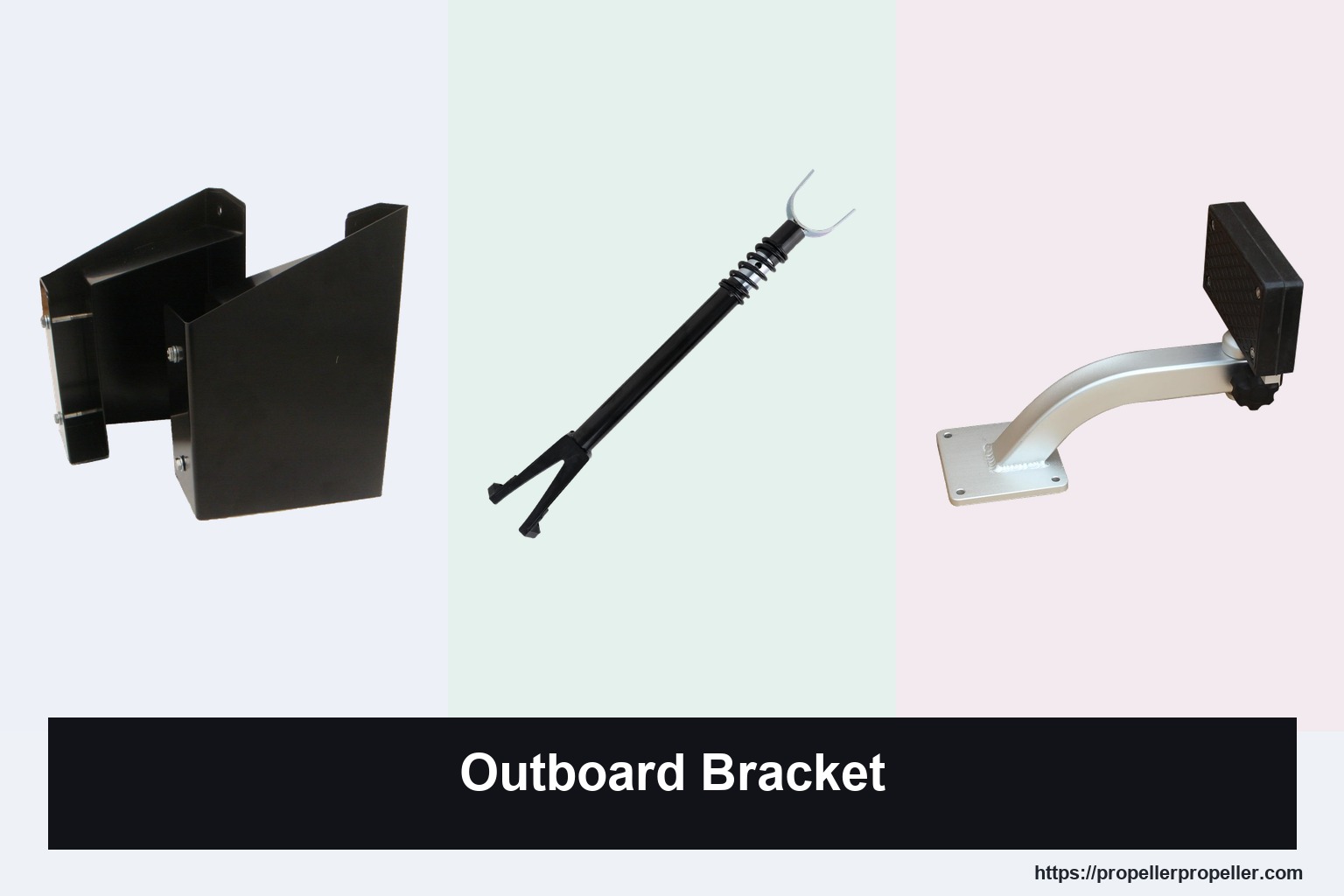
Choosing an outboard bracket is rarely just about finding something that holds weight. The real decision is whether you need storage, trailering support, a removable mount for an electric trolling motor, or a heavy-duty auxiliary bracket that can manage running trim and engine load. Those are different jobs, and the wrong design can create instability, wasted space, or avoidable stress on the motor and boat.
This roundup focuses on the practical differences that matter after the purchase: load approach, mounting style, material durability, adjustability, weight support, and the compromises that come with each bracket type. Some options are built to live on a wall and free up floor space. Others are made to support an outboard while towing. One is aimed strictly at electric trolling motors. The final option is a more substantial transom-mounted solution for auxiliary use.
Top Outboard Bracket on the Market

Sternmaster Me-165 Wall Storage Bracket
- Wall-mounted storage
- Fits clamp-on outboards
- 2 wall brackets included
- 8 x 3.5 x 12 inches
- Powder-coated steel

Five Oceans Adjustable Transom Saver
- 20.5 to 31 inches
- Up to 200 HP
- Shock-absorbing support
- Steel tube construction
- 1-year warranty

Brocraft Deck Mount Bracket
- Deck mount design
- For clamp-on trolling motors
- Marine aluminum construction
- 36-pound thrust maximum
- Two-year limited warranty

Panther Auxiliary Outboard Bracket
- Five vertical positions
- Up to 35 HP
- 10 inches of travel
- ABYC standards
- Safety cable included
This article may contain affiliate links. As an Amazon Associate, the website may earn from qualifying purchases at no additional cost to you.
Outboard Bracket Reviews
Sternmaster Me-165 Wall Storage Bracket
- Item Dimensions
- 8 x 3.5 x 12 inches
- Item Weight
- 11 pounds
- Mounting Type
- Wall Mount
- Material Type
- Alloy Steel
Advantages
- Wall-mounted floor-space saver
- Compact 8 x 3.5 x 12 inches
- Steel construction
- Textured powder coat finish
- Two wall brackets included
Limitations
- Board not included
- Mounting hardware not included
The Sternmaster Marine Tools Me-165 is for the owner who wants to get motors off the floor and onto the wall without turning the garage into a permanent shop. Its wall mount format is the main advantage, because it uses vertical space instead of consuming valuable floor area. The bracket set is built from alloy steel with a textured black powder-coated finish, so the storage solution itself is more substantial than a simple hook or light-duty shelf support. At 8 by 3.5 by 12 inches and 11 pounds, it is compact enough to stay out of the way while still giving the motor a stable resting point.
The mounting concept is simple, but the setup still depends on the rest of the system being done correctly. The bracket uses a board between the two wall pieces, and the board is not included. That means the load capacity is not a fixed catalog number so much as a function of the wood size, wall strength, and how carefully the brackets are installed. The hardware is also not included. In practice, that pushes this toward buyers who are comfortable choosing the proper fasteners and framing location rather than expecting a fully packaged solution.
Against the other brackets in this group, the Me-165 is the storage specialist. It does not trail behind a boat, and it does not adjust for trim or running position. Instead, it solves the problem of where to put a clamp-on outboard when it is not on the water. That makes it the most sensible choice for garages, sheds, and small commercial spaces where organization matters more than propulsion support. For that job, its value is straightforward: it turns unused wall area into organized motor storage and does so with a durable, no-nonsense build.
PHOTO: Sternmaster Me-165 Wall Storage – Wall Storage Bracket → Source: Amazon.com
Five Oceans Adjustable Transom Saver
- Mounting Type
- Engine Mount, Transom Mount
- Item Weight
- 2.7 kg
- Material Type
- Aluminum
- Maximum Horsepower
- 150 hp
- Manufacturer Warranty Description
- 1-Year Warranty
Advantages
- Adjustable 20.5 to 31 inches
- Supports outboards up to 200 HP
- Shock-absorbing mechanism
- Rubber V-block support
- Includes strap and hardware
Limitations
- Not for storage use
- Installation fit depends on trailer
The Five Oceans FO3465 is aimed at a very different problem from wall storage. This is a trailer support piece meant to protect the outboard and transom while the boat is being moved. The adjustable range from 20.5 to 31 inches gives it enough flexibility for a wide span of trailer setups, and its stated fit for motors up to 200 HP puts it in a much more serious support class than a light-duty accessory. The steel construction and rubber V-block are practical details, not cosmetic ones. They are there to hold the motor securely while also absorbing some of the vibration and movement that trailering can create.
That shock-absorbing behavior matters because trailering stress is not just about static weight. A transom saver needs to stabilize the steering mechanism and help reduce the kind of repeated jolt that can transfer into the transom. The included rubber motor stop, 10-inch rubber strap, bolt, and nut mean the bracket is not a bare tube with a vague promise. It arrives as a support system. The listed 1.5-inch tube diameter also suggests a more rigid structure than the flimsy supports that tend to flex under load. With a 1-year warranty, it adds at least a basic layer of after-sale reassurance.
This is the right bracket for a boater who already has a tow setup and wants a support piece that is purpose-built for transport rather than storage. It is not trying to do the wall-bracket job of the Sternmaster, and it is not the right tool for a removable trolling-motor setup. Compared with the Panther, it is simpler and more economical, but it also serves a narrower role. If your priority is protecting the engine and transom during trailering, this is the clearest, most direct choice in the group.
PHOTO: Five Oceans Adjustable Transom – U-Shaped Support End → Source: Amazon.com
Brocraft Deck Mount Bracket
- Mounting Type
- Deck Mount
- Material Type
- Aluminum, Polyvinyl Chloride
- Color
- Larger Bracket
- EU Spare Part Availability Duration
- 2 years
- Finish Types
- Powder Coated
Advantages
- Purpose-built for trolling motors
- Marine aluminum and nylon
- Removable for engine power
- 36-pound thrust maximum
- Two-year limited warranty
Limitations
- Not for outboard engines
- Low thrust limit
The Brocraft Deck Mount Trolling Motor Bracket is the narrowest-purpose product in this set, but that specialization is exactly why some buyers will want it. It is built for clamp-on electric trolling motors, not outboards, and the product language is explicit about that limitation. The deck mount format matters because it keeps the motor at the boat deck rather than treating it as trailer gear or auxiliary propulsion hardware. The construction combines marine aluminum with black nylon plastic, which is a sensible blend for a piece that may be repeatedly removed and reinstalled.
The 36-pound thrust limit is the most important buying boundary here. That number immediately separates it from brackets meant for larger gasoline engines, and it helps prevent mismatched expectations. The bracket is also designed to be removed when the boat is under engine power or being trailered, which is a meaningful operational note. It is not intended to stay in place for every mode of use. That makes the Brocraft best for owners who switch between trolling and main-engine operation and want a bracket that supports that workflow rather than forcing a permanent installation.
Compared with the other three products, the Brocraft is the most specialized and the least interchangeable. It will not replace a transom saver, and it will not serve as wall storage. But for an electric trolling motor that needs a removable deck-mounted home, it is the most relevant option here. The two-year limited warranty also stands out in a category where buyers often want some confidence in long-term use. Choose it when the motor is electric, the thrust is modest, and the need is for a purpose-built deck bracket rather than a universal support solution.
PHOTO: Brocraft Deck Mount Bracket – Deck Mount Bracket → Source: Amazon.com
Panther Auxiliary Outboard Bracket
- Mounting Type
- Transom Mount
- Maximum Horsepower
- 35 hp
- Item Weight
- 19 pounds
- Manufacturer Warranty Description
- LIMITED WARRANTY
Advantages
- Up to 35 HP capacity
- Five vertical positions
- 10 inches of travel
- Stainless steel hardware
- ABYC standards
Limitations
- Highest price in group
- More bracket than casual users need
The Panther 55-0410 is the most substantial bracket in this group and the one aimed at buyers who need real auxiliary motor support rather than simple storage or trailering assistance. It is rated for up to 35 HP and 263 lbs., which puts it in a very different use class from the lighter-duty options here. The anodized aluminum bracket, stainless steel torsion springs, and aircraft-type stainless steel hardware are all clues that this is built for load management, not convenience alone. The extra-wide 2-inch mounting board also matters because it spreads force across a larger mounting area.
Its operating behavior is more refined than the other brackets in this roundup. The hand-adjustable knob and five vertical running positions let the motor be set for changing water or load conditions, and the 10 inches of travel adds meaningful adjustment range. Those details make the bracket more useful when the auxiliary motor is part of active propulsion rather than an occasional add-on. The counterbalancing springs reduce the effort needed to move the motor, which is a practical benefit when the bracket is used repeatedly. ABYC standards compliance also gives the design a more formal safety and construction context.
This is the most expensive option here, and the price reflects the fact that it does a job the others cannot. The Sternmaster is for storage, the Five Oceans piece is for towing, and the Brocraft is for a small electric trolling motor. The Panther sits above all of them in capability and complexity. It is the strongest recommendation for a buyer who needs a serious transom-mounted auxiliary bracket and values adjustability, structural confidence, and a clearly defined safety package. If the motor class and use case match, this is the bracket that deserves the closest look.
PHOTO: Panther Auxiliary Outboard Bracket – Auxiliary Motor Bracket → Source: Amazon.com
How to Choose an Outboard Bracket
The best outboard bracket depends less on the word bracket than on the job you expect it to do. A wall storage stand, a trailer support, a deck mount for a trolling motor, and an auxiliary motor bracket are all serving different mechanical needs. Once you match the design to the task, the rest of the decision becomes much easier. Focus first on how the motor will be used, then on mounting location, load support, and how often you need to remove or adjust the bracket.
Match the Use Case
Start by separating storage, trailering, trolling, and auxiliary propulsion. A bracket that is excellent for one of those jobs can be wrong for the others. Storage brackets are about getting weight off the floor and into a stable resting position. Trailer supports are about reducing movement and strain during transport. Motor-specific deck mounts and auxiliary transom brackets are built around how the engine interacts with the boat while it is in use. Choosing the right job definition prevents most buying mistakes before they happen.
Mounting Location
Where the bracket attaches affects both convenience and load behavior. Wall-mounted designs rely on the strength of the wall and the quality of the board or fasteners behind them. Deck and transom mounts depend on how the boat is built and how much space is available around the motor. Trailer support pieces need to line up with the geometry of the hull and trailer. A good fit is not just about whether the hardware reaches the surface. It is about whether the installation point can safely share the load.
Weight and Capacity
Capacity claims only matter when they match the motor and the way the bracket is used. A lightweight storage bracket may not publish a single fixed weight limit because the board and mounting surface help determine the final load behavior. Trailer supports and auxiliary brackets are more likely to state horsepower or motor weight limits, which is useful because those figures are easier to compare. Always treat the support rating as a boundary, not a target. Leaving a margin makes the bracket easier to live with and less likely to be overstressed.
Adjustability and Travel
Adjustability is valuable when the motor has to change position for different water conditions, trailer setups, or storage needs. Some brackets only need to hold a motor in place, so a fixed support is enough. Others are meant to move through several vertical positions or to adapt to different trailer lengths. More adjustment is not automatically better, but it does create flexibility when the boat, engine, and transport setup are not perfectly standardized. If you expect frequent changes, look for clear adjustment ranges rather than vague marketing language.
Materials and Durability
Marine use puts every bracket under stress from vibration, moisture, and repeated loading. Steel can be a strong choice for storage and trailer support, especially when it has protective coating. Aluminum is often preferred where corrosion resistance and weight matter, particularly on boat-mounted hardware. Rubber, nylon, and stainless steel hardware can add useful real-world durability by reducing slip, wear, and fastener corrosion. The best material mix depends on the job, but a bracket should feel more like a structural component than an accessory that needs constant attention.
Removal and Convenience
A bracket is easier to use when it matches how often the motor needs to come off or change position. If the motor will live in one place most of the time, simplicity matters more than quick release features. If it has to come off for trailering or switch between trolling and engine power, removal becomes a core design requirement. That is where mounting style, fastener access, and included hardware make a real difference. The right bracket should reduce hassle instead of creating one more piece of equipment you have to manage every trip.
Outboard Bracket Comparison Table
| Product | Best For | Mount Type | Max HP | Weight | Material | Warranty |
|---|---|---|---|---|---|---|
| Sternmaster Me-165 Wall Storage Bracket | Best for wall storage | Wall Mount | Not Specified | 11 pounds | Alloy Steel | Not Specified |
| Five Oceans Adjustable Transom Saver | Best for trailering support | Engine Mount, Transom Mount | 150 hp | 2.7 kg | Aluminum | 1-Year Warranty |
| Brocraft Deck Mount Bracket | Best for trolling motors | Deck Mount | Not Specified | Not Specified | Aluminum, Polyvinyl Chloride | Not Specified |
| Panther Auxiliary Outboard Bracket | Best heavy-duty auxiliary bracket | Transom Mount | 35 hp | 19 pounds | Aluminum | LIMITED WARRANTY |
How We Tested & Analyzed Outboard Bracket
This analysis prioritized the core functional differences that separate outboard brackets into distinct categories of use. Storage brackets, trailer supports, removable trolling-motor mounts, and auxiliary transom brackets were evaluated as different tools rather than competing versions of the same product. That approach matters because a buyer can easily overvalue one feature, such as load capacity, while overlooking the more important question of whether the design is actually intended for the job at hand.
Construction materials, mounting type, adjustment range, support limits, and included hardware were treated as the main decision factors. Those details determine whether a bracket is likely to fit the space, handle the motor safely, and remain practical over repeated use. Where the product records included safety standards, warranty terms, or specific support features, those were weighed for the extra confidence they add in real use. The goal was to focus on evidence that changes buying decisions rather than on generic product praise.
Because brackets vary so widely in purpose, the comparison also considered tradeoffs. A lighter, simpler bracket may be ideal for storage but irrelevant for trailering. A more adjustable, heavy-duty bracket may be the strongest option for auxiliary propulsion but unnecessary for a small trolling motor. Rather than forcing a single ranking across incompatible designs, the analysis highlighted which bracket type best answers each use case and what limitation a buyer accepts in exchange for that strength.
Frequently Asked Questions
What is the difference between an outboard bracket and a transom saver?
An outboard bracket is a broad term for hardware that supports or stores a motor, while a transom saver is specifically used during trailering to reduce stress on the transom and motor. The intended use is the key difference. A storage bracket stays in the garage, while a transom saver travels with the boat.
How do I know what size bracket I need?
Start with the motor’s weight, horsepower, and how it will be used. Then check the mounting space on the boat, trailer, or wall. For adjustable products, make sure the range covers your setup with some margin. If the bracket has a stated limit, treat that as the maximum, not the ideal operating point.
Can one bracket work for every outboard setup?
Usually not. The best bracket depends on whether the motor is being stored, trailered, used as a trolling setup, or mounted as an auxiliary engine. A universal approach often sacrifices stability or convenience. Matching the bracket style to the exact job is the safest way to avoid fit and performance problems.
What materials are best in marine environments?
Aluminum, coated steel, stainless hardware, rubber, and durable plastics are all common in marine hardware because they balance strength with corrosion resistance or wear control. The most important factor is whether the construction suits the specific task. A trailer support may benefit from steel strength, while a removable deck bracket may favor lighter corrosion-resistant materials.
Final Thoughts
The right outboard bracket is the one that matches your actual use, not just the motor size on paper. Storage, trailering, trolling, and auxiliary propulsion each demand different hardware, and the best choice is usually obvious once you stop comparing them as if they were interchangeable. The strongest options in this group each solve one problem well, which is exactly what you want from support hardware that affects safety, convenience, and equipment life.
If your priority is simply organizing a motor off the floor, the wall storage bracket makes the most sense. If your concern is tow-time protection, the trailer support is the practical answer. A trolling-motor owner needs the deck-mounted specialist. A serious auxiliary setup calls for the heavy-duty transom bracket. Choose by function first, then by mounting fit and construction quality, and the bracket you buy is far more likely to feel like the right one from day one.