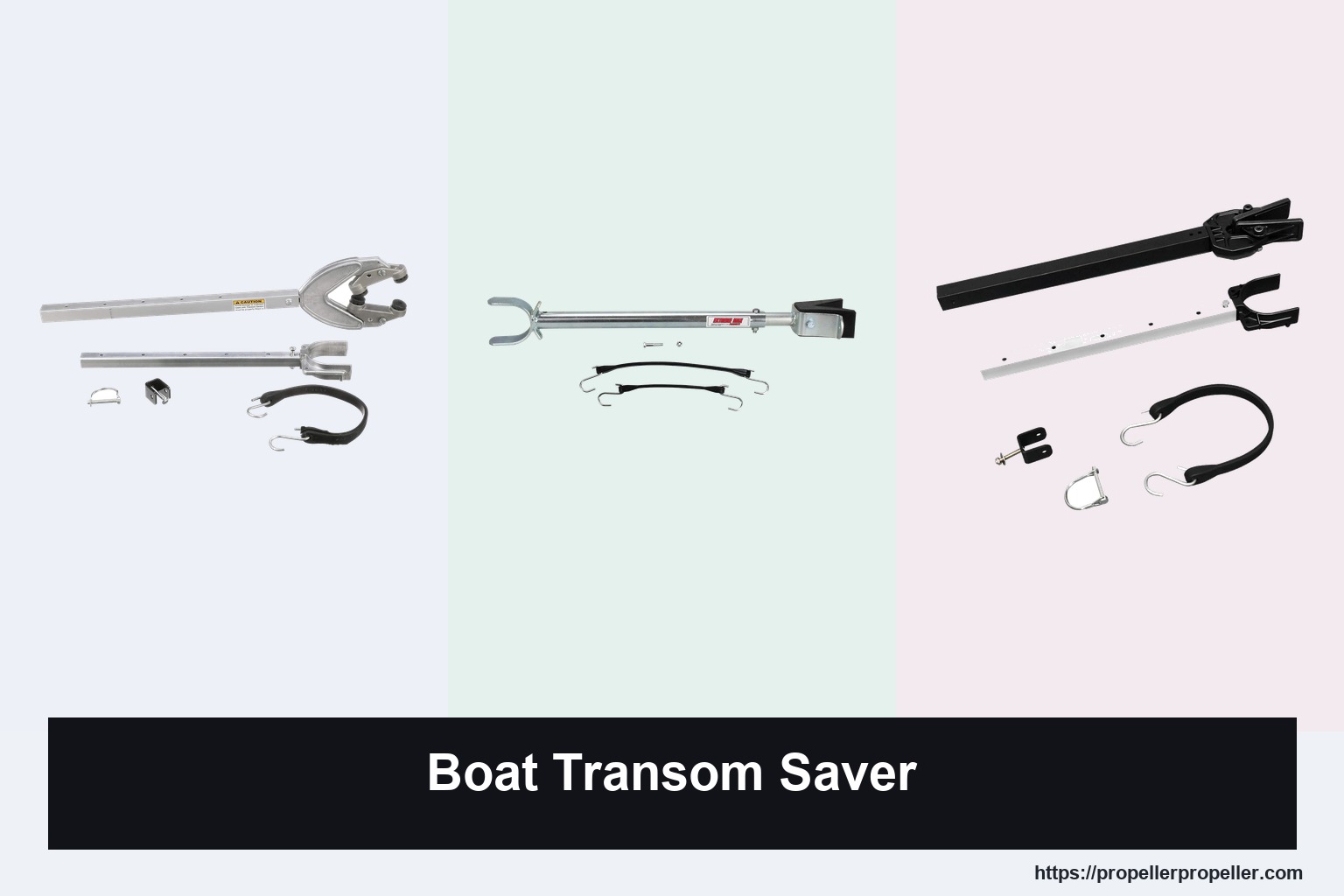
A good transom saver matters most when the road surface turns rough and the outboard starts acting like a lever on the hull. That load can pound the transom, stress trim hardware, and make an otherwise simple tow feel harder on the boat than it should. The right support changes that by shifting weight off the stern and into the trailer where it belongs. For buyers comparing boat transom saver options, the real question is not whether to use one. It is which design fits the engine, trailer, and hauling conditions you actually have.
This roundup focuses on fit, stability, mounting style, and the limits that matter in daily use. Adjustable length can solve installation problems, but only if the head design and trailer connection match your rig. Material choice affects durability and corrosion tolerance. Length range affects how precisely the saver can support the motor without forcing the trim to sit awkwardly. Warranty length and included hardware also matter because a transom saver is only useful when it installs cleanly and stays dependable from one haul to the next.
Top Boat Transom Saver on the Market

Attwood Heavy-Duty Adjustable Transom Saver
- 24 to 36 inch adjustment
- Dual mounting brackets
- Heavy-duty aluminum and rubber
- Replaceable rubber pads

Extreme Max Straight Transom Saver
- 21 to 31 inch range
- Roller mount design
- Steel construction
- Up to 150 HP

Adjustable Shock Absorbing Transom Saver
- 23 to 35 inch range
- Composite head
- Supports motors 100 HP and under
- Roller and trailer mounts

Attwood Adjustable Composite Head Saver
- 23 to 35 inch range
- Composite head
- Power trim compatible
- Roller and trailer mounts

Sebnux Adjustable Shock Absorbing Saver
- 23 to 35 inch range
- 2-year warranty
- Composite head
- Aluminum construction
This article may contain affiliate links. As an Amazon Associate, the website may earn from qualifying purchases at no additional cost to you.
Boat Transom Saver Reviews
Attwood Heavy-Duty Adjustable Transom Saver
- Item Dimensions
- 36.22 x 6.3 x 0.98 inches
- Item Weight
- 1 kg
- Material Type
- Heavy Duty Aluminum / Rubber
- Manufacturer Warranty Description
- 90 days
Advantages
- 24 to 36 inch range
- Roller and trailer mounts
- Replaceable rubber pads
- Heavy-duty aluminum build
- Broad setup compatibility
Limitations
- Short 90-day warranty
- No explicit horsepower rating
The strongest case for this model is its broad fit window and sturdy support structure. The 24 to 36 inch adjustment range gives it enough reach to match a wide spread of boat and trailer setups without forcing a compromise on support height. Its heavy-duty aluminum / rubber construction is the kind of material pairing that matters when the saver is expected to absorb repeated road vibration rather than just hold position in the driveway. The result is a transom saver that reads as practical equipment, not a temporary fix.
Mounting flexibility is another reason it stands out. The included roller and trailer mount brackets let the same unit work with different trailer hardware, which reduces the chance that a buyer needs adapters or extra improvisation just to get started. The heavy-duty head is built to grip the engine securely, and the replaceable rubber pads matter because the contact point is the part that wears first. A 90-day warranty is not long, so the real value here comes from the sturdy construction and the fact that the design is aimed at routine trailering rather than occasional use only.
Compared with the shorter-range options in this group, this one is the safer pick when you do not yet know whether your setup needs the extra reach. It is also more broadly accommodating than the models that cap support at 100 HP, because its key selling point is fit and road stability rather than a narrow engine-size niche. Buyers who want a dependable, general-purpose transom saver for varied trailer setups should start here. It is the most balanced recommendation in the group because it pairs flexible adjustment with hardware meant to handle real transport abuse.
PHOTO: Attwood Heavy-Duty Adjustable Transom – Adjustable transom saver → Source: Amazon.com
Extreme Max Straight Transom Saver
- Item Weight
- 5.69 pounds
- Product Dimensions
- 22.25 x 6.25 x 2.5 inches
Advantages
- Up to 150 HP
- Steel construction
- Two-year replacement warranty
- Roller mount design
- Straight support geometry
Limitations
- Not for saltwater use
- Shorter adjustment range
This model is the clearest choice when engine support capacity is a priority. Its up to 150 HP rating puts it in a different use bracket from the more compact composite-head designs, so buyers with larger outboards can focus on fit rather than wondering whether the saver is underbuilt. The 21 to 31 inch extension range is shorter than some alternatives, but that can actually help when the trailer geometry is already close to ideal and you need a more direct support path. Steel construction also signals a bias toward rigidity, which is exactly what a heavier motor puts under strain.
The roller-mount approach is straightforward and keeps installation focused on a common trailer layout. That simplicity is valuable because it avoids forcing the buyer into a more universal but less precise setup. The tradeoff is environmental: this model is not intended for saltwater or brackish-water contact, so it is best treated as a freshwater or dry-trailer solution. The two-year replacement warranty is a useful confidence marker, especially in a category where hardware wear and vibration can surface after repeated launches and retrievals.
Relative to the other saves in this roundup, this one earns its place by being the most specific about heavier-duty outboard support. It gives up some adjustment span compared with the longest telescoping options, but that is a fair exchange if the main requirement is stable support for a larger motor. Buyers with a compatible roller-style trailer and a heavier engine should consider this the strongest technical match. It is the right call when capacity matters more than universal versatility.
PHOTO: Extreme Max Straight Transom – Roller-mount transom saver → Source: Amazon.com
Adjustable Shock Absorbing Transom Saver
Advantages
- 23 to 35 inch range
- Composite head
- Hardware included
- Roller and trailer mounts
- Lower price point
Limitations
- 100 HP limit
- Fewer formal specifications
This is the value play for buyers who want adjustable support without paying a premium for brand recognition. The 23 to 35 inch shaft range gives it enough flexibility for a broad set of trailer heights, and the composite head keeps the contact point focused on holding the engine securely rather than overcomplicating the design. Its stated use for motors 100 HP and under makes the intended workload clear. That is useful because it tells buyers where the design is meant to live instead of leaving them to guess whether the saver is sized for their setup.
Installation should be manageable for straightforward trailer arrangements because the unit is designed around both roller and trailer mounts. The package also includes the mounting hardware needed to complete the setup, which reduces the odds of a second parts run before the first tow. Aluminum construction gives it the durability profile expected in this category, while the shock-absorbing language points to a design meant to soften the effects of road movement rather than merely prop the motor in place. For a lower-priced option, that combination is reasonably well rounded.
Compared with the more expensive Attwood models, this one trades some brand recognition and specification clarity for a lower entry price. Compared with the 150 HP Extreme Max, it is not the answer for larger outboards, but that limitation is also what keeps the price approachable. Buyers with smaller motors who want a functional saver and do not need a premium materials story should look closely at this one. It is the most sensible budget recommendation in the set when the engine rating fits the use case.
PHOTO: Adjustable Shock Absorbing Transom – Transom saver with straps → Source: Amazon.com
Attwood Adjustable Composite Head Saver
Advantages
- 23 to 35 inch range
- Composite head
- Power trim compatible
- Dual mounting options
- Moderate-price Attwood option
Limitations
- 100 HP ceiling
- Limited published specs
This Attwood model is the most targeted option for buyers who already know they need a composite-head design. The 23 to 35 inch adjustment range is broad enough to cover many common trailer setups, while the composite head is sized for motors up to 100 HP. That makes it well suited to everyday trailering where stable engine support matters more than chasing maximum span or maximum horsepower. The power-trim compatibility is especially important because it narrows the fit question in a useful way. It tells you this saver is meant for rigs with trim or tilt hardware that still need a secure hold.
The dual mounting options keep it practical on trailers that do not all use the same rear support arrangement. That is a meaningful installation advantage because the wrong mount style can turn a simple accessory into a frustrating one. The design is aimed at reducing bounce and leverage during transport, which is exactly the problem transom savers are meant to solve. Because the product does not publish a detailed materials breakdown in the facts available here, the purchase decision relies more on fit and feature alignment than on a long spec sheet. That is not a weakness so much as a sign that the value is concentrated in the geometry and head design.
Against the budget composite-head option, this one stands out for clearer fit guidance around power trim. Against the heavier-duty steel option, it is the more specialized choice for moderate-power outboards rather than the largest motors in the field. Buyers who have a trim-equipped engine and want a trusted-name adjustment range should find this one compelling. It is the strongest choice when compatibility with power trim is the deciding factor and the engine stays within the stated 100 HP envelope.
PHOTO: Attwood Adjustable Composite Head – Transom saver with straps → Source: Amazon.com
Sebnux Adjustable Shock Absorbing Saver
- Package Weight
- 1.56 kg
- Warranty Description
- 2 Years Warranty
- Material
- Aluminum
Advantages
- 23 to 35 inch range
- 2-year warranty
- Composite head
- Aluminum construction
- Included mounting hardware
Limitations
- Less established brand
- No horsepower rating
This Sebnux model is appealing because it combines a familiar adjustability range with a stronger warranty than some competitors in the set. The 23 to 35 inch shaft length keeps it in the same practical lane as other universal-fit choices, and the 2 Years Warranty gives the buyer more protection than the short warranty common in this category. The aluminum body and composite head create a support profile that looks aimed at standard outboard trailering rather than specialized heavy-haul duty. That is a sensible balance for buyers who want usable features without moving into a higher price bracket.
Setup should be straightforward if your trailer uses either roller or trailer mounts, because the included hardware package addresses the common connection points. The composite head is intended to hold the engine securely while reducing scratch risk, which matters when the saver will be attached and removed repeatedly through a season. A key practical consequence of that design is that the saver is framed more as a protective support than a rigid industrial brace. That makes it a better fit for routine recreational hauling than for buyers chasing the most aggressive hardware profile available.
Compared with the less expensive composite-head option, this one stands out mainly because the warranty is better defined and the package details are cleaner. Compared with the premium Attwood models, it offers less brand pedigree but still covers the same general install range. Buyers who want a solid middle ground between cost and confidence should place this high on the list. It is the right recommendation when you want a sensible universal fit and a warranty that feels more reassuring than the bare minimum.
PHOTO: Sebnux Adjustable Shock Absorbing – Transom saver with straps → Source: Amazon.com
How to Choose a Boat Transom Saver
The right transom saver starts with the relationship between your outboard, your trailer, and the way the boat sits when it is out of the water. A saver that is too short can leave the engine geometry awkward. One that is too long can create its own leverage problems. You also need to think about how the head contacts the motor, whether the trailer uses a roller or a different mount style, and whether the product is intended for your engine size. Small differences in design can make the setup either tidy and dependable or annoying every time you load.
Length and Fit
Length is the first measurement to check because it determines whether the saver can actually support the motor at the right angle. Too little adjustment can force the engine into a position that does not line up with the trailer support. Too much length is not automatically better either, because the goal is controlled support, not extra reach. Measure the distance from the motor support point to the trailer contact point before you buy, then leave room for adjustment so the fit is not at the edge of the range.
Head Design
The head is where the saver meets the engine, so its shape and material matter more than many buyers realize. A secure grip reduces slip, chatter, and finish damage during transport. Composite heads are common where scratch protection and moderate-duty support are important. Heavier-duty heads with replaceable pads can be a better choice when the saver will see frequent use. Pay attention to how the head holds the motor in relation to trim hardware, because a good fit here is what keeps the setup calm on rough roads.
Trailer Mount Style
Trailer compatibility can be the difference between a simple install and a setup that needs extra parts. Some transom savers are designed for roller mounts, while others include both roller and trailer brackets. If your trailer already has a rear roller, that can simplify the choice. If it does not, a dual-mount design gives you more flexibility. The important thing is not the number of mounting words in the product name. It is whether the attachment matches the actual hardware on your trailer.
Engine Size and Use
Engine rating matters because a transom saver is only useful when it is built for the weight it will carry. Smaller outboards can work well with lighter composite-head designs, while heavier engines call for stronger construction and clearer capacity limits. If the product states a horsepower ceiling, treat that as a real selection filter rather than a vague suggestion. Buyers with larger motors should prioritize stability and published support limits. Buyers with moderate-power setups can focus more on fit and convenience.
Material and Durability
Material choice affects both stiffness and long-term wear. Aluminum is common because it keeps weight down while still offering a strong support structure. Steel can add rigidity, which may matter for heavier engines and more demanding towing conditions. Rubber contact parts and replaceable pads are worth paying attention to because they can reduce wear where the motor meets the saver. For most buyers, durability is not about one dramatic spec. It is about whether the design looks ready to survive repeated launch-and-retrieve cycles without looseness or damage.
Warranty and Confidence
Warranty terms do not tell the whole story, but they do help frame the level of confidence the maker is willing to put behind the design. A short warranty is common in this category, so a longer one can be a meaningful differentiator. Still, the best warranty is not a substitute for correct fit. Use it as a final tiebreaker after you have matched length, mount style, and engine size. That approach leads to a more reliable purchase than chasing the longest protection period alone.
Boat Transom Saver Comparison Table
| Product | Best For |
|---|---|
| Attwood Heavy-Duty Adjustable Transom Saver | Best Overall |
| Extreme Max Straight Transom Saver | Best for Heavier Outboards |
| Adjustable Shock Absorbing Transom Saver | Best Budget-Friendly Pick |
| Attwood Adjustable Composite Head Saver | Best for Power Trim |
| Sebnux Adjustable Shock Absorbing Saver | Best Warranty Value |
How We Tested & Analyzed Boat Transom Saver
This roundup was built around the purchase decisions that matter most in a transom saver: fit, mounting geometry, support capacity, material choice, and practical protection during trailering. The goal was to compare products by how well they solve the actual task of reducing stress on the stern, not by how many marketing claims they make. Adjustment range, head style, trailer attachment options, and engine limits were treated as primary decision points because they directly affect installation and real-world usefulness.
Where product records provided stronger detail, those facts were weighed more heavily than vague promotional language. Warranty terms, included hardware, stated horsepower limits, and material construction were all considered because they change the ownership experience after the first tow. Products that offered clearer fit guidance or more complete mounting flexibility were given credit, while designs with narrower ranges or visible use restrictions were noted as tradeoffs rather than flaws. The result is a comparison aimed at matching buyers to the most sensible support style for their setup.
Limits in the available facts were handled conservatively. When a product did not clearly state a specification, that gap was not filled in from assumption. That matters in this category because a transom saver is only as useful as its compatibility with the trailer and engine. The analysis therefore focuses on grounded differences that can affect installation ease, support stability, and durability over time. It is better to choose from a smaller set of verified advantages than to rely on an accessory that sounds versatile but may not fit cleanly.
Frequently Asked Questions
Why use a transom saver at all?
A transom saver reduces the leverage and bouncing force an outboard can place on the transom during transport. That matters most when roads are rough or the trailer sees repeated miles. The goal is to shift support away from the hull so the stern is not carrying the motor’s movement by itself.
Should I choose roller mount or trailer mount compatibility?
Choose the mount style that matches your trailer first. Roller compatibility is useful if your trailer already uses a rear roller, while dual-mount designs add flexibility when hardware varies. The right answer is the one that installs cleanly on your actual trailer without improvised brackets.
Does a longer adjustable range always mean a better saver?
Not necessarily. A wider range can improve fit flexibility, but the best saver is the one that lands in the proper support position for your specific boat and trailer. Once the motor is held securely and the geometry looks correct, extra range is less important than stable contact and clear compatibility.
What should I look for if I have a larger outboard?
Prioritize stated engine support limits, stronger construction, and a head design that holds the motor securely without wobble. Larger outboards place more load on the accessory, so a published horsepower rating is more useful than a vague promise of universal fit. Capacity should be your first filter.
Final Thoughts
A good boat transom saver is less about novelty and more about getting the right support geometry for your rig. Once the engine is off the transom and properly braced to the trailer, the boat is better protected against the bounce and leverage that road travel creates. The best choice depends on whether you need broad fit, heavier-duty support, or a smarter price point for a smaller motor. Match the saver to the trailer hardware and engine size before you worry about anything else.
For most buyers, the safest path is to start with fit range, then check mounting style, then weigh warranty and material quality. That sequence keeps you from overbuying capacity you do not need or underbuying support for a motor that asks more of the hardware. The right transom saver should disappear into the towing routine. It should hold steady, install cleanly, and reduce stress every time the boat goes back on the road.