
A stuck propeller can turn a routine inspection into an expensive problem if the puller does not match the shaft, hub, or propeller style. The key split in this group is not simply build material. Three tools are for inboard boat shafts, one uses adjustable straps for outboard three-blade props, and one is purpose-built for tiny FPV drone motor shafts.
Choose by the equipment in front of you. Confirm shaft diameter and blade count for a clamp-style marine puller. For an outboard, check whether a strap system can route around your hub. Drone pilots need a far smaller tool that pulls from the prop root rather than applying force to a boat-style shaft.
Top Propeller Pullers on the Market

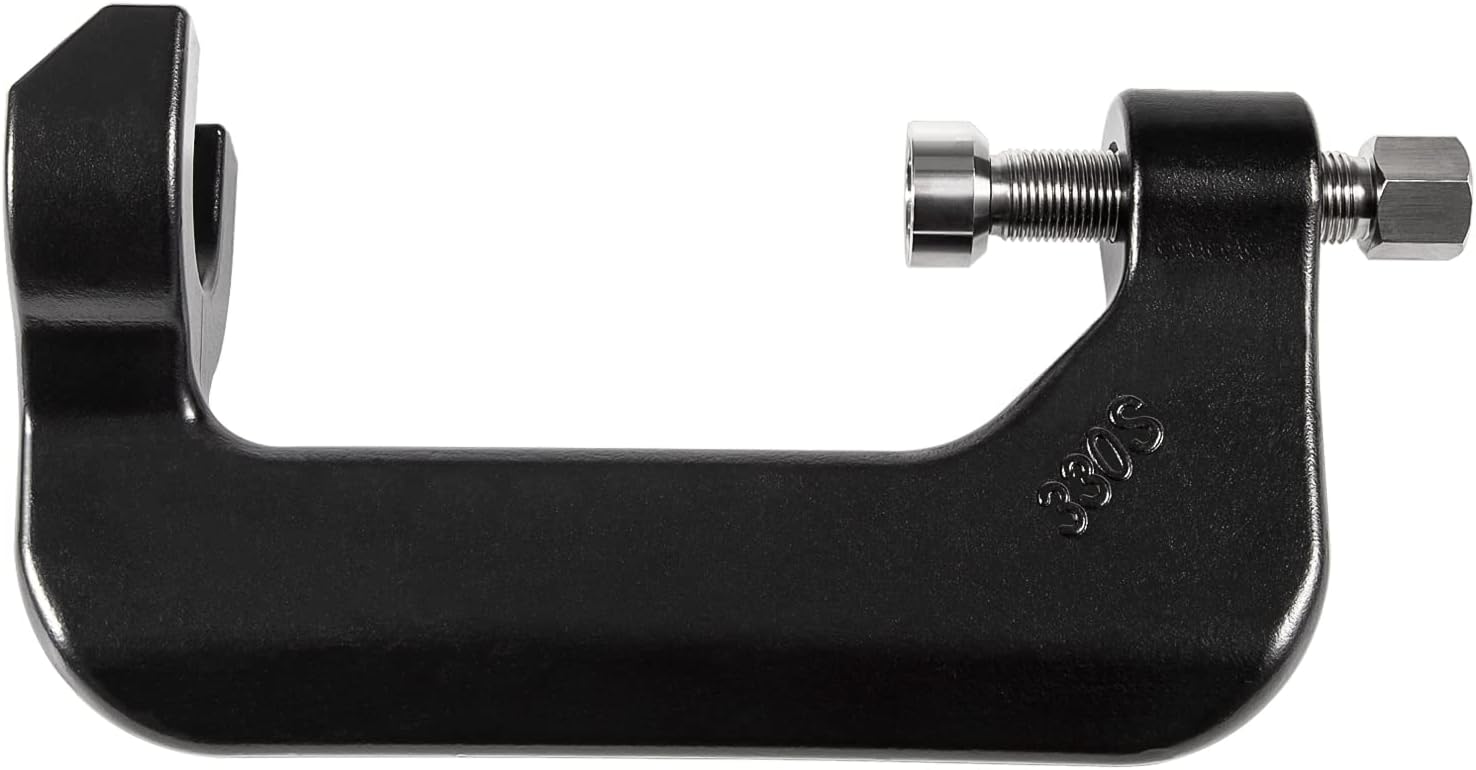
E-cowlboy 330S Propeller Puller
- Fits 1 1/4-inch propeller shafts
- For 2-, 3-, and 4-blade props
- Heat-treated alloy steel construction
- Swiveling screw point protects shaft ends
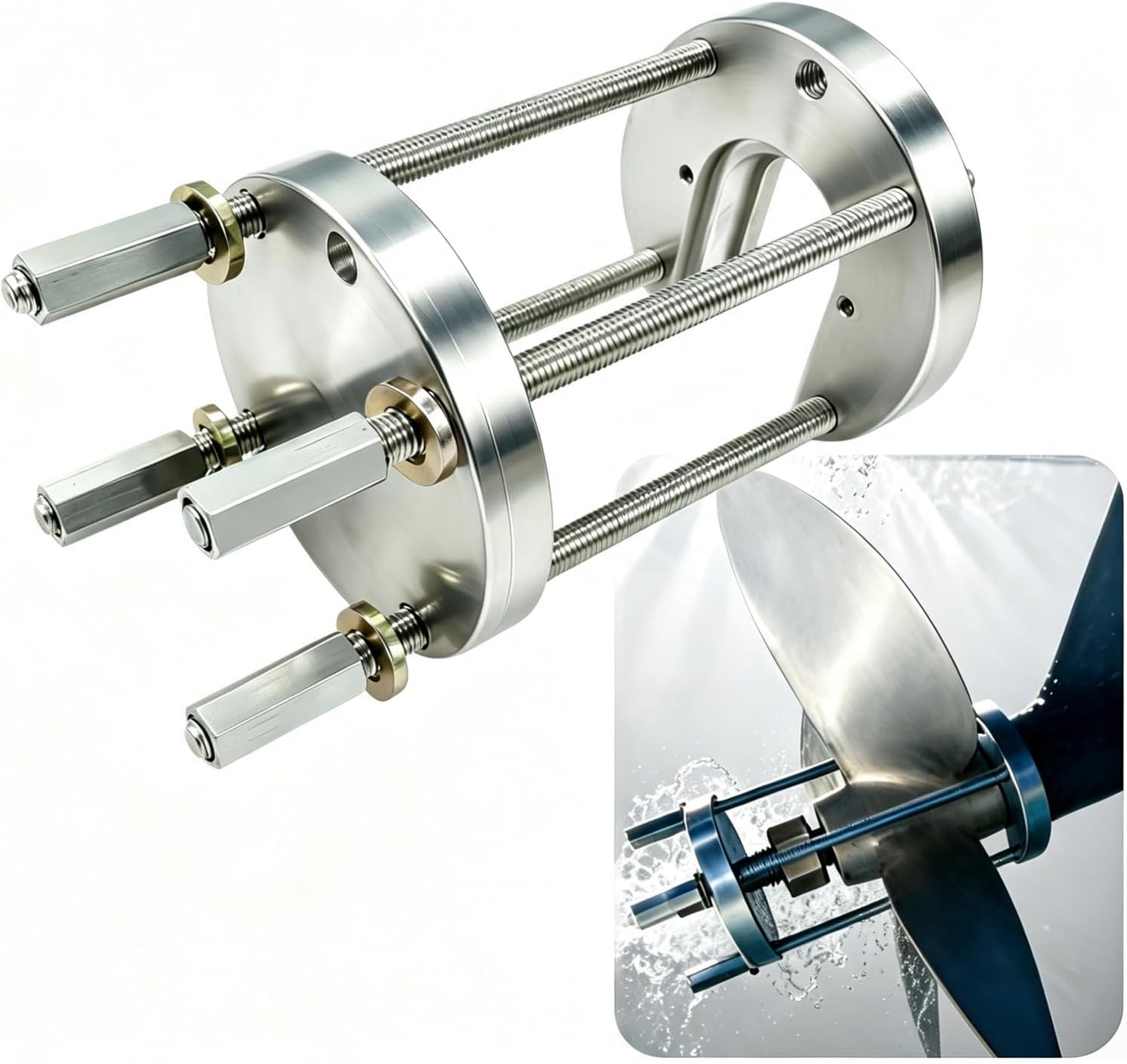
RoloTippi K813 Boat Prop Puller
- Fits 1 1/2- to 1 3/4-inch shafts
- Supports specified 3- and 4-blade hubs
- Maximum 6 1/2-inch plate distance
- No drilling or cutting required

Yoursme Inboard Prop Puller
- Fits 3/4- to 1 1/8-inch shafts
- Requires shaft-end dimple
- 3.25- to 4.5-inch jaw opening
- Heat-treated alloy steel construction

Obokidly FPV Drone Prop Puller
- Fits 0.8- to 1.5-mm motor shafts
- Rope-pulling removal design
- Replaceable rope head
- 304 stainless-steel main body
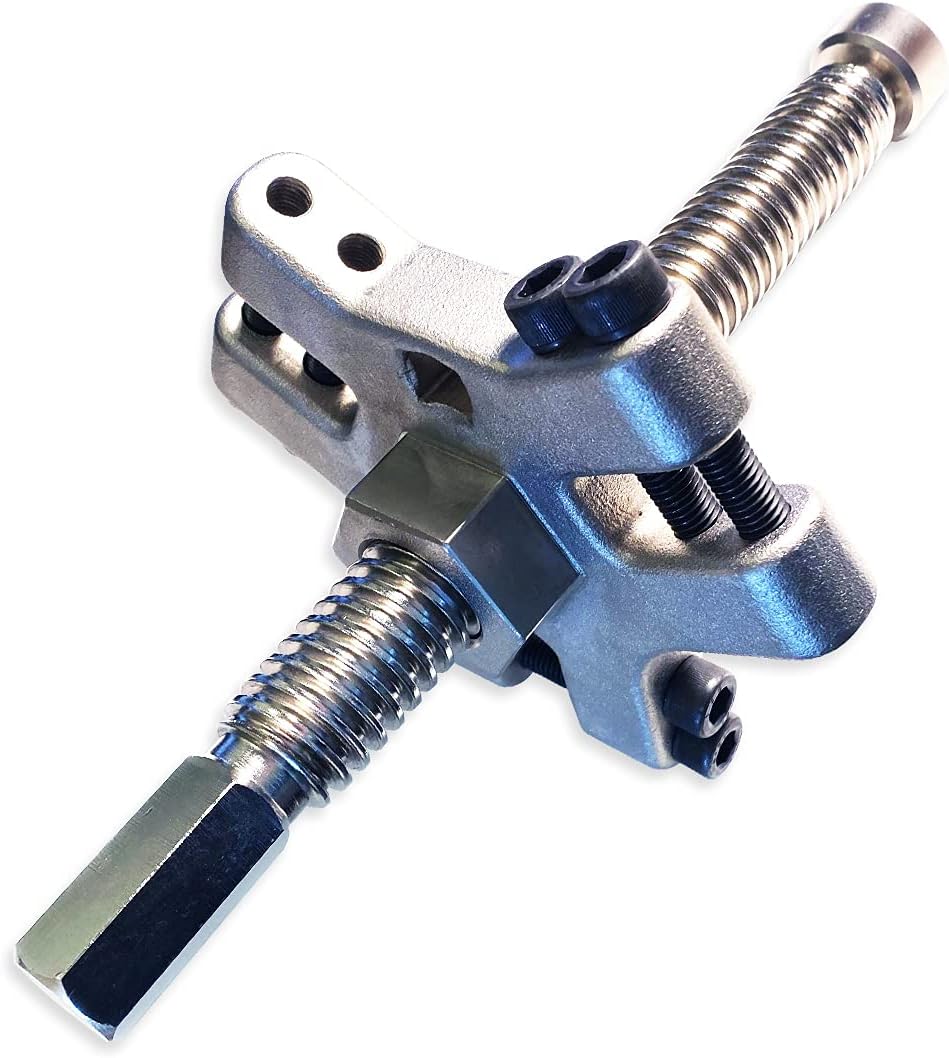
Marine Tech Tools AMT0066 Puller
- For most standard 3-blade props
- Three adjustable straps included
- Nickel-plated steel construction
- ACME-thread screw-drive design
Detailed Product Reviews
E-cowlboy 330S Propeller Puller
- Shaft Fitment
- 1 1/4 Inch propeller shafts only.
- Propeller Compatibility
- 2, 3 and 4 blade propellers
- Construction
- high strength heat treated alloy steel
- Screw Point
- exclusive swiveling screw point
Advantages
- Specified for 1 1/4-inch shafts
- Works with two-, three-, and four-blade props
- Swiveling screw point
- Fine-thread screw design
- Heat-treated alloy steel construction
Limitations
- Only for 1 1/4-inch propeller shafts
I would choose the E-cowlboy 330S when the boat has a confirmed 1 1/4 Inch propeller shaft. It is a C-clamp-style puller intended for inboard ski, wakeboard, and surf propellers with two, three, or four blades. That defined fitment makes it a more focused choice than a universal-looking tool when the shaft size is already known.
The practical detail here is the exclusive swiveling screw point. It is designed to bear against the shaft end while helping avoid damage there. Fine-thread screws are intended to create pulling force with less manual effort. Its heat-treated alloy-steel construction has rust-protection plating, which is relevant for a tool stored around marine equipment. Do not use this model as a general inboard puller across shaft sizes. Its stated fitment is limited to 1 1/4-inch shafts.
Against the Yoursme Inboard Prop Puller, the E-cowlboy serves a different shaft range rather than a broader one. The Yoursme covers 3/4-inch through 1 1/8-inch shafts and requires a dimple in the shaft end. Buy the E-cowlboy when your 1 1/4-inch shaft matches its specification. Move to the Yoursme only if your smaller shaft and shaft-end dimple meet that model’s requirements.
RoloTippi K813 Boat Prop Puller
- Shaft Fitment
- 1-1/2″ thru 1-3/4″ prop shafts
- Propeller Compatibility
- 4-blade propellers with up to 4-1/8″ hub diameter and 3-blade propellers with up to 3-3/4″ hub diameter.
- Maximum Plate Distance
- maximum 6-1/2″ distance between plates
- Construction
- 3/4″ thick aluminum puller plates and 10″ zinc-plated steel threaded rods.
- Installation
- no drilling, cutting, or modifications
Advantages
- Fits 1 1/2- to 1 3/4-inch shafts
- Specified hub-diameter limits
- 6 1/2-inch maximum plate distance
- No-modification installation
- Zinc-plated steel threaded rods
Limitations
- Only supports stated shaft and hub ranges
- Not specified for two-blade propellers
The RoloTippi K813 is the model to consider for an inboard shaft from 1-1/2″ thru 1-3/4″ prop shafts. Its specified propeller limits are four-blade hubs up to 4 1/8 inches and three-blade hubs up to 3 3/4 inches. Those measurements matter more than a generic claim of universal fit. Check both the shaft and hub before ordering.
This is a plate-and-rod system with 3/4″ thick aluminum puller plates and 10-inch zinc-plated steel threaded rods. It allows a maximum 6 1/2-inch distance between plates. Installation is stated to require no drilling, cutting, or modifications. The operating guidance calls for even tightening, about half a turn at a time, and confirming blade clearance before applying force. That makes alignment part of the setup rather than something to correct after tension is applied.
The E-cowlboy 330S is the better match for a 1 1/4-inch shaft, while the K813 addresses the larger 1 1/2- through 1 3/4-inch range. The K813 also states hub-diameter limits and plate spacing, which are useful checks for a propeller that needs a plate-style arrangement. Choose it for a verified larger-shaft setup, not merely because it is described as an upgrade.
Yoursme Inboard Prop Puller
- Shaft Fitment
- 3/4″ to 1-1/8″ shaft
- Propeller Compatibility
- 2, 3 and 4 blade propellers
- Jaw Opening
- 3.25″to 4.5″
- Shaft Requirement
- Must have dimple in end of shaft to use
- Construction
- high strength heat treated alloy steel
Advantages
- Fits smaller stated inboard shaft range
- Works with two-, three-, and four-blade props
- 3.25- to 4.5-inch jaw opening
- Fine-thread screw design
- Black rust-protection coating
Limitations
- Requires a dimple in shaft end
- Limited to 1 1/8-inch maximum shaft
For a ski, wakeboard, or surf boat with a smaller inboard shaft, the Yoursme puller has the clearest stated range: 3/4″ to 1-1/8″ shaft. Its C-clamp layout is intended for two-, three-, and four-blade inboard propellers. Before treating the range as sufficient, inspect the end of the shaft. This puller requires a dimple there to use it.
The jaw opening is specified at 3.25″to 4.5“, so clearance between the puller and the propeller assembly remains a setup check. The product description also calls for at least 1/4 inch of clearance between the propeller hub and strut. Fine threads are intended to provide pulling force with less effort, and the heat-treated alloy-steel body has a black rust-protection coating. The shaft-end dimple requirement is the central limitation, not a minor detail.
The E-cowlboy 330S takes over at a 1 1/4-inch shaft, where this Yoursme model no longer fits its stated range. Conversely, the Yoursme is the one to select for a compatible 3/4- to 1 1/8-inch shaft with the required dimple. I would not choose between them on blade count, because both state compatibility with two-, three-, and four-blade propellers.
Obokidly FPV Drone Prop Puller
- Shaft Fitment
- Suitable for motor shaft with a diameter of 0.8mm-1.5mm
- Propeller Compatibility
- Suitable for 2-blade propeller/3-blade propeller/4-blade propeller
- Puller Design
- rope-pulling structure
- Rope Head
- Replaceable rope head.
- Construction
- 304 stainless steel (corrosion-resistant and high-strength) for main body
Advantages
- Fits 0.8- to 1.5-mm motor shafts
- Supports two-, three-, and four-blade drone props
- Rope-pulling design
- Replaceable rope head
- 304 stainless-steel main body
Limitations
- Not intended for boat propeller shafts
- Limited to stated small motor-shaft range
The Obokidly is not a boat propeller puller in miniature. It is a dedicated option for 1S and 2S FPV racing drones with a 0.8mm–1.5mm motor shaft. It supports two-, three-, and four-blade drone propellers within that shaft range. If you fly the stated small FPV platforms, its scale and rope-based approach match the task far better than a marine clamp puller.
Its rope-pulling structure is designed to remove a propeller without requiring a gap in the blades. The guidance is to rotate the pull rope for even force and pull near the blade root. The main body is 304 stainless steel, while the rope head is replaceable. That replacement feature is useful when working with different compatible propellers, but it does not expand the stated 0.8- to 1.5-mm shaft range.
The E-cowlboy 330S is for 1 1/4-inch inboard boat shafts, whereas the Obokidly is for millimeter-scale drone motor shafts. These are not competing choices for the same repair. Pick the Obokidly only for compatible FPV motor shafts and propellers. Pick a marine puller when servicing an inboard or outboard boat propeller.
Marine Tech Tools AMT0066 Puller
- Propeller Compatibility
- most standard 3-blade propellers
- Included Straps
- three adjustable straps
- Thread Type
- ACME threads
- Construction
- Nickel-plated steel
- Small Propeller Setup
- Cinch the straps around the hub for smaller props
Advantages
- For most standard three-blade propellers
- Three adjustable straps included
- Small and large hub setup options
- Nickel-plated steel construction
- ACME-thread screw-drive design
Limitations
- Only specified for three-blade propellers
- Designed for outboard motor use
The Marine Tech Tools AMT0066 is the right type of tool for a stuck most standard 3-blade propellers on an outboard motor. Rather than relying on an inboard shaft-size specification, it uses three adjustable straps around the propeller hub. That makes its purchase case straightforward: it is for an outboard three-blade propeller, not for every blade count or every marine drive arrangement.
For smaller propellers, the straps can cinch around the hub. For larger propellers, they can thread through the inner hub. This is a meaningful setup difference because the attachment method changes with hub size. The puller uses ACME threads and nickel-plated steel construction. The tool includes three adjustable straps, so the stated strap arrangement is part of the package rather than a separate compatibility assumption.
Compared with the RoloTippi K813, the AMT0066 favors a strap-based setup for three-blade outboard props. The K813 is built around stated inboard shaft, hub-diameter, and plate-distance limits and also accommodates specified four-blade props. Choose the AMT0066 when your outboard has a compatible standard three-blade propeller. Choose the K813 only when its larger inboard fitment measurements match your boat.
How to Choose a Propeller Puller
A puller should match the propeller system before its material or general-duty description influences the decision. Measure and inspect the relevant contact points first, then choose the puller style that applies force in the correct place.
Identify Your Propeller System
Start by separating inboard boat shafts, outboard propellers, and FPV drone motors. These systems use radically different dimensions and puller designs. A puller made for an inboard shaft is not a substitute for a strap puller on an outboard or a rope tool on a small drone motor.
Confirm Shaft Dimensions
For clamp and plate pullers, verify the shaft diameter against the stated fitment range. Do not round up or down when a model has a single specified shaft size. Drone pullers also need a shaft match, but their dimensions are generally measured in millimeters rather than inches.
Check Blade and Hub Fit
Blade count is a compatibility limit, not decoration. Confirm whether the puller supports your two-, three-, or four-blade propeller. Plate-style tools may also have hub-diameter and plate-spacing limits. Strap systems require an attachment route that suits the size and shape of the hub.
Inspect Contact Points
Look at the shaft end, hub area, propeller-to-strut clearance, and available room for the puller before beginning. A tool may require a shaft-end dimple or a defined clearance gap. These details determine whether the puller can sit squarely and apply force as intended.
Choose the Puller Style
C-clamp pullers suit the specified inboard shaft arrangements. Plate-and-rod designs add limits for hub size and spacing. Adjustable straps are designed around compatible outboard hubs. Rope-pulling tools are for small drone propellers. Choose the mechanism that matches how your propeller can be gripped and supported.
Propeller Puller Comparison Table
| Product | Best For | Prop Compatibility | Shaft Fitment | Construction |
|---|---|---|---|---|
| E-cowlboy 330S Propeller Puller | For 1 1/4-Inch Shafts | 2, 3 and 4 blade propellers | 1 1/4 Inch propeller shafts only. | high strength heat treated alloy steel |
| RoloTippi K813 Boat Prop Puller | For Larger Inboard Shafts | 4-blade propellers with up to 4-1/8″ hub diameter and 3-blade propellers with up to 3-3/4″ hub diameter. | 1-1/2″ thru 1-3/4″ prop shafts | 3/4″ thick aluminum puller plates and 10″ zinc-plated steel threaded rods. |
| Yoursme Inboard Prop Puller | For Smaller Inboard Shafts | 2, 3 and 4 blade propellers | 3/4″ to 1-1/8″ shaft | high strength heat treated alloy steel |
| Obokidly FPV Drone Prop Puller | For FPV Drone Props | Suitable for 2-blade propeller/3-blade propeller/4-blade propeller | Suitable for motor shaft with a diameter of 0.8mm-1.5mm | 304 stainless steel (corrosion-resistant and high-strength) for main body |
| Marine Tech Tools AMT0066 Puller | For Three-Blade Outboards | most standard 3-blade propellers | Not Specified | Nickel-plated steel |
How We Evaluated Propeller Pullers
I compared the selected pullers by their stated application, shaft fitment, supported blade count, puller mechanism, construction, and any setup conditions that could prevent use. The recommendations prioritize a precise match over broad marketing language. Where two tools address different shaft ranges or drive types, that compatibility difference determines the recommendation more than a general claim of pulling strength.
Frequently Asked Questions
Can one propeller puller work on every boat?
No. Inboard shafts, outboard hubs, and drive layouts can require different puller designs. Match the tool to the stated shaft range, blade count, hub arrangement, and puller mechanism before attempting removal.
Why should I measure the propeller shaft first?
A clamp or plate puller only fits within its stated shaft range. A shaft that is even outside a narrow listed size may prevent correct positioning or safe force application. Measure before ordering rather than relying on the boat type alone.
Does blade count determine compatibility by itself?
No. Blade count is only one check. You may also need to verify shaft diameter, hub diameter, available plate spacing, or whether straps can be routed around or through the hub.
What is the difference between a clamp puller and a strap puller?
A clamp puller bears against a compatible shaft and grips the propeller arrangement around it. A strap puller uses adjustable straps around or through a compatible hub. The correct choice depends on whether the propeller is on an inboard shaft or an outboard setup.
Why do some pullers require a shaft-end dimple?
A stated dimple requirement means the puller’s pressure point is intended to seat in that feature at the end of the shaft. If the shaft lacks it, choose a tool that does not list that requirement rather than trying to improvise the contact point.
Are drone propeller pullers interchangeable with marine pullers?
No. Drone pullers are sized for very small motor shafts and use a different force application method. Marine pullers are designed around boat propeller shafts or hubs and should be selected only for their stated marine fitment.
Final Thoughts
My main recommendation is to make fitment the deciding factor. The E-cowlboy 330S is the focused choice for a confirmed 1 1/4-inch inboard shaft, while the RoloTippi K813 addresses the stated larger inboard range. For a standard three-blade outboard propeller, the Marine Tech Tools AMT0066 offers the relevant strap-based design. Drone work calls for the Obokidly, not a marine puller.



