
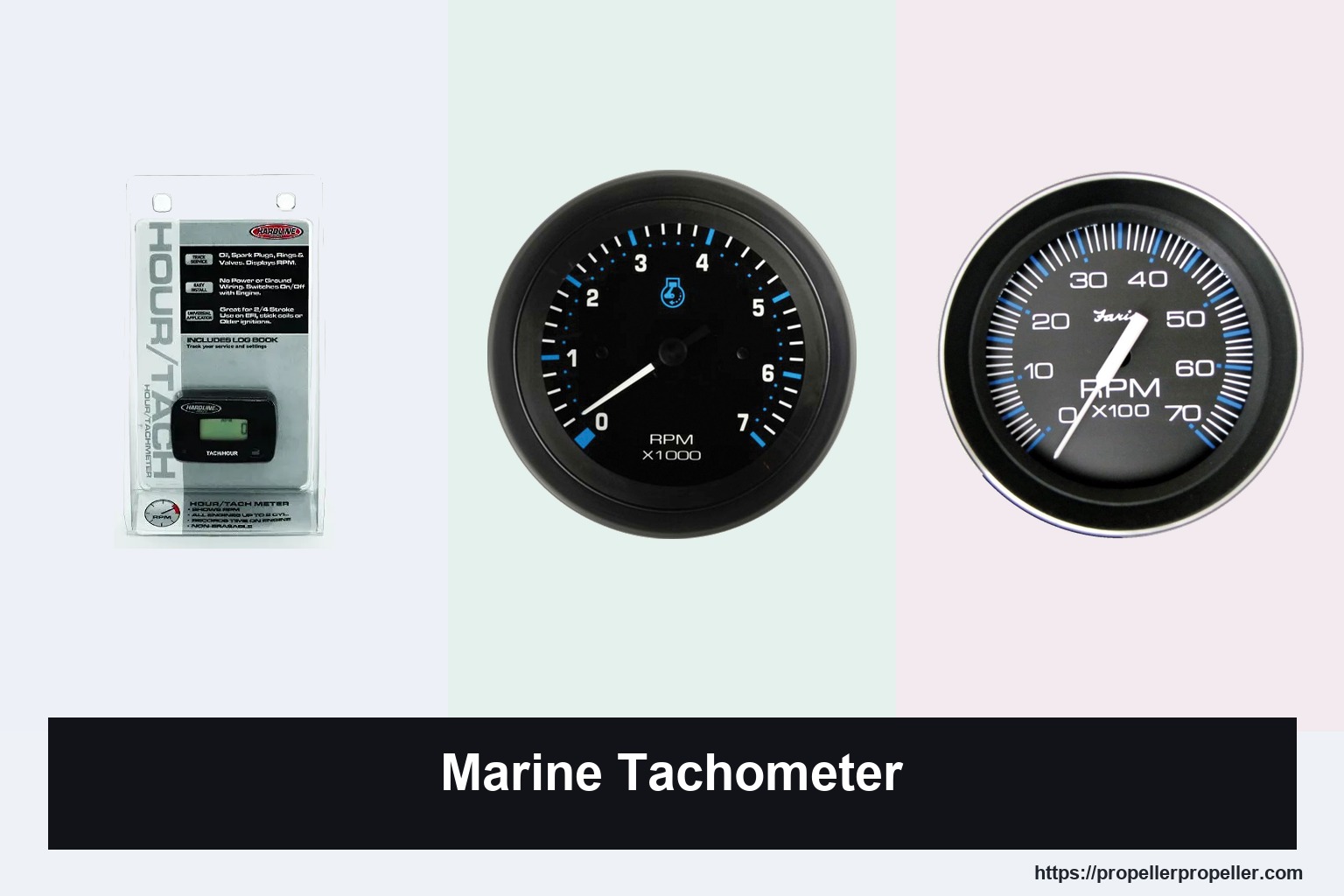
A marine tachometer does more than display engine speed. On the water, it helps you avoid over-revving, dial in throttle response, and judge whether the powerhead is behaving the way it should under load. The best choices also need to survive vibration, spray, changing light, and the reality that many boats use different ignition setups or panel cutouts. That means the right tach is not just about a number on the dial. It is about readable layout, correct sender compatibility, dependable sealing, and a form factor that actually fits your dash.
This roundup focuses on that practical buying decision. Some options are traditional panel gauges with marine styling and fixed sizing. Others are compact digital hour-and-tach units that simplify maintenance tracking for smaller outboards or multipurpose engines. A few are better suited to buyers who want non-contact measurement or portable diagnostics rather than a permanent helm installation. The best pick depends on how you run the boat, how much space you have, and whether you care more about dash aesthetics, service tracking, or diagnostic versatility.
Top Marine Tachometer on the Market

Hardline Products HR-8061-2 Hour Tach
- Up to 16,000 RPM
- One-wire inductive pickup
- IP-68 sealed housing
- 10-year internal battery
- Peel-and-stick mount

Sierra 68399P 3-Inch Tachometer
- 3-inch gauge
- Glass construction
- Marine-grade replacement gauge
- Limited warranty

Faria Coral 7000 Tachometer
- 7000 RPM range
- 3.375-inch mounting hole
- Perimeter-lighted black dial
- Flat glass lens
- Black aluminum bezel

Sierra 68374P Arctic Tachometer
- 3-inch gauge
- 0-7000 RPM range
- Domed glass lens
- White bezel design
- Universal fit

Runleader RL-HM011F Digital Tach Hour Meter
- Service reminder timer
- Replaceable CR2450 battery
- IP65 waterproof rating
- 0.1-hour accuracy
- Programmable firing patterns

Extech 461920 Laser Photo Tachometer
- Non-contact laser measurement
- Up to 99,999 RPM
- Backlit 5-digit display
- Min/Max/Last memory
- Included reflective tape
This article may contain affiliate links. As an Amazon Associate, the website may earn from qualifying purchases at no additional cost to you.
Marine Tachometer Reviews
Hardline Products HR-8061-2 Hour Tach
- Warranty Description
- 10 Year Limited Warranty
- Material Type
- Plastic
- Item Dimensions
- 1 x 5 x 8 inches
- Item Weight
- 1.76 ounces
- Model
- HR-8061-2
Advantages
- Very low entry price
- Tracks hours and RPM
- No hard-wiring required
- Waterproof and vibration-resistant
- Battery does not drain boat power
Limitations
- Not a classic helm gauge
- Limited to two-cylinder gas engines
The Hardline Products HR-8061-2 is the most practical choice for boaters who want a low-cost engine monitor rather than a traditional dash gauge. Its ability to switch between tachometer and hour meter means you can watch RPM while running and log service time when the engine is off. That combination matters for smaller outboards and auxiliary gas engines where maintenance intervals are often tracked by runtime, not guesswork. The display reaches 16,000 RPM, so it is aimed well beyond basic idle-check duty.
Its biggest installation advantage is the one-wire inductive pickup. You wrap it around the spark plug wire and skip cutting, splicing, or hard-wiring into the electrical system. That is especially useful on compact boats, older rigs, and mixed-use equipment where owners want a fast setup. The waterproof, dustproof, and vibration-resistant construction adds confidence in marine spray, and the sealed internal lithium battery means the unit does not pull power from the boat. That reduces wiring complexity and avoids drain during storage.
Against the more traditional panel gauges in this roundup, this unit wins on simplicity and maintenance tracking, not on cockpit presentation. It is the least expensive option here by a wide margin, yet it still brings runtime logging, inductive compatibility, and a useful waterproof design. The tradeoff is that it is not a flush-mounted analog helm gauge. If you want an affordable way to monitor RPM and service hours on a small gas-powered boat, this is the clearest value play and the easiest recommendation to make.
PHOTO: Hardline Products HR-8061-2 Hour – Packaging Front → Source: Amazon.com
Sierra 68399P 3-Inch Tachometer
- Warranty Description
- limited warranty
- Material Type
- Glass
- Item Dimensions
- 4 x 6 x 8 inches
- Item Weight
- 8 ounces
- Model
- 68399P
Advantages
- Common 3-inch gauge size
- Traditional dash-mounted format
- Designed for marine replacement use
- Glass-faced construction
- Limited warranty included
Limitations
- Few feature details provided
- No hour-meter function
The Sierra International 68399P is aimed at buyers replacing an existing marine tachometer with a straightforward, brand-name gauge. The 3-inch format keeps it in the common helm-gauge size class, which helps when the goal is to refresh a panel without redesigning it. Its glass construction gives it a more traditional instrument feel than the compact digital units in this group, so it suits boaters who want a permanent dash-mounted display rather than a portable diagnostic tool.
This model is built around the expectations of marine replacement work. Sierra positions its parts for harsh marine use, and the limited warranty supports the idea that this is a conventional gauge meant to live in a boat dash over time. The main limitation is the very sparse feature set exposed here. There is no long list of extra functions to learn or manage, which can be an advantage when you simply need a clean tachometer swap and nothing more. That also means buyers should be certain the size and electrical match are right before choosing it.
Compared with the digital hour-and-tach options, this gauge is the more focused and more permanent solution. It does not add service timers or a battery-powered maintenance log. Compared with the more decorative Faria gauge, it is less about style and more about straightforward replacement. That makes it the right fit for someone restoring or maintaining a boat panel and wanting a known marine gauge format. If the priority is a simple 3-inch replacement tachometer, this is the most direct choice in the set.
PHOTO: Sierra 68399P 3-Inch Tachometer – Black Gauge Face → Source: Amazon.com
Faria Coral 7000 Tachometer
- Material Type
- Aluminum
- Item Dimensions
- 7 x 6 x 6 inches
- Model
- 3003.34
- Part Number
- 3003.34
Advantages
- Distinctive marine styling
- 7000 RPM dial range
- Flat glass lens
- Black aluminum bezel
- Perimeter-lit dial
Limitations
- Requires a 3.375-inch hole
- No hour-meter function
The Faria Coral-series tachometer is the most style-forward option in this roundup. Its perimeter-lighted black dial, contoured white pointer, and white-and-blue graphics are meant to look intentional on a boat helm, not merely functional. The 7000 RPM range is a familiar fit for many marine applications, and the 4-inch gauge format gives it a more substantial presence on the panel. For buyers who care about the instrument cluster as part of the boat’s visual identity, that matters as much as the reading itself.
Installation is where the size detail becomes important. This gauge requires a 3.375-inch mounting hole, so it is not the casual drop-in choice some shoppers might assume. The flat glass lens and black aluminum bezel suggest a more refined finish, but the fit still needs to be checked against the existing dash opening before ordering. That makes it best for owners who are planning a deliberate panel upgrade rather than swapping a failed gauge at the last minute. The universal-fit wording helps, but the hole size remains the real decision point.
Compared with the Sierra replacement gauges, this Faria stands out because it brings design polish to the helm. Compared with the Hardline and Runleader units, it is less about hour tracking and more about a clean analog display. That tradeoff makes it the strongest pick when the tachometer is part of a broader cockpit refresh. If you want the most attractive marine tach in this group and can accommodate the mounting requirement, this is the one to favor.
PHOTO: Faria Coral 7000 Tachometer – Coral Gauge Face → Source: Amazon.com
Sierra 68374P Arctic Tachometer
- Material Type
- Glass
- Item Dimensions
- 3 x 5 x 5 inches
- Thread Style
- Unc
- Model
- 68374P
- Warranty Description
- limited warranty
Advantages
- Clear white-on-black graphics
- Domed glass resists water
- 3-inch marine gauge size
- 0-7000 RPM range
- Universal fit
Limitations
- No hour tracking
- No digital service reminder
The Sierra International 68374P is a straightforward 3-inch marine tachometer with a cleaner, brighter visual style than many plain replacement gauges. The white bezel and black-on-white graphics improve legibility, and the 0-7000 RPM range keeps the dial appropriate for common outboard use. That range is broad enough for general marine monitoring without trying to be a multi-function instrument. The result is a gauge that feels practical first, but still looks finished on the panel.
Its domed glass lens is an important marine detail because it sheds water and resists scratching better than a basic flat plastic face would. That matters in wet, reflective helm conditions where visibility can drop fast. The universal fit language also helps here, though the actual installation still depends on the panel opening and sender code match. Because it is a traditional gauge, it is best for a permanent boat dash where the owner wants a readable analog tach and does not need extra maintenance tracking features.
Against the Faria Coral, this Sierra trades some style drama for a cleaner, brighter face. Against the Hardline and Runleader digital options, it gives up hour-meter functions and service reminders in exchange for a simpler marine instrument layout. That makes it especially attractive for boaters who want a dependable tachometer they can glance at quickly without extra display clutter. If readability and a classic 3-inch marine format matter most, this is one of the strongest all-around options here.
PHOTO: Sierra 68374P Arctic Tachometer – White Gauge Face → Source: Amazon.com
Runleader RL-HM011F Digital Tach Hour Meter
- Material Type
- Acrylonitrile Butadiene Styrene (ABS)
- Item Dimensions
- 2.89 x 1.85 x 0.79 inches
- Item Weight
- 80 g
- Model
- RL-HM011F
- Thread Style
- Spk
Advantages
- Combines tach and hour meter
- Service reminder timer
- Replaceable battery
- IP65 waterproof rating
- Programmable engine patterns
Limitations
- Less premium helm appearance
- Requires correct programming
The Runleader RL-HM011F is built for owners who care about maintenance timing as much as RPM. It combines a tachometer, hour meter, and service timer in one small display, which makes it more informative than a basic analog gauge. The 0.1-hour accuracy is useful when you are trying to stay disciplined about oil changes, service intervals, or seasonal storage prep. For a marine owner who wants a compact digital reminder instead of a large panel instrument, that feature set is the main draw.
The replaceable CR2450 battery is a practical strength because data can be retained after battery changes and shutdowns. That reduces the anxiety that comes with sealed units when you are counting service time over long periods. The IP65 waterproof rating is solid for splash-prone environments, and the device is also described as easy to install with detailed instructions. Because it can be programmed for different engine firing patterns, it has more setup flexibility than a simple universal tach, but that also means the owner needs to match the programming to the engine correctly.
Compared with the Hardline unit, this model offers a richer maintenance experience, including the service reminder function and replaceable battery. Compared with the analog Sierra gauges, it is much more utilitarian and far less about panel appearance. It is not the best choice if you want a traditional helm aesthetic, but it is one of the best choices if you want a compact digital maintenance tool that can live on a smaller boat, tender, or multi-use engine. For buyers who want reminders and runtime tracking in one package, this is the strongest pick.
PHOTO: Runleader RL-HM011F Digital Tach – Digital Hour Tach → Source: Amazon.com
Extech 461920 Laser Photo Tachometer
- Warranty Description
- 6 months
- Material Type
- Acrylonitrile Butadiene Styrene (ABS)
- Item Dimensions
- 2.3 x 1.6 x 6.2 inches
- Item Weight
- 0.02 kg
- Model
- 461920
Advantages
- Non-contact measurement
- Very high RPM range
- Exceptional accuracy
- Backlit display
- Min/Max/Last memory
Limitations
- Not a permanent helm gauge
- Requires reflective tape
The Extech 461920 is not a marine helm tachometer in the usual sense. It is a non-contact diagnostic tool, and that is exactly why it belongs in this roundup. The laser targeting and reflective tape let you measure rotating objects from 2 to 99,999 RPM without touching the equipment. That makes it useful for troubleshooting, setup, and verification on engines or components where a permanent gauge is not the right answer. For buyers who need portable diagnostics instead of an installed display, this is the most versatile tool in the group.
Its accuracy and display features are the standout technical advantages. The ±0.05% accuracy and 0.1 RPM resolution are unusually precise for this category, while the backlit five-digit screen makes readings easier to use in dim shops or tight engine spaces. Min, max, and last-reading recall also help when you are comparing operating states rather than just checking one number. The handheld form factor is compact, but it requires line-of-sight access and reflective tape, so it is not a set-it-and-forget-it cockpit solution.
Against every permanent gauge here, the Extech solves a different problem. It is less about continual on-water monitoring and more about accurate, temporary measurement during inspection or tuning. That means it is the wrong choice if you want a fixed marine instrument at the helm. It is the right choice if you want a diagnostic tach that can travel between engines and test conditions. For technically minded buyers, marine mechanics, and owners who want a precision check tool, it is the most capable diagnostic option in the set.
PHOTO: Extech 461920 Laser Photo – Handheld Tachometer → Source: Amazon.com
How to Choose a Marine Tachometer
Choosing a marine tachometer is really a choice between three jobs. Some buyers need a permanent helm gauge that reads clearly in sun and spray. Others need a compact digital unit that tracks runtime and service intervals. A third group needs a diagnostic tool that can check rotation without staying on the boat. The right answer depends on how much panel space you have, how much wiring you want to touch, and whether you care more about appearance, maintenance tracking, or test-and-tune flexibility.
Gauge or Tool
Start by deciding whether you need a fixed instrument or a portable diagnostic aid. A panel gauge belongs at the helm and gives you a constant RPM reference while running. A handheld photo tach is better when you want to verify speed during setup or troubleshooting. Those two jobs overlap only slightly, so choosing the wrong style usually leads to frustration. Think about where you will read it and whether it must stay installed all season.
Readability at Sea
Marine use punishes bad displays. Sun glare, splash, and vibration all make a tach harder to read, so the face design matters more than many buyers expect. High-contrast graphics, sensible dial ranges, and glass or sealed lenses can make a big difference when you need a quick glance at throttle settings. If the helm is bright or open, prioritize legibility over decorative details. A tach that looks stylish but is difficult to read is a poor trade on the water.
Compatibility Matters
Before buying, make sure the tach matches your engine setup. Some gauges are intended for specific sender codes or mounting holes. Others work through inductive pickup or programmable firing patterns. That difference can save or create a lot of installation work. If you are replacing a damaged gauge, measure the opening and confirm the style of connection first. If you are adding a new monitor, make sure the engine type and cylinder count are supported.
Power and Wiring
Power source is one of the biggest separators in this category. Some units run from an internal battery and avoid boat wiring entirely. Others need a permanent dash connection. Battery-powered and inductive designs are easier to add to small boats or older setups, but they may sacrifice the polished look of a traditional gauge. Wired helm instruments can look cleaner and feel more permanent, yet they demand more installation planning. Choose the style that fits your tolerance for setup work.
Durability in Wet Conditions
A tachometer on a boat has to tolerate more than normal vibration. Salt, humidity, and washdown use all stress the housing and lens. Sealed construction, waterproof ratings, and scratch-resistant faces are worth paying attention to because they affect how long the gauge stays readable. A unit that survives moisture but fogs or scratches easily loses usefulness quickly. For open boats and hard-running rigs, durability is not a premium extra. It is a core requirement.
Maintenance vs Style
Some buyers want the tach to help manage service intervals. Others want it to disappear into the dash and simply look appropriate. Neither approach is wrong, but they solve different problems. A unit with hour tracking or service reminders is more useful for scheduling oil changes and upkeep. A traditional analog gauge is better if the helm layout and visual consistency matter more. Decide which job is more valuable to you before narrowing the field.
Marine Tachometer Comparison Table
| Product | Best For | RPM Range | Mount Size | Water Protection | Power Type | Model |
|---|---|---|---|---|---|---|
| Hardline Products HR-8061-2 Hour Tach | Best Budget Marine Monitor | 1 x 5 x 8 inches | Plastic | 10 Year Limited Warranty | 1.76 ounces | HR-8061-2 |
| Sierra 68399P 3-Inch Tachometer | Best Marine Replacement | 4 x 6 x 8 inches | Glass | limited warranty | 8 ounces | 68399P |
| Faria Coral 7000 Tachometer | Best Styled Marine Tach | 7 x 6 x 6 inches | Aluminum | Not Specified | 1 g | 3003.34 |
| Sierra 68374P Arctic Tachometer | Best Clean-Read Marine Tach | 3 x 5 x 5 inches | Glass | limited warranty | 7.2 ounces | 68374P |
| Runleader RL-HM011F Digital Tach Hour Meter | Best Maintenance Tracker | 2.89 x 1.85 x 0.79 inches | Acrylonitrile Butadiene Styrene (ABS) | Not Specified | 80 g | RL-HM011F |
| Extech 461920 Laser Photo Tachometer | Best Diagnostic Tachometer | 2.3 x 1.6 x 6.2 inches | Acrylonitrile Butadiene Styrene (ABS) | 6 months | 0.02 kg | 461920 |
How We Tested & Analyzed Marine Tachometer
This roundup was built around the decisions a marine buyer actually has to make: gauge style, reading clarity, engine compatibility, mounting requirements, power source, and resistance to wet conditions. Those criteria matter because a tachometer can be technically accurate and still be a bad purchase if it does not fit the dash, match the engine, or survive the environment. Each product was evaluated as a category solution rather than as a generic tachometer, which is why the comparison emphasizes setup consequence as much as display features.
Comparisons focused on meaningful functional differences. Permanent helm gauges were separated from compact digital monitor units and from non-contact diagnostic tools, because those categories solve different problems even when the product names overlap. Within the helm-gauge group, the key distinctions were readability, dial range, mounting dimensions, and marine durability cues. Within the digital group, the decisive factors were battery behavior, service tracking, and installation simplicity. That keeps the recommendations grounded in how each tach would be used in real ownership.
The analysis also accounts for limitations that matter to buyers. Some models offer very little setup detail, which increases the importance of checking fit before ordering. Others depend on proper programming or a compatible sender code. Diagnostic tools add precision, but they are not a substitute for a permanent cockpit display. By weighing those tradeoffs directly, the guide aims to reduce mismatch risk and help readers choose the tachometer type that fits their boat and maintenance habits.
Frequently Asked Questions
Do marine tachometers need to match engine type exactly?
Often, yes. Some tachometers are designed for specific sender codes, cylinder counts, or firing patterns. Others use inductive pickup or non-contact measurement, which changes the compatibility question. Always confirm whether the unit is meant for permanent dash use, direct wiring, or temporary diagnostic work before you buy.
Are digital hour-and-tach units better than analog gauges?
Not universally. Digital units are usually better if you want runtime tracking, service reminders, or compact installation. Analog gauges are better if you want a classic helm display that is easy to read at a glance. The better choice depends on whether maintenance tracking or dash presentation matters more to you.
How important is waterproofing in a marine tachometer?
Very important. Boats deal with spray, humidity, vibration, and cleaning, so the housing and lens need to handle moisture without becoming unreadable or unreliable. A tach that resists water but scratches or fogs quickly can still become a poor long-term value. Look for sealing and durable lens construction.
Can a diagnostic tachometer replace a helm gauge?
Usually no. A diagnostic tachometer is great for temporary measurements, tuning, and troubleshooting, especially when it uses non-contact sensing. It is not meant to serve as a permanent dashboard instrument. If you need to monitor RPM while underway, choose a fixed marine gauge or a digital hour-and-tach unit instead.
Final Thoughts
The best marine tachometer is the one that matches how you use the boat. A permanent gauge makes sense when you want a clear, always-available RPM reading at the helm. A compact digital unit makes more sense when maintenance tracking and easy installation matter more. A portable diagnostic tach is the right tool when precision measurement is the priority. Once you separate those jobs, the field becomes much easier to narrow.
For most buyers, the decision comes down to fit, readability, and how much setup complexity you are willing to accept. The strongest value comes from choosing the simplest tachometer that still solves your real problem. If that means a basic replacement gauge, buy the gauge. If it means a maintenance meter, choose the maintenance meter. If you need a test tool, get the test tool. That discipline is what leads to a purchase you will actually be happy with on the water.



