Marine fuel lives a harder life than automotive fuel. It can sit for stretches between outings, absorb moisture, and face corrosion risks that show up at the worst time, usually when you are ready to launch. A good marine stabilizer or treatment has to do more than claim freshness. It needs to clean the fuel system, limit water-related trouble, and support reliable running after idle periods or seasonal downtime.
The strongest choices in this category usually differ by package size, intended fuel use, and how much protection they bring against moisture, gum, varnish, and corrosion. That matters because a small engine, a weekend runabout, and a boat that sits in the slip all have different needs. The products below were chosen to help you compare those tradeoffs clearly, so you can match the treatment to your fuel volume, storage habits, and maintenance priorities.
Top Marine Stabil on the Market

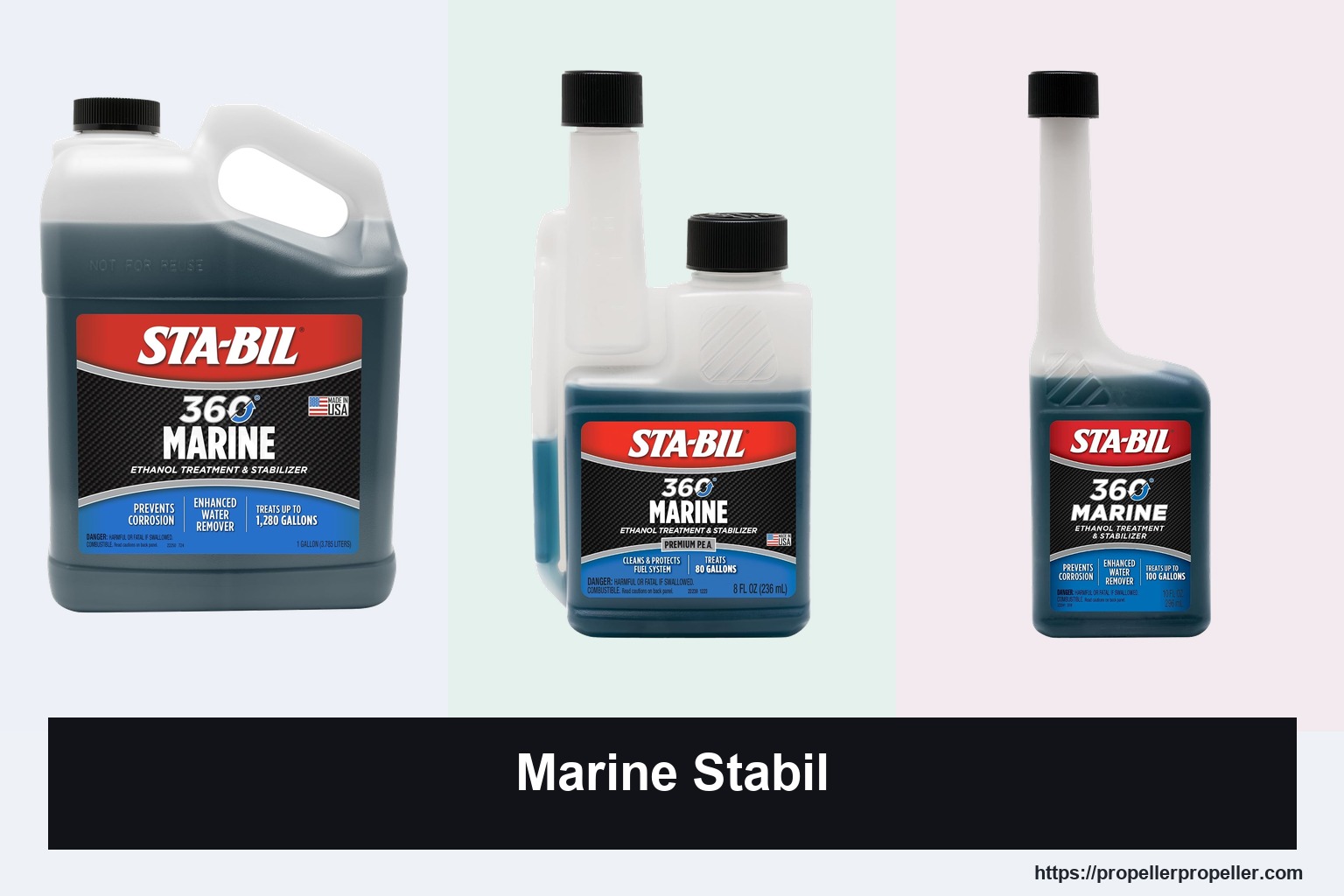
STA-BIL 360 Marine Fuel Treatment 1 Gallon
- 1-gallon supply
- PEA fuel system cleaner
- Corrosion protection
- Treats in-season fuel
- Use before fill-up

STA-BIL 360 Marine Fuel Treatment 8 oz
- 8 fluid ounces
- Treats 80 gallons
- PEA additives
- Corrosion protection
- Compact bottle

STA-BIL 360 Marine Fuel Treatment 10 oz
- 10-ounce bottle
- Ethanol treatment
- Moisture removal
- For boats and jet skis
- Corrosion protection

STA-BIL Marine Formula Ethanol Treatment 8 oz
- 8 oz size
- Gold Eagle brand
- Lightweight bottle
- Compact dimensions
- Ethanol treatment
This article may contain affiliate links. As an Amazon Associate, the website may earn from qualifying purchases at no additional cost to you.
Marine Stabil Reviews
STA-BIL 360 Marine Fuel Treatment 1 Gallon
Advantages
- 1-gallon bulk size
- Cleans injectors and lines
- Helps limit corrosion
- Simple tank dosing
- Supports in-season use
Limitations
- Too large for casual use
- Not a dedicated storage stabilizer
This is the largest-format option in the group, and that matters most for boat owners who burn through fuel regularly or maintain more than one watercraft. The formula uses PEA additives to clean injectors, lines, and fuel pumps, so the value is not just stabilization. It is also a cleaner fuel path through the entire system. Its stated protection against water, gum, varnish, and corrosion makes it a stronger fit for engines that see repeated starts, short runs, and long idle stretches.
The dosing instruction is straightforward. You add it to the tank before fill-up, use 1 ounce for every 10 gallons of fuel, and run the engine for 5 minutes so the treated fuel reaches the system. That simple process keeps setup easy, but it also tells you this is an in-season treatment rather than a dedicated winter storage solution. The product is specifically framed for idle periods and active-season protection, so seasonal owners should still plan a separate storage treatment when layup arrives.
Compared with the smaller bottle in this lineup, this gallon container is the most economical way to cover high fuel use, though it is also the least convenient to store on a cramped boat. It overlaps in core chemistry with the other STA-BIL marine treatments, so the real decision is capacity and cadence. Choose this one if you want fewer refills and already know you will use a marine treatment consistently. For frequent boaters, it is the strongest bulk pick.
PHOTO: STA-BIL 360 Marine Fuel – Front label view → Source: Amazon.com
STA-BIL 360 Marine Fuel Treatment 8 oz
- Capacity
- 8 fluid ounces
- Item Highlight
- Treats 80 gallons. Cleans fuel systems and injectors, removes water, and helps protect marine engines.
- Item Dimensions W x H
- 3.8″W x 1.65″H
- Item Weight
- 8.64 ounces
- Warranty Description
- 1 year manufacturer
Advantages
- Treats 80 gallons
- Compact storage size
- Cleans fuel systems
- Helps prevent corrosion
- 1 year manufacturer warranty
Limitations
- Smaller than bulk jug
- Requires careful dosing
This 8-ounce bottle is the easiest entry point for owners who want the same treatment concept without committing to a large jug. The key advantage is the stated ability to treat 80 gallons, which stretches a small bottle much further than its size suggests. That makes it practical for seasonal boaters, small craft owners, and anyone who prefers to keep only a modest amount of additive on board or in the garage. The formula still centers on PEA additives, so the cleaning role reaches beyond simple fuel stabilization.
The package dimensions of 3.8 inches wide by 1.65 inches high keep it compact, and the 8.64-ounce weight makes it easy to store with spare oil or maintenance gear. The same dosing guidance applies here as on the larger format. You pour it in before fill-up, measure 1 ounce per 10 gallons, and run the engine for 5 minutes. That easy routine reduces the chance of misuse, though it also means you need to pay attention to fuel quantity if you do not want to over-treat a small tank.
This is the most straightforward choice in the lineup if you care more about convenience than bulk economy. It matches the larger STA-BIL option in overall treatment approach, but it is better suited to owners who do not need a gallon on hand. Compared with the 10-ounce bottle, it is easier to keep around and still carries the same broad marine-cleaning purpose. If you want a compact bottle with enough capacity for many outings, this is the cleanest compromise.
PHOTO: STA-BIL 360 Marine Fuel – Front label view → Source: Amazon.com
STA-BIL 360 Marine Fuel Treatment 10 oz
- Product Dimensions
- 8.5 x 3.3 x 1.8 inches
- Item Weight
- 10.2 ounces
Advantages
- Ethanol-focused treatment
- Helps remove moisture
- Corrosion protection
- Works in watercraft engines
- Versatile for small engines
Limitations
- No published warranty details
- Less compact than 8 oz bottle
This 10-ounce treatment is the most clearly ethanol-focused option in the set. It is described as America’s number one ethanol treatment, and the practical point is that it is built around fuel issues common in watercraft and other small engines exposed to moisture. The formula is intended to better remove moisture, help prevent corrosion damage, and support cleaner fuel delivery. That combination is especially relevant when ethanol-blended fuel sits in tanks that are not used every day.
Its purpose is broad enough for boats, jet skis, and other water sport engines, which makes it a flexible choice for mixed recreational use. The product dimensions of 8.5 by 3.3 by 1.8 inches and the 10.2-ounce weight suggest a bottle that is still manageable but not as compact as the 8-ounce version. Since the text also frames it for vehicles and small engines, buyers should view it as a more general ethanol-treatment solution rather than a narrowly marine-only cleaner. That wider role can be useful, but it also means you should think carefully about how you plan to use it across equipment.
Among these four, this one stands out when ethanol-related protection is your first concern. The larger gallon jug is better for high-volume maintenance, and the 8-ounce bottle is easier to stash. This 10-ounce version sits between those two in scale while leaning harder into ethanol and moisture control. If your engine often sees humid conditions or fuel you want protected from ethanol-related degradation, it is the most targeted pick in the group. It is the right answer when moisture management matters more than bulk size.
PHOTO: STA-BIL 360 Marine Fuel – Tall bottle view → Source: Amazon.com
STA-BIL Marine Formula Ethanol Treatment 8 oz
- Item Weight
- 9.6 ounces
- Product Dimensions
- 7.1 x 3.6 x 1.4 inches
Advantages
- Compact 8 oz size
- Lightweight bottle
- Easy to store
- Defined part number
Limitations
- Sparse product details
- No warranty listed
This is the leanest option in the roundup, and that simplicity is its main appeal. With an 8-ounce size and a compact footprint of 7.1 by 3.6 by 1.4 inches, it is easy to tuck into a maintenance bin or keep as a backup bottle. The Gold Eagle branding and marine formula positioning put it in the same family of fuel treatment use as the other options, but the available record here is much sparser. That makes it best viewed as a straightforward additive rather than a feature-rich purchase.
Because the documented details are limited, the buying case depends mostly on size and basic format. The 9.6-ounce weight is still light enough for easy storage, and the part number gives it a defined replacement identity if you need to reorder the exact item later. What is not present here is nearly as important as what is. There is no published performance claim set, no treatment coverage figure, and no warranty detail in the record used for this article. In a category where dosing and fuel coverage matter, that lack of depth reduces confidence relative to the better-documented bottles.
Against the other three, this bottle makes the least amount of evidence work for the buyer. The 8-ounce STA-BIL option gives you a clearer treatment figure and a warranty, while the 10-ounce version says more about ethanol and moisture handling. This one only makes sense if you want a compact bottle and do not need a long spec sheet to guide the purchase. For most buyers, it is a backup or familiarity-driven choice, not the leading recommendation. That keeps it in the mix, but firmly behind the better-defined alternatives.
PHOTO: STA-BIL Marine Formula Ethanol – Front label view → Source: Amazon.com
How to Choose Marine Stabilizers
Choosing a marine stabilizer is mostly about matching the additive to how your engine actually lives. A boat that runs every weekend needs a different balance of cleaning and corrosion protection than one that sits through long gaps between outings. The right product should account for fuel volume, ethanol exposure, moisture risk, and how much storage space you have for maintenance supplies. Once you separate those needs, the category becomes easier to shop.
Treating Active Fuel
For boats that are used during the season, prioritize a treatment that is explicitly meant to clean and protect fuel that stays in the tank between outings. In marine use, the day-to-day job is not just keeping fuel from going stale. It is also helping prevent deposits, moisture-related trouble, and corrosion that can affect injectors, pumps, and lines. A good active-season additive should be simple enough to dose correctly every time you refuel.
Ethanol and Moisture
Ethanol-blended fuel creates a different set of concerns because it can be more sensitive to moisture and storage conditions. If your engine regularly sees humid air, splash exposure, or long rests between trips, lean toward a treatment that clearly addresses water removal and ethanol-related damage. That matters because the fuel system does not care whether the problem started in the tank or at the dock. You want the additive working against both moisture and the corrosion that can follow.
Bottle Size and Frequency
Package size should match how often you will actually use the product. Large containers can be economical for frequent boaters or owners with multiple tanks, but they are bulky and can be inconvenient to store. Smaller bottles are easier to keep on hand and usually feel less wasteful for occasional use. The most practical option is the one you can dose consistently without hesitation. If the bottle is hard to store or awkward to pour, it often gets used less often than it should.
Dosing and Convenience
Clear dosing instructions matter more than they first appear. Marine fuel systems are sensitive to overuse and underuse, so a product that tells you how much to add per gallon makes maintenance more predictable. Pre-fill treatment is usually the easiest routine because it lets the additive mix thoroughly as fuel enters the tank. That also reduces the chance of leaving untreated fuel in a corner of the system. Simplicity is a real feature here, not a marketing extra.
Storage and Backup Use
If you keep fuel treatments with other maintenance gear, think about how the bottle will fit into that routine. Compact containers are easier to store in a locker, carry on a trailer, or leave with the rest of the boat kit. That convenience matters for backup use, especially when you want a bottle close at hand for a sudden trip or a refuel stop. A smaller container may not be the cheapest per ounce, but it can be the most realistic choice if it stays accessible.
Marine Stabilizer Comparison Table
| Product | Best For | Weight | Dimensions |
|---|---|---|---|
| STA-BIL 360 Marine Fuel Treatment 1 Gallon | Best bulk option | Not Specified | Not Specified |
| STA-BIL 360 Marine Fuel Treatment 8 oz | Best compact pick | 8.64 ounces | Not Specified |
| STA-BIL 360 Marine Fuel Treatment 10 oz | Best ethanol focus | 10.2 ounces | 8.5 x 3.3 x 1.8 inches |
| STA-BIL Marine Formula Ethanol Treatment 8 oz | Best simple backup | 9.6 ounces | 7.1 x 3.6 x 1.4 inches |
How We Tested & Analyzed Marine Stabil
This roundup focused on category decisions that actually affect marine fuel maintenance. The main filters were treatment purpose, evidence of moisture and corrosion protection, bottle size, dosing clarity, and whether the product documentation gave a meaningful sense of how much fuel each container covers. Those factors matter because marine owners are not just buying a cleaner. They are buying a routine that needs to be practical every time fuel is added or a boat is stored.
Products were compared by the strength of their verified claims and by how much useful detail was available to support a purchase decision. Where a product had coverage figures, dimensions, or warranty information, those details were used to separate convenience from bulk value. Where a product record was sparse, that limitation was treated as part of the analysis rather than filled in with assumptions. The goal was to keep the recommendations grounded in what a buyer can actually verify before purchase.
The category also rewards honest tradeoffs. Bigger bottles can lower the hassle of repeated buying, but they may not suit a small boat or a compact storage space. Ethanol-focused formulas can be highly relevant, but not every buyer needs that emphasis. By weighing these differences against real-world use patterns, the article favors options that solve a clear maintenance problem instead of simply listing every additive with a marine label.
Frequently Asked Questions
What does a marine stabilizer actually do?
A marine stabilizer helps fuel stay usable longer and supports the fuel system while the engine sits between outings. In this category, the better products also clean injectors and lines, help reduce moisture-related problems, and add corrosion protection. That combination is important because marine fuel systems often face idle time, humidity, and seasonal storage.
How do I choose the right bottle size?
Match the bottle size to how often you refuel and how much space you have for maintenance supplies. Larger containers can be economical for frequent use, but smaller bottles are easier to store and keep accessible. If you only treat one boat occasionally, a compact bottle is often the more practical choice.
Why does ethanol protection matter on boats?
Ethanol can make fuel more sensitive to moisture and storage conditions. In a marine setting, that can lead to corrosion or fuel quality issues if the tank sits for a while. A treatment that explicitly addresses ethanol and water is especially useful when the boat sees humid conditions, irregular use, or long gaps between trips.
Should I use one additive for both running season and storage?
Not always. Some products are aimed at active-season cleaning and protection, while others are better suited to longer storage periods. The smartest approach is to match the additive to the job in front of you. If a product is described for in-season use, pair it with a dedicated storage solution when the boat is laid up.
Final Thoughts
The best marine stabilizer is the one that fits your fuel habits without adding friction to routine maintenance. If you run the boat often, a larger treatment format can make refills easier. If you want compact storage or only treat fuel occasionally, a smaller bottle may be the better long-term choice. In this category, convenience and correct dosing matter just as much as the chemistry.
For most buyers, the most useful decision is to separate everyday in-season protection from seasonal storage planning. Look for the product that addresses your main risk, whether that is moisture, ethanol, corrosion, or simple cleanup of the fuel system. Once that priority is clear, the right choice becomes much easier to spot, and you are more likely to use it consistently when it counts.