Marine oil work is one of those maintenance jobs where the wrong tool wastes time fast. On boats, the challenge is rarely just moving fluid. It is reaching narrow drain points, matching the correct fitting, keeping the job clean, and avoiding a pump that turns a simple oil change into a spill-prone chore. The best options in this category are the ones that make that process controlled and predictable, especially when you are dealing with outboard gear oil or engine oil in tight spaces.
This roundup focuses on the practical differences that matter before you buy. That means pump stroke output, adapter coverage, hose and tube reach, self-priming behavior, construction, and whether the tool is suited to your boat’s drain plug or dipstick tube. Some of these pumps are best as compact gear-oil change tools. Others are broader fluid extractors that trade simplicity for versatility. The right choice depends on how often you service the boat, what fluids you handle, and how much setup you want to manage each time.
Top Marine Oil Pump on the Market

Slippery Pete Lower Unit Gear Oil Pump
- 8cc per stroke
- 3 adapter sizes
- Rigid suction tubes
- Fits most outboards
- Not Volvo Penta

EWK 6L Manual Fluid Extractor
- 6L capacity
- 59-inch clear hose
- 42-inch metal probe
- No electricity needed
- Transport sealing cap

LOZAGU Lower Unit Gear Oil Pump
- 10cc per stroke
- 4 adapter sizes
- 19.5-inch hose
- Two suction tubes
- Quart bottle fit

Pactrade Marine Brass Oil Extractor
- Solid brass body
- Self-priming hand pump
- 6mm, 8mm, 12mm tubes
- 9-inch length
- One-year warranty
This article may contain affiliate links. As an Amazon Associate, the website may earn from qualifying purchases at no additional cost to you.
Marine Oil Pump Reviews
Slippery Pete Lower Unit Gear Oil Pump
Advantages
- Compact quart-bottle pump
- Metal swivel fitting
- Common adapter coverage
- Tall and short bottle reach
- Low-cost maintenance tool
Limitations
- Not compatible with Volvo Penta
- Limited to gear-oil use
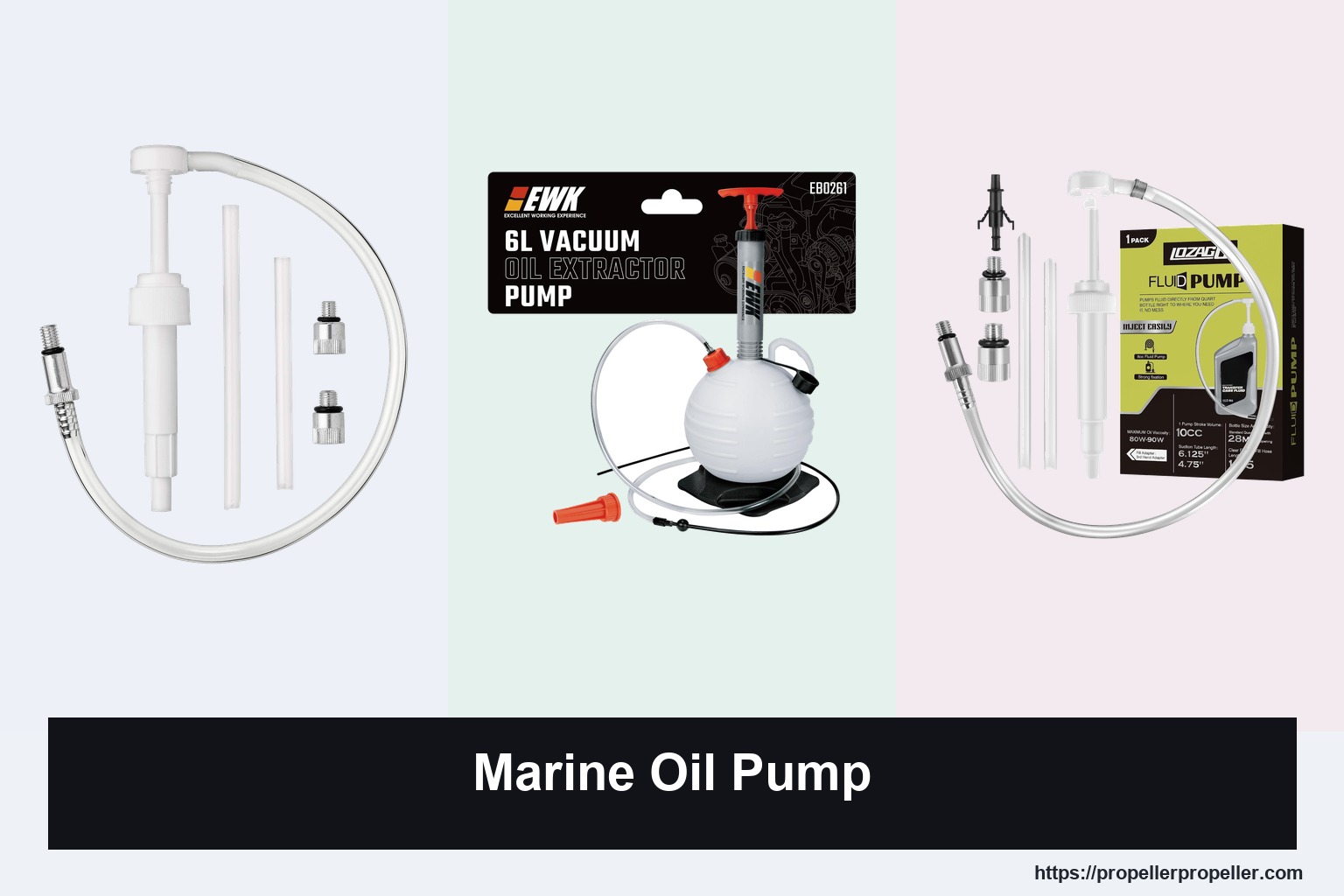
Slippery Pete is the most narrowly focused option here, and that is exactly why many boat owners will like it. The 8cc per pump stroke output gives you a simple, repeatable transfer rate, while the included 3 adapter sizes reduce the guessing that often slows down lower-unit oil changes. Because it is built around standard quart bottles, it stays compact and easy to store with the rest of your maintenance kit instead of becoming a bulky extractor you rarely want to carry.
The setup is straightforward for the kind of job it targets. The metal swivel and the 8mm and 10mm adapters help cover common marine drain plug sizes, and the two rigid suction tubes are meant to reach both tall and short gear-oil bottles. That matters when you are working on a dock, in a driveway, or in a cramped trailer storage area, because the bottle position changes how easily the pump feeds. The clear downside is its compatibility boundary. The fit is broad for many outboard motors, but it is explicitly not intended for Volvo Penta applications.
Against the other pumps in this group, this one wins on simplicity and price rather than versatility. It is a better match than a full fluid extractor when your job is specifically lower-unit gear oil, and it is less of an all-purpose tool than the larger manual pump systems. If your maintenance routine centers on outboard gear oil and you want the smallest, least complicated way to move that fluid, this is the strongest value pick. Just make sure your motor is actually covered before you commit to it.
PHOTO: Slippery Pete Lower Unit – Pump and adapters set → Source: Amazon.com
EWK 6L Manual Fluid Extractor
- Product Dimensions
- 9.5 x 9.5 x 14.6 inches
- Item Weight
- 3.7 pounds
- Model
- 6L Manual Oil Extractor
Advantages
- Large 6L capacity
- Long clear hose
- Deep-reaching probe
- Power-free operation
- Stable step-on base
Limitations
- Bulkier than bottle pumps
- Less specialized for marine use
EWK’s 6L manual extractor is the most versatile tool in this group and the one most likely to suit owners who maintain more than one machine. Its 6L manual extractor format gives it enough capacity for larger oil changes, while the 59″ clear hose adds a practical inspection benefit because you can watch the fluid as it moves. That combination matters when you want a cleaner, more deliberate oil change rather than a fast one-shot transfer tool. It is also broader in purpose than a marine-only pump, so it can pull double duty across vehicles and equipment.
Its setup is more involved than the compact bottle pumps, but the tradeoff is reach and control. The 42-inch flexible metal probe is designed to go deep into the pan, while the wide step-on base helps keep the unit steady as suction builds. The sealing cap is another useful detail because it supports cleaner transport after the extraction is complete. Since no electricity or compressor is needed, this is the sort of pump you can use in a garage, driveway, or remote work area. The flip side is that it is a bigger tool and a less specialized one, so it rewards buyers who value flexibility over minimalism.
Compared with the smaller gear-oil pumps in this list, the EWK makes more sense when you want one extractor for multiple jobs rather than a dedicated marine refill tool. It is not the lightest choice, and it is not the simplest for a one-size-specific marine service, but it is the most adaptable. Buyers who service boats alongside motorcycles, generators, or other equipment will get the most from it. If you want one manual extractor that can handle broader maintenance work without power, this is the most capable option here.
PHOTO: EWK 6L Manual Fluid – 6L vacuum oil extractor → Source: Amazon.com
LOZAGU Lower Unit Gear Oil Pump
- Product Dimensions
- 8.27 x 5.5 x 1.37 inches
- Item Weight
- 4.8 ounces
- Model
- LOZ-LHP03
Advantages
- Very low price
- Four adapter sizes
- Long service hose
- Tall and short bottle tubes
- Lightweight design
Limitations
- Dedicated to lower-unit use
- Less premium construction
LOZAGU’s lower-unit pump is the most budget-friendly way into this category, but it still carries enough hardware to feel serious. The 10CC per pump stroke rating is a little more aggressive than the smaller pump above, and the 4 adapter sizes improve the odds of matching your drain plug without extra trips for accessories. Because it is built for standard quart bottles, it stays close to the core marine task of moving gear oil cleanly from the bottle into the lower unit.
The practical value here comes from reach and packaging. The long 19.5-inch hose is useful when the bottle cannot sit directly beside the work area, and the long and short suction tubes help with both tall and short quart bottles. That makes the pump easier to place in a tight bilge, on a transom, or near an awkward service bay. The product is also light enough to stay in a small maintenance box. The main limitation is the same one common to specialized lower-unit pumps. It is meant for a specific job and does not replace a broader fluid extractor.
Against the other two gear pumps, this one is the better pick for buyers who want more adapter coverage at a lower price. It is not as polished as the higher-priced marine-specific option, but it gives you a longer hose and an extra adapter size for less money. That combination makes it especially attractive if you service a few different boats or simply want a practical backup pump. If the goal is affordable, dedicated lower-unit oil changing with useful reach, this is the one to start with.
PHOTO: LOZAGU Lower Unit Gear – Lower unit adapter kit → Source: Amazon.com
Pactrade Marine Brass Oil Extractor
Advantages
- Solid brass construction
- Self-priming action
- Three tube sizes
- Removable tubing
- One-year warranty
Limitations
- Manual operation only
- Requires tube selection
Pactrade Marine takes a different route from the bottle-mounted pumps. Instead of focusing only on standard quart bottle gear oil changes, it uses a solid brass body and a self-priming hand pump format that feels more like a durable maintenance tool than a disposable accessory. That construction is appealing if you value a sturdy hand pump for repeated use, and the brass cylinder body is a meaningful differentiator at this price level. It is also clearly aimed at boats with outboard motors, but it is broad enough to extend to other vehicles and equipment too.
The included 6mm, 8mm, and 12mm plastic tubes give it useful fitting flexibility, and the removable tubing is a practical advantage when cleaning matters after oil service. The 9-inch body is compact enough to store easily, yet the pump is still sized like a real hand tool rather than a tiny accessory. The one-year warranty adds a bit of reassurance for buyers who want some post-purchase coverage. On the downside, the pump relies on manual operation and tube selection, so it asks for a little more care than the bottle pumps when you are matching the right connection.
This is the best choice for buyers who want a more durable-feeling hand extractor and are comfortable with a traditional pump-and-tube routine. It is not as quick to set up as the simplest lower-unit bottle pumps, and it is not as broadly capable as the large 6L extractor. Still, it occupies a valuable middle ground for people who want brass construction and a self-priming design without moving up to a larger fluid-transfer system. If longevity and a more substantial hand-tool feel matter, this is the most appealing pick.
PHOTO: Pactrade Marine Brass Oil – Brass hand pump → Source: Amazon.com
How to Choose a Marine Oil Pump
Choosing a marine oil pump starts with the job you actually need to do. A lower-unit gear oil change demands different fittings and a different workflow than extracting engine oil through a dipstick tube. Capacity, hose length, adapter sizes, and whether the pump is bottle-mounted or self-contained all change how clean and easy the job feels. The best purchase is not always the most powerful one. It is the pump that matches your boat, your service routine, and the amount of cleanup you are willing to tolerate.
Match the Service Job
The first decision is whether you are changing lower-unit gear oil or extracting engine oil. Those jobs look similar from a distance, but they use different access points and reward different tool shapes. A bottle-style gear pump is usually the better fit when the goal is to refill a lower unit cleanly. A manual extractor makes more sense when you want to pull oil through a dipstick tube or service multiple engines with one tool. Choosing the wrong style tends to slow the work down more than the actual pumping ever will.
Check Adapter Coverage
Adapter size matters because a pump that nearly fits still wastes time. Marine drain plugs and service openings are not perfectly standardized, so extra fittings can save a project when you are working on different motors or older hardware. A wider adapter set also reduces the chance of forcing a poor seal, which can lead to leaks or a failed transfer. If you maintain more than one boat or keep equipment from multiple brands, adapter variety is usually worth more than a small difference in price.
Think About Reach
Hose and tube length are easy to overlook until the bottle or reservoir has to sit in an awkward place. Short tools are fine when the workspace is open and the fluid container can stay close to the drain point. Longer hoses help when the engine bay is cramped, the transom area is crowded, or the container needs to sit farther away for stability. Reach also affects how clean the job stays. Better placement usually means fewer spills, less strain, and less need to reposition the pump mid-task.
Choose the Right Capacity
Capacity influences how often you have to stop and reset the tool. Smaller gear pumps are efficient for single lower-unit services, especially when the bottle size and fill volume are predictable. Larger extractors become more attractive when you want to handle a bigger oil load in one pass or move between engines, generators, and other equipment. Bigger is not automatically better. A large reservoir can add weight and bulk, so the right balance depends on whether you value compact storage or fewer interruptions during service.
Look at Build and Cleaning
Construction quality matters most when the pump will live in a damp marine storage area or see repeated seasonal use. Metal fittings, brass bodies, and reinforced hoses generally hold up better than thin, fragile parts, especially when the tool is packed away with other maintenance gear. Cleaning is equally important. Removable tubing and sealing features make a real difference after an oily job because they reduce mess in storage and help the pump stay usable the next time you need it. A tool that is easy to clean usually ends up being the one you actually keep on board.
Consider Power and Portability
Manual pumps are popular in marine use because they do not depend on electricity or compressed air. That makes them easier to use at the dock, in the driveway, or anywhere you do not want to drag extra equipment. Portability matters if you maintain a trailer boat or work from a mobile setup. Light pumps are easier to carry, but heavier extractors sometimes justify themselves with larger capacity or better reach. The real question is whether you want the simplest tool to move around or the most capable one to keep in the shop.
Marine Oil Pump Comparison Table
| Product | Best For | Weight | Dimensions | Model |
|---|---|---|---|---|
| Slippery Pete Lower Unit Gear Oil Pump | Best Compact Gear Pump | Not Specified | Not Specified | Not Specified |
| EWK 6L Manual Fluid Extractor | Best All-Around Extractor | 3.7 pounds | 9.5 x 9.5 x 14.6 inches | 6L Manual Oil Extractor |
| LOZAGU Lower Unit Gear Oil Pump | Best Budget Marine Pump | 4.8 ounces | 8.27 x 5.5 x 1.37 inches | LOZ-LHP03 |
| Pactrade Marine Brass Oil Extractor | Best Brass Manual Pump | Not Specified | Not Specified | Not Specified |
How We Tested & Analyzed Marine Oil Pump
This category was evaluated by comparing the characteristics that change the experience of a marine oil change in practice. Adapter compatibility, hose or tube reach, pump output, construction material, storage footprint, and operating style all matter because they determine whether a tool is quick, clean, and usable in confined boat spaces. The comparison also considered whether each pump was specialized for lower-unit gear oil or broad enough for general fluid extraction, since that difference strongly affects day-to-day value.
Price and usability were weighed together rather than in isolation. A lower-cost pump is not a better buy if it lacks the reach or fittings needed for the job you actually perform. Likewise, a more expensive extractor earns its place only when the added capacity, sealing, or material quality solves a real maintenance problem. The analysis therefore focused on the consequences of each verified feature, not on feature count alone.
Limits were handled conservatively. When a product clearly targeted a narrower application, that specialization was treated as part of its value rather than a flaw. When a compatibility restriction or manual-operation tradeoff appeared, it was treated as a buying constraint that matters to the reader. No unsupported performance claims were added, and no assumption was made about unlisted accessories, ratings beyond the verified rating, or use cases that were not grounded in the available product details.
Frequently Asked Questions
What makes a marine oil pump different from a regular transfer pump?
A marine oil pump is usually designed around the access and fitting problems that come with boats. Lower-unit service often needs adapters that match specific drain openings, while engine oil extraction may rely on dipstick-tube access and longer probes. The right marine tool is less about raw power and more about clean routing, compatible fittings, and control in tight spaces.
Should I choose a bottle-mounted pump or a manual extractor?
Choose a bottle-mounted pump when your main task is refilling or changing lower-unit gear oil from a standard bottle. Choose a manual extractor when you want a more general tool for pulling oil from engines or other equipment. Bottle pumps are usually simpler and smaller. Manual extractors are usually more versatile and better for broader maintenance routines.
How important are hose and tube lengths?
Very important if your work area is cramped. Longer hoses and probes let you keep the container or pump body in a safer, more convenient position. That can reduce spills and make it easier to work around transoms, engine bays, and awkward storage layouts. If your setup is spacious, shorter tools can still be perfectly efficient.
Is build material worth paying more for?
Often yes, especially in marine use where tools may be stored in damp conditions or used repeatedly over time. Brass, reinforced construction, and better sealing can improve longevity and reduce annoyance during cleanup. If you only service one boat occasionally, a simpler tool may be enough. If you maintain equipment regularly, stronger materials usually pay off.
Final Thoughts
The best marine oil pump is the one that matches your service pattern instead of trying to do every job. Dedicated lower-unit pumps are compact, affordable, and efficient when you know your fittings. Larger manual extractors are better when you want one tool for multiple fluids and machines. Brass hand pumps sit in the middle by offering a sturdier feel and a more traditional maintenance workflow. Each approach makes sense for a different kind of owner.
If your priority is quick lower-unit service, choose the simplest pump that fits your motor and bottle style. If you value flexibility or maintain more than one type of equipment, step up to a broader extractor. And if durability and a solid hand-tool feel matter most, look for the sturdier construction option. A good choice here saves time every season, and the right one should make the next oil change feel controlled instead of complicated.