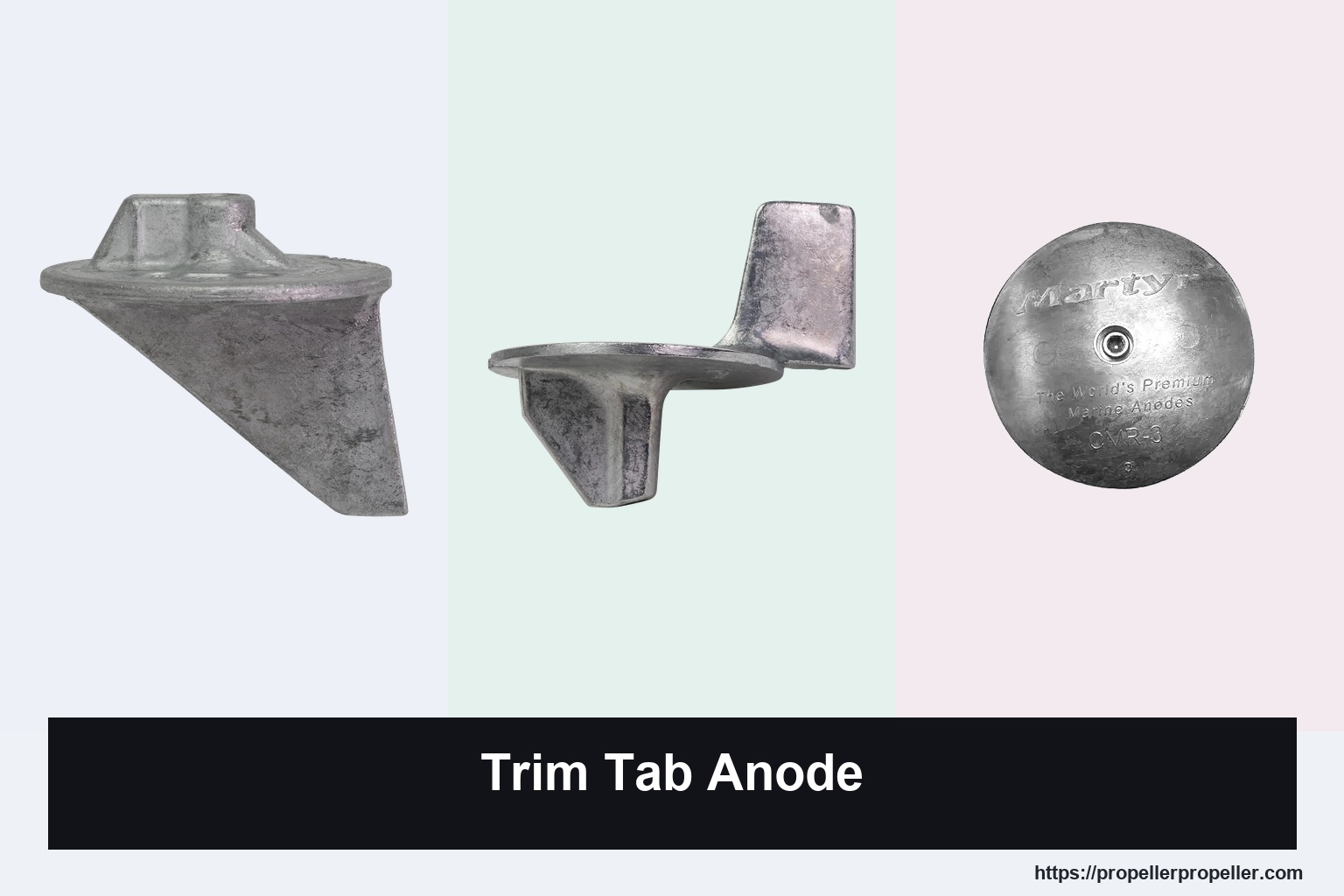
A trim tab anode is a small part with an outsized job. It has to manage galvanic corrosion while living in a place where water, turbulence, and metal contact never stop working against it. For boat owners, that means the real buying decision is not just about price. It is about matching the right metal, fit, and engine compatibility so the anode can protect the drive without interfering with propeller clearance or steering performance.
The best options also differ by water type and service pattern. Some are built around aluminum for broader mixed-water use. Others are zinc and make more sense where saltwater protection is the priority. Fit matters just as much as material, because a trim tab anode that does not match the engine family or installation geometry can create more hassle than protection. The products below are sorted to help you weigh those tradeoffs quickly and choose with confidence.
Top Trim Tab Anode on the Market

Quicksilver 31640Q4 Aluminum Trim Tab Anode
- Aluminum construction
- Fresh or saltwater use
- Mercury and MerCruiser fit
- Easy replacement

Quicksilver 98432Q6 Zinc Trim Tab Plate
- Zinc anode plate
- Extended trim tab profile
- Fresh or saltwater use
- Existing hardware install

Martyr CMR03AL Aluminum Rudder Anode
- Aluminum sacrificial anode
- Complete pair included
- ISO 9001 manufacturing
- Brackish water performance

Martyr CMR Zinc Anodes
- Zinc alloy construction
- Saltwater-specific design
- ISO 9001 manufacturing
- Low-cost cathodic protection

Celliparts Yamaha Trim Tab Anode
- Yamaha outboard fit
- Zinc alloy material
- Includes M10x1.25 bolt
- 115HP-225HP range
This article may contain affiliate links. As an Amazon Associate, the website may earn from qualifying purchases at no additional cost to you.
Trim Tab Anode Reviews
Quicksilver 31640Q4 Aluminum Trim Tab Anode
- Material
- Aluminum
- Package Weight
- 0.21 kg
- Item Dimensions LxWxH
- 6.9 x 5.5 x 3.55 inches
- Part Number
- 31640Q4
- Number of Items
- 1
Advantages
- Freshwater and saltwater use
- Mercury and MerCruiser compatibility
- Low package weight
- Fast replacement with common tools
- Mil-spec aluminum construction
Limitations
- Propeller clearance must be checked
- Fit is application-specific
The Quicksilver 31640Q4 is aimed at owners who want a straightforward replacement anode for Mercury or Mariner outboards and MerCruiser stern drives. Its aluminum construction is the key reason it stands out, because aluminum is positioned here as a corrosion-control part that can work in both fresh and saltwater. That flexibility matters if your boat moves between waterways or if you simply want one material choice that is not locked to a single environment. The anode is also framed as a trim tab, so it is doing two jobs at once: corrosion protection and hydrodynamic trim support that can aid steering.
Installation is uncomplicated on paper, but this is still a part that deserves a careful fit check. The guidance to confirm propeller clearance before operation is not a throwaway warning. It tells you this is a close-clearance component, and trim tab geometry has to be right the first time. The compact package size and low weight point to a part that is easy to handle and store as a spare, while periodic inspection remains part of the maintenance rhythm. In practice, that means the best result comes from treating it as a wear item rather than a one-time fix.
Compared with the zinc options in this group, this model is the more versatile pick for mixed-water use and broader compatibility within the Mercury and MerCruiser family. It does not promise the narrow-engine specificity of the Yamaha replacement, but it gives you a practical balance of protection, ease of replacement, and cross-environment use. That makes it the strongest default choice for owners who want a dependable general-purpose trim tab anode. If you are not chasing a niche fit, this is the one to start with.
PHOTO: Quicksilver 31640Q4 Aluminum Trim – Trim Tab Anode → Source: Amazon.com
Quicksilver 98432Q6 Zinc Trim Tab Plate
- Material
- Various Materials
- Package Weight
- 0.48 kg
- Item Dimensions LxWxH
- 6.7 x 6.7 x 4 inches
- Part Number
- 98432Q6
- Number of Items
- 1
Advantages
- Extended plate shape
- Easy with existing hardware
- Freshwater and saltwater use
- Purpose-built cavity fit
- Compact replacement part
Limitations
- Narrower application range
- Propeller clearance still required
This Quicksilver zinc plate is the more specialized choice in the lineup. It is built for Mercury and Mariner outboards that use the trim tab anode cavity in the anti-ventilation plate, including certain low-horsepower applications and other compatible two-stroke setups. The extended trim tab plate format is the important clue here. It signals a shape designed to occupy a defined cavity rather than a broad universal mount, which is exactly what you want when the engine geometry is tight and the installation point matters.
The appeal is not only fit but also installation simplicity. Being described as easy to install with existing hardware means the buyer is dealing with a replacement part that should not require a complicated hardware hunt, which is especially useful when the boat is already out of service. The zinc material is the other defining trait. Zinc remains the conventional answer when saltwater protection is the priority, and this model is also rated for freshwater or saltwater use, giving it broader utility than many zinc-only parts. Clearance checks still matter, so it rewards a careful installer who verifies the engine application first.
Against the aluminum Quicksilver option, this one is less about broad environmental flexibility and more about specific engine fit and the familiar behavior of zinc. That makes it a stronger answer for buyers who know they need this style of replacement and want a straightforward swap. It is not the most universal trim tab anode here, but it is one of the clearest matches for narrow cavity applications. Choose this if the fit is confirmed and you want a conventional zinc solution rather than a general-purpose aluminum one.
PHOTO: Quicksilver 98432Q6 Zinc Trim – Trim Tab Anode Plate → Source: Amazon.com
Martyr CMR03AL Aluminum Rudder Anode
- Material Type
- Aluminum
- Item Weight
- 8.96 ounces
- Size Name
- 0.5″ x 3.75″ x 0.34″
- Fastener Size
- 5/16” x 1-1/2”
- Warranty Description
- 90 days
Advantages
- Brackish water performance
- Complete pair included
- Stainless steel hardware
- ISO 9001 manufacturing
- 90-day warranty
Limitations
- Less specific engine fit data
- Short warranty window
The Martyr CMR03AL is the most clearly engineered corrosion-control part in the group for mixed salinity conditions. Its aluminum body is promoted as performing well in brackish water and resisting passivation, which matters because passivated anodes can lose effectiveness when the environment shifts. The aluminum body also brings the usual benefits of lighter weight and broader freshwater and saltwater usability. For buyers dealing with changing water chemistry, that is a meaningful advantage over saltwater-only zinc options.
The hardware picture is stronger than many competitors because this part is sold as a complete pair and includes stainless steel bolt and nut hardware for installation on both sides of the rudder or trim tab. That makes the setup more balanced and can reduce the chance of mismatched protection across paired surfaces. The 5/16 inch by 1-1/2 inch fastener size adds useful specificity, and the 90-day warranty gives a basic but real post-purchase window. ISO 9001 manufacturing is also worth noting because it speaks to process consistency rather than marketing language alone.
Relative to the Quicksilver aluminum option, this Martyr part leans harder into corrosion-performance detail and paired installation hardware. Relative to the zinc products, it is the better fit where water conditions vary or brackish operation is common. The tradeoff is that it is less about universal engine-family compatibility and more about a corrosion-management approach centered on the rudder or trim tab assembly itself. That makes it the best recommendation for boaters who need a thoughtful mixed-water anode and value hardware completeness. It is the most strategically targeted aluminum choice here.
PHOTO: Martyr CMR03AL Aluminum Rudder – Round Anode Face → Source: Amazon.com
Martyr CMR Zinc Anodes
- Material Type
- Zinc
- Item Weight
- 14.72 ounces
- Item Diameter
- 2.81 inches
- Warranty Description
- Manufacturer
Advantages
- Saltwater-specific design
- Pressure diecast construction
- ISO 9001 quality system
- Low-cost cathodic protection
- Conventional zinc alloy
Limitations
- Saltwater focus only
- Limited fit detail
This Martyr zinc anode is the clearest saltwater-focused choice in the set. The zinc alloy construction aligns with the familiar role of zinc as a sacrificial metal in marine corrosion control, and the product is explicitly described as suitable for saltwater use. That makes it a sensible option for owners who want a conventional anode material with a cost-conscious profile. The language around low-cost cathodic protection is important because it defines the product’s role plainly. It is not trying to be a premium multi-environment solution. It is trying to be an effective saltwater wear part.
The manufacturing notes matter here. Pressure diecast construction and ISO 9001 quality management suggest a focus on repeatable production, which is important for sacrificial parts where alloy quality directly affects life and performance. The item diameter of 2.81 inches gives you a better sense of scale than a vague marketing title alone, and the manufacturer warranty is another practical detail to keep in mind. Because this is a saltwater-specific design, it is best treated as a focused tool rather than a universal answer for every boat and water condition.
Compared with the aluminum models, this part is narrower in use but more straightforward in its intended environment. Compared with the Quicksilver zinc plate, it is less tied to a specific engine family and more oriented toward the material choice itself. That combination makes it especially useful for saltwater boaters who care more about conventional zinc behavior and cost than about broad mixed-water flexibility. It is the best value if you want a simple, saltwater-specific anode without paying for a more specialized fit or additional hardware complexity.
PHOTO: Martyr CMR Zinc Anodes – Round Anode Face → Source: Amazon.com
Celliparts Yamaha Trim Tab Anode
- Material
- Zinc
- Package Weight
- 0.47 kg
- Part Number
- 6E5-45371-01
- Number of Items
- 1
Advantages
- Yamaha-specific replacement
- Includes mounting bolt
- 115HP-225HP fit range
- Direct part-number match
- Compact replacement size
Limitations
- Limited to Yamaha fit
- Less versatile than universal options
This Celliparts anode is the most application-specific part in the roundup. It is built around the Yamaha part number 6E5-45371-01 and is also stated as compatible with Sierra 18-6097. The most important fact is its fit range for Yamaha outboards from 115HP to 225HP in both 2-stroke and 4-stroke versions. That makes it a direct replacement-style purchase rather than a generalized trim tab anode decision. The Zinc alloy construction keeps it in the standard saltwater corrosion-control category, which is what many Yamaha owners expect from this kind of part.
The included M10x1.25 bolt is a practical advantage because it reduces the chance of a stalled repair waiting on unrelated hardware. That matters more than it first appears, since anode replacement is often done as part of a maintenance cycle rather than a planned upgrade. The package weight and compact dimensions suggest a straightforward replacement component rather than an oversized assembly. Because the part is tied to a precise engine family, the buyer’s job is mostly verification, not comparison shopping. You confirm the match, install it, and get back on the water.
Against the broader Quicksilver options, this Celliparts model trades flexibility for specificity. That is exactly why it belongs in a roundup like this. If your Yamaha outboard falls inside the stated fit range, the direct replacement nature is a major convenience. It is less attractive if you need a part that can cross between engine brands or water conditions with more flexibility. For Yamaha owners who want the closest thing to a targeted replacement, this is the strongest choice. It is the easiest recommendation when the engine match is confirmed and precision matters more than versatility.
PHOTO: Celliparts Yamaha Trim Tab – Anode with Bolt → Source: Amazon.com
How to Choose a Trim Tab Anode
Choosing a trim tab anode is mostly about avoiding the wrong compromise. You need the correct metal for the water you run in, the right fit for the drive or outboard, and a part that can be installed without creating propeller clearance problems. A mismatch can reduce corrosion protection or create unnecessary maintenance, so the smartest purchase is the one that matches your engine family, environment, and service expectations rather than the one with the broadest marketing claim.
Material and Water Type
Material is the first decision because it shapes where the anode works best. Zinc remains the classic saltwater option, while aluminum is often chosen when freshwater, saltwater, or brackish conditions are all in play. That distinction matters because the wrong material can shorten useful life or make protection less consistent. If your boat sees more than one water type, a broader-use aluminum anode can be easier to live with. If you are staying in saltwater, zinc is often the more familiar and focused choice.
Engine and Drive Fit
Fit is just as important as metal choice. Trim tab anodes are not generic blocks. They have to match the outboard or sterndrive geometry and, in some cases, the specific cavity or mounting style used by the drive. When the fit is wrong, you do not just waste money. You can also create clearance issues or end up with a part that does not sit where it should. Always confirm the engine family and application before you buy.
Installation Hardware
Hardware can be the difference between a simple maintenance task and a delayed repair. Some trim tab anodes are built to reuse existing fasteners, while others include the bolt or mounting hardware needed for a proper install. That changes how quickly you can complete the job and how much extra shopping is required. If you service the boat yourself, a part that includes the right hardware can save time. It also reduces the risk of mismatched fasteners or installation shortcuts.
Clearance and Access
A trim tab anode sits close to parts that must keep moving freely, so clearance checks are not optional. Propeller interference is the big concern, especially on parts mounted near the anti-ventilation plate or trim tab area. Even a correctly matched anode can become a problem if it is installed without verifying spacing. Choose a design you can inspect easily and replace without disassembly headaches. Easy access matters because anodes are wear items, not permanent hardware.
Service Life and Replacement
Sacrificial anodes are meant to be inspected and replaced before corrosion compromises protection. That means durability is important, but so is predictability. A higher-quality casting or a better alloy does not eliminate maintenance. It simply gives you a better shot at stable performance between checks. Look for clear guidance on inspection intervals and a part that makes replacement straightforward. The best purchase is the one that fits your maintenance routine, not the one that promises to eliminate it.
Trim Tab Anode Comparison Table
| Product | Best For | Material | Weight | Fit Key | Item Weight | Color |
|---|---|---|---|---|---|---|
| Quicksilver 31640Q4 Aluminum Trim Tab Anode | Best all-around pick | Aluminum | 0.21 kg | 31640Q4 | 13.61 g | Unspecified |
| Quicksilver 98432Q6 Zinc Trim Tab Plate | Best for compact fits | Various Materials | 0.48 kg | 98432Q6 | 29 g | Unspecified |
| Martyr CMR03AL Aluminum Rudder Anode | Best for brackish water | Not Specified | Not Specified | CMR03AL | 8.96 ounces | silver |
| Martyr CMR Zinc Anodes | Best saltwater budget pick | Not Specified | Not Specified | Not Specified | 14.72 ounces | One |
| Celliparts Yamaha Trim Tab Anode | Best Yamaha replacement | Zinc | 0.47 kg | 6E5-45371-01 | 1 pounds | Not Specified |
How We Tested & Analyzed Trim Tab Anode
This roundup was built around the decisions that matter most for trim tab anode buyers. Material, water compatibility, engine fit, mounting style, and installation practicality were weighed first because those are the factors that determine whether the part will actually protect the drive. When product records included stronger evidence such as alloy type, hardware details, fit ranges, or warranty terms, those details were prioritized because they change the ownership experience in a concrete way.
Products were compared by how directly they solve a buyer’s corrosion-protection problem. A broad-use aluminum part was treated differently from a saltwater-specific zinc part, and a direct-replacement engine-specific anode was evaluated on precision rather than versatility. That approach matters because trim tab anodes are not one-size-fits-all accessories. A part can be excellent and still be wrong for the wrong engine or water condition. The analysis therefore focused on fit, environment, and maintenance consequences rather than on generic popularity signals.
Limitations were handled conservatively. When a record did not clearly state a dimension, compatibility boundary, or warranty detail, that gap was not filled with assumption. This keeps the recommendations grounded and prevents a narrow fit part from being mistaken for a universal option. The goal is to help a buyer choose the most appropriate anode for the actual boat, not the most impressive-sounding one on paper. That is especially important in marine corrosion protection, where a small mismatch can have real maintenance costs.
Frequently Asked Questions
How often should a trim tab anode be replaced?
Replace it when inspection shows significant corrosion or pitting, or when the metal has worn enough that protection is no longer dependable. The exact interval depends on water type, engine use, and how quickly the anode sacrifices itself. Regular visual checks are the safest approach because anodes are designed to be consumed over time.
Should I choose zinc or aluminum?
Choose zinc when your boat lives in saltwater and you want the classic saltwater material. Choose aluminum when you want broader use across fresh, salt, or brackish water. The best material is the one that matches your operating environment, because the wrong choice can reduce efficiency or shorten useful life.
Why does engine compatibility matter so much?
Trim tab anodes are shaped to specific drives, cavities, and mounting points. If the fit is off, the part may not install correctly or may interfere with nearby components. That is why matching the engine family or part number is more important here than in many other maintenance parts.
Do I need to check propeller clearance after installing one?
Yes. Clearance should always be verified after installation because a trim tab anode sits close to moving hardware. Even a correct replacement can create a problem if it is not seated as expected. A quick check protects both the anode and the propeller from avoidable contact.
Final Thoughts
A trim tab anode is one of those parts that looks simple until you have to choose the wrong one. The best decision comes from matching water type, engine fit, and installation style before you look at anything else. Once those are aligned, the choice becomes much easier because the remaining differences are mostly about convenience, hardware, and how much flexibility you want from the material itself.
For most buyers, the safest path is to start with the exact application and work outward from there. Broad aluminum options suit mixed-water use, zinc remains the straightforward saltwater answer, and engine-specific replacements are the right move when you need precision above all else. Choose the part that matches how you actually boat, not just the one that sounds strongest on paper, and you will get the corrosion protection and steering support the category is meant to deliver.