According to the U.S. Coast Guard’s 2024 Recreational Boating Statistics Report, more than 250 serious propeller-related injuries occur every year worldwide.
These incidents often involve exposed boat propellers causing severe harm to swimmers, divers, and even marine life, while also damaging propellers and lower units.
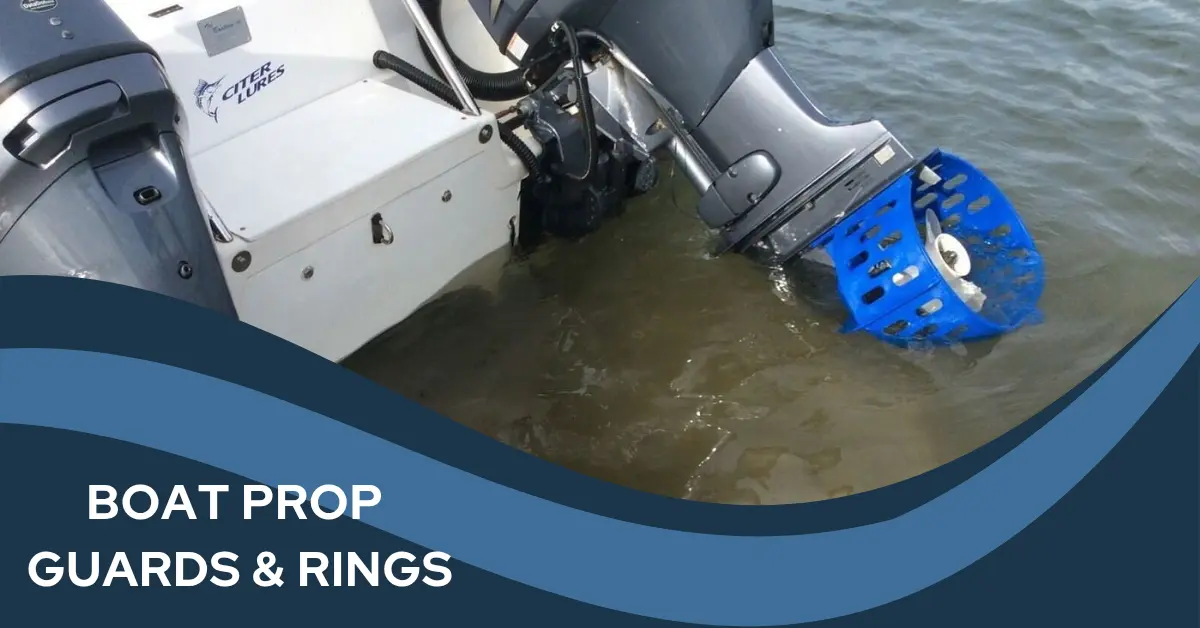
That’s why propeller rings guards and baskets have become essential components of modern boat propeller protection systems.
Propeller rings encircle the blades to enhance efficiency, minimize cavitation, and direct thrust more effectively.
Propeller guards shield the propeller from debris, marine life, and accidental contact, while baskets provide full enclosure for added safety during handling, maintenance, or shallow-water operation.
In addition, they also reduce the risk of entanglement with fishing lines or seaweed, protect aquatic ecosystems, and extend the lifespan of expensive propulsion systems.
This complete guide explores everything about propeller rings guards and baskets; from how they work and the different types available to their real-world advantages, performance impact, installation tips, and best-use practices.
Thus, let’s dive in!
Understanding the Basics
Each of the items – prop guards, rings and baskets, serves a distinct purpose in enhancing safety, efficiency, and performance on the water.
1. Propeller Ring (Nozzle / Shroud)
A propeller ring, also known as a ducted propeller or Kort nozzle, is a circular, annular shroud that surrounds the propeller blades.
When designed with hydrofoil-shaped cross-sections, the ring reduces the gap around the blade tips. It improves water flow and boosts thrust at low speeds.
Kort-type nozzles are often used on tugs, trawlers, and workboats because they enhance low-speed thrust and help the vessel stay stable while moving.
2. Guard (Cage / Deflector / Ring Guard)
A propeller guard is any frame, cage, or deflector that forms a physical barrier between the rotating blades and the outside environment.
Propeller guards come in different types, from open bars and partial shields to full cage enclosures.
Their main purpose is to prevent accidental contact with people, animals, or debris and to protect the propeller from impact damage.
3. Basket (Debris / Line Basket)
A basket is a mesh or perforated enclosure positioned around the prop or intake that intercepts large debris, nets, fishing line, or vegetation before it reaches the blades or lower unit.
Baskets are frequently used on shallow-water workboats, rental fleets, and commercial vessels that encounter heavy debris loads.
Common Materials & Construction
Propeller protection devices are made from stainless steel or aluminum, which offer strength and durability ideal for commercial use.
Lightweight options include polymers like polypropylene or nylon and composites such as fiberglass or carbon fiber, which resist corrosion and improve efficiency.
Polymer guards are easy to retrofit, while composite designs can be shaped for better hydrodynamic performance.
Guards, rings, and baskets must match propeller diameter, pitch, and shaft clearance.
Using the wrong size propeller guard can lead to problems like increased drag, cavitation, fouling, or even gearbox damage.
To avoid these issues, always follow model-specific fitting guides provided by manufacturers.
For inboard, outboard, or stern drives, professional installation is strongly recommended.
Why Design Matters for Performance?
The shape and clearance of a propeller guard greatly affect performance.
A hydrofoil-like nozzle with minimal tip gap improves thrust and reduces vortices, while poor geometry increases drag and cavitation.
Designs vary by application; rescue and towing boats prioritize low-speed thrust and stability, while recreational boats need low drag for speed and efficiency.
There are trade-offs: full cages offer maximum protection but create more drag and fouling risk, while ring or nozzle guards enhance thrust but can trap debris.
The goal is to balance protection, efficiency, and easy maintenance.
Standards & Testing
The U.S. Coast Guard provides a standard test procedure to measure how well propeller guards perform and prevent injuries.
Following industry and testing guidelines is essential when choosing or certifying propeller guard systems for safety and reliability.
Manufacturers often reference RYA/US Powerboating recommendations and third-party testing when marketing guards.
Types of Propeller Protection Systems
Below is a detailed, well-researched breakdown of every major propeller protection type.
1. Propeller Rings (Nozzles / Ducted Propellers)
A propeller ring nozzle’s internal profile is often foil-shaped, so it accelerates flow through the propeller disc and recovers pressure downstream.
It increases effective thrust at low advance speeds. This is why ducted propellers are common on tugs, trawlers, and workboats.
Common variants
- Kort nozzles: Classic accelerating nozzles optimized for heavy loads at slow speeds.
- Shrouded props: Simpler rings that reduce tip losses without full duct shaping; sometimes used on smaller craft.
Pros
- Higher low-speed thrust
- Improved course stability
- Partial blade protection
Cons
- Added high-speed drag
- Debris fouling risk
- Possible cavitation issues
Ideal use: Workboats, tugs, trawlers, rescue craft, and any low-speed, heavily loaded vessel where thrust and protection outweigh top-speed loss.
2. Propeller Guards (Cages, Skeg Guards)
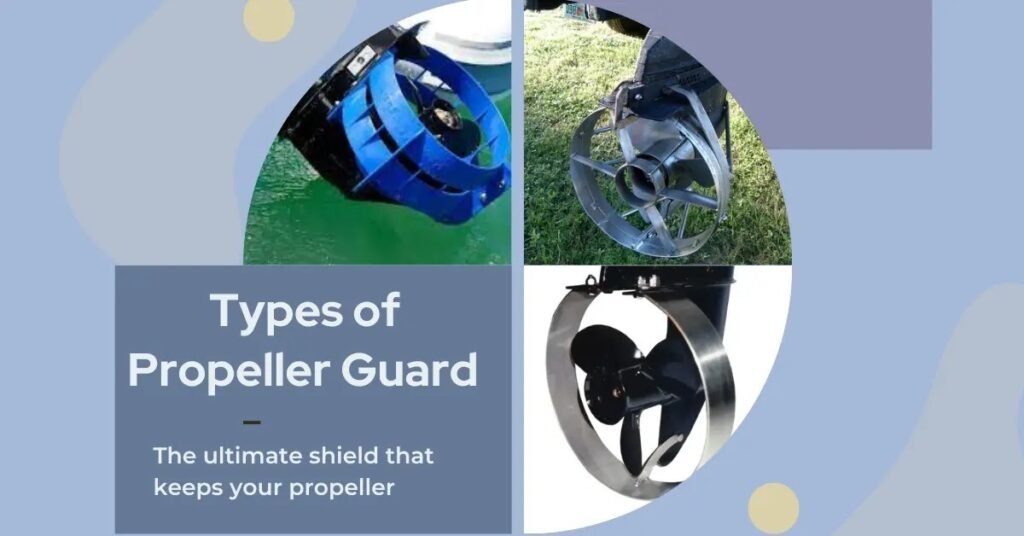
Propeller guard designs run from full cages (360° enclosures or basket-type cages) to partial/half cages, deflector bars, and skeg guards.
Guards may be welded metal, bolted stainless units, or polymer/composite bolt-on systems.
Open vs. enclosed designs
- Open (deflectors / partial guards): Reduce the likelihood of contact while keeping drag lower and making debris clearance easier.
- Enclosed (full cages): Maximal protection, best for rescue, rental, dive, or shallow-water work where human contact risk is high.
Common materials include stainless steel, aluminum, fiberglass/composite, and engineering polymers.
Pros
- Protects human contact
- Shields from debris
- Reduces accident risk
- Extends propeller life
Cons
- Increases water drag
- Requires regular cleaning
- Can affect speed
- May alter handling
Ideal use: Rescue and patrol boats, dive charters, and shallow-water vessels, where protection, liability reduction, and debris resistance are more important than top-speed performance.
3. Propeller Baskets / Line Guards
Baskets are mesh or perforated cages placed around the prop or water intake to catch large debris (nets, logs, fishing lines, seaweed) before it contacts the blades or lower unit.
They are usually finer-mesh or perforated than open guards and emphasize clog prevention rather than human injury protection.
Pros
- Prevents line entanglement
- Protects from debris
- Reduces downtime issues
- Shields propeller tips
Cons
- Increases water drag
- Needs regular cleaning
- Can trap small debris
- Slight performance reduction
Ideal use: Commercial trawlers, workboats, rental fleets, and environmental survey vessels operating in weed- or debris-prone waters.
Comparison Table
Here’s a quick comparison table of the propeller rings guards and baskets.
| Type | Structure | Main Purpose | Ideal Use |
| Propeller Ring | Circular enclosure | Flow control & light protection | Low-speed boats |
| Guard | Open or cage frame | Injury & impact protection | Rescue/dive boats |
| Basket | Mesh enclosure | Debris blocking | Commercial/trawlers |
Key Benefits and Advantages of Propeller Guards
Below is a comprehensive overview of their advantages.
1. Safety First
Propeller guards help prevent injuries to swimmers, divers, and marine life.
Studies show they can reduce sea turtle mortality by up to 90% and protect marine mammals like manatees and dolphins.
They are essential in swimming zones, dive sites, rescue operations, and tourism, which can reduce accidents and enhance overall water safety.
2. Equipment Protection
Propeller guards shield blades, gearcases, and lower units from impacts with submerged objects. It reduces damage and costly repairs.
This protection also lowers maintenance needs, which extends equipment life and cuts operational costs.
3. Operational Efficiency
Nozzle and ducted designs boost low-speed thrust and maneuverability, ideal for shallow or confined waters.
They also reduce fouling and entanglement from debris like ropes and seaweed.
4. Environmental Impact
Propeller guards minimize damage to aquatic habitats, protecting seagrass and reducing wake turbulence that causes shore erosion.
They also lower the risk of collisions with marine life, which helps preserve biodiversity and healthy underwater ecosystems.
Potential Drawbacks and Limitations of Propeller Guards
Below is a detailed overview.
1. Added Drag and Slight Reduction in Top Speed
Propeller guards increase hydrodynamic resistance. It adds drag that can reduce top speed and fuel efficiency.
The engine must work harder to overcome this resistance.
2. Decreased Acceleration
Some designs can reduce thrust efficiency, which slows acceleration by disturbing water flow.
At higher speeds, guards may impair handling. It makes vessels less responsive to steering
3. Compatibility Issues
Not all propeller guards fit every boat or engine, which can create installation issues.
Incorrect installation may cause misalignment, vibrations, or damage to the propeller and engine.
4. Need for Regular Inspection
Propeller guards need regular inspection to prevent fouling and detect corrosion.
Proper cleaning and upkeep maintain efficiency and protect both the guard and propeller from damage.
Top 3 Propeller Rings Guards and Baskets in 2025
Choosing the right propeller ring, guard, or basket can make all the difference in safety, performance, and durability for your boat or drone.
1. Northboat 11″ Polypropylene Propeller Safety Guard
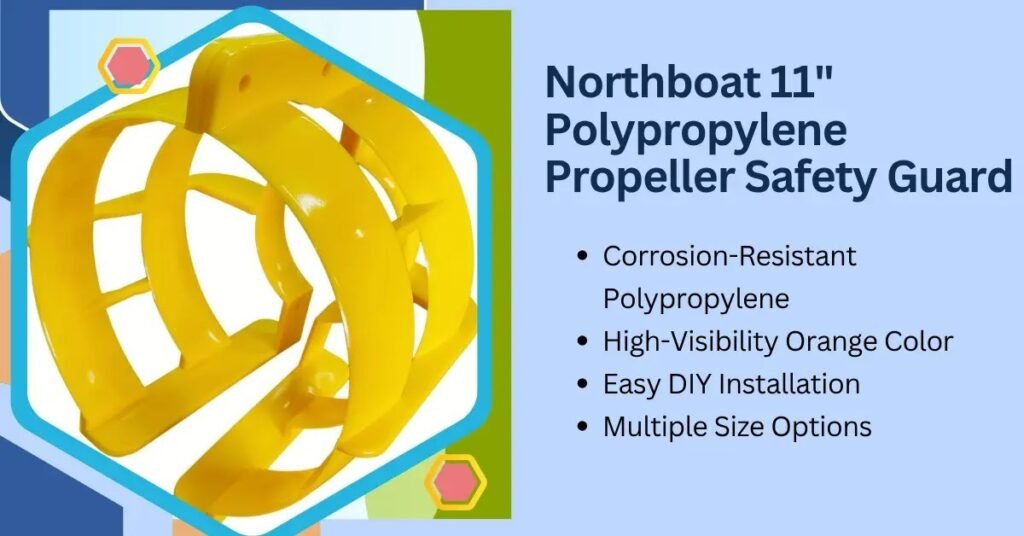
The Northboat 11″ propeller safety guard is a polypropylene cage designed to fit most 25 – 35 HP outboard motors.
It surrounds the propeller to prevent line entanglement, reduce the risk of prop strikes, and protect swimmers and wildlife.
Lightweight and corrosion-proof by design, it’s intended as a bolt-on retrofit for recreational and rental boats.
Performance
The polypropylene rigid construction resists saltwater corrosion and is visible on the water, though heavier-duty impacts (large rock strikes) still risk damage.
There can be a minor reduction in top speed and a need for routine cleaning if operating in weedy water.
Key Features
- 11″ polypropylene cage (also available in other sizes)
- Fits 25 – 35 HP outboards (Mercury/Johnson/Evinrude/Yamaha/Suzuki/Honda)
- Lightweight, corrosion-resistant material
- Bolt-on retrofit design (mounts to anti-cavitation plate/skeg)
Why we picked it
We chose the Northboat 11″ Polypropylene Propeller Safety Guard because it offers reliable protection and effortless compatibility with most 25 – 35HP outboards at an affordable price point.
Its lightweight, rigid yet durable polypropylene design makes it ideal for everyday recreational boating and rental fleets.
2. Misppro Stainless Steel Security Cage Protector
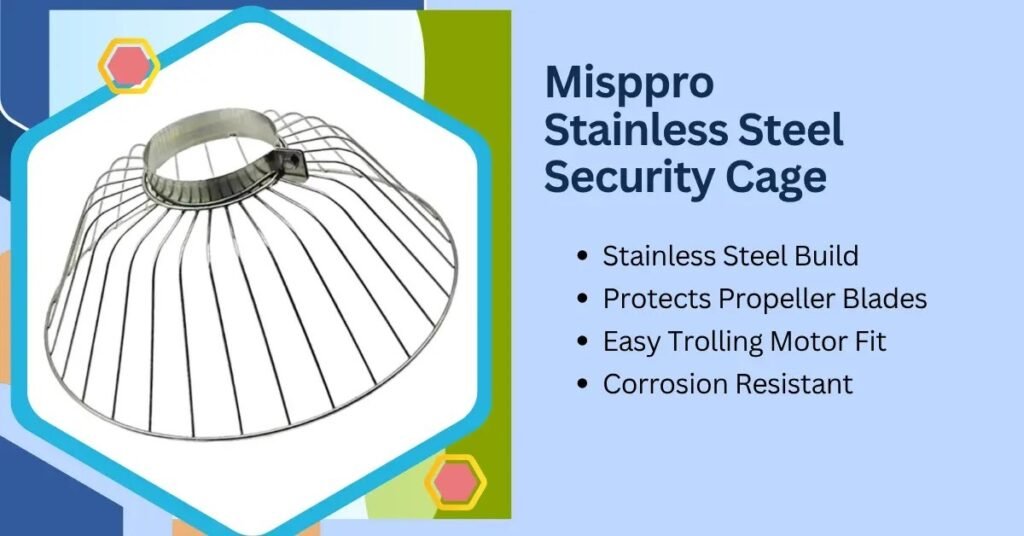
This stainless-steel propeller guard is a universal cage made for 12V electric trolling motors and small outboard applications.
The welded metal construction prioritizes durability and abrasion resistance over ultralight weight.
It offers full propeller protection, significantly reducing the risk of damage or accidents while paddling, for a safer boating experience.
It’s sold as a simple clamp-on or bolt-on unit based on shaft size, and multiple sizes are offered to fit popular trolling-motor diameters.
Performance
Stainless construction holds up well in saltwater and delivers clear, rugged protection.
It is also famous for preventing prop damage from submerged obstacles. Because it’s metal, expect slightly more weight and potential drag versus plastic guards.
Installation is basic but must be matched to the shaft size for vibration-free running.
Key Features
- Stainless-steel welded cage for trolling motors
- Multiple size options to fit common 12V motor shafts
- Resistant to impact, abrasion, and saltwater corrosion (electropolished on some listings)
- Simple clamp/bolt mounting; low maintenance
- Ideal for inflatable boats, kayaks, and small fishing craft.
Why we picked it
We selected the Stainless Steel Propeller Guard for 12V Trolling Motors for its rugged construction and dependable performance in debris-filled or rocky waters.
It’s designed for anglers and small-boat owners who need extra strength and longevity without sacrificing thrust efficiency.
3. SupremeMarine Polypropylene Propeller Guard Protective Cover
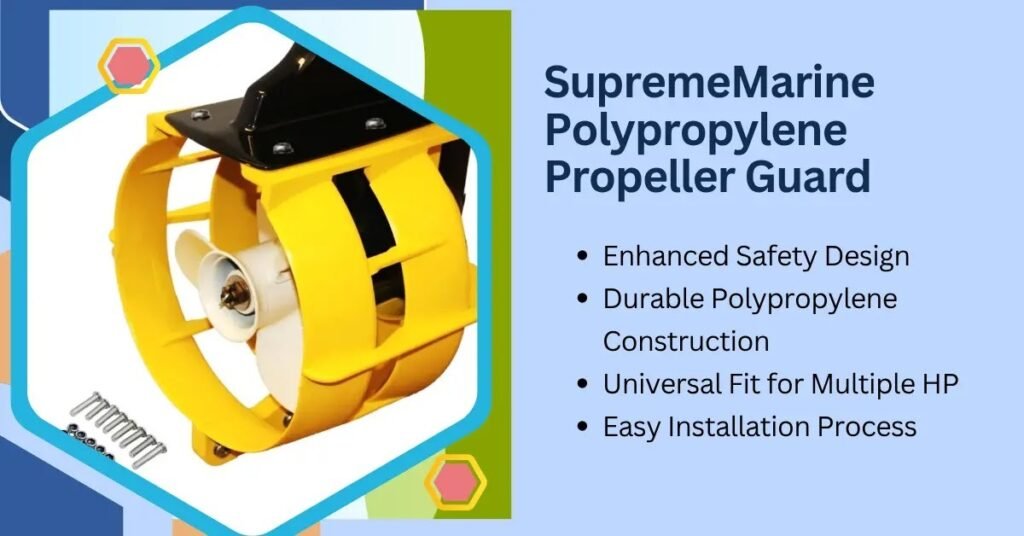
The SupremeMarine Propeller Guard is a polypropylene safety cage designed for 9.9-35 HP outboard motors, available in sizes ranging from 9″ to 13″.
It wraps around the propeller blades to protect against line entanglement, weeds, and shallow-water strikes while enhancing visibility with a bright yellow finish.
The lightweight polypropylene construction resists corrosion almost as well as stainless steel and is intended for DIY installation on common branded outboards (Yamaha, Mercury, Honda.
Performance
The guard performs well in shallow waters and for weed-prone lakes.
The material holds up reasonably well for casual use, though it is not as heavy-duty as stainless steel models for extreme conditions.
Key Features
- Polypropylene cage available in multiple sizes (9″, 11″, 13″) for 9.9-35 HP outboards.
- Bright yellow finish for enhanced visibility.
- Corrosion-resistant polypropylene construction.
- Designed for line, weed, and shallow-water debris protection.
- DIY retrofit bolt-on style with commonly compatible mounting.
Why We Picked It
We chose the SupremeMarine Propeller Guard because it provides reliable protection against debris, weeds, and shallow-water strikes while remaining lightweight and easy to install.
It’s safe for rescue boats, life boats, water ski boats, dive boats, rental boats, houseboats, children & swimmers in the water around boats.
Installation Guide for Propeller Rings Guards and Baskets
Below is a detailed guide to assist you in the installation process.
Tools Required
- Drill: For creating mounting holes.
- Screwdrivers: To fasten screws.
Wrenches: For tightening bolts and nuts. - Safety Equipment: Gloves and goggles to protect yourself during installation.
Step-by-Step Installation Process
Step 1: Preparation
Ensure the propeller guard is compatible with your motor’s horsepower and shaft size.
You will need a drill, screwdrivers, wrenches, and safety equipment like gloves and goggles.
Step 2: Positioning the Guard
Place the propeller guard against the cavitation plate as far forward as possible.
Ensure the propeller is inside the outer protective ring and does not protrude backward.
If the mounting surface is uneven, smooth it beforehand to ensure a secure fit.
Step 3: Securing the Guard
Loosely screw both halves of the guard together using the provided screws.
Align the guard so that there is an even distance all around the propeller and that it runs parallel to the propeller shaft.
Step 4: Drilling and Fixing
Mark the required drill holes on the cavitation plate and lower skeg. Remove the guard and drill the necessary holes.
Reattach the guard and securely fasten it to the cavitation plate and skeg with the provided screws.
Ensure the propeller can turn freely all around.
Step 5: Final Checks
Tighten all screws and bolts securely. Perform a test run to ensure everything functions correctly.
Regularly check the tightness of the screws and the alignment of the guard.
Common Mistakes to Avoid
- Incorrect Guard Size: Using a guard that doesn’t fit your motor can lead to ineffective protection and potential damage.
- Improper Alignment: Misaligning the guard can cause interference with the propeller, affecting performance.
- Skipping Drilling Steps: Not drilling the necessary holes can result in an insecure fit, leading to potential detachment during operation.
- Neglecting Regular Checks: Failing to regularly inspect the guard can lead to unnoticed wear or loosening of screws.
Safety Precautions During Installation
- Power Off the Engine: Always ensure the engine is turned off before starting the installation process.
- Wear Protective Gear: Use gloves and goggles to protect yourself from sharp edges and debris.
- Secure the Boat: Ensure the boat is stationary and secure before beginning installation.
- Follow Manufacturer Instructions: Adhere to the specific installation guidelines provided by the manufacturer.
Maintenance Guide for Propeller Rings, Guards, and Baskets
This guide provides detailed steps for inspecting, cleaning, and checking for damage or corrosion, for both saltwater and freshwater environments.
Regular Inspection Routines
Inspect propeller guards before and after each use to ensure they are securely attached and free from visible damage.
Look for signs of wear such as cracks, bends, or loose fasteners.
Ensure the guard is properly aligned with the propeller and does not interfere with its rotation.
Check that all bolts and screws are tightened to the manufacturer’s specifications. Remove any accumulated debris that could affect performance.
Cleaning Methods for Saltwater and Freshwater Boats
Saltwater Environment
After each use, rinse the propeller guard with fresh water to remove salt deposits.
Use a boat-specific soap and a soft brush or sponge to clean the guard. If possible, flush the engine using a built-in flush port or earmuffs to remove saltwater from internal components.
Apply a water-repellent lubricant such as CRC 6-56 to protect metal parts from corrosion.
Freshwater Environment
Even in freshwater, it’s important to clean the propeller guard regularly to remove algae, dirt, and other debris.
After cleaning, ensure the guard is thoroughly dried to prevent rusting.
Consider applying a protective coating to metal parts to prevent corrosion.
Common Problems and Troubleshooting for Propeller Guards
Here’s a detailed guide to understanding and addressing common problems.
1. Vibration or Noise After Installation
Potential Causes
If the guard is too close to the propeller blades, it can disrupt water flow. That may lead to cavitation and increased vibration.
Unsecured bolts or screws can cause rattling noises and vibrations. Cracks or bends in the guard can lead to imbalanced forces.
Solutions
Ensure a minimum gap of 80 -100mm between the propeller hub and the guard for high-performance propellers.
Regularly inspect and tighten all screws and bolts to prevent loosening.
Examine the guard for any signs of wear or damage and replace it if necessary.
2. Reduced Thrust or Increased Water Resistance
Potential Causes
Mesh or cage-type guards can decrease thrust by 15% or more due to increased drag and turbulence.
Incorrect positioning or alignment can disrupt water flow.
Solutions
Opt for streamlined ‘cowling’ guards that have a minimal impact on performance.
Follow manufacturer guidelines to ensure correct installation and alignment.
3. Improperly Installed Guards
Potential Causes
The guard may obstruct the propeller’s movement. Parts of the guard may be detached or hanging.
Solutions
Remove the guard and reinstall it according to the manufacturer’s instructions. Ensure all bolts and screws are tightened to the specified torque.
Verify that the guard is suitable for your specific boat model and propeller size.
Choosing the Right Propeller Protection System
Here’s a step-by-step guide to assist you in making an informed decision.
1. Identify Propeller Size and Motor Type
Measure the diameter and pitch of your propeller. This information is crucial for selecting a guard that fits properly and provides adequate protection.
Determine whether your vessel uses an outboard or inboard motor, as this will influence the type of guard compatible with your setup.
2. Determine Primary Usage
If your vessel operates in areas with swimmers, divers, or in rescue operations. It prioritizes guards that offer maximum safety features.
For high-speed vessels or those requiring optimal performance, choose guards designed to minimize drag and maintain thrust efficiency.
For commercial or heavy-duty use, select guards made from materials known for their strength and resistance to wear.
3. Check Compatibility with Your Vessel
Ensure the guard is compatible with your vessel’s anti-cavitation plate and skeg.
Measure the distance from under the anti-cavitation plate to the bottom of the skeg to determine the appropriate guard size.
Consider the material of your propeller aluminum or stainless steel) and choose a guard that offers the best protection without causing damage.
4. Compare Brands and Materials
Guards are commonly made from materials like polypropylene, aluminum, or composite materials. Each has its advantages,
Guards are made from polypropylene (lightweight, corrosion-resistant), aluminum (durable, strong yet light), or composites (high strength and impact-resistant).
Frequently Asked Questions (FAQ)
1. Do propeller guards reduce boat speed?
Yes, propeller guards reduce boat speed. Streamlined guards may reduce speed by only 2 – 3%, while mesh or cage-style guards can decrease thrust by 15% or more due to increased drag and turbulence.
2. Are propeller baskets legal in all waters?
No, propeller baskets are not legal in all waters. In some areas, propeller guards are required by law for boats operating in public waters to ensure safety against propeller strikes.
3. Can I install one myself?
Yes, many propeller guards are designed for DIY installation. Ensure compatibility with your motor and follow the manufacturer’s instructions for proper installation.
4. Which material lasts longest in saltwater?
Stainless steel and high-impact polypropylene are durable materials suitable for saltwater environments. They resist corrosion and wear, ensuring longevity.
5. How often should I clean or replace it?
Clean your propeller guard after each use, especially in saltwater, to prevent corrosion. Inspect for damage regularly and replace if signs of wear or corrosion are evident.
6. How much do propeller guards cost?
Prices vary based on size and material. Plastic guards may cost between $250 and $320, while stainless steel options can be more expensive. Consider the long-term benefits and durability when evaluating cost
Final Thoughts
Investing in propeller rings guards and baskets is essential for both safety and performance on the water.
These devices protect swimmers, marine life, and your equipment while reducing maintenance costs and operational downtime.
By enhancing low-speed thrust, preventing entanglements, and minimizing environmental impact, they offer unmatched peace of mind for recreational and professional boaters alike.
Choosing the right propeller protection requires careful consideration of material, design, and compatibility.
Don’t compromise on safety, and equip your boat with quality protection to enjoy worry-free boating adventures.
Best of luck!