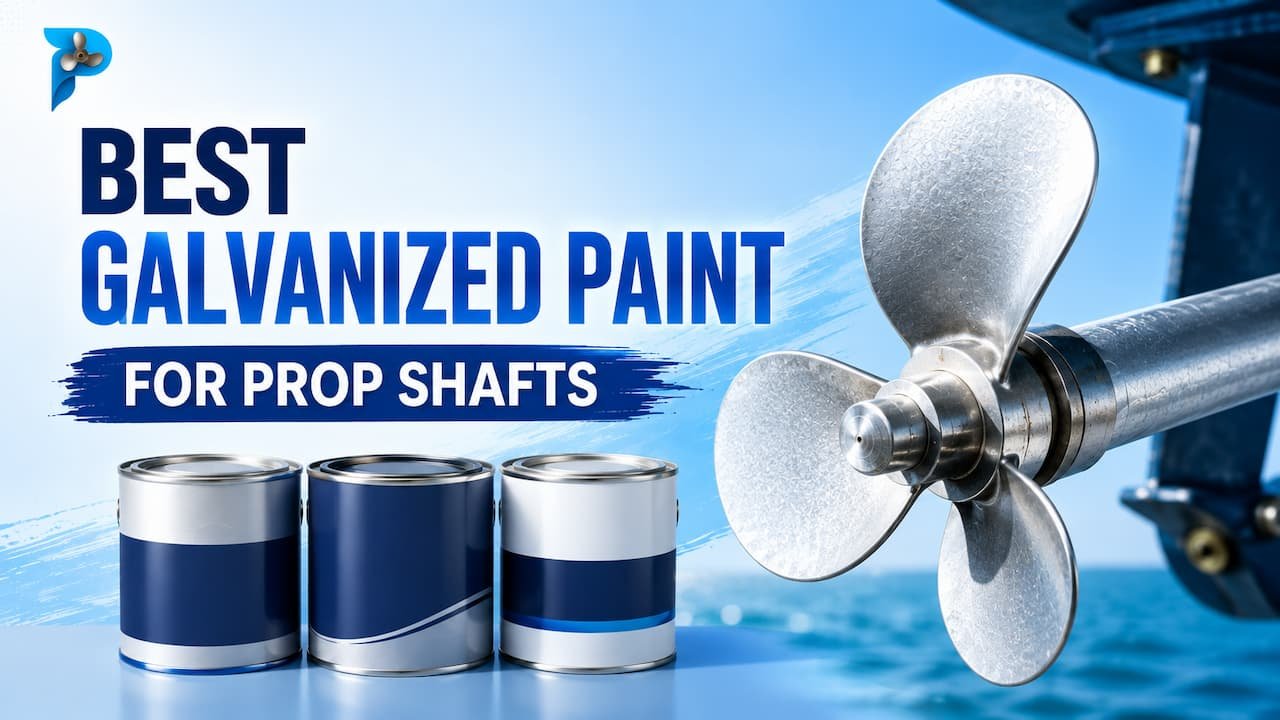
Your prop shaft is bleeding rust streaks down the strut again, and you’re wondering if a can of zinc-rich spray paint can actually fix that. It can, but only if you pick the right one and apply it the right way.
Quick answer: The best galvanized paint for prop shafts is a cold galvanizing compound with a high metallic zinc content, ideally 90% or more. ZRC Cold Galvanizing Compound is the strongest all-around option for most boats, Rust-Oleum’s cold galvanizing spray is the best budget pick, and Pettit Prop Coat Barnacle Barrier is worth it if you also want some fouling resistance built in.
After several seasons rotating different zinc coatings across bronze and stainless running gear in mixed water conditions, I’ve learned that the product matters less than most people think. Surface prep, coat count, and your local water conditions decide whether this stuff actually works. Here’s everything you need to choose the right one.
What Is Galvanized Paint for Prop Shafts (and What It Actually Does)
Galvanized paint for prop shafts is a zinc-rich “cold galvanizing” compound, typically 65 to 95 percent metallic zinc, brushed or sprayed onto bare metal running gear to mimic hot-dip galvanizing. It creates a sacrificial, cathodic layer that resists corrosion and slows marine growth on stainless, bronze, or steel prop shafts, struts, and propellers.
Here’s the part most product listings gloss over. This paint doesn’t “galvanize” your shaft the way a factory dipping process does. It’s a cold-applied substitute that behaves like galvanizing once it’s dry, not an industrial transformation of the metal itself.
The zinc particles in the coating act as a sacrificial layer. Saltwater and moisture attack the zinc first, protecting the base metal underneath through cathodic protection. That’s the same principle behind the zinc anodes already bolted to your shaft.
Cold Galvanizing vs. Hot-Dip Galvanizing
Hot-dip galvanizing is an industrial process. The metal part gets fully submerged in molten zinc, bonding a thick, uniform zinc layer to the surface. It’s how galvanized fencing, brackets, and hardware are made at the factory.
Cold galvanizing compound is the field repair and retrofit version. You can’t dip a boat’s prop shaft in molten zinc while it’s hanging on a strut, so a zinc-rich paint stands in for that process. Manufacturers reference ASTM A780, the standard covering repair of damaged hot-dip galvanized coatings, to back up that equivalence claim.
Cold Galvanizing Compound vs. Barnacle Barrier vs. Sacrificial Anode
These three terms get mixed up constantly in boating forums, and mixing them up leads to disappointed owners. They solve different problems.
A cold galvanizing compound, like ZRC or basic Rust-Oleum spray, is built for corrosion resistance. Its job is protecting bare metal from rust and electrolysis, not stopping barnacles.
A barnacle barrier product, like Pettit Prop Coat, is a cold galvanizing compound with added claims around fouling resistance. It still relies mostly on the same zinc-rich chemistry, just marketed and formulated with running gear fouling in mind.
A sacrificial zinc anode is a completely separate piece of hardware. It’s a solid zinc collar or disc bolted onto the shaft, wired to bond with the rest of your underwater metal. It protects the whole system electrically, and it has nothing to do with paint.
Do Prop Shafts Actually Need Galvanized Paint?
Yes, if your shaft is bare stainless, bronze, or steel and sitting in the water for extended periods. Bare metal running gear is constantly exposed to galvanic corrosion and electrolysis, especially in marinas with stray electrical current or mixed metals nearby.
Before you blame the paint for pitting or rust, check your bonding system first. A corroded or disconnected sacrificial zinc anode is one of the most common root causes of shaft damage that owners mistake for coating failure.
If the bonding wire to your zinc anode is broken, the anode stops protecting anything. Paint alone won’t compensate for that. Fix the electrical bonding first, then coat the shaft.
How We Compared the Top Galvanized Paints for Prop Shafts
Every product below was evaluated against the same criteria, so this isn’t a random brand shoutout list. Here’s what we weighed for each one.
Zinc content by weight, since that’s the single biggest driver of corrosion protection. Application format, whether it’s aerosol, brush-on, or both. Suitability for saltwater, freshwater, or brackish use. Estimated cost per season of protection. And how forgiving the product is for a DIY application on a hauled-out boat.
Top 5 Best Galvanized Paints for Prop Shafts (2026)
1. ZRC Cold Galvanizing Compound: Best Overall
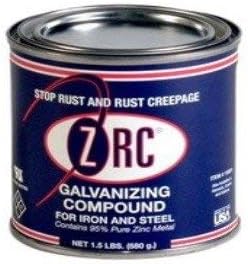
- Organic Zinc-Rich cold compound coating containing 95% metallic zinc for galvanic protection
- Equivalent to hot-dip galvanizing protecting ferrous metals from rust and corrosion
- Apply by brush, roller or spray
ZRC has been making this compound since the 1950s, and it’s still the reference point most other brands get compared against. It’s manufactured with 95 percent metallic zinc dust meeting ASTM D520 Type III purity, and it’s recognized under the Underwriters Laboratories Component Program as equivalent to hot-dip galvanizing.
Manufacturer testing shows it passing over 2,850 hours of ASTM B117 salt fog exposure without failure. That’s a meaningful data point if you’re comparing it against a generic hardware store spray with no published test results.
It comes in aerosol, brush-on liquid, quart, and gallon sizes, so you can match the format to the size of your running gear. If you want the highest zinc content available in a consumer product, this is it.
2. Rust-Oleum Cold Galvanizing Compound Spray: Best Budget Option

- Ideal for use on wrought iron and spot-welded metal, gutters, chain-link fences and more to repair weathered galvanized …
- 93% pure zinc coating applies a galvanized film to renew weathered galvanized surfaces
- Dries to the touch in only 30 minutes and covers up to 12 sq. ft. per can
This is the can most weekend boat owners already know, largely because it’s cheap and sold everywhere. Multiple boating forums mention paying under ten dollars for a can that outlasted their expectations on props and shafts in moderate growth areas.
It’s a fast-dry aerosol formula, ideal for a quick coat during a routine haul-out. Zinc content runs lower than ZRC’s premium line, which is the tradeoff for the price.
For owners who recoat every season anyway, this is a practical, low-cost habit to build. It won’t outperform a premium marine-specific product long-term, but it does the basic corrosion protection job reliably.
3. Pettit Prop Coat Barnacle Barrier: Best for Corrosion Plus Some Fouling Resistance

- PETTIT PAINT 1792, PET1792
Pettit built this product specifically for underwater metals, including transducers, struts, rudders, and prop shafts. It bonds to a wide range of base metals: steel, stainless steel, cast iron, copper, bronze, galvanized steel, and lead.
Here’s the honest caveat. This is not a guaranteed antifouling substitute. Real-world reports are mixed. Some owners in low-growth, moving water report clean props all season. Others in warm, brackish, or stagnant slips report barnacles covering the coating within a few months.
Your water conditions matter more than the product choice here. If your marina has heavy fouling pressure, plan to top-coat this with a proper antifouling paint rather than relying on the zinc coating alone.
4. CRC Zinc-It Instant Cold Galvanize: Best Fast-Drying Touch-Up
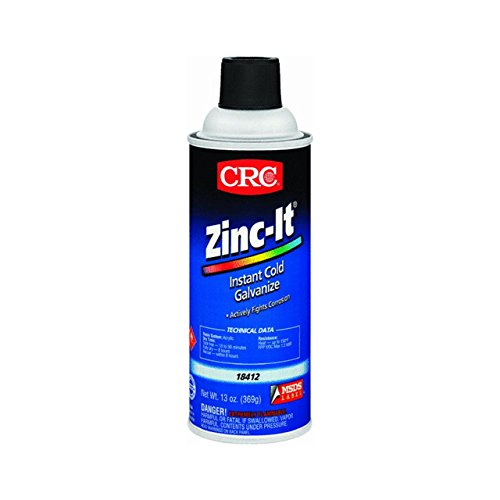
CRC’s formula is built around speed. It dries to the touch in about 15 minutes, which makes it useful for last-minute touch-ups before a launch, not just full seasonal recoats.
Zinc purity sits above 93 percent, which is solid for a fast-dry formula. It’s marketed broadly for threads, fasteners, and exposed edges, and it carries over well to smaller prop shaft touch-up jobs where you don’t want to wait around at the yard.
If you’ve ever had to scramble to patch a scratched spot before splashing the boat, this is the one to keep in the maintenance locker.
5. ZincKote Cold Galv Aerosol Spray: Best High-Zinc Alternative

- 96% Zinc DFT – dry film thickness – highest zinc % in the industry
- 99.995% Zinc Purity – No Recycled zinc used
- Meets & Exceeds ASTM A780 specs for repair of Hot Dip Galvanizing
ZincKote positions itself directly against ZRC, with a claimed 96 percent zinc dry film thickness. It’s a newer name in the space compared to the legacy brands, but the zinc content puts it in the same premium tier.
It’s formulated as low VOC, which matters if you’re working in a state with stricter coating regulations at your marina or boatyard. It can be used as both a primer and a finish coat.
If ZRC is out of stock or you want a second premium-tier option to compare pricing against, this is a reasonable alternative with a similar zinc profile.
Which One Should You Choose Based on Your Water Conditions?
Your local water is the biggest variable in how any of these products perform. A coating that works flawlessly in a cool, moving-water marina can fail within weeks in a warm, stagnant, brackish slip.
| Water Type | Best Pick | Why |
|---|---|---|
| Saltwater, moderate growth | ZRC or ZincKote | Highest zinc content, best long-term corrosion resistance |
| Saltwater, heavy fouling | Pettit Prop Coat, top-coated with antifouling paint | Adds real fouling protection on top of corrosion resistance |
| Freshwater | Rust-Oleum or CRC | Lower corrosion pressure means a budget option often lasts the season |
| Brackish, stagnant slip | Pettit Prop Coat plus antifouling topcoat | Zinc alone won’t stop growth in these conditions |
Cost Per Season: Is the Premium Option Worth It?
Premium doesn’t always mean better value once you factor in how often you have to recoat. Here’s a rough breakdown based on typical can pricing and coat counts.
| Product | Approx. Price | Coats Needed | Est. Protection | Cost per Season |
|---|---|---|---|---|
| ZRC Cold Galvanizing Compound | $20-$25 | 2-3 | 1-2 seasons | $10-$25 |
| Rust-Oleum Cold Galvanizing Spray | $8-$12 | 2-3 | Up to 1 season | $8-$12 |
| Pettit Prop Coat Barnacle Barrier | $30-$40 | 2-3 | 1 season | $30-$40 |
| CRC Zinc-It | $10-$15 | 2-3 | Touch-up use | $10-$15 |
| ZincKote Aerosol Spray | $18-$22 | 2-3 | 1-2 seasons | $10-$22 |
If you recoat every haul-out anyway, the cheaper products often make more financial sense. If you want fewer touch-ups over a two-year stretch, the higher zinc content in ZRC or ZincKote earns its price back.
How to Apply Galvanized Paint to a Prop Shaft (Step-by-Step)
Coating performance is proportional to how well you prep the surface. Rushing this step is the number one reason these products fail early.
Surface Preparation
Strip the shaft back to bare, clean metal. Sand, scrape, or sandblast off any old paint, rust, or antifouling residue first. Wipe the surface down with a compatible thinner or solvent afterward, and let it dry fully before you apply anything.
Application: Coats, Drying Time, and Recoat Window
Apply two to three thin coats rather than one thick one. Thick coats trap solvent underneath and crack later. Most products recommend waiting a few minutes to an hour between coats, so check your specific can’s label for the exact recoat window.
Spray from about six to eight inches away in light, even passes. If you’re brushing it on instead, work in one direction and avoid going back over a coat that’s already starting to tack up.
Curing Before Launch
Give the final coat time to fully cure before splashing the boat, not just dry to the touch. Manufacturer data sheets typically call for a full cure period measured in hours, sometimes overnight, before submersion. Launching too early softens the coating and shortens its life.
Is It Safe for Aluminum Outdrives and Stainless Shafts?
Stainless steel and bronze shafts are generally safe candidates for zinc-rich cold galvanizing compounds. These metals are the intended use case for most of the products above.
Aluminum outdrives need extra caution. Applying certain zinc-rich coatings directly to aluminum, especially without checking manufacturer compatibility, can create the wrong electrical relationship between metals and accelerate galvanic corrosion instead of preventing it.
If you’re coating an aluminum outdrive, check the product’s data sheet for aluminum compatibility first, and consider a topcoat specifically formulated as non-cuprous if you’re layering antifouling paint over it. When in doubt, ask the manufacturer directly or stick to a product explicitly labeled safe for aluminum.
Frequently Asked Questions
Does galvanized paint work on stainless steel prop shafts?
Yes. Stainless steel is one of the primary base metals these coatings are designed for, alongside bronze, steel, and cast iron. Surface prep still matters more than the metal type.
How long does cold galvanizing spray last underwater?
Typically six months to two years, depending on the product’s zinc content, your water conditions, and how many coats you applied. Warmer, high-growth water shortens that window.
Can you use Rust-Oleum cold galvanizing compound on a boat prop?
Yes, and it’s one of the most commonly used budget options among boat owners for exactly this purpose, based on years of forum discussion and repeat use.
What’s the difference between galvanizing paint and antifouling paint?
Galvanizing paint focuses on corrosion resistance through a zinc-rich sacrificial layer. Antifouling paint focuses on preventing marine growth through biocides. They solve different problems and are sometimes layered together.
Do I need to remove the old coating before reapplying?
Yes, if it’s flaking, chalky, or worn thin. Applying fresh coating over failing old coating usually leads to early peeling. Strip back to clean metal for the best result.
How many coats of zinc paint does a prop shaft need?
Most manufacturers recommend two to three thin coats. Some heavy-exposure boat owners apply five or six over a season for extra protection, particularly in high-growth saltwater.
Final Verdict
There’s no single “best” galvanized paint for every prop shaft. ZRC earns the top overall spot for its zinc content and testing data, Rust-Oleum is the smart budget pick for annual recoaters, and Pettit makes sense if you’re willing to pair it with real antifouling protection in a heavy fouling area.
Match the product to your water conditions, not just the highest zinc percentage on the label. Prep the shaft properly, give it time to cure, and check your zinc anode bonding while you’re at it. That combination matters more than which can you grab off the shelf.