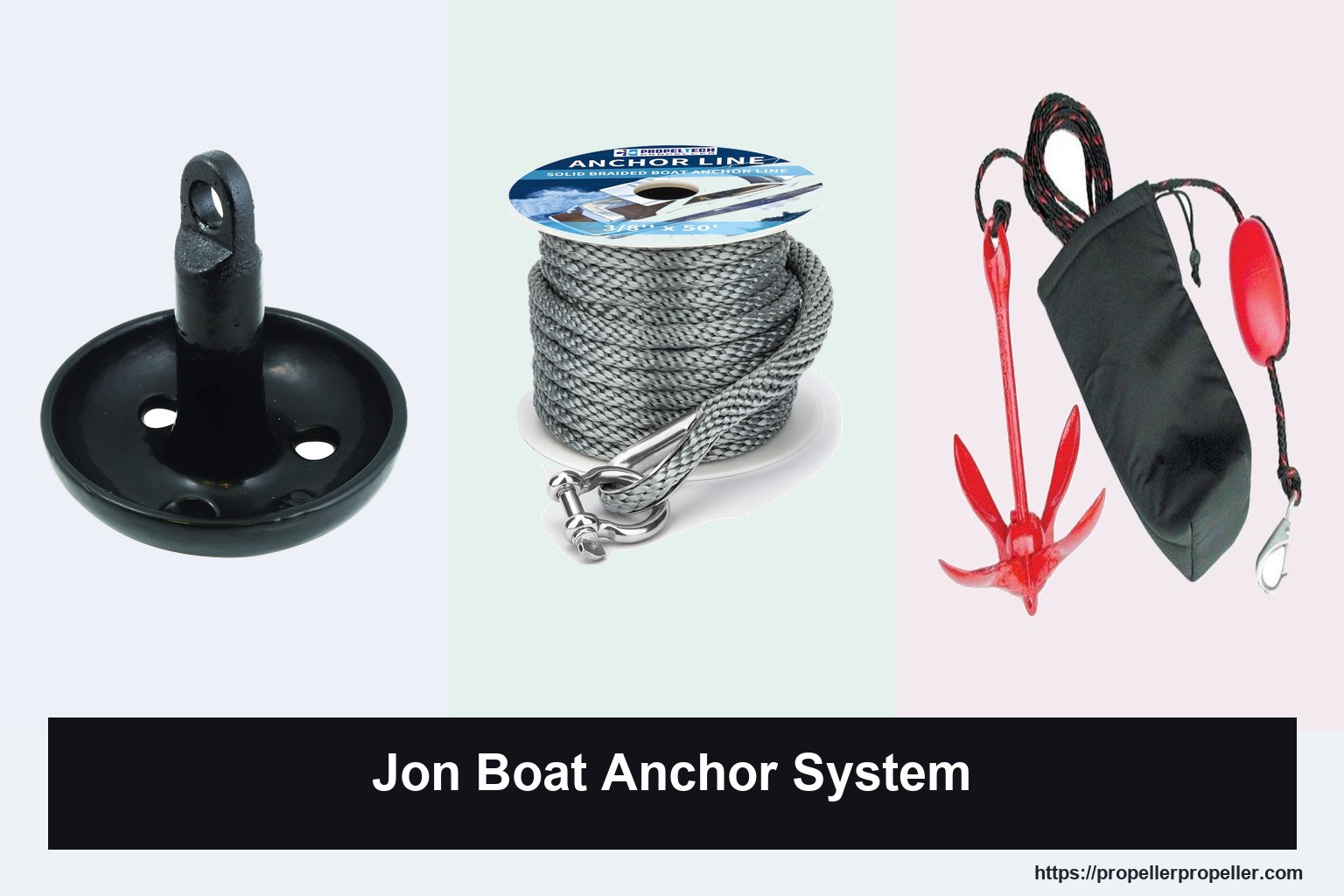
A jon boat anchor system has to do more than hold position. It has to match shallow-water use, stay manageable in a small hull, and handle the realities of mud, weeds, wind shift, and limited onboard storage. The wrong setup can be awkward to deploy, noisy to stow, or too specialized for the way a small boat actually gets used. The right one keeps fishing or tending gear simple and predictable.
The four options here cover different approaches to anchoring a jon boat, from a classic holding anchor and rope setup to a compact anchor lock system. That matters because there is no single best answer for every boat or water condition. Some buyers need a straightforward anchor that bites soft bottoms. Others need a complete kit with rope and storage. Others care most about one-handed control or stowing everything under a seat.
Top Jon Boat Anchor System on the Market
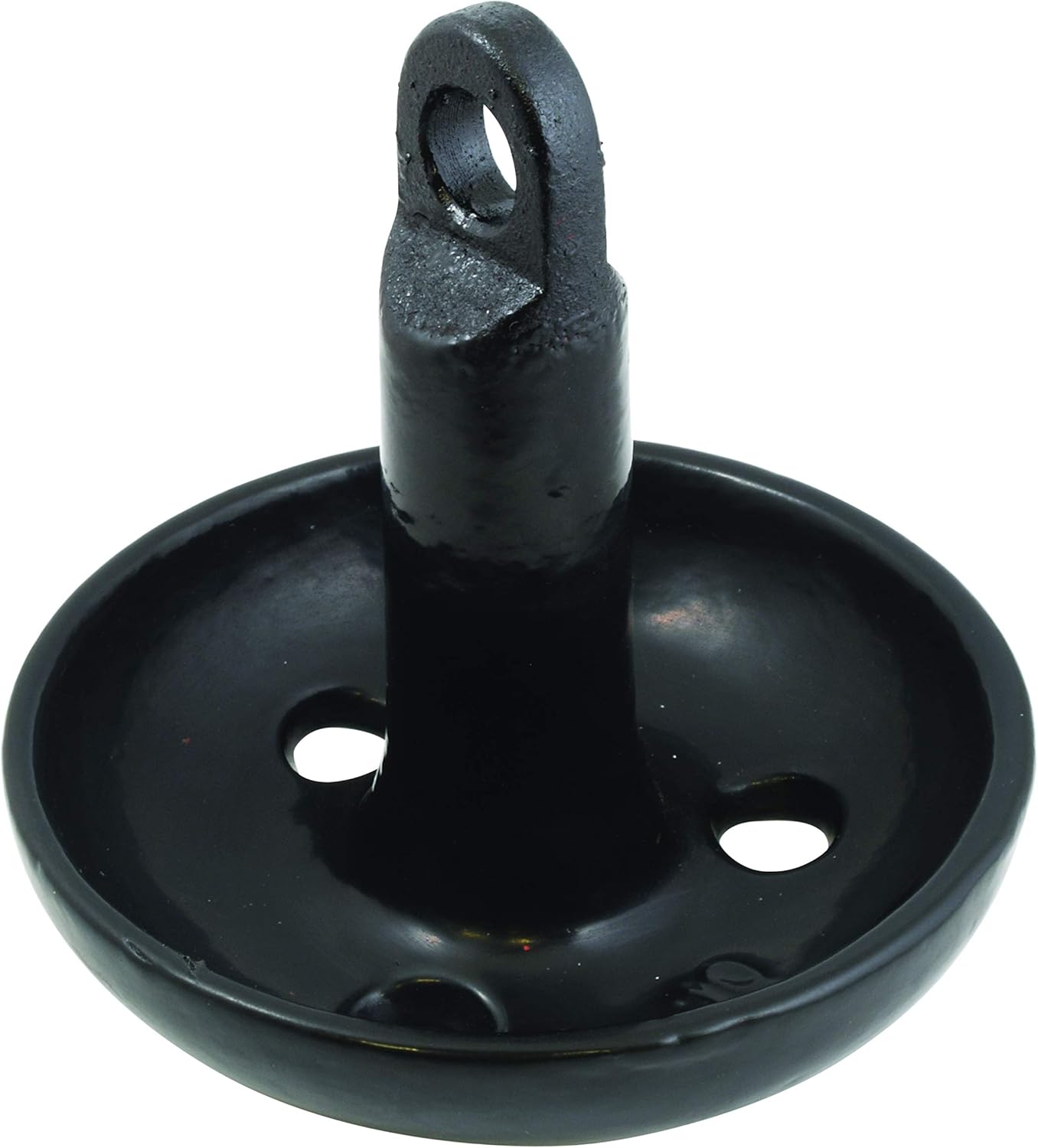
Attwood 8-Pound Mushroom Anchor
- 8-pound cast iron build
- Wide mushroom cup
- PVC-coated finish
- Steel connection eye

PropelTech 3/8-Inch Anchor Rope
- 50-foot marine line
- 3/8-inch solid braid
- Stainless steel thimble
- 2000-pound tensile strength

AIRHEAD Grapnel Anchor System
- 3.3-pound folding anchor
- 25-foot marine-grade rope
- Padded storage case
- Fits under boat seats

Scotty #276 Anchor Lock
- Side or deck mount
- One-hand lock and release
- Fits up to 1/2-inch rope
- Smooth roller bearing
This article may contain affiliate links. As an Amazon Associate, the website may earn from qualifying purchases at no additional cost to you.
Jon Boat Anchor System Reviews
Attwood 8-Pound Mushroom Anchor
- Item Weight
- 8.1 pounds
- Material
- Cast Iron
- Size
- 8-Pound
- Color
- Black
- Item Dimensions LxWxH
- 8.66 x 7.68 x 7.6 inches
Advantages
- Strong hold in mud and weeds
- PVC coating helps protect surfaces
- Steel eye suits rope or chain
- Compact for small-boat storage
- Good value for lightweight boats
Limitations
- Best on soft bottoms
- No rope included
The Attwood mushroom anchor is the most straightforward choice here for buyers who expect mud, silt, or weed-heavy bottoms. Its wide cup is the key advantage because it spreads contact over soft ground instead of trying to claw into it. That makes it a practical fit for lightweight boats where holding power matters more than aggressive bite. The 8-pound size also keeps the anchor in the range that makes sense for small craft rather than forcing unnecessary bulk into a jon boat layout.
Construction is another reason it stands out. The anchor uses cast iron with a black PVC coating, so the body is built for marine use while also reducing the chance of scratching the hull or deck during handling. The steel connection eye is a useful detail for rope tie-off or a chain leader, and that improves flexibility in how the anchor system is rigged. At 8.66 by 7.68 by 7.6 inches, it is compact enough to store without dominating limited space on a small boat.
Compared with the rope kits and the mount-based option in this group, this anchor is the most bare-bones solution. That is an advantage if you already know your setup and just need dependable bottom holding, but it also means the rest of the system depends on what rope and hardware you choose. The result is best for a buyer who wants a simple anchor body first and a customizable system second. For soft-bottom fishing in a jon boat, this is the most direct recommendation.
PHOTO: Attwood 8-Pound Mushroom Anchor – Mushroom Anchor → Source: Amazon.com
PropelTech 3/8-Inch Anchor Rope
- Size
- 3/8 Inch 50FT
- Tensile Strength
- 2000 pounds
- Load Capacity
- 450 Pound
- Material Type
- Nylon
Advantages
- 50-foot length suits small boats
- Solid braid resists shock loads
- Stainless hardware reduces end wear
- Flexible and easier to coil
- Designed for 12–21 foot boats
Limitations
- Rope only, no anchor included
- 30-day warranty is brief
This rope is the most relevant pick for buyers building a complete jon boat anchor system around a separate anchor. The 50-foot length gives enough scope for many small-boat anchoring situations, and the 3/8-inch diameter keeps it substantial without being hard to manage. Its solid braid construction matters because it is meant to absorb shock and resist the jerky load changes that happen when wind or wake pulls on a small boat. That makes it a better anchor line choice than a thin utility rope.
The hardware at the end is where this rope becomes more than basic line. A 316 stainless steel thimble protects the connection point from friction wear, while the snap hook makes attachment faster when you are setting or retrieving gear repeatedly. The rope is also described as resistant to saltwater corrosion, UV, and abrasion, which matters for anyone who stores gear in the boat or leaves it exposed between trips. It is designed for boats under 21 feet, so it aligns naturally with jon boat use rather than oversized vessels.
Against the other options, this is not a stand-alone anchoring solution. It is the supporting piece that turns an anchor into a usable system, and that is where its value sits. The AIRHEAD package includes rope, but this line is the more focused upgrade if you want a stronger connection and a more specific size choice. It is best for buyers who already have or are selecting an anchor and want line quality to match. For a compact freshwater jon boat setup, this is a smart, practical buy.
PHOTO: PropelTech 3 8-Inch Anchor – Anchor Line Spool → Source: Amazon.com
AIRHEAD Grapnel Anchor System
- Size
- Standard
- Item Length
- 300 inches
- Material Type
- Stainless Steel
- Tension Supported
- 1500 lbs
- Color
- Multi-Colored
Advantages
- Complete anchor system
- Folding anchor saves space
- Works on mixed bottom types
- Padded case simplifies storage
- Small-boat friendly package
Limitations
- Shorter rope than some setups
- Less specialized for soft mud
The AIRHEAD system is the most complete option for a buyer who wants a ready-to-use package instead of assembling parts. The 3 1/3-pound folding grapnel anchor is small enough to stay manageable, and the four-fluke design is intended for mud, sand, gravel, and rock. That gives this kit broader bottom versatility than a pure mud anchor, which matters if a jon boat sees different launch spots or mixed lake bottoms. The included 25-foot marine-grade rope also removes the need to source a separate line right away.
Storage is where this package fits small boats especially well. The anchor folds, and the padded nylon case helps protect surrounding gear while also reducing noise in the boat. That matters in a jon boat where space is at a premium and loose metal can be annoying to stow. The kit is designed to fit under most boat seats or in PWC compartments, so it works as a compact carry-along solution rather than a permanent mount. The stainless steel hardware adds confidence at the connection point.
Relative to the Attwood anchor, this is more versatile across bottom types but less specialized for soft mud and weeds. Relative to the separate rope option, it is more convenient because the rope and hardware are already part of the system. That makes it the strongest match for buyers who want a portable, compact, and complete anchoring package for different waterways. If your jon boat needs one kit that can travel easily and cover more than one bottom condition, this is the safest recommendation.
PHOTO: AIRHEAD Grapnel Anchor System – Grapnel Anchor Kit → Source: Amazon.com
Scotty #276 Anchor Lock
- Mounting Type
- Deck Mount
- Item Dimensions
- 2 x 2 x 4 inches
- Item Weight
- 16 ounces
- Material Type
- Metal
- Manufacturer Warranty Description
- Limited Warranty
Advantages
- One-hand lock and release
- Side or deck mounting
- Quiet roller bearing
- Accepts up to 1/2-inch rope
- Compact fixed-mount design
Limitations
- Requires installation
- Not a stand-alone anchor
The Scotty anchor lock is the most specialized product in this roundup, and that is exactly why it belongs in a jon boat system discussion. Instead of acting as the anchor itself, it controls the line and anchor position from a fixed mount. The appeal is one-handed operation. In still-water fishing, that can matter more than raw holding power because it lets you make adjustments without dealing with a loose rope system. The No. 241 combination side/deck mount also broadens where it can be installed on a small boat.
Its compact dimensions and 16-ounce weight make it easier to integrate into a limited-size hull than a more elaborate anchoring rig. The unit accepts rope up to 1/2 inch in diameter, so compatibility is broad enough for many small-boat anchor lines. The roller bearing is a meaningful detail because it supports smoother, quieter movement, which is useful when repeated adjustments are part of the fishing routine. Because it is metal and fixed-mount, it is better suited to a deliberate install than a temporary carry-on setup.
Compared with the other three products, this is not the simplest purchase and not the most universal. It depends on a mounting point, and it works best when the boat will regularly anchor in the same style of calm-water setting. That tradeoff is also its strength, because once installed it can make repeated anchor changes easier and more controlled than a loose rope-and-anchor system. For a small boat owner who values clean line management and frequent adjustment, this is the best recommendation in the group.
PHOTO: Scotty 276 Anchor Lock – Anchor Lock Mount → Source: Amazon.com
How to Choose a Jon Boat Anchor System
The best jon boat anchor system depends on how you use the boat, not just how much it weighs or how much line comes in the package. Small boats are sensitive to clutter, and anchoring gear needs to fit the hull, the bottom conditions, and the way you fish or idle. A good setup should be easy to deploy, simple to stow, and matched to the holding job you actually face on the water.
Bottom Type
Start with the waterbed you anchor over most often. Soft mud and weeds reward broad-contact anchors that can settle in and stay put. Sand, gravel, and mixed bottoms often call for a more versatile shape that can bite or catch. If your outings vary from one launch site to another, a more adaptable anchor system can save you from carrying a second setup just to stay secure.
Boat Size Fit
Jon boats have limited room and different stability needs than larger hulls. A system that is too large becomes awkward to handle and store, while one that is too light may drift when wind or current increases. Match the anchor and line to the boat length, expected load, and the amount of exposed deck space you can spare. Compact gear matters because it keeps the cockpit uncluttered and easier to move through.
Rope and Hardware
The line is part of the system, not an accessory to ignore. Braided construction usually handles load changes better than cheap, loosely built line, and corrosion-resistant hardware matters anywhere the gear may see spray or damp storage. A protected end connection also helps limit wear at the point that sees the most friction. If you anchor often, smoother handling and easier coiling become practical advantages, not minor conveniences.
Storage and Portability
On a jon boat, storage can decide whether an anchor gets used often or left at home. Folding anchors, compact cases, and gear that fits under a seat are valuable because they reduce noise and keep metal from bouncing around the hull. A portable system is the better choice when you move launch sites, use a smaller tow vehicle, or want to carry the setup off the boat between trips.
Mount or Carry
There is a real tradeoff between a carried system and a fixed mount. Carry systems are flexible and easy to move between boats, but they can take more time to deploy and retrieve. Fixed mounts improve control and line management, especially if you anchor in the same kind of water repeatedly. If your routine includes a lot of adjustment while fishing, a mounted solution may be worth the extra installation step.
Durability Factors
Durability in anchor gear comes from the combination of body material, coating, and hardware. Cast iron and steel bring strength, while coatings can help reduce rust and scuffing. Nylon, stainless steel, and marine-grade components matter for line systems because they face UV, abrasion, and moisture over time. A durable anchor system should hold up not only when it is deployed, but also when it is stored wet, hauled often, or left in the boat through a season.
Anchor System Comparison Table
| Product | Best For | Weight | Length | Color | Material Type | Size |
|---|---|---|---|---|---|---|
| Attwood 8-Pound Mushroom Anchor | Best for soft bottoms | 8.1 pounds | Not Specified | Black | Not Specified | 8-Pound |
| PropelTech 3/8-Inch Anchor Rope | Best anchor rope kit | Not Specified | Not Specified | Grey | Nylon | 3/8 Inch 50FT |
| AIRHEAD Grapnel Anchor System | Best all-in-one kit | 0.27 g | 300 inches | Multi-Colored | Stainless Steel | Standard |
| Scotty #276 Anchor Lock | Best control system | 16 ounces | 15 inches | Black | Metal | Not Specified |
How We Tested & Analyzed Jon Boat Anchor System
This roundup was built around category-level factors that matter most on a jon boat: holding power, line management, storage convenience, mounting requirements, and how each setup behaves in small, shallow-water use. The goal was not to rank products by a single number. It was to weigh the practical job each system is meant to do and the consequences that follow from its design. That approach matters because small-boat anchoring is about usability as much as it is about raw hold.
The analysis compared how each product would function in a real jon boat context. A complete kit has a different value than a bare anchor body. A fixed mount changes the work of anchoring in a way that a carry-on package cannot. Rope quality, hardware, and compactness were treated as decision criteria because they affect deployment, wear, and how much hassle the setup creates over time. Differences were judged by operational usefulness, not by feature count alone.
Limitations were also part of the evaluation. Some systems are purpose-built for soft bottoms and are less versatile elsewhere. Some are portable but require separate components to be truly complete. Others improve control but depend on installation. Those tradeoffs are important because the right choice is the one that fits your water, your boat, and your tolerance for setup complexity. The recommendations reflect that balance rather than assuming one style is always superior.
Frequently Asked Questions
What matters most in a jon boat anchor system?
The biggest factors are bottom type, boat size, and how much gear you want to handle on the water. A system that matches muddy flats, mixed lake bottoms, or calm fishing spots will be easier to use and more reliable than one chosen only by weight or price.
Do I need rope with the anchor?
Yes, unless you are buying a control or lock component that works with an existing line. Rope quality affects deployment, retrieval, and how well the system handles shock loads. A good line is part of the anchoring setup, not an optional extra.
Is a folding anchor better for small boats?
Often it is, especially when storage space is limited. Folding anchors can be easier to stow under a seat or in a compartment, and they are useful when you want a portable system. They are not always the best for soft mud, though, where broader contact can hold better.
Should I choose a mounted system or a carry-on kit?
Choose a mounted system if you anchor often in the same style of water and want easier line control. Choose a carry-on kit if you move between boats, want less installation work, or need something compact and flexible. The right answer depends on how often you use the anchor and how much convenience you want.
Final Thoughts
A jon boat anchor system should make the boat easier to fish from, not harder to manage. That is why the best choice depends on whether you need pure holding power, a complete portable kit, better line quality, or a mounted control solution. Each of those priorities points to a different kind of system, and that is normal. Small boats tend to reward gear that stays compact, behaves predictably, and matches the water you actually use.
Choose the setup that solves your real problem first. If the challenge is soft bottoms, prioritize holding shape. If storage is tight, prioritize compactness. If anchor adjustments are frequent, prioritize control. If you are building from scratch, prioritize line and hardware as much as the anchor body itself. When those pieces line up, anchoring becomes a simple part of the trip instead of a distraction.