A pontoon boat needs rod storage that stays out of the way, survives sun and spray, and keeps gear ready when the bite turns on. The wrong rack wastes deck space, invites tangles, and can leave rods sliding around where passengers step or gear shifts. The better choices solve those problems with secure mounting, durable materials, and layouts that match how many rods you actually carry.
This roundup focuses on compact, practical rod holders that suit pontoon-boat use without overcomplicating the install. The key differences are capacity, mounting style, tube sizing, and the way each holder protects rods in transit or between casts. One option emphasizes simple freestanding storage, while the others lean into fixed wall- or deck-mounted setups with higher capacity. That spread matters because pontoon owners do not all need the same balance of portability, permanence, and multi-rod storage.
Top Rod Holders For Pontoon Boat on the Market

SeaSense 3-Rack Rod Holder
- 3 rod slots
- Polypropylene construction
- Freestanding mount
- Mounting hardware included

XinKunmarine Aluminum 4-Rod Holder
- Holds 4 rods
- Aluminum build
- Scratch-proof plastic lining
- Deck mount design
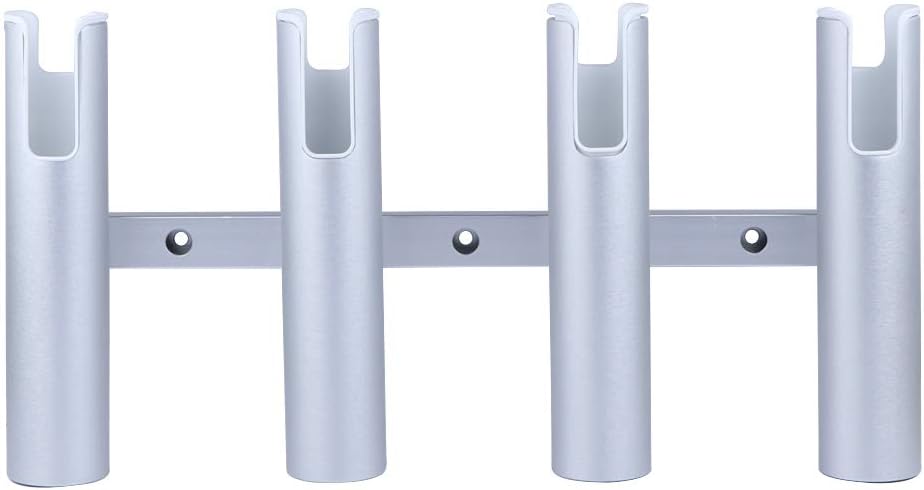
Hoffen Wall-Mounted 4-Rod Holder
This article may contain affiliate links. As an Amazon Associate, the website may earn from qualifying purchases at no additional cost to you.
Rod Holders For Pontoon Boat Reviews
SeaSense 3-Rack Rod Holder
- Material Type
- Polypropylene (PP)
- Mounting Type
- Freestanding
- Fits Rod Size
- 22.86 centimeters
- Warranty Description
- 1 year warranty
Advantages
- Compact 3-rod storage
- Lightweight 16-ounce build
- Easy soap-and-water cleaning
- UV-stabilized for sun exposure
- Hardware included for setup
Limitations
- Only holds three rods
- Freestanding design is less fixed
The SeaSense rack is the simplest choice here for pontoon owners who mainly want a tidy place to park a few rods between outings. Its 3 rod slots keep the setup compact, and the polypropylene construction matters because it is light, easy to clean with soap and water, and built around everyday marine storage rather than permanent hardware. That combination makes sense when you want an inexpensive organizer that also keeps pliers and filet knives close at hand.
Its freestanding mounting style changes the whole use case. You are not committing to a fixed wall or deck layout, so the holder can move from garage to truck to boat without becoming a permanent install project. The UV-stabilized material is a useful durability cue for open-deck storage where sun exposure is constant. The size is also restrained at 1″D x 4″W x 9″H, so it is unlikely to dominate a small pontoon storage area, though the compact footprint naturally limits how much gear it can manage at once.
Against the two aluminum racks in this group, the SeaSense unit trades capacity and a more rugged fixed-mount feel for easier handling and simpler ownership. That tradeoff is the point. It is the one to choose if you want a lightweight rack for a smaller rod count, value quick setup, and do not need a dedicated multi-rod station bolted into the boat. For casual pontoon anglers, it is the most straightforward recommendation.
PHOTO: SeaSense 3-Rack Rod Holder – Three-Rack Rod Storage → Source: Amazon.com
XinKunmarine Aluminum 4-Rod Holder
- Material Type
- Aluminum
- Mounting Type
- Deck Mount
- Fits Rod Size
- 17.1 inches
- Warranty Description
- 90 DAYS
Advantages
- Four-rod capacity
- Aluminum construction
- Scratch-protective lining
- Includes mounting screws
- Compact 11.8-inch width
Limitations
- 90-day warranty only
- Requires fixed installation
The XinKunmarine holder is built for anglers who want a more permanent multi-rod station on a pontoon deck. The headline advantage is its 4 rod capacity, which lets you stage several setups without crowding the floor. The aluminum build gives it a sturdier, more marine-oriented profile than a plastic storage rack, and the soft plastic lining is important because it reduces abrasion where rods rest against the tube.
Installation is more involved than a freestanding rack, but that fixed-deck approach is what makes it useful on a pontoon that serves as a fishing platform. The holder includes mounting screws, and the deck-mount format keeps rods organized in one place rather than shifting around during transport. The tube opening is listed at 1.5 inches, so buyers should pay attention to rod handle fit before choosing it. The 11.8-inch width keeps the rack relatively manageable, but it still assumes you want a dedicated spot for a multi-rod layout.
Compared with the SeaSense rack, this model is the more serious storage solution and the better choice when deck organization matters more than portability. Compared with the Hoffen rack, it offers a similar four-rod concept but in a deck-mount layout rather than a wall-mount format. That makes it the most flexible of the two aluminum picks for pontoon use. Choose it if you want fixed storage, four-rod capacity, and a clean, corrosion-minded metal design.
PHOTO: XinKunmarine Aluminum 4-Rod Holder – Four-Slot Aluminum Rack → Source: Amazon.com
Hoffen Wall-Mounted 4-Rod Holder
- Material Type
- Aluminum
- Mounting Type
- Wall Mount
- Fits Rod Size
- 1.45 inches
- Warranty Description
- 3 year manufacturer
Advantages
- Marine-grade aluminum
- Four-tube storage
- No moving parts
- Three-year warranty
- Includes mounting screws
Limitations
- Wall mount only
- Wider footprint on deck
The Hoffen rack is the strongest long-term option in this group for a pontoon owner who wants fixed storage and a more finished install. It uses marine-grade aluminum and a 4 tube rack layout, so it is aimed at organized rod staging rather than casual carry-around storage. The solid construction with no moving parts is a meaningful durability trait, especially on a boat where fewer moving parts usually means fewer things to loosen or fail over time.
The wall-mount setup is a real distinction. It works best when you have a defined storage zone on the pontoon and want rods held upright and away from walking space. The listed tube diameter of 1.37 inches is slightly tighter than the XinKunmarine rack, so rod handle fit deserves attention. Its 16.5-inch width also gives it a broader footprint, which can be useful for spacing but less convenient if you are trying to conserve every inch of open area. The included screws simplify the install, but this is still a fixed solution rather than a portable one.
Relative to the other two picks, the Hoffen unit is the most compelling for buyers who prioritize durability and a longer warranty window. The 3-year manufacturer warranty stands out in this small field, and that matters if you expect the holder to stay on the boat through multiple seasons. It is not as easy to move as the SeaSense rack, and it does not use the deck-mount format of the XinKunmarine option. Still, for a pontoon that needs permanent, multi-rod storage, it is the most confident recommendation.
PHOTO: Hoffen Wall-Mounted 4-Rod Holder – Four-Slot Aluminum Rack → Source: Amazon.com
How to Choose Rod Holders for Pontoon Boats
Choosing rod holders for a pontoon boat is mostly about matching the rack to how you fish and how the deck is used the rest of the time. A good holder should keep rods secure without creating trip hazards or forcing you to rebuild the layout every time you head out. The right answer depends on whether you value portability, fixed storage, or the ability to stage several rods at once. Material, mounting style, and tube size all matter because those details determine whether the holder fits the boat cleanly and protects the gear you store in it.
Mounting Style
Mounting style is the first decision because it determines how permanent the holder will be. Freestanding racks are easier to move between the garage, truck, and boat. Wall- and deck-mounted racks stay put and usually feel better suited to a dedicated fishing zone on a pontoon. If you regularly change the layout or share the boat for nonfishing use, a movable design is easier to live with. If the holder will always live on the boat, a fixed mount usually gives you better organization and less clutter.
Capacity Needs
Think about how many rods you want staged at one time, not just how many you own. A smaller rack can be enough if you usually bring only one or two setups and want a place to park them securely. A four-rod design makes more sense when you fish with a partner or like to have different rigs ready for changing conditions. More capacity is useful only if your deck has space for it, because an oversized rack can interfere with movement and make the boat feel crowded.
Rod Fit
Tube diameter matters because a rack can have the right capacity and still be a poor fit for your gear. If the opening is too tight, rods may not seat cleanly. If it is too loose, they can shift more than you want during transport or while the boat is moving. Check the diameter against the grips and handles of the rods you use most often. This is especially important on pontoon boats, where racks are often mounted close to seating, storage compartments, or walkways.
Material and Finish
Material influences both durability and upkeep. Polypropylene is light and easy to clean, which can be a good match for a compact rack that might move in and out of storage. Aluminum is better suited to more permanent marine use because it has a sturdier feel and is commonly paired with finishes or linings intended to handle sun and moisture. A protective liner is worth considering if you want to reduce scuffs where the rod rests. The best material is the one that matches how harsh your storage conditions are likely to be.
Deck Space
Pontoon boats reward compact planning because the deck serves many roles. A rod holder should preserve walking space and not create snag points near seats or rails. Before buying, look at the holder’s width and height as a practical footprint, not just a capacity claim. A small rack can disappear into a corner, while a wider four-rod design may need a more deliberate location. The right placement usually matters as much as the rack itself, because even a well-made holder becomes annoying if it blocks movement.
Durability and Warranty
Sun, spray, and vibration all influence how long a holder will stay useful. UV resistance matters for exposed storage, and rust-resistant or marine-oriented materials are better choices when the rack will remain on the boat. A longer warranty can be a useful signal when two holders otherwise look similar, though it should not replace a close look at build quality. If you expect the holder to stay installed all season, durability should outweigh small savings on price.
Rod Holder Comparison Table
| Product | Best For | Mount Type | Tube Size | Material | Warranty | Color |
|---|---|---|---|---|---|---|
| SeaSense 3-Rack Rod Holder | Best Compact Storage | Freestanding | 22.86 centimeters | Polypropylene (PP) | 1 year warranty | White |
| XinKunmarine Aluminum 4-Rod Holder | Best Multi-Rod Capacity | Deck Mount | 17.1 inches | Aluminum | 90 DAYS | 4 Tubes Sliver |
| Hoffen Wall-Mounted 4-Rod Holder | Best Long-Term Choice | Wall Mount | 1.45 inches | Aluminum | 3 year manufacturer | Silver 4 Tubes |
How We Tested & Analyzed Rod Holders for Pontoon Boat
This comparison was built around the decision factors that matter most for pontoon-boat rod storage: mounting method, rod capacity, tube fit, material choice, and deck footprint. Those criteria were prioritized because they shape whether a rack works cleanly on a real boat, not just whether it looks good on a product page. Capacity and fit were treated separately because a larger rack is not automatically better if the tube size is wrong for the rods you actually carry.
Construction quality and environmental resistance were also weighed carefully. On a pontoon, a rod holder is exposed to sun, moisture, vibration, and occasional bumps from changing gear. That is why material type, lining, UV treatment, and warranty length were considered as part of the buying decision. A holder that looks similar on paper can perform very differently once it is mounted and left in the elements.
The final recommendations also reflect tradeoffs in portability and permanence. A movable rack suits one style of boating, while a fixed mount suits another. Rather than trying to force a single winner, the analysis focuses on which holder best matches a specific use pattern. That approach is more useful for readers because it translates specs into actual ownership consequences: ease of install, storage convenience, and how much deck space the holder will consume.
Frequently Asked Questions
What type of rod holder works best on a pontoon boat?
The best type depends on how you use the deck. If you want a clean, permanent setup for frequent fishing, a fixed wall- or deck-mounted holder is usually the most practical. If you need something easier to move or store away, a freestanding rack is simpler and more flexible.
How many rod slots should I choose?
Choose the smallest capacity that still matches your routine. Three slots are often enough for casual use or a compact setup. Four slots make more sense if you fish with others or like multiple rigs ready at once. More capacity only helps when you have room for it on deck.
Why does tube size matter?
Tube size affects whether your rods sit securely. A holder that is too narrow may not accept your rod handles comfortably. One that is too wide may allow more movement than you want. Checking the opening against your most-used rods is one of the easiest ways to avoid a poor fit.
Is aluminum better than plastic for marine use?
Aluminum is often the better choice when the holder will stay on the boat, because it tends to feel sturdier and is well suited to marine environments. Plastic can still be a smart option when you want light weight, easy cleaning, and simpler portability. The better material depends on whether permanence or convenience matters more.
Final Thoughts
The best rod holders for a pontoon boat are the ones that match your space and your fishing style, not just the ones with the highest capacity. A compact rack works when you need quick, low-fuss storage. Fixed aluminum holders make more sense when you want rods organized in a permanent position and ready for repeated use. Once you match the mount style and tube fit to your gear, the right choice becomes much clearer.
For most buyers, the decision comes down to whether you want portability, multi-rod staging, or the most durable installed setup. That is why the three picks here split into distinct roles instead of competing on one narrow spec. Choose the one that fits the way you actually use your pontoon, and you will end up with a holder that saves space, protects rods, and stays useful season after season.