
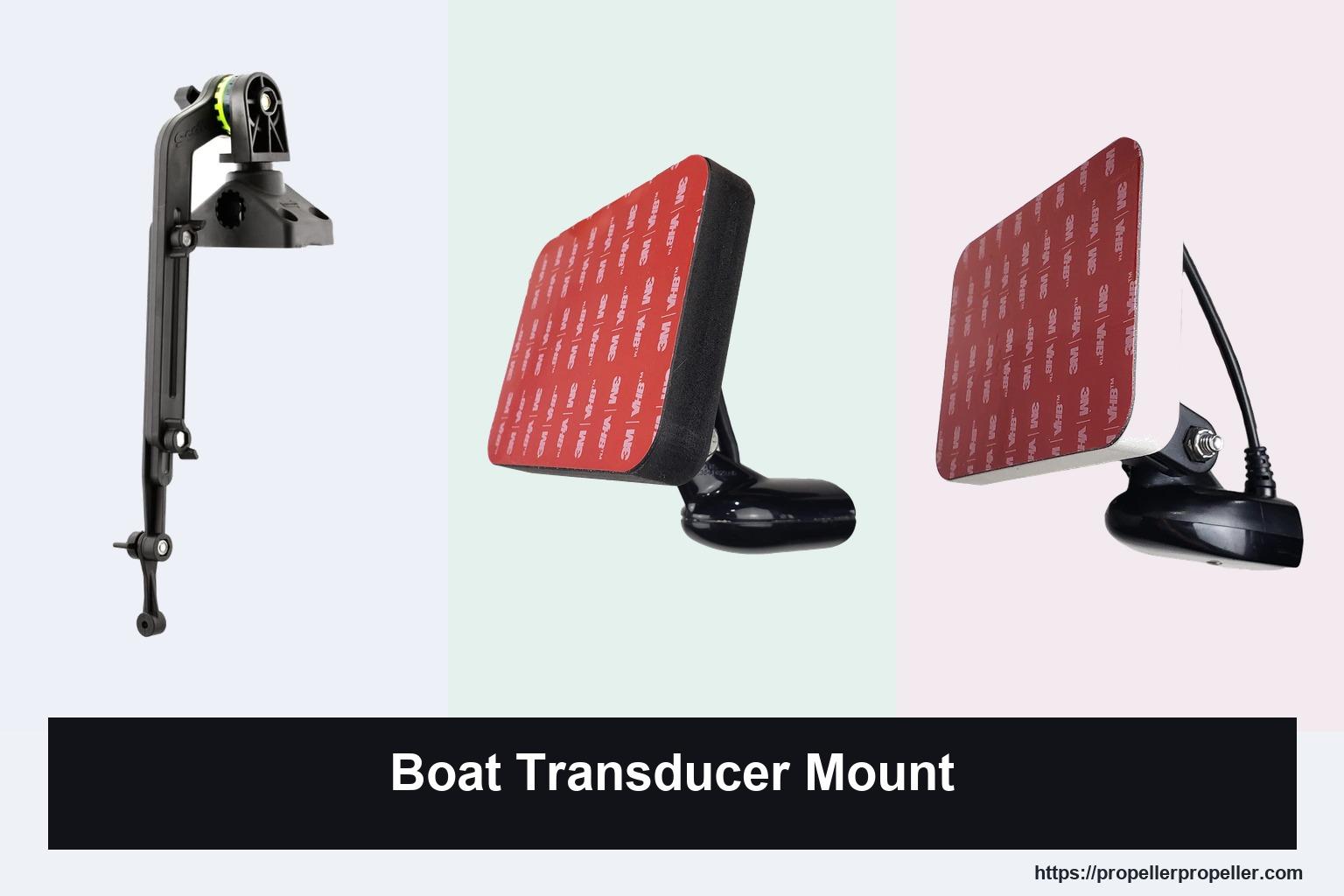
A reliable boat transducer mount has to do more than hold a sensor in place. It needs to survive vibration, let you tune the transducer angle, and match the way you actually launch, transport, and store the boat. That is especially important when you are choosing between clamp-on hardware, screwless pad systems, and transom-mounted brackets. The wrong style can create wasted setup time, awkward cable routing, or a mount that is too rigid for regular adjustments.
This roundup focuses on the practical differences that matter on the water. Some options prioritize no-drill installation and portability, while others are built for a more permanent transom setup or for kayaks and SUPs that need compact storage. The best pick depends on where you fish, how often you remove the gear, and how much adjustment you need to get a clean sonar return. The recommendations below translate those tradeoffs into clear buying decisions.
Top Boat Transducer Mount on the Market

Scotty #140 Kayak/SUP Transducer Arm
- Telescopes 11.5 to 18 inches
- 360-degree swivel
- Slip discs for micro adjustments
- Fits Scotty post mounts

Stern Pad Standard Black Kit
- Screwless installation
- 4.5 x 3.5 x .75 inches
- Bottom-painted compatible
- Includes cable clips

Stern Pad White 3M Kit
- Made in the USA
- Genuine 3M VHB adhesive
- Screwless mounting
- 4.5 x 3.5 x .75 inches

Unexcelled Fishing Portable Bracket
- Aluminum construction
- 15 to 23 inch range
- 2.375 inch clamp opening
- No-drill mounting

sixcow MHX XNT Bracket
- Marine-grade steel
- Transom mount
- Two-slot angle adjustment
- Installation hardware included
This article may contain affiliate links. As an Amazon Associate, the website may earn from qualifying purchases at no additional cost to you.
Boat Transducer Mount Reviews
Scotty #140 Kayak/SUP Transducer Arm
- Material Type
- Nylon
- Mounting Type
- Post Mount
- Item Dimensions
- 13 x 4 x 3 inches
- Item Weight
- 16 ounces
- Manufacturer Warranty Description
- LIMITED WARRANTY
Advantages
- Compact transport profile
- Wide angle adjustment
- Lightweight 16-ounce build
- Scotty mount compatibility
- Fine-tuning slip discs
Limitations
- Transducer not included
- Best suited to Scotty hardware
The Scotty #140 is the most natural fit for kayak and SUP anglers who need a transducer arm that stays compact when the boat is being transported but still reaches far enough for real placement flexibility. Its telescoping range from 11.5 inches to 18 inches lets you keep the arm tucked in for storage and extend it when the transducer needs clearer water. The 360 degrees swivel matters just as much. It gives you a broad adjustment window when hull shape, seat position, or accessory clutter changes the ideal mounting angle.
Setup is straightforward if you already use Scotty post-mount hardware because this arm is built to fit into that ecosystem. The included locking side and deck mount means the system is not just a bare arm, and the slip disc adds micro-adjustment when a coarse angle change is not enough. That kind of fine tuning is useful when you are trying to clean up sonar performance without drilling into a hull. The 16-ounce weight and nylon construction also keep the assembly light enough for small craft use while avoiding the feel of heavy bracket hardware.
Among the five options here, this is the most portable and the least committed to a permanent transom solution. It is not the strongest choice for large, fixed-boat installations, and the transducer itself is not included, so the buyer still needs compatible electronics hardware. Even so, that limitation is part of its value. If you want a compact, adjustable arm for a kayak or SUP and you already have a Scotty mounting base, this is the clearest recommendation.
PHOTO: Scotty 140 Kayak SUP – Adjustable mounting arm → Source: Amazon.com
Stern Pad Standard Black Kit
- Weight Capacity Maximum
- 200 pounds
- Water Resistance Level
- Waterproof
- Enclosure Material
- Polymer
Advantages
- Screwless installation
- Bottom-paint compatible
- Waterproof polymer body
- Includes cable clips
- Compact mounting footprint
Limitations
- Not for large 3D scan transducers
- Requires 18-hour cure time
This Stern Pad is aimed at boat owners who want a clean, screwless way to add transducer or accessory mounting without cutting into the hull. The pad measures 4.5 x 3.5 x .75 inches, which keeps the footprint modest while still giving you a dedicated mounting surface. The waterproof polymer body is a good sign for long-term marine use, and the listed 200 pounds maximum capacity suggests the pad is built for more than lightweight temporary hardware. That combination makes it appealing when you want a low-profile foundation rather than a movable arm.
Installation is the main reason this style exists. The system is designed for less than five minutes of install time, although the cure period is 18 hours, so the real-world timeline is quick to place and slower to fully ready. The no-screw approach avoids hull penetrations and messy epoxies, and the ability to bottom paint it is important for boats that stay in the water. The included screwless cable clips and install kit reduce the number of extra parts you need to source, which can simplify a first-time setup.
Compared with clamp-style or adjustable arm mounts, this pad is more about permanence and clean routing than flexibility. It is not intended for large 3D scanning transducers, so buyers with oversized sonar hardware need to look elsewhere. For standard transducer and accessory mounting on a boat hull, though, it is a disciplined choice that reduces installation risk. Choose this when you value a neat, screwless, fixed mounting point more than fast repositioning or tool-free removal.
PHOTO: Stern Pad Standard Kit – Adhesive stern pad → Source: Amazon.com
Stern Pad White 3M Kit
- Mounting Type
- Transom Mount
Advantages
- Genuine 3M VHB adhesive
- Screwless mounting
- Bottom-paint compatible
- Compact stern footprint
- Made in the USA
Limitations
- Not for large 3D scan transducers
- Less adjustable than bracket mounts
This white Stern Pad follows the same screwless mounting idea but adds a distinct value point for buyers who care about adhesive pedigree and manufacturing origin. The key difference is the use of Genuine 3M VHB Adhesive, which signals a more established bonding approach for mounting hardware to the boat. The 4.5 x 3.5 x 0.75 inch size keeps it in the same compact category as the black version, so you get a similar footprint without adding bulk to the stern area. That makes it useful when you want the mount to disappear into the boat layout instead of dominating it.
The installation logic is still simple, but the adhesive choice changes the confidence level for many buyers. A screwless pad reduces the chance of hull damage, and the included screwless cable clips help you keep wiring tidy as it runs toward the electronics. The ability to bottom paint it broadens compatibility for boats that stay in the water, which matters if you do not want to remove and rework the mount seasonally. Just as important, the note about larger 3D scanning transducers is a reminder that size and sensor mass still matter with adhesive systems.
Against the other products in this roundup, this is the more polished fixed-mount option for a buyer who wants a clean finish and a dependable adhesive-backed install. It does not offer the same angle range as a swing arm, and it is not meant to be a general-purpose bracket. That tradeoff is acceptable when you want a permanent-looking solution with a low visual profile. If your priority is a screwless boat transducer mount that keeps the stern uncluttered, this is the strongest adhesive-based pick.
PHOTO: Stern Pad White 3M – Adhesive stern pad → Source: Amazon.com
Unexcelled Fishing Portable Bracket
- Material Type
- Aluminum
- Mounting Type
- Boat Mount
- Item Depth
- 23 inches
- Color
- Black
- Finish Types
- Power Coat Paint
Advantages
- Aluminum construction
- Long 15 to 23 inch range
- No-drill mounting
- 2.375 inch clamp opening
- Add-on electronics mount
Limitations
- Requires a suitable clamp point
- More setup than pad mounts
The Unexcelled Fishing bracket is the most flexible clamp-on choice in the group for boaters who want a removable transducer solution with more reach than a compact kayak arm. Its adjustable range from 15 inches to 23 inches gives you a longer span than the compact models here, which helps when the mounting point sits farther from the ideal water line. The 2.375 inch C-clamp opening also matters because it defines where the hardware can physically attach on the boat. That makes this a real fit-and-measure product rather than a universal one-size solution.
The aluminum construction and black powder coat point to a bracket built for marine exposure instead of indoor hardware duty. It is also a no-drill design, so you can remove it more easily than a permanently mounted pad system. The threaded hole for an add-on electronics mount adds a practical expansion path if you want to keep accessories consolidated in one area. At the same time, the need to use three screws for the transducer portion means setup is more involved than the simplest clamp-only hardware. This is a mounted tool, not a throw-on-and-forget accessory.
Compared with the Scotty arm, this bracket gives you more range but less kayak-specific compactness. Compared with the adhesive stern pads, it is far easier to remove and reposition, but it does ask for a sturdier attachment point and a more deliberate installation. That makes it the best fit for anglers who need a portable bracket on a boat and want a stronger, more adjustable setup than a small accessory arm. If you prioritize removable hardware and extra reach, this is the best middle-ground pick.
PHOTO: Unexcelled Fishing Portable Bracket – Boat-mounted transducer bracket → Source: Amazon.com
sixcow MHX XNT Bracket
- Material Type
- Marine-grade Steel
- Mounting Type
- Transom Mount
- Manufacturer Warranty Description
- 30-Day money-back guarantee, 12-Month warranty for quality-related issues
- Item Depth
- 1.0 inches
- Color
- Black
Advantages
- Marine-grade steel
- Low entry price
- Two-slot angle adjustment
- Installation hardware included
- 12-month warranty
Limitations
- Requires drilling
- Less flexible than clamp mounts
The sixcow bracket is the most budget-friendly transom mount in this lineup, and it focuses on one thing very well. It is built from marine-grade steel, which gives the bracket a more serious hardware feel than entry-level plastic mounts, and the powder-coated black finish adds a layer of corrosion resistance for boat use. The mounting type is transom-based, so it belongs to the more fixed category of boat transducer hardware. That makes it especially relevant for buyers who want a straightforward bracket rather than an arm or adhesive pad.
What separates this bracket from the others is the combination of compatibility depth and simple angle control. The two-slot design allows quick angle adjustment, which is useful when you need to fine-tune sensor alignment after initial mounting. Installation hardware is included, and the setup calls for three screws, so this is a more committed install than a clamp-on option. The warranty coverage also stands out here with a 30-day money-back guarantee and 12-month warranty for quality-related issues. That gives a low-cost bracket a more reassuring ownership profile than the price alone would suggest.
Against the higher-priced bracket and arm options, this model wins on cost and loses on flexibility. It does not offer the long extension of the portable clamp bracket or the no-drill simplicity of the stern pads, but it is the most direct path to a stable transom installation on a tight budget. That makes it the best recommendation for buyers who already know their transducer family and want inexpensive, fixed mounting hardware with basic adjustability. For value-focused use, it is hard to ignore.
PHOTO: sixcow MHX XNT Bracket – Transducer bracket kit → Source: Amazon.com
How to Choose a Boat Transducer Mount
The right mount depends on where the transducer needs to live and how often you want to move it. A kayak rig, a fixed stern installation, and a clamp-on bracket all solve different problems. Start with the boat, not the sensor. You are deciding how much adjustment, removal, and drilling you can tolerate before the mount becomes annoying in daily use.
Mount Style
The first decision is whether you want a permanent, semi-permanent, or removable setup. Adhesive pads and screw-mounted brackets stay put and usually keep cables tidy, but they demand more commitment at install time. Clamp-on and arm-style mounts are easier to remove or reposition, which matters if the boat is shared, trailered often, or used for more than one fishing setup. Match the mount style to your actual workflow, not just to the transducer type.
Adjustment Range
Transducer angle is not a cosmetic detail. It affects whether the sensor stays aligned in clean water and whether you get stable readings at speed or while turning. A longer arm or a bracket with angle slots gives you more room to correct for hull shape and accessory clutter. If your boat already has a predictable mounting point, you may not need much adjustment. If you are still experimenting, range matters more than simplicity.
Installation Commitment
Some boaters want a mount they can install once and forget. Others need hardware they can move between boats or collapse for storage. Drilling creates a more permanent result, while screwless pads and clamp systems reduce the risk of committing to the wrong location. The tradeoff is usually time versus flexibility. If you are not confident about the final transducer position, the least invasive option can save you from rework later.
Boat Size & Layout
Small boats, kayaks, and SUPs usually benefit from compact hardware that does not interfere with paddling, loading, or transport. Larger boats often have more room for brackets, longer arms, and dedicated transom hardware. The important question is not simply whether a mount fits, but whether it fits without creating a cable routing problem or a storage problem. Measure the usable area first and account for livewells, cleats, and other accessories.
Durability & Materials
Marine exposure is hard on mounting hardware. Aluminum, steel, and quality composites each have a different balance of stiffness, weight, and corrosion resistance. Powder coating, waterproof polymer bodies, and marine-grade materials all matter because the mount will live near spray, sun, and vibration. Lighter materials are easier to handle, but heavier hardware can feel more stable. Buy the construction level that matches how rough your boating conditions really are.
Compatibility Limits
Not every mount is meant for every transducer. Some systems are built around a specific post mount or a known transducer family, while others are broader but less specialized. Size restrictions also matter, especially for larger scanning transducers that need more room and stronger support. Before you buy, confirm that the mount is intended for your sensor type and that the installation method matches your boat’s structure.
Boat Transducer Mount Comparison Table
| Product | Best For | Mount Style | Material | Length | Finish | Color |
|---|---|---|---|---|---|---|
| Scotty #140 Kayak/SUP Transducer Arm | Best for kayak rigs | Post Mount | Nylon | 13 inches | Black | Black |
| Stern Pad Standard Black Kit | Best no-drill pad | Surface Mount | Not Specified | Not Specified | Not Specified | Black |
| Stern Pad White 3M Kit | Best adhesive pad | Transom Mount | Not Specified | Not Specified | Not Specified | Not Specified |
| Unexcelled Fishing Portable Bracket | Best portable bracket | Boat Mount | Aluminum | 23 inches | Power Coat Paint | Black |
| sixcow MHX XNT Bracket | Best budget bracket | Transom Mount | Marine-grade Steel | 1.0 inches | Powder Coated | Black |
How We Tested & Analyzed Boat Transducer Mount
This roundup was built by comparing mount style, adjustment range, installation method, materials, and any stated compatibility limits. Those are the factors that most directly determine whether a transducer mount will work in real boating conditions. Price mattered too, but only as one part of the equation. A low-cost option is not a good value if it forces awkward placement or creates a poor mounting geometry for the sensor.
The analysis also weighed practical consequences rather than treating specifications as isolated facts. A compact arm is useful because it stores easily and adjusts quickly. A screwless pad is useful because it reduces hull commitment and simplifies routing. A bracket with a wider range matters because it can compensate for a difficult mounting point. Differences were judged by how they affect installation confidence, day-to-day adjustability, and the likelihood that the mount will suit a specific boat layout.
Because product records vary in depth, the comparison stays disciplined about what can be stated cleanly. Where a mount had a defined material, finish, or warranty, that was treated as a real decision point. Where a product was limited by size, drilling requirements, or transducer compatibility, that limitation was surfaced plainly. The goal was not to crown the most feature-rich option, but to show which mount type fits which kind of boating problem best.
Frequently Asked Questions
What mount style is best for a small boat or kayak?
Compact arm mounts and screwless pad systems are usually the easiest to live with on smaller craft. They take up less space, are simpler to route around, and do not demand as much dedicated hull room. If you remove gear often or need the transducer out of the way for transport, choose the style that keeps setup compact and predictable.
Do I need to drill holes to mount a transducer?
Not always. Some mounts use adhesive pads or clamp hardware instead of through-hull drilling. That can be a major advantage when you want to avoid permanent changes or are still deciding on the final location. Drilled mounts are more committed, but they can be the better choice when you want a fixed, stable installation.
Why does transducer adjustment range matter?
Adjustment range determines how well you can align the sensor with the water and the boat’s hull shape. A mount with more range can help you correct for interference, awkward geometry, or a poor starting position. If the angle is wrong, sonar performance can suffer even when the transducer itself is good.
What should I check before buying a transducer mount?
Confirm the mounting style, the available space on your boat, and any compatibility limits for your transducer type. Then consider whether you need a removable setup, a permanent installation, or fine angle control. Those practical questions matter more than product name alone because they determine whether the mount will actually solve your installation problem.
Final Thoughts
The best boat transducer mount is the one that matches how you use the boat, not just how the hardware looks on paper. Kayaks and SUPs benefit from compact, adjustable hardware. Boats that stay in the water often favor screwless or adhesive mounting. Fixed transom setups make sense when you already know the position you want and prefer a more permanent solution. Once you decide which of those profiles fits your boat, the rest of the choice becomes much easier.
That is why the final decision should come down to installation style, adjustment needs, and how much permanence you are willing to accept. If you want flexibility, choose the removable or arm-based route. If you want a cleaner, more permanent result, choose a pad or bracket built for that job. The right answer is the one that keeps your transducer aligned, your boat uncluttered, and your setup repeatable every time you launch.



