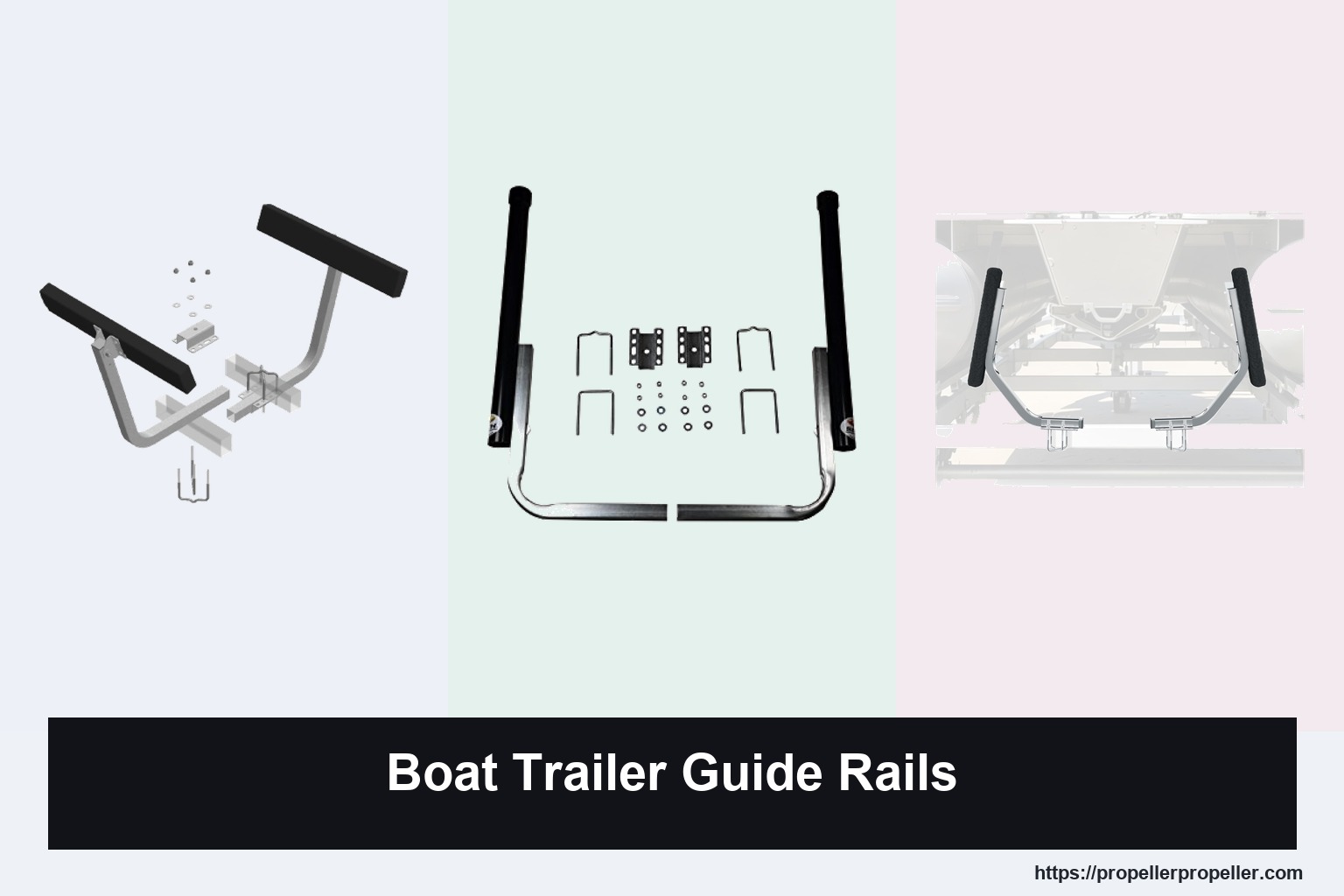
Boat trailer guide rails look simple, but they solve one of the most frustrating parts of launching and loading: keeping the hull centered when current, wind, or a shallow ramp wants to push everything off line. The right guide system does more than mark the trailer edges. It reduces correction time, lowers the chance of rubbing a hull against metal, and makes solo loading much less stressful. For buyers comparing guide posts, bunk boards, and taller rail-style guides, the key differences are adjustment range, mounting fit, contact material, and how much visual guidance you get at the ramp.
This roundup focuses on practical buying decisions rather than generic trailer accessories. Some setups need padded bunk boards that help cradle the boat and resist side drift. Others benefit from taller post-style markers that stay visible when the trailer is partly submerged. A few buyers need the widest possible adjustment range because frame width, bunk height, and boat profile all vary. The strongest options here balance fit, ease of installation, and enough structure to make loading more predictable without creating avoidable trailer interference.
Top Boat Trailer Guide Rails on the Market

CE Smith 2-Foot Bunk Board Guide-On
- 2-foot bunk board
- 21-inch height
- Fits 3-inch frames
- Marine carpet covering
- Mounting hardware included

CE Smith PVC Boxed Post Guide-On
- 60-inch post guide
- Adjusts 13 inches each side
- PVC boxed post
- Fits 3-inch frames
- Mounting hardware included

KUAFU 30-Inch Adjustable Trailer Guide
- 30-inch height
- 24-36 inch range
- Steel construction
- Zinc-plated finish
- Bolt-on install

HECASA 61-Inch Adjustable Guide Rails
- 61-inch guide rails
- Galvanized steel
- Adjustable design
- Large package size
- Bunk board style
This article may contain affiliate links. As an Amazon Associate, the website may earn from qualifying purchases at no additional cost to you.
Boat Trailer Guide Rails Reviews
CE Smith 2-Foot Bunk Board Guide-On
- Load Capacity
- 4000 pounds
- Mounting Type
- U-Bolt
- Material Type
- Southern yellow pine
- Item Dimensions
- 28.6 x 11.7 x 5.5 inches
- Item Weight
- 17.4 pounds
Advantages
- Carpeted bunk surface
- Strong 4,000-pound rating
- Wide adjustment range
- Includes mounting hardware
- Fits common trailer frames
Limitations
- Not the tallest guide style
- Wood requires more care
The CE Smith 27660 is the kind of guide-on that suits buyers who want more than a boundary marker. Its 2-foot bunk board format and carpeted contact surface help the boat settle into position instead of bouncing against a bare post. The 4000 pounds load capacity also signals that this is built for serious trailer setups rather than light-duty convenience gear. For ramps where crosswind or side current keeps nudging the hull off center, the wider contact area is a real advantage because it gives the boat a softer and more forgiving guide path.
Its adjustment range is useful in the way a trailer accessory should be useful: it solves fit problems instead of creating new ones. The board sits at 21 inches high and can adjust out to 13 inches from the frame on each side. That gives enough positioning flexibility for different hull shapes and frame layouts. It fits frames up to 3 inches wide and 4.25 inches high, and the U-bolt mounting keeps the installation approach straightforward. The untreated Southern yellow pine construction is practical, but it does mean the carpeted board is doing part of the protection work, so long-term care matters.
Against the taller post-style options in this group, this model is the better choice when you want the trailer to guide the boat physically rather than simply mark its edges. It is not the most vertical or visible solution, and the wood-and-carpet build is more specific than all-metal rail systems. Even so, that tradeoff makes sense for buyers who value hull contact control and a stable loading feel. If your ramp routine benefits from a softer touch and you have a compatible frame, this is the most forgiving guide-on in the set.
PHOTO: CE Smith 2-Foot Bunk – Exploded Mounting Hardware → Source: Amazon.com
CE Smith PVC Boxed Post Guide-On
- Size
- 60″
- Mounting Type
- U-Bolt
- Material
- Plastic
- Item Weight
- 22.9 pounds
- Item Dimensions L x W
- 60″L x 3″W
Advantages
- Tall 60-inch guide
- Clear underwater visibility
- Adjusts 19 inches each side
- Includes mounting hardware
- Fits common trailer frames
Limitations
- Less hull contact support
- Heavier than simple markers
This CE Smith post guide-on is built for buyers who need a strong visual target rather than a bunk-style contact surface. The 60-inch height gives it a much more visible profile than shorter guide systems, and the boxed post design is especially helpful when the trailer is partly underwater at the ramp. That matters because line-of-sight is often the difference between a clean load and a second attempt. The PVC boxed post construction also keeps the focus on clear guidance instead of hull contact, which is exactly what some trailers need.
The fit range is sensible for common trailer frames. It adjusts out to 19 inches on each side and fits frames up to 3 inches wide by 4.25 inches high. Mounting hardware is included, so the buyer is not left sourcing basic installation parts separately. The U-bolt mounting approach should appeal to anyone replacing an existing guide or adding one to a compatible frame without wanting a complicated fabrication project. At 22.9 pounds, it is substantial enough to feel anchored without being excessive for a trailer accessory.
Compared with the bunk-board option above, this is the more visibility-first solution. It does less to cradle the hull, but it is easier to read from the tow vehicle and from the ramp edge. That makes it a strong pick for buyers who already have a stable trailer bed and mainly need a taller reference point during loading and backing. If your biggest frustration is not hull support but simply finding and holding the trailer line, this is the better buy.
PHOTO: CE Smith PVC Boxed – Mounting Hardware Set → Source: Amazon.com
KUAFU 30-Inch Adjustable Trailer Guide
- Size
- 24″-36″
- Package Weight
- 7.62 kg
Advantages
- Lower entry price
- Steel construction
- Zinc-plated finish
- Includes hardware and instructions
- Wide height range
Limitations
- Less premium feel
- Limited published specifications
The KUAFU guide is the most price-friendly option in this group, but it still brings the adjustment range many buyers actually need. The 30-inch height and 24-inch to 36-inch mounting range make it adaptable to different trailer frame setups without moving into overly specialized hardware. It is aimed at bunk-style pontoon trailer applications, but the frame compatibility language is broad enough to matter for buyers working with box, channel, or I-beam frames up to 3 inches wide and 4.25 inches tall. That combination makes it a flexible entry point for common trailer geometry.
Its steel build and zinc-plated surface are the right kind of details for a marine accessory because corrosion resistance matters just as much as strength. The package includes two guide-ons, hardware, and instructions, which lowers the barrier for a do-it-yourself installation. The bolt-on approach should appeal to buyers who want a conventional attachment method rather than a custom fabrication job. At 7.62 kg package weight, it is not the lightest hardware in the set, but it is still manageable for typical garage installation workflows.
Against the heavier and more expensive guide systems here, KUAFU stands out as the value play. It does not offer the padded bunk contact of the CE Smith bunk board, and it lacks the tall visual presence of the boxed post style. Instead, it delivers a sensible middle ground with useful adjustability and a lower cost of entry. That makes it the right recommendation for buyers who need a functional guide-on without paying for extra material or height that they may not use.
PHOTO: KUAFU 30-Inch Adjustable Trailer – Pontoon Guide Rails → Source: Amazon.com
HECASA 61-Inch Adjustable Guide Rails
- Package Weight
- 15.42 kg
Advantages
- Tall 61-inch rails
- Galvanized steel build
- Adjustable design
- Substantial hardware package
- Guide-first layout
Limitations
- Limited fit details
- Heavier package to handle
HECASA’s 61-inch guide rails are the tallest rail-style option in this group, which makes them appealing to buyers who want a more prominent boundary on the trailer. The 61-inch length is the standout fact here, because extra height and reach can matter when the boat sits deep or the ramp angle makes alignment harder to judge. The galvanized steel construction also points toward durability in a wet marine environment, where corrosion resistance is not optional. This is a rail-first solution for trailers that benefit from a stronger visual and structural guide.
The tradeoff is that the published details are leaner than those of the other options. That means buyers should pay close attention to the package dimensions and weight before planning installation or shipping logistics. The 62 x 12 x 6 inch package and 15.42 kg weight suggest a substantial piece of hardware, so handling and mounting will feel more like installing trailer structure than adding a small accessory. The adjustable design is promising, but the absence of more detailed fit measurements means compatibility checks become especially important before purchase.
Compared with the CE Smith post guide and bunk-board choices, this model sits in a more specialized position. It does not lean on a carpeted surface for hull contact, and it does not present the same breadth of fit information as the more established frame-friendly options. What it does offer is height and a galvanized build in a simple rail format. That makes it the best candidate for buyers who want a tall guide presence and are comfortable verifying compatibility before committing to the install.
PHOTO: HECASA 61-Inch Adjustable Guide – Bunk Board Guide Rails → Source: Amazon.com
How to Choose Boat Trailer Guide Rails
The right guide system depends on what problem you are trying to solve at the ramp. Some buyers need a soft landing surface that helps the hull center itself. Others need taller visual markers that stay obvious when the trailer is partly submerged. A few need broad adjustment ranges because the trailer frame, bunk height, and boat profile do not line up neatly. The best choice is the one that matches your loading conditions, not the one with the longest feature list.
Guide Style
Start by deciding whether you need a bunk-board style guide or a post-style marker. A bunk board gives the boat a padded side reference, which can reduce drift and make the hull feel more controlled as it settles onto the trailer. A post-style guide is better when your main problem is visibility, because the taller upright is easier to see while backing and loading. The right style depends on whether you want contact, reference, or both.
Fit and Frame
Trailer frame compatibility matters more than many buyers expect. Measure the frame width and height before you compare anything else, because guide hardware often fits only within a specific range. If the guide cannot clamp securely to the frame, the rest of the design becomes irrelevant. Look for enough adjustment to place the guide where the hull actually needs support, not just where the hardware happens to land.
Height and Visibility
Height changes how easy the guide is to read at the ramp. Taller posts are easier to spot when the trailer is partly underwater, while shorter rails may be enough if you already have a clear loading path. Higher guides can also help when side current or wind makes alignment harder. The tradeoff is that more height usually means more bulk, so consider storage, towing clearance, and handling before choosing the tallest option available.
Materials and Durability
Material choice affects both corrosion resistance and how the guide interacts with the boat. Carpeted wood can be gentler on the hull and more forgiving during loading, but it may require more care over time. Steel and galvanized steel generally give a more rigid structure and better wet-environment durability. PVC or plastic-based posts prioritize visibility and simpler guidance. Think about how often the trailer lives in the water, because repeated exposure is where material differences matter most.
Installation and Hardware
Mounting style should match your comfort level and the trailer’s existing structure. U-bolt and bolt-on systems are usually easier for straightforward upgrades, especially when hardware is included. Check whether the guide can be mounted high enough or adjusted far enough outward to work with your hull shape. If installation feels ambiguous before purchase, it usually stays ambiguous during assembly, so favor the clearest fit information you can find.
Loading Conditions
Your typical ramp environment should influence the final choice. Calm water and easy access reduce the need for tall, heavy-duty guides. Wind, current, and steep ramp angles increase the value of taller markers and more forgiving contact surfaces. If you often load alone, choose the system that gives the most predictable visual cue or hull correction. The goal is not simply to own a guide rail. The goal is to make each loading cycle more repeatable.
Boat Trailer Guide Comparison Table
| Product | Best For | Height | Mount Type | Weight | Color | Global Trade Identification Number |
|---|---|---|---|---|---|---|
| CE Smith 2-Foot Bunk Board Guide-On | Best for padded guidance | Not Specified | U-Bolt | 17.4 pounds | Black | 00768296001865 |
| CE Smith PVC Boxed Post Guide-On | Best for visibility | 60″ | U-Bolt | 22.9 pounds | Black | 00744119193085, 00768296009663 |
| KUAFU 30-Inch Adjustable Trailer Guide | Best budget option | 24″-36″ | Not Specified | Not Specified | Not Specified | Not Specified |
| HECASA 61-Inch Adjustable Guide Rails | Best for taller rails | Not Specified | Not Specified | Not Specified | Not Specified | Not Specified |
How We Tested & Analyzed Boat Trailer Guide Rails
This roundup was built around the practical decisions that matter most to boat trailer buyers: fit, guide height, material choice, mounting approach, and how each design changes loading behavior at the ramp. Rather than treating all guide rails as interchangeable, the analysis separates contact-based bunk systems from visibility-first post systems and taller rail layouts. That distinction is important because the right choice depends on whether the buyer wants hull support, alignment help, or both.
Comparison also weighed the completeness of the published fit information. A guide with clear frame ranges, mounting style, and installation hardware earns more confidence than one that leaves the buyer guessing about compatibility. Where specifications were sparse, the analysis treated that lack of detail as a meaningful consideration instead of filling gaps with assumptions. The result is a set of recommendations grounded in what the hardware actually declares, not in what a generic trailer accessory might be expected to do.
Value was considered in relation to construction and use case, not just price. A lower-cost guide can be the right choice if it still provides the adjustment range and materials a buyer needs. A more expensive option can still be justified when it offers better hull guidance or visibility. The recommendations therefore focus on the tradeoffs that influence ownership experience over time, especially in wet environments and imperfect loading conditions.
Frequently Asked Questions
Should I choose bunk boards or post guides?
Choose bunk boards when you want the trailer to help center the hull with more surface contact. Choose post guides when the main challenge is seeing the trailer edges while backing or loading. Many buyers prefer bunk boards for more forgiving alignment and post guides for stronger visual cues at the ramp.
What measurements matter before buying?
Measure the trailer frame width and height first. Then check the guide’s adjustment range and overall height. Those numbers determine whether the hardware fits securely and whether the guide will sit where the boat actually needs guidance. If the frame range is wrong, the rest of the product details matter much less.
Why does guide height matter so much?
Height affects how visible the guide stays when the trailer is partly submerged. Taller guides are easier to see from the tow vehicle and from the ramp, which can make alignment easier in wind or current. Shorter guides can still work well, but they are less useful when visibility is the biggest challenge.
What material is best for marine use?
There is no single best material for every trailer. Carpeted wood can be gentler on the hull, while steel and galvanized steel usually emphasize rigidity and corrosion resistance. PVC and plastic-based posts prioritize visibility and simple guidance. The best material is the one that matches how often the trailer sees water and how much hull contact you want.
Final Thoughts
Boat trailer guide rails are worth choosing carefully because they affect every launch and retrieval. A good guide does not just look sturdy. It reduces guesswork, shortens loading time, and helps protect the hull from awkward contact. The best fit depends on whether you want padding, visibility, or height. Once you know that priority, the remaining decision becomes much clearer.
For most buyers, the safest approach is to match the guide style to the real ramp conditions you face most often. Calm-water loading with a stable trailer points toward simpler solutions. Wind, current, and underwater visibility challenges justify taller or more forgiving hardware. Measure first, compare fit ranges second, and then choose the design that makes your routine more repeatable. That is how you end up with guide rails that earn their space on the trailer.