
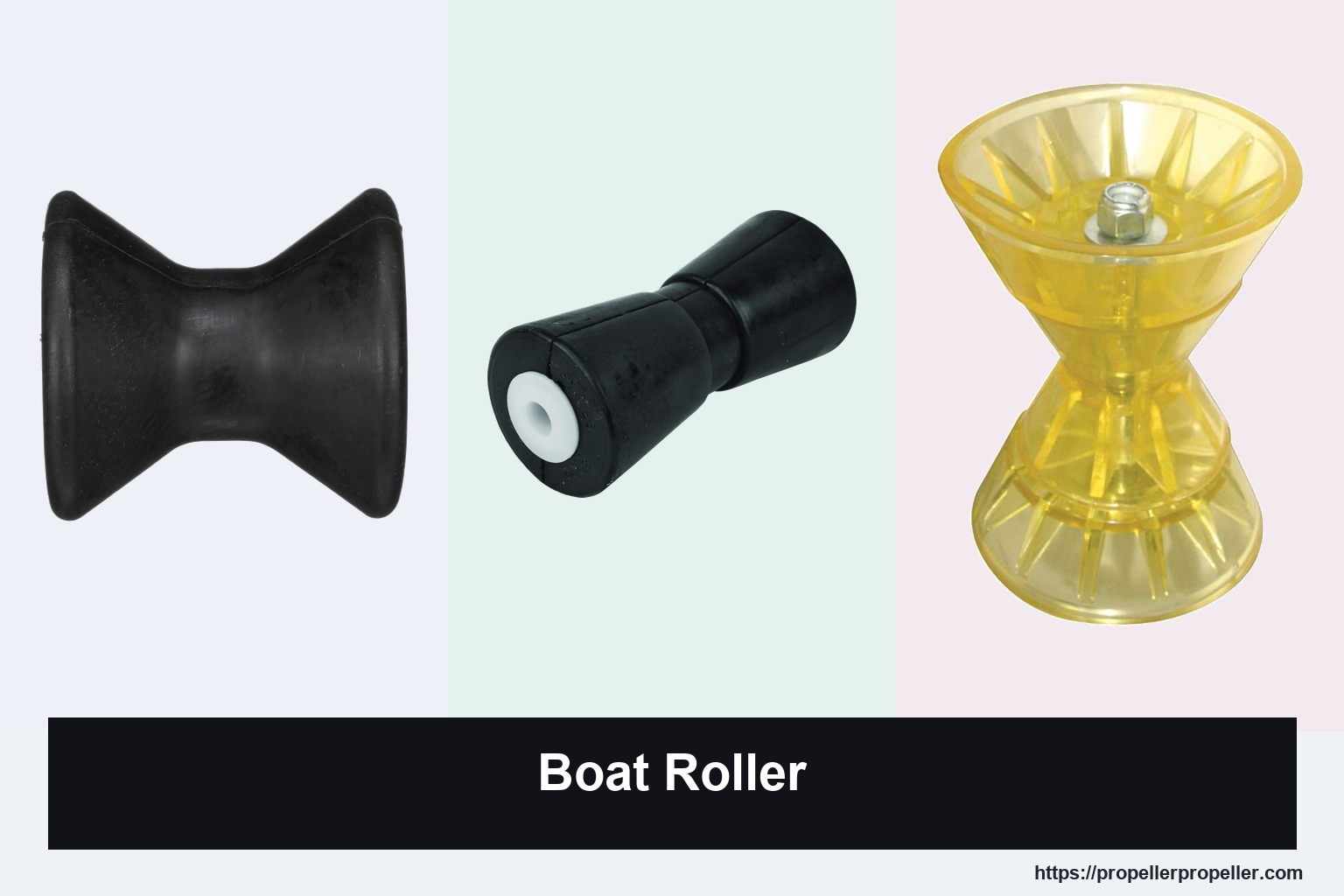
A good boat roller does more than keep a trailer looking complete. It shapes how smoothly the hull centers, how much contact stress the boat sees during loading, and how confidently the trailer supports the keel once the boat is in place. The right choice depends on roller material, diameter, shaft compatibility, and whether you need a simple replacement part or a full assembly with bells and hardware.
This roundup focuses on the practical differences that matter at the ramp and on the road. Some rollers are compact molded replacements that keep costs low. Others use polyurethane or rubber construction to soften contact, resist weathering, and improve centering. The best pick for you is the one that matches your trailer bracket, protects the hull surface you are moving, and fits the way you load and retrieve your boat.
Top Boat Roller on the Market

Seachoice Molded Bow Roller
- Black rubber construction
- 3 inch by 1/2 inch
- Compact replacement roller
- Lightweight 0.24 kg

Attwood Heavy Duty Keel Roller
- Rubber keel roller
- 8-inch diameter
- Heavier 2.3 pounds
- Black marine finish

SeaSense Super Polymer Bow Roller
- 4-inch poly vinyl roller
- Resists oil, gas, salt
- Includes shaft and hardware
- Spins freely

COLOFULWAY 3 Inch Bow Roller Assembly
- 3-inch TPU roller
- Includes end bells
- 1/2-inch shaft bolt
- Vehicle-specific fit

COLOFULWAY 4 Inch Spoke Roller
This article may contain affiliate links. As an Amazon Associate, the website may earn from qualifying purchases at no additional cost to you.
Boat Roller Reviews
Seachoice Molded Bow Roller
- Size
- 3 In. x 1/2 In.
- Item Dimensions LxWxH
- 3 x 3 x 3 inches
- Package Weight
- 0.24 kg
- Color
- Black
Advantages
- Lowest-cost option
- Compact replacement size
- Lightweight to handle
- Simple molded rubber design
- Easy spare-part format
Limitations
- No hardware details listed
- Less specialized than assemblies
The Seachoice Molded Bow Roller is the simplest option here, and that is its appeal. Its 3 inch x 1/2 inch size keeps it squarely in replacement territory, while the black rubber body is aimed at routine trailer service rather than premium hardware. For a buyer replacing a worn bow roller without rebuilding the whole guide system, it offers the most direct path back to basic function. The very light 0.24 kg package weight also signals a compact part that is easy to handle and store as a spare.
Installation should stay straightforward because the roller is a small-format part with a compact footprint. That matters when you want to swap out a tired roller without changing the trailer layout or adding extra complexity. The product record does not spell out a hardware bundle, so buyers should expect to verify their shaft and bracket setup before ordering. The main advantage is its low-mass, low-drama replacement role. The tradeoff is that it is not the most elaborate assembly in the group, so it is best for straightforward service work.
Against the larger rubber and polyurethane assemblies in this set, this Seachoice part is the leanest choice. It is the right call when you value simplicity, low cost, and a familiar molded roller shape over extra centering hardware or a more specialized fit. If your trailer already accepts this size and you want a no-frills replacement that gets the job done, this is the one to start with. Buyers seeking a full guide-and-support assembly should move up to one of the heavier-duty options instead.
PHOTO: Seachoice Molded Bow Roller – Molded black roller → Source: Amazon.com
Attwood Heavy Duty Keel Roller
- Item Diameter
- 8 inches
- Item Weight
- 2.3 pounds
- Material Type
- Rubber
- Color
- Black
- Item Dimensions
- 3.39 x 3.39 x 8 inches
Advantages
- Heavy-duty rubber build
- Large 8-inch diameter
- Impact-absorbing support
- Broad trailer compatibility
- Strong keel guidance
Limitations
- Diameter selection must match
- No hardware bundle listed
The Attwood Heavy Duty Boat Trailer Roller is the strongest pure support piece in this lineup. Its 8 inch diameter and rubber construction point to a roller meant for more demanding keel support, not just a light bow contact point. That bigger format matters when you want the boat to track predictably as it loads and launches. The 2.3 pounds weight also suggests a more substantial component than the compact molded alternatives, which can be reassuring in a heavy-use trailer system.
The rubber body is built around impact absorption, and that is the key operational benefit. A firm roller that cushions hull contact can reduce harsh transfer when the trailer and boat are moving against each other at the ramp or on uneven ground. The product is also described as a trailer replacement part designed for many roller systems, so it belongs in a broad service category rather than a single proprietary setup. Buyers should still confirm their bracket and roller diameter needs before ordering because the item is offered in multiple lengths.
This Attwood roller stands apart from the smaller molded bow rollers and from the full assemblies that include bells and bolts. It is the better choice when the priority is dependable keel guidance and durable rubber support rather than a complete centering package. That makes it especially appealing to owners of heavier boats or anyone replacing a worn support roller in a proven trailer system. If your goal is stable, rugged, and uncomplicated keel support, this is the most convincing heavy-duty pick in the group.
PHOTO: Attwood Heavy Duty Keel – Rubber shaft roller → Source: Amazon.com
SeaSense Super Polymer Bow Roller
- Size
- 4-Inch
- Material
- Poly Vinyl
- Color
- Yellow
- Item Dimensions LxWxH
- 5 x 5.12 x 7.99 inches
Advantages
- Non-marring polymer surface
- Resists oil, gas, salt
- Includes shaft and hardware
- Freely spinning design
- Smooth launch behavior
Limitations
- Higher price than basic rollers
- Larger than simple replacements
The SeaSense Super Polymer Bow Roller is the most material-focused option here. Its poly vinyl construction is paired with a non-marring molded design, so it is built to move the boat smoothly without being rough on the hull surface. The 4-inch size gives it enough presence to serve as a real bow contact point while still staying within a manageable trailer format. For buyers who want a roller that feels more refined than plain rubber, this one earns attention quickly.
This model stands out because it is described as unaffected by oil, gas, and salt. That matters at the ramp, where rollers see the kind of contamination that can shorten the life of lesser parts or leave them feeling sticky. The freely spinning action also reduces drag during launching, which can make positioning feel less jerky. Just as important, the included shaft and mounting hardware lower the odds that you will need a separate parts run before installation. The tradeoff is that its 4-inch footprint may be more than you need for very simple replacement jobs.
Compared with the small Seachoice roller, this SeaSense option is more complete and more protective. Compared with the rubber-heavy Attwood roller, it leans harder into chemical resistance and smoother rolling rather than raw support mass. That makes it the best fit for buyers who want a bow roller that is still straightforward but more polished in daily use. If you want a balanced mix of smooth launch behavior, hull care, and installation convenience, this is one of the safest recommendations in the group.
PHOTO: SeaSense Super Polymer Bow – Yellow polymer roller → Source: Amazon.com
COLOFULWAY 3 Inch Bow Roller Assembly
- Compatible with Vehicle Type
- Marine-Personal-Craft, Trailer
- Automotive Fit Type
- Vehicle Specific Fit
- Material Type
- polyurethane
- Finish Type
- Powder Coated
Advantages
- Complete assembly format
- End bells protect hardware
- TPU resists marking
- 1/2-inch shaft included
- Vehicle-specific fit
Limitations
- Fit must match bracket
- More specialized than basic rollers
This COLOFULWAY assembly is built for buyers who want more than a plain roller. The 3 inch polyurethane bow roller sits inside a broader package that includes end bells and a 1/2 inch shaft bolt, so the purchase is aimed at complete bow support rather than a single wear item. The practical benefit is center control. The end bells help keep the boat away from the bracket and bolts, which is exactly what you want when the trailer geometry leaves little room for slop.
Its TPU construction is the key durability point. Polyurethane-style material is meant to resist rusting behavior and avoid marking the boat, which is useful when the roller sees repeated loading cycles and road shock. The vehicle-specific fit language also matters because it suggests a more deliberate match to the bracket rather than an all-purpose guess. That can reduce the chance of buying a part that is mechanically close but dimensionally wrong. The assembly approach does mean you should pay closer attention to compatibility than you would with a plain roller replacement.
Among the options here, this one is the best choice when bracket protection and centering matter as much as rolling support. It is more specialized than the Seachoice and less simply rugged than the Attwood, but it gives you a more complete trailer contact point than either of those. Buyers who know they need a 3-inch bracket fit and want the extra guard of end bells should look here first. For a targeted bow-roller assembly, this is the most decisive all-in-one pick in the set.
PHOTO: COLOFULWAY 3 Inch Bow – Red bow roller → Source: Amazon.com
COLOFULWAY 4 Inch Spoke Roller
- Color
- Blue
- Package Weight
- 0.91 kg
Advantages
- Larger 4-inch roller
- TPU construction
- Spoke-style assembly
- End-bell protection
- Clear 1/2-inch shaft fit
Limitations
- Bracket fit must be verified
- More assembly complexity
The 4-inch COLOFULWAY spoke roller is the most fully developed bow-assembly style in this group. Its 4 inch TPU roller gives it a larger contact surface than the 3-inch assembly, while the spoke design adds a more structured look and a different support profile. For buyers who want a bow roller assembly that feels more substantial at the point where the boat meets the trailer, that size increase matters. The blue finish also makes it easy to identify during inspection or replacement work.
The builder’s focus on TPU is important because it points to a roller meant to avoid rust and marking while supporting the boat and absorbing road shock. The end-bell concept is again part of the value here, since it keeps the hull from rubbing against bolts or the roller bracket. That turns the part from a simple contact wheel into a more protective guide point. Because it is an assembly, the fit conversation is central. Buyers should confirm the 1/2-inch shaft requirement and whether their trailer bracket is set up for a 4-inch roller.
Compared with the 3-inch COLOFULWAY assembly, this model is the more substantial version and is the better match when you want a larger roller face. Compared with the simpler molded options, it brings more structural support and more deliberate centering protection. That makes it the right recommendation for buyers prioritizing bow guidance over absolute simplicity. If your trailer hardware is ready for a 4-inch spoke assembly and you want a more complete contact solution, this is the strongest finishing choice.
PHOTO: COLOFULWAY 4 Inch Spoke – Blue bow roller → Source: Amazon.com
How to Choose a Boat Roller
A boat roller seems like a small part until it starts affecting loading, centering, and hull wear. The right choice depends on how much support you need, how your trailer is built, and how often the boat meets the roller during launch and retrieval. Material, diameter, shaft size, and whether you want a simple replacement or a full assembly all matter more than appearance.
Roller Material
Material is the first decision because it controls how the roller behaves under load and against the hull. Rubber tends to be simple, durable, and familiar. Polyurethane-style materials usually add smoother movement and better resistance to marking. If your boat has a finish you want to protect, a non-marring surface is worth paying for. If the trailer is already well matched and you mainly need a working replacement, a basic rubber roller can still be the most sensible route.
Diameter and Support
Diameter affects how the trailer carries the boat and how much surface is available for contact. Smaller rollers are often easier to replace and keep the trailer compact. Larger rollers can spread the load more confidently and improve keel guidance. The right size depends on the bracket, the trailer geometry, and the weight of the boat. A roller that is too small may not center as well. One that is too large may not fit the existing hardware cleanly.
Assembly or Replacement
A plain roller is usually the simplest purchase when you are replacing a worn part and the shaft or bracket is already in good shape. A full assembly makes more sense when you need end protection, new hardware, or a more complete contact point. Assemblies can reduce the chance of metal-on-hull contact, but they also demand more careful fit checks. Before buying, decide whether you need a single wear item or a broader trailer update.
Shaft and Bracket Fit
Boat rollers fail to perform when the shaft or bracket match is wrong. The trailer may accept several roller styles, but the mounting diameter and width still need to line up. If the fit is off, the roller can bind, sit crooked, or leave too much side play. That leads to uneven wear and poor centering. Verify the existing bracket dimensions before ordering, especially when moving from a simple roller to a more complete assembly.
Launch Conditions
Where and how you launch matters more than many buyers expect. A ramp with frequent saltwater exposure or heavy seasonal use benefits from materials that resist contamination and repeated wet-dry cycles. If you launch in rougher conditions, a roller that absorbs shock can reduce harsh contact as the boat loads and retrieves. For lighter use on a predictable ramp, a basic roller may be enough. Match the part to the environment, not just the price.
Hull Protection
The most important job of a boat roller is to support the boat without creating unnecessary wear. Non-marring materials, end bells, and smooth spinning action all help reduce abrasion at the bow or keel contact points. If your hull finish is sensitive or the boat is expensive to refinish, protection should outweigh cosmetic simplicity. A cheaper roller that transfers wear to the boat is rarely the bargain it seems to be.
Boat Roller Comparison Table
| Product | Best For | Color | Number of Items | Package Weight |
|---|---|---|---|---|
| Seachoice Molded Bow Roller | Best budget replacement | Black | 1 | 0.24 kg |
| Attwood Heavy Duty Keel Roller | Best heavy-duty roller | Black | 1 | Not Specified |
| SeaSense Super Polymer Bow Roller | Best corrosion-resistant roller | Yellow | Not Specified | 1.04 kg |
| COLOFULWAY 3 Inch Bow Roller Assembly | Best centering assembly | Not Specified | 1 | Not Specified |
| COLOFULWAY 4 Inch Spoke Roller | Best bow-center assembly | Blue | Not Specified | 0.91 kg |
How We Tested & Analyzed Boat Roller
This guide evaluates boat rollers by the factors that directly change trailer performance: material behavior, fit, support style, and the level of hardware included. Those details matter because a roller is not just a passive part. It shapes how the boat centers, how much stress reaches the hull, and how easy the trailer is to service over time. The analysis favors features with clear operational consequences over cosmetic differences.
Comparison focused on the practical gap between a basic replacement roller, a heavy-duty support roller, and complete assemblies with centering protection. That makes it easier to separate parts that solve a narrow wear issue from parts that change how the trailer behaves during launching and retrieval. When a product offered a broader hardware package or a more specific fit, that was treated as a meaningful advantage only if it aligned with a real setup need.
Limitations were weighed carefully. Not every product record includes the same depth of fit data, hardware detail, or size information, so unsupported claims were excluded rather than inferred. Where a product’s role was clear but the mounting specifics were sparse, the recommendation stayed focused on the verified use case. That keeps the guidance practical and prevents a buyer from overestimating compatibility or assuming a part is more universal than the evidence shows.
Frequently Asked Questions
How do I know what roller size to buy?
Start with the bracket and shaft dimensions already on the trailer. Roller size has to fit the hardware and still leave the boat supported correctly. A compact replacement is fine when you are matching an existing setup. A larger roller makes more sense when you need better load spread or improved keel guidance.
What is the best roller material for hull protection?
Non-marring polyurethane-style materials are often the safest choice when finish protection matters most. Rubber is still common and can work well, especially for straightforward support jobs. The key is to avoid a roller that creates rough contact or leaves visible marks on the hull during repeated loading cycles.
Do I need a full assembly or just a roller?
A plain roller is enough when the shaft and bracket are already in good shape and you only need to replace the wear surface. A full assembly is better when you want end protection, new hardware, or more controlled centering at the bow. The decision usually comes down to how complete the repair needs to be.
Why does end-bell protection matter?
End bells keep the hull from rubbing directly against bolts or bracket edges. That matters when the trailer sees frequent loading, because small contact points can create wear over time. If your boat is sensitive to abrasion or the existing setup leaves little clearance, end bells are a worthwhile upgrade.
Final Thoughts
The best boat roller is the one that matches your trailer geometry and your loading habits. A compact replacement keeps things simple. A heavy-duty rubber roller supports more demanding use. A full assembly adds centering protection and can reduce the chance of hull contact with exposed hardware. Once you know which of those jobs matters most, the right choice becomes much easier to narrow down.
For most buyers, the smartest approach is to prioritize fit first, then material, then the amount of hardware included. That order prevents wasted money and reduces installation frustration. Choose the roller that solves your real trailer problem, not the one with the biggest feature list. If you do that, you will end up with a part that supports the boat cleanly, lasts longer, and makes ramp use feel more predictable.



