
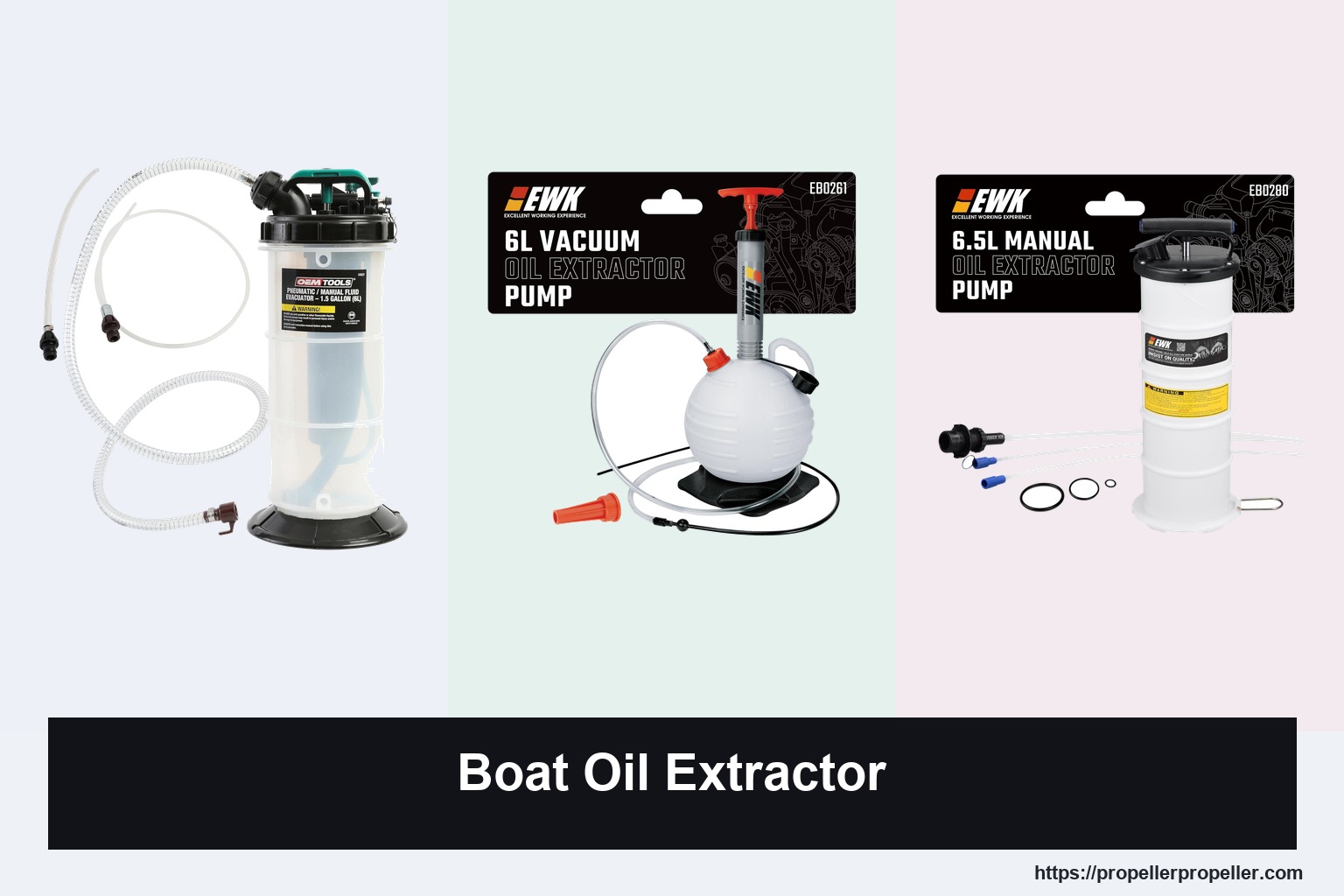
Changing oil on a boat is rarely as convenient as doing it in a driveway. Access is tighter, drain plugs are less cooperative, and the risk of spilling fluid into a bilge or dock area raises the stakes. A good oil extractor solves that problem by pulling oil through the dipstick tube or another top-side opening, which keeps the service cleaner and usually much faster than a traditional drain-pan approach.
The right extractor for marine use needs more than a tank and a hose. Buyers should pay attention to how the pump is powered, how far the pickup tube reaches, whether the tank capacity matches the volume of the engine, and how well the unit handles transport and cleanup after the job is done. The four picks below cover different priorities, from compressor-assisted extraction to fully manual portability, so you can match the tool to your boat, dock, or garage routine.
Top Boat Oil Extractor on the Market

OEMTOOLS 24937 6L Fluid Extractor
- Dual pneumatic/manual operation
- 6L leak-resistant reservoir
- 41-inch dipstick hose
- 5-foot suction hose
- Automatic shut-off valve

EWK 6L Manual Fluid Extractor
- 59-inch clear hose
- 42-inch metal probe
- 6L portable tank
- No power required
- Step-on base

EWK 6.5L Manual Oil Extractor
- 6.5L sealed tank
- 102-inch suction tube
- Manual operation
- Marine and small-engine use
- Heat-resistant polyethylene

VEVOR 6.5L Manual Extractor
- 6.5L tank
- Four tube sizes
- Manual operation
- Multiple fluid types
- All-in-one kit
This article may contain affiliate links. As an Amazon Associate, the website may earn from qualifying purchases at no additional cost to you.
Boat Oil Extractor Reviews
OEMTOOLS 24937 6L Fluid Extractor
- Item Weight
- 6.78 pounds
- Product Dimensions
- 19.13 x 8.9 x 8.9 inches
- Model
- 24937
Advantages
- Works with air or hand power
- Long hoses improve reach
- Automatic shut-off reduces overflow risk
- Handles multiple fluid types
- Built for repeated use
Limitations
- Needs compressor for pneumatic mode
- Heavier than manual-only options
The OEMTOOLS 24937 is the most flexible choice in this group because it can work with shop air or by hand. That matters on a boat where power access may be inconsistent and the service location may change from marina to garage. The dual operation setup also broadens its use beyond engine oil, since the extractor is built to move coolant, transmission fluid, and steering fluid through dipstick tubes or other openings without forcing you under the hull or vehicle.
The 6L reservoir is a practical middle ground for many service jobs, and the automatic shut-off valve reduces the chance of overfilling the tank during an extraction. The included 41-inch dipstick hose and 5-foot suction hose extend reach to deeper reservoirs, which is useful when access points sit farther from the opening than expected. Compatibility with standard air compressors through a Milton M-style quick-connect coupling with a 1/4-inch NPT fitting also makes the pneumatic mode straightforward for shops that already own the right air gear.
Against the manual-only tools here, this model is the most workshop-oriented and the least dependent on operator stamina. That is a real advantage if you expect repeated fluid changes or want faster service when compressor air is available. It is less stripped-down than a pure hand pump, but that extra capability is exactly why it stands out for buyers who want one extractor that can handle boats, garage work, and heavier maintenance without compromise.
PHOTO: OEMTOOLS 24937 6L Fluid – Pneumatic and Manual Modes → Source: Amazon.com
EWK 6L Manual Fluid Extractor
- Item Weight
- 3.7 pounds
- Product Dimensions
- 9.5 x 9.5 x 14.6 inches
- Model
- 6L Manual Oil Extractor
Advantages
- Very portable at 3.7 pounds
- No power or air needed
- Clear hose shows fluid condition
- Stable base improves pumping
- Sealed cap aids transport
Limitations
- Manual pumping takes more effort
- Not for gasoline or hot fluids
The EWK 6L Manual Fluid Transfer Pump is the most travel-friendly option in this roundup. At 3.7 pounds, it is easy to move between a garage, driveway, or dockside service spot, and the fact that it needs no electricity or compressor simplifies use in places where infrastructure is limited. Its 59-inch clear hose and 42-inch flexible metal probe also make it easier to confirm fluid condition and reach deeper into the pan without juggling extra equipment.
For marine owners, the sealed cap and angled spout are meaningful details because they support cleaner transport and more controlled pouring after extraction. The step-on base adds stability while you pump, which matters when you are working on uneven ground or trying to avoid tipping a partially filled tank. The clear level gauge is another practical touch, since it shows how much has been removed and helps you judge when the reservoir is nearing capacity without guessing.
Compared with the OEMTOOLS unit, this extractor gives up pneumatic speed and dual-mode flexibility in exchange for simplicity and portability. That tradeoff is useful for smaller jobs, mobile maintenance, or users who value a compact tool that can live in the boat locker and come out when needed. It is the best fit for buyers who want a straightforward manual extractor they can carry anywhere, provided they are comfortable with a hand-pump workflow and the model’s fluid and temperature limits.
PHOTO: EWK 6L Manual Fluid – 6L Vacuum Oil Extractor Pump → Source: Amazon.com
EWK 6.5L Manual Oil Extractor
Advantages
- Extra-long suction tube
- Large 6.5L tank
- Works on boats and small engines
- Heat-resistant tank material
- Stable base for pumping
Limitations
- Manual pumping required
- Not for gasoline or corrosives
This EWK 6.5L manual extractor is the strongest reach-first option in the group. The extra-long 102-inch suction tube changes the equation for low-clearance boats, small engines, and other equipment where access from below is awkward or impossible. That length lets you work from above through a dipstick or fill opening and still reach deep sump areas, which is exactly what marine maintenance often demands when space is cramped and the drain plug is hard to approach.
The 6.5L sealed tank is large enough for many passenger-car and small-engine fluid changes, while the stable base and one-hand carry format keep the unit practical for garage, dock, or yard use. The high-density heat-resistant polyethylene construction is also relevant because it is intended for common automotive and marine fluids up to 140°F. That temperature ceiling matters if you plan to extract warm oil after a short run, since it defines the operating window more clearly than a generic hand pump does.
Against the 6L manual option, this model favors reach and tank volume over portability by a small margin. It is the better choice when hose length is the limiting factor and when you want one extractor that can move between cars, boats, lawn equipment, and generators. The limitation is clear as well: it is still a fully manual pump, and it should not be used with gasoline or other highly volatile or corrosive fluids. For buyers who need access first, this is the one to consider.
PHOTO: EWK 6 5L Manual – 6.5L Manual Oil Extractor Pump → Source: Amazon.com
VEVOR 6.5L Manual Extractor
Advantages
- Includes multiple tubes and rings
- 6.5L tank capacity
- Manual operation needs no equipment
- Broad fluid compatibility
- Good for multi-vehicle use
Limitations
- No compressor-assisted mode
- Feature focus is more general
The VEVOR 6.5L Manual Oil Extractor Pump stands out for buyers who want a broader accessory package rather than the simplest pump design. The included tank, main tube, dipstick, two extension tubes, suction hose, two sealing rings, and user manual mean you can set it up with less guesswork than a bare-bones tool. The four tube sizes matter because they improve your odds of matching the opening and reaching the fluid source without improvising around hose fit.
Its manual operation keeps the tool self-contained, which is useful when you are working away from a power outlet or compressor. The detailed tube dimensions also suggest a more deliberate approach to extraction depth, especially for owners who service multiple machines with different openings and service access. Because the unit is intended for engine oil, gear oil, power steering fluid, and brake fluid, it has a broader fluid profile than some basic extractors, but buyers should still respect the category’s limits and avoid unsupported chemicals or fuels.
Relative to the other three products, this one is the most package-driven and the least defined by a single standout mechanism. That makes it a strong option when convenience in setup matters more than premium construction cues or compressor compatibility. It is especially appealing to a buyer who wants one kit that can cover several fluid jobs with minimal accessory shopping. If your priority is having the widest assortment of included parts in one box, this is the most complete manual option here.
PHOTO: VEVOR 6 5L Manual – Extractor Pump and Tubes → Source: Amazon.com
How to Choose a Boat Oil Extractor
Boat oil extractors look similar at a glance, but the details decide whether the tool feels convenient or frustrating in real use. The right choice depends on how often you service the boat, whether you have compressor air nearby, how much fluid you need to remove in one session, and how much hose reach you need to get to the sump from above. For marine maintenance, those practical constraints matter more than a broad product description.
Power and Workflow
The biggest early decision is whether you want manual extraction or a unit that can also use compressed air. Manual pumps are easier to move and simpler to store, which suits dockside work or small garages. Pneumatic support becomes valuable when you service fluids often or want less pumping effort. Think about how you usually work, not just how fast you want the job to go.
Reach and Access
Hose length and probe design matter more on boats than many buyers expect. Tight engine bays, low access points, and awkward reservoir layouts can make a short hose feel useless even when the tank size is right. Longer pickup tubes and flexible probes reduce the chance that you will have to reposition the tool mid-job. If the drain area sits deep or far from the opening, reach should be a top priority.
Capacity and Cleanup
Tank size should match the amount of fluid you expect to remove without needing to empty the reservoir halfway through. A larger tank can reduce interruptions, but it also adds bulk and weight. For marine use, sealed tanks, shut-off valves, and stable bases are worth paying attention to because they limit spills during transport and storage. Cleanup is easier when the extractor is designed to stay upright and close securely after use.
Fluid Compatibility
Not every extractor is suitable for every fluid, and that limitation matters. Many tools can handle engine oil, gear oil, coolant, or transmission fluid, but gasoline and highly volatile liquids are often excluded. Temperature limits also matter if you prefer to extract warm oil after running the engine. Before buying, make sure the intended fluids and temperature range match the work you actually do on the boat and any other machines you service.
Portability and Storage
Boaters often value tools that are easy to carry, stow, and bring out only when needed. A lighter extractor is easier to move between the garage, dock, and trailer area, while a heavier or more complex unit may suit a fixed shop better. If space is limited, the tank shape, hose management, and general footprint can matter as much as raw capacity. Choose the size that fits where the tool will actually live.
Boat Oil Extractor Comparison Table
| Product | Best For | Tank Size | Weight | Model |
|---|---|---|---|---|
| OEMTOOLS 24937 6L Fluid Extractor | Best Overall | 19.13 x 8.9 x 8.9 inches | 6.78 pounds | 24937 |
| EWK 6L Manual Fluid Extractor | Best Portable | 9.5 x 9.5 x 14.6 inches | 3.7 pounds | 6L Manual Oil Extractor |
| EWK 6.5L Manual Oil Extractor | Best Reach | Not Specified | Not Specified | Not Specified |
| VEVOR 6.5L Manual Extractor | Best Kit | Not Specified | Not Specified | Not Specified |
How We Tested & Analyzed Boat Oil Extractor
This roundup was built around the factors that matter most in boat oil extraction: how the tool is powered, how far it can reach, how much fluid it can hold, and how safely it manages used oil during and after extraction. Those criteria are central because marine maintenance often happens in cramped spaces where a traditional drain-pull routine is less convenient. The analysis also weighed whether each unit can realistically handle the kind of fluids boat owners and small-engine users commonly service.
Products were compared by translating their verified design details into practical use cases. A longer hose, for example, matters only if it helps the extractor reach a sump or reservoir that is difficult to access from below. Likewise, tank size is meaningful only when paired with the ease of transport and the likelihood of overflow during a job. That approach favors tools that solve real maintenance friction instead of simply looking feature-rich on paper.
The comparisons also account for tradeoffs buyers should understand before choosing. Manual units are simpler and more portable, while compressor-ready models can reduce effort and speed up repeated service. Larger kits can help with setup flexibility, but they may be less focused than streamlined alternatives. Where a product has clear fluid or temperature limitations, those limits were treated as part of the decision rather than an afterthought, because using the wrong extractor is a practical drawback, not a minor detail.
Frequently Asked Questions
What makes a boat oil extractor different from a regular pump?
The main difference is the way it solves access. Boat maintenance often happens in tighter spaces, so a good extractor needs enough hose reach to pull fluid from above without forcing you under the hull or around cramped hardware. Sealed tanks, stable bases, and spill control also matter more because you are often working around docks, bilges, or storage areas where cleanup is less forgiving.
Should I choose manual or pneumatic extraction?
Manual extractors are simpler, lighter, and easier to bring anywhere. Pneumatic support is better if you already have compressor access and want less pumping effort. For occasional boat use, manual can be the easier route. For repeated service or a shared workshop, pneumatic capability can save time and reduce fatigue during longer maintenance sessions.
How important is hose length?
Very important. A short hose may work on easy-access engines, but boat layouts often place the fluid source farther from the opening you can reach. Longer pickup tubes and flexible probes reduce guesswork and help you extract fluid cleanly the first time. If access is cramped, choose reach over convenience features that do not affect the actual job.
Can one extractor handle more than engine oil?
Often yes, but only within the tool’s stated limits. Many extractors can also handle fluids such as transmission fluid, coolant, or power steering fluid. The key is to check what the unit is built for and avoid gasoline or other unsupported liquids. Matching the extractor to the fluid type keeps the tool safer and more useful across different maintenance tasks.
Final Thoughts
The best boat oil extractor is the one that matches your access, storage, and workflow constraints. If you have compressor air and want a more versatile shop tool, a dual-mode unit is hard to beat. If portability and simplicity matter more, a manual extractor with good reach and a sealed tank can be the smarter everyday choice. In marine maintenance, convenience is not a luxury. It is what keeps routine service clean enough that you actually do it on schedule.
For most buyers, the winning formula is straightforward: enough hose to reach the sump, enough capacity to finish the job, and a design that is easy to carry and empty without spills. Once those basics are covered, the remaining choice comes down to whether you value speed, portability, or included accessories most. Pick the extractor that fits the place you will use it, and it will feel far more useful than a larger or flashier model that is awkward on the dock.



