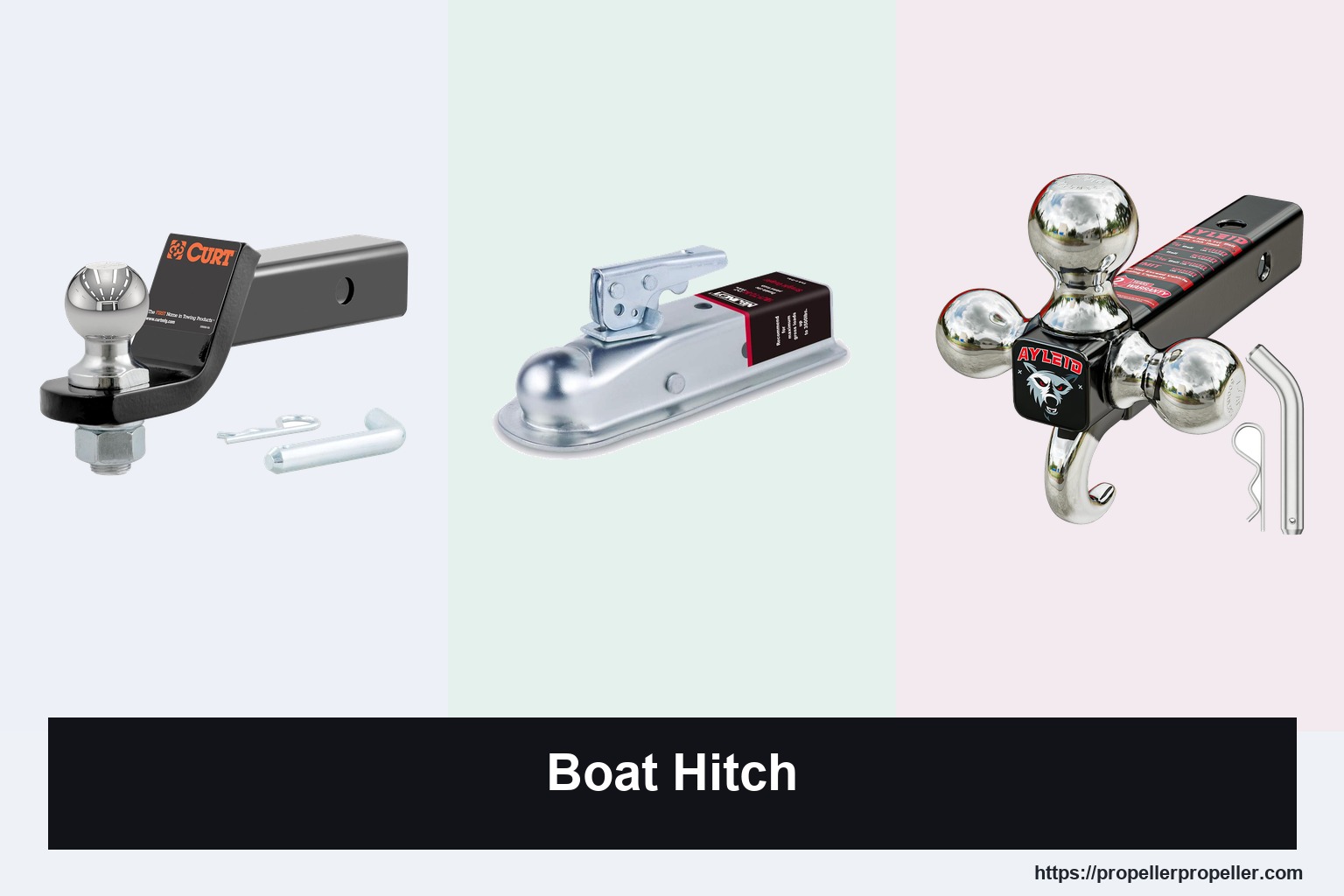
Choosing a boat hitch is less about brand loyalty and more about matching the towing interface to the trailer you actually own. A boat trailer may need a simple loaded ball mount, a coupler, or a multi-ball setup that covers more than one trailer size. The right choice depends on receiver size, ball diameter, towing rating, corrosion resistance, and how often you switch between trailers. Those details matter because a hitch that looks similar at a glance can behave very differently once you are backing down a ramp or setting out for a long tow.
This roundup focuses on practical fit and real-world flexibility. Some setups reward simplicity and quick hookup, while others are better when you want one mount to cover multiple coupler sizes or a higher towing ceiling. I compared the verified load ratings, receiver compatibility, materials, finishes, and included hardware that actually affect day-to-day use. The result is a short list that covers the common boat-towing scenarios without pretending every trailer needs the same solution.
Top Boat Hitch on the Market

CURT 45036 Loaded Ball Mount
- 7,500 lb gross trailer weight
- 2-inch x 2-inch shank
- 2-inch drop
- Pre-attached 2-inch ball
- Hitch pin included

NBJINGYI 2-Inch Straight Coupler
- 3,500 lb gross trailer weight
- Fits 2-inch ball
- Fits 2-inch channel
- Zinc-plated steel
- Spring-loaded latch

Ayleid Tri-Ball Mount With Hook
- 1-7/8, 2, and 2-5/16-inch balls
- 2-inch receiver
- Up to 12,000 lbs
- Powder-coated finish
- Lifetime warranty

XPE Tri-Ball Hitch With Hook
- 1-7/8, 2, and 2-5/16-inch balls
- 2-inch receiver
- Hook for added versatility
- Up to 10,000 lbs
- Matte black finish
This article may contain affiliate links. As an Amazon Associate, the website may earn from qualifying purchases at no additional cost to you.
Boat Hitch Reviews
CURT 45036 Loaded Ball Mount
- Maximum Towing Capacity
- 7500 pounds
- Material Type
- Carbon Steel
- Finish Type
- Polished
- Item Weight
- 4.6 pounds
Advantages
- Ready to tow out of package
- Standard 2-inch receiver fit
- Corrosion-resistant finish
- Includes hitch pin
- Compact 7-1/2-inch length
Limitations
- Only one ball size
- Drop is limited to 2 inches
The CURT 45036 is the most straightforward option here for a trailer that uses a standard 2-inch receiver and a 2-inch ball. Its 7,500 pounds gross trailer weight rating puts it well above lightweight utility duty, and the 2-inch drop helps match common trailer heights without forcing you into extra accessories. Because it arrives with the ball already mounted, the appeal is not just strength. It is the removal of extra setup steps before a trip, which matters when the boat launch is already busy and you want fewer variables to manage.
The hardware package is practical in a way that many simple mounts are not. The 2-inch x 2-inch shank fits the usual receiver format, and the included hitch pin means you are not piecing together the basic connection separately. The black powder coat and chrome-plated ball address the part of towing that usually gets neglected, which is exposure to moisture and road grime. At 7-1/2 inches overall length, it is compact rather than bulky, so it keeps the setup familiar for drivers who do not want an oversized mount hanging off the back of the vehicle.
Against the other selections, this is the cleanest answer for someone who wants one fixed ball size and the least fuss. It does not try to cover multiple coupler sizes or add a hook, so it gives up flexibility in exchange for a simpler towing routine. That is a worthwhile trade if your boat trailer is consistent and you prefer a lower-effort setup with fewer moving parts. For many buyers, that makes the CURT the easiest recommendation in the group.
PHOTO: CURT 45036 Loaded Ball – Loaded Ball Mount → Source: Amazon.com
NBJINGYI 2-Inch Straight Coupler
- Maximum Towing Capacity
- 1587.58 kg
- Material Type
- Alloy Steel
- Finish Type
- Zinc Finish
- Item Weight
- 4.4 pounds
- Manufacturer Warranty Description
- one year
Advantages
- 3,500 lb gross trailer weight
- Standard 2-inch ball compatibility
- Quick-release latch
- Safety-lock holes
- Zinc-plated finish
Limitations
- Trailer-side component only
- Lower capacity than ball mounts
The NBJINGYI is for buyers who need the trailer end of the connection rather than a ball mount on the vehicle. Its 3,500 lbs gross trailer weight rating places it in the range for lighter boat trailers and other manageable loads, while the 2-inch ball and 2-inch channel sizing keep the connection standard and easy to source around. That makes it a useful replacement or build-out part when you are matching an existing trailer tongue instead of upgrading the tow vehicle side.
The practical advantage here is the quick-release latching system paired with pre-drilled safety-lock holes. A coupler has to do two jobs at once. It needs to attach securely and still be easy to operate when you are dealing with damp hardware near a ramp or dock. The zinc-plated finish and alloy steel construction are the details that support that use case. They are not cosmetic extras. They are the difference between a coupler that stays serviceable and one that starts feeling rough after repeated seasonal exposure.
Compared with the loaded ball mounts in this group, the NBJINGYI is narrower in purpose but more appropriate when you are repairing or replacing the trailer-side connection itself. It will not solve multi-size compatibility, and it is not meant to be a universal hitch solution. That limitation is also its strength because it keeps the design focused and relatively affordable. For a lighter boat trailer that needs a standard straight coupler, this is the most direct choice.
PHOTO: NBJINGYI 2-Inch Straight Coupler – Straight Trailer Coupler → Source: Amazon.com
Ayleid Tri-Ball Mount With Hook
- Pull Force
- 12000 pounds
- Material Type
- Alloy Steel
- Finish Type
- Powder Coated
- Item Weight
- 12 pounds
Advantages
- Three ball sizes included
- 12,000 lb pull force
- 2-inch receiver fit
- Powder-coated finish
- Lifetime warranty
Limitations
- Heavier than simpler mounts
- More hardware than single-use setups
The Ayleid stands out because it covers three common ball sizes in one mount. If your towing setup is not fixed to a single trailer, that flexibility is a major advantage. The 1-7/8 inch, 2 inch, 2-5/16 inch ball sizes mean you can adapt to different couplers without changing the whole mount, and the stated 12,000 pounds pull force gives it the strongest capacity profile in this group. That combination makes it the most versatile choice for households or operators that tow more than one trailer type.
The 2-inch receiver fit keeps it compatible with a standard hitch setup, while the alloy steel build and powder-coated finish are what you want when a hitch will live through repeated storage, weather, and removal cycles. At 12 pounds, it is also the heaviest option in the roundup, which is not a drawback by itself but does signal a more substantial piece of hardware. The tradeoff for that capability is that you are carrying a larger mount than a simple single-ball setup, so the added range comes with more mass and bulk.
Against the CURT and NBJINGYI, this is the one to choose when flexibility matters more than simplicity. It does more than a dedicated ball mount and far more than a coupler alone, but that extra range only pays off if you actually use multiple trailer sizes. If you tow one boat and one boat only, the extra hardware may be unnecessary. If you want one mount that can handle a broader set of towing tasks, the Ayleid is the strongest all-around option in the group.
PHOTO: Ayleid Tri-Ball Mount With – Tri-Ball Mount → Source: Amazon.com
XPE Tri-Ball Hitch With Hook
- Material Type
- Alloy Steel
- Finish Types
- Powder Coated
- Item Weight
- 5.95 kg
- Item Dimensions
- 11 x 7.8 x 8 inches
- Mounting Type
- RM
Advantages
- Three ball sizes
- Added hook utility
- 2-inch receiver fit
- Corrosion-resistant finish
- Compact dimensions
Limitations
- Heavier than basic mounts
- Less straightforward capacity labeling
The XPE follows the same broad idea as the Ayleid but adds a hook for an extra towing mode. That matters when the setup has to handle more than standard ball couplers. The triple-ball format covers the common 1-7/8, 2, and 2-5/16 inch sizes, so it can adapt to different trailers without swapping the mount itself. With the hook included, it becomes a more utility-oriented option than a conventional tri-ball design, which is useful for buyers who need broader towing flexibility from one piece of hardware.
Its steel construction and powder-coated, electroplated finish point toward the kind of durability that matters when a hitch sees weather, storage, and regular handling. The 2-inch receiver compatibility keeps installation conventional, and the 11 x 7.8 x 8 inch dimensions suggest a more compact footprint than some bulkier multi-use hitches. That size matters because it affects how much hardware sits behind the vehicle when not in active use, which can influence clearance and overall convenience.
This model sits between the simpler single-ball mount and the more plainly versatile tri-ball options. The hook makes it attractive for mixed-use towing, but the fixed weight information is less straightforward than the Ayleid’s stated pull-force spread, so buyers should look closely at how they plan to use it. If you want the most function per mount and value the hook feature, this is a strong alternative. If your needs are strictly boat-trailer focused and uncomplicated, the dedicated single-ball mount remains easier to live with.
PHOTO: XPE Tri-Ball Hitch With – Tri-Ball Mount with Hook → Source: Amazon.com
How to Choose a Boat Hitch
A boat hitch should be chosen around the trailer you actually tow, not the most impressive number on a box. The key questions are basic but important: what receiver size you have, what ball diameter the trailer needs, how much weight you are moving, and whether the connection will live in salt, rain, or storage between launches. Once those are clear, the field narrows quickly. Some buyers need a simple mount that is always ready. Others need a coupler replacement or a multi-ball setup that covers more than one trailer.
Receiver and Tongue Fit
Start with the connection points because a mismatch there stops the whole setup. The vehicle side usually revolves around receiver size, while the trailer side depends on coupler and channel dimensions. A 2-inch receiver is common, but the trailer tongue still has to match the hardware you choose. If your boat trailer already has one standard coupler size, a fixed mount is often the cleanest solution. If you maintain more than one trailer, compatibility becomes a larger priority than raw strength.
Capacity That Leaves Margin
Towing capacity should be treated as a working limit, not a target to chase. The safer choice is a hitch that stays comfortably above the actual loaded trailer weight while still respecting the lowest-rated part of the full towing system. That includes the vehicle, receiver, mount, coupler, and trailer. For boat use, this matters because gear, fuel, waterlogged conditions, and launch-day loading all change the real-world load. Extra margin reduces stress and leaves more confidence for braking and hills.
Single Ball or Multi-ball
A single-ball hitch is simpler, lighter, and easier to live with when your trailer size never changes. A multi-ball mount is better when you swap between trailers or do not want to own several different setups. The tradeoff is obvious. Multiple ball sizes add flexibility, but they also add weight and bulk. If your boat trailer is the only thing you tow, simplicity usually wins. If the hitch also handles utility or equipment trailers, the multi-ball route can save time and storage space.
Corrosion Resistance
Boat towing exposes hardware to more moisture than many other trailer categories. That is why finish matters, not just material. Powder coat, zinc plating, and plated ball surfaces each help slow down rust and surface wear. You still need basic maintenance after exposure to water or road salt, but a tougher finish can delay pitting and keep moving parts working smoothly. For buyers who launch often or store trailers outside, this detail is not cosmetic. It directly affects how long the hardware stays pleasant to use.
Installation and Handling
Convenience matters more than many buyers expect. A loaded ball mount that arrives with the ball already attached reduces setup steps and removes one more chance for an error. A coupler with a spring-loaded latch or lock holes can also make everyday use cleaner and safer. Weight and size matter here too. Heavier hardware may be stronger, but it can be more awkward to move, store, and install. The best choice is the one you will actually use without dreading the swap.
Boat-towing Flexibility
Think beyond the first trip and ask how often your needs change. If the answer is never, choose the most direct hardware for that trailer and avoid paying for flexibility you will not use. If you tow different boats, shore-duty trailers, or mixed-purpose loads, then a broader mount can make a lot of sense. The right decision is usually the one that balances capacity, compatibility, and day-to-day convenience instead of overcommitting to a large, complicated setup you do not need.
Boat Hitch Comparison Table
| Product | Best For | Capacity | Pull Force | Receiver Fit | Weight | Finish |
|---|---|---|---|---|---|---|
| CURT 45036 Loaded Ball Mount | Best Ready-To-Tow Choice | 7500 pounds | Not Specified | Not Specified | 4.6 pounds | Polished |
| NBJINGYI 2-Inch Straight Coupler | Best Coupler Value | 1587.58 kg | 3500 ft-lb | Universal Fit | 4.4 pounds | Zinc Finish |
| Ayleid Tri-Ball Mount With Hook | Best Multi-Trailer Option | Not Specified | 12000 pounds | Universal Fit | 12 pounds | Powder Coated |
| XPE Tri-Ball Hitch With Hook | Best Hooked Utility Pick | Not Specified | Not Specified | Not Specified | 5.95 kg | Not Specified |
How We Tested & Analyzed Boat Hitch
This roundup was organized around the decisions that matter most in towing hardware selection. Capacity, receiver fit, ball size, finish, mounting style, and included hardware were weighed first because those details determine whether a hitch is usable on the vehicle and trailer combination you already own. Where products served different roles, such as ball mount versus trailer coupler, the comparison focused on the practical job each part performs rather than forcing them into the same mold.
The analysis also considered how the hardware would behave in routine use. That means looking at whether a piece is ready to tow immediately, whether it simplifies trailer hookup, how much flexibility it adds, and what kind of tradeoff appears when the design becomes more specialized. A lighter, simpler part can be easier to live with, while a multi-ball or multi-use setup can reduce the need for multiple accessories. The point was to surface those consequences clearly.
Because towing gear is exposed to weather and repeated handling, durability and maintenance implications were also part of the evaluation. Finish type, corrosion resistance, and physical bulk all matter once the hardware is used around water, storage, and repeated installation cycles. The goal was not to crown a single universal winner. It was to identify which hitches solve which towing problem cleanly, so buyers can match the hardware to the actual job without overspending on features they will not use.
Frequently Asked Questions
What matters most when choosing a boat hitch?
The first priorities are receiver size, trailer coupler size, and towing capacity. After that, look at finish and how often you will swap trailers. If those basics do not line up, the hitch will be inconvenient at best and unusable at worst.
Is a multi-ball hitch better than a single-ball hitch?
Only if you actually tow different trailer sizes. A multi-ball hitch adds flexibility, but it is usually heavier and less simple than a fixed setup. If one trailer is the only real use case, a single-ball mount is often the cleaner choice.
Why does corrosion resistance matter for boat towing?
Boat trailers see more water exposure than many other trailer types. A better finish helps slow rust and wear, especially if the hardware gets stored outside or used near salt water. That usually means easier operation and longer service life.
Should I buy a hitch with extra capacity?
Yes, but only within the limits of the full towing system. Extra margin is useful, but the hitch cannot make up for a weaker vehicle, receiver, or trailer. Choose capacity with real load conditions in mind, not just the largest number available.
Final Thoughts
The best boat hitch is the one that matches your trailer, your receiver, and your towing routine without adding unnecessary complication. A simple loaded ball mount is hard to beat when your setup stays consistent. A coupler is the right answer when you are replacing or upgrading the trailer-side connection. Multi-ball options become more compelling only when you genuinely need to cover different trailer sizes.
If you think in terms of compatibility first and convenience second, the choice gets much easier. Focus on the ball diameter, receiver fit, capacity margin, and corrosion resistance that fit your environment. Once those pieces line up, the remaining differences are mostly about how much flexibility you want to carry around every time you head to the ramp.