Boat hardware has to do more than look marine-ready. It has to fit the tube, hold under motion, resist corrosion, and make installation simple enough that you do not waste time forcing mismatched parts together. The best choices in this category are rarely the most complicated. They are the pieces that solve a specific connection problem cleanly and stay dependable in salt, spray, and sun.
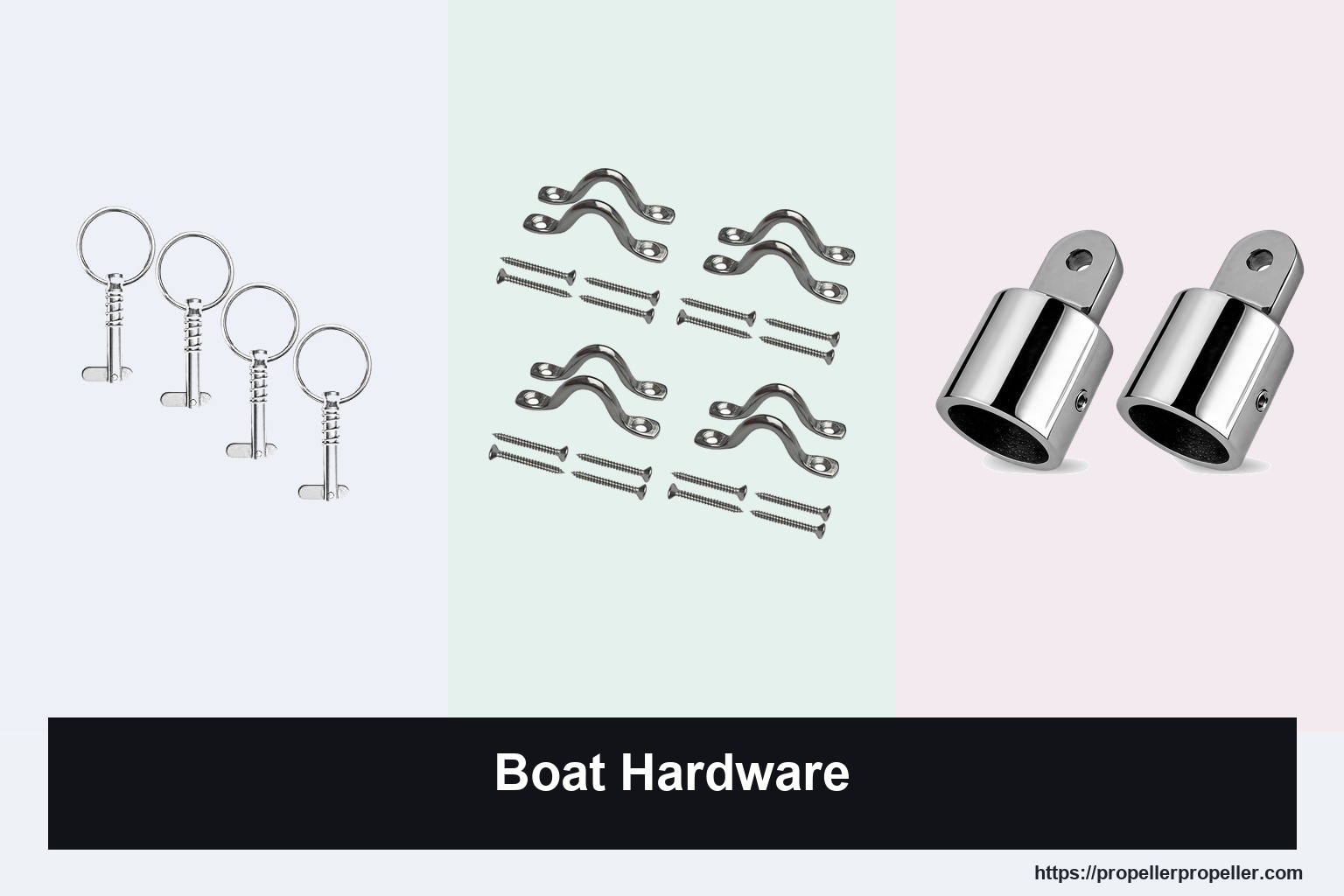
This roundup focuses on three very different deck-hardware jobs. One product handles quick release points for bimini tops and support poles. Another creates tie-down and lashing anchors for decks and gear. The third replaces external eye-end fittings on round tubing. Together, they cover the core decisions most buyers face: size compatibility, stainless construction, installation effort, and whether you need removal, anchoring, or frame connection.
Top Boat Hardware on the Market

VTurboWay 1/4 Inch Quick Release Pins
- 4-piece set
- 1/4-inch diameter
- 316 stainless steel
- Drop cam and spring
- For bimini tops

Vtete 3/8 Inch Pad Eye Straps
- 8 pad eyes
- 16 screws included
- Accepts up to 3/8-inch lines
- 316 stainless steel
- For tie-down rigging

Acelane External Eye End Fittings
- 2-piece set
- Fits 7/8-inch OD tubing
- 316 stainless steel
- No drilling or welding
- For bimini frame joints
This article may contain affiliate links. As an Amazon Associate, the website may earn from qualifying purchases at no additional cost to you.
Boat Hardware Reviews
VTurboWay 1/4 Inch Quick Release Pins
- Number of Pieces
- 4
- Fastener Type
- quick release
- Size Name
- 1/4\” x 0.9\”
- Material Type
- Stainless Steel
- Pin Type
- Spring
Advantages
- 4-piece matched set
- 316 stainless steel construction
- Quick-release spring action
- Compact 1/4-inch fit
- Useful for bimini hardware
Limitations
- Limited to pin applications
- Size must match exactly
These pins suit buyers who need a fast, repeatable way to secure and remove bimini-top hardware, support poles, or deck hinge connections. The combination of 1/4-inch diameter and 0.9-inch usable length points to a compact fit that matters when the attachment point has limited room. Because the set includes four pieces, it is practical for matching hardware on a single setup or keeping spares ready for replacement. The quick-release format also reduces the friction of seasonal removal, which is often where boat hardware becomes annoying rather than useful.
The material choice is the main durability story here. Marine grade 316 stainless steel is the right call for exposed marine environments because corrosion resistance matters every time the part stays installed through wet storage, spray, or saltwater exposure. The slidable spring and drop cam are especially useful when the same hardware has to work across different bimini sizes, since that kind of adjustment can prevent a loose fit from becoming a rattling or unreliable one. The polished finish also helps the pins look appropriate on visible deck hardware instead of feeling like temporary shop parts.
Among the three products in this roundup, this is the most specialized connection piece and the one most clearly focused on convenience during removal and reinstallation. The tradeoff is that it solves a narrower problem than pad eyes or eye ends, so it is not the right choice if you need an anchor point or a tubing connector. For buyers replacing worn bimini pins or building a system that needs frequent access, it is the cleanest fit. I would choose it when quick release and corrosion resistance matter more than versatility.
PHOTO: VTurboWay 1 4 Inch – Quick Release Pins → Source: Amazon.com
Vtete 3/8 Inch Pad Eye Straps
- Number of Pieces
- 8
- Load Capacity
- 250 pounds
- Fastener Type
- Loop
- Material Type
- Stainless Steel
- Size
- 1.5″ x 2″ inches
Advantages
- 8-piece hardware set
- 16 screws included
- 316 stainless steel
- 250-pound load capacity
- Suitable for multiple rigging uses
Limitations
- Requires surface mounting
- Not for tube-end connections
This set is aimed at buyers who need anchor points rather than moving hardware. The 3/8-inch line capacity matters because it gives you a clear ceiling for ropes and lanyards, which is the sort of detail that affects whether a tie-down solution feels secure or cramped. With eight pad eyes in the package, it is easy to spread attachment points across a deck, kayak, canoe, or bimini installation. The included screws add convenience as well, since you are not left sourcing matching fasteners before the job can begin.
The dimensions matter because pad eyes can be either helpful or awkward depending on where they land. A 1.5-inch mounting-hole spacing and a 2-inch overall length suggest a compact footprint that can fit many smaller rigging locations without dominating the surface. The 316 stainless steel construction is important in a part that will live close to water and often stay exposed, and the 250-pound load capacity gives a useful sense of how much holding power the hardware is built around. That does not make it universal lifting gear, but it does signal a sturdier anchor than basic lightweight loops.
This product differs from the quick-release pins in a meaningful way. It is not about taking hardware apart quickly. It is about creating dependable attachment points for securing equipment. That makes it the better choice when your priority is lash-down control rather than frequent disassembly. Compared with the external eye-end fitting, it is also more straightforward because the job is surface anchoring instead of tube-end joining. If you need multiple tie-down points for marine gear, this is the most practical of the three.
PHOTO: Vtete 3 8 Inch – Pad Eye Straps → Source: Amazon.com
Acelane External Eye End Fittings
Advantages
- Fits 7/8-inch tubing
- 316 stainless steel build
- No drilling required
- Two-piece replacement set
- Purpose-built for frame joints
Limitations
- Tube size must match
- Less versatile than pad eyes
This fitting is the most clearly frame-focused option in the group. It works on 7/8-inch OD round tubes, so the buyer decision starts with tube compatibility rather than general marine use. The external eye-end design is meant for joining bimini top frame parts, which makes it useful when the problem is a broken or worn connection at the frame, not a missing tie-down point. Two pieces are included, so it fits a smaller repair or a paired replacement job where matching hardware matters more than bulk quantity.
Installation is the strongest practical advantage here. The hardware is designed for assembly without drilling or welding, which lowers the barrier for owners who want a repair instead of a fabrication project. The cast 316 stainless steel construction is especially relevant in a saltwater environment, where replacement parts need to resist rust and weathering over time. The polished finish and smooth touch are secondary benefits, but they matter on exposed fittings because marine hardware is often visible and frequently handled during setup or teardown.
This is the least generic of the three products and also the one most dependent on getting the measurement right. The quick-release pins are easier to understand if you only need detachable hardware, and the pad eyes are more flexible if you need anchor points. This fitting wins when the job is specifically to connect a bimini frame to compatible round tubing. That narrow focus is also its strength. If your tube size matches, it is the most direct repair-oriented option here, and I would recommend it for frame replacement work before any broader-use alternative.
PHOTO: Acelane External Eye End – Tube Cap Fittings → Source: Amazon.com
How to Choose Boat Hardware
Boat hardware looks simple until the wrong part fails a fit check or starts corroding after a season in the elements. The best way to choose is to start with the job the part has to do, then confirm the exact dimensions, attachment method, and material quality before you worry about convenience. On a boat, a well-matched piece saves time every time you use it. A mismatched one creates rattles, leaks, loose gear, or a repair that has to be done twice.
Match the Job
The first decision is whether you need a removable connector, a fixed anchor point, or a frame joint. Those are different hardware categories even when they look similar at a glance. A quick-release part is useful when you need regular access. A pad eye is better when the goal is to hold a line or strap in place. A tube fitting is the right answer when two frame sections or accessories must join securely.
Verify Exact Size
Marine hardware is unforgiving when the measurements are off. Tube diameter, hole spacing, usable length, and line capacity all need to line up with the actual installation point. Even a small mismatch can create play in the connection or make the part unusable without modification. Measure the existing hardware and the mounting surface before you buy, then compare those numbers to the product dimensions instead of relying on generic fit language.
Choose the Right Metal
In a wet environment, material choice affects both lifespan and appearance. Stainless steel is a strong baseline because it resists rust far better than plain steel or low-grade hardware. For parts that stay exposed to spray or saltwater, marine-grade stainless is even more reassuring. That matters most on visible hardware and on anything that stays installed for long periods, because corrosion can turn a small accessory into a maintenance problem very quickly.
Think About Installation
Some marine hardware is meant to be swapped in with simple tools. Others are closer to a repair project. If you want the easiest path, look for parts that avoid drilling or welding and come with the fasteners you need. That can save time and reduce the chance of damaging a deck surface or frame tube. More involved installations can still be worth it when the fit is exact, but only if you are prepared for the extra work.
Plan for Use Frequency
How often you remove or adjust the hardware should influence what you buy. Frequent-access parts need smooth operation and a connection style that does not wear out from repeated handling. Anchors that stay in place can prioritize holding power and compact size instead. A boat owner who stows a bimini often will value easy release. Someone tying down gear for the whole season may care more about load rating and screw count.
Balance Versatility and Specificity
The most versatile hardware is not always the best choice. A general anchor can solve several small problems, but a highly specific fitting may work better when the application is defined and the measurements are exact. Decide whether you want one part to handle multiple uses or one part to solve one job extremely well. That tradeoff is often what separates a satisfying marine repair from an awkward compromise.
Boat Hardware Comparison Table
| Product | Best For | Material | Pieces | Fastener | Color |
|---|---|---|---|---|---|
| VTurboWay 1/4 Inch Quick Release Pins | Best For Quick Release | Stainless Steel | 4 | quick release | Silver |
| Vtete 3/8 Inch Pad Eye Straps | Best For Tie-Downs | Stainless Steel | 8 | Loop | silver |
| Acelane External Eye End Fittings | Best Frame Connector | Not Specified | Not Specified | Not Specified | Not Specified |
How We Tested & Analyzed Boat Hardware
The analysis focused on fit, material quality, fastening style, and the practical job each piece is meant to do. Those are the factors that most strongly affect whether marine hardware becomes a durable solution or a frustrating mismatch. Size compatibility matters because boat hardware is often installed in tight, pre-defined places. Material matters because exposure to water, sun, and salt changes how long the part stays functional and presentable.
Comparison was based on how clearly each product solved a different hardware need. One product was assessed as a removable connection piece, another as a tie-down anchor, and the third as a frame connector. That structure helps separate products that might otherwise look interchangeable. Load capacity, included hardware, line capacity, and installation method were treated as decision drivers when they were available because they change real-world usefulness, not just catalog appeal.
Limitations were handled conservatively. When a fact was not provided, it was not assumed. That is especially important in marine hardware, where a vague fit claim can be misleading. The recommendations therefore emphasize only the verified dimensions, materials, and installation characteristics that a buyer can use to judge suitability. The goal is to help you narrow the choice by application, not by hype.
Frequently Asked Questions
What material is best for boat hardware?
Stainless steel is the safest general choice because it resists rust much better than plain steel. In saltwater or other harsh marine environments, marine-grade stainless is even more useful. The right option depends on exposure, but for most buyers, corrosion resistance should be the first filter before price or appearance.
How do I know if a fitting will fit my boat?
Start with the exact measurement of the tube, mounting holes, or line size the part has to work with. Boat hardware is often dimension-specific, so even small mismatches can cause looseness or prevent installation. If the part is for a round tube or a fixed deck point, measure the existing hardware before ordering.
Should I choose quick-release or fixed hardware?
Choose quick-release hardware when you remove or adjust the part often, such as with bimini tops or support poles. Fixed hardware is better when you need a stable anchor point for tie-downs or rigging. The decision is less about style and more about how often the connection needs to move.
Is included hardware important?
Yes, because it can simplify installation and reduce extra purchases. Screws or matched pieces make a project easier to start and more likely to be completed cleanly. Even so, included hardware does not replace the need to verify size and application. Compatibility still matters more than what comes in the package.
Final Thoughts
Boat hardware works best when the part matches the task exactly. A removable connector, a tie-down anchor, and a frame joint all solve different problems, and the right choice depends on how the boat is used, how often the piece needs to move, and how exposed it will be to weather. The safest buying habit is to verify size first, then choose the metal and installation style that match the environment.
Once those basics are clear, the decision becomes much easier. Pick the hardware that reduces friction in daily use and avoids unnecessary compromise. If you need frequent access, favor quick release. If you need secure lash points, favor pad eyes. If you need a clean frame repair, choose the fitting made for that tube. That approach leads to better compatibility, fewer installation surprises, and a longer service life.