A boat gyro can make the difference between a straight tracking hull and a model that constantly needs correction under throttle. In this category, the most important question is not just whether a receiver or radio includes gyro stabilization. It is whether the whole control system matches the way you run on water, how far you need to stay connected, and how much setup you want to deal with before the first launch.
The four options here span receivers, transmitter-and-receiver bundles, and complete radio systems with telemetry and adjustable gyro behavior. That matters because boat use stresses range, signal stability, fail-safe behavior, and water exposure differently than land driving does. The best choice depends on whether you want a simple receiver swap, a fuller control upgrade, or a more capable surface radio that can manage telemetry and extra channels without making operation awkward.
Top Boat Gyro on the Market

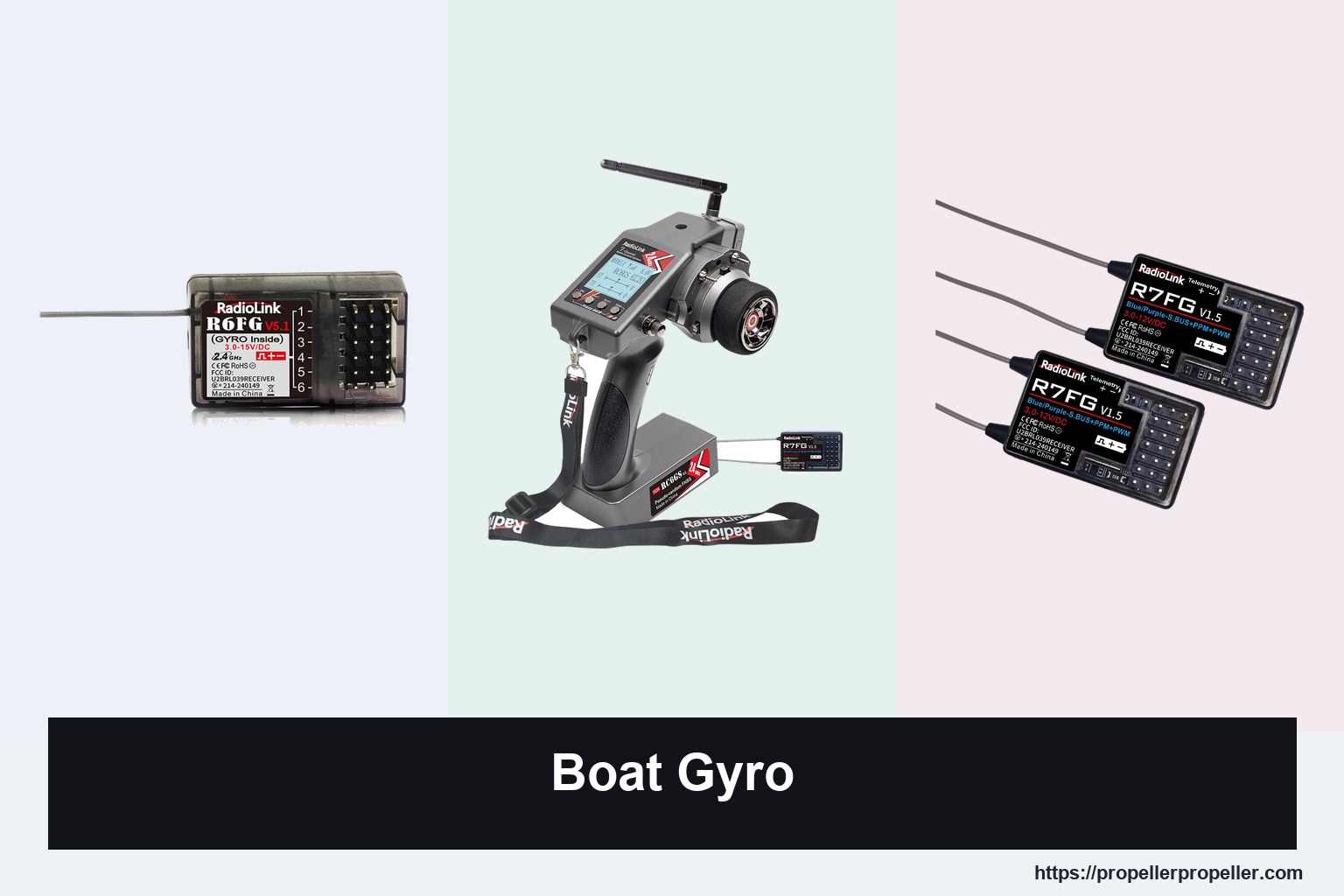
Radiolink R6FG Gyro Receiver
- Built-in gyro stabilization
- 1300-foot ground range
- 4096 resolution signal output
- Press-to-bind setup
- Reverse polarity protection

Radiolink RC6GS V3 Radio Set
- 7-channel transmitter
- 1900-foot control range
- Real-time telemetry screen
- Waterproof gyro receiver
- 30 model storage
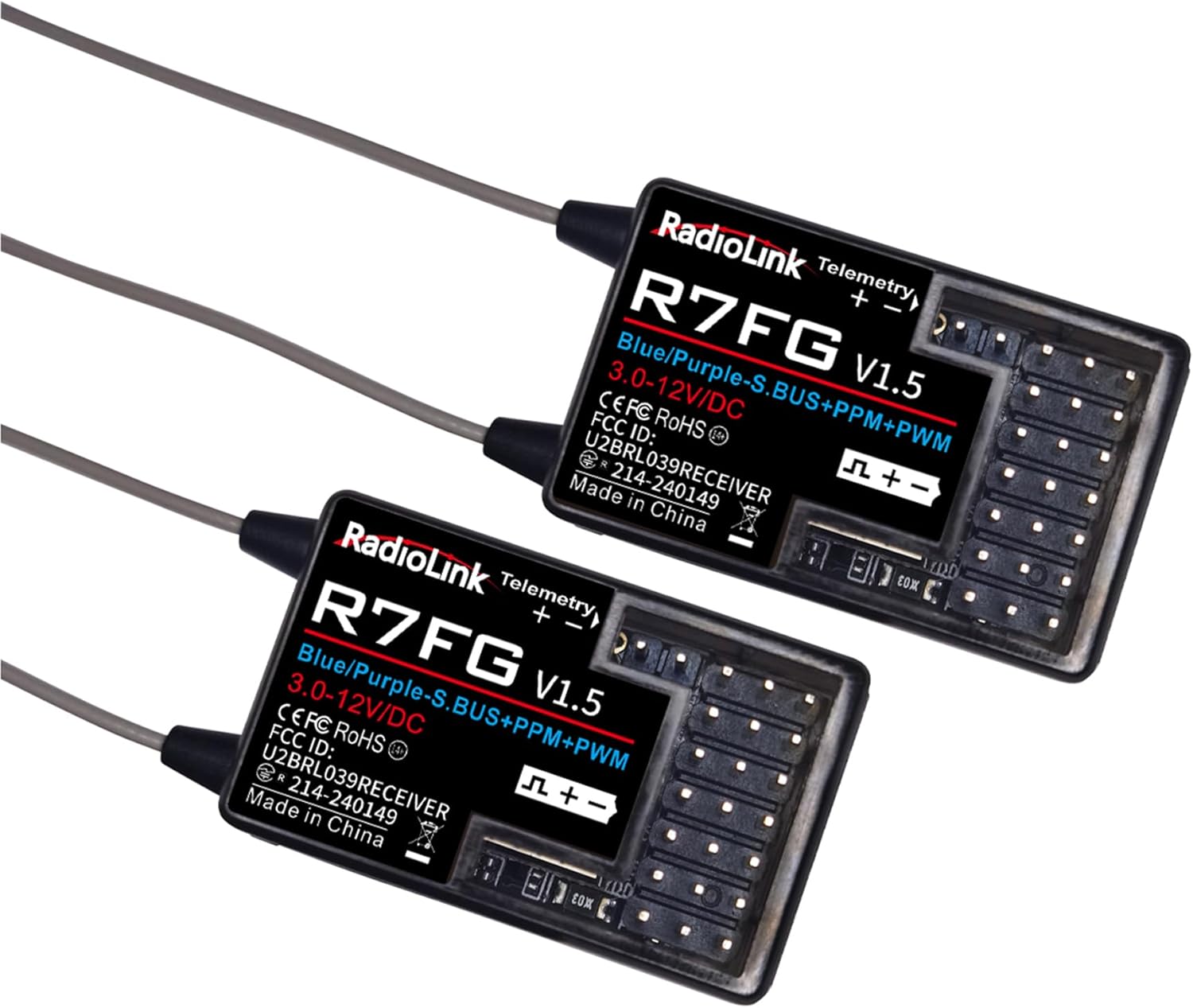
Radiolink R7FG 7-Channel Receiver
- Two receiver pack
- Integrated telemetry
- IPX4 splash resistance
- 600-meter range
- One-time binding

DUMBORC X6 RC Radio Set
- Built-in gyro receiver
- 400-meter range
- Low-voltage alarm
- Throttle speed control
- Three charging methods
This article may contain affiliate links. As an Amazon Associate, the website may earn from qualifying purchases at no additional cost to you.
Boat Gyro Reviews
Radiolink R6FG Gyro Receiver
- Item Highlight
- for Vehicle Drifting/Crawler/Truck/Boat Works with Radio Controller RC4GS V3/RC6GS V3/RC8P/RC8X/T8FB/T8S/T12D/T16D
- Operation Mode
- Normal, Gyro Function
- Item Weight
- 5.94 g
Advantages
- Built-in gyro correction
- Very light receiver
- Long control distance
- Easy binding process
- Voltage protection included
Limitations
- Receiver only, no transmitter
- No telemetry features
The Radiolink R6FG is a compact receiver-first option for someone who already has a compatible surface transmitter and only needs stabilization added at the vehicle end. Its built-in gyro is the key reason to look at it for a boat setup that needs straighter tracking, especially when the hull tends to wander under throttle. The rated 1300 feet range also gives it a practical safety margin for open-water runs, where losing control distance can end a session quickly. At just 5.94 g, it stays out of the way inside a tight hull or electronics bay.
Setup is straightforward enough that it suits builders who do not want a complicated pairing process every time they change components. The press-to-bind approach reduces friction during installation, and the reverse-polarity protection is a useful safeguard when you are working inside a crowded waterproofing layout. The receiver also supports 3.0 to 15V DC, which broadens servo compatibility and makes it easier to integrate with different power arrangements. Its small plastic housing and compact dimensions are practical, but the unit is still clearly aimed at people comfortable with receiver-level installation rather than plug-and-play radio replacement.
Compared with the bundled transmitter systems in this group, the R6FG is the most focused and the least expansive choice. It does not try to add telemetry screens, extra programming, or a full hand-held control package. That makes it the right pick when your priority is adding gyro correction without replacing a working radio setup. If your boat build already has a good transmitter and you want a light, low-friction stabilization receiver, this is the clearest value play in the lineup.
PHOTO: Radiolink R6FG Gyro Receiver – Compact 6-Channel Receiver → Source: Amazon.com
Radiolink RC6GS V3 Radio Set
- Maximum Range
- 1900 feet
- Warranty Description
- manufacturer warranty for 1 year from day of purchase
- Compatible Devices
- rc boat, rc buggy hotwheel, rc car, rc crawler, rc tank drifting
- BuiltIn Media
- 1* R7FG Receiver, 1* RC6GS V3 Controller, 1* User Instruction, 1* Voltage Telemetry Cable
Advantages
- Complete transmitter and receiver
- Telemetry display included
- Seven-channel flexibility
- Long operating range
- One-year warranty
Limitations
- Heavier than receivers
- More system than basic builds
The Radiolink RC6GS V3 is the most complete control package here for a buyer who wants to upgrade both ends of the link at once. The transmitter and receiver arrive together, and the system is built around a 1900 feet range that gives you extra confidence when you are operating farther from shore. Real-time telemetry on the screen adds another layer of utility because it shows vehicle battery voltage and RSSI, so you can track link quality and power status without guessing. That combination makes it the strongest all-in-one choice for a boat owner who values visibility as much as range.
Its seven-channel layout is more flexible than a basic two- or four-channel radio, and the customizable switches matter if you run extra functions such as lights, winches, or auxiliary equipment. The included receiver is described as a gyro receiver, so straight-line stability is part of the package rather than an added accessory. The one-year manufacturer warranty is also worth noting in a category where buyers often want reassurance that their radio gear is not a disposable experiment. At 12 ounces, it is heavier than the receiver-only choices, but that is the predictable tradeoff for a more feature-rich transmitter body.
This is the best fit for someone who wants a complete surface-radio platform instead of piecing together separate parts. It offers more control logic and more feedback than the simpler receiver options, while staying easier to understand than highly specialized multi-system setups. If your boat build is moving beyond basic steering and throttle and you want telemetry, channel expansion, and gyro support in one package, the RC6GS V3 is the most decisive recommendation in the group.
PHOTO: Radiolink RC6GS V3 Radio – Transmitter and Receiver Bundle → Source: Amazon.com
Radiolink R7FG 7-Channel Receiver
- Product Dimensions
- 1.59 x 0.87 x 0.5 inches
- Item Weight
- 1.44 ounces
- Manufacturer recommended age
- 14 years and up
Advantages
- Telemetry data included
- Splash-resistant housing
- Two receivers in pack
- Wide signal compatibility
- Low-latency seven channels
Limitations
- Receiver only
- Compatibility is transmitter-dependent
The Radiolink R7FG is the strongest receiver-focused option for a boat owner who wants more than simple gyro stabilization. It combines a built-in gyro with telemetry for model voltage, receiver voltage, and RSSI, so you can keep track of both control link quality and power state while you run. The IPX4 splash resistance is especially relevant in a marine environment because it adds a layer of protection against routine spray, though it is not a substitute for full waterproof sealing. Because the package includes two receivers, it also has unusual value for buyers managing more than one vehicle or keeping a spare on hand.
The quoted 600-meter control range keeps it competitive for open-area use, and the low-latency output across all seven channels suggests responsive steering corrections when the boat is moving quickly. Binding is designed to happen once, after which the transmitter remembers the receiver. That reduces the hassle of repeated setup between sessions. The 3 to 12V DC operating range and SBUS, PPM, and PWM support make the receiver versatile, but the versatility only matters if the rest of the radio system can use it. In other words, this is a receiver built for integration rather than a stand-alone solution.
Against the R6FG, the R7FG adds telemetry and splash resistance. Against the RC6GS V3, it is narrower in scope because it does not replace the transmitter. That makes it the right choice for a buyer who already has a compatible Radiolink radio and wants more feedback plus better environmental tolerance from the receiver end. If your boat sees spray and you want a receiver that adds monitoring without bloating the setup, this is the most specialized pick in the lineup.
PHOTO: Radiolink R7FG 7-Channel Receiver – Dual Receiver Units → Source: Amazon.com
DUMBORC X6 RC Radio Set
- Item Weight
- 499 g
- Item Dimensions
- 6.3 x 3.94 x 8.07 inches
- Color
- Black
- Item Highlight
- Remote Controller, Fail-Safe, Low Voltage Alarm Function, for RC Vehicle Car, Boat, Tank Model Parts
Advantages
- Complete radio package
- Built-in gyro receiver
- Beginner-friendly throttle control
- Low-voltage alarm included
- USB charging support
Limitations
- Heaviest transmitter here
- Shorter range than top option
The DUMBORC X6 is the budget-minded alternative for a boat owner who wants a full transmitter-and-receiver package with gyro support without stepping into the more expensive feature tier. The built-in gyro receiver helps keep the model tracking straighter, and the 400 meters range is respectable for many surface runs where you are not pushing long-distance operating limits. The low-voltage alarm and fail-safe behavior are practical additions because they reduce the chance of a runaway or drained pack turning a session into a recovery problem. For a newcomer or a casual user, that combination is easier to justify than paying for telemetry and deep programming options you may not use.
Operation is more approachable than the more advanced systems in this group. The throttle speed adjustment is especially useful for beginners, younger operators, or anyone testing a new hull because it lets you soften acceleration instead of jumping straight to full output. The transmitter can be powered by four AA batteries or a 2-3S lithium battery, and it can also charge through USB. That flexibility matters if you want to keep the radio ready with minimal planning. The reverse-polarity protection on the lithium interface is another sensible safeguard during battery handling, though the unit’s large 499 g weight and 6.3 x 3.94 x 8.07-inch size make it less compact than the receiver-only choices.
This set sits between the stripped-down receiver options and the more polished RC6GS V3 system. It gives you the essentials for boat control, including gyro support, fail-safe behavior, and basic tuning, but it does not match the longer range or telemetry depth of the higher-end package. That tradeoff is exactly why it belongs here. If you want a lower-cost way to get a complete radio setup with stabilization and beginner-friendly controls, the X6 is the strongest value-oriented option among the four.
PHOTO: DUMBORC X6 RC Radio – Transmitter and Receiver Set → Source: Amazon.com
How to Choose a Boat Gyro
Choosing a boat gyro system is mostly about deciding where you want the stabilization to live. Some buyers only need a receiver that keeps the hull tracking straight. Others want a full transmitter package that also changes how they monitor range, voltage, and auxiliary channels. On water, the wrong balance can be frustrating fast, because even a small signal or steering problem becomes harder to correct once the boat is moving and distance is increasing.
Receiver or Full Radio
Start by deciding whether you already have a compatible transmitter. If you do, a receiver-only gyro unit can be the cleanest upgrade because it keeps the cost and installation burden low. If you are starting from scratch, a full radio package is usually the smarter purchase because it avoids compatibility guessing and gives you a matched control link from day one. That difference matters more on boats than many buyers expect, since stable steering and dependable range depend on the whole chain, not one feature alone.
Range and Signal Stability
Boat use rewards stronger signal behavior because open water can expose weak control links very quickly. Range figures are useful, but the more important question is whether the radio system is built to hold a stable connection without random interference. Look for systems that clearly state long-range performance and anti-interference design, then decide whether your sailing area actually needs the extra headroom. For a pond or lake close to shore, modest range may be enough. For larger water, the extra margin is worth paying for.
Gyro Control Behavior
Gyro stabilization is not just a marketing feature. It changes how often you need to correct steering, especially when wind, hull shape, or throttle input makes the boat wander. Some systems let you adjust gyro sensitivity from the transmitter, which is valuable because too much correction can feel twitchy while too little can leave the boat hunting across the water. A good buyer thinks about that adjustment as tuning, not decoration. The best setup is the one that lets you calm the boat without taking control away from the driver.
Telemetry and Alerts
Telemetry becomes valuable once you care about battery state, receiver voltage, or signal strength during a run. On boats, that kind of feedback can prevent a dead pack or a weak-link surprise far from shore. A low-voltage alarm on the transmitter is useful when you want a simple warning system, while on-screen telemetry is better when you want more specific live data. If you rarely run long sessions, basic alerting may be enough. If you often push farther out, the extra visibility is a real safety advantage.
Water Exposure and Protection
A boat environment always introduces spray, splash, and the possibility of wet handling. That makes water resistance an important decision point, even when the electronics are not fully submersible. Splash-resistant receivers can be a strong fit for exposed installs, but they still need sensible placement and sealing practices. Buyers should also pay attention to reverse-polarity protection and compact size, because both reduce the chance of an installation mistake causing damage in a crowded hull. The safest setup is the one that assumes moisture will happen and plans accordingly.
Boat Gyro Comparison Table
| Product | Best For | Channels | Weight | Water Resistance | Color | Manufacturer recommended age |
|---|---|---|---|---|---|---|
| Radiolink R6FG Gyro Receiver | Best simple receiver | Normal, Gyro Function | 5.94 g | for Vehicle Drifting/Crawler/Truck/Boat Works with Radio Controller RC4GS V3/RC6GS V3/RC8P/RC8X/T8FB/T8S/T12D/T16D | Gyro Inside | 14 years and up |
| Radiolink RC6GS V3 Radio Set | Best full radio set | Not Specified | 12 ounces | 30 Models Storage 2.4Ghz Voltage Telemetry Surface Remote Radio Controller Combo for RC Crawler, Drifting, Car and Boat | Black | Not Specified |
| Radiolink R7FG 7-Channel Receiver | Best waterproof receiver | Not Specified | 1.44 ounces | Not Specified | Not Specified | 14 years and up |
| DUMBORC X6 RC Radio Set | Best budget radio set | Manual | 499 g | Remote Controller, Fail-Safe, Low Voltage Alarm Function, for RC Vehicle Car, Boat, Tank Model Parts | Black | 0 – 10 years |
How We Tested & Analyzed Boat Gyro
This roundup focused on category-level differences that matter in actual boat use: control range, stabilization behavior, channel flexibility, telemetry, and environmental tolerance. Those factors were weighed more heavily than marketing language because boat operation depends on reliable signal behavior and practical setup, not just a long feature list. When a product combined several useful functions in one system, that was treated as a meaningful advantage only if the functions were specific enough to change the buying decision.
Comparisons also emphasized how each option would fit into a real build. Receiver-only products were evaluated as upgrade parts for existing systems, while transmitter bundles were treated as replacement control platforms. That distinction is important because a strong receiver can still be the wrong purchase if the rest of the radio chain does not match it. The review structure therefore focused on compatibility, operating range, and control features that affect setup consequences and daily use.
Limitations were handled conservatively. If a record did not clearly support a claim, it was left out rather than inferred. That approach keeps the guidance grounded and avoids overpromising on waterproofing, battery life, or installation ease. It also means that the most important tradeoffs are visible: some systems are simpler, some are more capable, and some prioritize receiver features over complete radio replacement. The goal was to help a buyer choose with confidence based on verified differences, not on speculative assumptions.
Frequently Asked Questions
Do I need a gyro for a boat RC setup?
Not every boat requires one, but a gyro can reduce constant steering correction and make tracking feel calmer. It is especially useful when hull shape, wind, or throttle changes make the model wander. If you already drive smoothly on calm water, you may not need it. If you want a steadier line and less correction work, it is a worthwhile feature.
Should I buy a receiver or a full radio system?
Buy a receiver only if your current transmitter is compatible and you are satisfied with it. Choose a full radio system if you want the cleanest path to a matched control link, more features, or fewer setup headaches. For many buyers, the full system is the easier decision because it removes compatibility uncertainty from the process.
How important is telemetry on a boat?
Telemetry matters most when you run farther away or want better awareness of battery and signal status. It can help you avoid pushing a pack too far or losing confidence in the link without warning. If you only run short, casual sessions, a simple low-voltage alert may be enough. Longer runs benefit more from live data.
What water protection should I look for?
At minimum, look for splash resistance and a layout that is practical to seal inside the hull. Spray is normal on boats, so protection against moisture exposure is useful even when the electronics are not waterproof in the strict sense. Reverse-polarity protection is also valuable because installation mistakes can happen in tight spaces near batteries and wiring.
Final Thoughts
The best boat gyro setup is the one that matches your current radio gear and your tolerance for complexity. A receiver-only option can be the smartest upgrade when you already have a compatible transmitter, while a full system makes more sense if you want telemetry, more channels, or a cleaner all-in-one replacement. On water, range and signal stability matter as much as gyro correction, so do not let stabilization alone drive the decision.
If you want the simplest path, choose the option that solves your biggest problem without adding new ones. That might mean a compact receiver for a proven radio setup, or it might mean a full transmitter package that gives you better feedback and easier tuning. Once you separate upgrade path, operating distance, and environmental tolerance, the right choice becomes much clearer.