
A boat gauge is one of those small dashboard decisions that can make a big difference in how confidently you run the boat. The right instrument does more than sit in a panel. It needs to be readable in bright light, survive wet conditions, match the sender or signal source, and give you information quickly enough to matter when you are underway. That is especially important in marine use, where vibration, spray, and limited panel space can expose weak parts of a gauge long before the rest of the system shows problems.
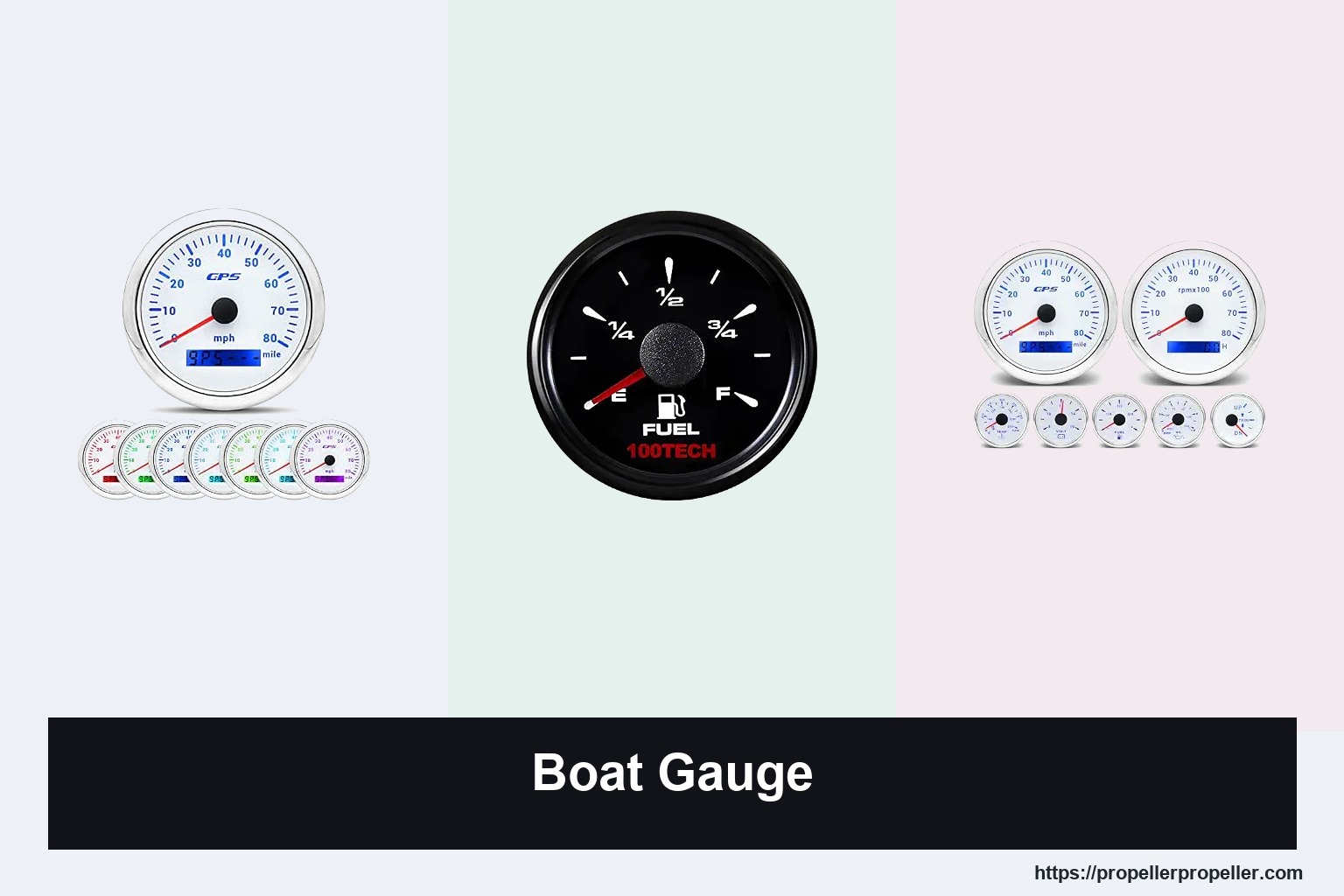
The three options here cover three different buying needs. One focuses on GPS speed, one focuses on fuel level, and one bundles the core engine and boat readings into a full set. That makes the real comparison less about which gauge is universally best and more about which instrumentation strategy fits your boat, your wiring, and the level of information you want on the dash. The strongest choices are the ones that solve the right problem cleanly without creating installation trouble or compatibility headaches.
Top Boat Gauge on the Market

ARTILAURA GPS Speedometer 85mm
- 7 color backlight
- 80 MPH range
- 316L stainless bezel
- IP67 waterproof
- GPS antenna included

100TECH Marine Fuel Gauge
- 5 sender signals
- 8 backlight colors
- 2-1/16 inch size
- 9-32V DC
- IP67 waterproof

ARTILAURA 7 Gauge Marine Set
- Seven-gauge kit
- GPS speedometer included
- 85mm and 52mm sizes
- IP67 waterproof
- Sensors included
This article may contain affiliate links. As an Amazon Associate, the website may earn from qualifying purchases at no additional cost to you.
Boat Gauge Reviews
ARTILAURA GPS Speedometer 85mm
- Material Type
- Stainless Steel 316L Bezel + Anti-fog Glass
- Item Dimensions
- 3.37 x 3.37 x 2 inches
- Item Weight
- 6.4 ounces
Advantages
- GPS-based speed reading
- 7 solid backlight colors
- Clear sky signal source
- Marine-ready waterproof housing
- Includes antenna and harness
Limitations
- Requires clear sky access
- Single-function instrument only
The ARTILAURA GPS speedometer is aimed at a skipper who wants speed data without depending on a traditional mechanical sender. Its 80 MPH range keeps the display focused on practical marine speeds, while the GPS signal source removes the need for a separate speed sensor. That matters on boats where mechanical pickup hardware can complicate the install or become another point of failure. The 316L bezel and anti-fog glass also point to a gauge built for exposure, not just dashboard appearance.
Setup is relatively straightforward because the package includes the GPS antenna, wire harness, and installation instruction. The gauge fits an 85mm, 3-3/8 inch opening, so it is not a universal drop-in for smaller panels. Once mounted, its operation depends on a clear view of the sky, which is the main tradeoff of GPS-based speed. That is not a flaw so much as a usage requirement. In open water it can be a clean solution, while enclosed docks, heavy overhead structure, or obstructed mounting locations may be less forgiving.
Against the other two picks, this one is the most specialized. It does one job rather than monitoring fuel or engine conditions, but it does that job with the least dependence on boat-specific hardware. The 9-32V operating range also broadens its fit across vehicle and marine electrical systems. Choose this gauge if speed is the priority and you value a simple signal path over a multi-gauge dashboard. For that role, it is the clearest single-instrument recommendation in the group.
PHOTO: ARTILAURA GPS Speedometer 85mm – GPS Speedometer → Source: Amazon.com
100TECH Marine Fuel Gauge
- Item Dimensions
- 2.5 x 2.5 x 2.5 inches
- Warranty Description
- 2 Years
- Material Type
- Stainless Steel
- Thread Style
- Npt
Advantages
- Five sender resistance settings
- Anti-vibration needle design
- Eight backlight colors
- 2-year warranty
- Stainless steel construction
Limitations
- Sender matching is critical
- Fuel-only display
The 100TECH fuel gauge is built for the buyer who needs a reliable fuel-level read without overcomplicating the dash. Its adjustable signal support covers several common sender resistances, so it can work with a wider range of tanks than a fixed-resistance gauge. The 8-level fine scale and anti-vibration needle matter because fuel readings are only useful when they stay steady instead of wandering with chop or engine shake. A stainless steel body and IP67 waterproof rating fit the marine setting better than a typical automotive-only gauge.
Installation is centered around a 2-1/16 inch cutout and a 9-32V DC operating range, which gives it flexibility across 12V and 24V systems. That flexibility is helpful, but the sender match is the real compatibility checkpoint. The gauge supports specific resistive outputs, and the signal setting must be adjusted correctly for accurate readings. In practice, that means the buyer should know the tank sender type before ordering. The included instructions help, but this is still a setup-sensitive product rather than a plug-it-in-and-forget-it part.
Compared with the GPS speedometer and the full gauge kit, this model is the most focused on one everyday need. It does not try to monitor engine data, and that keeps the panel cleaner and the price much lower. The 2-year warranty is another meaningful plus for a component that will be exposed to moisture and vibration. Choose this gauge if fuel status is the number you care about most and you want a durable, backlit meter that can be matched to the sender instead of replaced around it.
PHOTO: 100TECH Marine Fuel Gauge – Fuel Level Dial → Source: Amazon.com
ARTILAURA 7 Gauge Marine Set
- Item Weight
- 1.83 kg
- Thread Style
- Npt
- Material Type
- 316L Metal, Rubber, Plastic
Advantages
- Seven matching instruments
- GPS and tachometer included
- Two gauge sizes
- Sensors included
- IP67 protection
Limitations
- Most complex installation
- Highest price here
This ARTILAURA set is for a buyer who wants the dash instrumentation problem solved in one purchase. It combines GPS speed, tachometer, fuel, water temperature, oil pressure, volt, and trim readings, so it reaches much deeper into boat monitoring than a single gauge can. The seven-gauge kit approach is the main value here. Instead of adding instruments one at a time, you get a coordinated layout with matching styling and a common backlight scheme. That makes the dash look intentional while also covering more operating data.
The size mix is important during installation. The GPS speedometer and tachometer need an 85mm, 3-3/8 inch opening and require 55mm of clearance behind the panel, while the other gauges fit the 2-1/16 inch format. That means this kit is best for a panel with enough space and a buyer willing to plan the layout before cutting holes. The included sensors and senders help reduce the sourcing burden, but the kit is still more complex than a single gauge. The benefit is breadth. The cost is a more involved install.
In comparison with the single-instrument options, this set is the broadest and most dashboard-ready, but it also demands the most commitment to installation and wiring. The 0-120 MPH GPS speed range and the 0-6000 RPM tachometer range give it the kind of coverage that matters on boats where engine condition and speed both deserve attention. The tradeoff is price and complexity. If you want one package that replaces multiple separate purchases and gives you the most complete monitoring setup, this is the strongest choice. If you only need speed or fuel, it is more gauge than you need.
PHOTO: ARTILAURA 7 Gauge Marine – Full Gauge Kit → Source: Amazon.com
How to Choose a Boat Gauge
The best boat gauge is the one that matches your instrument job, sender type, and panel space without forcing a bunch of compromise. Some buyers only need speed or fuel information. Others want a coordinated set that covers engine and boat systems at once. Before focusing on styling or color options, think about what the gauge must read, how it connects to the boat, and whether the mounting size fits the dash you already have.
Measurement Need
Start by deciding which reading actually matters most on your boat. Speed, fuel level, engine temperature, oil pressure, voltage, and trim all solve different problems, and a gauge that monitors the wrong one is just decoration. A single-purpose gauge is often the cleanest answer when you already know the gap in your dash. A multi-gauge kit makes more sense when you are building out a panel from scratch or replacing a tired, mixed set.
Sender Compatibility
Matching the gauge to the sender or signal source is the most important technical step. Fuel and trim instruments often depend on resistance values, while some speed instruments use GPS instead of a sender altogether. If the gauge and sender are not aligned, the reading may be inaccurate or unusable. Before you buy, confirm the resistance range, input type, and whether the gauge supports the system already in the boat. That one check prevents most installation frustration.
Panel Size
Mounting diameter matters because marine dashboards rarely have unlimited space. The common sizes in this category are larger speedometer openings and smaller auxiliary-gauge openings. If you are replacing an existing instrument, measure both the front cutout and the depth behind the panel. A gauge can look like it fits from the front and still fail because the body or wiring needs more clearance than the dash provides. Panel planning is easier than drilling twice.
Power and Lighting
Most boat gauges are designed for low-voltage marine or vehicle systems, but you still want the operating range to match your electrical setup. Lighting also matters because the gauge has to stay readable at night without becoming distracting. Multi-color backlights are useful when you are trying to coordinate with existing dash illumination, but the backlight is secondary to readability. Clear dial markings and a sensible display layout usually matter more than flashy color options.
Durability Factors
Marine environments are hard on small electronics. Look for corrosion-resistant materials, sealed housings, and ratings that indicate the gauge can handle water exposure and dust. Vibration resistance matters too, especially on faster boats or rougher water. A gauge that looks good on day one but fogs, shakes, or corrodes quickly is not a bargain. Strong materials and sealed construction reduce the chance that you will be replacing the same part again next season.
Kit or Single Gauge
A single gauge can be the smartest purchase when you only need one data point and want the simplest install. A full kit is better when you want a coordinated dashboard and are ready to deal with more wiring, sensors, and panel work. The right answer usually depends on whether you are solving a narrow problem or rebuilding the whole instrument layout. More gauges are not automatically better. The better setup is the one you can install correctly and read easily every time you are on the water.
Boat Gauge Comparison Table
| Product | Best For | Waterproof | Size | Weight | Number of Items | Part Number |
|---|---|---|---|---|---|---|
| ARTILAURA GPS Speedometer 85mm | Best GPS Speedometer | Stainless Steel 316L Bezel + Anti-fog Glass | 3.37 x 3.37 x 2 inches | 6.4 ounces | 1 | AR-CX8156 |
| 100TECH Marine Fuel Gauge | Best Fuel Gauge | Stainless Steel | 2.5 x 2.5 x 2.5 inches | 3.53 ounces | 1 | YBUAB |
| ARTILAURA 7 Gauge Marine Set | Best Full Gauge Kit | 316L Metal, Rubber, Plastic | Not Specified | 1.83 kg | 7 | AR-Set7A-0004 |
How We Tested & Analyzed Boat Gauge
This roundup was built around category-level decision points that matter in marine use. The analysis focused on readability, compatibility, mounting size, sender requirements, power range, environmental sealing, and the practical cost of installation. Those criteria separate a gauge that merely fits from one that actually works in a boat dashboard over time. The goal was to compare what each instrument can do, what it requires from the boat, and how much complexity it adds.
Because this category includes both single instruments and full gauge kits, the comparison had to account for different buying intentions rather than forcing every product into the same mold. A speed-only gauge, a fuel-only gauge, and a complete monitoring set solve different problems. The evaluation therefore emphasized whether each product’s feature set matched its role, whether its installation demands were realistic, and whether its construction looked appropriate for the marine environment described by its specifications.
Limitations matter in this category because compatibility can decide the purchase more than appearance or price. A gauge may have strong materials and useful lighting, but still fail to suit the wrong sender resistance or panel opening. For that reason, the analysis treated exact fit, sender match, and environmental protection as deciding factors rather than nice-to-have details. The resulting recommendations favor practical ownership over feature volume alone.
Frequently Asked Questions
What matters most when buying a boat gauge?
Compatibility matters first. A gauge has to match the sender type, panel opening, and electrical system before features like color lighting or styling become useful. After that, focus on readability and durability. In marine use, a gauge that is easy to install but hard to trust is not a good purchase.
Should I choose a single gauge or a full set?
Choose a single gauge when you only need one measurement and want a simpler install. Choose a full set when you are refreshing the dashboard or need several readings at once. The deciding factor is usually how much information you want on the helm and how much wiring complexity you can handle.
Why does waterproofing matter so much?
Boat gauges live in a wet, vibrating environment, even when they are under a windshield or inside a console. Sealing helps protect the internal parts from spray, humidity, and dust. Better protection usually means less fogging, fewer electrical issues, and a longer useful life in normal marine conditions.
Do backlight colors affect performance?
Backlight colors mainly affect night visibility and dashboard matching. They do not replace a clear dial or accurate sender match. A useful backlight is one that helps you read the gauge without glare or distraction. Choose lighting options after you have confirmed the gauge’s core measurement and fit.
Final Thoughts
The best boat gauge is the one that solves the right problem without creating a new one. If you need only one clean reading, a focused instrument can be the most efficient choice. If your dash needs a broader reset, a coordinated kit saves time and gives you a more unified result. In every case, fit, sender match, and environmental protection should outrank styling details.
That is the real takeaway from this category. Readings only matter when they are trustworthy, and trustworthy readings depend on the gauge being suited to the boat it is going into. Once you know whether you are chasing speed, fuel, or a full instrument panel, the right choice becomes much easier to narrow down. Buy for the job you actually need, and the dashboard will be more useful every time you go out.



