A boat gauge set is less about decoration than control. On the water, the dashboard has to tell you whether the engine is healthy, whether fuel is running low, and whether the electrical system is holding steady before a small issue becomes a delayed return or an avoidable breakdown. The right set also has to fit the helm cleanly, survive vibration and moisture, and present the right information in a layout you can read fast in sun or spray.
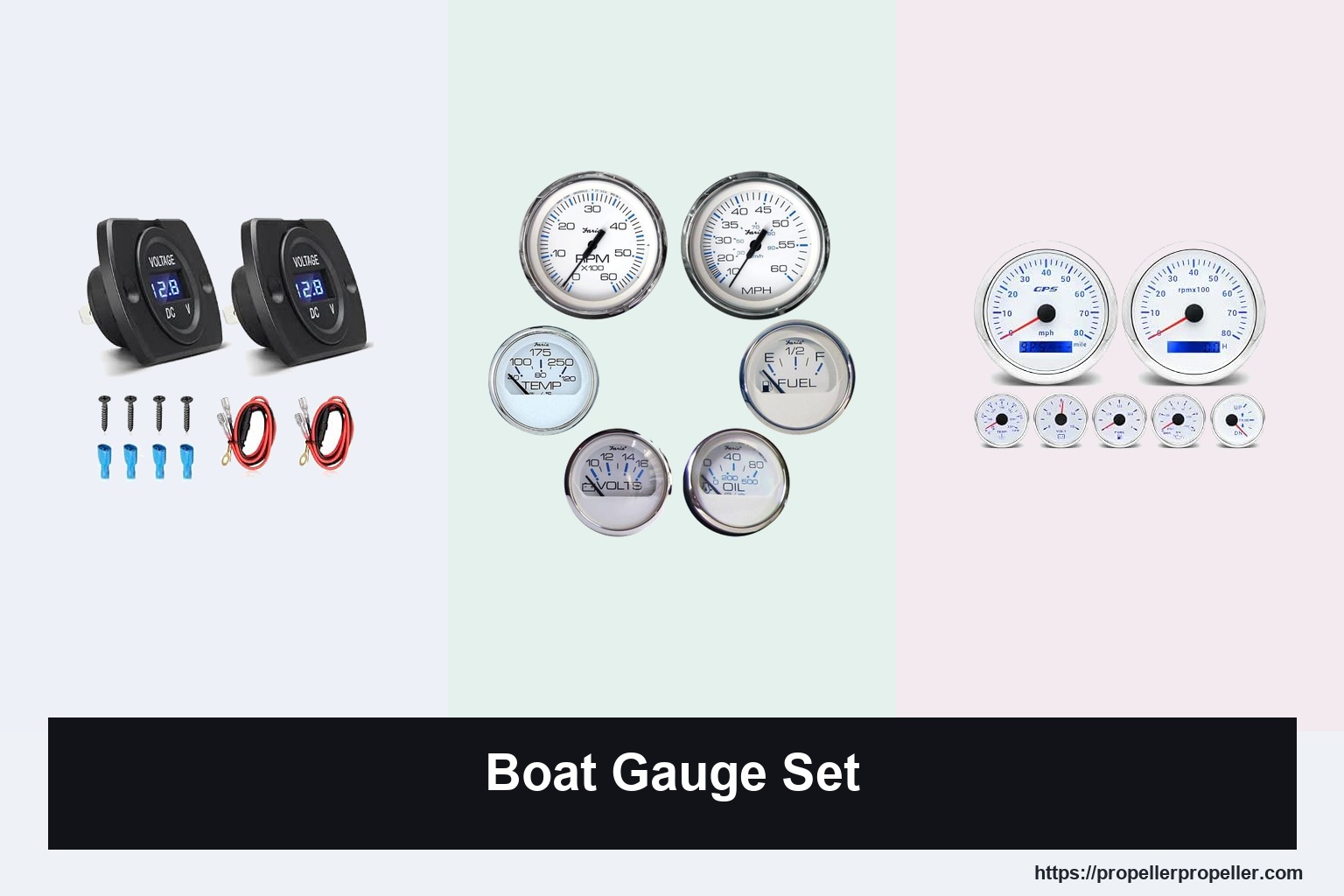
The three options below cover very different buying priorities. One is a simple voltage monitor for owners who mainly want battery visibility and an easy panel-mount install. Another is a traditional six-gauge boxed set with classic analog presentation and a stainless-steel finish. The third combines a broader seven-gauge layout with GPS speed, multiple senders, and modern backlighting. The best choice depends on how much instrumentation you need, how much dashboard space you have, and how much installation work you want to take on.
Top Boat Gauge Set on the Market

Anina 2-Pack LED Voltmeter
- 8V-48V voltage display
- Blue LED digits
- 29mm panel mount
- Waterproof design
- Two-piece kit

Faria Chesapeake 6-Gauge Set
- Six-gauge boxed set
- Stainless steel bezel
- Domed glass lens
- Perimeter-lighted white dial
- Inboard gauge cluster
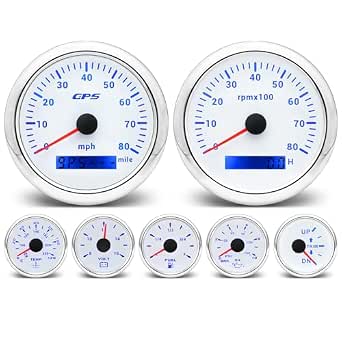
ARTILAURA 7-Gauge GPS Kit
- GPS speedometer
- Seven-color backlight
- 316L metal construction
- IP67 rating
- Included senders
This article may contain affiliate links. As an Amazon Associate, the website may earn from qualifying purchases at no additional cost to you.
Boat Gauge Set Reviews
Anina 2-Pack LED Voltmeter
- Minimum Operating Voltage
- 12 volts
- Power Source
- Corded Electric
- Item Weight
- 0.11 kg
- Model
- SP-2531
Advantages
- Very low entry cost
- Clear daylight visibility
- Simple panel-mount format
- Wide voltage range
- Two meters included
Limitations
- Shows voltage only
- No engine performance data
This is the simplest pick in the group, but that simplicity is a strength when your main concern is battery visibility. The 8V-48V voltage display covers common 12V and 24V systems, so the meter can track a wide operating window without forcing you into a specialty setup. The blue LED digits matter at the helm because they stay readable in bright daylight and at night, which is exactly when a quick glance should tell you whether the electrical system is holding steady. For owners who want a compact diagnostic readout rather than a full instrument cluster, this is the most direct route.
The installation profile is also friendly to smaller dashboards and retrofit jobs. A 29mm panel mount is a practical fit for a clean, built-in look, and the included mounting approach reduces the amount of extra hardware you need to source. Its sealed construction is relevant in marine use because splash and damp air are part of normal life, not edge cases. The meter is powered through a corded connection, so it belongs in a planned panel install rather than a temporary setup. That makes it a better long-term monitor than a loose accessory you move around.
Against the other two picks, this model trades breadth for focus. It does not try to replace speed, fuel, temperature, or oil-pressure instruments, and that restraint keeps the price and installation burden low. The result is a sensible option for boaters who already have most gauges in place and only need to watch charging health more closely. It is also the least intimidating choice for a straightforward retrofit. If your priority is a compact, low-cost battery monitor rather than a full helm suite, this is the one to choose.
PHOTO: Anina 2-Pack LED Voltmeter – Two Pack Voltage Meters → Source: Amazon.com
Faria Chesapeake 6-Gauge Set
- Material Type
- Stainless Steel
- Item Dimensions
- 21 x 10 x 7 inches
- Item Weight
- 3 pounds
- Model
- KTF001
- Part Number
- KTF001
Advantages
- Complete six-gauge package
- Polished stainless bezel
- Domed glass face
- Perimeter-lighted dial
- Covers core engine data
Limitations
- Largest installation footprint
- No GPS speed readout
This set is built for owners who want a complete, traditional inboard instrument cluster without piecing together separate gauges. The boxed layout includes speedometer, tachometer, fuel level, voltmeter, water temperature, and oil pressure, so the helm can show the core operating signals in one matched group. The polished stainless steel bezel and domed glass lens give it a more finished look than basic utility gauges, which matters when the dashboard is visible from the cockpit and the cabin. It is the most classic presentation in the roundup.
The 60 MPH pitot speedometer and 6000 RPM tachometer cover the two numbers many operators watch most often, while the 10-16 VDC voltmeter, 100-250°F water-temperature gauge, and 80 PSI oil-pressure gauge extend the set into real engine-health monitoring. The perimeter-lighted white dial is a practical touch for late-day running, and the blue-and-black graphics keep the face legible without visual clutter. At 21 x 10 x 7 inches and 3 pounds, this is a substantial boxed kit, so buyers should expect a more deliberate installation than they would with a single gauge or a lighter modular set.
Compared with the other options, this one is less about low-cost monitoring and more about a polished, cohesive dashboard. It does not add GPS-based speed or a modern seven-color backlight system, but it does deliver a balanced six-gauge spread in a single style. That makes it strongest for boat owners who value an OEM-like appearance and want the essential engine and system readings grouped together. If your priority is a conventional analog gauge package with a stainless finish, this is the most compelling recommendation.
PHOTO: Faria Chesapeake 6-Gauge Set – Six-Gauge Instrument Set → Source: Amazon.com
ARTILAURA 7-Gauge GPS Kit
- Material Type
- 316L Metal, Rubber, Plastic
- Item Weight
- 1.83 kg
- Thread Style
- Npt
- Number of Items
- 7
- Part Number
- AR-Set7A-0004
Advantages
- Seven-gauge coverage
- GPS-based speed
- Seven backlight colors
- IP67 protection
- Senders included
Limitations
- More complex installation
- Requires panel clearance
This is the most feature-rich kit in the group, and it is aimed at buyers who want more than a basic analog refresh. The set includes GPS speed, tachometer, fuel, water temperature, volt, oil pressure, and trim, which gives it broader coverage than the six-gauge alternative. The GPS speedometer is the standout because it avoids the need for a mechanical speed pickup, and the seven-color backlight adds flexibility for nighttime legibility and dashboard styling. For a helm that needs to do more than simply look complete, this is the most ambitious package.
The installation requirements are more involved, but the kit is designed with that in mind. The main speedometer and tachometer use an 85mm opening and need 55mm of clearance behind the panel, while the smaller gauges fit a 2-1/16 inch format. That split sizing is important because it affects whether the cluster can drop into an existing console or needs a more serious cutout plan. The included GPS antenna and senders also reduce the guesswork around sourcing compatible components. Its IP67 waterproof and dustproof grade and scratch-resistant curved glass lenses add confidence in marine environments where exposure is part of the job.
Relative to the other two products, this set has the deepest function but also the most setup complexity. It is stronger than the simple voltage monitor because it watches more systems, and it is more modern than the stainless six-gauge set because it adds GPS speed and multi-color illumination. The tradeoff is that it asks for more attention to panel sizing, sender compatibility, and installation planning. That makes it the best choice for owners who want a broad, upgraded marine instrument cluster and are willing to build around it. If you want the most complete feature set here, this is the clear pick.
PHOTO: ARTILAURA 7-Gauge GPS Kit – Seven-Gauge Cluster → Source: Amazon.com
How to Choose a Boat Gauge Set
Choosing a boat gauge set is mostly a question of information density. Some helms only need a clean voltage readout, while others need speed, engine health, fuel status, and trim all visible at once. The right setup depends on how your boat is used, how much space you have behind the panel, and whether you want a simple replacement or a broader instrumentation upgrade.
Gauge Coverage
Start with the data you actually need at the helm. A basic boat may only require battery voltage and one or two engine checks, while a more involved setup benefits from speed, RPM, fuel, temperature, oil pressure, and trim. More gauges are not automatically better. Extra instruments only help when you can read them quickly and you have a reason to watch them regularly. A useful rule is to match the gauge count to the systems you would miss if one failed tomorrow.
Fit and Layout
Panel fit matters as much as the instrument list. Gauge sets often use different opening sizes, and the behind-panel depth can determine whether the cluster fits cleanly or forces a redesign. Before buying, measure the face opening, the available depth, and the space for wiring and senders. A set that looks simple on paper can become frustrating if one large dial needs more clearance than your console can spare. Good fit reduces installation time and avoids awkward adapter work later.
Visibility and Lighting
Readability is a daily-use issue, not a luxury feature. You want a face that stays legible in direct sun and at dusk, and the lighting should not wash out the markings. Clear pointers, strong contrast, and sensible backlighting all matter when you are scanning gauges quickly. If the boat runs at night or in changing light, prioritize a display style you can read without leaning over the helm. The best instrument is the one you can interpret in a second.
Marine Durability
A boat gauge set needs to tolerate moisture, vibration, and temperature swings. Look for construction that is intended for marine environments, including sealed faces, corrosion-resistant materials, and scratch-resistant lenses where available. These details do more than improve lifespan. They also reduce fogging, staining, and cosmetic wear that can make a dash hard to read long before the gauges fail mechanically. In practice, durability is about preserving both function and visibility over time.
Installation Complexity
Some gauge sets are close to drop-in replacements, while others need senders, antennas, or more careful panel work. Simpler setups are better when you want a quick retrofit or you are replacing only one function. Broader kits can be more capable, but they often require a larger time commitment and more attention to compatibility. The right choice depends on whether you want the least disruptive upgrade or a full instrumentation project. Plan for the job you are actually willing to complete.
Boat Gauge Set Comparison Table
| Product | Best For | Gauge Count | Material | Weight | Model | Part Number |
|---|---|---|---|---|---|---|
| Anina 2-Pack LED Voltmeter | Best Budget Voltage Monitor | 1 | Not Specified | 0.11 kg | SP-2531 | SP-2531 |
| Faria Chesapeake 6-Gauge Set | Best Classic Six-Gauge Set | 1 | Stainless Steel | 3 pounds | KTF001 | KTF001 |
| ARTILAURA 7-Gauge GPS Kit | Best Full-Feature Gauge Kit | 7 | 316L Metal, Rubber, Plastic | 1.83 kg | Not Specified | AR-Set7A-0004 |
How We Tested & Analyzed Boat Gauge Set
This roundup was built around decision criteria that matter in real helm use: instrument coverage, readability, installation demands, durability, and the practical consequences of each gauge format. The goal was not to rank products by marketing volume, but to compare how much useful information each set can deliver and what that information costs in panel space, setup effort, and complexity. That is the difference between a gauge that looks complete and one that actually supports day-to-day operation.
Construction details were weighed for what they imply in a marine setting. Materials, lens design, lighting style, sealing, and mounting approach all influence how well a gauge set holds up to splash, vibration, and changing light. Size and component count were also treated as meaningful because they affect whether a product is a quick retrofit, a moderate replacement, or a more committed dashboard project. When the available information supported it, those physical constraints were used to explain the likely buyer tradeoffs.
Comparisons were kept category-level rather than speculative. Where a product emphasized a single function, the analysis focused on simplicity and ease of adoption. Where a set bundled more instruments, the focus shifted to completeness and integration cost. Missing details were not filled in from assumption. Instead, the article favors verifiable facts and translates them into buying consequences so readers can choose according to their own helm layout, operating habits, and installation comfort level.
Frequently Asked Questions
What does a boat gauge set need to show first?
Start with the readings that protect the boat and support the way you operate it. For many owners, that means engine temperature, oil pressure, fuel level, voltage, and speed. A smaller boat or a repower project may only need one or two of those values, but the best set is the one that shows the information you will check most often without distraction.
Are digital gauges better than analog gauges?
Neither style is universally better. Digital readouts are often easier to read at a glance and can be more compact, while analog gauges can feel more traditional and give a quick sense of change through pointer movement. The better choice depends on your dashboard space, your preference for styling, and how much information you want visible at one time.
Why does panel fit matter so much?
Gauge sets are easier to live with when they match the opening sizes and depth your console can support. If the fit is wrong, installation can require cutting, adapters, or awkward wiring routes. Checking dimensions first reduces rework and helps ensure the gauges sit flat, stay legible, and look intentional instead of forced into place.
What makes a gauge set suitable for marine use?
A marine-ready set should tolerate moisture, vibration, and changing temperatures without losing readability. Sealed construction, corrosion-resistant materials, and durable lenses are all useful signs. Those features matter because a dashboard lives in a harsh environment, and a gauge that clouds, stains, or loosens becomes a problem even if the electronics still function.
Final Thoughts
The best boat gauge set is the one that matches your dashboard and your operating priorities. If you only need a quick battery check, a compact voltage monitor can solve the problem with little fuss. If you want a conventional helm cluster, a matched analog set delivers a cleaner, more complete look. If your goal is to upgrade both coverage and capability, a broader kit with GPS speed and multiple senders is the most ambitious route.
What matters most is not buying the most instruments. It is choosing the set that fits your panel, stays readable in real light, and gives you the information you will actually use on the water. Get those three things right and the dashboard becomes a useful operating tool instead of decoration. That is the standard worth aiming for in 2026.