Boat fuel treatment matters most when you need an engine that starts cleanly after sitting, keeps running smoothly in damp marine conditions, and resists the fuel problems that show up faster on the water than in a daily driver. Water intrusion, ethanol-related instability, varnish, and carbon buildup can all turn into rough idle, harder starts, and avoidable maintenance if fuel sits too long or circulates through a dirty system.
The best options for boat owners do more than claim cleaner combustion. They need to support storage stability, work with gasoline blends that are common in marine use, and offer enough concentration or volume to make routine treatment practical. The four products below stand out for their verified cleaning and stabilization claims, their compatibility with marine and other engines, and the tradeoffs that matter when you are choosing between broad multi-use treatments and concentrated gasoline-specific formulas.
Top Boat Fuel Treatment on the Market

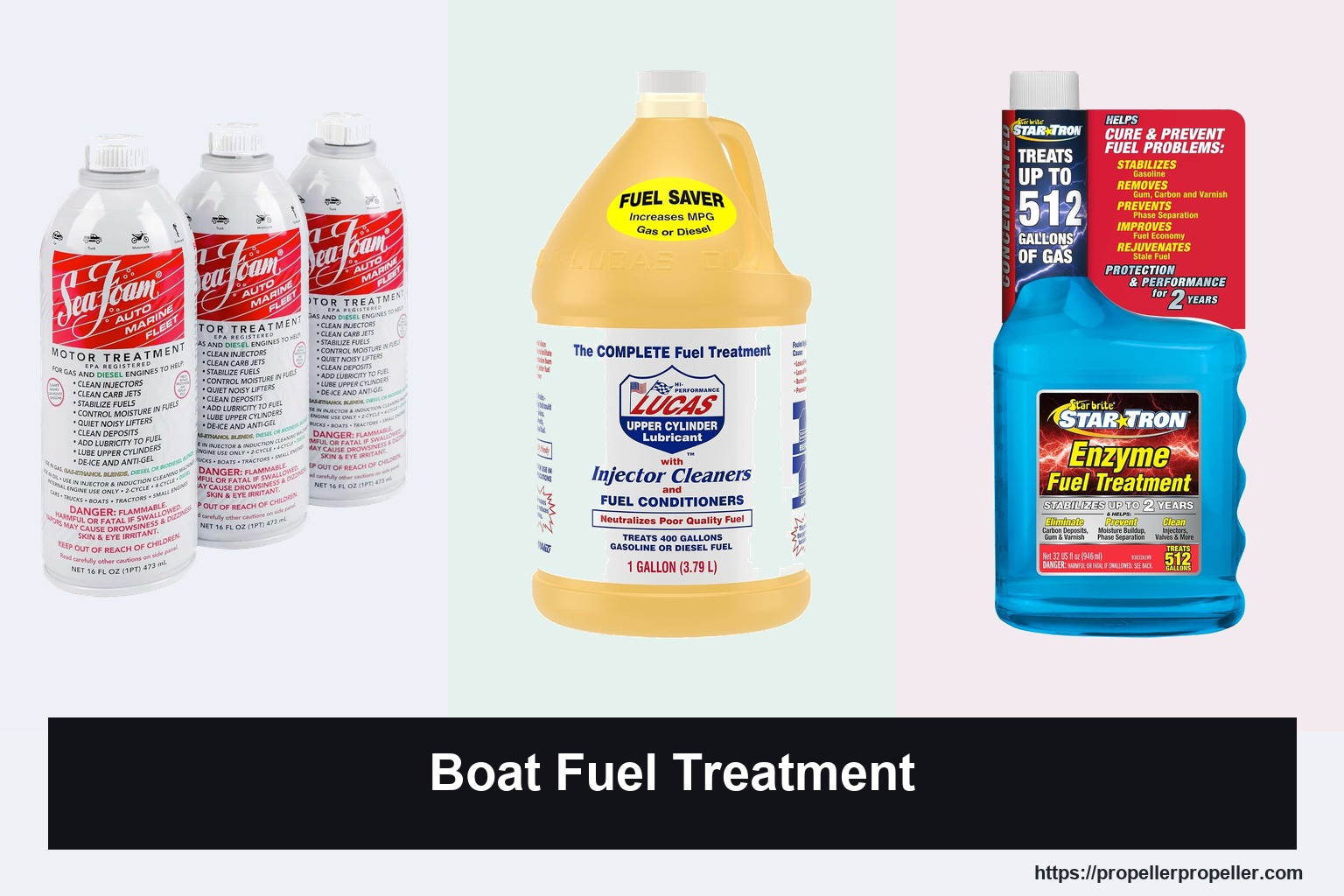
Sea Foam Motor Treatment 3-Pack
- 16 oz bottles, pack of 3
- Gas, diesel, and oil use
- Fuel stabilizer up to 2 years
- Compatible with boats and jet skis

Lucas Oil Fuel Treatment 1 Gallon
- 1 gallon bottle
- Gasoline and diesel use
- Treats injectors and chambers
- 30-day warranty

Star Tron Concentrate 32 Oz
- Treats up to 512 gallons
- 1 oz per 16 gallons
- Enzyme technology formula
- Up to 2-year stabilization

Star Tron Gasoline 16 Oz
- 16 oz gasoline treatment
- 1 oz per 16 gallons
- Stabilizes gasoline up to 1 year
- Ships in frustration-free packaging
This article may contain affiliate links. As an Amazon Associate, the website may earn from qualifying purchases at no additional cost to you.
Boat Fuel Treatment Reviews
Sea Foam Motor Treatment 3-Pack
Advantages
- Fuel and oil treatment in one
- Works with gas and diesel
- Stabilizes fuel up to 2 years
- Pack of three bottles
- Fits boats and personal watercraft
Limitations
- No single-use concentration figure
- Less specialized than marine-only formulas
Sea Foam Motor Treatment is the broadest all-around option in this group for owners who want one additive that can cover fuel and oil treatment duties. Its appeal is the way it reaches beyond simple storage help. It is positioned to clean injectors, carburetor restrictions, chamber areas, sludge, and deposits, so the benefit is not just better fuel freshness but also a cleaner path through the whole engine system. The pack of three 16 oz bottles also suits owners who treat fuel regularly rather than buying a large single container for occasional use.
The marine-relevant value shows up in its compatibility range. It is stated to work with gasoline, diesel, gas-ethanol blends, E10, and E85, and it is also described as usable in conventional and synthetic oil. That breadth matters if your household uses multiple engines or if a boat shares fuel storage with other equipment. The stabilizer claim of up to 2 years is especially useful for seasonal storage. The main practical constraint is that this kind of broad-spectrum treatment is not as single-mindedly gasoline-specific as some alternatives.
Against the others here, Sea Foam is the most flexible but not the most concentrated. It is the safer pick for buyers who value one additive that can move between boats, cars, motorcycles, and storage tanks without much friction. That flexibility is the reason to choose it over a narrower marine gasoline treatment, especially if you maintain several engines or want an oil treatment capability in the same product family. For boat owners who prize simplicity and broad compatibility over extreme concentration, this is the strongest all-purpose recommendation.
PHOTO: Sea Foam Motor Treatment – Three Bottles → Source: Amazon.com
Lucas Oil Fuel Treatment 1 Gallon
- Size
- 128 Fluid Ounce
- Liquid Volume
- 1 gallons
- Manufacturer Warranty Description
- 30 Days
- Compatible with Vehicle Type
- Car
Advantages
- Large 1-gallon container
- Cleans and lubricates fuel system
- Supports pumps and injectors
- Marine diesel compliance stated
- Helps prevent rust and corrosion
Limitations
- Bulky to store
- Warranty is only 30 days
Lucas Oil 10013 Fuel Treatment is the volume play in this lineup. The 1-gallon size makes sense for owners who service multiple tanks, use fuel treatment frequently, or want a single container that lasts through repeated maintenance cycles. Its claims focus on cleaning and lubricating the fuel system, including injectors, carburetor, and combustion chamber, while also increasing power and acceleration by reducing deposits. That mix matters because the product is not only about storage. It is also meant to support day-to-day engine response and consistency.
The marine angle is reinforced by its stated compliance with federal low sulfur content requirements for diesel motor vehicles and non-road, locomotive, and marine diesel equipment engines. That gives it broader fuel-system relevance than a simple gasoline cleaner, although the compatibility information also points to vehicle-specific fit and a car-oriented catalog identity. In practice, that means the buyer should pay attention to intended fuel type and engine use rather than assuming a one-size-fits-all marine chemical profile. The 30-day warranty is short, but it does show a defined manufacturer policy.
Among the options here, Lucas Oil stands out when container size and frequent dosing matter more than concentration or a specialty marine formula. It is a logical choice for owners who want one large bottle for many treatments and appreciate a product that addresses rust, corrosion, injectors, and combustion deposits in the same blend. If your priority is economy of volume and regular maintenance, this is the most straightforward high-capacity option in the set. If you want compact storage or a more concentrated gasoline treatment, another formula may fit better.
PHOTO: Lucas Oil Fuel Treatment – Fuel Saver Label → Source: Amazon.com
Star Tron Concentrate 32 Oz
- Product Dimensions
- 3 x 4.5 x 10.25 inches
- Item Weight
- 1.9 pounds
- Model
- Star Tron Enzyme Fuel Treatment – Concentrate Gas Formula
Advantages
- Treats up to 512 gallons
- Very low dosing rate
- Helps prevent phase separation
- Targets ethanol-related fuel problems
- Stabilizes fuel up to 2 years
Limitations
- Gasoline-focused rather than oil treatment
- Smaller bottle than bulk options
Star Tron Enzyme Fuel Treatment is the most concentration-focused option in this roundup, and that is exactly what makes it attractive for boat owners who treat fuel often or maintain larger fuel supplies. The 32 fl. Oz. Container is stated to treat up to 512 gallons, and the dosing rate of 1 fluid ounce per 16 gallons is a strong sign of efficiency. That kind of yield matters when you are stabilizing fuel for seasonal storage or keeping a rotating tank clean without constantly replacing product bottles.
Its enzyme technology and water-handling claims are the key marine advantages. The formula is described as helping prevent phase separation by dispersing water into submicron-sized droplets that are safely eliminated while the engine operates. That is a meaningful consideration in humid or wet environments where marine fuel can pick up moisture. The product also targets ethanol-related issues, gum, carbon deposits, varnish, and old fuel, so its value is not limited to storage. It is built to keep systems cleaner even after inactivity.
This is the best fit for buyers who care about concentration and moisture management more than bulk size. Compared with the more general treatments here, Star Tron is easier to justify when your main concern is marine fuel stability, not oil treatment or a huge container. It is also stronger for owners who want a gasoline-focused stabilizer that can revive old fuel while supporting easier starts. Choose this if your boat sits, sees wet conditions, or needs a compact bottle with unusually high treatment yield.
PHOTO: Star Tron Concentrate 32 – Treats Up to 512 Gallons → Source: Amazon.com
Star Tron Gasoline 16 Oz
- Item Weight
- 1.02 pounds
- Product Dimensions
- 2.25 x 3.75 x 8.75 inches
- Model
- Star Tron Enzyme Fuel Treatment – Concentrate Gas Formula
Advantages
- Compact 16 oz bottle
- Simple gasoline treatment
- Helps prevent ethanol issues
- Works with 2-cycle pre-mix
- Easy to store onboard
Limitations
- Shorter stabilization claim
- Less economical than the larger concentrate
This Star Tron gasoline formula is the more compact, lower-cost entry in the lineup, and it keeps the core benefits of the enzyme treatment while trimming the size and spend. The 16 oz bottle is easier to store on a boat or in a dock box, and the same dosing structure that appears in the larger concentrate keeps use simple. It still targets ethanol problems, gum, carbon, varnish, and fuel cleanliness, so the practical result is a treatment that can address rough running and stale-fuel issues without requiring a large purchase.
The setup profile is friendly to seasonal owners because the formula is built for everyday use and storage. It is described as stabilizing gasoline for up to 1 year, which is shorter than the larger concentrate’s 2-year claim but still useful for many marine storage cycles. The product also says it works with all engines, including 2-cycle pre-mix, which is helpful for owners who run both a boat and smaller equipment. Compared with the 32 oz concentrate, you give up yield, but not the basic gasoline-treatment approach.
This is the right choice when you want the Star Tron approach in a smaller, lower-commitment bottle. It is less economical by volume than the 32 oz concentrate, but it is easier to buy for occasional use and simpler to keep aboard. For boat owners who do not need the largest treatment capacity, this formula is the most approachable gasoline stabilizer in the group. If budget, storage space, and a straightforward bottle size matter more than maximum yield, this is the best value-oriented recommendation.
PHOTO: Star Tron Gasoline 16 – Treats Up to 256 Gallons → Source: Amazon.com
How to Choose Boat Fuel Treatment
Choosing boat fuel treatment starts with the way your engine actually lives. Marine fuel often sits longer, sees more humidity, and faces a higher risk of water contamination than fuel in a commuter car. That means the best product is not simply the one that promises cleaner combustion. It is the one that matches your storage interval, fuel type, engine mix, and tolerance for bulk or concentration. A good treatment should support reliable starts, reduce deposits, and stay useful whether the boat is run every weekend or parked for months.
Fuel Stability
The first question is how long fuel has to remain usable. Seasonal boat owners need a treatment that can protect fuel through an off-season, not just through a short trip cycle. If fuel is likely to sit in the tank for months, longer stabilization matters because stale fuel can create hard starts and uneven running when you return to the water. Short storage windows are less demanding, but they still benefit from a product that keeps gum and varnish from forming while the boat waits at the dock or in storage.
Water Management
Water control is one of the biggest marine-specific concerns. Boats are exposed to humidity, condensation, and sometimes direct water intrusion, so a treatment that addresses phase separation or moisture dispersal can be more useful than a simple cleaner. This is especially important with ethanol-blended fuel, which can react badly when water accumulates. If your boat lives in a wet climate or sits through temperature swings, prioritize a formula that explicitly handles water instead of assuming a general fuel additive will be enough.
Fuel and Engine Compatibility
Compatibility matters because not every boat setup uses the same fuel. Some owners need gasoline treatment only, while others maintain diesel equipment or run several engines with different requirements. A broader additive can be convenient if your garage also holds generators, motorcycles, or other small engines. At the same time, a narrower gasoline formula can be the smarter pick if your only goal is marine fuel stabilization. The right choice is the one that matches your actual fuel mix without creating confusion at the fill-up stage.
Dose and Bottle Size
Bottle size changes how practical a treatment feels over time. A small bottle is easier to store on board, but a concentrated formula can cover far more fuel and reduce how often you replace it. A large bottle makes sense for frequent maintenance or multi-engine households, though it can be bulky. The best value is not always the biggest container. It is the product whose dosing rate and package size match how often you treat fuel and how much storage space you are willing to give up.
Cleaning and Storage
A good boat fuel treatment should do more than sit in the tank quietly. The better formulas help keep injectors, carburetors, combustion chambers, and fuel lines cleaner, which matters when deposits can affect throttle response and idle quality. If your engine has already been sitting or shows signs of stale fuel, look for a product that claims to handle gum, varnish, and carbon, not just one that talks about basic preservation. That broader cleaning action is what separates a simple stabilizer from a more useful maintenance additive for marine use.
Fuel Treatment Comparison Table
| Product | Best For | Dimensions | Weight | Model |
|---|---|---|---|---|
| Sea Foam Motor Treatment 3-Pack | Best Multi-Use Option | Not Specified | Not Specified | Not Specified |
| Lucas Oil Fuel Treatment 1 Gallon | Best High-Volume Bottle | Not Specified | Not Specified | Not Specified |
| Star Tron Concentrate 32 Oz | Best Concentrated Marine Formula | 3 x 4.5 x 10.25 inches | 1.9 pounds | Star Tron Enzyme Fuel Treatment – Concentrate Gas Formula |
| Star Tron Gasoline 16 Oz | Best Budget Pick | 2.25 x 3.75 x 8.75 inches | 1.02 pounds | Star Tron Enzyme Fuel Treatment – Concentrate Gas Formula |
How We Tested & Analyzed Boat Fuel Treatment
This roundup was built by comparing category-level performance claims that matter most for marine fuel use. The analysis focused on fuel stability, moisture handling, cleaning scope, dosing efficiency, and compatibility across gasoline or diesel applications. Those factors matter because a boat owner is usually balancing longer storage intervals, fluctuating humidity, and the need to avoid rough starts or deposit buildup after periods of inactivity.
Product differences were judged by the practical consequences of each verified claim rather than by marketing language alone. Container size, concentration, and stated treatment coverage were weighed against how often a buyer is likely to use the additive. Compatibility notes were also important because marine owners often maintain more than one engine type. When a formula claimed broader fuel-system cleaning or oil treatment, that breadth was considered a real tradeoff against specialization.
A final consideration was the limits of each formula’s focus. Some treatments are built for broad multi-use maintenance, while others are narrower and more concentrated for gasoline storage and moisture control. That distinction matters because no single additive solves every marine fuel problem in the same way. The recommendations therefore prioritize the strongest verified use case for each product and note where a buyer may want a more specialized alternative.
Frequently Asked Questions
What does boat fuel treatment actually do?
Boat fuel treatment helps keep fuel usable longer, reduces the chance of gum and varnish formation, and can support cleaner combustion. In marine use, that often means easier starts, smoother idle, and fewer storage-related fuel problems when the boat sits between outings.
Should I choose a stabilizer or a cleaner?
Many of the best options do both, but the balance matters. If fuel will sit for a long time, stabilization should come first. If the engine already shows rough running or deposit issues, a treatment with stronger cleaning claims may be the better starting point.
Does ethanol make marine fuel treatment more important?
Yes, because ethanol-blended fuel is more vulnerable to moisture-related problems and can create issues like phase separation or rough running if it sits too long. A treatment that specifically addresses ethanol behavior is usually a better match for boats than a generic additive.
How often should I use fuel treatment in a boat?
Usage depends on how the boat is stored and run. Regular treatment is useful when fuel sits for extended periods or when the vessel sees seasonal storage. For boats used frequently, treatment is often most important before storage, after fueling, or at the interval recommended by the product.
Final Thoughts
Boat fuel treatment is worth choosing carefully because marine fuel faces a tougher environment than most on-road applications. The right additive can help protect against stale fuel, water-related problems, and the deposits that lead to poor starts or uneven running. What matters most is matching the formula to your storage habits, fuel type, and how much convenience you want from the bottle size and dosing rate.
For broad compatibility and all-purpose maintenance, a multi-use treatment is hard to beat. For concentrated gasoline stabilization and moisture control, a marine-focused enzyme formula is often the smarter buy. If you want the best result, choose the product that fits your real fuel situation rather than the one with the broadest claims. That approach will usually do the most to keep the engine ready when you are.