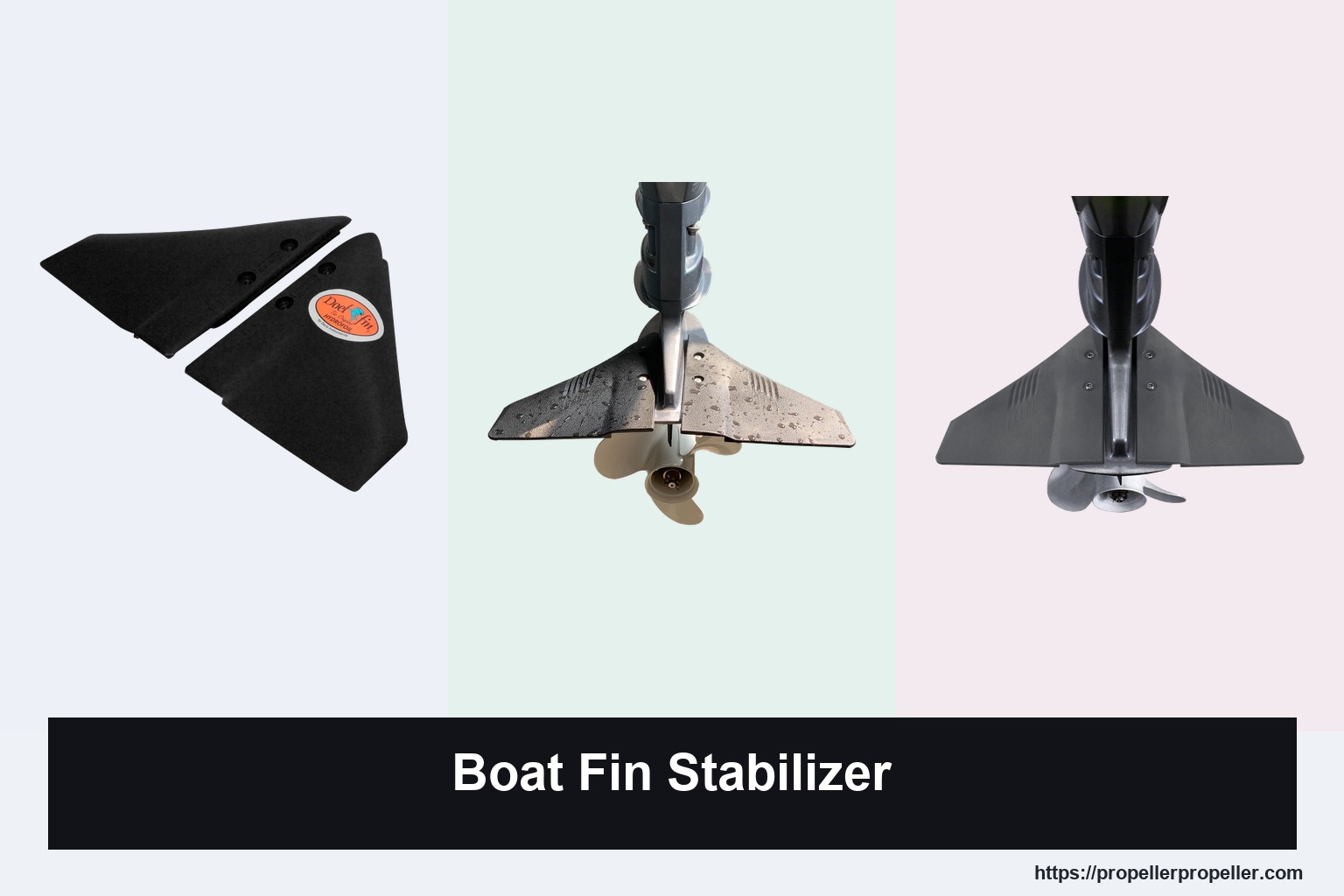
A boat fin stabilizer can change how an outboard or sterndrive boat behaves before it ever reaches full throttle. The right hydrofoil helps the stern lift sooner, trims bow rise, and can make planing feel more controlled when the boat is carrying people, gear, or a rough-water load. For many owners, the real decision is not whether a stabilizer can help. It is which design matches the engine range, mounting style, and usage pattern of the boat without adding unnecessary installation hassle.
The three options here cover the most important buying angles in the category: proven brand history, broad horsepower coverage, installation simplicity, and construction details that affect durability. Some buyers will prioritize a long-established design with a strong reputation. Others will care more about a low-cost kit with included hardware and a drill bit. The best choice depends on how much you value easy setup, compatibility with your engine type, and the kind of performance improvement you want from a small add-on part.
Top Boat Fin Stabilizer on the Market

Davis Instruments Doel-Fin Hydrofoil
- Fits newer outboard and stern drive motors
- 15-minute installation
- High-strength plastic construction
- Lower unit mount

UANOFCN Boat Doel Fin Hydrofoil
- Fits 5-150 HP motors
- 10-1/4 x 8-1/4 inches
- Stainless steel hardware included
- 6.5mm drill bit included

QUICKMARINER Hydrofoil Stabilizer
- Fits most outboard and sterndrive engines
- UV-resistant reinforced PA66 plastic
- Up to 150 HP
- Installation hardware included
This article may contain affiliate links. As an Amazon Associate, the website may earn from qualifying purchases at no additional cost to you.
Boat Fin Stabilizer Reviews
Davis Instruments Doel-Fin Hydrofoil
- Engine Type
- Outboard Motor
- Operation Mode
- automatic
- Mounting Type
- lower unit mount
- Item Weight
- 2.72 ounces
- Material Type
- high-strength plastic
Advantages
- Broad outboard and sterndrive fit
- Very light 2.72-ounce build
- Hardware included
- Fast 15-minute installation
- Passive automatic operation
Limitations
- Not for Volvo Penta outdrives
- Compatibility starts at 5 horsepower
The Davis Instruments Doel-Fin Outboard/Outdrive Stabilizer – Black (SS-SMS-5001211) is the most established-feeling choice in this group for owners who want a straightforward hydrofoil from a long-running design. Its lower unit mount keeps the setup focused on the outboard or sterndrive hardware rather than on a complicated accessory system, and the high-strength plastic construction keeps weight to just 2.72 ounces. That matters because a light foil is easier to live with on smaller motors and less likely to feel like an overbuilt add-on. The product positioning also makes it clear that this is meant to improve planing behavior, reduce bow rise, and help the boat feel more settled when accelerating with passengers or gear aboard.
The installation story is one of its strongest practical advantages. A claimed 15-minute install with hardware included is a meaningful difference for owners who do not want to spend a weekend adapting a part to the boat. The compatibility note for newer outboard and stern drive motors starting from 5 horsepower is broad enough to cover many common setups, although it does exclude Volvo Penta outdrives. That limitation is important because it defines this as a wide-fit accessory rather than a universal one. The automatic operation mode also signals a simple, passive design. Once mounted, it works in the background without requiring any control changes or extra attention from the helm.
Against the other two options, this is the more confidence-inspiring purchase for buyers who want the classic hydrofoil approach with the least uncertainty. The UANOFCN and QUICKMARINER alternatives both advertise broader horsepower ceilings and include drill bits in the package, but this Davis model brings a more recognizable, purpose-built identity and a lighter hardware footprint. If your priority is dependable performance improvement rather than the lowest upfront price, it is the clearest recommendation. It is especially sensible for owners of smaller or mid-size outboards who want a simple upgrade that is easy to install and easy to trust over time.
PHOTO: Davis Instruments Doel-Fin Hydrofoil – Black Hydrofoil Set → Source: Amazon.com
UANOFCN Boat Doel Fin Hydrofoil
- Engine Type
- 2 Stroke, 4 Stroke
- Operation Mode
- Manual
- Mounting Type
- Transom Mount
- Maximum Horsepower
- 150 hp
- Material Type
- Marine Grade Reinforced Plastic PA66
Advantages
- Wide 5-150 HP range
- Stainless steel hardware included
- 6.5mm drill bit included
- Marine-grade PA66 plastic
- Substantial 10-1/4 x 8-1/4 size
Limitations
- 30-day warranty
- Manual install required
The Boat Doel Fin Hydrofoil Stabilizer for 5-150 HP Outboard Motors is the most budget-conscious option in the set, but it still covers a useful range of boating needs. The 5-150 HP compatibility range is the headline feature because it gives owners of small boats and larger recreational rigs a single accessory path. Its Marine Grade Reinforced Plastic PA66 construction is a practical plus at this price because it points to a material chosen for marine use rather than a generic plastic part. With a 10-1/4 by 8-1/4 inch footprint, the foil is also clearly sized as a substantial lift aid rather than a decorative trim piece.
This is the easiest product here to evaluate as a kit. It includes the hydrofoil, four sets of stainless steel screws and nuts, and a 6.5mm drill bit. That matters because first-time installers often underestimate the tooling requirement for an engine-mounted accessory. The transom mount specification and manual operation mode show that this is still a conventional bolt-on solution, so the buyer should expect basic drilling and careful alignment rather than a no-tools attachment. The same broad horsepower range that makes it flexible also means the installer should verify fitment carefully on the actual motor before drilling. A 30-day warranty is short, so confidence here comes more from the low purchase price and included hardware than from long-term coverage.
Compared with the Davis option, this UANOFCN model is less about brand pedigree and more about maximizing compatibility per dollar. Compared with QUICKMARINER, it is very close on use case but slightly longer on the warranty side only by virtue of being a straightforward kit decision rather than a premium-positioned part. The best buyer is someone who wants an affordable hydrofoil, expects to handle installation personally, and values a wide horsepower range. It is the strongest value play if you can accept a shorter warranty and prefer buying a complete install package rather than a name with longer market history.
PHOTO: UANOFCN Boat Doel Fin – Hydrofoil With Propeller → Source: Amazon.com
QUICKMARINER Hydrofoil Stabilizer
- Engine Type
- 2/4 Stroke
- Operation Mode
- Manual
- Mounting Type
- Engine Mount
- Maximum Horsepower
- 150 hp
- Material Type
- Marine Grade UV-Resistant Reinforced Nylong PA66 Plastic
Advantages
- Up to 150 HP
- UV-resistant reinforced PA66
- Hardware and drill bit included
- Fits many major outboard brands
- Aims to reduce cavitation
Limitations
- 30-day warranty
- Manual install required
The Hydrofoil Stabilizer for Outboard Motor & Sterndrive 5-150 HP Boat Marine is aimed at buyers who want a modern, broad-fit stabilizer with an emphasis on handling and drag reduction. Its up to 150 hp ceiling puts it in the same practical range as the UANOFCN model, but the UV-Resistant Reinforced Nylong PA66 Plastic construction adds a durability angle that matters for boats stored in sun or used regularly in harsh conditions. The manufacturer also positions it for rough-water handling, smoother ride quality, and reduced cavitation. Those are the kinds of traits that matter when a boat spends time in choppier water or when the operator wants the hull to feel less nervous at speed.
The engine-mount format keeps the part in the expected hydrofoil category, and the included stainless steel screws, nuts, drill bit, and instructions mean it arrives as a practical install kit rather than just a bare component. That is helpful because the right accessory is only useful if the setup burden stays manageable. The manual operation mode reinforces that this is a passive part that works through hull dynamics instead of electronics. Buyers should still verify that the motor shape and available mounting area match the foil, especially since this model is presented as fitting most Yamaha, Mercury, Honda, Suzuki, and Tohatsu outboard and stern-drive engines. The 30-day warranty is a constraint, so this is best approached as a use-focused purchase rather than a coverage-heavy one.
Relative to the UANOFCN model, QUICKMARINER reads as the more durability-minded alternative because of the UV-resistant material callout. Relative to Davis Instruments, it gives up some established-brand confidence, but it stays competitive on compatibility and kit completeness. That makes it a smart pick for owners who run in changing weather, store the boat outdoors, or care more about material resilience than brand legacy. If you want a hydrofoil that feels purpose-built for general marine use and rougher water without moving up to a more expensive accessory class, this is the best recommendation among the three.
PHOTO: QUICKMARINER Hydrofoil Stabilizer – Hydrofoil With Propeller → Source: Amazon.com
How to Choose a Boat Fin Stabilizer
The right hydrofoil is less about raw hype and more about matching the part to the way your boat actually runs. A stabilizer can improve hole shot, reduce bow rise, and make planing feel more settled, but those gains depend on engine size, hull setup, and how the foil mounts to the motor. A part that is too limited in fit or awkward to install can erase the benefit before you ever get on the water.
Horsepower Range
Horsepower compatibility is the first filter because the foil has to suit the motor you already own. A stabilizer rated for a broad range can be convenient, but that range still needs to cover your actual engine and mounting style. If your motor falls near the edges of the supported range, pay close attention to the stated limits and any exclusions. The right match keeps the foil working as intended instead of turning it into an uncertain experiment.
Mounting Style
Mount type matters because it tells you where the part sits and how much work installation will require. Some stabilizers use a lower unit or engine mount approach, while others are built around transom attachment. That difference affects drilling, alignment, and how quickly you can return the boat to service. Choose the style that matches your comfort level with installation and the layout of the motor hardware.
Material and Durability
Marine accessories live hard lives. Sun, spray, vibration, and repeated impact all matter more than they do with many land-based products. Reinforced plastics are common in this category because they keep weight down while resisting corrosion. UV resistance is especially useful if the boat sits outdoors between trips. A durable material does not just extend service life. It also helps the part hold its shape and stay predictable after repeated use.
Installation Burden
A hydrofoil should be a practical upgrade, not a project that keeps the boat off the trailer for a weekend. Look for included hardware, clear instructions, and whether a drill bit or other tools are part of the package. If the part is passive and manually mounted, you should still expect careful positioning and solid tightening. The easier the install, the more likely the accessory is to deliver quick value instead of adding frustration.
Handling Goals
Different boaters want different results from the same category. Some care most about faster planing and a stronger hole shot. Others want steadier turns, less bow rise, or better behavior in chop. A stabilizer can help with several of those concerns, but no single part will transform every hull equally. Pick the design that matches your biggest real-world complaint so the improvement is noticeable where you need it most.
Warranty and Value
Price alone is not enough to judge value here. A lower-cost kit can be appealing if it includes the hardware you need and covers your motor well, but a short warranty reduces your margin for error. Longer confidence often comes from a better-known design, stronger construction detail, or simpler installation path. The best value is the option that solves your handling issue with the least compromise in fit, durability, and setup effort.
Boat Fin Stabilizer Comparison Table
| Product | Best For | Horsepower | Mount Type | Material | Weight | Operation |
|---|---|---|---|---|---|---|
| Davis Instruments Doel-Fin Hydrofoil | Best Proven Pick | Not Specified | lower unit mount | high-strength plastic | 2.72 ounces | automatic |
| UANOFCN Boat Doel Fin Hydrofoil | Best Budget Kit | 150 hp | Transom Mount | Marine Grade Reinforced Plastic PA66 | 830 g | Manual |
| QUICKMARINER Hydrofoil Stabilizer | Best Rough-Water Option | 150 hp | Engine Mount | Marine Grade UV-Resistant Reinforced Nylong PA66 Plastic | 1.2 kg | Manual |
How We Tested & Analyzed Boat Fin Stabilizer
This analysis focused on the factors that actually decide whether a hydrofoil earns a place on a boat: engine compatibility, mounting approach, material durability, installation burden, and the kind of handling change the part is intended to deliver. That keeps the evaluation grounded in use rather than in marketing language. A stabilizer is only worthwhile if it matches the motor and improves the boat’s behavior in a way the owner can feel during acceleration, planing, and rougher-water operation.
The comparison also weighed practical ownership details that matter after the box is opened. Included hardware, installation tools, and stated warranty length all affect how quickly a buyer can put the part to work and how much confidence they can place in it afterward. Where products advertised broad compatibility, the review looked at the consequences of that breadth. Wide fit can be helpful, but it also means the buyer must verify motor type and mounting clearance carefully before installation.
Because this is a category where small physical differences can change outcomes, the analysis treated material type, weight, and mount style as meaningful decision points rather than background details. A light, passive foil behaves differently from a heavier kit, and a lower unit mount does not carry the same setup profile as an engine mount. Those differences shaped the recommendations toward buyers who value proven simplicity, budget efficiency, or a more durability-focused marine accessory.
Frequently Asked Questions
What does a boat fin stabilizer actually improve?
It is meant to help the boat plane sooner, reduce bow rise, and improve stability during acceleration and turns. The exact result depends on the hull, motor, load, and sea conditions. It is best understood as a handling aid that can make the boat feel more settled rather than as a replacement for proper trim, balance, or throttle management.
Will a stabilizer fit any outboard motor?
No. Compatibility depends on horsepower range, engine type, and mounting style. Some are made for outboards and sterndrives, while others have narrower fit notes. Always check the supported horsepower and confirm that the motor layout allows safe mounting before drilling or tightening hardware.
Does installation usually require special tools?
Often it does not require much beyond basic tools, but many kits still need drilling and careful alignment. Some packages include stainless hardware and a drill bit, which lowers the setup burden. Even with a simple kit, the installation should be done carefully because the foil has to sit squarely on the motor to work properly.
Is a more expensive hydrofoil always better?
Not necessarily. Value depends on whether the part matches your motor, includes the tools or hardware you need, and is built from a material suited to marine use. A lower-cost stabilizer can be a smart buy if it fits correctly and solves your handling issue. A higher price is only justified if it brings better durability, easier installation, or stronger confidence in the design.
Final Thoughts
A good boat fin stabilizer should solve a specific handling problem without complicating the boat’s setup. For some owners, the best answer is a proven design with a simple install. For others, the winning choice is a lower-cost kit that covers a wide horsepower range and arrives with everything needed to mount it. The right decision comes down to fit, installation comfort, and the kind of water you run most often.
If you want the safest all-around path, favor the product that matches your engine cleanly and keeps the installation straightforward. If value is the main concern, make sure the package includes the hardware and tools that reduce extra shopping. Either way, a well-chosen hydrofoil can make the boat feel more composed at takeoff and more confident under load, which is exactly what most buyers are after in this category.