
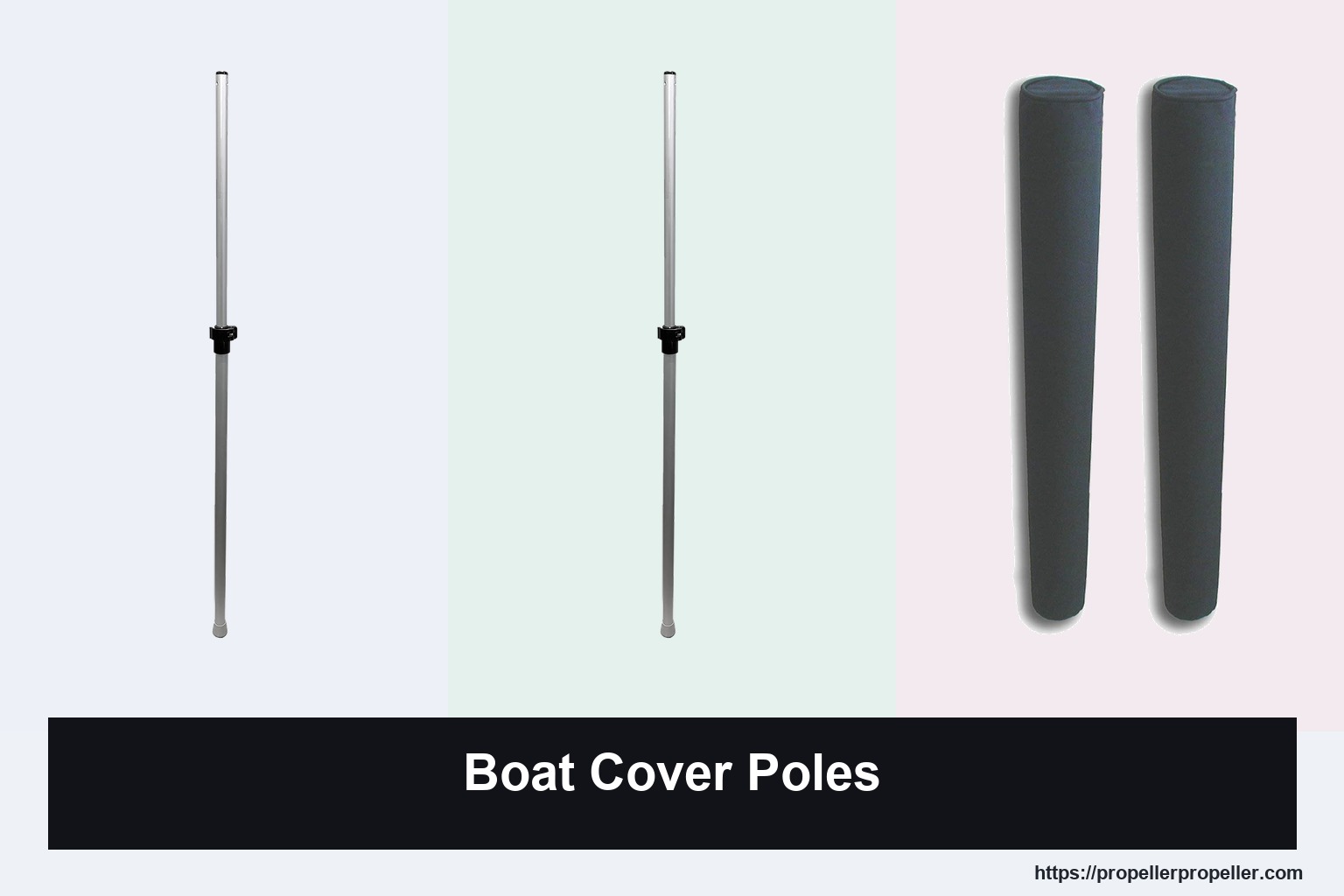
Boat cover poles do one job, but they do it in a way that can save a cover, reduce water pooling, and make seasonal storage less frustrating. The right pole keeps fabric lifted where it matters and stays stable enough to survive weather, wet decks, and repeated setup without turning into another piece of gear you have to fight with.
This roundup focuses on practical differences that matter on the water and at the trailer. Height range, locking method, tip design, deck protection, and support capacity all affect how easily a pole fits your boat and how confidently it holds position. The best choice is the one that matches your cover geometry and your storage routine, not the one with the longest feature list.
Top Boat Cover Poles on the Market

Vico Marine 28-47 Inch Cover Support Pole
- 28 to 47 inch adjustment
- 170 lb support capacity
- Anodized aluminum construction
- One-hand FlipLock adjustment
- Rubber crutch tip
Vico Marine 39-70 Inch Pontoon Support Pole
- 39 to 70 inch adjustment
- 170 lb support capacity
- Heavy gauge aluminum
- Three interchangeable tips
- Pontoon cover use

Mad Dog 60 Inch Trailer Guide Pads
- 60 inch length
- Set of two
- 600 denier canvas
- UV fade resistant material
- Capped end design

Vico Marine 31-47 Inch Swivel Pole
- 31 to 47 inch adjustment
- 170 lb support capacity
- Swivel base design
- Anodized aluminum pole
- Three interchangeable tips
This article may contain affiliate links. As an Amazon Associate, the website may earn from qualifying purchases at no additional cost to you.
Boat Cover Poles Reviews
Vico Marine 28-47 Inch Cover Support Pole
- Item Highlight
- Heavy-duty anodized aluminum pole with patented flip-lock, 170 lb capacity, and non-scuff rubber crutch tip.
- Material Type
- Aluminum
- Item Dimensions
- 47 x 1 x 1 inches
- Compatible with Vehicle Type
- Boat
- Water Resistance Level
- Water Resistant
Advantages
- Compact storage length
- One-hand locking adjustment
- Three tip options
- Non-marring deck contact
- Universal boat fit
Limitations
- Not the tallest option
- Single pole only
This pole is the smallest-footprint option in the group, and that matters when storage space is tight or the cover height only needs a modest lift. The 28 to 47 inch adjustment makes it useful for smaller boats and lower cover profiles, while the 170 lb capacity gives it the kind of headroom that helps the pole stay relevant in heavy weather rather than just calm conditions. The anodized aluminum body keeps the structure light enough to handle easily without sounding flimsy.
Setup is built around quick changes rather than delicate tweaking. The FlipLock can be locked with one hand, which reduces the annoyance of adjusting height while balancing on deck or leaning into a cockpit. Three tip configurations broaden where it can be used, since the same pole can be adapted for snap points, grommets, or plug-style contact. The TPR crutch tip is a practical detail rather than a cosmetic one, because deck scuffing is a real concern when poles shift under load or when surfaces stay wet.
Among the four picks, this one makes the most sense when you want a simple, compact support pole with the broadest usefulness in a smaller size. It does not try to solve every storage scenario, and that is part of its appeal. Buyers who need a short transport length, easy handling, and a dependable deck-friendly tip will get the most from it. If your cover height falls within the range and you value convenience over specialty length, this is the safest all-around recommendation.
PHOTO: Vico Marine 28-47 Inch – Adjustable Support Pole → Source: Amazon.com
Vico Marine 39-70 Inch Pontoon Support Pole
Advantages
- Tall 39 to 70 inch range
- One-hand FlipLock adjustment
- Heavy gauge aluminum build
- Three tip configurations
- Designed for pontoon covers
Limitations
- Bulkier when stored
- Less compact for transport
This version is built for taller cover spans, and that is the clearest reason to choose it over the shorter support pole in the lineup. The 39 to 70 inch adjustment reaches much higher, which matters for pontoon layouts or any cover geometry that needs more centerline lift to shed water. The 170 lb capacity keeps the pole from feeling like a compromise just because it is taller. For buyers dealing with larger overhead space, that combination is the main selling point.
The structure follows the same heavy-gauge anodized aluminum approach, so the added reach does not come with a shift toward a weaker material. The patented flip lock is still doing the work of making height changes manageable, and the one-hand adjustment is useful when you are balancing position against wind, fabric tension, or awkward deck access. The crutch tip and alternate tip styles also help it adapt to different contact points without requiring a separate support solution.
This is the better choice when your biggest constraint is height rather than footprint. It is not as compact as the shorter pole, so storage and handling are a little less convenient, but that tradeoff is exactly why it belongs in the lineup. If your cover needs a taller center support and you want the same 170-pound rating as the other Vico Marine pole, this is the more appropriate pick. It is the one to buy when reach is the priority and a longer collapsed length is acceptable.
PHOTO: Vico Marine 39-70 Inch – Adjustable Support Pole → Source: Amazon.com
Mad Dog 60 Inch Trailer Guide Pads
- Material Type
- Canvas UV Fade Proof
- Coverage
- 2 3/8 inch diameter
- Compatible with Vehicle Type
- Boat Trailer
- Ultraviolet Light Protection
- UV Protection
- Water Resistance Level
- Water Resistant
Advantages
- Pair includes both sides
- Long 60 inch coverage
- 600 denier canvas
- UV fade resistant
- Capped end retention
Limitations
- Not for cover support
- Requires trailer guide poles
This product solves a different problem from the support poles above. Instead of holding a cover up, it cushions trailer guide poles so loading and unloading are less likely to mark up the boat. The 60 inch length gives generous surface coverage, and the set of two format matters because guide poles are normally used in pairs. That makes the purchase feel complete rather than like a partial fix that still leaves one side exposed.
Material choice is where this accessory earns its place. The 600 denier canvas is meant to survive repeated contact, and the UV fade resistant construction matters because trailer hardware lives outside, not in a sheltered garage. The capped end design is more useful than it first sounds, since it helps keep the pad from sliding down during use. An elastic band adds another layer of retention, which reduces the chance that the pad shifts right when you need the guide pole to stay lined up.
Compared with the support poles in this roundup, this is the most specialized option. It is not meant to lift a cover, and that distinction is important because buyers sometimes cross-shop these accessories by accident. If your problem is trailer guidance and impact protection rather than cover support, this is the obvious pick. Buyers who want a tough, pair-based solution for everyday launch and retrieval will get more value from it than from a general-purpose cover pole.
PHOTO: Mad Dog 60 Inch – Pair of Covers → Source: Amazon.com
Vico Marine 31-47 Inch Swivel Pole
- Model
- Vico-Marine-X47A-2Tip-PBR
Advantages
- Swivel base protection
- One-hand FlipLock adjustment
- 170 lb support rating
- Three tip options
- Anodized aluminum build
Limitations
- Less compact than shortest pole
- Less reach than tall pole
This pole sits in the middle of the size range and adds one feature that changes how it behaves on deck. The 31 to 47 inch adjustment still suits shorter cover profiles, but the real distinction is the swivel pole base, which is meant to protect the deck and make installation easier. For owners who care about avoiding concentrated pressure points, that base design is the clearest reason to choose it over the simpler compact pole.
The rest of the structure stays familiar and that is a strength. Heavy-gauge anodized aluminum keeps the pole practical for regular handling, and the patented flip lock keeps height changes simple. The 170-pound rating means the swivel base is not paired with a weak support structure. Three tip options also broaden compatibility, so the pole can adapt to different cover attachment styles instead of forcing a single setup approach. That flexibility is useful when a boat sees different storage conditions through the year.
Relative to the other two support poles, this is the best balanced option for people who want a shorter support range but are especially concerned about deck protection. It gives up some of the compactness of the shortest version and some of the height of the taller one, but it adds a base detail that can matter every time the pole is placed. If your priority is stability on the deck and easier positioning, this is the one to favor. It is the most refined all-around choice for ordinary cover support use.
PHOTO: Vico Marine 31-47 Inch – Swivel Base Pole → Source: Amazon.com
How to Choose Boat Cover Poles
Choosing a boat cover pole starts with the shape of the cover, not the brand on the package. A pole that is too short will not lift the low point of the fabric enough to shed water, while a pole that is too tall can create awkward pressure or poor fit. Height range, base style, tip style, and material all influence how well the pole supports the cover through weather and storage cycles.
Match the Height Range
The most important decision is whether the pole reaches the center height your cover needs. A shorter adjustable range works well for compact boats and lower-profile covers, while a taller range is better when the cover spans a wider opening or needs more peak height to move runoff away from the middle. Buying too much height can be just as awkward as buying too little, because the pole has to fit the actual geometry of the cover, not an idealized shape.
Look at the Base
The base determines how the pole behaves against the deck or trailer surface. A fixed tip is simple and often enough when the surface is forgiving, but a swivel-style base can reduce concentrated pressure and help the pole sit more naturally as the cover shifts. That matters on slick, wet, or slightly uneven surfaces where a rigid contact point can skate or leave a mark. If the pole will stay installed for long stretches, a base that protects the deck is worth serious attention.
Choose the Right Tip
Tip style affects where and how the pole can connect to the cover. Some setups need a snap-style contact point, while others depend on a grommet or plug-style fit. A pole with multiple tip options is more versatile because it can adapt to different cover attachment points without forcing extra accessories. That flexibility is useful if you swap covers seasonally or if the boat uses a different support point depending on how tightly the cover is pulled.
Prioritize Stable Materials
Anodized aluminum is a strong fit for this category because it keeps weight manageable without giving up the durability expected from outdoor hardware. Support poles live in a wet, sunny, and often salty environment, so material stability matters as much as raw strength. A good pole should feel rigid when loaded and still be easy to handle during installation or removal. If a pole is overly heavy, it becomes annoying to adjust. If it is too light or flexible, it may not hold shape under the cover’s tension.
Think About Storage
Collapsed length is easy to overlook, but it changes whether the pole is convenient to keep onboard or stowed in a garage. A compact collapsed size is useful when space is tight or when you want the pole to ride with the boat. Longer collapsed poles can be perfectly fine if you have dedicated storage, but they are less forgiving when packing gear into a limited compartment. Practical buyers should treat collapsed length as a real part of fit, not an afterthought.
Use the Right Accessory
Not every pole-related product solves the same problem. A cover support pole lifts fabric and helps water shed, while a trailer guide pad protects hull contact points during loading. The distinction matters because the wrong accessory may appear similar but will not solve the issue you are actually trying to fix. Decide first whether the problem is cover sag, deck scuffing, or trailer guidance. Once that is clear, the category choice becomes much easier and the hardware will do its job properly.
Boat Cover Pole Comparison Table
| Product | Best For | Material | Vehicle Type | UV Protection | Automotive Fit Type | Color |
|---|---|---|---|---|---|---|
| Vico Marine 28-47 Inch Cover Support Pole | Best compact support pole | Aluminum | Boat | Yes | Universal Fit | Silver |
| Vico Marine 39-70 Inch Pontoon Support Pole | Best tall-range support pole | Not Specified | Not Specified | Not Specified | Not Specified | Not Specified |
| Mad Dog 60 Inch Trailer Guide Pads | Best trailer guide padding | Canvas UV Fade Proof | Boat Trailer | UV Protection | Universal Fit | Black |
| Vico Marine 31-47 Inch Swivel Pole | Best deck-friendly base | Not Specified | Not Specified | Not Specified | Not Specified | Not Specified |
How We Tested & Analyzed Boat Cover Poles
This review set was built around the decision points that matter most in real boat storage use. Height adjustment, support rating, tip versatility, deck contact, and material durability all influence whether a pole is practical once it is on the boat. The analysis focused on the consequences of those traits, not just the traits themselves, because the buyer needs to know how a pole behaves under tension, during installation, and across repeated seasonal use.
The products were compared by role as well as by specification. Two options serve as support poles, one adds a swivel base for better deck interaction, and one addresses trailer guide protection rather than cover support. That distinction matters because shoppers often compare accessories only by length or price, even though the use case can be completely different. The evaluation therefore emphasized compatibility, physical form, and what each design changes in daily operation.
Limitations were handled conservatively. When a product did not present a specification, the article avoided filling in the gap or inferring performance from a similar item. That approach keeps the guidance grounded and prevents misleading comparisons. Where a feature clearly changes buyer experience, such as a swivel base or alternate tips, the analysis treats it as a practical tradeoff. Where a detail is absent, the recommendation stays focused on what is actually supported by the available evidence.
Frequently Asked Questions
How tall should a boat cover pole be?
The right height depends on the cover’s span and where the low point forms. A shorter pole is usually enough for compact boats with modest sag, while a taller pole is better when the cover needs a higher center lift to move water away from the middle. Measure the space the cover actually needs to clear before choosing.
Why does tip style matter on a cover pole?
Tip style determines how the pole interfaces with the cover. Some covers use snap points, others use grommets or plug-style contact. A pole with multiple tip options is more adaptable, especially if you use more than one cover or adjust your setup seasonally. The wrong tip can make a stable pole awkward to position.
Is a swivel base worth it?
A swivel base is worth considering when deck protection and placement stability matter. It can reduce concentrated pressure and help the pole sit more naturally on the surface, especially if the deck is wet or slightly uneven. If you regularly install and remove the pole, that extra ease can be more valuable than a fixed contact point.
Do trailer guide pads replace cover support poles?
No. They solve different problems. Trailer guide pads protect guide poles during loading and unloading, while cover support poles hold fabric up and help shed water. If your issue is hull contact at the trailer, you need guide padding. If your issue is sagging cover fabric, you need a support pole.
Final Thoughts
Boat cover poles are simple tools, but the best one is the one that matches your boat’s shape, your storage setup, and the way you actually use the cover. Height range and tip style determine fit, while the base and material determine whether the pole stays useful after repeated exposure to weather and movement. Once you narrow the job to the right use case, the choice becomes much easier.
For compact boats and straightforward cover support, the shorter adjustable pole is the most convenient pick. For taller cover spans, the longer-range option is the better fit. If deck protection is a priority, the swivel-base model stands out. And if the problem is trailer loading rather than cover sag, the guide pads belong in a different buy entirely. Match the hardware to the problem, and you will get better results with less frustration.



