Choosing the right boat buffer is less about chasing the highest number on a motor label and more about matching the tool to the finish you need to protect. Some boat owners are trying to restore faded gel coat. Others want a simple way to maintain gloss, clean scuffs, or move between waxing and polishing without fighting the tool itself. The best choice depends on surface type, pad compatibility, control at low speed, and whether you want a rotary-style machine, a dual-action polisher, or a hand-applied cleaner.
That mix matters because marine surfaces are easy to overwork and expensive to correct. A strong buffer can shorten detailing time, but only if it gives you enough control for wax, compound, and correction work. This roundup weighs motor strength, speed range, comfort, pad size, and the kind of finish each product is built to support. It also includes maintenance products where a machine is not the right answer, because the best boat care routine often combines both correction and cleanup.
Top Boat Buffer on the Market

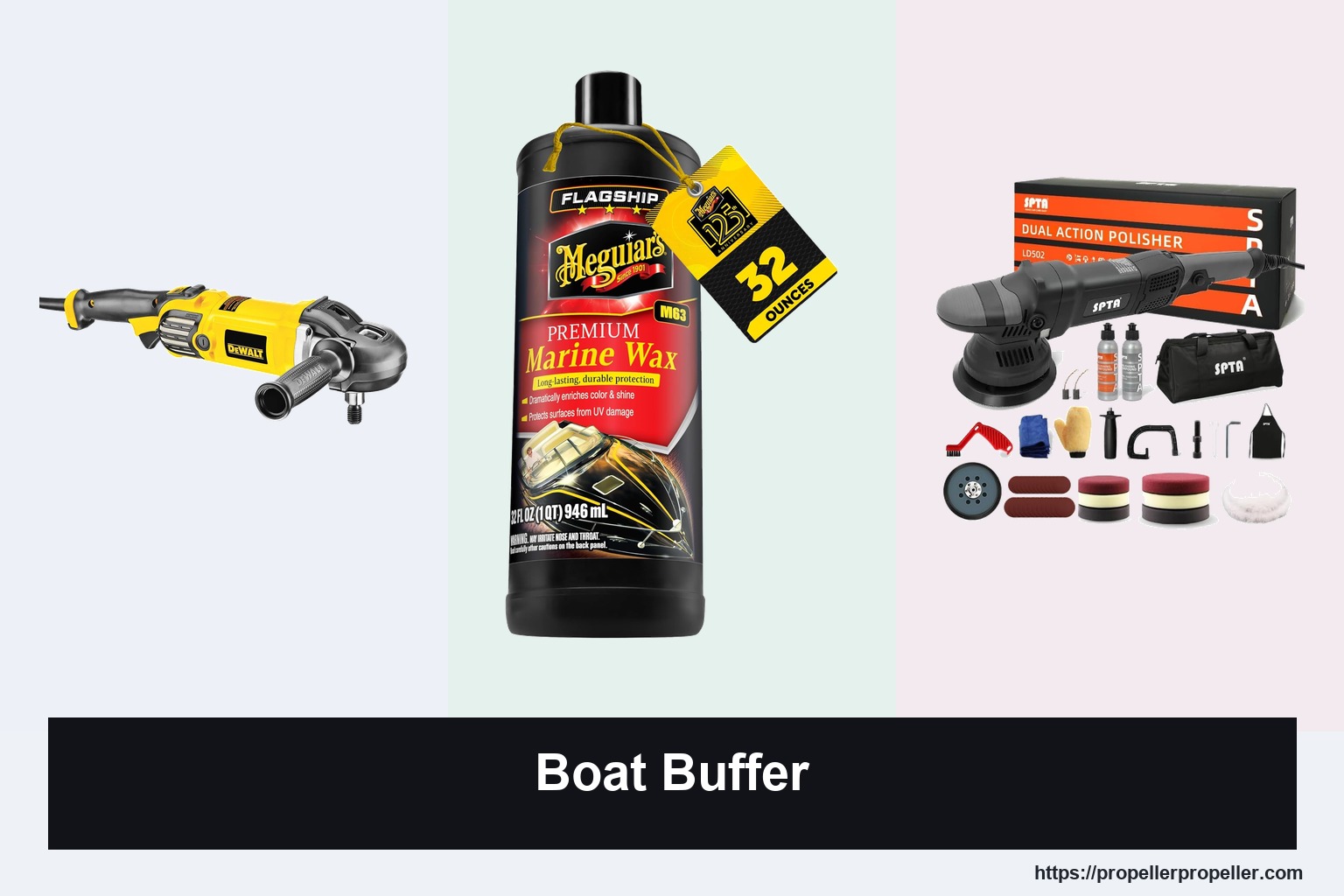
DEWALT DWP849X Buffer Polisher
- 7- to 9-inch pad range
- 12 amp corded motor
- 0 to 3,500 RPM dial
- Soft start control
- 3-year limited warranty

Meguiar’s Flagship Marine Wax
- 32-ounce gel formula
- For fiberglass and gel coat
- Hand or polisher application
- UV protection focus
- Light oxidation removal

SPTA 5-Inch Dual Action Polisher
- 5-inch dual-action design
- 6 speed settings
- 2,000 to 5,200/min
- Includes pad and accessory kit
- Side and D handles

Meguiar’s Marine/RV One-Step Compound
- 32-ounce compound
- For fiberglass and gel coat
- Removes moderate oxidation
- Works by hand or machine
- Marine and RV use

PORTER-CABLE 7424XP Polisher
- 6-inch random orbit
- 4.5 amp motor
- 2,500 to 6,800 OPM
- Swirl-free action
- Side handle included

Better Boat Erasers Cleaning Sponges
- Three-pack cleaning sponges
- No chemicals needed
- For scuffs and grime
- Reinforced core design
- Safe on many surfaces
This article may contain affiliate links. As an Amazon Associate, the website may earn from qualifying purchases at no additional cost to you.
Boat Buffer Reviews
DEWALT DWP849X Buffer Polisher
- Power Source
- Corded Electric
- Amperage
- 12 A
- Speed
- 3500 rpm
- Item Weight
- 6.7 pounds
- Manufacturer Warranty Description
- 3 yr warranty on material and workmanship
Advantages
- High-output 12 amp motor
- Large 7- to 9-inch pad support
- Soft start reduces abrupt engagement
- Safety lock after power loss
- Three handles included
Limitations
- Heavier than random-orbit options
- More machine than simple wax jobs
The DWP849X is the most forceful option here for buyers who want a serious rotary-style machine rather than a light polishing aid. Its 12 amp motor and 0-3,500 RPM speed range give it the headroom needed for larger pads and more demanding marine correction work. That matters when you are dealing with oxidized gel coat or trying to keep a long session moving on broad surfaces. The 7-inch to 9-inch pad range also points toward large-area coverage, so this is the tool in the group for faster material movement rather than gentle finishing alone.
The control layout is where this machine separates itself from simpler polishers. A variable speed trigger, a large speed dial, and soft start all help prevent abrupt engagement when the pad touches the surface. That is valuable on boat finishes, where sudden grab can leave marks or create extra cleanup. The no volt release switch adds a safety layer after power interruptions, and the large spindle lock makes pad changes less annoying during a long detail. At 6.7 pounds, it is still substantial, so the comfort features are doing real work rather than serving as marketing filler.
Compared with the other polishing machines in this group, the DEWALT leans hardest into power and durability. It is the better choice than the lighter random-orbit unit when the job calls for more force and larger pads, but it asks for more attention from the user. That tradeoff is exactly why it stands out for experienced owners, pro-minded detailers, or anyone maintaining a larger boat with regular correction work. If the goal is a serious buffer that can handle demanding sessions without feeling underbuilt, this is the strongest all-around machine here.
PHOTO: DEWALT DWP849X Buffer Polisher – Buffer Polisher → Source: Amazon.com
Meguiar’s Flagship Marine Wax
- Item Form
- Gel
- Recommended Uses For Product
- Wax protection on fiberglass & gel coat
- Specific Uses For Product
- Gloss,Polish,Shine
- Item Weight
- 2 pounds
Advantages
- Protective wax for gel coat
- Hand or machine application
- Adds gloss and color depth
- Targets light oxidation and swirls
- Large 32-ounce container
Limitations
- Not a heavy correction product
- Requires surface prep for best results
This wax belongs in the routine for owners who want protection and gloss after the heavy correction work is done. The 32 fluid ounces of gel-form wax is built for fiberglass and gel coat, which keeps the product focused on the surfaces most common on boats. It is meant to enrich color and shine while leaving a long-lasting protective layer, so the benefit is not just cosmetic. It is the kind of product that helps a boat look maintained instead of simply cleaned.
The application flexibility is one of its main strengths. It can be used by hand or with a dual-action polisher, so you do not need a dedicated machine to get it on the boat. That matters for owners who only wax occasionally or who want a simpler maintenance product than a correction compound. It is also described as removing swirl marks, fine scratches, light oxidation, and dullness. That puts it in the maintenance-and-refresh category rather than the heavy-restoration category, which is exactly where many boats spend most of their life.
Against the stronger correction compounds in this roundup, the tradeoff is clear. It will not replace a cutting product when a surface has deeper defects, but it is the more practical choice when the finish already looks decent and needs protection. Compared with the buffers, it is slower only if you expect a tool to do the work for you. For routine marine care, though, that simplicity is a plus. This is the best recommendation for boat owners who want a protective wax with real use flexibility and a lower barrier to application.
PHOTO: Meguiar’s Flagship Marine Wax – Marine Wax Bottle → Source: Amazon.com
SPTA 5-Inch Dual Action Polisher
Advantages
- Full detailing kit included
- Dual-action motion for safer polishing
- Six speed settings
- Stable speed control
- Two grip options
Limitations
- Accessory-heavy setup to store
- Less proven than top legacy brands
This is the most kit-oriented machine in the lineup, and that makes it attractive for someone who wants a workable detailing setup without sourcing each accessory separately. The 5-inch dual-action format is sized for more controlled polishing than a big rotary buffer, which is useful when you are trying to correct paint or freshen up a boat finish with less risk of aggressive removal. The included pads, compounds, backing plate, handles, and carrying bag turn it into an immediate-use package rather than a bare tool that still needs shopping around it.
Its operating range is broad enough for several stages of work. The six-speed control and no-load range from 2,000 to 5,200 per minute let you slow down for waxing and increase speed for more correction-oriented work. The constant power and smooth-start behavior should matter to anyone planning a longer session, because stable speed reduces the stop-and-go feel that can make polishing tiring. The detachable side handle and D-handle are also practical, since different grip styles can change how steady the machine feels around rails, curves, and tighter boat surfaces.
Compared with the DEWALT and the PORTER-CABLE, this one sits in the middle on intensity but at the top on bundled value. It does not promise the same heavy-duty build impression as the more established pro-leaning machines, yet it arrives ready to work with a much fuller accessory set. That makes it the most reasonable pick for a buyer who wants one purchase to cover polishing, waxing, and light correction without overcommitting on price. If convenience and accessory coverage matter more than pro-grade simplicity, this is the most balanced kit in the group.
PHOTO: SPTA 5-Inch Dual Action – Polisher Kit → Source: Amazon.com
Meguiar’s Marine/RV One-Step Compound
Advantages
- Removes moderate oxidation
- Works with multiple application methods
- Useful on fiberglass and gel coat
- Restores gloss and color
- Large 32-ounce bottle
Limitations
- Not a protection finish
- May still need wax after use
This compound is aimed at the owner who needs more correction than wax can deliver but does not want to split the job across multiple products. The 32 fluid ounces of compound are formulated for fiberglass and gel coat, and the product is positioned to remove moderate oxidation, scratches, stains, and water spots. That makes it the middle ground in this roundup. It is not a protection-only finish product, and it is not a heavy machine by itself. It is the chemistry you reach for when the surface needs visible recovery before protection.
The big practical advantage is application flexibility. It can be used by rotary buffer, by hand, or with a dual-action polisher, so it adapts to the equipment already in the garage. That matters because marine correction work is often a sequence rather than a single step. A compound like this can simplify the process when the hull or top surfaces need one product that cuts and refines at the same time. It also means a smaller owner can tackle targeted areas without committing to a dedicated polishing machine first.
Compared with the wax in this list, the compound is the more aggressive choice and should be used when the finish has real defects, not just dullness. Compared with the dedicated buffers, it gives less mechanical control but far more chemical correction in one bottle. That tradeoff makes it a strong recommendation for owners who want a simpler restoration step before sealing the surface. If your boat has oxidation and visible wear, this is the better starting point than wax alone.
PHOTO: Meguiar’s Marine RV One-Step – Marine Compound Bottle → Source: Amazon.com
PORTER-CABLE 7424XP Polisher
- Power Source
- Corded Electric
- Amperage
- 4.5 A
- Speed
- 3400 rpm
- Item Weight
- 5.8 pounds
- Manufacturer Warranty Description
- 3 Year Limited Warranty, 1 Year Free Service Contract, 90 Day Money Back Guarantee
Advantages
- Swirl-free random orbit
- Lightweight 5.8-pound build
- 6-inch pad compatibility
- 3-year limited warranty
- Two-position side handle
Limitations
- Less powerful than rotary polishers
- Accessory bundle is minimal
The 7424XP is the most approachable true polisher in this group for buyers who want control more than raw aggression. Its 6-inch random orbit action and 2,500-6,800 OPM speed range are built around swirl-free polishing and sanding rather than brute-force cutting. That makes it a smart match for boat owners who want to refresh a finish without jumping straight to a heavy rotary machine. The 4.5-amp motor is not the strongest here, but that is part of the appeal because it keeps the tool in a more manageable lane for careful work.
The lighter weight and compact body matter in real use. At 5.8 pounds, it is easier to carry along rails, decks, and awkward edges than the larger pro-style buffer. The two-position side handle adds another layer of control, and the proprietary counterbalance is specifically meant to work with the 6-inch pad format. That kind of balance detail is important because orbital polishers feel better when the pad is matched to the machine correctly. The ball-and-roller bearing construction and 3-year warranty also support the case for a tool intended for long-term ownership rather than one-time use.
Against the DEWALT, this is the calmer choice. It will not push quite as hard, but it is easier to manage and better suited to users who value finish quality and reduced learning curve. Against the SPTA, it is a more focused tool with less bundled convenience but a stronger reputation for being a dependable platform. For most boat owners who want a safer, steadier path into machine polishing, this is the best balance of control, size, and proven design.
PHOTO: PORTER-CABLE 7424XP Polisher – Orbital Buffer → Source: Amazon.com
Better Boat Erasers Cleaning Sponges
- Material Type
- Rubber
- Item Weight
- 9.07 g
- Recommended Uses For Product
- Cleaning boat decks, consoles, seats, fiberglass, fabric, leather, vinyl, plastic, aluminum, gelcoat, and metal surfaces
Advantages
- No-chemical cleanup
- Three sponges included
- Works on many materials
- Compact and lightweight
- Good for quick spot cleaning
Limitations
- Not for oxidation correction
- Does not add protection
Not every boat cleaning problem needs a buffer or a compound. These erasers are for the kind of fast cleanup that happens after docking, during routine washdown, or before guests arrive. The three-pack format and the reinforced-core sponge design make them a practical add-on for spot cleaning scuffs, salt, grease, and grime. Because they work with water alone, they are especially useful when you want to clean a small area without pulling out bottles, pads, or machines.
The size and surface compatibility matter more than they might first appear. At 4.5 by 3 by 1.5 inches, each sponge is small enough to control on corners, seats, consoles, and trim. The material is listed as rubber, and the product is intended for many materials, including fiberglass, vinyl, gel coat, plastic, aluminum, and leather. That breadth makes it useful in mixed-surface boat interiors where a harsher cleaner or polishing compound would be overkill. The lightweight build also means it fits easily into a dock bag or storage compartment.
Compared with the waxes and compounds in this roundup, this is the low-effort maintenance choice rather than the restoration choice. It will not correct oxidation or add a protective finish, but it can erase marks that would otherwise interrupt the look of a clean boat. That makes it the right recommendation for owners who want a quick, inexpensive, no-chemical cleanup tool alongside their main detailing products. If you need fast cosmetic cleanup more than surface correction, this is the most practical pick here.
PHOTO: Better Boat Erasers Cleaning – Boat Erasers Box → Source: Amazon.com
How to Choose a Boat Buffer
The right boat buffer depends on what you expect it to do first. Some buyers need a machine that can correct oxidation and restore gel coat. Others want a safer orbital motion for routine polishing. A third group may not need a buffer at all and will get better results from a marine wax or spot cleaner. The smartest purchase is the one that matches the surface condition, the size of the boat, and the amount of control you want while working around curves, rails, and tight deck spaces.
Cutting vs Finishing
Start by deciding whether you need correction or maintenance. A cutting-oriented tool or compound is appropriate when the surface has oxidation, scratches, or dullness that no longer responds to wax alone. A finishing product is better when the boat already looks decent and only needs protection or gloss restoration. Matching the product to the defect level keeps you from overworking the gel coat and also keeps the job faster. That is especially important on boats, where large surfaces can tempt you to use more force than necessary.
Pad Size & Reach
Pad size affects both coverage and control. Larger pads cover broad surfaces faster, which is useful on hull sides and other open areas. Smaller pads are easier to manage around rails, consoles, and hardware. If your boat has a lot of tight geometry, a more compact pad can reduce the amount of tape-off and rework you need. The best choice is usually the one that lets you finish the major surfaces efficiently without becoming awkward on the detail work that follows.
Speed Control
A wide speed range matters more than many first-time buyers expect. Lower speeds are better for waxing and controlled product spread. Higher speeds are useful when a compound needs more correction power. Variable control also helps you adapt to different materials and conditions without switching tools. If the machine jumps too aggressively, you spend more time fighting it and less time refining the finish. Smooth starts and stable speed under load are especially valuable because they reduce the risk of pad grab and uneven results.
Weight & Handling
Weight becomes important during long polishing sessions. A lighter tool is easier to maneuver overhead and around curved surfaces, but it may feel less planted on large panels. A heavier machine can feel more stable during aggressive work, though it asks more from your arms and shoulders. Handle options matter too. Side handles, dual grips, and balanced counterweights improve control when you are changing angles or moving between vertical and horizontal surfaces. The right balance is the one you can keep steady for the whole job.
Marine Surface Care
Boat surfaces often need more than one product type. A compound restores a tired finish, a wax protects and deepens gloss, and a spot cleaner handles quick scuffs before they become part of the boat’s everyday look. Buying only one of those can leave gaps in your maintenance plan. It is better to decide whether your current problem is correction, protection, or cleanup. That decision will usually point you toward the right tool or chemical, and it keeps you from overspending on capability you do not need.
Boat Buffer Comparison Table
| Product | Best For | Weight | Number of Items | Color | Global Trade Identification Number | Material Type |
|---|---|---|---|---|---|---|
| DEWALT DWP849X Buffer Polisher | Best Heavy-Duty Buffer | 6.7 pounds | 1 | Black, Yellow | 00885911229654 | Blend |
| Meguiar’s Flagship Marine Wax | Best Marine Wax | 2 pounds | 1 | Not Specified | 00070382163327 | Not Specified |
| SPTA 5-Inch Dual Action Polisher | Best Value Kit | Not Specified | Not Specified | Not Specified | Not Specified | Not Specified |
| Meguiar’s Marine/RV One-Step Compound | Best One-Step Compound | Not Specified | Not Specified | Not Specified | Not Specified | Not Specified |
| PORTER-CABLE 7424XP Polisher | Best Swirl-Free Polisher | 5.8 pounds | 1 | Gray | 00885911086394 | Blend |
| Better Boat Erasers Cleaning Sponges | Best Spot Cleaner | 9.07 g | 3 | White | Not Specified | Rubber |
How We Tested & Analyzed Boat Buffer
This roundup was built around the decisions that matter most in marine care: correction strength, finish safety, application flexibility, and the amount of control a buyer gets at the pad or sponge. Products were compared by their stated speed ranges, motor or chemical role, surface compatibility, weight where relevant, and the kind of job each one is designed to handle. That approach matters because boat care is not just about power. It is about whether a tool or formula matches the condition of the surface you are actually trying to improve.
The comparison also separates machine-based options from compounds, waxes, and spot cleaners so the article reflects real buying behavior instead of forcing every item into the same mold. A buffer that excels at restoration is not automatically the right answer for routine protection, and a wax that shines well is not a substitute for correction on heavily oxidized gel coat. By weighing those tradeoffs directly, the recommendations favor practical fit over generic feature counting.
Limitations were handled by looking for what each product did not claim to do. A finishing wax should not be treated like a correction compound. A random-orbit polisher should not be mistaken for the most aggressive restoration tool. A spot cleaner should not be expected to replace protection or polishing. That framing keeps the guidance grounded in category reality and helps readers choose based on the task in front of them, not on a single headline specification.
Frequently Asked Questions
Do I need a buffer for every boat cleaning job?
No. A buffer is useful for correction and larger-scale polishing, but many routine jobs only need wax, a compound, or a spot cleaner. If the finish is already in decent shape, a simpler product can save time and reduce the chance of overworking the surface.
What is the difference between a rotary and a random-orbit polisher?
A rotary-style machine generally delivers more direct cutting power and can cover more demanding correction work. A random-orbit polisher is typically easier to control and is often chosen when swirl reduction and safer finishing matter more than aggressive material removal.
When should I use compound instead of wax?
Use compound when the surface has oxidation, scratches, staining, or dullness that wax will not hide or fix. Use wax after correction, or when the finish mainly needs protection and a deeper gloss. Compound corrects. Wax preserves and enhances.
What should I look for in a boat care starter kit?
Look for a combination that covers correction, protection, and quick cleanup. A controlled polisher or buffer helps with larger surfaces, a marine wax maintains the finish, and a spot cleaner handles marks and grime between deeper detailing sessions.
Final Thoughts
The best boat buffer is the one that matches the job in front of you. If you are restoring tired gel coat, a stronger machine or compound matters most. If you are maintaining a healthy finish, control and ease of use become more important than raw power. If you only need to clear scuffs and routine grime, a spot cleaner may be the smartest purchase of all. Marine detailing gets easier when each product has a defined role instead of forcing one tool to do everything.
Buy with the surface condition and your own comfort level in mind. Bigger, more aggressive tools are efficient when you know how to use them, but they demand more attention and more space to work. Gentler polishers, waxes, and cleaners reduce risk and still produce excellent results when paired correctly. That is the real decision in this category: not which item is strongest on paper, but which one will help you keep the boat looking right with the least frustration over time.