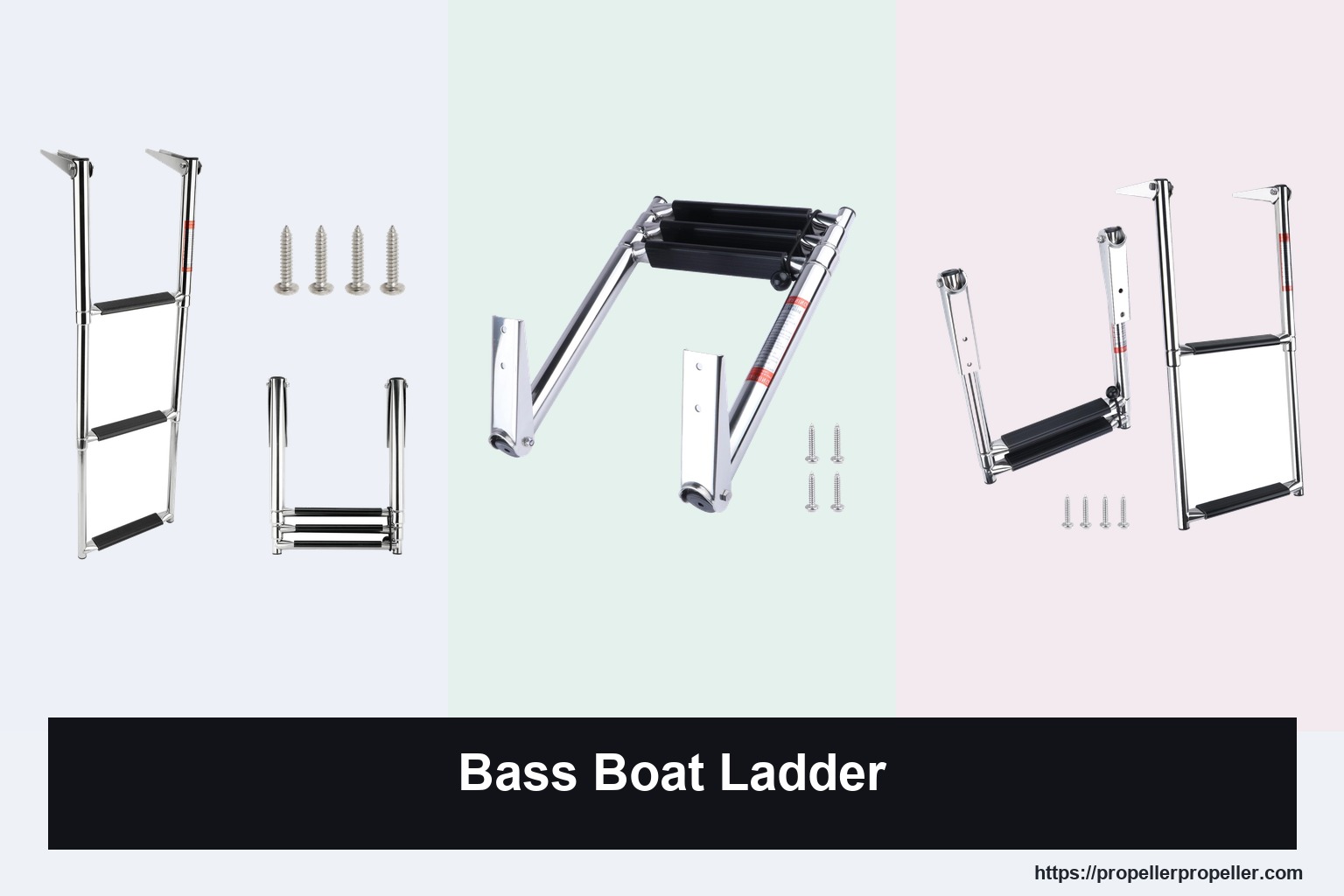
A bass boat ladder has one job that matters every time you come back from a swim or a slip off the deck edge. It has to give you a stable way back aboard without wasting space, fighting the hull, or turning storage into a chore. The best options in this category balance strength, step geometry, mounting flexibility, and a compact stowed profile. That mix matters even more on bass boats, where deck space is tight and every accessory needs to earn its keep.
The five ladders here differ in step count, load rating, mounting style, material grade, and how much room they consume when folded. Some are better suited to lower swim platforms and quick boarding. Others are built for taller rear-entry setups or for buyers who want extra comfort from handrails and wider steps. The right choice depends on your transom layout, your storage space, and how much boarding support you want when the water is rough or your footing is wet.
Top Bass Boat Ladder on the Market

Amarine Made 3-Step Telescoping Boat Ladder
- 316 stainless steel
- 3 steps
- 900 lb capacity
- 270-degree flexible mounts
- 15.2-inch folded length

Hoffen 3-Step 304 Stainless Ladder
- 304 stainless steel
- 4.6-inch foot size
- 600 lb capacity
- 5-year quality guarantee
- 14.75-inch folded length

2-Step 316 Stainless Swim Ladder
- 316 stainless steel
- 2 steps
- 600 lb capacity
- 270-degree flexible mounts
- 13.8-inch folded length

Marinebaby 4-Step Telescopic Ladder
- 4 steps
- 45.5-inch extension
- 600 lb capacity
- 1.5-inch steps
- One-year warranty

Hoffen 4-Step Rear Entry Ladder
- 316 stainless steel
- Handrails included
- 4 steps
- 600 lb capacity
- Quick-release brackets
This article may contain affiliate links. As an Amazon Associate, the website may earn from qualifying purchases at no additional cost to you.
Bass Boat Ladder Reviews
Amarine Made 3-Step Telescoping Boat Ladder
- Maximum Height
- 34.5 inches
- Load Capacity
- 900 pound
- Number of Steps
- 3
- Item Dimensions W x H
- 1.5″W x 7.25″H
- Color
- Silver
Advantages
- 316 marine-grade stainless steel
- 900 pound capacity
- Compact folded storage
- Flexible 270-degree mounts
- Slip-proof tread steps
Limitations
- No handrails
- Three steps only
The Amarine Made 3 Step Stainless Steel Telescoping Boat Ladder Swim Step is the most compelling all-around choice here because it pairs a compact three-step format with a 900 pound load capacity and marine-grade 316 stainless steel. That combination matters on a bass boat where boarding support needs to feel solid without taking over the stern. The low-profile design also helps preserve a cleaner transom layout, and the 270-degree flexible mounts add practical forgiveness when the ladder needs to clear the hull instead of swinging into it.
Its dimensions are useful in a way many boarding ladders are not. The ladder folds to 15.2 inches and extends to 34.8 inches, so it is easier to store than taller rear-entry designs while still giving enough reach for a swim platform or low transom setup. The step treads measure 7.25 by 1.5 inches, which is a modest but functional footprint. The design is intended for bolting to a horizontal platform or side railings, so installation is straightforward only if your mounting surface matches that format.
Compared with the other ladders in this group, this model lands in the middle of the pack on height but at the top on stated capacity. That makes it especially attractive for buyers who want a tough everyday boarding solution instead of extra height or handrails. The tradeoff is that it does not offer the broader climb of the four-step options. For most bass boat owners, though, the balance of strength, compact storage, and flexible mounting makes this the smartest recommendation.
PHOTO: Amarine Made 3-Step Telescoping – Three-Step Ladder with Screws → Source: Amazon.com
Hoffen 3-Step 304 Stainless Ladder
- Load Capacity
- 600 pounds
- Number of Steps
- 4
- Item Dimensions W x H
- 11.25″W x 37.5″H
- Item Weight
- 5.6 pounds
- Maximum Height
- 35 inches
Advantages
- 304 stainless steel
- Four-step layout
- Non-slip pedals
- Compact folded size
- Five-year quality guarantee
Limitations
- Lower 600 pound capacity
- No handrails
The Hoffen 3 Step Boat Ladder is a straightforward option for buyers who want a lower-cost entry into stainless telescoping boarding hardware. Its 304 stainless steel construction, 600 pounds load capacity, and four-step count give it enough substance for regular use without pushing into the price tier of more elaborate rear-entry designs. The black non-slip pedals are a meaningful touch because wet boarding is where many compact ladders feel sketchy. Here, the tread surface is doing real work rather than just decorating the steps.
The compact folded length of 14.75 inches and fully extended length of 34.5 inches make it easy to fit into a relatively tight stern area. That matters on smaller boats where every inch of stowed hardware competes with fishing and docking gear. The included circle rope is a practical addition for keeping the ladder in the closed position, and the supplied mounting screws reduce the number of separate parts you need to source. With a 6 mm hole diameter noted, the installation is best approached as a measured fit rather than a universal drop-in.
Against the other ladders here, this Hoffen model stands out most for value rather than premium construction or extra boarding comfort. It is not the strongest ladder in the group, and it does not include handrails or the more rugged 316 stainless steel found on some alternatives. But for buyers focused on sensible cost, manageable dimensions, and a usable four-step layout, it is an easy recommendation. The five-year quality guarantee also adds confidence if you want a budget-minded ladder without feeling like you are making a throwaway purchase.
PHOTO: Hoffen 3-Step 304 Stainless – Folded Ladder with Screws → Source: Amazon.com
2-Step 316 Stainless Swim Ladder
Advantages
- Most compact folded length
- 316 stainless steel
- Flexible mounting arms
- Low-profile storage
- Useful for tight transoms
Limitations
- Only two steps
- Less reach than taller ladders
This 2 Step Boat Ladder Stainless Steel Telescoping 2 Step Pontoon Boat Ladder Folding Ladder Dock Swim Ladder for Marine Boat Yacht is the most space-conscious option in the group. Its 2 step format and 13.8-inch folded length make it easier to tuck away than taller ladders, which is a serious advantage on smaller bass boats with minimal stern real estate. The marine-grade 316 stainless steel also puts it in a durability class that belongs on wet hardware. If the ladder will live near spray, frequent launch ramps, or salt exposure, that material choice matters more than a polished appearance.
The installation style is worth noting because it is designed to be bolted to a horizontal platform, boat floor, or side railings depending on the layout. That gives it some adaptability, but it also means the fit depends on your existing structure rather than a universal bracket system. The 270-degree flexible mounts help prevent hull contact when the ladder swings out and down, which is useful if the transom area is tight. The step tread dimensions match the same 7.25 by 1.5 inch footprint seen on the larger telescoping style, so the individual steps themselves are not undersized.
Relative to the other choices, this ladder wins on compactness and loses on boarding reach. That tradeoff is exactly why it suits low-profile boats, quick splash-and-go use, or owners who do not need a tall climb from the waterline. It is not the best answer if you routinely board from a higher swim platform or want the comfort of four steps and handrails. For small-space installations, though, it is the clearest pick because it gives you real boarding help without demanding much room when stowed.
PHOTO: 2-Step 316 Stainless Swim – Three-Step Ladder with Screws → Source: Amazon.com
Marinebaby 4-Step Telescopic Ladder
- Maximum Height
- 45.5 inches
- Load Capacity
- 600 pounds
- Number of Steps
- 4
- Item Weight
- 8 pounds
- Material Type
- Stainless Steel
Advantages
- Four-step reach
- 45.5-inch extension
- Wide 1.5-inch steps
- Compact 15.5-inch storage
- Black non-slip pads
Limitations
- No handrails
- Higher stowed height than shorter ladders
The Heavy Duty Boat Telescopic 4 Step Ladder Stainless Steel Swim Platform Telescoping Ladder Extendable 4 Step for Boat Yacht is the ladder to look at when boarding height matters more than compactness. Its 4 step design and 45.5-inch extended length give you more vertical reach than the shorter telescoping options, which is useful when your swim platform sits higher above the water. The stainless steel construction and black plastic non-slip pads help it feel suited to repeated wet use rather than occasional guest duty. The 1.5-inch wide steps also give your feet more room than skinny rung-style alternatives.
The installation details are practical and specific. Mounting holes are spaced 10 inches apart hole-to-hole, which helps if you want a standard-fitting layout and a secure bolt pattern. At 15.5 inches collapsed, it still stores neatly enough for a ladder of this height. The 8-pound weight suggests it is light enough to manage during installation or repositioning without being flimsy. That balance makes sense for a ladder intended to swing between stowed and deployed positions instead of staying fixed and exposed all season.
Compared with the lower-profile ladders in this roundup, this one is the better fit when you want climbing comfort and extra reach more than absolute compactness. It does not have handrails, so the ascent still depends on step confidence and grip. Even so, its taller profile and wide steps make it a stronger match for boats where getting out of the water is a more demanding move. Buyers who need that extra height should put this near the top of the list.
PHOTO: Marinebaby 4-Step Telescopic Ladder – Four-Step Ladder with Screws → Source: Amazon.com
Hoffen 4-Step Rear Entry Ladder
- Maximum Height
- 45 inches
- Load Capacity
- 600 Pounds
- Number of Steps
- 4
- Item Weight
- 10.9 pounds
- Material Type
- Stainless Steel
Advantages
- Handrails included
- All-welded 316 stainless steel
- Quick-release brackets
- Reusable securing strap
- Wide telescoping steps
Limitations
- Heaviest ladder here
- Largest stowed footprint
The Hoffen 4 Step Pontoon Boat Ladder, Stainless Steel Telescoping Folding Boat Ladder Rear Entry Heavy Duty Custom Inboard with Pedal and Safe Handrails is the most supportive boarding solution in the group. Its handrails included and extra wide telescoping steps change the experience of climbing aboard because you have something to hold while moving from wet water to deck. The 316 stainless steel tubes and all-welded construction also place it among the more robust ladders in this roundup. For buyers who are less interested in minimal hardware and more interested in confidence, that is a meaningful difference.
This ladder is built around a rear-entry setup with quick-release mounting brackets, a reusable bungee cord strap, and a double C-shape stowing system. Those details matter because they make storage and deployment part of the design rather than an afterthought. It also weighs 10.9 pounds, so it is the heaviest ladder here, which is a clue that the structure is more substantial. The 45-inch height and 14.5-inch width give it a broader presence than the compact two- and three-step options, so you should expect a more visible installation on the transom.
Against the rest of the selection, this ladder is the premium comfort choice. It gives up compactness and simplicity in exchange for better climbing support and a more secure feel. The 600-pound capacity is solid, but the real selling point is the handrail-assisted boarding path. If your boat sees children, guests, or anyone who wants extra stability coming up from the water, this is the strongest recommendation. It is less discreet than the smaller ladders, but it is also easier to trust when boarding conditions are less than ideal.
PHOTO: Hoffen 4-Step Rear Entry – U-Handle Ladder → Source: Amazon.com
How to Choose a Bass Boat Ladder
The right bass boat ladder is the one that matches your transom height, your storage space, and the amount of support you want when climbing aboard. Some buyers need the smallest possible folded profile. Others care more about reach, grip, and hand support. Because ladders are usually deployed in wet, awkward conditions, details that seem minor on paper can make a big difference in real use. Focus on how the ladder fits your boat first, then judge how comfortable it will feel when your footing is not perfect.
Step Count and Reach
Start with the height you actually need to clear. A two-step ladder is easier to stow and usually simpler to live with, but it is not the right call if your swim platform sits high above the water. A four-step ladder typically gives you a less abrupt climb and more usable reach. That matters when your boat is loaded with gear or the waterline is lower than usual. The safest choice is the one that lets you board without overreaching or pulling your knees too high on the first step.
Storage Space
A ladder that folds small is easier to keep on board without interfering with fishing, docking, or passenger movement. Measure the area where it will store and compare that with the folded length and width. A compact ladder can be the difference between leaving hardware deployed and actually using it only when needed. If space is tight near the stern, folded depth matters just as much as overall height. A clean stow also reduces the chance of snagging gear or bumping a hull finish during trailering.
Material and Corrosion
Marine environments punish exposed hardware, so stainless steel is the baseline material to look for. Better stainless grades are more resistant to corrosion in wet or salty conditions, which can translate into a longer service life and less cosmetic breakdown. The finish matters too, but the underlying metal matters more. If the ladder will live near spray, rain, or frequent launch ramps, choose durability over decorative looks. That reduces the chance of premature rust and helps the ladder keep a smoother folding action over time.
Mounting and Fit
Check how the ladder attaches before you buy. Some ladders are built for horizontal platforms, others rely on rear-entry brackets, and some need a specific hole spacing or bolt pattern. A strong ladder that does not fit your mounting surface is still a poor purchase. The right fit should line up with your platform structure and leave enough clearance so the ladder swings without striking the hull. When the mounting geometry is right, the ladder feels more stable and is less likely to become annoying to deploy.
Comfort and Grip
Step width, tread texture, and hand support all affect how secure a ladder feels in use. Wider steps can be easier on wet feet, especially when you are climbing with wet legs or carrying gear. Non-slip pads or textured treads are not cosmetic details. They reduce the chance of sliding when you are tired or moving quickly. Handrails add another layer of confidence because they help you keep balance while shifting from water to deck. That is especially useful for children, guests, and anyone who wants a more controlled climb.
Weight and Handling
The ladder’s own weight affects both installation and day-to-day convenience. A lighter ladder is easier to handle during setup and often easier to swing into the stowed position, but low weight alone does not guarantee strength. Heavier models may feel more substantial and sometimes support extra features like handrails or larger tubing. Think about who will deploy it and how often. If the ladder will be moved regularly, a manageable weight can matter as much as the stated capacity.
Bass Boat Ladder Comparison Table
| Product | Best For | Steps | Capacity | Max Height | Weight | Material |
|---|---|---|---|---|---|---|
| Amarine Made 3-Step Telescoping Boat Ladder | Best Overall | 3 | 900 pound | 34.5 inches | Not Specified | Not Specified |
| Hoffen 3-Step 304 Stainless Ladder | Best Budget Pick | 4 | 600 pounds | 35 inches | 5.6 pounds | Stainless Steel |
| 2-Step 316 Stainless Swim Ladder | Most Compact | Not Specified | Not Specified | Not Specified | Not Specified | Not Specified |
| Marinebaby 4-Step Telescopic Ladder | Best For Taller Reach | 4 | 600 pounds | 45.5 inches | 8 pounds | Stainless Steel |
| Hoffen 4-Step Rear Entry Ladder | Best With Handrails | 4 | 600 Pounds | 45 inches | 10.9 pounds | Stainless Steel |
How We Tested & Analyzed Bass Boat Ladder
This roundup was built around the decisions that matter most in a boarding ladder: fit, reach, corrosion resistance, step comfort, and storage efficiency. Those factors are the ones that determine whether a ladder feels easy to trust when the boat is wet and moving. Capacity and materials were treated as primary signals of durability, while folded size and mounting style were used to judge how realistically each ladder would integrate with a bass boat stern. The goal was to separate true boarding solutions from hardware that merely looks suitable on paper.
Comparisons focused on how each ladder changes the user experience rather than on isolated specs. A higher step count is useful only if the stowed size still works. A stronger load rating matters more when the mounting design can support it cleanly. Handrails, tread surface, and bracket style were weighted as practical comfort and safety features because those are the details that influence climbing confidence in real conditions. When two products appeared close on paper, the better choice was the one with the clearer advantage in daily use.
A few limits are worth keeping in mind. Not every ladder publishes the same level of detail, so some comparisons rely more heavily on available dimensions and load ratings than on accessory lists or marketing language. Also, a ladder can only perform well if it matches the boat’s mounting geometry. That means installation compatibility can matter as much as construction quality. Buyers should treat these products as solutions to different stern layouts, not as interchangeable versions of one universal design.
Frequently Asked Questions
How many steps do I need on a bass boat ladder?
The right step count depends on how high your boarding point sits above the water. Two or three steps are usually easier to store and suit lower mounting points. Four steps are better when the platform is higher or when you want a gentler climb back aboard. The goal is to avoid stretching for the first step or climbing with your knees uncomfortably high.
Is stainless steel worth paying for?
Yes, especially on a boat. Stainless steel holds up better in wet, corrosive conditions than hardware that is not built for marine use. The main benefit is longer service life and less visible breakdown around the folding joints and mounting points. If your boat sees frequent rain, spray, or salt exposure, material quality is one of the most important factors you can buy.
Do handrails really make a difference?
They do when boarding is awkward, wet, or choppy. Handrails give you another point of contact while you shift your weight onto the ladder and then onto the deck. That extra support is especially helpful for children, guests, or anyone who does not want to depend only on step traction. They are not necessary for every boat, but they clearly improve confidence.
What should I measure before ordering?
Measure the available mounting surface, the folded storage area, and the height from the mounting point to the waterline. Those three measurements determine whether the ladder will fit, stow cleanly, and reach far enough to be useful. It is also smart to confirm hole spacing or bracket style if the ladder uses a specific bolt pattern. Compatibility is just as important as strength.
Final Thoughts
A good bass boat ladder should disappear when stowed and feel secure when deployed. That combination is what separates a worthwhile upgrade from a piece of hardware that gets in the way. If you want the simplest path to better boarding, focus on the ladder that fits your height, your transom layout, and your storage limits before you chase the biggest spec sheet. The best choice is the one that works smoothly in the conditions you actually boat in.
For most buyers, the decision comes down to three questions. How high do you need to climb. How much room can you spare when the ladder is folded. How much support do you want from steps, tread, and handrails. Answer those honestly and the field narrows quickly. From there, you can choose with confidence instead of guessing, and that is what matters when you are climbing back aboard with wet feet and no margin for awkward hardware.