Keeping a boat’s oil change routine clean matters more than most owners expect. Access can be awkward, splash risks are real, and a poor transfer setup can turn a routine service into a mess that wastes time and creates cleanup work. A good pump or extractor changes the whole job by controlling suction, limiting spills, and making fluid handling more predictable whether you are working at the dock, in the driveway, or inside a tight engine bay.
The best options for boat oil changes are not all built the same. Some rely on manual vacuum extraction through a dipstick tube. Others use 12V powered transfer for marine systems and winterizing tasks. The right choice depends on how you service the boat, what fluids you move, how much speed you need, and whether portability or powered performance matters more. The four picks below cover those different needs with a focus on practical use, not marketing claims.
Top Boat Oil Change Pump on the Market

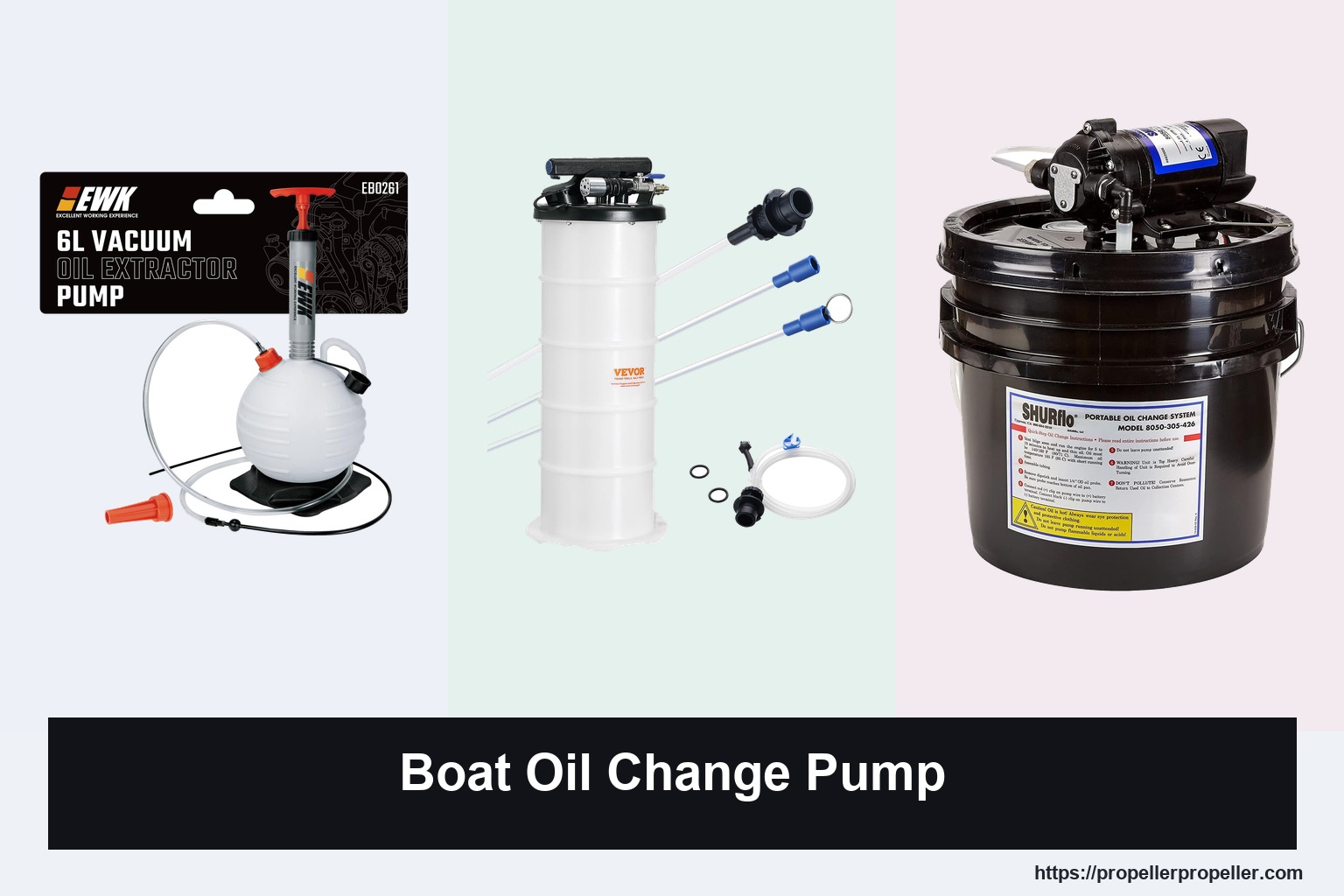
EWK 6L Manual Fluid Transfer Pump
- 6L extraction capacity
- Manual pump operation
- 59-inch clear hose
- 42-inch metal probe

VEVOR 6.5L Pneumatic/Manual Extractor
- Dual manual and pneumatic modes
- 6.5L tank capacity
- Four tube sizes
- Multi-fluid use

PENTAIR SHURFLO 12V Oil System

Wzyblixo 6.5L Dual-Use Extractor
- Pneumatic or manual use
- 6.5L capacity
- Extra-long suction pipes
- Brake bleeding hose
This article may contain affiliate links. As an Amazon Associate, the website may earn from qualifying purchases at no additional cost to you.
Boat Oil Change Pump Reviews
EWK 6L Manual Fluid Transfer Pump
- Item Weight
- 3.7 pounds
- Product Dimensions
- 9.5 x 9.5 x 14.6 inches
- Model
- 6L Manual Oil Extractor
Advantages
- Power-free operation
- Clear hose visibility
- Deep-reach probe
- Stable step-on base
- Compact portable form
Limitations
- Manual pumping takes effort
- Not for gasoline
For owners who want a straightforward, power-free way to handle routine fluid changes, this EWK extractor is built around control. The 6L capacity is enough for a typical maintenance session without forcing constant emptying, and the long clear hose lets you monitor what is coming out as you work. That visibility matters when you want to confirm fluid color or catch signs that the change is complete. The flexible metal probe is the other practical advantage because it helps the tool reach deeper pickup points instead of stopping short in the pan.
The operating style is simple, but the details matter. Because it works without electricity or compressed air, it stays usable in a garage, driveway, or on the road where powered gear is inconvenient. The step-on base adds stability during pumping, which reduces movement while suction is building. The sealing cap helps control transport after use, and the angled spout makes pouring less awkward. The only real constraint is that it is a manual system, so speed depends on the user rather than a motor.
Compared with the powered and higher-capacity alternatives here, this is the most portable and least demanding setup. It is the better match when you value low complexity and do not want to depend on a battery connection or air supply. It is also the most compact option in the group, which helps in a crowded garage. Buyers who service a single boat or a small mix of equipment will likely appreciate that balance, and it is the clearest recommendation if you want a clean manual extractor rather than a more complex transfer system.
PHOTO: EWK 6L Manual Fluid – 6L Vacuum Oil Extractor Pump → Source: Amazon.com
VEVOR 6.5L Pneumatic/Manual Extractor
Advantages
- Dual operation modes
- Larger 6.5L tank
- Multiple extension tubes
- Broad fluid compatibility
- Good price positioning
Limitations
- More setup parts
- No specific fit data
This VEVOR extractor is aimed at buyers who want more flexibility than a basic hand pump can offer. The 6.5L tank gives it slightly more holding room than the 6L manual options, which is useful when you want to extract and empty less often. Its standout feature is the dual-mode design. You can run it manually when portability matters, or use pneumatic power when speed becomes the priority. That makes it a practical fit for a garage that handles different jobs and different work conditions.
The tube assortment is the strongest clue to how the tool is meant to be used. With multiple tube sizes and long extension lengths, the pump is built to reach deeper points and adapt to different fluid paths. That flexibility can save time when a pickup point is awkward or the fluid source sits farther back in the system. The tradeoff is that the setup is more involved than a simple manual extractor, so it rewards a user who is comfortable assembling the right hose combination before starting.
Against the more specialized marine pump in this roundup, this one is broader in day-to-day usefulness but less purpose-built for powered transfer. It is the better pick if you want one tool that can handle several fluids and adapt between air and hand operation. It also lands in a useful middle ground on price. For buyers who service boats plus other equipment and want a versatile extractor without moving all the way to a dedicated 12V transfer system, this is the most balanced option.
PHOTO: VEVOR 6 5L Pneumatic – Manual and Pneumatic Pump → Source: Amazon.com
PENTAIR SHURFLO 12V Oil System
- Size
- 16″ H x 12-1/2″ D
- Item Weight
- 3 pounds
- Liquid Volume
- 11.4 liters
- Compatible with Vehicle Type
- Marine, RV
- Automotive Fit Type
- Universal Fit
Advantages
- 12V powered operation
- Self-priming pump
- Continuous-duty motor
- Thermal overload protection
- Marine and RV focus
Limitations
- Higher purchase price
- Less portable than manual units
This SHURFLO system is the most specialized choice in the group for marine and RV service. The 1.55 GPM flow and self-priming design point to faster transfer than a hand-operated extractor, which matters when you are dealing with larger service tasks or repeated seasonal maintenance. The 12V DC motor is a major advantage on a boat because it supports powered operation without needing household electricity. That makes the system more suitable for dockside or onboard use than a manual vacuum unit.
The continuous-duty motor with thermal overload protection adds confidence for longer sessions. The ability to run dry without damage is also valuable in real-world use because setup errors are less likely to become expensive failures. With 8-foot leads and alligator clips, the system is built for direct battery connection, so installation is straightforward if you already have access to a 12V source. Its container-based setup also helps keep fluid collection organized, though it is less compact than handheld extractors and is not meant to be the lightest option here.
Compared with the manual pumps in this roundup, this is the clear performance pick for marine owners who want powered transfer and more serious service capability. It costs far more, but that price buys a dedicated system rather than a general-purpose extractor. Buyers who do seasonal boat maintenance, winterizing, and fluid transfers on 12V systems should look here first. If your priority is boat-centric convenience and cleaner high-volume service, this is the strongest recommendation.
PHOTO: PENTAIR SHURFLO 12V Oil – Portable Oil Change System → Source: Amazon.com
Wzyblixo 6.5L Dual-Use Extractor
- Item Weight
- 6.93 pounds
- Package Dimensions
- 22.1 x 9.8 x 6.9 inches
- Model
- 6.5LHU
Advantages
- Dual manual and pneumatic use
- 6.5L fluid capacity
- Long suction hoses
- Brake bleeding hose included
- Moderate price
Limitations
- Heavier than basic extractors
- Less refined technical detail
Wzyblixo targets buyers who want dual-operation flexibility without moving into a premium powered system. The 6.5L capacity gives it room to handle a full extraction session, and the long suction hardware is meant to reach deeper fluid points so the pump can pull more completely. That is useful when the main concern is getting old oil out cleanly rather than just moving liquid quickly. The added brake bleeding hose also broadens what the kit can do beyond oil service.
Operation is centered on adaptability. It can work with pneumatic input when air is available, but it still functions manually when you are away from a compressor. That makes it practical for mixed-use garages and mobile work. The sturdy construction and leak-focused design are reassuring for fluid handling, although the listing does not give enough technical detail to suggest the same level of refinement as the more established marine system. It is also heavier than the simplest manual extractor, so portability is decent rather than exceptional.
Against the other options here, this model wins mainly on versatility at a moderate price. It is not as quick as the powered SHURFLO system, and it lacks the brand clarity and compact simplicity of the EWK manual pump. Even so, it is a sensible pick for buyers who want one extractor that can do multiple jobs without a large investment. If you want a dual-use tool with extra hose reach and are comfortable trading some polish for value, this is the one to consider.
PHOTO: Wzyblixo 6 5L Dual-Use – Fluid Extractor Kit → Source: Amazon.com
How to Choose a Boat Oil Change Pump
A boat oil change pump should do more than move fluid. It should match the way you service the boat, the access you have, and the amount of cleanup you are willing to tolerate. The wrong setup can leave you fighting slow suction, awkward hose routing, or a transfer method that does not suit your maintenance routine. Start by thinking about whether you need a simple extractor for occasional oil changes or a powered system for broader marine servicing.
Manual or Powered Use
Your first decision is whether you want a manual extractor or a powered transfer system. Manual pumps are simpler and usually easier to move around. They are a strong fit when you want basic oil changes without extra accessories. Powered systems matter more when speed, repeat use, or seasonal maintenance tasks become part of the job. If you work on a boat where electrical access is easy, a 12V system can save time and reduce physical effort.
Capacity and Emptying
Tank size affects how often you have to stop and dump collected fluid. A larger reservoir is more convenient when you are handling higher volumes or want fewer interruptions during a service. Smaller extractors can still work well for routine jobs, but you may need to empty them more often. Think about the largest service you expect to perform, not just the average one, because a pump that is too small can become tiring on the one job where you need it most.
Hose Reach and Access
Hose length and probe design matter because boat engine spaces are often cramped. A longer hose can keep the container in a stable spot while the pickup reaches the fluid source. That reduces tipping and makes the job easier to manage. A narrow or flexible probe can also help when the access path is not straight. If the suction line cannot reach cleanly, even a good pump will feel inefficient, so this is one of the most practical details to check before buying.
Fluid Compatibility
Not every pump is meant for the same fluids. Some are best for engine oil, while others can also handle transmission fluid, gear oil, antifreeze, or brake fluid. That difference matters if you plan to use the tool for winterizing or for maintenance beyond an oil change. Read compatibility carefully and avoid assuming a pump can safely handle gasoline or high-temperature fluids unless that use is clearly supported. Matching the pump to the fluid protects both the tool and your maintenance results.
Portability and Setup
If you move the pump between a garage, a dock, and a storage area, weight and form factor matter more than they first appear. A compact manual extractor is easier to carry and store. A powered system may be more capable, but it also needs battery connection, more space, or additional setup time. The best choice is the one you will actually use regularly. A smaller system that is easy to bring out often ends up more valuable than a larger unit that stays on a shelf.
Boat Oil Pump Comparison Table
| Product | Best For | Power | Model |
|---|---|---|---|
| EWK 6L Manual Fluid Transfer Pump | Best Manual Extractor | 3.7 pounds | 6L Manual Oil Extractor |
| VEVOR 6.5L Pneumatic/Manual Extractor | Best Dual-Mode Value | Not Specified | Not Specified |
| PENTAIR SHURFLO 12V Oil System | Best Marine Transfer System | 3 pounds | Not Specified |
| Wzyblixo 6.5L Dual-Use Extractor | Best Budget Dual-Use | 6.93 pounds | 6.5LHU |
How We Tested & Analyzed Boat Oil Change Pump
This roundup focuses on the maintenance problems that matter most in boat oil service: access, suction control, fluid handling, and setup burden. Each product was judged by the strength of its verified operating method, its ability to move fluid cleanly, and the practical consequences of its capacity, hose reach, and power source. That approach favors tools that reduce mess and make routine maintenance more predictable rather than tools that simply look feature-rich on paper.
Comparisons also weighed how broadly each pump can be used. A marine owner may want a dedicated 12V transfer system, while another buyer may need a compact manual extractor that works in a driveway or on the water. Compatibility details, container size, weight, and motor or pump design all affect how useful the tool will be in real maintenance work. Where a product lacked clear technical detail, that limitation was treated as part of the buying decision rather than filled in with assumptions.
Value was considered in context. A lower price is only compelling if the tool still meets the user’s actual service needs. For that reason, the analysis balanced purchase cost against functional scope, portability, and convenience. The result is a category view that separates simple extractors from more specialized marine systems and helps readers choose the pump that matches their service frequency and setup constraints.
Frequently Asked Questions
What makes a boat oil change pump different from a regular siphon?
A boat oil change pump is built for controlled fluid transfer during maintenance, not just moving liquid from one container to another. In practice, that means better hose reach, stronger suction methods, and a layout that helps you extract oil from an engine or related system with less mess.
Should I choose manual or powered operation?
Manual pumps are the easier choice if you want portability and simple setup. Powered systems are better when you want faster transfer or expect to do more frequent marine maintenance. The right answer depends on whether convenience or speed matters more in your routine.
How important is hose length?
Very important. Boats often have cramped access points, so hose length and probe shape can determine whether the tool reaches the fluid cleanly. A longer or more flexible pickup line can reduce awkward positioning and make the whole job easier to control.
Can one pump handle multiple fluids?
Some can, but you should verify compatibility before using them outside oil service. Many pumps can also handle transmission fluid or antifreeze, while gasoline and high-temperature fluids are often excluded. Matching the pump to the fluid is essential for safety and reliability.
Final Thoughts
The best boat oil change pump is the one that matches your maintenance style. Manual extractors are easier to carry and simpler to use. Powered marine systems are worth the higher price when you want faster transfer and more structured seasonal service. Dual-mode units sit in the middle and can be a smart compromise when versatility matters more than specialization.
For most buyers, the decision comes down to access, speed, and how often you will use the tool. Choose the simplest pump that still reaches the fluid cleanly and handles the jobs you actually do. That approach usually produces the least frustration and the most useful long-term value.