A marine oil change pump earns its keep by turning a messy, awkward maintenance job into a controlled transfer. On boats and other marine platforms, access is often tight, drain plugs can be inconvenient, and clean-up matters because the work usually happens in a cockpit, dock area, or storage bay where spills are harder to tolerate. The right tool depends on whether you want a simple hand pump, a vacuum extractor that reaches through a dipstick tube, or a powered system that can keep pace with larger service routines.
The strongest candidates in this category differ in more than price. Some are built for small lower-unit gear oil bottles and outboard drain plugs, while others are sized for full oil extraction from engines, gear cases, and related fluids. Capacity, hose length, portability, and whether the pump runs manually or with 12V power all change how the tool fits real maintenance work. The picks below focus on those practical differences so you can choose a pump that matches your boat, your access points, and how often you service it.
Top Marine Oil Change Pump on the Market

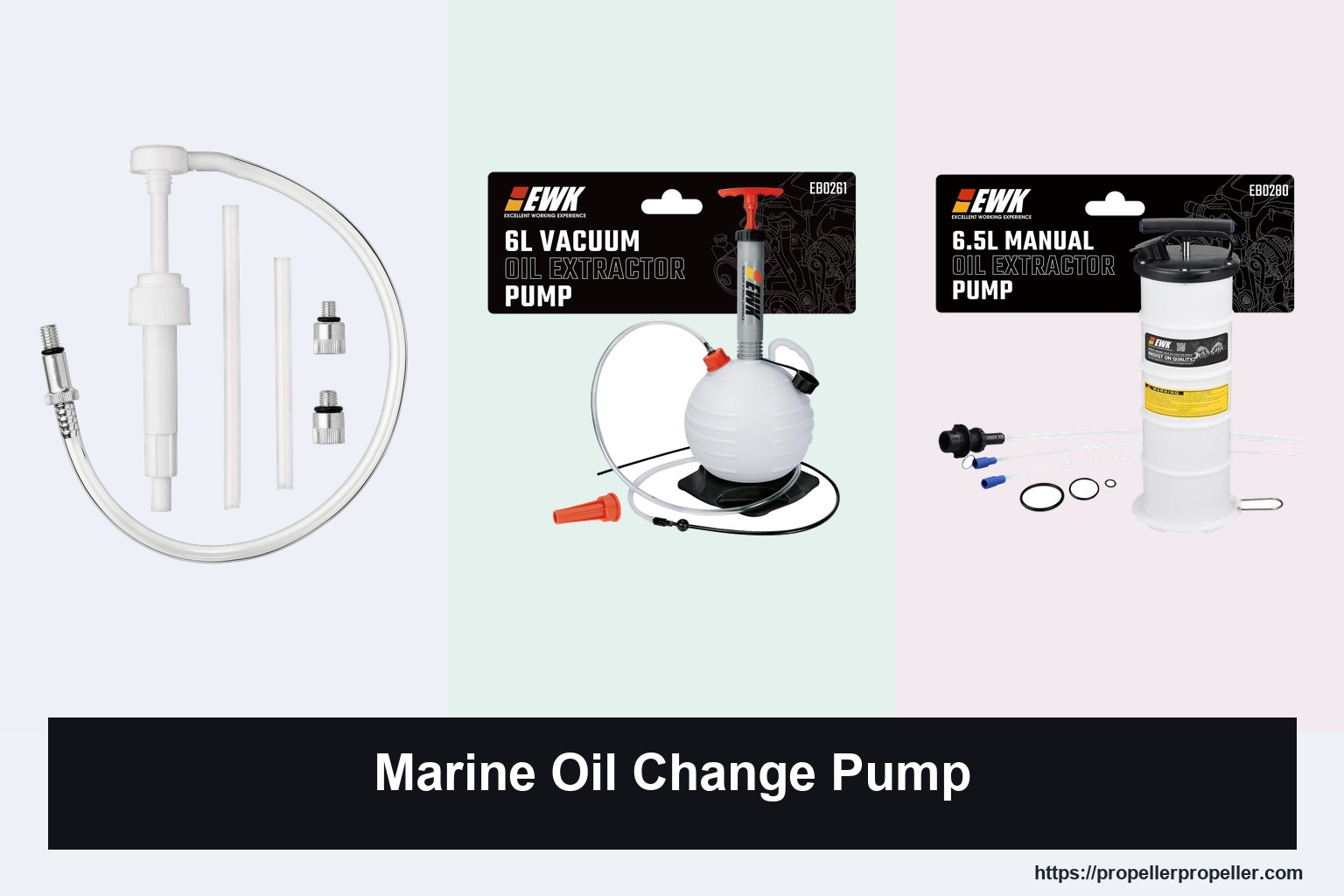
Slippery Pete Lower Unit Gear Oil Pump
- 8cc per stroke
- 3 adapter sizes
- 2 rigid suction tubes
- Fits most outboards

EWK 6L Manual Fluid Extractor
- 6L tank capacity
- 59-inch clear hose
- 42-inch metal probe
- No power required

EWK 6.5L Manual Oil Extractor
- 6.5L sealed tank
- 102-inch suction tube
- Manual vacuum operation
- Marine and small-engine use

VEVOR 6.5L Dual-Mode Extractor

VEVOR 6.5L Manual Extractor

SHURFLO 12V Oil Change System
This article may contain affiliate links. As an Amazon Associate, the website may earn from qualifying purchases at no additional cost to you.
Marine Oil Change Pump Reviews
Slippery Pete Lower Unit Gear Oil Pump
Advantages
- Compact bottle-pump format
- Three adapter sizes included
- Rigid tubes for different bottle heights
- Simple manual operation
- Easy to store
Limitations
- Not compatible with Volvo Penta
- Limited to lower-unit use
This pump is aimed squarely at boat owners who service lower units from standard quart bottles instead of dealing with bulk transfer gear. The 8cc per pump stroke output keeps the motion simple and predictable, which matters when you are topping off or changing gear oil in a confined service window. The included 3/8 inch metal swivel and the 8mm and 10mm adapters widen compatibility with many marine outboard drain plugs, so you are not forced to guess at fittings before the job starts.
Its design is intentionally narrow in scope. The two rigid suction tubes reach both tall and short gear oil bottles, which removes one common frustration when the bottle empties before the job is done. That said, this is still a manual bottle pump, so it is better suited to lower-unit servicing than to larger fluid extraction tasks. The clear advantage is portability and simplicity. The limitation is equally clear, since it is not built as a broad-use oil evacuator.
Against the larger extractor-style options in this roundup, this one wins on focus rather than versatility. It is the most direct choice when your only real need is lower-unit gear oil service and you want compact storage between jobs. The explicit Volvo Penta exclusion is important, because it tells you to move on if your boat sits in that camp. For most outboard owners, though, this is the most efficient and least complicated recommendation in the group.
PHOTO: Slippery Pete Lower Unit – Tube and adapter set → Source: Amazon.com
EWK 6L Manual Fluid Extractor
- Product Dimensions
- 9.5 x 9.5 x 14.6 inches
- Item Weight
- 3.7 pounds
- Model
- 6L Manual Oil Extractor
Advantages
- 59-inch clear hose
- 42-inch metal probe
- No electricity needed
- Stable step-on base
- Sealed for transport
Limitations
- Not for gasoline
- Not for fluids above 175°F
This extractor suits the buyer who wants a compact, power-free way to handle routine fluid changes. The 6L reservoir gives it enough capacity for many passenger-vehicle jobs, while the 59″ clear hose and the 42″ flexible metal probe support deeper reach and easier visual checks during extraction. That combination matters because you can see fluid quality and keep the process controlled without turning the job into a garage cleanup project.
The pump works from a dipstick tube, so it avoids the need to lift a vehicle or crawl underneath it. That is especially useful when you are working in a driveway, shared garage, or any location where electricity is inconvenient. The wide step-on base is there for stability, and the sealing cap helps when you need to move used fluid after the job. Its stated fluid range is broad, but the limitation is just as practical: it is not meant for gasoline or very hot fluids, so it belongs in maintenance work rather than fuel handling.
Compared with the lower-unit bottle pump, this is the more flexible tool for complete oil extraction. Compared with the powered marine system, it is easier to move and less dependent on vehicle electrics, but it does ask you to do the pumping yourself. That tradeoff makes sense for a reader who wants a portable, all-around extractor for multiple machines. If you service cars as well as marine equipment, this is one of the most balanced choices in the lineup.
PHOTO: EWK 6L Manual Fluid – 6L vacuum oil extractor pump → Source: Amazon.com
EWK 6.5L Manual Oil Extractor
- Product Dimensions
- 8.27 x 8.27 x 22.05 inches
- Item Weight
- 6.09 pounds
- Exterior
- Frosted Translucent Reservoir, Anodized and Matte Plastic Handle
- Model
- 6.5L Manual Oil Extractor
Advantages
- 6.5L sealed tank
- 102-inch suction tube
- Portable manual operation
- Works on marine fluids
- Stable base
Limitations
- Not for gasoline
- 140°F fluid limit
This model is built for owners who need a little more tank space and a little more reach. The 6.5L sealed tank is a useful step up for most passenger-car and light marine maintenance, and the 102 inch suction tube is the detail that changes where you can use it. That length matters when access from below is poor and the pickup point is far from the service opening. It is a strong fit for boats, low cars, and small engines where a drain pan would be awkward or impractical.
Operation stays straightforward because the unit is fully manual. That keeps it free from compressors, cords, and power searches, which is a real advantage on a dock or in a remote storage area. The frosted translucent reservoir and the stable base support clean handling, while the sealed design makes transport easier once the used fluid is collected. Its material and heat limits are worth respecting, though. It is designed for common automotive and marine fluids up to 140°F, so warm oil is fine, but very hot or aggressive fluids are outside its intended use.
Among the three extractors in the roundup, this one offers one of the most useful combinations of reach and capacity without moving into powered complexity. It is more adaptable than the lower-unit pump and more substantial than the smaller manual extractor, but it still preserves the simple, portable workflow that many owners want. If your maintenance routine includes boats, motorcycles, and yard equipment, this is the most versatile manual pick here. The recommendation is easy: choose it when access is tight and you want longer tube reach without adding power equipment.
PHOTO: EWK 6 5L Manual – 6.5L manual oil extractor pump → Source: Amazon.com
VEVOR 6.5L Dual-Mode Extractor
Advantages
- Dual-mode operation
- 6.5L tank
- Four tube sizes
- Manual backup option
- Broad fluid use
Limitations
- More parts to manage
- Less simple than single-mode pumps
This extractor stands out because it gives you two operating paths instead of one. The dual-mode setup means you can use pneumatic assistance when speed matters or fall back to manual pumping when you want a simple, self-contained tool. The 6.5L tank gives it the same practical capacity class as the other full-size extractors in the group, while the included tube set and suction hose support deeper reach into different fluid chambers. That flexibility is what separates it from the more basic manual options.
The four extraction tube sizes matter because marine and automotive service points are not all built alike. A setup like this reduces the chance that one awkward filler or dipstick opening forces you to improvise. The tradeoff is that more capability also means more parts to manage, including sealing rings and multiple hoses. For buyers who want speed and adaptability, that is acceptable. For someone who just wants the least complicated maintenance routine, it may feel like more equipment than necessary.
Directly compared with the manual EWK extractors, this one is the better choice when you value faster transfer and wider tube options. Directly compared with the 12V marine pump, it does not depend on vehicle power, which keeps it useful in more places. The buyer who benefits most is the one servicing several fluid types across different machines and who wants one extractor that can shift between manual and assisted operation. If you want range and pace in the same package, this is the strongest middle ground in the group.
PHOTO: VEVOR 6 5L Dual-Mode – Oil extractor with accessories → Source: Amazon.com
VEVOR 6.5L Manual Extractor
- Lift Type
- Manual
- Item Weight
- 5.07 pounds
- Product Dimensions
- 22.44 x 9.06 x 8.66 inches
- Model
- Fluid Extractor
Advantages
- Simple manual design
- 6.5L tank
- Multiple tube lengths
- Multi-fluid compatibility
- Low setup burden
Limitations
- No pneumatic assist
- Transfer speed depends on pumping
This version is the straightforward manual alternative for buyers who do not need pneumatic assistance. The 6.5L tank gives it the same useful service range as other full-size extractors, and the manual operation keeps setup simple. That simplicity has value when you want a clean oil change process without adding equipment that needs air supply, special fittings, or extra maintenance. For routine automotive and marine service, it is a practical no-frills option.
Its appeal rises from the included tube set, which gives you different reach options for awkward fill and dipstick access points. That matters when the fluid opening sits in a cramped compartment or when the machine you are servicing has a narrow path to the sump. Like the other universal extractors, it is designed for several fluid types, which is useful if you maintain more than one vehicle or watercraft. The tradeoff is that it stays firmly in the manual category, so transfer speed depends on your own pumping effort.
Against the other VEVOR extractor in this roundup, this one sacrifices pneumatic speed in exchange for less complexity. Against the EWK manual extractors, it sits closer to the utility-first middle, with enough tank size and tube variety to stay versatile without becoming overly specialized. That makes it the better fit for a buyer who wants a simple extractor and values lower operating fuss over faster throughput. If you want the most direct path to a clean manual fluid change, this is the one to beat at this price point.
PHOTO: VEVOR 6 5L Manual – Oil extractor with accessories → Source: Amazon.com
SHURFLO 12V Oil Change System
- Item Weight
- 3 pounds
- Size
- 16″ H x 12-1/2″ D
- Compatible with Vehicle Type
- Marine, RV
- Liquid Volume
- 11.4 liters
- Container Type
- bucket
Advantages
- 1.55 GPM flow
- Self-priming pump
- 12V DC operation
- Thermal overload protection
- Durable marine-ready materials
Limitations
- Higher price than manual options
- Requires 12V power
This is the most capable option in the group for buyers who want a powered service system rather than a hand pump. The 1.55 GPM flow and self-priming diaphragm design are the key reasons it stands apart, because they turn fluid transfer into a faster, more consistent process. The 12V DC motor also matters on boats and RVs where battery power is available and portable service is part of the routine. If you are looking beyond occasional top-offs, this is the product that feels built for repeat maintenance.
The inclusion of 8-foot leads with alligator clips simplifies battery connection, which is useful when service points vary from boat to boat. Its continuous-duty motor with thermal overload protection is another meaningful advantage because it supports longer sessions without making the unit feel delicate. The nylon housing, Geolast diaphragm, and stainless steel hardware point toward durability in demanding environments. The tradeoff is that this is not the smallest or cheapest path to fluid transfer, and it is best when a powered system is actually worth carrying and connecting.
Compared with the manual extractors, this system asks for more commitment but returns that effort with speed and service consistency. Compared with the lower-unit bottle pump, it is vastly broader in scope and much more appropriate for larger maintenance routines. This is the recommendation for buyers who maintain marine gear regularly and want a pump that can handle oil changes and winterizing tasks as part of a repeated workflow. When powered operation is acceptable, it is the most complete marine-focused choice in the roundup.
PHOTO: SHURFLO 12V Oil Change – Portable oil change system → Source: Amazon.com
How to Choose a Marine Oil Change Pump
The right marine oil change pump depends on where the fluid lives, how you reach it, and how often you perform service. A lower-unit pump, a manual vacuum extractor, and a powered transfer system all solve different problems. Buying well means matching the tool to the maintenance task instead of assuming one pump will cover every boat, engine, and storage situation. Focus on reach, capacity, and how much setup you are willing to tolerate before each job.
Service Access
Start with the access point you actually have. Some marine jobs are handled through a drain plug or lower unit opening, while others are easier through a dipstick tube or top-side fill point. A pump that matches your access path reduces mess and saves time. If you cannot comfortably reach from below, a topside extractor is usually the cleaner route. If you are working directly on a gear case, a dedicated lower-unit pump can be the more efficient tool.
Power Requirements
Decide early whether you want manual force or powered transfer. Manual extractors are easier to store, lighter to move, and independent of compressors or outlets. Powered systems are better when speed and repeatability matter, especially in marine service where battery access is already part of the workflow. The best choice is the one that fits your normal work location. A dock, driveway, or remote storage area can change the value of electric or pneumatic operation very quickly.
Capacity and Reach
Tank size matters when you service larger engines or want to empty fluid in one cycle. Smaller reservoirs can be fine for quick jobs, but they may require more emptying during larger maintenance tasks. Tube length matters just as much. Long suction hoses and deep probes are useful when the pickup point is hidden below a cowl or tucked into a cramped compartment. Shorter tools are simpler, but they are only convenient when the access path is straightforward.
Fluid Compatibility
Check which fluids the pump is actually intended to move. Some tools are best for gear oil alone, while others are built for engine oil, transmission fluid, coolant, power steering fluid, or antifreeze. That choice affects whether one tool can cover the boat and other equipment, or whether you need a dedicated setup for a specific job. Also watch temperature and chemical limits. A pump that is fine for warm oil may not be suitable for gasoline or very hot fluid.
Portability and Storage
Marine maintenance often happens in awkward places, so the size and shape of the pump can matter as much as its pumping method. A stable base, a sealing cap, or a compact footprint can make transport easier and reduce cleanup after use. If you plan to keep the tool on a service cart, in a boat locker, or in a trailer compartment, make sure the package is easy to carry and secure. Convenience during storage usually predicts convenience during the next oil change.
Durability and Service Life
Look for materials and construction that match the environment. Boats expose tools to tighter storage, moisture, and repeated handling, so sturdy housings, metal fittings, and sealing parts are not just nice extras. For a frequently used pump, durability can matter more than headline capacity. A tool that stays reliable year after year is worth more than one that seems powerful but demands constant attention. For buyers who service multiple machines, dependable construction saves money and frustration over time.
Marine Pump Comparison Table
| Product | Best For | Weight | Model | Product Dimensions |
|---|---|---|---|---|
| Slippery Pete Lower Unit Gear Oil Pump | Best For Lower Units | Not Specified | Not Specified | Not Specified |
| EWK 6L Manual Fluid Extractor | Best Portable Extractor | 3.7 pounds | 6L Manual Oil Extractor | 9.5 x 9.5 x 14.6 inches |
| EWK 6.5L Manual Oil Extractor | Best Reach And Capacity | 6.09 pounds | 6.5L Manual Oil Extractor | 8.27 x 8.27 x 22.05 inches |
| VEVOR 6.5L Dual-Mode Extractor | Best For Faster Extraction | Not Specified | Not Specified | Not Specified |
| VEVOR 6.5L Manual Extractor | Best Budget Extractor | 5.07 pounds | Fluid Extractor | 22.44 x 9.06 x 8.66 inches |
| SHURFLO 12V Oil Change System | Best Powered System | 3 pounds | Not Specified | Not Specified |
How We Tested & Analyzed Marine Oil Change Pump
This roundup was built around the practical differences that decide marine oil change satisfaction in the real world. Capacity, hose reach, operating mode, compatibility with marine use, and portability shaped the analysis because those factors change whether a pump is pleasant to use or merely acceptable on paper. The goal was to separate specialized lower-unit tools from broader fluid extractors and from powered service systems, since those categories solve different maintenance problems.
Comparisons also focused on how each tool changes the work itself. A compact lower-unit pump can be the right answer for outboard gear oil, while a long-reach vacuum extractor matters more when access is from above. Powered systems were judged against their setup burden as well as their speed, because added capability only helps if the user is willing to connect power and manage the extra hardware. Tradeoffs were treated as central, not secondary, because every marine maintenance tool asks for some compromise between simplicity and versatility.
The final recommendations reflect category fit rather than a single universal ranking. A good marine oil change pump is the one that reduces awkward access, keeps fluid transfer controlled, and matches the service pattern you actually have. Limiting factors were handled carefully, especially power needs, temperature restrictions, and explicit compatibility gaps. When a product was narrow in purpose, that narrowness was treated as useful if it solved a specific marine task cleanly.
Frequently Asked Questions
What type of pump is best for marine oil changes?
The best type depends on the job. For lower units and gear oil bottles, a dedicated bottle pump can be enough. For top-side extraction through a tube, a manual fluid extractor is usually more versatile. If you service boats regularly and want faster transfer, a powered 12V system can be the most efficient option.
Do I need a powered pump for boat maintenance?
Not necessarily. Manual extractors handle many routine oil changes cleanly and do not require electricity or air. Powered pumps become more attractive when you service often, want quicker transfer, or already have easy access to 12V power. For occasional maintenance, manual tools are often simpler and easier to store.
How important is hose length?
Very important when the access point is deep, narrow, or offset from where you can stand. Longer hoses and probes let you reach fluid without lifting the boat or crawling underneath. Shorter hoses are fine for simple jobs, but they can make a cramped maintenance task much harder than it needs to be.
Can one pump handle different fluids?
Some can, but only within the limits intended by the manufacturer. Many marine and automotive extractors can handle engine oil and related fluids, while some are limited by temperature or chemical compatibility. Do not assume a pump can move gasoline or very hot fluid unless that is explicitly part of its intended use.
Final Thoughts
The best marine oil change pump is the one that fits your access, your power source, and the kinds of fluids you service most often. A lower-unit bottle pump is the cleanest answer for outboard gear oil. A manual extractor is better when you want reach and portability. A powered 12V system becomes worthwhile when you need faster, repeatable service and are already working in a marine environment where battery connection is natural.
For most buyers, the decision comes down to convenience versus capability. Simpler tools are easier to live with and often enough for occasional service. More elaborate systems earn their place when you maintain boats regularly or want one tool to cover multiple maintenance tasks. Choose the pump that makes your usual oil changes easier, not the one with the longest feature list. That is the route to cleaner service and fewer frustrations over time.