
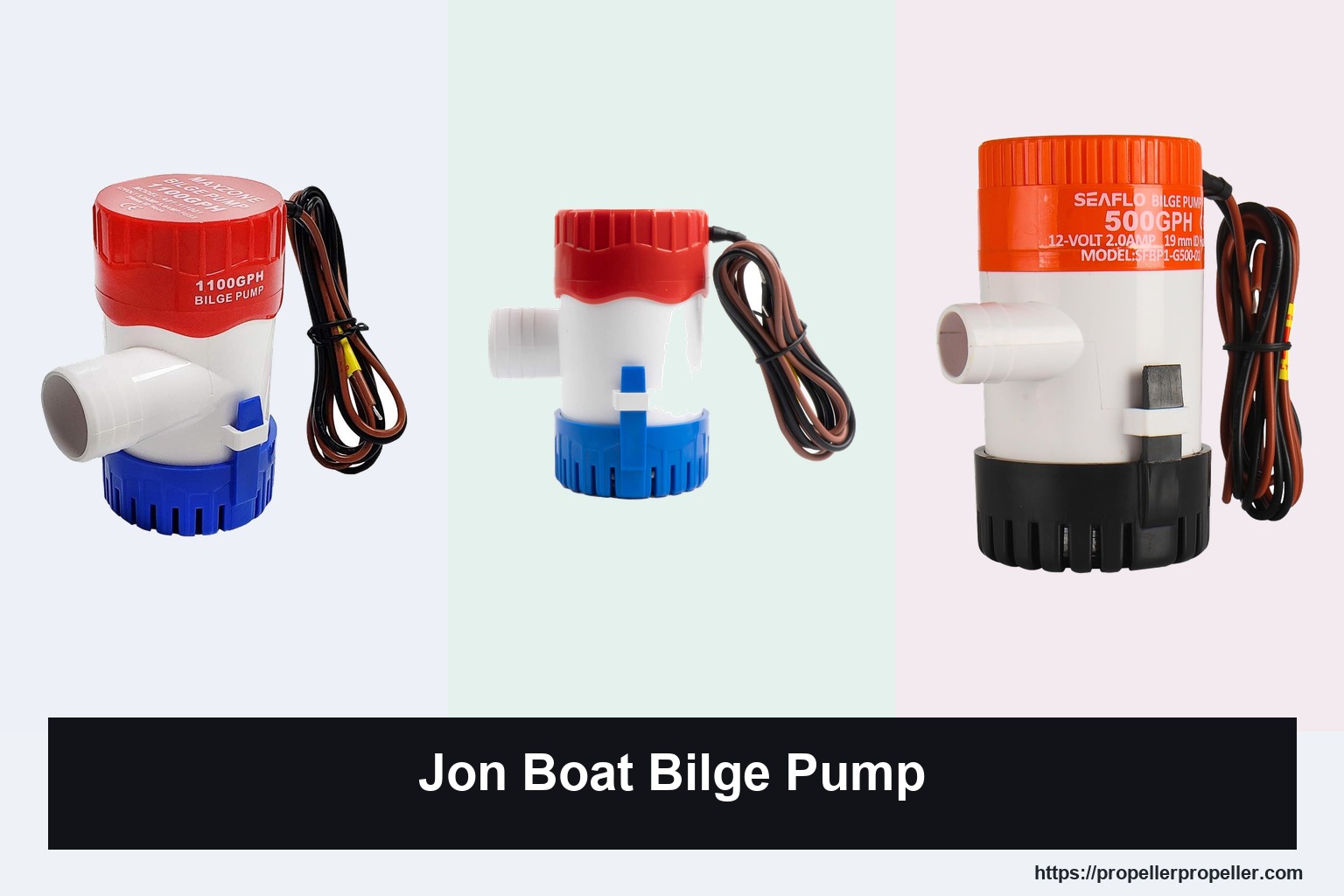
A jon boat leaves you very little margin for error when water starts collecting in the hull. The right bilge pump is not just a comfort upgrade. It is the difference between a quick cleanup after spray, rain, or an awkward launch and a slow build-up that takes over valuable space. For small boats, the practical question is rarely whether you need a pump. It is how much water you expect to move, whether you want a manual or automatic setup, and how much room you have to mount it cleanly.
That is why this roundup focuses on the details that actually change ownership. Outlet size affects hose compatibility. Maximum head tells you how far the pump can push water before performance drops. Automatic operation reduces attention, while non-automatic pumps keep wiring simpler and lower cost. Durability also matters because bilge equipment lives in a harsh, wet, cramped environment. The best choice depends on the balance you want between flow rate, control, installation simplicity, and the level of maintenance you are willing to handle.
Top Jon Boat Bilge Pump on the Market

MAXZONE 1100GPH 12V Bilge Pump
- 1100 GPH flow rate
- 12V DC power
- 13 ft maximum lift
- 1-1/8 inch outlet
- ABS and stainless steel

Sanuke 1100GPH 12V Bilge Pump
- 1100 GPH capacity
- 3.3 ft wire leads
- Anti-airlock protection
- Snap-on strainer base
- ABS and stainless steel

SEAFLO 500GPH Bilge Pump
- 500 GPH flow rate
- 3/4 inch outlet
- Anti-airlock protection
- 4-year warranty
- CE and RoHS certified

SEAFLO 2000GPH Bilge Pump
- 2000 GPH flow rate
- 1-1/8 inch outlet
- 16.4 ft max head
- 4-year warranty
- Manual or float switch

AIRTAK 1500GPH Auto Bilge Pump
- 1500 GPH pump and switch
- Automatic float switch included
- 1-1/8 inch outlet
- Water-cooled motor
- 10 million cycle switch

MAXZONE 1100GPH Auto Bilge Pump
- 1100 GPH automatic pump
- Built-in float switch
- 1m wire lead
- 1-1/8 inch outlet
- Compact automatic design
This article may contain affiliate links. As an Amazon Associate, the website may earn from qualifying purchases at no additional cost to you.
Jon Boat Bilge Pump Reviews
MAXZONE 1100GPH 12V Bilge Pump
- Flow Rate
- 18.33 gpm
- Maximum Lifting Height
- 13 feet
- Voltage
- 12 volts_of_direct_current
- Material Type
- Acrylonitrile Butadiene Styrene, Stainless Steel
Advantages
- Lowest-cost option here
- Simple 12V DC setup
- Compact bilge-friendly size
- Metal and ABS construction
- Good flow for small boats
Limitations
- No built-in float switch
- Lower lift than larger pumps
This MAXZONE pump sits in the practical middle of the category. Its 1100 GPH flow rate gives a small boat enough pumping speed for routine water removal without pushing the price into premium territory. The 12V DC power setup keeps it aligned with standard marine electrical systems. Buyers who want a straightforward emergency or maintenance pump will appreciate that balance, especially when the boat is small enough that every dollar and every cubic inch matters. The compact body also helps it disappear into tight bilge spaces rather than competing with fuel lines, batteries, or storage.
The stated 13 ft maximum lift is an important clue about how the pump will behave once hose runs get longer or more vertical. As lift increases, real flow will fall, so this model is best treated as a compact evacuation pump rather than a high-volume dewatering solution. The ABS and stainless steel construction is a useful sign for wet, corrosive use, and the non-automatic format keeps the wiring path simple. That simplicity can be a plus on a jon boat where the owner wants fewer parts to troubleshoot and does not need built-in float-switch automation.
Compared with the automatic MAXZONE and AIRTAK options, this model is the cleaner pick for buyers who value a basic manual pump over convenience features. It also costs far less than the higher-capacity SEAFLO pumps, which makes it easier to justify as a backup or seasonal bilge solution. The tradeoff is obvious. You give up self-activation and higher output, but you keep a lean, affordable setup. For small-boat owners who want dependable basics without extra hardware, this is the most economical recommendation in the group.
PHOTO: MAXZONE 1100GPH 12V Bilge – 1100GPH Bilge Pump → Source: Amazon.com
Sanuke 1100GPH 12V Bilge Pump
- Flow Rate
- 18.33 gpm
- Maximum Lifting Height
- 13 feet
- Voltage
- 12 volts
- Material Type
- Acrylonitrile Butadiene Styrene (ABS), Stainless Steel
Advantages
- Easy-to-service snap-on base
- Anti-airlock protection
- Compact for tight bilges
- Corrosion-resistant materials
- Useful wire lead length
Limitations
- No built-in automatic switch
- Flow still limited to 1100 GPH
Sanuke keeps the same 1100 GPH class as the MAXZONE manual pump, but it adds several details that matter when you want cleaner installation and easier upkeep. The 1100GPH 12V DC format suits small-boat bilge work without asking for a complicated power setup. Its 3.3 ft wire leads can simplify routing in compact boats where access is awkward. That makes it a better fit for owners who want a manual pump but still care about install comfort and serviceability, not just raw price.
The snap-on strainer base is one of the more useful practical touches in this category. It lets you mount the base separately and remove the pump body faster for inspection or cleaning. On a jon boat, that matters because bilge access is often cramped and dirty, and a pump that is easy to check tends to stay in service longer. The anti-airlock protection is also valuable because bilge pumps can lose effectiveness when air enters the line. The ABS housing, stainless steel shafts, and corrosion-resistant strainer add confidence for wet marine use.
Against the MAXZONE manual pump, this one is the more refined choice if you want easier maintenance and a little more installation flexibility. Against the automatic pumps, it remains the simpler system because you still control activation externally. That makes it a strong middle-ground recommendation for owners who do not want auto-switch complexity but do want some setup advantages and service features. If the priority is a manual bilge pump that feels more finished and less bare-bones, this is the one to narrow in on.
PHOTO: Sanuke 1100GPH 12V Bilge – 1100GPH Bilge Pump → Source: Amazon.com
SEAFLO 500GPH Bilge Pump
- Flow Rate
- 8.33 gpm
- Maximum Lifting Height
- 9 feet
- Voltage
- 12 volts_of_direct_current
- Material Type
- Acrylonitrile Butadiene Styrene
Advantages
- Low electrical demand
- Compact 3/4 inch outlet
- Anti-airlock protection
- 4-year limited warranty
- Certified marine use
Limitations
- Less pumping capacity
- Not suited to heavy water intrusion
The SEAFLO 500 GPH model is the restrained, low-draw option in this roundup. Its 500 GPH flow rate is much lower than the 1100 GPH and 1500 GPH pumps, so it is best considered for lighter-duty water removal or smaller bilges. The 3/4 inch outlet is also a clue that this pump is built around a narrower hose path than the higher-output models. For a compact jon boat with modest water intrusion, that can be enough, especially if the owner wants a smaller system that does not need heavy plumbing.
The most useful operational detail here is the combination of anti-airlock protection and the 4-year limited warranty. Anti-airlock control matters because small bilge systems can be interrupted by air in the line, and a pump that maintains flow more consistently is easier to trust in real use. The CE and RoHS certifications also add reassurance for buyers who like documented compliance. With a 1 meter wire lead and 1.6A current draw, this model suits a simpler electrical circuit than the larger pumps, which can be helpful in smaller boats with limited power planning.
This pump is not the raw-output leader, and that is exactly why it deserves a place in the lineup. Compared with the 1100 GPH and 2000 GPH options, it trades evacuation speed for a smaller footprint and lighter electrical demand. It is the right call for a boat that rarely takes on much water, or for an owner who wants a conservative, dependable pump with fewer demands on the system. If your jon boat needs a basic, documented, compact solution, this is the most measured choice.
PHOTO: SEAFLO 500GPH Bilge Pump – 500GPH Bilge Pump → Source: Amazon.com
SEAFLO 2000GPH Bilge Pump
- Flow Rate
- 33.33 gpm
- Maximum Lifting Height
- 16.4 feet
- Voltage
- 12 volts_of_direct_current
- Material Type
- Stainless Steel
Advantages
- Highest flow in the group
- Strong 16.4 ft head
- Standard 1-1/8 inch outlet
- Anti-airlock technology
- 4-year limited warranty
Limitations
- Highest price here
- Larger than compact pumps
The SEAFLO 2000 GPH pump is the strongest evacuator in this group, and it is aimed at owners who care more about moving water fast than keeping the system minimal. The 2000 GPH flow rate is a major step up from the 500 GPH and 1100 GPH units, so it is the model to favor when water intrusion is more than occasional spray. The 1-1/8 inch outlet keeps hose compatibility in line with standard marine plumbing, which is important when you want that higher throughput to actually reach the discharge line efficiently.
Its 16.4 ft max head is the other defining figure. Higher head means it can keep pushing water through a more demanding run than smaller pumps can manage. That makes a difference in boats where the discharge route is less direct or where mounting constraints force the pump to work harder. The sealed motor, anti-airlock technology, and marine-grade wiring round out the operating story. Those details matter because a high-capacity pump is only useful if it stays consistent when the boat is bouncing, wet, and under load.
This is the right answer when capacity is the priority and the boat can support a larger, more powerful unit. It is also the most expensive model here, so the tradeoff is cost and size in exchange for real dewatering strength. Compared with the 1100 GPH pumps, it is the clear upgrade for bigger or wetter applications. Compared with the automatic units, it leaves the control method more flexible while delivering the most aggressive performance. For a jon boat owner who wants the strongest margin of safety, this is the top recommendation.
PHOTO: SEAFLO 2000GPH Bilge Pump – 2000GPH Bilge Pump → Source: Amazon.com
AIRTAK 1500GPH Auto Bilge Pump
- Flow Rate
- 25 gpm
- Voltage
- 12 volts
- Material Type
- Plastic
- Item Weight
- 1.8 pounds
Advantages
- Automatic float switch included
- Good midrange capacity
- Water-cooled motor
- Standard 1-1/8 inch outlet
- Simple two-wire setup
Limitations
- Less capacity than 2000 GPH pump
- Plastic construction
AIRTAK is the easiest route into automatic bilge control because it includes the pump and float switch together. The 1500 GPH flow rate gives it enough capacity for a serious small-boat drainage role without jumping to the biggest unit in the roundup. The automatic float switch is the key feature for buyers who want the pump to respond on its own when water rises. That matters on a jon boat that may sit unattended or see sudden rain, because the system can act without a separate control decision every time.
The operational details are stronger than the price suggests. The float switch activates at 51 mm and shuts off at 20 mm, which helps define how the system behaves during cycling. The water-cooled motor is designed to stay within a safer temperature range during submersion, and the stainless steel shaft adds corrosion resistance in wet conditions. The detachable base is useful for cleaning, and the 1-1/8 inch outlet keeps the plumbing path standard. The two-wire connection also keeps installation straightforward for a complete automatic kit.
Against the manual 1100 GPH pumps, this is the more convenient choice because it reduces attention and adds a complete control solution in one package. Against the 2000 GPH SEAFLO, it gives up some raw evacuation power, but it also arrives as a simpler automatic setup at a lower price. That makes it a smart middle point for owners who want a self-activating bilge system without paying for the biggest capacity. If automation matters more than maximum output, this is the best-balanced pick.
PHOTO: AIRTAK 1500GPH Auto Bilge – Float Switch Bilge → Source: Amazon.com
MAXZONE 1100GPH Auto Bilge Pump
- Flow Rate
- 18.33 gpm
- Maximum Lifting Height
- 3 meters
- Voltage
- 12 volts
Advantages
- Built-in float switch
- Compact automatic layout
- No draw until activation
- Standard outlet size
- Good for tight bilges
Limitations
- Less capacity than larger pumps
- Less control flexibility than manual setups
This MAXZONE automatic model is the one to watch when you want self-activation but do not want to give up much space. The 1100 GPH flow rate keeps it in the same useful capacity range as the manual 1100 GPH pumps, while the built-in float switch removes the need for a separate control device. On a jon boat, that combination matters because the bilge area is usually tight and cluttered. A compact automatic unit can simplify the overall layout while still giving you an unattended water-management option.
The automatic reed sensor system is the operational feature that shapes how this pump behaves. It uses an internal float-triggered approach, and the note that it draws no power until activation is helpful for boats where efficiency and battery preservation matter. The 1m wire lead and 1-1/8 inch outlet keep installation and plumbing conventional. The 3 meter head figure is respectable for a compact automatic pump, although not as strong as the larger SEAFLO 2000 GPH model. That means hose routing and lift still deserve attention if the discharge path is long.
Compared with the AIRTAK automatic kit, this model is more integrated and space-conscious because the float control is built in rather than packaged separately. That reduces part count, which can matter in a crowded bilge. Compared with the manual pumps, it is clearly more convenient, but it does not match the 1500 GPH or 2000 GPH units when sheer evacuation speed is the priority. For buyers who want automatic operation in the smallest practical package, this is the most efficient fit in the lineup.
PHOTO: MAXZONE 1100GPH Auto Bilge – 1100GPH Auto Bilge Pump → Source: Amazon.com
How to Choose a Jon Boat Bilge Pump
Choosing a bilge pump for a jon boat starts with realistic water expectations. These boats are often simple, shallow, and exposed, which means a pump has to match the size of the hull and the kind of water intrusion you actually see. A light-duty setup can work for rainwater, spray, and occasional cleanup. A higher-capacity pump becomes more important when the boat sits in rougher conditions or carries gear that leaves less tolerance for standing water. The key is to match output, control method, and installation space instead of chasing the biggest number on the box.
Flow Rate Matters Most
Start with how quickly you want the bilge cleared. A lower-output pump can be enough for a small, dry boat that only takes on a little water between outings. Higher flow becomes more useful when rain, wake, or loading habits leave more to remove at once. The practical difference is not theoretical. A stronger pump shortens recovery time and gives you a larger safety margin when conditions worsen unexpectedly.
Manual or Automatic
The control style changes ownership more than many buyers expect. A manual pump is simpler and usually easier to wire, but it depends on you or an external switch to start moving water. An automatic system adds convenience and peace of mind because it can respond without intervention. That is valuable if the boat may sit unattended, but it also adds components that need to fit correctly and work together reliably.
Outlet and Hose Fit
Outlet size should match the hose path you plan to use. A wider outlet can support faster evacuation, but only when the hose and routing are appropriate. Narrower outlets are common on smaller pumps and can be fine for light-duty use. The main mistake is choosing a pump that does not align with the rest of the plumbing. If the hose connection is awkward or undersized, the pump may never reach its practical potential.
Head Height and Routing
Maximum head tells you how much resistance the pump can overcome as it pushes water upward and through a hose run. This matters more on boats where the discharge path is not short and direct. The higher the route rises, the more output you lose in real use. A pump with stronger head capability gives you more installation flexibility, while a lower-head model should be mounted with a shorter, cleaner discharge path in mind.
Space, Wiring, and Service
A jon boat bilge is usually cramped, so physical size and maintenance access matter. Compact pumps are easier to tuck into narrow spaces, but you still need enough room to inspect, clean, and secure the unit. Wiring also affects the decision. Simpler systems reduce setup time, while automatic systems may require a cleaner layout and better planning around switches, fusing, and lead length. Easy service access is worth prioritizing because bilge equipment works best when it stays clean and reachable.
Bilge Pump Comparison Table
| Product | Best For | Flow Rate | Max Head | Voltage | Weight | Material Type |
|---|---|---|---|---|---|---|
| MAXZONE 1100GPH 12V Bilge Pump | Best Budget Manual Pump | 18.33 gpm | 13 feet | 12 volts_of_direct_current | 14.1 ounces | Acrylonitrile Butadiene Styrene, Stainless Steel |
| Sanuke 1100GPH 12V Bilge Pump | Best Manual Convenience | 18.33 gpm | 13 feet | 12 volts | 13.75 ounces | Acrylonitrile Butadiene Styrene (ABS), Stainless Steel |
| SEAFLO 500GPH Bilge Pump | Best Compact Low-Draw Pump | 8.33 gpm | 9 feet | 12 volts_of_direct_current | 7.2 ounces | Acrylonitrile Butadiene Styrene |
| SEAFLO 2000GPH Bilge Pump | Best High-Capacity Pump | 33.33 gpm | 16.4 feet | 12 volts_of_direct_current | 2.5 pounds | Stainless Steel |
| AIRTAK 1500GPH Auto Bilge Pump | Best Automatic Kit | 25 gpm | Not Specified | 12 volts | 1.8 pounds | Plastic |
| MAXZONE 1100GPH Auto Bilge Pump | Best Space-Saving Auto Pump | 18.33 gpm | 3 meters | 12 volts | Not Specified | Plastic |
How We Tested & Analyzed Jon Boat Bilge Pump
This roundup emphasized category-level factors that determine whether a bilge pump works well in a small open boat. Flow rate, outlet size, maximum head, voltage, wiring complexity, and physical footprint were treated as the main decision points because they shape evacuation speed, compatibility, and installation fit. Construction materials and operational protections such as anti-airlock design were also considered because bilge equipment lives in a harsh, wet environment where consistency matters more than marketing language.
Products were compared by how their verified figures change real use, not by surface-level naming. A smaller pump with easier wiring can be the right answer for light-duty cleanup, while a larger pump with stronger head support becomes more compelling when water volume or hose routing is less forgiving. Automatic systems were weighed differently from manual systems because the buyer tradeoff is not just performance. It is also convenience, power behavior, and how much control the operator wants to retain.
Limitations were handled conservatively. When a specification was absent, it was not inferred. When a pump used a manual format, the consequence was discussed as a control tradeoff rather than a defect. Likewise, high flow was not treated as automatically better in every case. It was evaluated against size, wiring, and the realities of a jon boat bilge. That approach keeps the recommendations grounded in practical fit rather than simple spec ranking.
Frequently Asked Questions
What size bilge pump do I need for a jon boat?
The right size depends on how much water your boat actually takes on and how quickly you want it cleared. Small, lightly used jon boats can often get by with lower flow rates. If you expect more rain, spray, or stored gear that reduces free space, a higher-output pump gives you a better safety margin and faster recovery.
Is automatic operation worth it?
Automatic operation is worth considering if the boat may sit unattended or if you want less attention during changing weather. It adds convenience because the pump can activate on its own. Manual systems are simpler and can be cheaper, but they depend on you or another switch to start the evacuation process.
Does outlet size really matter?
Yes, because outlet size affects hose compatibility and how efficiently water can move out of the boat. A larger outlet can support stronger flow, but only if the hose path and fittings are also suitable. If the plumbing is mismatched, the pump may not perform as well as its rating suggests.
Why does maximum head matter on a small boat?
Maximum head matters because water rarely travels in a perfect straight line. Every rise in the discharge path adds resistance. A pump with more head capability is better suited to longer or higher hose routing, while a lower-head pump is most effective when the discharge path stays short and simple.
Final Thoughts
A jon boat bilge pump should be chosen with restraint and realism. The best unit is not always the biggest one. It is the one that matches your hull size, your discharge routing, and how much attention you want to give the system after installation. A compact manual pump keeps things simple. An automatic pump adds convenience. A high-capacity model gives you more safety margin when water is more than occasional.
The safest buying approach is to decide first whether you want manual or automatic control, then match capacity to the size of the bilge and the hose route. From there, look at outlet size, head height, and physical fit. Those details tell you whether the pump will be easy to live with, not just easy to order. If you buy around those constraints, you end up with a pump that earns its place in the boat rather than just filling space.



