
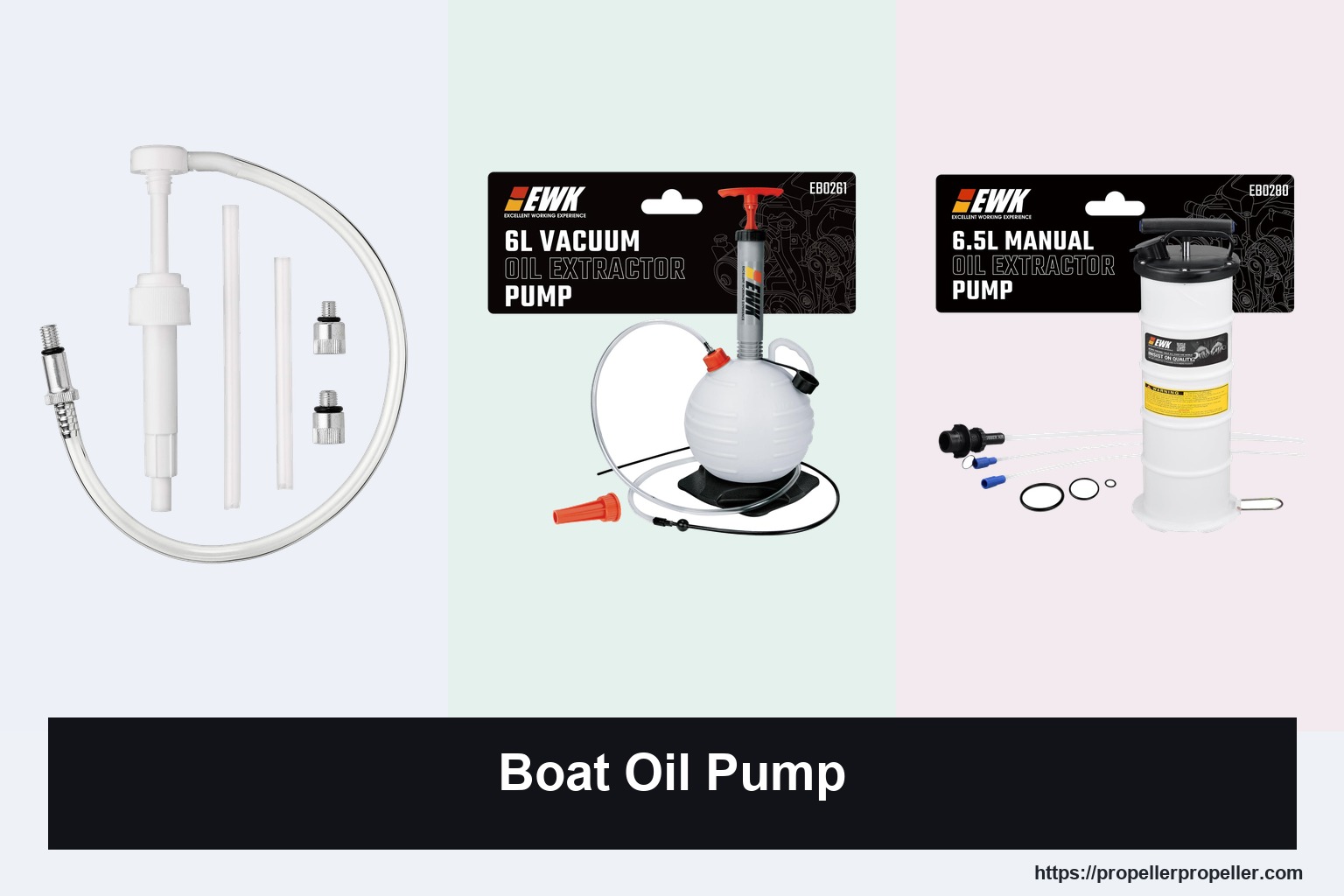
Choosing a boat oil pump is less about convenience than control. Marine maintenance often happens in cramped spaces, with awkward access, limited power, and little tolerance for spills. A good pump needs to match the service you actually perform, whether that means transferring gear oil into a lower unit, extracting engine oil from above, or handling multiple fluid types without turning a simple job into a cleanup problem.
The best options in this category vary more than the name suggests. Some are purpose-built for lower unit gear oil bottles and small outboard jobs. Others are larger fluid extractors that can handle engine oil and related maintenance fluids from above the sump. What matters most is the real operating method, the hose reach, the tank size, the adapter fit, and any limits on compatibility or fluid temperature. The picks below focus on those practical differences so you can choose the right tool for the boat and the kind of maintenance you do most often.
Top Boat Oil Pump on the Market

Slippery Pete Gear Oil Pump
- Standard quart bottles
- 3 adapter sizes
- 8cc per stroke
- Metal swivel fitting
- Fits most outboards

EWK 6L Manual Fluid Extractor
- 6L sealed tank
- 59-inch clear hose
- 42-inch metal probe
- No power needed
- Step-on base

EWK 6.5L Manual Oil Extractor
- 6.5L sealed tank
- 102-inch suction tube
- Manual vacuum pump
- For boats and small engines
- Heat-resistant tank

VEVOR Dual-Mode Oil Extractor
- Pneumatic or manual
- 6.5L tank
- Four tube sizes
- 8-125 PSI part number
- 4-step fluid swap

VEVOR Manual 6.5L Extractor
- Manual operation
- 6.5L tank
- Four tube sizes
- 8-125 PSI part number
- For automotive fluids
This article may contain affiliate links. As an Amazon Associate, the website may earn from qualifying purchases at no additional cost to you.
Boat Oil Pump Reviews
Slippery Pete Gear Oil Pump
Advantages
- 8cc per pump stroke
- 3 adapter sizes included
- Rigid tubes reach bottle bottoms
- Compact storage bag included
- Simple lower unit focus
Limitations
- Not compatible with Volvo Penta
- Limited to gear oil transfer
This pump is aimed squarely at lower unit service, where bottle-to-drive compatibility matters more than broad fluid versatility. The key advantage is the included 3/8 inch metal swivel plus 8mm and 10mm adapters, which reduces the trial-and-error that usually slows marine gear oil changes. Its 8cc-per-stroke output also matters because it keeps the pumping process predictable when you are filling a lower unit from a standard quart bottle. For owners who only need one focused tool, that narrow design is a strength rather than a compromise.
The two rigid suction tubes are a practical detail, not just an accessory count. They let the pump reach the bottom of both tall and short gear oil bottles, so you are less likely to waste product or re-seat the tube midway through a job. The re-closeable poly bag also helps keep the pieces together between services. The main limitation is explicit: it will not fit Volvo Penta, so the fit check is critical before you buy. For most outboard users, though, the setup stays simple and self-contained.
Compared with the larger fluid extractors in this roundup, this is the most specialized option. It does not try to handle every automotive or marine fluid, and that focus is exactly what makes it efficient for lower unit work. If your maintenance routine centers on gear oil changes rather than extraction from above, this is the clearest match. It is the right choice for buyers who want a compact, inexpensive pump that is built around one job and one kind of bottle connection.
PHOTO: Slippery Pete Gear Oil – Pump and adapters set → Source: Amazon.com
EWK 6L Manual Fluid Extractor
Advantages
- 6L tank capacity
- 59-inch clear hose
- 42-inch flexible probe
- Power-free operation
- Sealing cap for transport
Limitations
- Bulkier than bottle pumps
- Not for gasoline
This extractor is built for buyers who want a portable way to remove fluid from above the sump instead of fighting a drain plug. The 6L tank gives it enough capacity for many routine services, while the 59-inch clear hose is useful because it lets you monitor oil quality as fluid moves. The 42-inch flexible metal probe extends the tool’s reach into the pan, so the design is aimed at fuller extraction rather than shallow pickup. That combination makes it more versatile than a bottle pump when the job is not just top-off work.
Manual operation keeps the setup independent of electricity or compressed air. That matters on a dock, in a driveway, or anywhere you want a cleaner service without extra equipment. The sealing cap helps contain fluid during transport, and the angled spout is there to make disposal more controlled. The wide step-on base is another meaningful detail because extractor tanks can shift while pumping. The tradeoff is straightforward: you are carrying a larger tool than a bottle pump, so portability comes with more bulk.
Against the other extractors here, this one leans toward strong all-around usability rather than a single marine specialty. It can handle engine oil and several other common fluids, but it is still a manual tool with clear use limits, including a maximum fluid temperature of 175°F and a warning against gasoline. If you want one extractor for boat and garage maintenance, it is a sensible middle ground. It is the best fit for buyers who value a sealed container, long hose reach, and power-free operation more than absolute compactness.
PHOTO: EWK 6L Manual Fluid – 6L vacuum oil extractor → Source: Amazon.com
EWK 6.5L Manual Oil Extractor
Advantages
- 102-inch suction tube
- 6.5L sealed tank
- Manual vacuum operation
- Works for boats and small engines
- Heat-resistant polyethylene
Limitations
- Not for gasoline
- Single operating mode
This model stands out because it is designed for long reach as much as for capacity. The 102-inch suction tube is the feature that changes the job, since it can slide deep into tight systems where access from below is difficult. The 6.5L tank is large enough for most passenger-car-sized services, but the boat and small-engine compatibility is what makes it especially relevant here. For owners who need to pull fluid from a dipstick or reservoir opening rather than from a drain point, the layout is highly practical.
The manual vacuum approach keeps the tool independent of compressors and outlets, which is useful around marinas, storage lots, and places where power is inconvenient. Its heat-resistant polyethylene tank and hoses are built for common automotive and marine fluids up to 140°F, so the tool is more than just an oil-only extractor. The sealed design also matters when you need to move used fluid to a recycling point without creating a spill risk. The main caution is that it should not be used with gasoline or highly volatile or corrosive fluids.
In comparison with the smaller gear-oil pump, this is the stronger choice when you need to extract rather than refill. It also edges out a shorter-hose extractor if your boat or small engine has awkward access points and deep pickup needs. Among the two 6.5L extractors, this version is especially compelling for anyone who values hose reach over more elaborate operating modes. It is the right pick for buyers who want one manual tool that can work across boats, small engines, and other fluid service tasks without power dependency.
PHOTO: EWK 6 5L Manual – 6.5L manual oil extractor → Source: Amazon.com
VEVOR Dual-Mode Oil Extractor
- Product Dimensions
- 8.27 x 8.66 x 21.65 inches
- Item Weight
- 5.73 pounds
Advantages
- Pneumatic or manual use
- 6.5L tank
- Multiple tube lengths
- Lightweight at 5.73 pounds
- Broad fluid compatibility
Limitations
- More setup than simple pumps
- Bulkier than bottle-specific tools
This extractor is the most flexible of the group because it offers both pneumatic and manual operation. That matters if you split your maintenance between a garage with air available and field work where you want a self-contained tool. The 6.5L tank is a familiar and workable size, but the real value is the choice of operating mode. Pneumatic use favors speed, while manual use keeps the unit usable when you do not want to depend on extra gear. For buyers who service more than one vehicle or machine, that adaptability is a genuine advantage.
The tube package is unusually broad for a manual-style extractor. The main tube, two extension tubes, and suction hose give you multiple reach options, which helps when drain access is inconsistent across boats, cars, and small engines. The part number references 6-125 PSI, so the pneumatic side is clearly part of the intended workflow. Product dimensions of 8.27 x 8.66 x 21.65 inches and a weight of 5.73 pounds also tell you this is still a manageable tool, not an oversized workshop machine. The setup is more involved than a simple bottle pump, but the payoff is broader utility.
Relative to the other extractors, this one is the most technically versatile and the easiest to justify if you want to cover several types of maintenance with one purchase. It does not have the ultra-long hose of the most reach-focused model, but it adds the option to run faster when air is available. That makes it the strongest pick for mixed-use buyers who split time between garage and dock. If you want one extractor that can adapt as your work changes, this is the most complete option in the set.
PHOTO: VEVOR Dual-Mode Oil Extractor – Oil extractor with hose → Source: Amazon.com
VEVOR Manual 6.5L Extractor
- Item Weight
- 5.07 pounds
- Product Dimensions
- 22.44 x 9.06 x 8.66 inches
Advantages
- Manual-only operation
- 6.5L tank
- Multiple tube sizes
- Lightweight at 5.07 pounds
- Compact storage footprint
Limitations
- No pneumatic mode
- Less specialized reach
This manual extractor is the cleanest choice for buyers who want a straightforward fluid removal tool without pneumatic complexity. The 6.5L tank is large enough for routine service, and the manual mode keeps the workflow easy to understand and maintain. Its tube set gives you multiple reach options, which is useful when access points vary between boats and vehicles. Since it is positioned as an automotive fluid extractor, it works best as a general maintenance tool rather than a specialist marine-only solution.
The included dimensions and weight are helpful because they show this is a practical carry-and-store unit. At 5.07 pounds and 22.44 x 9.06 x 8.66 inches, it stays relatively portable for a sealed extractor with a tank of this size. The same four-tube layout used in the broader VEVOR design supports deeper pickup, while the manual workflow keeps maintenance simple for owners who do not want to manage air pressure or compressor setup. That simplicity becomes a real benefit for occasional users who value predictable operation over speed.
Compared with the dual-mode model, this one gives up pneumatic speed and the flexibility that comes with it. Compared with the longer-reach EWK extractor, it is less specialized for awkward access. Those tradeoffs make it the most direct choice for buyers who want a manual extractor with a familiar tank size and a lighter footprint than many larger fluid systems. If you want a simple, well-rounded extractor for routine boat and garage fluid work, this is the most uncomplicated place to land.
PHOTO: VEVOR Manual 6 5L – Oil extractor with hoses → Source: Amazon.com
How to Choose a Boat Oil Pump
The right boat oil pump depends on where the fluid has to go, not just how much of it you need to move. Some buyers are only replacing gear oil in a lower unit, which calls for a bottle pump with the correct adapter and a clean transfer path. Others are extracting engine oil from above, which puts hose reach, tank sealing, and operating mode at the center of the decision. Once you separate refill jobs from extraction jobs, the field becomes much easier to evaluate.
Match the Job Type
Start by deciding whether you are refilling, extracting, or doing both. A gear-oil pump is usually the better answer for lower unit service because it is designed around bottle transfer and adapter fit. A fluid extractor is better when you need to pull oil from above through a dipstick tube or reservoir opening. That difference matters because the wrong style can turn a simple maintenance task into a slow, messy workaround.
Check Hose Reach
Reach is one of the most useful clues about whether a pump will work in your space. Short hoses can be fine when the bottle sits directly beside the fill point, but they are much less useful when access is cramped or the pickup point sits deep inside the engine bay. Longer suction tubes are valuable on boats and small engines because they reduce how much you need to reposition the tool during service. More reach usually means more flexibility, but it can also add storage bulk.
Choose the Operating Mode
Manual pumps stay simple because they do not need a compressor or outlet. That makes them attractive for dock work, travel, and occasional maintenance. Pneumatic capability is worth considering if you already have air available and want a faster extraction cycle. The tradeoff is complexity. A dual-mode tool can serve more situations, but a manual-only unit may be easier to maintain and less fussy for owners who want the shortest possible setup path.
Size the Tank Properly
Tank capacity should match the fluids you typically service, not just the biggest number you can find. A 6L or 6.5L extractor is often enough for routine marine and automotive maintenance, while still remaining manageable to carry and store. Smaller, bottle-based pumps avoid tank handling altogether, which can be an advantage for quick gear-oil transfers. Larger capacity is useful only when it prevents mid-job emptying or repeated trips to dispose of fluid.
Watch Compatibility Limits
Compatibility is where many buyers get tripped up, especially in marine use. Adapter sizes, tube styles, fluid temperature limits, and excluded applications can matter more than the headline description. Some tools are clearly broad-purpose, while others are intentionally narrow and may exclude certain drivetrains or fluids. The safest approach is to compare the tool’s connection method and fluid restrictions against the specific maintenance job you plan to perform. If either one is unclear, choose the more explicit fit.
Think About Storage and Cleanup
A good boat oil pump should be easy to live with after the job is done. Sealed containers, transport caps, and re-closeable storage all reduce the chance of spills in the garage, truck, or boat locker. Portability matters because used oil has to get from the work area to disposal without creating another mess. For occasional users, the difference between a tidy stored tool and a loose pile of hoses is enough to decide whether the pump stays convenient or becomes a nuisance.
Boat Oil Pump Comparison Table
| Product | Best For |
|---|---|
| Slippery Pete Gear Oil Pump | Best for gear oil |
| EWK 6L Manual Fluid Extractor | Best portable extractor |
| EWK 6.5L Manual Oil Extractor | Best long-reach extractor |
| VEVOR Dual-Mode Oil Extractor | Best dual-mode option |
| VEVOR Manual 6.5L Extractor | Best simple extractor |
How We Tested & Analyzed Boat Oil Pump
This roundup was organized around the decisions that matter most in marine fluid service: whether the tool refills or extracts, how much reach it has, whether it depends on power or air, and how easily it stores and transports used fluid. That framing keeps the analysis focused on real use rather than on broad marketing claims. The most useful products in this category are not necessarily the most versatile ones. They are the ones whose operating style matches the maintenance job you actually perform.
When comparing products, the strongest differences came from capacity, hose length, adapter fit, fluid compatibility, and operating mode. Those factors were weighed as practical constraints because they affect whether a tool works cleanly at the dock, in a driveway, or in a garage. Products with narrow specialization were treated as strengths when the specialization aligned with the job. Products with broader utility were favored when they could genuinely cover more than one maintenance scenario without losing clarity or usability.
The final recommendations also account for limits that buyers need to know before ordering. That includes explicit incompatibilities, fluid temperature ceilings, and the storage consequences of larger tanks or longer hoses. A good choice in this category should reduce mess, not create more steps. For that reason, the analysis emphasizes compact decision points that help you choose once and use the pump repeatedly with confidence.
Frequently Asked Questions
Do I need a pump or an extractor for boat maintenance?
It depends on the task. A pump is usually the right tool for transferring gear oil into a lower unit. An extractor is better when you need to pull fluid from above, such as through a dipstick or fill tube. Many buyers end up wanting both styles because they solve different maintenance problems.
How important is hose length?
Very important when access is tight or the pickup point sits deep in the engine compartment. Longer hoses give you more placement freedom and reduce awkward repositioning. Shorter hoses are fine for simple refill jobs, but they are less forgiving when you are working around cramped marine hardware.
Is manual operation enough for most buyers?
Yes, for many owners it is. Manual pumps and extractors are simpler, do not require power or air, and are easy to use away from a workshop. Pneumatic operation is useful if you already have compressed air and want speed, but it is not necessary for routine maintenance.
What compatibility detail matters most?
The connection method and fluid restrictions. For bottle pumps, adapter size has to match the gear-oil fill point. For extractors, hose reach and fluid limits matter more. It is always safer to check the exact maintenance job first and then choose the pump style that clearly fits it.
Final Thoughts
A good boat oil pump should make maintenance cleaner, not more complicated. Once you know whether you are refilling a lower unit or extracting fluid from above, the right choice becomes much easier to spot. Narrow tools can be excellent when they fit the job precisely, while larger extractors are better when you want one device for more than one kind of service. The best buy is the one that matches your access, your storage space, and your willingness to set up extra equipment.
For most buyers, the winning decision comes down to specialization versus flexibility. If you mainly change gear oil, a purpose-built bottle pump is the simplest and most efficient option. If you service boats alongside cars, generators, or small engines, a sealed manual extractor or dual-mode unit can save time across the season. Choose the tool that removes the most friction from your real maintenance routine, and you will end up with a pump you actually reach for again.



