
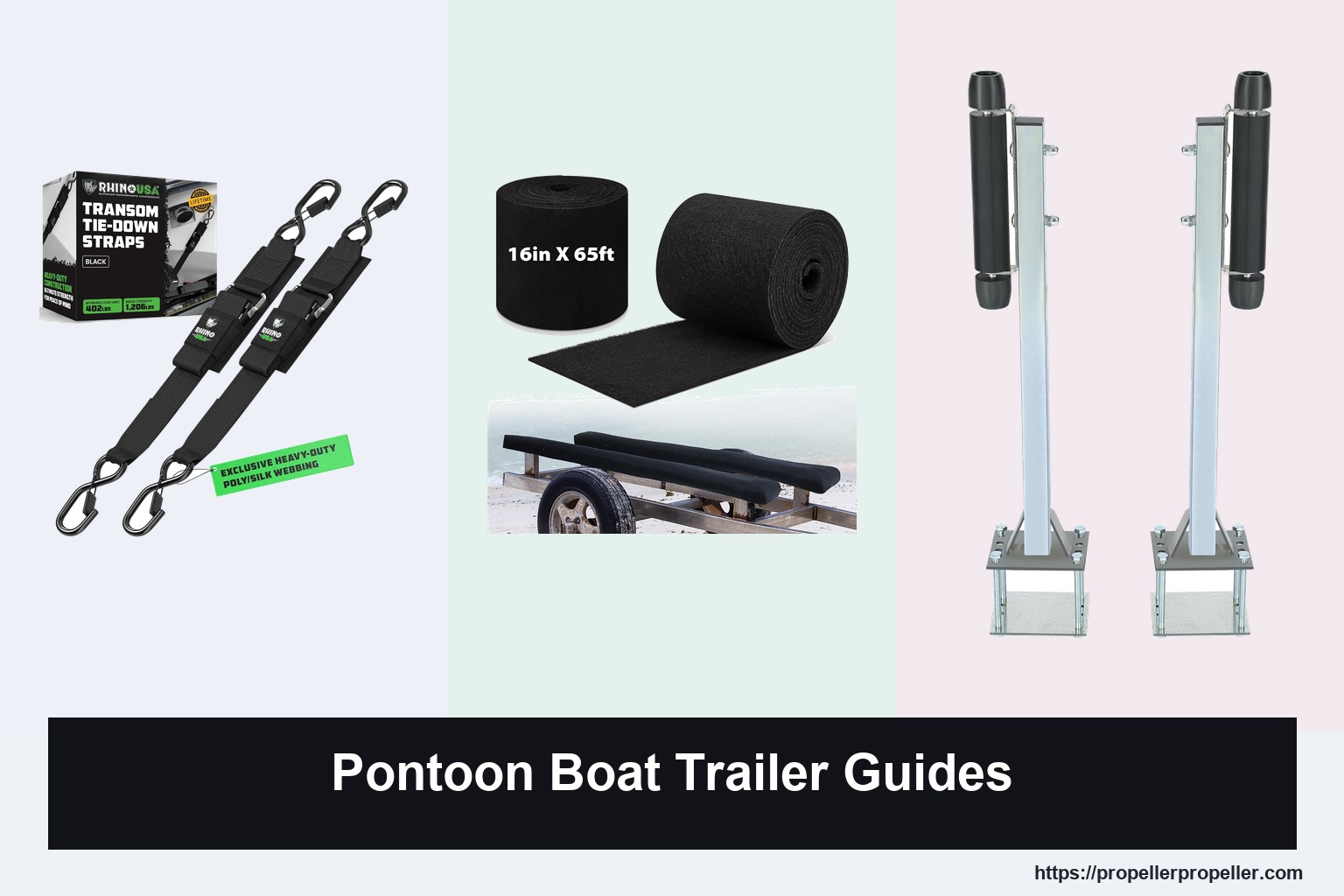
Pontoon loading is less forgiving than many boat owners expect. A trailer that looks close enough at the ramp can still leave you fighting angle, alignment, and contact points when the bunks or guides do not suit the hull and the trailer geometry. The right trailer accessory should reduce that friction, not add another adjustment problem. For pontoon owners, the most useful options tend to fall into three roles: tie-down security, bunk surface protection, and upright guide control.
This roundup focuses on that practical mix. One product secures the boat after loading, one protects the contact surface where the boat rides, and one helps steer the boat onto the trailer more predictably. That combination matters because pontoon trailering is often about controlling movement at each stage, not solving only one problem. The strongest choices here stand out for durability, fit range, and the kind of setup they ask from you before the next launch or retrieval.
Top Pontoon Boat Trailer Guides on the Market

Rhino USA Boat Transom Straps
- 2-pack tie-down set
- 13.5 to 48 inch adjustment
- Stainless steel hardware
- 400 pound load capacity
- Polyester strap material

Timgle Boat Trailer Bunk Carpet
- 16 inch by 65 foot roll
- 6mm thick cushioning
- Polyester with PU backing
- Floating installation type
- For bunk board replacement

KUAFU 30 Inch Trailer Guide
- 30 inch guide height
- Adjustable 13 to 29.5 inches
- Steel with zinc plating
- PVC pipe protectors
- Direct bolt-on installation
This article may contain affiliate links. As an Amazon Associate, the website may earn from qualifying purchases at no additional cost to you.
Pontoon Boat Trailer Guides Reviews
Rhino USA Boat Transom Straps
- Number of Pieces
- 2
- Item Dimensions L x W
- 48″L x 2″W
- Load Capacity
- 400 pounds
- Fastener Type
- Buckle
- Material Type
- Polyester
Advantages
- 2-pack covers a standard trailer setup
- Wide 13.5 to 48 inch adjustment
- Stainless steel hardware resists corrosion
- 400 pound load capacity
- Unlimited lifetime warranty
Limitations
- Not a loading guide
- Only addresses tie-down security
This is the most straightforward security piece in the group, and that is exactly why it matters after loading a pontoon. The 2-pack format covers a standard trailer setup without forcing you to piece together separate hardware. The 13.5″ to 48″ adjustment range is wide enough to accommodate different trailer and transom dimensions, so you are not locked into one boat size or one tie-down geometry. The 400-pound load capacity and 1200-pound tensile strength give this strap set a clear job: hold the boat in place during transport rather than merely dressing the trailer.
The construction details are the part buyers should pay attention to if they trailer in wet conditions often. Polyester is a sensible webbing choice for marine use, and the stainless steel hardware plus corrosion-resistant S hooks are there for the part of the system that usually fails first. The buckle fastener keeps the process simple, which matters when you are tying down after a long day at the ramp. The straps measure 48 inches long and 2 inches wide, so they bring a compact but substantial profile that should fit neatly into routine trailer use without adding clutter.
Against the other two products here, this one serves the final step rather than the loading or support stage. It will not guide the boat onto the trailer, and it will not cushion the bunk contact area, but it closes the loop by securing the boat for road travel. That makes it the best choice for owners who already have alignment under control and need a dependable tie-down solution with a strong warranty backstop. If your priority is transport security over launch assistance, this is the clearest recommendation.
PHOTO: Rhino USA Boat Transom – Transom Tie-Down Straps → Source: Amazon.com
Timgle Boat Trailer Bunk Carpet
- Item Dimensions L x W
- 16.93″L x 13.78″W
- Material Type
- Polyester
- Backing Type
- Polyurethane (PU)
- Pile Height
- 0.24 inches
Advantages
- 16-inch by 65-foot roll
- 6mm cushioning layer
- Polyester construction
- PU backing adds support
- Cut-to-fit replacement use
Limitations
- Requires cutting and installation
- Does not assist trailer alignment
This carpet roll is aimed at the contact surface that takes the most wear during repeated loading and unloading. The 16-inch width and 65-foot length give it the scale to cover a substantial amount of trailer bunk material, while the 6mm thickness adds a clear cushioning layer between the hull and the trailer surface. That extra padding matters when you want to reduce abrasion at the contact points that see the most sliding. For pontoon trailering, where consistent support matters as much as grip, the smoother surface can help protect both finish and structure.
Material choice is central here. Polyester with a polyurethane backing gives the carpet a marine-oriented construction, and the non-abrasive surface is the selling point that matters most in actual use. It is designed to be cut to length, so installation can be adapted to the bunk size rather than forcing the bunk to match a preset panel. The floating installation type also points to a simpler replacement job, which is useful if you are refreshing worn bunk boards instead of rebuilding the entire trailer support system.
Compared with the other two products, this is the most passive solution, but that is not a weakness if your real problem is wear and cushioning. It does not guide the hull into position the way a vertical guide does, and it does not secure the boat for travel the way transom straps do. What it does is preserve the support surface, which can reduce scuffing and make loading feel less harsh. Choose it if your trailer already aligns well and you want to improve the contact surface before looking at anything else.
PHOTO: Timgle Boat Trailer Bunk – 16in X 65ft → Source: Amazon.com
KUAFU 30 Inch Trailer Guide
Advantages
- 30 inch guide height
- Adjustable 13 to 29.5 inches
- Zinc-plated steel construction
- PVC pipe protectors
- Direct bolt-on design
Limitations
- Installation may require experience
- Focused on loading guidance only
This is the most directly relevant piece for people whose main frustration is getting the boat onto the trailer cleanly. The 30-inch guide height gives the trailer a tall visual and physical cue at the loading area, while the adjustable 13-inch to 29.5-inch range lets you tune the setup for different trailer layouts. That combination matters because guides only help if they rise high enough to stay visible and meaningful at the ramp. As a pair of guides, it creates a more defined path for approach and correction when alignment is imperfect.
The construction is aimed at durable, repeated use. Steel forms the core structure, and the zinc-plated surface is there to resist rust in a marine environment. The PVC pipes with end caps are a useful detail because they help keep the boat from being scratched during contact. Direct bolt-on installation is simple in concept, but it does assume some confidence with trailer hardware. The note recommending professional installation if you have no previous experience is worth taking seriously because proper positioning determines how useful the guides will be.
Relative to the straps and the bunk carpet, this product addresses the moment of loading rather than the aftermath or the support surface. That makes it the most active tool in this set, especially for owners who want the trailer to do more of the alignment work for them. It is less about finish protection than the carpet and less about travel security than the straps, but it solves the most visible part of the loading process. If your pontoon trailer needs a clearer guide path at the ramp, this is the strongest pick.
PHOTO: KUAFU 30 Inch Trailer – Guide Posts Pair → Source: Amazon.com
How to Choose Pontoon Boat Trailer Guides
Choosing trailer accessories for a pontoon is less about adding hardware and more about solving the right problem at the right stage of loading. Some buyers need a better way to line up the boat at the ramp. Others need to protect the bunk contact area or keep the boat secure once it is on the trailer. The best setup depends on where the current process breaks down, how often you launch, and how much trailer adjustment you are willing to handle.
Loading Control
The first question is whether you are trying to guide the boat onto the trailer or simply support it once it is there. Vertical guide hardware is the most useful when the boat drifts off center as you approach the trailer, because it gives you a visual boundary and a physical reference point. That matters most at shallow ramps or in crosswind conditions, where even a small correction error becomes a larger loading problem. If your issue is alignment, start here before looking at anything else.
Hull Protection
Bunk surface material is the category to study when you care more about contact wear than loading precision. A smoother, thicker surface can reduce abrasion where the hull meets the trailer, which is especially useful if the boat is frequently launched and retrieved. Thickness is not only about comfort. It affects how much cushioning sits between the boat and the support structure, so a modest increase can be meaningful if your current surface is hard or worn.
Tie-down Security
Once the boat is on the trailer, securement becomes the priority. A proper tie-down should be easy to tension, sized for the trailer geometry, and built from materials that tolerate wet use. This is the stage where corrosion resistance and hardware quality matter most because the straps or buckles will see repeated exposure to spray, rain, and road grime. If you travel long distances from the ramp, do not treat this as an accessory detail. It is part of the safety system.
Fit and Adjustment
Adjustment range is one of the most important practical details in this category. Boats, trailers, and bunk setups are not identical, so a fixed-size component can create an awkward compromise or force you into an unstable position. Look for enough travel in the hardware to match your trailer’s geometry without leaving the part at the edge of its usable range. More adjustment is not automatically better, but too little adjustment usually means more frustration during setup.
Installation Demands
Installation effort should match your comfort level with trailer work. Some accessories are cut-to-fit or straightforward to tension, while others require bolt-on mounting and careful positioning. That difference matters because the most effective trailer guide is the one installed correctly in the right place. If you are not confident with hardware alignment or drilling, prefer a simpler product or budget for help. A less ambitious install done well is usually more useful than a complex one left half-finished.
Pontoon Trailer Guides Comparison Table
| Product | Best For | Material | Color | Item Highlight | Manufacturer Warranty Description |
|---|---|---|---|---|---|
| Rhino USA Boat Transom Straps | Best Tie-Down Option | Polyester | Black | 2in x 48in Adjustable Tie Downs to Trailer. Ultimate Transom Straps for Trailering Safety with Boat, Jet Ski & Pontoon. | Unlimited Lifetime Warranty Included |
| Timgle Boat Trailer Bunk Carpet | Best Bunk Protection | Polyester | Black | 8/10/12/16/18/20/24 in Marine Grade Carpet for Trailer Bunk, Pontoon, Guides, Padding, Replacement, Lift Runners for Outdoor | / |
| KUAFU 30 Inch Trailer Guide | Best Loading Guide | Not Specified | Not Specified | Not Specified | Not Specified |
How We Tested & Analyzed Pontoon Boat Trailer Guides
This guide was built around category-level utility rather than a narrow feature count. The comparison focused on how each accessory affects a different stage of pontoon trailering, including alignment at the ramp, surface protection during loading, and road security after the boat is secured. That approach matters because a trailer setup can look complete while still leaving one weak point that causes most of the friction. The analysis therefore emphasizes operational consequences, not just materials and dimensions.
Durability and compatibility were treated as deciding factors because trailer accessories live in a harsh environment. Marine exposure, repeated motion, and contact with wet hardware make corrosion resistance, adjustment range, and installation style especially important. When products offered clear evidence in those areas, those details were weighted more heavily than generic marketing language. Where a specification did not appear, it was left out rather than inferred. The goal was to recommend only what the record supports.
Value was judged in practical terms. That means considering whether a product solves a distinct problem well enough to justify its place in a trailer setup, not whether it simply has the longest feature list. A strong product in this category should either improve loading control, reduce wear, or secure the boat confidently for travel. The final recommendations reflect those roles and the tradeoffs between simplicity, installation effort, and the stage of trailering each accessory improves most.
Frequently Asked Questions
Do pontoon trailers need guides or straps first?
Start with the problem that creates the most frustration or risk. If the boat is hard to center at the ramp, guides matter most. If the boat is already loading well but moves during transport, securement should come first. Many owners eventually use both because each part addresses a different stage of trailering.
How important is adjustment range?
Very important. A wide adjustment range lets one accessory work across different trailer setups and boat positions. Too little range can force awkward placement or reduce effectiveness. The best choice is the one that fits your trailer geometry without leaving the part at the edge of its usable travel.
What material traits matter most for trailer accessories?
Look for corrosion resistance, durable webbing or steel, and contact surfaces that will not damage the hull. Marine use punishes weak hardware quickly. A good product should tolerate wet conditions, repeated motion, and road exposure without making maintenance more difficult than the benefit it provides.
Can one accessory solve every pontoon loading problem?
Usually not. Loading alignment, bunk protection, and transport security are different jobs. One accessory may improve one stage dramatically, but a complete setup often combines more than one category. The right purchase depends on which part of the process is causing the most trouble right now.
Final Thoughts
Pontoon trailering becomes much easier when each accessory has a clear job. Guides help with alignment, bunk carpet protects the contact surface, and tie-downs secure the boat for transport. That is the core decision: identify the weak point in your current setup and buy the part that addresses it directly instead of assuming one product will fix the whole process.
For most buyers, the best choice is the accessory that removes the most stress at the ramp or on the road. If loading is the challenge, a properly installed guide is the most immediate improvement. If the hull or support surface is wearing too quickly, bunk carpet is the smarter upgrade. If the boat shifts in transit, securement should be the priority. Choose the tool that solves your actual problem, and the rest of the trailer setup becomes much easier to trust.



