
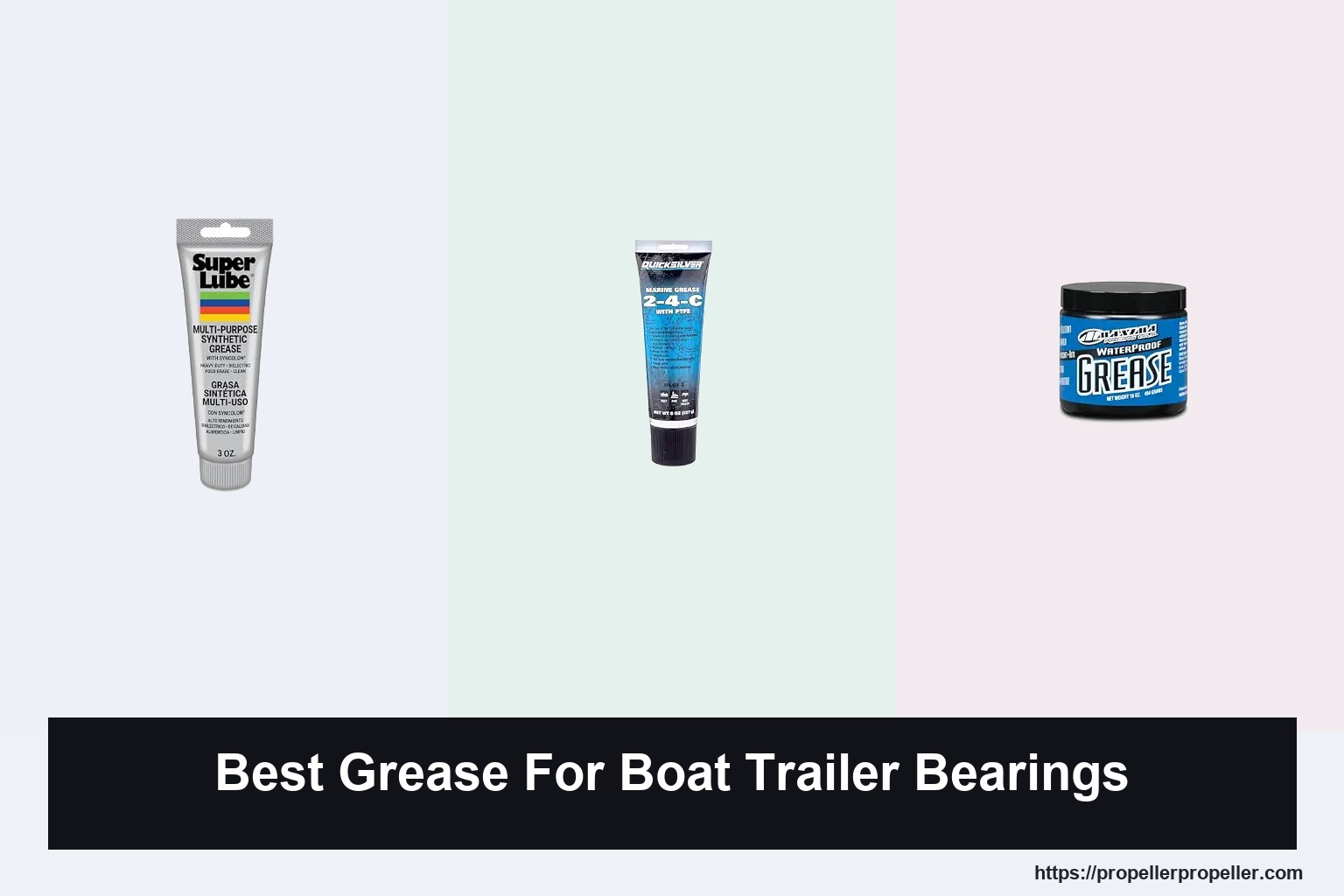
Boat trailer bearings live a harder life than most people expect. They see heat from road speed, repeated immersion, splash exposure, and long periods of storage between uses. The right grease has to stay in place, resist washout, and continue protecting metal surfaces when conditions turn wet, salty, or hot. That makes this a category where the wrong choice can cost you smooth towing, shorter bearing life, and avoidable maintenance.
This roundup focuses on greases that bring practical protection to trailer hubs and similar wet-duty hardware. The strongest options here combine water resistance, temperature stability, and load-carrying additives, while the weaker fits are still useful when a buyer needs a smaller tube or a more general-purpose lubricant. The key differences are in how much heat they tolerate, how well they resist moisture, and whether they are better suited to marine use, mixed automotive service, or compact maintenance kits.
Top Grease For Boat Trailer Bearings on the Market
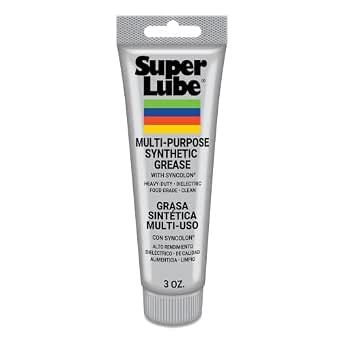
Super Lube Multi-Purpose Synthetic Grease
- 3 oz tube
- Water and corrosion resistant
- 450 °F upper rating
- NSF H1 registered
- Syncolon synthetic formula

Quicksilver 2-4-C Marine Grease
- 8 oz tube
- PTFE fortified
- Water-resistant lithium base
- Trailer wheel bearings
- Extreme pressure additives

Maxima Waterproof Grease
- 16 oz bottle
- NLGI No. 2
- -20 °F to 560 °F
- Water washout resistant
- Boat trailer axle use

Valvoline Moly-Fortified Synthetic Grease
- 1 lb jar
- Moly-fortified
- -60 °F to 425 °F
- NLGI No. 2
- GC-LB lithium complex

Permatex White Lithium Grease
- 1.5 oz tube
- White lithium grease
- Moisture resistant
- Metal-to-metal use
- Rust protection
This article may contain affiliate links. As an Amazon Associate, the website may earn from qualifying purchases at no additional cost to you.
Grease For Boat Trailer Bearings Reviews
Super Lube Multi-Purpose Synthetic Grease
- Container Type
- Tube
- Liquid Volume
- 3 fluid ounces
- Upper Temperature Rating
- 450 °F
- Compatible Material
- Metal
- Item Form
- Grease
Advantages
- Portable 3 oz tube
- High-temperature synthetic grease
- Resists water and corrosion
- NSF H1 registered
- Stays put under pressure
Limitations
- Too small for frequent repacking
- Not trailer-specific branding
Super Lube is the smallest, most portable option in this group, and that matters when you want a backup tube for trailer maintenance rather than a bench supply. The 3 fluid ounces volume keeps it easy to stash in a tow vehicle, tool bag, or marina kit. Its 450 °F upper temperature rating adds useful headroom for hot hubs and other warm-running parts. The value here is less about bulk and more about having a grease that can travel with the trailer and still handle demanding conditions.
Its synthetic, multi-purpose profile broadens the use case beyond bearings alone. The product is described as resistant to water, salt water, dirt, and corrosion, which is the kind of resilience trailer hardware needs after launches and recoveries. It is also NSF H1 registered and Kosher certified, so it sits in a more controlled product class than many general automotive greases. The non-melting formula is an important practical detail because a grease that stays put is less likely to run away from critical contact surfaces during heat cycles.
Against the larger marine and automotive options here, Super Lube is the most compact and the most general-purpose. That makes it a smart choice for owners who want one small tube for bearings, shop work, and emergency top-offs, not a large pail dedicated only to trailer hubs. The tradeoff is capacity, not capability. For buyers who prioritize portability and a strong high-temperature ceiling, this is the cleanest compact recommendation.
PHOTO: Super Lube Multi-Purpose Synthetic – Tube Front → Source: Amazon.com
Quicksilver 2-4-C Marine Grease
- Container Type
- Tube
- Liquid Volume
- 8 fluid ounces
- Viscosity
- 2-4
- Item Form
- Grease
Advantages
- Marine-focused formulation
- PTFE fortified
- Resists water breakdown
- Trailer bearing use listed
- 8 oz service tube
Limitations
- Less volume than jar options
- More specialized than general-purpose greases
Quicksilver is the most directly marine-oriented grease in the lineup, and that specificity is valuable when trailer bearings spend time in wet, corrosive environments. The grease is a 2-4-C Marine Grease with PTFE and a lithium-based NLGI 2 structure, which points to a product built for sliding surfaces, bearings, and other moving hardware that needs persistent lubrication. Its 8-ounce tube also gives enough volume for regular trailer service without moving into bulk storage territory.
The practical appeal comes from its stated resistance to water breakdown and oxidation. That combination matters because trailer hubs are exposed to moisture at launch, recovery, and storage. The product also lists trailer wheel bearings among its specific uses, which is the most relevant signal for this roundup. PTFE and extreme pressure additives expand its usefulness beyond simple lubrication, especially where metal surfaces see friction, load, and repeated motion. For a trailer that lives near salt air or freshwater ramps, those details are not decorative.
Compared with the more general synthetic and lithium greases here, Quicksilver is the most purpose-built marine choice. It does not lead on container size, but it does lead on context. Buyers who want a grease that belongs in a trailer hub and other boat hardware without overthinking compatibility will see the clearest fit here. If marine exposure is the main concern, this is the strongest recommendation.
PHOTO: Quicksilver 2-4-C Marine Grease – Tube Front → Source: Amazon.com
Maxima Waterproof Grease
- Container Type
- Bottle
- Liquid Volume
- 16 fluid ounces
- Upper Temperature Rating
- 293 °C
- Compatible Material
- Metal
- Item Form
- Grease
Advantages
- Large 16 oz bottle
- Very wide temperature range
- Water washout resistant
- Salt-water environment use
- Extreme-pressure additives
Limitations
- Bulkier than tube formats
- Less portable for roadside use
Maxima is the heavy-duty standout in this list because it combines a large fill size with an unusually wide operating range. The 16 fluid ounces in a bottle format are practical for owners who service multiple trailers or repack bearings on a schedule. More important is the -20 °F to 560 °F temperature range, which gives it a very broad envelope for seasonal towing and hot hub conditions. That makes it attractive for buyers who want one grease that can cover cold starts, summer trips, and demanding duty cycles.
The technical story is equally strong. It is a lithium complex NLGI No. 2 grease with high-density polymer, extreme pressure additives, rust inhibitors, and corrosion inhibitors. Those ingredients matter because trailer bearings fail when grease washes away, thins out, or loses film strength under load. The product also states resistance to water washout and includes boat trailer axles and hubs in salt water environments among its intended uses. That is a direct fit for the category and a meaningful signal for durability around launch ramps.
Relative to the more compact Super Lube tube and the marine-specific Quicksilver grease, Maxima is the most serious choice for frequent trailer maintenance. It brings the strongest combination of capacity, load protection, and environmental resistance. The tradeoff is that it is less compact and less specialized in branding than the marine-only option, but the performance envelope is broader. For owners who repack bearings often or maintain more than one trailer, this is the most compelling all-around pick.
PHOTO: Maxima Waterproof Grease – Jar Front → Source: Amazon.com
Valvoline Moly-Fortified Synthetic Grease
- Container Type
- Jar
- Upper Temperature Rating
- 425 °F
- Item Form
- Grease
Advantages
- Moly-fortified
- Very wide temperature range
- GC-LB lithium complex
- 1 lb jar
- Extreme-pressure protection
Limitations
- Not marine-specific
- Jar less portable than tube
Valvoline stands out for buyers who care most about film strength under load. The moly-fortified formula is the key difference, because molybdenum-based reinforcement is useful when bearing surfaces, hubs, or related components see heavier stress. The product also carries a -60 °F to 425 °F protection range, which gives it unusually broad low-temperature coverage for cold-weather towing and year-round storage conditions. In a category where moisture gets the attention, load resistance is still a major reason to choose a grease like this.
The grease is described as an NLGI No. 2 GC-LB lithium complex EP formula in synthetic base oil. That combination points to a product built for both wheel-bearing service and chassis-style applications where extreme pressure matters. The 1-pound jar format is large enough to support repeated maintenance without feeling excessive for a private owner. It does not carry the marine-specific positioning of Quicksilver or the explicit salt-water language of Maxima, but it does deliver a very broad service profile for mixed automotive and trailer duty.
Against the other picks here, Valvoline is the best choice when load handling and temperature breadth matter more than a strict marine label. It is less specialized than the marine-focused grease, but more stress-ready than a basic general-purpose tube. Buyers maintaining multiple vehicles, trailers, or equipment will appreciate that flexibility. If your trailer bearings share service demands with other heavy-duty hardware, this is the smartest load-focused option.
PHOTO: Valvoline Moly-Fortified Synthetic Grease – Product Can → Source: Amazon.com
Permatex White Lithium Grease
- Container Type
- Tube
- Liquid Volume
- 1.5 fluid ounces
- Compatible Material
- Metal-to-metal and Metal-to-plastic
- Item Form
- Grease
- Upper Temperature Rating
- 1100 °F
Advantages
- Lowest price point
- Very compact tube
- Moisture resistant
- Rust protection
- Metal-to-plastic compatible
Limitations
- Smallest fill size
- Less trailer-specific than others
Permatex is the smallest and least expensive option here, which makes it appealing as a utility tube rather than a primary trailer-repacking grease. The 1.5 fluid ounces size is easy to keep in a glove box or tool kit, and the metal-to-metal and metal-to-plastic compatibility widens where it can be used around the trailer and tow vehicle. That flexibility is useful for owners who want one small lubricant for several minor maintenance points, not just bearings.
Its core strengths are moisture resistance, high-heat tolerance, and rust protection. Those qualities support its place in a trailer-related toolkit, although the product’s stated suggested applications lean more toward doors, latches, tracks, and general maintenance than wheel bearings. That means the grease is useful as a support product, but it is not the most specifically tailored option for regular hub service. The stainless and non-toxic description also adds a small practical benefit for storage and handling in mixed-use garages or maintenance kits.
In direct comparison with the other products, Permatex is the budget and convenience play, not the most robust bearing grease. It is the one to buy when you need a compact, inexpensive tube for light-duty lubrication and occasional trailer-related touch-ups. Buyers looking for the best dedicated grease for boat trailer bearings should move up the list, but those who need a cheap, handy backup will find clear value here.
PHOTO: Permatex White Lithium Grease – Blister Pack Front → Source: Amazon.com
How to Choose Boat Trailer Grease
Boat trailer grease has to do more than reduce friction. It has to survive water intrusion, hot hubs, long storage periods, and repeated loading under road vibration. The right product is the one that keeps a stable protective film when the trailer is launched, recovered, and then hauled for hours at highway speed. That is why the most important comparison points are water resistance, temperature stability, load handling, and how easy the grease is to apply and repack.
Water Resistance
Moisture resistance is the first filter because bearings fail fast when grease breaks down around water. A trailer that sees boat ramps, splash exposure, or wet storage needs a lubricant that resists washout and keeps coating the metal surfaces after repeated immersion. If a grease is only good in a dry garage, it is the wrong tool for the job. Look for direct claims about water resistance, washout resistance, or marine use, and treat those as more important than cosmetic packaging or general-purpose labeling.
Temperature Stability
Hub grease works best when it stays consistent across cold starts, long drives, and hot summer towing. A grease with a narrow temperature window can thin out or stiffen too much, and both problems reduce protection. For boat trailers, you want enough high-temperature margin to survive heated bearings and enough low-temperature performance to move smoothly on a cold morning. The broader the range, the more forgiving the grease will be across seasons and towing schedules.
Load Capacity
Trailer bearings do not just spin. They carry weight, absorb road shock, and often deal with imperfect loading over long distances. That is where extreme-pressure additives and film-strength enhancers matter. These ingredients help keep a protective layer in place when contact pressure rises. If you tow heavy loads, travel far, or service hubs that run warm, choose a grease that explicitly calls out EP performance or heavy-load resistance rather than one that only promises general lubrication.
Container Size
The right container depends on how often you service your trailer. Small tubes are convenient for emergency top-offs, quick roadside maintenance, and owners who only repack bearings occasionally. Larger bottles and jars are better for frequent maintenance, multiple trailers, or shop use where you do not want to open a new package every time. A bigger container can also be more economical over time, but only if you will actually use it before storage conditions degrade the product.
Compatibility and Use
A grease can be excellent and still be the wrong match for your maintenance routine. Some products are clearly aimed at marine hardware and trailer hubs, while others are broader automotive lubricants that happen to work well in those applications. It helps to decide whether you want a dedicated trailer grease or a multipurpose lubricant that can also handle hinges, cables, or other metal parts. If your trailer maintenance is part of a wider ownership routine, a versatile formula may be more practical than a narrow specialty product.
Grease Comparison Table
| Product | Best For | Volume | Temp Range | Container | Use Profile | Form |
|---|---|---|---|---|---|---|
| Super Lube Multi-Purpose Synthetic Grease | Best Compact Tube | 3 fluid ounces | 450 °F | Tube | Multipurpose Lubricant | Grease |
| Quicksilver 2-4-C Marine Grease | Best Marine Pick | 8 fluid ounces | Not Specified | Tube | Marine lubrication, general use, steering system cables, throttle and shift cables, tilt lock mechanisms, tilt tube, remote controls, prop shaft, swivel pins, trailer wheel bearings | Grease |
| Maxima Waterproof Grease | Best Heavy-Duty Option | 16 fluid ounces | 293 °C | Bottle | Various automotive and recreational applications, especially in harsh environments or conditions where water resistance and high temperature resistance are required. | Grease |
| Valvoline Moly-Fortified Synthetic Grease | Best Load Resistance | 127.22 ml | 425 °F | Jar | Automotive, Industrial | Grease |
| Permatex White Lithium Grease | Best Budget Tube | 1.5 fluid ounces | 1100 °F | Tube | Fleet and plant maintenance. | Grease |
How We Tested & Analyzed Grease for Boat Trailer Bearings
The analysis focused on the factors that matter most for trailer bearing service: resistance to water intrusion, temperature stability, load handling, packaging convenience, and clarity of intended use. Products were compared by the practical demands they address rather than by brand positioning or generic marketing language. That approach favors greases with strong evidence for wet environments, heat tolerance, and mechanical protection, because those are the conditions that most directly affect bearing life and maintenance effort.
When products overlapped on basic grease type, the deciding factors became more specific. Container size, operating range, marine suitability, and the presence of extreme-pressure or moly reinforcement helped separate a compact backup tube from a full-service marine or heavy-duty option. The review structure also considered how each grease would fit a real maintenance routine, including whether it is better as a dedicated trailer product or as a broader shop lubricant that can cover several jobs.
No hands-on testing claims are made here. The judgments are based on the strongest verified product facts and on how those facts translate into performance, upkeep, and buyer tradeoffs. Where a product had a narrower maintenance role, that limitation was treated as part of the recommendation rather than a flaw. That keeps the guide focused on what a buyer can reasonably expect before choosing a grease for trailer hubs or related marine hardware.
Frequently Asked Questions
What grease type is best for boat trailer bearings?
The best choice is usually a grease that resists water washout, holds up under heat, and maintains a stable film under load. For boat trailers, marine-oriented or heavy-duty EP greases are generally better than basic multipurpose lubes because the bearings face both moisture and road stress.
How important is water resistance?
It is critical. Trailer hubs are exposed to splash, ramps, rain, and sometimes salt water. If the grease cannot resist moisture, it can break down, lose protection, and let corrosion start inside the bearing area. Water resistance is one of the most important traits in this category.
Should I choose a small tube or a larger container?
That depends on how often you service the trailer. A small tube is easier to carry for emergencies and occasional touch-ups. A larger jar or bottle makes more sense if you repack bearings regularly or maintain multiple trailers. Capacity is convenience, not performance, so choose around your routine.
Can one grease handle both trailer bearings and other marine parts?
Yes, if it is a versatile grease with good water resistance and suitable temperature performance. Many buyers prefer one formula that can also handle cables, hinges, and other hardware. The tradeoff is that a dedicated marine bearing grease may be more specialized for hub service, while a multipurpose grease offers broader utility.
Final Thoughts
The best grease for boat trailer bearings is the one that matches your exposure and maintenance habits. If you launch often or deal with salt water, prioritize moisture resistance and a stable heavy-duty formula. If you want one grease for both trailer hubs and other service points, a versatile synthetic or marine lubricant can make more sense than a narrow specialty tube. What matters most is keeping the grease in place when the trailer is wet, hot, and loaded.
For most buyers, the strongest choice will be the product that combines water resistance, load protection, and a container size that fits the way you maintain the trailer. Small tubes are excellent backups, larger jars suit frequent service, and marine-specific formulas are the safest bet for regular ramp use. Choose for the conditions you actually face, not the label language you like best, and your bearings will have a much better chance of staying smooth and protected.



