
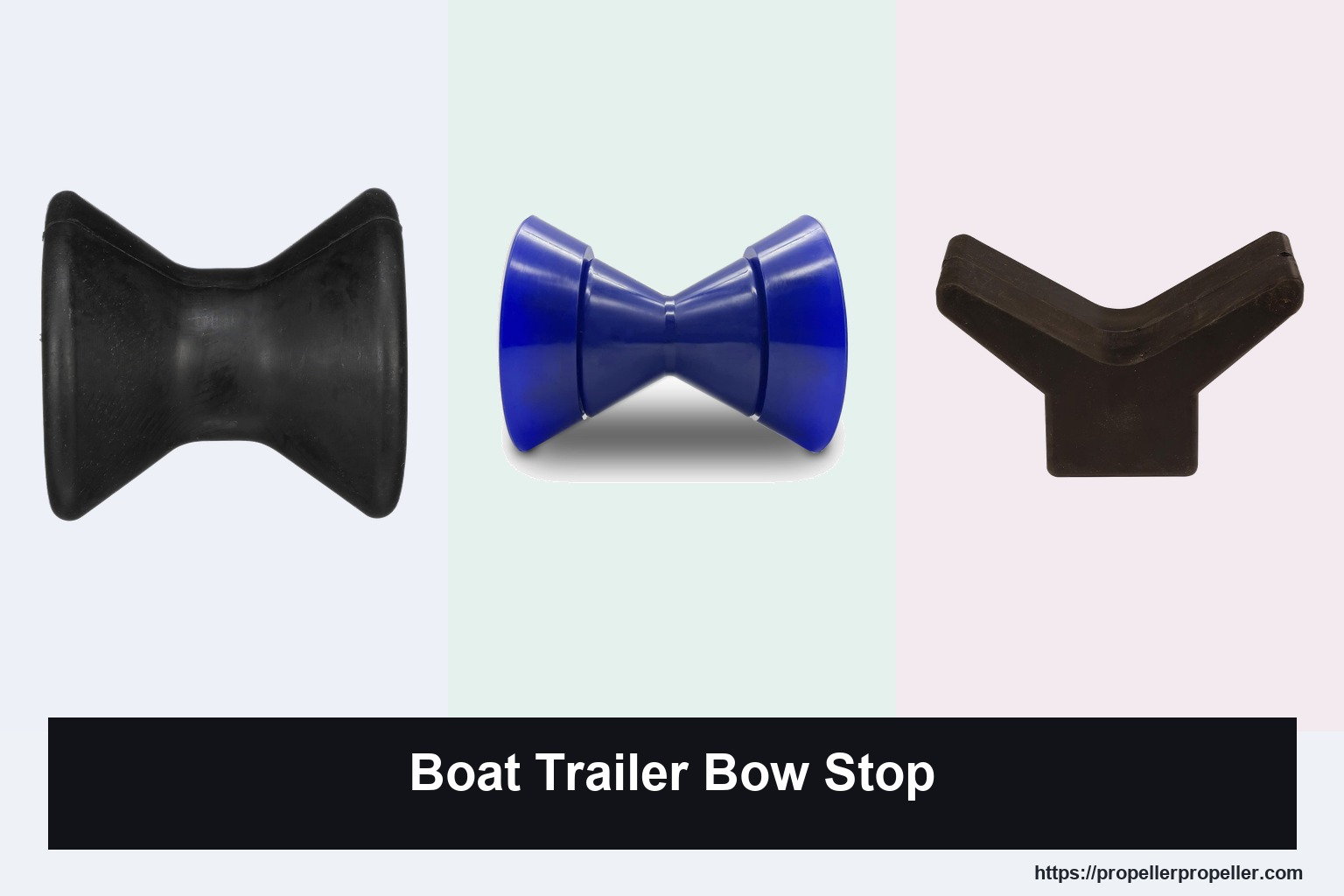
A good boat trailer bow stop does more than keep the bow from wandering at the ramp. It centers the hull, cushions contact at the winch post, and reduces the small impacts that can turn loading and towing into a recurring nuisance. The right part depends on what you are trying to solve. Some buyers need a simple roller that guides the boat smoothly into position. Others need a rubber stop that cradles the bow more firmly and limits movement once the boat is secured.
The four picks below cover the main buyer needs in this category: low-cost replacement rollers, tougher roller assemblies, and rubber bow stops with different shapes and sizes. The differences matter because trailer geometry, hull finish, and loading style all change what counts as the better fit. A compact guide may be enough for one trailer, while another setup benefits from more cushion or a deeper bow cradle. The best choice is the one that matches your trailer hardware and the way you actually launch and retrieve.
Top Boat Trailer Bow Stop on the Market

Seachoice Molded Bow Roller
- 4-inch roller width
- 1/2-inch inner diameter
- Oil, fuel, salt resistant
- Supports bow during loading
- Helps center the craft

COLOFULWAY 4-Inch Bow Roller Assembly
- 4-inch roller assembly
- Fits 1/2-inch shaft
- TPU construction
- End bells included
- Blue finish

Attwood Rubber Bow Stop
- Rubber Y-stop shape
- 3-inch mounting hole
- 3-inch by 3-inch size
- Non-marring finish protection
- Front-center trailer position

Attwood Deep-V Bow Stop
- 80-degree deep V
- Natural black rubber
- 3-inch opening
- 3/8-inch mounting hole
- Helps reduce vibration
This article may contain affiliate links. As an Amazon Associate, the website may earn from qualifying purchases at no additional cost to you.
Boat Trailer Bow Stop Reviews
Seachoice Molded Bow Roller
Advantages
- Lowest-cost roller option
- Resists oil and fuel
- Handles salt exposure
- Smooths loading and centering
- Simple replacement part
Limitations
- No assembly hardware shown
- Limited fit detail
This is the most straightforward option for a trailer owner who wants a replacement roller without overcomplicating the setup. The 4-inch roller width gives the bow a broad contact surface, while the 1/2-inch inner diameter keeps it aimed at common trailer hardware. That combination matters because it determines whether the part swaps in cleanly or turns into an awkward mismatch. As a bow-contact piece, it is built to support the boat or personal watercraft while helping the craft roll into position instead of catching hard on the trailer.
The appeal here is how little this part asks of the rest of the trailer. It is meant to be a replacement or first-time outfitting piece, so it suits a buyer working with a simple winch-post setup rather than chasing a highly specialized assembly. Its resistance to oil, fuel, and salt corrosion is a practical advantage for trailers that see ramp use and damp storage. The same roller action that helps loading also absorbs some of the shock that comes with launching and hitching, which can reduce the abruptness of repeated contact at the bow stop.
Against the other products in this group, this Seachoice roller is the cleanest low-cost answer when the goal is basic centering and smooth movement. It does not try to add bells, brackets, or a deep cradle shape. That makes it the right choice for buyers who know they need a roller and want a direct, economical replacement. If your priority is simple compatibility and minimal cost, this is the one to start with. It earns its place as the best budget roller by focusing on the essential job and nothing more.
PHOTO: Seachoice Molded Bow Roller – Black molded roller → Source: Amazon.com
COLOFULWAY 4-Inch Bow Roller Assembly
- Package Weight
- 0.91 kg
- Color
- Blue
Advantages
- Fits 1/2-inch shaft
- TPU roller material
- End bells reduce scraping
- Helps center the boat
- Single-assembly replacement
Limitations
- Requires shaft fit match
- Higher cost than basic roller
This assembly is aimed at buyers who want more than a bare roller. The 4 inch Boat Trailer Roller Assembly format and the fits 1/2″ shaft note point to a part designed for a specific mounting layout, which matters because shaft fit is what determines whether the roller actually belongs on the trailer. The TPU material is also important. Thermoplastic polyurethane elastomer is a sensible choice when the goal is a roller that can take repeated contact without behaving like a hard, unforgiving stop. That makes the assembly feel more complete than a simple replacement roller.
The end bells are a useful detail because they keep the boat from scraping against bolts or the roller bracket. That matters more than it sounds, especially for boats that settle tightly onto the bow stop during retrieval. The shape also helps center the boat and prevent bow-to-bowstand contact, so the assembly is doing alignment work as well as cushioning work. Since this is a one-pack assembly, it suits a buyer who wants to restore or upgrade a single trailer station rather than rebuild an entire system.
Compared with the Seachoice roller, this COLOFULWAY part is the better pick when the trailer needs a more complete roller solution and the shaft match is known. It is still a roller, but the added spoke-and-bell structure gives it more control around the bow area. Compared with the rubber stops in this roundup, it will generally feel more like a guide than a cradle. That makes it the strongest choice for buyers who want a functional, hardware-aware assembly and are comfortable selecting around shaft size and trailer fit. For that use case, it is the best roller assembly here.
PHOTO: COLOFULWAY 4-Inch Bow Roller – Blue roller assembly → Source: Amazon.com
Attwood Rubber Bow Stop
- Material Type
- Rubber
- Compatible with Vehicle Type
- Trailers
- Auto Part Position
- Front Center
- Manufacturer Warranty Description
- Please contact us if you experience any issues within 30 days of receipt.
Advantages
- Y-stop cradles the bow
- Rubber protects finish
- Compact 3-inch size
- Universal trailer fit
- Front-center mounting role
Limitations
- Rubber can wear over time
- Less rolling action than rollers
This bow stop is for buyers who want the bow held in a more defined cradle rather than simply rolled into place. The Y-stop shape gives the bow a secure resting point, and the non-marring, durable rubber is a major advantage when hull finish matters. At 3 inches by 3 inches with a 1/2-inch mounting hole, it is compact enough to stay focused on the contact point without becoming bulky. That makes it a strong match for trailers where the stop has a clear front-center role and the priority is clean, controlled contact at the bow.
The practical value here is stability. Rubber does not behave like a free-turning roller, so it is better suited to holding the boat in a set position once secured. That difference matters when the trailer sees repeated towing and launch cycles, because the bow stop is expected to cushion rather than encourage movement. The compatibility with trailers is straightforward, and the universal fit note broadens its usefulness for a range of boats. A 30-day warranty contact note adds a small but meaningful post-purchase safety net if something is not right after receipt.
Relative to the Seachoice and COLOFULWAY rollers, this Attwood stop is the better answer when the bow should sit more firmly and not ride on a rotating surface. It is not trying to guide as actively as a roller assembly. Instead, it emphasizes secure cradling and finish protection. Compared with the smaller, deep-V rubber stop in this roundup, it offers a more general bow-hold approach rather than a sharply angled nest. That makes it the best secure cradle for buyers who want an established rubber stop from a known trailer brand and are prioritizing secure positioning over rolling motion.
PHOTO: Attwood Rubber Bow Stop – Y-shaped rubber stop → Source: Amazon.com
Attwood Deep-V Bow Stop
Advantages
- 80-degree deep V
- Compact bow cradle
- Pre-drilled mounting hole
- Reduces vibration
- Simple replacement part
Limitations
- May leave marks
- No rolling action
This is the most shape-specific option in the group, and that is exactly why it stands out. The 80° angle creates a snug fit for the bow, while the 3-inch opening keeps the contact area focused rather than broad and generic. For a trailer that benefits from a defined cradle point, that shape can matter more than a rolling action. The natural black rubber construction adds the expected trailer-stop resilience, and the part is compact at 2 inches by 2 inches, so it is built to do one job well instead of occupying unnecessary space.
The pre-drilled 3/8-inch mounting hole is an installation advantage because it simplifies attachment on compatible hardware. That is useful when a buyer wants a direct replacement that does not require adapting a more complex assembly. Its shock-absorption role is also significant because it reduces road vibration and protects hull surfaces during transport. The tradeoff is plain in the note that rubber may leave marks on boat surfaces. That is a real consideration for buyers with sensitive finishes or who prefer a softer contact strategy.
Among the four products here, this Attwood stop is the most specialized cradle-style choice. It gives up rolling motion entirely in exchange for a tighter bow seat and a very direct hold point. Compared with the larger Attwood Y-stop, it is more compact and more focused on a deep V geometry. Compared with either roller, it is the better pick when you want the bow to settle into a fixed rubber nest instead of moving across a roller surface. That makes it the best deep-V stop for buyers who value a snug fit and a simple mounting approach.
PHOTO: Attwood Deep-V Bow Stop – Y-shaped rubber stop → Source: Amazon.com
How to Choose a Boat Trailer Bow Stop
Choosing a boat trailer bow stop is mostly about matching the part to how your trailer actually supports the boat. Some trailers rely on a roller to guide the bow into place. Others work better with a rubber stop that holds the hull more firmly once the winch takes over. The wrong shape can make loading feel sloppy, and the wrong mounting size can turn a simple swap into a frustrating project. A good decision starts with the hardware you already have, then narrows to the level of support and finish protection you need.
Roller or Rubber
The first decision is whether you want rolling guidance or fixed cradle support. A roller is better when you want the bow to move smoothly as it comes into position. A rubber stop is better when the boat should settle into a firm hold point and stay there. That difference changes how the trailer behaves at the ramp and how much movement you get during transport. If your current setup already uses a roller, replacing it with another roller is usually the simplest path. If the boat feels loose at the bow, a rubber stop may be the better correction.
Fit and Mounting
A bow stop only works well when the hole size and shaft or bracket layout match your trailer. That is why mounting details matter as much as the contact shape. Before buying, check the diameter of the shaft, the width of the roller area, and whether your current hardware uses a simple through-hole or a more specialized assembly. A close match saves time and reduces the chance of improvising with parts that do not seat correctly. If you are replacing one worn piece, matching the existing mount is usually more important than chasing a different style.
Hull Protection
The contact material should match your boat’s finish and how often it sees loading cycles. Rubber can cradle the bow securely, but some rubber parts may mark sensitive surfaces. A molded roller can be gentler in motion and easier on repeated loading contact. If your boat is stored and launched often, look closely at how the part behaves under pressure rather than only at its shape. The goal is not just cushioning. It is preventing the kind of hard point contact that can leave scuffs, scrape gelcoat, or shift the bow off center.
Trailer Stability
A bow stop is also part of how stable the boat feels once it is cinched down. Wider contact surfaces can spread pressure more evenly. A deep-V cradle can keep the bow centered more aggressively. That matters on rough roads or long trips, where small movements can become annoying and eventually wear on the trailer hardware. Think about whether your current problem is alignment, motion, or both. A part that centers well but allows movement may not be enough if the boat still rocks or shifts after loading.
Durability Needs
Trailer hardware lives near water, road grime, fuel, and sunlight, so durability is not optional. If the bow stop sees frequent ramp use or damp storage, look for materials that resist corrosion and hold up under repeated contact. Roller parts that resist oil, fuel, and salt exposure are useful when the trailer is exposed to messy conditions. Rubber parts have their own durability profile, but they can also wear or leave marks over time. The right pick is the one that matches your exposure level and the amount of maintenance you are willing to accept.
Setup Simplicity
A simple replacement can be the smartest purchase when your trailer already has a working bracket and the only problem is wear. In that case, a direct-fit part saves time and keeps the trailer layout unchanged. A more complete assembly makes sense when the current setup is missing pieces or the bow needs better centering hardware. The more parts an option includes, the more important compatibility becomes. Choose the least complicated solution that still solves the loading or holding problem you actually have.
Bow Stop Comparison Table
| Product | Best For | Color |
|---|---|---|
| Seachoice Molded Bow Roller | Best Budget Roller | Not Specified |
| COLOFULWAY 4-Inch Bow Roller Assembly | Best Roller Assembly | Blue |
| Attwood Rubber Bow Stop | Best Secure Cradle | Black |
| Attwood Deep-V Bow Stop | Best Deep-V Stop | Not Specified |
How We Tested & Analyzed Boat Trailer Bow Stop
This roundup focused on how each bow stop or roller changes trailer behavior at the bow, not on generic accessory features. The analysis weighed contact shape, mounting compatibility, material choice, and how each part would affect loading, centering, and transport stability. That matters because this category is not just about replacing worn rubber or plastic. It is about deciding whether the trailer needs smoother motion, firmer cradling, or better protection at the bow contact point.
The comparison also looked at practical fit implications. Hole sizes, shaft compatibility, and assembly style determine whether a part drops into an existing trailer setup or demands adjustment. Material type and shape were treated as operational tradeoffs. Rubber can hold the bow more securely, while rollers can make loading feel less abrupt. When a product included clearer size or mounting details, those details carried more weight because they reduce uncertainty for the buyer.
Limitations were treated as part of the decision rather than as afterthoughts. A compact bow stop may be excellent for a specific cradle point but less flexible across different trailer layouts. A roller assembly may add alignment help but require a more exact hardware match. Where durability notes, finish-protection notes, or mounting cautions were present, they were used to define the better buyer fit and the likely tradeoff. The result is a category guide centered on practical trailer use, not on abstract feature counting.
Frequently Asked Questions
Should I choose a roller or a rubber bow stop?
Choose a roller when you want the bow to move smoothly into position during loading. Choose rubber when you want a firmer cradle that holds the bow more securely once it is on the trailer. The better option depends on whether your main issue is alignment, hold, or both.
Why does mounting hole size matter so much?
Because the bow stop has to fit the trailer hardware you already use. If the hole or shaft size does not match, the part may not install cleanly or may not sit securely. Matching the existing mount usually matters more than choosing the fanciest shape.
Can a bow stop protect the boat’s finish?
Yes, but the level of protection depends on the material and shape. Rubber can cushion contact well, and a roller can reduce harsh loading contact. Some rubber parts may mark surfaces, so finish sensitivity should be part of the decision if the boat has a delicate surface.
What matters most for trailering stability?
A bow stop should keep the boat centered and prevent unnecessary movement. A deeper cradle can help with hold, while a roller can help with loading motion. For stability, look for a part that matches your trailer geometry and keeps the bow from shifting after the boat is secured.
Final Thoughts
The best boat trailer bow stop is the one that solves the actual problem at the bow, not the one with the most general appeal. If you need smoother loading, a roller makes sense. If you need a firmer hold and a more defined cradle, a rubber stop is usually the better path. The differences are small on paper but obvious on the trailer, where fit, material, and shape determine how confidently the boat settles and stays put.
Start with your existing hardware and the way your boat loads onto the trailer. That will usually point you toward the right style immediately. From there, choose the part that matches your mounting setup and the level of hull protection you want. A good bow stop should remove friction from trailering, not add it. When the shape and hardware line up, the right choice becomes very clear.



