
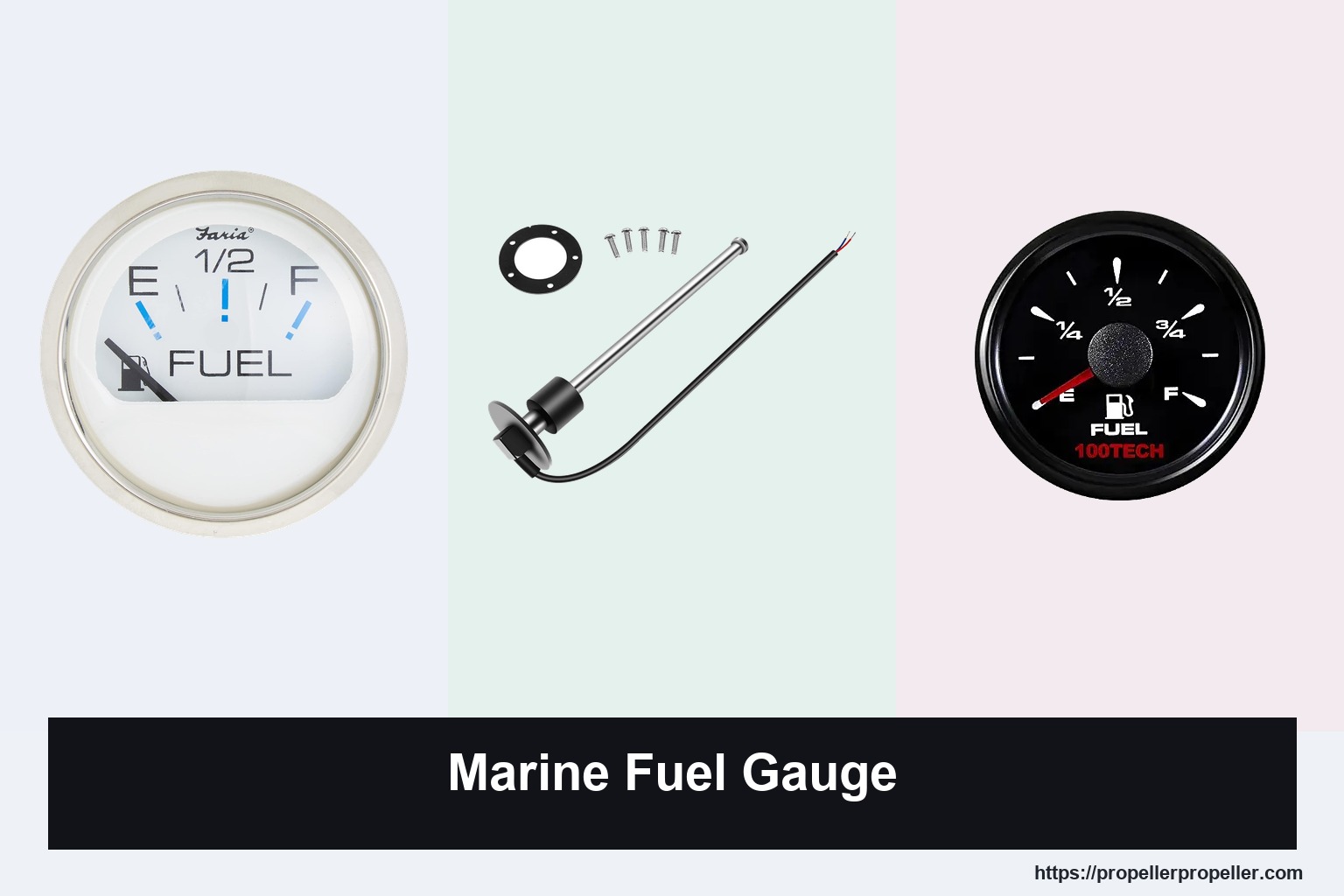
A marine fuel gauge is one of those small instruments that quietly decides how confidently you run a boat. When the reading is stable, the tank signal is matched correctly, and the gauge survives moisture and vibration, you get a clearer picture of range and reserve. When any of those pieces is off, the result is guesswork. That is why the best choices are not simply the most familiar dials. They are the ones that fit the sender signal, mount cleanly, and stay readable when conditions get rough.
This roundup focuses on the practical details that matter most in real use. Signal compatibility is the first filter, because a fuel gauge that cannot match the sender resistance is not useful. Then comes durability, especially stainless steel construction, waterproofing, and corrosion resistance in a marine environment. Display readability, calibration, and installation size also matter because they determine how easily the gauge integrates with an existing dash. The four options below cover those decisions from different angles.
Top Marine Fuel Gauge on the Market

Faria Chesapeake Fuel Level Gauge
- 2-inch white gauge
- Stainless steel construction
- E-1/2-F range
- 1/8″-20 thread style

Geloo Fuel Sending Unit
- 240-33 ohms output
- SUS316 stainless steel
- Standard SAE 5-hole
- Multiple length options

100TECH Adjustable Boat Fuel Gauge
- 5 signal settings
- 2-1/16-inch opening
- 9-32V DC range
- IP67 waterproof rating

100TECH White Adjustable Fuel Gauge
- Five signal inputs
- 2-1/16-inch opening
- 7 backlight colors
- IP67 waterproof
This article may contain affiliate links. As an Amazon Associate, the website may earn from qualifying purchases at no additional cost to you.
Marine Fuel Gauge Reviews
Faria Chesapeake Fuel Level Gauge
- Material Type
- Stainless Steel
- Thread Style
- 1/8″-20
- Item Dimensions
- 7.05 x 6.78 x 2.7 inches
- Item Weight
- 4.16 ounces
- Warranty Description
- LIMITED WARRANTY
Advantages
- Classic white analog face
- Stainless steel housing
- Compact 2-inch size
- Lightweight 4.16-ounce build
- Limited warranty included
Limitations
- Signal compatibility is not detailed
- No adjustable backlight
This gauge suits a buyer who wants a straightforward analog replacement with a clean marine look. The stainless steel build matters because it is the part of the instrument most exposed to moisture and corrosion at the dash. The 2-inch format keeps the install footprint compact, which is useful when you are replacing an older instrument or fitting a crowded console. The model is positioned as an original and replacement part, so it fits best when the goal is to restore a working fuel readout without changing the broader dash layout.
Its physical format is simple, but the mounting details still matter. The 1/8″-20 thread style gives you a specific connection standard to verify before ordering, which can prevent unnecessary rework during installation. At 4.16 ounces, the gauge is lightweight enough that it should not create mounting strain, and the white face keeps the presentation traditional rather than flashy. The tradeoff is that this is not a multi-signal universal instrument. It is a conventional gauge for buyers who already know the setup they need to match.
Among the four products here, this is the most traditional option and the least complicated visually. It does not add adjustable color modes or broad signal selection, but that restraint can be an advantage if you want a clean instrument that does one job without extra setup. The limited warranty keeps expectations straightforward, and the overall package is strongest for buyers replacing an existing Faria-style fuel gauge. Choose it when you want the cleanest path to a direct, marine-appropriate analog replacement.
PHOTO: Faria Chesapeake Fuel Level – Fuel Level Gauge → Source: Amazon.com
Geloo Fuel Sending Unit
- Material Type
- Stainless Steel
- Item Weight
- 9.6 ounces
- Part Number
- 425mm-240-33ohm
Advantages
- 240-33 ohms output
- SUS316 stainless steel
- SAE 5-hole mounting
- Includes gasket and screws
- Wide length range
Limitations
- Length must be selected carefully
- Not a complete gauge
This is the right kind of part for buyers who need the tank-side half of the system rather than the gauge itself. Its 240-33 ohms output is the core detail because that resistance range is one of the most common marine gauge matches, and it determines whether the pointer can read empty and full correctly. The sender is built from SUS316 stainless steel, which is a meaningful choice for a component that lives in a harsh tank environment and needs to resist corrosion over time. That combination makes it more relevant to a repair or replacement job than a cosmetic upgrade.
The installation details are unusually useful for planning the job. It uses a standard SAE 5-hole pattern and includes a gasket plus mounting screws, so you are not left sourcing the basics separately. The wiring is described as simple, with blue for negative and brown for gauge signal output, which should reduce confusion during hookup. The stated operational temperature range from -40°C to +85°C suggests broad environmental tolerance. The tradeoff is that you must choose the correct length and signal match before ordering, because the part is not universal in the casual sense.
Compared with the other products in this roundup, this sender is the most installation-sensitive piece and the one most dependent on the rest of the system being right. It is a better pick than a gauge alone when the sender is worn, inaccurate, or incompatible with your current readout. The long list of available lengths gives it flexibility, but it also requires more attention at purchase. Choose it when the repair goal is to restore tank sensing at the source, not simply replace the dash instrument.
PHOTO: Geloo Fuel Sending Unit – Sender Kit Parts → Source: Amazon.com
100TECH Adjustable Boat Fuel Gauge
- Material Type
- Stainless Steel
- Item Dimensions
- 2.5 x 2.5 x 2.5 inches
- Item Weight
- 3.53 ounces
- Warranty Description
- 2 Years
- Thread Style
- Npt
Advantages
- Five signal settings
- 9-32V DC operation
- IP67 waterproof and dustproof
- 316 stainless steel bezel
- Adjustable backlight colors
Limitations
- Sender resistance must still match
- Not as classic as white gauges
This model is the most flexible gauge in the group for someone trying to match a variety of sender types. The key advantage is its support for multiple resistance inputs, including 240-33ohm, 0-190ohm, 240-30ohm, 0-180ohm, and 10-180ohm. That breadth is valuable when you are dealing with a retrofit, an older boat, or a mixed equipment setup. The 2-1/16-inch size is also the standard opening many buyers expect for replacement gauges, so it fits comfortably into a conventional marine dash. The all-black presentation is more modern and subdued than a white-face instrument.
Its operating range of 9-32V DC makes it suitable for both 12V and 24V vehicle or engine systems, which reduces the risk of buying a gauge that is electrically awkward for the platform. The IP67 rating is a practical sign that the gauge is built for wet environments and dust exposure, and the 316 stainless steel bezel adds another layer of corrosion resistance at the face of the instrument. The adjustable backlight colors are not just cosmetic. They make it easier to coordinate with a dash or maintain visibility at night. The main limitation is that you still need to match the sender resistance correctly.
This is the strongest one-size-fits-most choice in the set, especially for buyers who want a gauge that can be adapted rather than one that is locked into a single sender style. It is more versatile than the classic analog option and less narrowly focused than a sender-only replacement. If you want a broad compatibility window, marine-ready sealing, and a cleaner aftermarket look, this is the most compelling all-around recommendation in the roundup. It earns that role because it balances flexibility and durability better than the others.
PHOTO: 100TECH Adjustable Boat Fuel – Black Gauge Face → Source: Amazon.com
100TECH White Adjustable Fuel Gauge
- Item Dimensions
- 2.5 x 2.5 x 2.5 inches
- Item Weight
- 3.84 ounces
- Warranty Description
- 2 Year Warranty
- Material Type
- Stainless Steel
Advantages
- Five signal inputs
- 7-color backlight cycle
- IP67 waterproof rating
- 316 stainless steel bezel
- Budget-friendly price
Limitations
- Still requires resistance matching
- White face is less premium
This gauge targets the buyer who wants the same core compatibility flexibility at a lower entry price. It supports the same family of sender signals, including 0-190ohm, 240-33ohm, 240-30ohm, 0-180ohm, and 10-180ohm, so it can handle a broad range of marine and vehicle setups. The 2-1/16-inch format keeps it aligned with common replacement openings, which matters if you want to swap an instrument without reshaping the dash. The white face is a quieter visual choice than the black version and may blend more naturally into traditional consoles.
Operationally, the gauge is built to be set up for 12V-24V systems, and its smooth-sweeping needle is meant to reduce the bouncing that can distract you when the boat is underway. The IP67 waterproof rating and 316 stainless steel bezel are important because this is still a marine instrument, even at a lower price point. The seven-color backlight cycle adds a little less variety than the black model, but it still gives you enough lighting control to match a dash at night. The tradeoff is that the signal match requirement remains non-negotiable.
Relative to the other three, this is the value play for buyers who want a versatile gauge without moving up to the more feature-rich sibling. It does not bring the sender itself, so it is not the answer when the tank unit is the problem. Instead, it is the better option when your sending unit is already in place and you want a lower-cost gauge that still supports multiple resistive standards. For that use case, it is a sensible and economical recommendation.
PHOTO: 100TECH White Adjustable Fuel – White Gauge Face → Source: Amazon.com
How to Choose a Marine Fuel Gauge
Choosing a marine fuel gauge is mostly about compatibility and reliability. A gauge that looks right but does not match the sender resistance is a dead end, and a readable face means little if the unit cannot survive moisture, vibration, and temperature swings. The best buying decisions start with the tank system you already have, then move to sealing, sizing, and display behavior. Once those basics are aligned, the remaining differences are about convenience, styling, and how much adjustment you want during installation.
Sender Compatibility
The first question is always whether the gauge and sender speak the same electrical language. Resistive sender standards vary, and the wrong match can leave the needle pinned at empty or full. That is why a broad signal range is useful when you are replacing older parts or dealing with an unknown setup. If you already know your sender standard, a narrower gauge can work well. If you do not, the safest path is to verify the resistance before you buy.
Mounting Size
Dash opening size matters more than many buyers expect. A gauge that is only slightly off can create extra work, especially on a finished helm where you do not want to enlarge holes or alter the panel. The common 2-1/16-inch format is popular because it fits many marine and automotive-style dashboards. If you are replacing one instrument, measure the opening and the mounting depth, then compare those numbers carefully before choosing a new unit.
Marine Durability
A boat gauge lives in a harsher environment than a typical vehicle instrument. Moisture, salt air, condensation, and vibration all punish thin materials and weak seals. Stainless steel bezels and waterproof ratings matter because they signal how well the unit may hold up over time. Corrosion resistance is especially important at the face and mounting edge, where the gauge is most exposed. The more often your boat sees open water or wet storage, the more important these details become.
Backlight Control
Backlight color is partly about style, but it also affects night readability and dash matching. A gauge that can change colors may blend better with factory lighting or help you keep the cockpit consistent across instruments. That said, lighting flexibility should not distract you from the main job of the gauge, which is showing fuel level clearly. If you run after dark, look for a display that is easy to read without being glaring or hard to dim.
Sender or Gauge
Some buyers only need the dash gauge. Others need the tank sending unit as well. Those are different repairs, and buying the wrong half of the system wastes time and money. If the pointer is unreliable but the sender is known to be sound, a replacement gauge may be enough. If the sender is corroded, sticking, or mismatched, start there first. Sorting out which part is failing is the fastest way to avoid an unnecessary return or a half-finished installation.
Marine Fuel Gauge Comparison Table
| Product | Best For | Signal Range | Mount Size | Material | Weight | Warranty |
|---|---|---|---|---|---|---|
| Faria Chesapeake Fuel Level Gauge | Best Classic Analog | Not Specified | 7.05 x 6.78 x 2.7 inches | Stainless Steel | 4.16 ounces | LIMITED WARRANTY |
| Geloo Fuel Sending Unit | Best Sender Upgrade | Water Fuel Level Gauge Sensor Boat Fuel Lever Sending Unit 5 Hole for Fuel Gauge & Water Lever Gauge Water Sender 17″(425mm) | Not Specified | Stainless Steel | 9.6 ounces | Not Specified |
| 100TECH Adjustable Boat Fuel Gauge | Best All-Around Gauge | Automotive Replacement Fuel Gauge for Boat RV Yacht Car Truck Motorcycle, 240-33ohm 0-190ohm 240-30ohm 0-180ohm 10-180ohm | 2.5 x 2.5 x 2.5 inches | Stainless Steel | 3.53 ounces | 2 Years |
| 100TECH White Adjustable Fuel Gauge | Best Budget Gauge | Aftermarket Fuel Level Gauge Automotive Replacement Gauge 240-33ohm 0-190ohm 240-30ohm 0-180ohm 10-180ohm Motocycle Car Truck | 2.5 x 2.5 x 2.5 inches | Stainless Steel | 3.84 ounces | 2 Year Warranty |
How We Tested & Analyzed Marine Fuel Gauge
This roundup was built around the practical factors that matter most in marine fuel gauge buying: resistance compatibility, panel fit, environmental durability, and ease of installation. Those are the details that determine whether a gauge works in your boat rather than just looking appropriate in a product image. Preference was given to products that disclose enough verified information to judge real-world fit, especially signal ranges, mounting sizes, materials, and sealing claims. When a product served a different role, such as the sender side of the system, that distinction was treated as part of the analysis rather than a drawback.
Comparisons focused on tradeoffs that affect ownership, not on cosmetic differences alone. A flexible gauge can be more useful than a narrow one, but only if the broader compatibility is backed by clear signal settings. A corrosion-resistant housing matters more on an exposed helm than it does on a sheltered dash. The same logic applies to control features and light settings. They are useful when they improve readability or simplify setup, and less important when they add complexity without solving a mechanical problem.
Limits in the available product information were handled conservatively. When a specification was not clearly verified, it was not filled in from assumption. That means the recommendations emphasize what can be known with confidence: size, material, operating range, warranty notes, and sender compatibility. For buyers, that is the right standard. A marine fuel gauge is an instrument where an uncertain detail can create a bad purchase, so the most useful guidance is the kind that protects you from mismatch and makes installation more predictable.
Frequently Asked Questions
What matters most when choosing a marine fuel gauge?
Sender compatibility matters first. If the gauge does not match the sender’s resistance range, the reading will not be trustworthy. After that, look at the mounting size, material quality, and waterproofing. Those details determine whether the gauge fits the dash, survives marine conditions, and remains readable over time.
Are all marine fuel gauges interchangeable?
No. Many look similar, but they can use different sender resistance standards and different mounting requirements. Some are also designed for a specific role, such as the dash gauge or the tank sender. Always verify both the electrical match and the panel fit before ordering.
Why does waterproofing matter so much?
Marine instruments face condensation, spray, humidity, and occasional direct moisture. A waterproof or sealed gauge is less likely to corrode, fog, or fail around the bezel and internal components. That matters not only for durability but also for keeping the fuel reading visible when conditions are wet or rough.
Should I replace the gauge or the sender first?
Replace the part that is actually failing. If the dash reading is wrong but the sender is worn or corroded, the sender may be the real issue. If the sender is known to be sound, a new gauge may solve the problem. The best repair is the one that fixes the mismatch without replacing good hardware.
Final Thoughts
The best marine fuel gauge is the one that fits the system you already have and survives the environment you use it in. Compatibility with the sender, the right dash opening, and a housing that resists moisture all matter more than visual extras. Once those basics are in place, features like adjustable lighting and broader signal support become useful refinements instead of distractions. That is the cleanest way to avoid a purchase that looks right but performs poorly.
For most buyers, the smartest move is to decide whether the job is a gauge replacement, a sender replacement, or both. If you need the simplest path, pick the instrument that matches your existing setup exactly. If you are rebuilding an older or uncertain system, flexibility and corrosion resistance are worth paying for. Choose with the sender, the panel, and the marine environment in mind, and the right gauge will be easy to live with for the long haul.



