A trim tab system changes how a small boat carries weight, climbs onto plane, and behaves once it is running. That matters most when the hull wants to stay bow-high, pound through chop, or wander with porpoising and chine walking. The right setup can make a modest boat feel more composed without asking the operator to manage constant adjustments at the helm.
This roundup focuses on Bennett trim tab options that prioritize self-leveling behavior, simple transom installation, and practical size matching for smaller hulls. The key differences are tab size, actuator behavior, construction, and how much setup effort each system asks for. Some are aimed at the smallest boats in the group, while others are built for a slightly larger length range or serve as a replacement actuator rather than a complete system.
Top Bennett Trim Tab on the Market

Bennett SLT6 Self-Leveling Tab System
- 6 x 8-inch tabs
- For boats up to 17 feet
- Spring-action system
- No hydraulics needed

Bennett SLT10 Self-Leveling Trim Tabs
- 10 x 10-inch tabs
- For boats over 17 feet
- 90-pound spring
- Universal fit

Bennett A1101A Standard Actuator
- Replacement actuator assembly
- 2.5-inch stroke
- Maintenance-free design
- Lifetime limited warranty

Bennett SLT6 Self-Leveling Trim Tab System
- 6 x 8-inch tabs
- Stainless steel material
- Automatic operation
- For boats 10 to 14 feet
This article may contain affiliate links. As an Amazon Associate, the website may earn from qualifying purchases at no additional cost to you.
Bennett Trim Tab Reviews
Bennett SLT6 Self-Leveling Tab System
- Item Weight
- 2.7 pounds
- Product Dimensions
- 4 x 10.5 x 10 inches
- Exterior
- Machined
Advantages
- 6 x 8-inch tab size
- Self-leveling spring action
- No hydraulic system
- Light 2.7-pound weight
- Compact boat focus
Limitations
- Best suited to smaller hulls
- Not a replacement actuator
The SLT6 is the most straightforward choice for a small boat owner who wants a self-leveling trim tab system without adding hydraulic complexity. Its 6 x 8-inch tabs and spring-action behavior are built around compact hulls, and Bennett positions it for boats up to 17 feet. That size range matters because a smaller boat usually needs a system that corrects attitude without overpowering the transom. The result is a setup that is aimed at faster planing, less pounding, and fewer handling quirks when the boat is lightly or unevenly loaded.
Its transom-only design is the main practical advantage. There are no hydraulics to route or manage, so installation stays focused on mounting the actuators and tabs rather than building a more involved control system. The self-leveling behavior also means the tabs respond automatically to boat speed and water pressure. At slower speeds, they stay down to help lift the stern, then move back up as speed builds. That automatic cycle is especially useful for operators who want a simpler system that still changes running attitude as conditions change.
Compared with the larger SLT10, this model is the more natural fit for shorter boats and lighter transoms. It is also the most complete option in the group, since it is a full tab system rather than a single replacement actuator. Buyers who want a compact, no-hydraulics solution should look here first. The limitation is simple: the size target is narrower than the other self-leveling kit, so larger boats should move up rather than trying to stretch this one beyond its intended range.
PHOTO: Bennett SLT6 Self-Leveling Tab – Self-Leveling Tab Assembly → Source: Amazon.com
Bennett SLT10 Self-Leveling Trim Tabs
- Item Weight
- 2 pounds
- Product Dimensions
- 11 x 10 x 4 inches
- Exterior
- Painted
Advantages
- 10 x 10-inch tabs
- For boats longer than 17 feet
- 90-pound spring setting
- Universal fit
- Automatic self-leveling
Limitations
- Bulkier than the SLT6
- Less suited to tiny boats
The SLT10 is the stronger sizing choice when a boat has moved beyond the very compact category and needs more tab surface to influence running attitude. Bennett describes it as ideal for boats longer than 17 feet, and the 10 x 10-inch tabs signal a broader footprint than the SLT6. That extra area can matter on heavier or longer small boats because it gives the system more leverage over hole shot, bow rise, and the tendency to pound in a chop. For owners who are near the upper end of the small-boat range, that added reach is the point of the model.
Its actuators are pre-set with a 90-pound spring, which is the part that defines how the self-leveling system reacts to speed and water pressure. In use, that means the tabs are not left to the operator. They change position automatically as the boat transitions from getting on plane to cruising. The universal fit claim also suggests broad compatibility, but the real setup advantage is still the same transom-only logic found in the smaller version. You avoid hydraulic plumbing and keep the installation centered on the tabs and actuators.
Against the SLT6, the SLT10 is the better answer when the boat is longer and the operator wants a bit more authority from the system. It sits in the same self-leveling family, but the bigger tab size makes it a more serious choice for hulls that need extra help carrying load and staying settled. The tradeoff is straightforward: it is less compact, so it is not the obvious pick for very small boats. For 14- to 18-foot boats that need more tab presence, this is the model to take seriously.
PHOTO: Bennett SLT10 Self-Leveling Trim – Self-Leveling Tab Assembly → Source: Amazon.com
Bennett A1101A Standard Actuator
Advantages
- Replacement actuator assembly
- 2.5-inch stroke
- Maintenance-free
- Lifetime limited warranty
- Restores compatible systems
Limitations
- Hardware not included
- Not a complete system
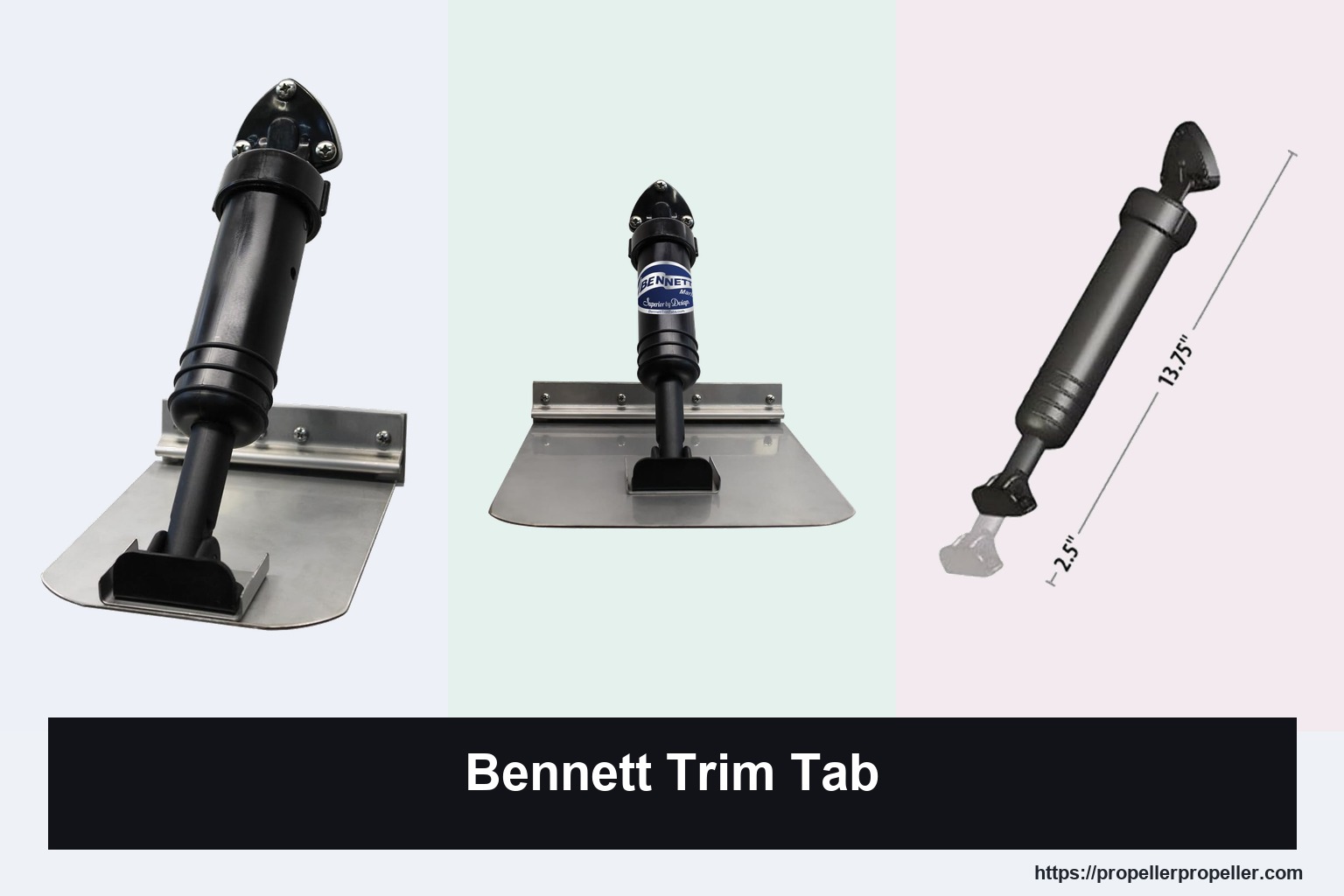
The A1101A is not a full trim tab kit. It is the replacement actuator assembly for owners who already have a Bennett system and need to restore operation without replacing every component. That role is important because the actuator is the moving part that pushes the tabs into position. A 2.5-inch stroke gives the assembly a defined operating range, and the maintenance-free construction is aimed at keeping the system simple once it is installed. For a repair-minded buyer, that is a cleaner fix than starting over with a complete kit.
The packaging note matters here because replacement actuators do not include hardware. That means the buyer needs to be prepared for the installation to depend on the existing setup or on a recommended hardware kit when replacing a hydraulic actuator assembly. The practical consequence is that this item suits owners who understand exactly what part has failed and already know the rest of their system is worth keeping. It is not a casual add-on. It is a service part for bringing a compatible trim tab system back into working order.
Relative to the two self-leveling kits, this product sits in a completely different buying situation. It is the right pick when the tabs themselves are fine and the actuator is the weak link. The lifetime limited warranty adds reassurance for a part that sees repeated movement, but it does not make this a substitute for a complete tab system. Choose it when you need the actuator restored and want to avoid unnecessary replacement of good hardware. That makes it the most specialized option in the group, and also the most efficient one for a targeted repair.
PHOTO: Bennett A1101A Standard Actuator – 13.75-Inch Actuator → Source: Amazon.com
Bennett SLT6 Self-Leveling Trim Tab System
- Item Dimensions L x W
- 6″L x 8″W
- Item Weight
- 16 ounces
- Material Type
- Stainless Steel
- Operation Mode
- Automatic
- Color
- Silver
Advantages
- Stainless steel tab assemblies
- Automatic operation
- All stainless hardware
- 5-year warranty
- Simple transom installation
Limitations
- Best for very small boats
- Less versatile than larger kit
This SLT6 package is the value-oriented version of Bennett’s compact self-leveling system. It is aimed at boats from 10 to 14 feet, so the sizing is more focused than the other SLT6 variant in the group. The 6 x 8-inch tabs are small enough to suit a lighter transom, while the automatic operation means the system works without constant rider input. For a small-boat owner, that combination can reduce the feel of being undertrimmed or overtrimmed every time the speed changes.
Construction details matter here because the system uses stainless steel tab assemblies and stainless steel hardware, with no plastic in the hardware package. That is the kind of detail that affects durability, especially in a marine environment where corrosion resistance is part of the value equation. The kit also includes composite actuators and an interlocking hinge, which point to a design built for simple transom mounting rather than a complicated inboard setup. Those are practical advantages if the goal is to add trim behavior without turning the boat into a project.
Against the other three products, this one is the clearest budget-conscious complete system for a very small boat. It is less flexible than the broader-range SLT6 variant and far more specialized than the replacement actuator, but it also carries a 5-year hassle-free warranty on all components. That warranty, combined with the stainless hardware and simple installation profile, makes it the sensible recommendation for owners of smaller hulls who want a complete self-leveling kit. If the boat falls inside its size range, this is the smartest all-around value in the group.
PHOTO: Bennett SLT6 Self-Leveling Trim – Dual Tab System → Source: Amazon.com
How to Choose Bennett Trim Tabs
Choosing a trim tab system starts with the boat itself. Length, weight, and how the hull behaves at takeoff matter more than brand language or broad promises. A small boat that porpoises at speed needs a different tab footprint than one that simply struggles to climb onto plane. The best purchase is the one that matches the hull’s size and the owner’s tolerance for installation complexity.
Boat Length Matters
Start with the hull length the system is meant to support. A tab set that is too small may not correct attitude with enough authority, while one that is too large can feel unnecessarily aggressive for a light boat. The practical question is not just whether the boat can physically carry the hardware. It is whether the tab surface is scaled to the amount of lift and control the hull actually needs. That is why length guidance should be treated as a real sizing constraint, not a casual suggestion.
Automatic or Manual Control
Self-leveling systems reduce the need for constant adjustment at the helm. That matters on boats where the driver would rather concentrate on throttle and course than on chasing a running attitude problem. Automatic behavior can also smooth the transition from hole shot to cruising speed, because the tabs react as conditions change. Manual systems still have value when a buyer wants direct control, but automatic setups are often easier to live with on smaller boats and for operators who want less to think about while underway.
Install Complexity
Installation effort is part of the buying decision because it changes the real cost of ownership. A transom-only system is attractive when the goal is to avoid hydraulic plumbing, extra controls, and a larger list of parts to route through the boat. Replacement parts are different again. They can save money and time when the rest of the trim tab system is already in good shape, but they require the owner to know exactly what component needs replacing. Matching the part to the job is the safest way to avoid unnecessary labor.
Materials and Durability
Marine hardware lives in a harsh environment, so material choices matter. Stainless steel hardware can improve confidence in corrosion resistance, especially where the system will see spray, moisture, and repeated movement. Composite pieces may still be used where flexibility or actuator function is part of the design, but the buyer should pay attention to what is structural and what is part of the moving mechanism. A durable finish and well-chosen hinge or actuator design can make the difference between a system that stays dependable and one that becomes a maintenance concern.
Performance Goals
Trim tabs can be chosen for different priorities. Some buyers want quicker planing and less bow rise. Others care more about reducing pounding in chop or eliminating porpoising and chine walking. Those are not identical goals, so the best system depends on the problem you are trying to solve first. If the boat is simply slow to settle on plane, sizing and responsiveness matter most. If the issue is instability at speed, a system with enough surface and proper automatic behavior becomes more important than a basic fit alone.
Repair or Replace
Not every buyer needs a whole new kit. If the tabs and mounting structure are still serviceable, a replacement actuator can be the most efficient path back to normal operation. That choice is especially sensible when the failed part is clearly identified and the rest of the system has already proven durable. On the other hand, if the existing setup is outdated, mismatched, or incomplete, replacing only one component can leave you with a partial solution. The right move is the one that restores reliable trim control with the least unnecessary overlap.
Trim Tab Comparison Table
| Product | Best For | Weight | Exterior | Model | Product Dimensions |
|---|---|---|---|---|---|
| Bennett SLT6 Self-Leveling Tab System | Best for compact boats | 2.7 pounds | Machined | SLT6 | 4 x 10.5 x 10 inches |
| Bennett SLT10 Self-Leveling Trim Tabs | Best for larger small boats | 2 pounds | Painted | SLT10 | 11 x 10 x 4 inches |
| Bennett A1101A Standard Actuator | Best replacement actuator | Not Specified | Not Specified | Not Specified | Not Specified |
| Bennett SLT6 Self-Leveling Trim Tab System | Best value compact kit | 16 ounces | Not Specified | Not Specified | Not Specified |
How We Tested & Analyzed Bennett Trim Tab
This comparison weighed the most decision-relevant differences for a trim tab buyer: tab size, intended boat length, control style, construction, and whether the product was a full kit or a replacement part. Those factors matter because trim performance is tied closely to hull scale and to how much installation effort a buyer is willing to accept. The analysis focused on what each system is actually set up to do rather than treating all trim tab products as interchangeable.
Products were compared by the clarity of their intended use. A compact self-leveling kit for smaller boats does not compete on the same terms as a larger self-leveling kit or a replacement actuator. That distinction shaped the evaluations, since the best choice is often the one that fits the boat’s needs with the fewest compromises. Durability cues such as stainless steel hardware, spring-action design, and warranty coverage were treated as meaningful value signals when they were verified.
Limitations were also part of the evaluation. Where sizing guidance was narrow, that counted as a tradeoff rather than a flaw. Where hardware was not included, that mattered because it changes the installation path. Where a product was a component rather than a complete system, it was judged on whether it served that repair role cleanly. The goal was to help a buyer choose a proper match, not to pretend that every option solves the same problem in the same way.
Frequently Asked Questions
What size boat needs trim tabs most?
Trim tabs are most useful when a boat struggles to plane cleanly, rides bow-high, or becomes unstable at speed. Small hulls can benefit as much as larger ones, but the system size has to match the boat’s length and weight. A properly scaled tab system is more effective than simply choosing the biggest option available.
Do self-leveling trim tabs need helm controls?
Self-leveling systems are designed to adjust automatically using speed and water pressure, so they do not rely on constant manual input. That makes them attractive for buyers who want less complexity at the helm. The tradeoff is that you give up the direct control found in a manual setup, but you also reduce day-to-day operating effort.
Are stainless steel tabs worth prioritizing?
For a marine environment, stainless steel is a meaningful durability advantage because it better supports corrosion resistance in wet, salty, or spray-prone conditions. That does not make every other material unsuitable, but it does make stainless hardware easier to trust for long-term use. It is especially relevant when the system will stay on the boat for many seasons.
When should I replace only an actuator?
Replace only the actuator when the tabs, hinges, and mounting hardware are still in good condition and the problem is isolated to the moving part. That approach avoids paying for parts you do not need. It is most sensible when you already know the failed component and the existing system is worth preserving rather than rebuilding from scratch.
Final Thoughts
Trim tabs are a small upgrade that can change the way a boat feels every time it comes off idle and every time the hull meets a wave. The smartest purchase is the one that matches the boat’s size, the amount of lift needed, and the amount of installation work you are willing to take on. A compact automatic kit is the right answer for some boats. A larger tab footprint or a replacement actuator is better for others.
If you are choosing strictly by fit and function, start with the boat’s length and the specific problem you want to fix. Then decide whether you need a full self-leveling system or only a service part. That sequence keeps the decision practical and avoids overspending on the wrong kind of control. With the right match, trim tabs are less about accessories and more about making the boat run like it was sized correctly from the start.