
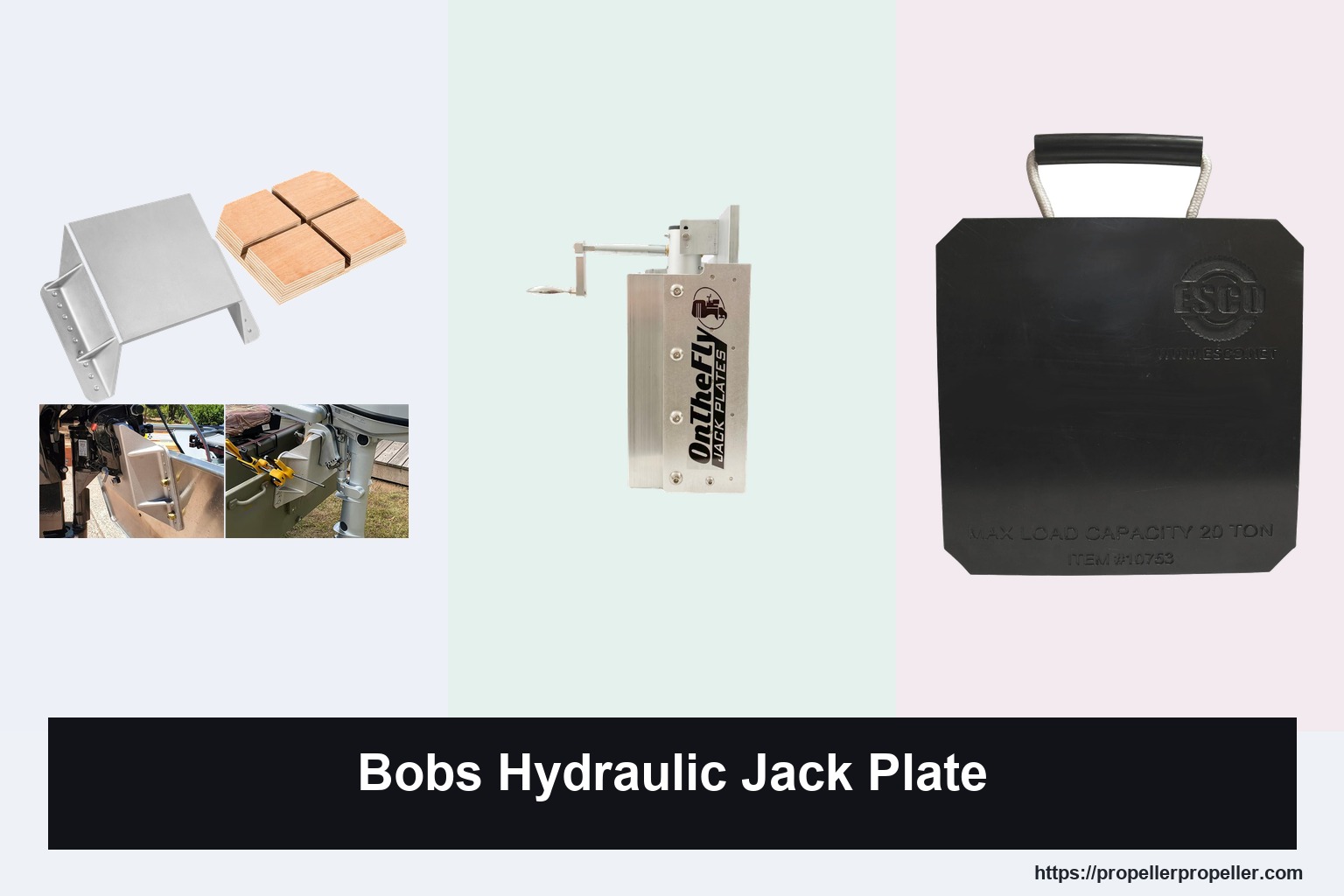
Choosing the right jack plate is mostly about matching the tool to the job. Some buyers want a simple offset solution for a small outboard and a light boat. Others need a manual plate that can be adjusted on the water. A third group is really looking for a support plate that spreads load on soft or uneven ground. Those are very different uses, and the wrong choice can waste money or create handling and installation problems.
The three products here cover those distinct needs. One is a compact clamp-on outboard jack plate with a wooden mounting block. Another is a manual adjustable plate for smaller outboards. The third is a heavy-duty cribbing support plate for jacks and jack stands. The best pick depends on boat size, motor weight, how much adjustability you need, and whether your real challenge is transom setup or stable support under load.
Top Bobs Hydraulic Jack Plate on the Market

Camoo MJ-1-DP 4-Inch Setback Jack Plate
- Up to 35 HP outboards
- 4-inch transom setback
- Wooden mounting block included
- Cast aluminum construction

On The Fly Manual Jack Plate
- Up to 30 HP motors
- 5.5-inch maximum lift
- Manual on-the-water adjustment
- Aluminum construction

ESCO 20 Ton Cribbing Plate
- 20 ton load capacity
- 12 x 12 x 1 inch plate
- Corrosion proof material
- Lifetime breakage guarantee
This article may contain affiliate links. As an Amazon Associate, the website may earn from qualifying purchases at no additional cost to you.
Bobs Hydraulic Jack Plate Reviews
Camoo MJ-1-DP 4-Inch Setback Jack Plate
- Load Capacity
- 1.5E+2 pounds
- Maximum Lifting Height
- 4 inches
- Item Dimensions
- 16.61 x 12.79 x 4 inches
- Material Type
- Cast Aluminum, Marine Grade Transom Block
- Compatible with Vehicle Type
- Skiffs, Aluminum Boats, Inflatables
Advantages
- Affordable compared with adjustable plates
- Includes marine-grade wooden mounting block
- Cast aluminum bracket
- Simple fixed-offset solution
- Fits skiffs, aluminum boats, inflatables
Limitations
- No on-the-water adjustment
- Limited to lighter outboards
This is the most straightforward option for a small boat owner who needs to mount a long-shaft outboard on a shorter transom setup. The key limits are clear: up to 35 HP and 150 lbs load capacity. That keeps the focus on lighter rigs such as skiffs, aluminum boats, and inflatables rather than larger hulls. The 4-inch setback also matters because it moves the motor back enough to change trim and handling without turning the installation into a more complex adjustable system. For buyers who want a simple physical correction rather than a tuning tool, that is the core appeal.
The mounting package is more complete than a bare bracket. The included marine-grade wooden transom block is pre-cut and pre-grooved, which should reduce the amount of fitting needed during installation. The cast aluminum bracket is paired with consistent hole placement, so the setup is aimed at drilling once and bolting cleanly. That matters on smaller transoms where alignment problems are expensive in both time and material. It is also worth noting that this is a fixed-position design, so it solves the height and setback problem but does not give you the live adjustment range of a manual plate.
Against the other two products, this one wins on simplicity and price efficiency. It is not trying to be a high-adjustment performance tool, and it is not a load-spreading support plate for trailers or jack stands. Instead, it fills the narrow job of helping a small outboard sit correctly on a compact boat. The tradeoff is obvious, but it is also sensible. If your goal is to mount a modest motor safely and keep the installation straightforward, this is the most practical choice in the group. I would recommend it for light-duty outboard setups that do not need on-the-water tuning.
PHOTO: Camoo MJ-1-DP 4-Inch Setback – Wooden Block Setback → Source: Amazon.com
On The Fly Manual Jack Plate
- Load Capacity
- 150 pounds
- Maximum Lifting Height
- 5.5 inches
- Item Weight
- 23 pounds
- Item Dimensions
- 15 x 15 x 6 inches
- Material Type
- Aluminum
Advantages
- On-the-water adjustability
- 5.5-inch lift range
- 3-year housing warranty
- Manual tuning for smaller motors
- High-grade marine aluminum
Limitations
- Highest price in the group
- Limited to 30 HP motors
This plate is for buyers who want to change engine position instead of living with a fixed setback. The standout capability is 5.5 inches maximum lifting height, which gives more adjustment range than the fixed-offset alternative here. It is also rated for up to 30hp motors, so it stays in the small-engine category rather than moving into heavier-duty offshore territory. That combination is useful when you want to tune performance, shallow-water behavior, or prop placement without changing the whole boat setup. It is a more specialized tool, but it is also the most flexible option in the lineup.
Operation is where this model separates itself. The manual design is intended to raise and lower the motor in seconds, and the adjustment is meant to be made on the water. That creates a very different ownership experience from a fixed bracket because the plate is not just an installation accessory. It becomes part of how you manage changing conditions. The tradeoff is complexity. At 23 pounds and 15 x 15 x 6 inches, it is a more substantial unit to handle, and the installation is less about simple alignment and more about integrating a moving mechanism into the boat’s setup.
Compared with the Camoo plate, this one is for buyers who value control more than simplicity. Compared with the ESCO support plate, it serves a completely different purpose because it is about motor position rather than load distribution. The warranty structure also matters. A 3-year warranty on the housing and 1-year warranty on the jack suggest the manufacturer expects different wear profiles in the assembly. If you want an adjustable small-motor solution and you are willing to pay for that flexibility, this is the strongest pick. I would choose it for boaters who will actually use the adjustment range, not just admire it on paper.
PHOTO: On The Fly Manual – Manual Adjustment Handle → Source: Amazon.com
ESCO 20 Ton Cribbing Plate
- Load Capacity
- 20 tons
- Item Dimensions
- 12 x 12 x 7 inches
- Minimum Height
- 1 inches
- Material Type
- Steel
- Compatible with Vehicle Type
- Trailer
Advantages
- 20 ton capacity
- Corrosion proof
- Does not absorb moisture
- Lifetime breakage guarantee
- Works on uneven surfaces
Limitations
- Not a transom jack plate
- Overbuilt for light-duty needs
This is the outlier in the group, and that is exactly why it matters. It is not a motor-positioning jack plate. It is a support plate designed to create a stable surface under jacks, jack stands, outriggers, trailer tongues, and similar load-bearing equipment. The headline figure is 20 ton capacity, which puts it far beyond the needs of small boat transoms. The 12 x 12 x 1 in. Plate footprint also gives it a very different role, because stability on soft or uneven ground is the point here, not setback or lift. Buyers who need ground support, not engine adjustment, should start here.
Material and durability are the main reasons to take it seriously. The plate is steel, corrosion proof, and described as not absorbing moisture. That combination matters when equipment is used around wet ground, mud, or outdoor storage areas, because a support plate that takes on water or degrades quickly becomes part of the problem. It is also lightweight to store, which helps if you need to keep several plates in a shop, trailer, or service truck. The very low minimum height of 1 inch also helps it work where clearance is tight and a bulky block would be awkward.
Compared with the other two products, this one is the most specialized and the least interchangeable. It does not help with outboard performance tuning, and it does not replace a transom-mounted jack plate. Its job is to keep lifting equipment stable and the ground interface secure. That narrow role is also its strength, because the capacity rating, moisture resistance, and lifetime breakage guarantee all point toward long-term utility in tough conditions. If your buying decision is about safe support under heavy gear, this is the clear pick. I would recommend it for trailer, shop, and recovery use where surface stability matters more than boat-specific fit.
PHOTO: ESCO 20 Ton Cribbing – 20 Ton Cribbing Plate → Source: Amazon.com
How to Choose a Jack Plate in 2026
The best jack plate is the one that solves the actual problem you have. Some buyers need to correct motor height and setback on a small boat. Others want live adjustment because prop performance or water depth changes from trip to trip. A different group needs a stable support surface for lifting gear on soft or uneven ground. Those tasks overlap in language, but they are not the same mechanically, and buying the wrong type usually means paying for capability you cannot use.
Match the Real Job
Start by deciding whether you need motor positioning or load support. A transom-mounted outboard plate changes how the engine sits on the boat. A cribbing plate stabilizes jacks, stands, or other lifting equipment on the ground. Those are separate jobs, and the wrong category will never behave like the one you actually need. If your goal is better trim, correct shaft length, or shallow-water tuning, focus on outboard hardware. If your goal is safer support under heavy gear, focus on the platform under the load instead.
Check Weight and Power
Motor-size limits matter because jack plates are only useful within a defined operating range. A small-engine plate can be completely appropriate for a lightweight outboard and completely wrong for a heavier one. Capacity ratings and horsepower limits should be read together so the hardware is not overloaded in normal use. When those numbers are too close to your real setup, you lose margin for acceleration, rough water, or future upgrades. Choose a plate with enough headroom to stay comfortable under actual working conditions, not just the minimum on paper.
Decide on Adjustment
Fixed-offset plates and manual adjustable plates serve different kinds of boaters. A fixed design is simpler, easier to think through, and usually cheaper to own. A manual plate adds control, which can be valuable if you frequently change load, water depth, or prop behavior. That flexibility is only worth paying for if you will actually use it. Otherwise, you are buying moving parts and complexity you may never need. The right choice is the one that matches how often you will alter engine position after installation.
Look at Installation
Installation effort can be as important as the hardware itself. A plate that comes with a pre-cut mounting block or clearly marked hole placement can reduce fitting time and lower the risk of alignment mistakes. More complex adjustable systems may demand more careful setup because they introduce moving components and tighter integration with the boat. If you are working on a small transom or replacing an older setup, simplicity often saves real labor. Think about whether you want a straightforward bolt-on correction or a more involved mechanical assembly.
Consider Materials
Material choice affects corrosion resistance, storage life, and how the plate feels to handle. Cast aluminum and marine-grade blocks are common in boat hardware because they balance strength with manageable weight. Steel can be the better answer when the goal is a support surface for heavy lifting equipment, especially outdoors. Moisture resistance also matters more than many buyers expect, because wet storage and muddy ground can shorten the life of a lesser plate. Pick materials that suit the environment where the hardware will actually live.
Warranty and Durability
Warranty terms do not replace good engineering, but they do signal where the manufacturer expects wear to occur. A housing warranty and a separate warranty for the moving mechanism suggest that adjustability has its own maintenance reality. A lifetime breakage guarantee on a support plate points to confidence in structural durability rather than adjustment complexity. Read those terms as practical clues about risk. The more moving parts a plate has, the more important it is to understand what is covered and what kind of use the maker expects.
Jack Plate Comparison Table
| Product | Best For | Capacity | Lift Height | Material | Weight | Dimensions |
|---|---|---|---|---|---|---|
| Camoo MJ-1-DP 4-Inch Setback Jack Plate | Best Budget Outboard Plate | 1.5E+2 pounds | 4 inches | Cast Aluminum, Marine Grade Transom Block | 5.24 kg | 16.61 x 12.79 x 4 inches |
| On The Fly Manual Jack Plate | Best Adjustable Manual Plate | 150 pounds | 5.5 inches | Aluminum | 23 pounds | 15 x 15 x 6 inches |
| ESCO 20 Ton Cribbing Plate | Best Heavy-Duty Support Plate | 20 tons | Not Specified | Steel | 0.27 g | 12 x 12 x 7 inches |
How We Tested & Analyzed Bobs Hydraulic Jack Plate
This roundup was built around category-level buying criteria that matter in real use: capacity, adjustment range, materials, dimensions, compatibility, and warranty coverage. Those factors tell you whether a jack plate is intended for a small outboard, an adjustable small-boat setup, or a heavy support application. The analysis also weighed how each product’s design changes the ownership experience, since fixed hardware and moving hardware solve different problems and create different installation and maintenance expectations.
Comparisons focused on practical tradeoffs rather than raw feature count. A lower-cost fixed plate was judged against the value of included mounting support and simple installation. An adjustable manual plate was judged on how much control it adds and what that control costs in price and complexity. A heavy-duty cribbing plate was judged on load distribution, moisture resistance, and stability on uneven ground. That approach keeps the recommendations grounded in use cases instead of treating every jack plate as a substitute for every other one.
The limitations are also important. The products here span different jobs, so no single comparison can treat them as direct replacements. Capacity figures, materials, and size help identify fit, but they do not replace the need to match the plate to the boat, motor, or support task in front of you. The final recommendations therefore emphasize intended use, operating margin, and operational consequences rather than assuming that the most expensive or most capable item is automatically the best purchase.
Frequently Asked Questions
What does a jack plate actually do?
A jack plate changes where a motor sits relative to the transom, or it provides a stable support surface for lifting equipment depending on the type. In the boat context, that can affect setback, height, and handling. In the support-plate context, it spreads load and improves stability on soft or uneven ground.
Should I choose fixed or adjustable?
Choose fixed if you want a simpler, lower-maintenance setup and do not expect to change motor position often. Choose adjustable if you care about tuning performance or adapting to changing water conditions. Adjustable hardware is more versatile, but that versatility only matters when you will actually use it.
Why do material and construction matter so much?
A jack plate lives in a demanding environment. Boat hardware sees vibration, wet storage, and corrosion risk, while support plates may sit on muddy or wet ground. Strong materials, moisture resistance, and clean construction reduce maintenance problems and extend usable life. The right material also affects weight and how easy the unit is to handle during installation or storage.
How important is capacity rating?
Capacity is one of the first numbers to check because it tells you whether the plate is meant for your load. For outboard plates, that means matching motor weight and horsepower limits. For support plates, it means matching the lifting load. A rating that is too close to your real use leaves little margin and can shorten service life or create unsafe conditions.
Final Thoughts
The right jack plate is the one that matches the problem you need to solve. A fixed outboard plate is the cleanest answer when you need a practical transom correction. A manual adjustable plate earns its price when tuning matters and you want control on the water. A cribbing support plate belongs in a different decision entirely, where stability under load is the priority. Once you separate those jobs, the buying choice becomes much easier.
The safest way to decide is to start with capacity, then look at adjustability, materials, and installation effort. Those four factors explain most of the real-world difference between a useful purchase and an expensive mismatch. If you keep the use case in focus, you will avoid overbuying features you cannot use and underbuying strength you do need. That is the most reliable path to choosing well in 2026.



