
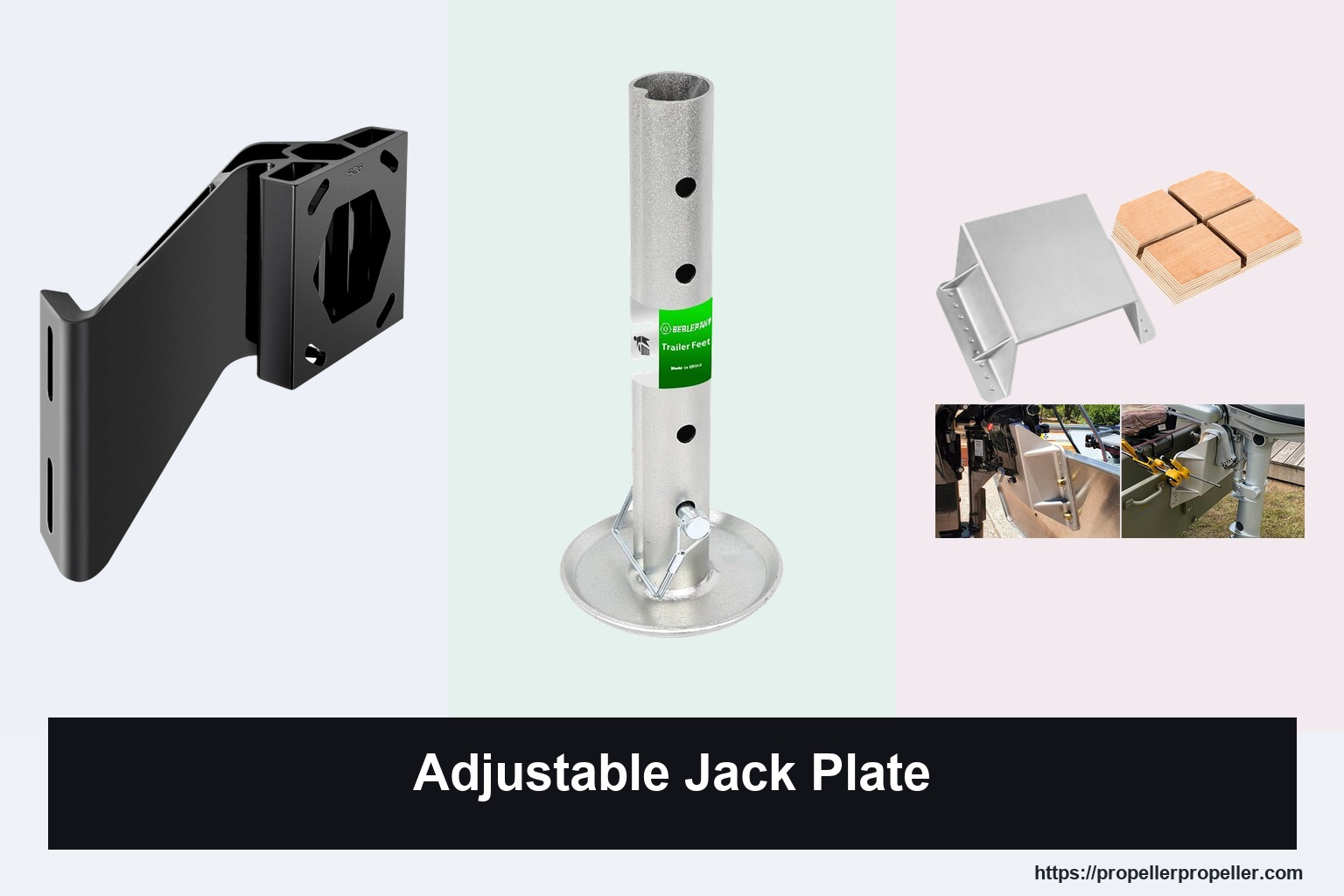
Choosing the right adjustable jack plate is less about buying the most expensive bracket and more about matching setback, lift, load, and mounting style to the boat or trailer you actually run. The wrong geometry can complicate motor height, trim behavior, transom clearance, or even basic hitching and leveling. The right one quietly solves a specific problem and stays out of the way.
This roundup focuses on six distinctly different options across boat motors, shallow-water anchor mounting, and trailer or jack support use. Some are built for fixed setback and strength, others for manual adjustment, and one is really an accessory bracket for a shallow-water anchor system rather than a motor plate. The common thread is practical fit: how much lift you need, how much weight you are moving, how much installation work you can handle, and whether corrosion resistance or on-the-water adjustment matters most.
Top Adjustable Jack Plate on the Market

Minn Kota Raptor Adapter Bracket
- Starboard-side mounting
- 2-inch setback
- 6-inch rise
- Stainless mounting hardware
- Powder-coated black finish
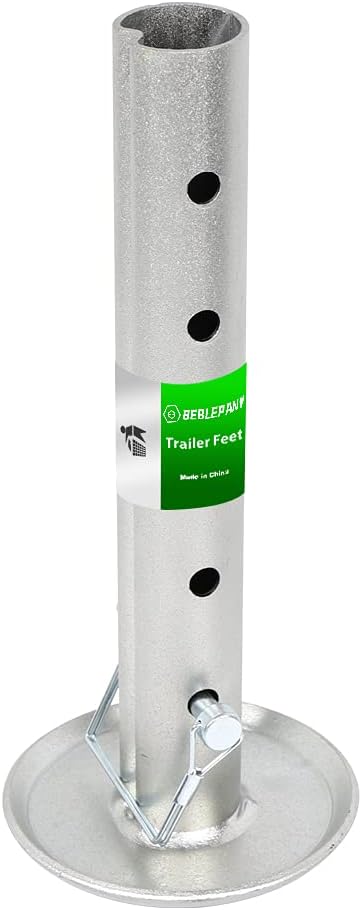
BEBLEPANY Trailer Jack Foot Plate
- Fits 2-inch inner tube
- 5,000-pound load capacity
- 12-inch lift extension
- Zinc-plated steel
- Tool-free locking pin

Camoo MJ-1-DP 4-Inch Jack Plate
- 4-inch setback
- Up to 35 HP
- Wooden mounting block included
- Cast aluminum construction
- Clamp-on style

T-H Marine JP-4FA-DP Hi-Jacker
- 4-inch setback
- 5.5-inch total vertical lift
- 3 engine mount holes
- 150 HP maximum
- Solid aluminum extrusion

KUAFU 6-Inch Adjustable Jack Plate
- 6-inch setback
- 40–150 HP range
- Aircraft-grade aluminum
- 20-pound weight
- Complete hardware package

On The Fly Manual Jack Plate
- Manual on-water adjustment
- Up to 30 HP
- 5.5-inch maximum lift
- 3-year housing warranty
- High-grade marine aluminum
This article may contain affiliate links. As an Amazon Associate, the website may earn from qualifying purchases at no additional cost to you.
Adjustable Jack Plate Reviews
Minn Kota Raptor Adapter Bracket
- Mounting Type
- Jackplate
- Material Type
- Aluminum
- Item Dimensions
- 11 x 5.25 x 13 inches
- Item Weight
- 8 pounds
- Manufacturer Warranty Description
- 5 year Manufacturer
Advantages
- Purpose-built for Raptor mounting
- Corrosion-resistant powder-coated finish
- Includes stainless hardware
- Alignment-friendly slotted holes
- Lightweight aluminum construction
Limitations
- Not a general jack plate
- Single application focus
This is the most specialized option in the group because it is not a general-purpose jack plate. It exists to place a Raptor shallow-water anchor on the starboard side with 2-inch setback and 6-inch rise, which matters when anchor clearance and deployment angle are the real problems. Buyers working around tight rigging or awkward bracket geometry will appreciate that it solves a mounting issue without forcing a full transom redesign. The single-piece aluminum construction keeps the bracket strong without adding unnecessary bulk.
The practical appeal is in the installation details. Stainless steel mounting hardware is included, and the slotted holes give room to fine-tune alignment instead of committing to a single fixed position on the first try. That reduces the chance of ending up with a crooked anchor mount or compromised clearance. The powder-coated black finish is another useful detail because it adds a layer of corrosion protection for boats that live in wet, salt-exposed, or simply harsh outdoor conditions.
Compared with the other products here, this is the most narrowly purpose-built accessory and the least flexible for anyone who wants a true jack plate for an outboard or trailer application. That specialization is exactly why it makes sense for Raptor owners who need a clean, repeatable starboard-side installation. If your goal is anchor compatibility rather than engine height adjustment, this is the one to start with, and it is the clearest recommendation in its niche.
PHOTO: Minn Kota Raptor Adapter – Bracket adapter → Source: Amazon.com
BEBLEPANY Trailer Jack Foot Plate
- Load Capacity
- 5000 pounds
- Maximum Lifting Height
- 5.2 inches
- Minimum Height
- 3 inches
- Material Type
- Steel
- Manufacturer Warranty Description
- 1 year warranty
Advantages
- High load capacity
- Fits standard 2-inch tubes
- Corrosion-resistant zinc plating
- Tool-free locking pin
- Adds useful lift extension
Limitations
- Not for motor mounting
- Basic support accessory
This trailer jack foot plate is the rugged support option in the group. Its 5,000-pound load capacity and 2-inch diameter inner tube compatibility make it a strong match for trailers, RVs, and boat trailers that need a wider, more stable base on soft ground. The 12-inch lift extension is especially useful when you are dealing with tall frames or uneven sites, because it adds reach instead of asking you to overextend the jack itself. Steel construction gives it the toughness expected in this role.
The key operational advantage is stability. A foot plate like this is meant to prevent sinking in mud, sand, or soft soil, and the zinc-plated finish adds corrosion resistance for outdoor storage and wet conditions. Tool-free attachment with a locking pin keeps the setup simple, which matters when you want fast deployment at a campsite or launch point. The tradeoff is that this is support hardware, not a motor-control component, so its value is in leveling and load distribution rather than steering or trim behavior.
Against the other products in this roundup, this one stands apart because it serves trailers and stabilizing jacks instead of boat motors. That makes it the best choice for buyers whose main problem is ground support and hitch height rather than transom geometry. If you need a tough, universal-style foot plate that can take abuse and add practical lift, this is the most straightforward pick in the category.
PHOTO: BEBLEPANY Trailer Jack Foot – Trailer jack foot plate → Source: Amazon.com
Camoo MJ-1-DP 4-Inch Jack Plate
- Load Capacity
- 1.5E+2 pounds
- Maximum Lifting Height
- 4 inches
- Material Type
- Cast Aluminum, Marine Grade Transom Block
- Compatible with Vehicle Type
- Skiffs, Aluminum Boats, Inflatables
- Manufacturer Warranty Description
- 12 months warranty
Advantages
- Compact 4-inch setback
- Includes wooden mounting block
- Suited to small boats
- Cast aluminum body
- Straightforward installation layout
Limitations
- Limited to 35 HP
- Not for larger engines
This is the compact outboard option for smaller boats that need a modest geometry change rather than a full-size performance plate. The 4-inch setback and limit of up to 35 HP tell you exactly where it belongs. It is aimed at clamp-on motors for skiffs, aluminum boats, and inflatables, especially when a long-shaft motor needs to sit correctly on a shorter transom. That makes it valuable for correcting fit and improving handling without moving into heavier-duty hardware than the boat requires.
The included wooden mounting block is a meaningful detail because it supports a firmer installation and fills the transom interface more cleanly. Cast aluminum construction is a sensible match for a small-engine bracket, and the pre-marked hole layout should shorten the setup process for someone comfortable drilling and aligning components carefully. Its 150-pound capacity is enough for its intended class, but it also defines the boundary. This is not the plate for larger outboards or aggressive lift demands.
Compared with the T-H Marine fixed plate and the KUAFU adjustable option, this one sits lower in horsepower and scale, which also keeps cost and complexity in check. That balance is useful for boaters who want a practical correction rather than a premium adjustable system. It is the best fit for smaller craft and lower-power motors where a clean, modest setback solves the problem without unnecessary hardware bulk.
PHOTO: Camoo MJ-1-DP 4-Inch Jack – Wooden mounting block → Source: Amazon.com
T-H Marine JP-4FA-DP Hi-Jacker
- Load Capacity
- 150 hp
- Maximum Lifting Height
- 4 inches
- Item Weight
- 11.2 pounds
- Material Type
- Aluminum
- Style Name
- Fixed
Advantages
- Handles up to 150 HP
- Solid aluminum extrusion
- Simple fixed design
- Useful 5.5-inch total lift
- Clear mounting-hole layout
Limitations
- No manual adjustability
- Fixed geometry only
This fixed jack plate is aimed at buyers who want a dependable geometry change without the moving parts of a manual system. Its 4-inch setback and 5.5-inch total vertical lift are the core numbers to understand, because they explain how it can help when a long-shaft outboard needs to sit properly on a short transom. The plate also supports outboards up to 150 hp, which places it in a very different class from the smaller-engine Camoo option and gives it room for a much broader range of boat setups.
The solid aluminum extrusion and 3-engine-mount-hole, 2-transom-hole layout are the practical reasons it belongs on boats where rigidity matters more than on-the-water adjustability. A fixed plate removes the complexity of moving mechanisms, so once it is set, there is less to monitor and fewer parts to think about. That simplicity is attractive for owners who want a stable, repeatable mounting solution and do not need to change motor position frequently.
Against the KUAFU and On The Fly options, this plate gives up adjustability but gains a straightforward fixed structure at a lower level of complexity. That tradeoff is worthwhile for buyers who prefer a clean install and predictable behavior over tuning. It is the strongest recommendation here for someone needing a sturdy, fixed plate that can handle serious outboard power without adding the cost or complication of manual adjustment.
PHOTO: T-H Marine JP-4FA-DP Hi-Jacker – Jack plate pair → Source: Amazon.com
KUAFU 6-Inch Adjustable Jack Plate
- Load Capacity
- 150 pounds
- Maximum Lifting Height
- 4 inches
- Minimum Height
- 6 inches
- Material Type
- Aluminum
- Style Name
- Adjustable
Advantages
- Wide 40–150 HP range
- Aircraft-grade aluminum
- Useful 6-inch setback
- Includes mounting hardware
- Substantial 20-pound build
Limitations
- Professional installation recommended
- Compatibility must be verified
This is the most broadly applicable outboard plate in the roundup. The 6-inch setback and 40-150 HP range put it in the sweet spot for a wide span of boats and engine sizes, especially when a buyer needs a stronger correction than a small-engine bracket but does not want to step up to a fully manual premium system. The aircraft-grade aluminum construction is a solid sign of durability, and the 20-pound weight hints at a substantial build rather than a light duty spacer.
Setup is the main place where this plate separates itself from the simpler fixed options. Professional installation is recommended, and that is worth taking seriously because the fit depends on accurate measurements, proper drilling, and confirming the boat’s transom and engine dimensions before purchase. The included hardware package is helpful, but it does not remove the need for careful planning. For buyers who know they need a 6-inch setback and want a stronger plate for broader engine compatibility, the installation burden is the price of that flexibility.
Relative to the T-H Marine fixed model, this plate offers a larger setback and a wider engine range, but it asks more from the installer. Compared with the On The Fly manual unit, it is less about active adjustment and more about landing on a versatile static setup. That makes it the right choice for buyers who want a versatile aluminum plate with serious compatibility potential and are comfortable treating installation as a proper project rather than a quick bolt-on.
PHOTO: KUAFU 6-Inch Adjustable Jack – Adjustable lift bracket → Source: Amazon.com
On The Fly Manual Jack Plate
- Load Capacity
- 150 pounds
- Maximum Lifting Height
- 5.5 inches
- Minimum Height
- 4.25 inches
- Material Type
- Aluminum
- Manufacturer Warranty Description
- 3 year warranty on the jack plate housing, 1 year warranty on the jack
Advantages
- On-the-water adjustability
- Useful 5.5-inch lift
- Three-year housing warranty
- Marine aluminum construction
- Fast position changes
Limitations
- Higher price point
- Limited to 30 HP
This is the standout choice for buyers who actually want to move motor height rather than simply set it once. The manual adjustment feature and up to 30hp motors limit tell you the intended use immediately. It suits smaller outboards where tuning the motor position on the water can matter more than absolute brute strength. The 5.5-inch maximum lifting height gives it meaningful range for adjusting performance, and the marine aluminum housing is built for the sort of wet, repetitive use that manual hardware has to survive.
The real distinction here is operational control. Being able to raise and lower the motor in seconds means you can react to conditions instead of committing to one static setting for the whole trip. That is a very different workflow from the fixed T-H Marine plate or the broader KUAFU bracket. The tradeoff is that this extra control comes with a higher price and a narrower horsepower ceiling, so it only makes sense when the motor size and tuning flexibility both matter.
Compared with the other five products, this is the most premium and the most specialized in terms of use pattern. It is not the cheapest way to solve transom geometry, and it is not meant for high-horsepower outboards. Still, for a buyer with a compatible small motor who wants the ability to fine-tune position without leaving the water, it is the clear recommendation and the most capable adjustability-focused option in the group.
PHOTO: On The Fly Manual – Manual jack plate → Source: Amazon.com
How to Choose an Adjustable Jack Plate
The right jack plate is the one that solves the geometry problem without creating a compatibility problem. Some buyers need setback to correct engine position. Others need extra vertical lift to clear a transom or improve motor placement. Trailer and support products add another layer, where stability on soft ground matters more than propeller height or engine trim. Start with the use case, then narrow the field by horsepower, mounting pattern, lift range, and the amount of installation work you are willing to take on.
Setback and Lift
Setback changes how far the motor sits from the transom. That affects clearance, leverage, and sometimes handling. More setback is not automatically better. Too much can create unnecessary stress or move the engine farther back than the hull was designed for. Lift matters for different reasons. A modest lift can solve fitment, while a larger lift may help with tuning or ground clearance. Choose the smallest geometry change that actually addresses the problem you are trying to solve.
Horsepower and Weight
Every plate has a real structural boundary, even when the marketing language sounds broad. Match the bracket to the motor’s horsepower and the expected load. Smaller engines usually need a compact, lighter plate, while larger outboards demand more rigid construction and stronger mounting. If the support hardware is undersized, the result is not just poor performance. You can end up with flex, alignment issues, or a mounting setup that never feels secure under throttle or travel vibration.
Fixed or Adjustable
A fixed plate is the simpler choice when your engine height is known and unlikely to change. It is usually easier to live with, easier to inspect, and less complicated to install. An adjustable design becomes worthwhile when you want to tune performance, deal with changing conditions, or make on-water changes. The extra control is valuable only if you will actually use it. Otherwise, you are paying for flexibility that may sit unused.
Installation Complexity
Some jack plates are straightforward bracket installs. Others require careful drilling, alignment, or even professional help. That difference matters because a plate that is theoretically compatible can still become a frustrating project if the mounting pattern, transom shape, or surrounding hardware creates tight tolerances. Consider whether you want included hardware, a pre-marked hole pattern, or a setup that assumes you can measure accurately and work methodically. The easier the install, the less room there is for avoidable error.
Materials and Corrosion
Aluminum is common because it stays relatively light while offering solid strength. Steel is often the better choice for heavy support duty, especially where ground contact and load distribution matter. Finish also matters. Powder coating and zinc plating are not cosmetic details. They slow corrosion in wet environments and help hardware survive long-term outdoor exposure. If the plate will live on a boat trailer, in salt air, or at a launch site, material and finish can matter as much as the dimensions.
Warranty and Long-term Use
Warranty terms are useful because they reflect how much confidence the maker places in the hardware. They do not replace fit verification, but they can influence value when two products appear similar on paper. For gear that will be exposed to vibration, spray, and repeated load cycles, a meaningful warranty can reduce risk. Just make sure the coverage lines up with how the product will actually be used. A strong warranty is more helpful when the plate is installed correctly and used within its intended range.
Adjustable Jack Plate Comparison Table
| Product | Best For | Setback | Lift | Capacity | Material | Warranty |
|---|---|---|---|---|---|---|
| Minn Kota Raptor Adapter Bracket | Best anchor adapter | Not Specified | Not Specified | Not Specified | Aluminum | 5 year Manufacturer |
| BEBLEPANY Trailer Jack Foot Plate | Best heavy-duty foot | 5.2 inches | 3 inches | 5000 pounds | Steel | 1 year warranty |
| Camoo MJ-1-DP 4-Inch Jack Plate | Best compact outboard plate | 4 inches | 4 inches | 1.5E+2 pounds | Cast Aluminum, Marine Grade Transom Block | 12 months warranty |
| T-H Marine JP-4FA-DP Hi-Jacker | Best fixed-strength plate | 4 inches | 14 centimeters | 150 hp | Aluminum | Not Specified |
| KUAFU 6-Inch Adjustable Jack Plate | Best broad-compatibility plate | 4 inches | 6 inches | 150 pounds | Aluminum | Not Specified |
| On The Fly Manual Jack Plate | Best manual adjuster | 5.5 inches | 4.25 inches | 150 pounds | Aluminum | 3 year warranty on the jack plate housing, 1 year warranty on the jack |
How We Tested & Analyzed Adjustable Jack Plate
The analysis focused on the factors that determine whether a jack plate will actually work in the field. That meant prioritizing geometry, load rating, material, mounting style, and the operational difference between fixed and adjustable systems. The goal was to compare products by the decisions they force on the buyer, not by catalog style or brand familiarity. Where a product had a narrow use case, that specialization was treated as a strength when it clearly aligned with a defined buyer need.
Products were compared by how their verified dimensions and capacity limits translate into day-to-day use. A plate with broad horsepower compatibility serves a different buyer than a compact bracket for a small outboard or a trailer support plate designed to prevent sinking. Installation complexity also mattered. Hardware completeness, hole layout, and the presence of adjustable features change how much planning a buyer should expect before the first wrench turns.
The limits of the category were also part of the evaluation. A jack plate can improve fit and positioning, but it cannot fix an incompatible engine, a damaged transom, or an application that exceeds its rated load. Because of that, the review process emphasized fit verification and realistic usage boundaries. Warranty coverage, corrosion resistance, and the practical tradeoff between flexibility and simplicity all played a role in identifying which products were strongest for specific buyer types.
Frequently Asked Questions
What does setback do on a jack plate?
Setback moves the motor farther from the transom. That can improve clearance and change leverage at the stern. The right amount depends on the hull, engine, and the problem you are trying to solve. More setback is useful only when it matches the boat’s geometry and operating needs.
How do I choose between fixed and adjustable?
Choose fixed when you want a stable, simple mounting solution and do not plan to change motor position often. Choose adjustable when you want tuning flexibility or the ability to change height for different conditions. Adjustable hardware is more useful, but only if you will actually use that control.
Why does material matter so much?
Material affects strength, weight, and corrosion resistance. Aluminum is common because it keeps weight manageable while staying strong enough for many mounting jobs. Steel is often better where heavy support and ground contact are the main concerns. Finish matters too, especially in wet or salt-exposed environments.
What should I verify before buying?
Check horsepower, load rating, mounting style, setback, and the dimensions of both the plate and the boat or trailer location where it will sit. Compatibility problems usually come from one overlooked measurement or an underestimated load. The safest purchase is the one that matches the hardware you already have and the conditions you actually face.
Final Thoughts
The best adjustable jack plate is the one that matches the job instead of chasing the biggest number on the page. Small outboard owners usually benefit from compact, well-matched geometry changes. Larger boat setups need stronger construction and more careful fit verification. Trailer and stabilizer buyers should focus on load support and corrosion resistance instead of motor-specific terms. Once you know which problem you are solving, the right option becomes much easier to spot.
For most buyers, the decision comes down to how much adjustability you genuinely need. Fixed plates are simpler and often enough. Manual or broader-adjustment designs earn their place when tuning matters or when the engine position needs to change with conditions. If you focus on horsepower range, setback, lift, mounting style, and durability, you can buy with confidence and avoid the common mistake of choosing a plate that looks versatile but does not suit the boat or trailer in front of you.



