
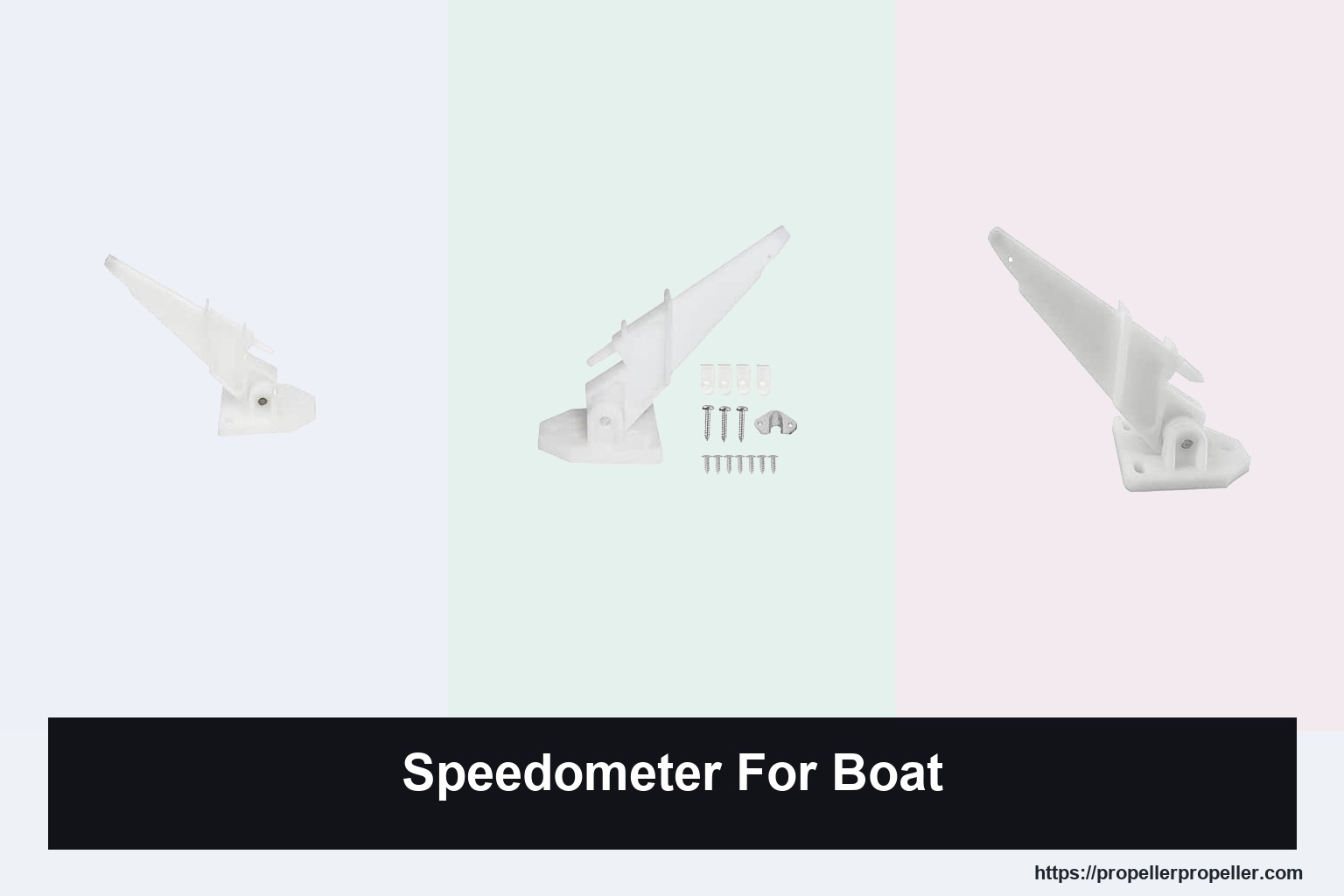
A boat speedometer only feels simple until the readings wander, the pickup snags weeds, or the gauge cannot tolerate spray and vibration. Buyers usually want one of two things: a direct replacement for a pressure-driven system or a cleaner GPS-based gauge that does not depend on a water pickup. The right choice comes down to compatibility, installation effort, and how much you value simplicity versus flexibility.
This roundup focuses on five practical options that cover both camps. The pitot-style units are the straightforward route when you want to preserve an existing setup or replace a damaged tube quickly. The GPS gauges change the equation by using satellite signal instead of water pressure, which can reduce mechanical complexity but adds its own mounting and power considerations. The best fit depends on your helm layout, your speed range, and whether you want a universal replacement or a more modern instrument panel.
Top Speedometer For Boat on the Market

Seachoice Universal Pitot Tube
- Pitot tube pickup
- Kick-up protection
- Weed resistant design
- Universal speedometer compatibility

Marine Boat Pitot Kit
- Up to 80 MPH
- Automatic kick-up tube
- Universal mounting holes
- Pressure-driven speedometer use

ISURE MARINE Kick-Up Pilot Tube
- 80 MPH speed range
- ABS construction
- Slotted mounting pattern
- Automatic kick-up feature

ARTILAURA GPS Speedometer Black
- 85mm gauge size
- GPS antenna included
- IP67 waterproof and dustproof
- 7 color backlighting

ARTILAURA GPS Speedometer White
- 85mm gauge size
- GPS antenna included
- IP67 waterproof and dustproof
- White gauge finish
This article may contain affiliate links. As an Amazon Associate, the website may earn from qualifying purchases at no additional cost to you.
Speedometer For Boat Reviews
Seachoice Universal Pitot Tube
- Item Dimensions
- 4 x 2 x 9 inches
- Item Weight
- 2.88 ounces
- Part Number
- 50-15401
- Warranty Description
- http://www.seachoice.com/warranty-information
Advantages
- Universal replacement for many speedometers
- Kick-up feature reduces breakage risk
- Weed resistant pickup design
- Very light at 2.88 ounces
- Compact 4 x 2 x 9 inches
Limitations
- Requires a pressure-driven speedometer system
- No mounting hardware listed
This is the most direct choice for restoring a pressure-driven boat speedometer without overcomplicating the job. The pitot tube design delivers the water pressure signal those systems need, and the universal compatibility claim broadens its appeal if you are replacing a damaged pickup rather than redesigning the dash. The white finish is simple and unobtrusive, which matters on boats where the hardware needs to disappear into the stern rather than dominate it. The compact size and light weight also make it easy to handle during a basic swap.
The practical advantage here is the combination of a weed-resistant shape and a kick-up feature. Weed resistance matters because pickup issues often show up as unstable readings rather than a total failure, so a design that stays cleaner in the water can reduce nuisance inaccuracies. The kick-up feature is even more important in shallow water or when docking gets tight. Instead of turning a minor impact into a broken part, the assembly is designed to move out of harm’s way. That lowers the risk of repeated repairs on boats that see real use rather than sheltered cruising.
Against the GPS gauges in this roundup, this model wins on simplicity and cost. It does not ask for a display swap or satellite reception. It is the better buy for owners who already run a pressure-driven speedometer and just need the pickup to work again. The tradeoff is obvious: this is hardware for a conventional system, not a modernized readout. If your goal is a straightforward, affordable replacement that keeps the existing gauge alive, this is the most sensible starting point.
PHOTO: Seachoice Universal Pitot Tube – White pitot tube → Source: Amazon.com
Marine Boat Pitot Kit
- Item Dimensions
- 3 x 4 x 4 inches
- Item Weight
- 50 g
- Part Number
- 65620
Advantages
- Very low purchase price
- Up to 80 MPH coverage
- Automatic kick-up protection
- Universal replacement approach
- May fit existing mounting holes
Limitations
- Basic feature set
- Mounting accessories not included
This kit targets the buyer who wants the lowest-cost path back to a functioning pressure-based speedometer. The up to 80 MPH range covers the speed window most recreational boats need, and the universal replacement angle is strong for owners dealing with mixed-brand hardware. The automatic kick-up tube adds an important layer of protection. That matters because the cheapest replacement is not really cheap if it breaks the first time you graze a trailer bunk or shallow bottom.
Installation flexibility is one of its strongest practical advantages. The claim of compatibility with most mounting holes means you may be able to avoid drilling new holes, which saves time and reduces the chance of creating a sloppy mounting point on the transom. Its very low weight also keeps the assembly easy to position while aligning hardware. The tradeoff is that this is still a basic pitot solution. It depends on water pressure and on the existing gauge system, so it is not the answer for someone trying to convert to GPS or eliminate a pickup tube altogether.
Compared with the Seachoice option, this one is more aggressively priced and aimed at the cost-conscious repair. It gives up the more established brand identity, but it keeps the same core job intact. For boaters who care most about getting a working speed reading back without spending much, it is the clearest budget pick in the set. Choose it when the priority is function first and the rest of the installation can stay simple.
PHOTO: Marine Boat Pitot Kit – Pitot kit components → Source: Amazon.com
ISURE MARINE Kick-Up Pilot Tube
- Material Type
- Acrylonitrile Butadiene Styrene (ABS)
- Thread Style
- Slotted
- Item Weight
- 0.06 kg
Advantages
- Lightweight at 0.06 kg
- ABS material construction
- Slotted mounting pattern
- Automatic kick-up feature
- 80 MPH compatibility
Limitations
- Mounting accessories not included
This model is a strong pick for owners who want a compact, no-frills replacement with a little more material detail behind it. The ABS construction is relevant because it suggests a practical balance of stiffness and flexibility, which is exactly what you want in a component that may need to survive impacts without becoming brittle. The universal replacement pitch and the 80 MPH pressure-driven speedometer compatibility keep it aligned with typical recreational marine use. The smoke-resistant claim is less central than the structural points, but it reinforces the idea that this is meant for ordinary boating conditions rather than a specialized setup.
The installation story is one of its better selling points. A standard slotted hole pattern is valuable because it can reduce the chance of drilling new holes for a replacement, and that is especially useful when you are trying to preserve the stern surface or reuse existing mounting points. The automatic kick-up feature is another meaningful safeguard, especially on boats that spend time around docks, sandbars, or weed beds. The package note is important too. Mounting accessories are not included, so this is the right pick when you already have the supporting hardware or do not mind sourcing it separately.
In comparison with the other pitot tubes here, this one lands between the bare-bones budget option and the more established universal replacement. It is lighter than the Seachoice unit and more explicitly material-focused than the cheapest kit, which may matter if you want a cleaner specification trail before buying. The best audience is the owner who wants a lightweight replacement, modest price, and an installation pattern that may save drilling. If that is the brief, it is easy to recommend.
PHOTO: ISURE MARINE Kick-Up Pilot – Kick-up tube assembly → Source: Amazon.com
ARTILAURA GPS Speedometer Black
- Item Dimensions
- 3.37 x 3.37 x 2 inches
- Material Type
- Stainless Steel 316L Bezel + Anti-fog Glass
- Item Weight
- 6.4 ounces
- Part Number
- AR-CX8155
Advantages
- GPS-based speed measurement
- IP67 waterproof and dustproof
- 316L stainless steel bezel
- Anti-fog glass face
- Includes GPS antenna and harness
Limitations
- Higher price than pitot options
- Needs sky view for GPS reception
This is the most modern option in the group and the one that makes the strongest case for a full gauge upgrade. The 85mm gauge size and 3-3/8 inch format suit standard dash cutouts, so the attraction is not just the tech but the fact that it can slot into many existing layouts. The 0 to 80 MPH range is appropriate for marine use, and the included GPS antenna changes the installation equation by moving speed measurement away from a water pickup. That can be a meaningful simplification for boats where a pitot tube is already a pain point.
The biggest operational distinction is the signal source. Because it reads from satellite signal rather than a speed sensor or water pressure line, you avoid the mechanical dependency that can make pitot systems inconsistent when tubing or pickup placement is imperfect. The IP67 waterproof and dustproof rating is also important in a marine environment because helm components need to withstand spray and exposure. Add the 316L stainless bezel and anti-fog glass, and you get a gauge that is clearly built for harsh conditions rather than a casual interior install. The 9-32V operating range broadens compatibility across vehicle and marine electrical systems, but you still need to account for antenna placement and a clear view of the sky.
Against the pitot-style products, this gauge is the choice for buyers who want less dependence on water hardware and more confidence in a clean dash install. It costs much more, so it is not the obvious answer for a quick repair. It is the right pick when you are replacing the whole approach, not just the tube. If you want a digital marine gauge with a weather-resistant build and the convenience of GPS measurement, this black version is the most compelling upgrade here.
PHOTO: ARTILAURA GPS Speedometer – GPS gauge set → Source: Amazon.com
ARTILAURA GPS Speedometer White
- Item Dimensions
- 3.37 x 3.37 x 2 inches
- Material Type
- Stainless Steel 316L Bezel + Anti-fog Glass
- Item Weight
- 6.4 ounces
- Part Number
- AR-CX8156
Advantages
- GPS-based speed measurement
- IP67 waterproof and dustproof
- 316L stainless steel bezel
- Anti-fog glass face
- White finish suits light panels
Limitations
- Higher price than pitot options
- Needs sky view for GPS reception
This version brings the same core GPS gauge approach into a lighter visual package. The 85mm gauge size again matters because it fits the standard dash format many boaters are trying to preserve, and the white finish is the detail that changes the visual outcome at the helm. On boats with lighter panels or brighter interiors, that can make the gauge look like it belongs rather than feeling bolted on as an afterthought. The 0 to 80 MPH indication range remains appropriate for the category, and the included GPS antenna keeps the installation concept consistent with the black version.
Functionally, this is still a satellite-based speedometer with the same set of marine-minded protections. The 316L stainless bezel and anti-fog glass help explain why it is positioned as a serious outdoor gauge rather than a decorative display. IP67 protection is especially useful because marine electronics live in an environment where spray, humidity, and dust can all shorten service life if the housing is weak. The 9-32V operating range gives it broad electrical flexibility, but as with any GPS gauge, placement matters. It will be happiest where the antenna can see the sky clearly and the dash can support a standard 85mm opening.
Relative to the black version, the difference here is cosmetic but still practical. Buyers choosing between them are deciding more on helm appearance than on measurement behavior. Relative to the pitot options, the real advantage is the move away from a water-pressure pickup. That means less dependence on transom hardware and a cleaner route for someone who wants a full gauge refresh. Choose this one when the white finish matches the boat better and you want the same GPS-driven convenience as the black model.
PHOTO: ARTILAURA GPS Speedometer White – GPS gauge set → Source: Amazon.com
How to Choose a Boat Speedometer
The best boat speedometer is the one that matches how your boat actually measures speed. Pressure-driven systems are simple and inexpensive to keep alive, but they rely on a pickup tube that can be damaged, clogged, or knocked out of alignment. GPS gauges remove that water hardware from the equation, which can improve convenience and clean up the helm, but they bring their own demands around power, mounting, and signal reception. A good purchase starts with your existing setup, then moves to the environment your boat sees and the level of installation work you are willing to take on.
Pressure or GPS
The first decision is whether you want a pitot-style replacement or a GPS gauge. A pitot system measures water pressure, so it makes sense when you already have a compatible speedometer and just need a working pickup again. A GPS gauge reads from satellite signal instead. That can be simpler in use because it avoids a transom pickup, but it only works well when the antenna has a clear view of the sky. Choose the technology that matches your current hardware and the kind of maintenance you want to avoid.
Dash Size and Fit
Physical fit matters more than many buyers expect. Gauge diameters and cutout requirements need to line up with your panel if you want a clean installation. A standard-size marine gauge can save time, but you still need to check whether the opening, bezel, and mounting depth suit your helm. If you are replacing a failed unit, measure the hole and verify the back-side clearance before ordering. A mismatch here can turn a quick upgrade into a panel modification project.
Water Resistance
Marine electronics live with spray, humidity, and temperature swings, so housing quality matters. A waterproof or dustproof rating gives you a better sense of how confidently the gauge can be used in exposed conditions. Materials such as stainless steel bezel components and anti-fog glass are useful because they help the instrument stay readable and resist wear. For pitot hardware, durability is just as important because the pickup sits in a spot where impacts and debris are common. A weak material choice usually becomes a reliability problem later.
Installation Effort
Some speedometers are straightforward replacements. Others demand a more involved install because they need wiring, antenna placement, or new mounting points. Pitot systems can be attractive when you want the least disruption, especially if the new part can reuse existing holes. GPS gauges often require a little more planning because the antenna needs a sensible location and the display needs electrical power. Before buying, think about whether you want a fast mechanical swap or a more complete instrument update.
Speed Range
Always check the speed range against how you run the boat. A range that covers typical recreational speeds is usually enough, but too little range can make the gauge less useful at the top end. On the other hand, a huge range that you never use does not add much value. The best choice is one that reads clearly in the speeds you actually travel most often. That keeps the instrument easier to interpret at a glance and reduces the chance of buying a display that feels oversized for the job.
Mounting Protection
If your boat sees shallow water, docking bumps, or weed-heavy areas, protection features deserve real attention. A kick-up pickup can reduce the chance of breakage when the tube hits something. Weed resistance matters because it helps preserve steadier readings in areas where debris can interfere with water flow. These details do not sound dramatic on paper, but they influence how often you end up troubleshooting the speedometer instead of using it. For everyday boating, that difference can be more valuable than a flashy display feature.
Speedometer Comparison Table
| Product | Best For | Speed Range | Build Material | Weight | Part Number | Number of Items |
|---|---|---|---|---|---|---|
| Seachoice Universal Pitot Tube | Best Universal Replacement | 4 x 2 x 9 inches | Pitot Tube | 2.88 ounces | 50-15401 | 1 |
| Marine Boat Pitot Kit | Best Budget Pitot | 3 x 4 x 4 inches | mounting holes | 50 g | 65620 | 1 |
| ISURE MARINE Kick-Up Pilot Tube | Best Lightweight Pitot | Not Specified | Acrylonitrile Butadiene Styrene (ABS) | 0.06 kg | cesuqi | 1 |
| ARTILAURA GPS Speedometer Black | Best GPS Upgrade | 3.37 x 3.37 x 2 inches | Stainless Steel 316L Bezel + Anti-fog Glass | 6.4 ounces | AR-CX8155 | 1 |
| ARTILAURA GPS Speedometer White | Best White GPS Gauge | 3.37 x 3.37 x 2 inches | Stainless Steel 316L Bezel + Anti-fog Glass | 6.4 ounces | AR-CX8156 | 1 |
How We Tested & Analyzed Speedometer for Boat
This comparison focused on compatibility, installation consequences, measurement method, and durability in marine use. Pressure-driven pickups and GPS gauges solve the same buyer problem in different ways, so the analysis weighed how each design changes the ownership experience. The goal was not to rank by price alone, but to judge what each product means for a boater who may be replacing a broken part, preserving an existing system, or upgrading to a cleaner dash layout.
Build details also mattered because marine speedometers are exposed to water, vibration, sun, and repeated handling. Where ratings, materials, dimensions, operating ranges, or protection claims were available, they were translated into practical value rather than repeated as a specification list. That meant paying attention to installation range, fit, and the degree of hardware dependence each product creates. A feature only counted when it affected use, durability, or setup in a meaningful way.
The final recommendations also account for tradeoffs. Lower-cost pitot units can solve a simple repair, but they do not modernize the system. GPS gauges offer a more complete change, but they require more planning and a higher budget. That difference is central to the buying decision, so the guidance emphasizes which kind of owner benefits from each approach instead of pretending that one design is universally better.
Frequently Asked Questions
Should I choose a pitot speedometer or GPS speedometer?
Choose a pitot-style setup if you already have pressure-driven hardware and want the easiest replacement path. Choose GPS if you want to remove the water pickup from the equation and are willing to support an antenna and electrical installation. The better choice depends on whether you want to preserve the current system or modernize it.
What speed range do most boaters need?
Most recreational boats do not need an extreme top-end range. A gauge that covers typical operating speeds clearly is usually more useful than one that looks impressive on paper. The important point is that the scale should remain easy to read at the speeds you actually use most often.
Why does a kick-up pickup matter?
A kick-up design can reduce damage when the pickup hits shallow water, debris, or a docking obstacle. That matters because a fragile tube often fails from impact rather than wear. For boats that see real-world shoreline use, that protection can save you from repeated replacements and troubleshooting.
Do GPS speedometers need special placement?
Yes. GPS gauges work best when the antenna has a clear view of the sky. Obstructions, heavy structure, or poor mounting positions can weaken reception and slow startup. Good placement is part of getting reliable readings, so plan the helm layout before you buy.
Final Thoughts
The best speedometer choice comes down to whether you are repairing what you already have or changing the way the boat measures speed. Pitot units remain the most economical path for existing pressure-driven systems, especially when you want a quick replacement and do not need to redesign the dash. GPS gauges cost more, but they trade pickup hardware for a cleaner measurement method and a more modern helm presence. Those are different solutions to different problems, and the right answer depends on how your boat is used.
Once you separate those two paths, the decision gets much easier. Focus on fit, installation burden, protection from impact, and whether the gauge range matches your real cruising speeds. A good boat speedometer should disappear into the background until you need it, then deliver a reading you can trust at a glance. Pick the design that best matches your boat’s layout and maintenance tolerance, and you will end up with a much better long-term result.



