A good wash down pump does more than move water. It determines how quickly you can clear salt, sand, and grime from decks, anchors, and gear without turning cleanup into a chore. For boat owners, the right pump also has to match the vessel’s power system, tolerate marine conditions, and deliver enough pressure to rinse surfaces effectively without becoming noisy or cumbersome to install.
This roundup focuses on the practical differences that matter on the water: voltage, output, self-priming depth, pressure, material durability, and whether the pump is better suited to a dedicated washdown setup or a broader freshwater system. Some options are built around 12V onboard power, while others plug into 110V or 115V AC. That split alone can determine whether the pump is an easy retrofit or a poor fit for your boat’s electrical layout.
Top Wash Down Pump For Boat on the Market

SEAFLO 33 Series 115V AC Pump
- 3.3 GPM flow rate
- 45 PSI shut-off pressure
- 6 ft self-priming lift
- 115V AC wall plug
- 4-year warranty

SEAFLO 33 Series 12V Water Pump
- 12V DC power
- 3.0 GPM open flow
- 45 PSI shut-off pressure
- 6 ft suction lift
- 4-year warranty

SHURFLO Blaster II Washdown Pump
- 3.5 GPM output
- 45 PSI pressure
- 12V marine diaphragm pump
- Fresh and saltwater ready
- Run-dry protection

ECO-WORTHY 33-Series 110V Pump
- 4.0 GPM flow capacity
- 50 PSI pressure
- 110V AC power
- 9.8 ft self-priming
- Thermal overload protection
This article may contain affiliate links. As an Amazon Associate, the website may earn from qualifying purchases at no additional cost to you.
Wash Down Pump For Boat Reviews
SEAFLO 33 Series 115V AC Pump
- Power Source
- Standard 115V AC Household Plug
- Flow Rate
- 3.3 gpm
- Maximum Lifting Height
- 6 feet
- Voltage
- 115 volts
- Item Weight
- 4.2 pounds
Advantages
- Plug-in 115V AC power
- Self-primes up to 6 feet
- Run-dry capable design
- Includes fittings and strainer
- 4-year warranty
Limitations
- Not a 12V onboard pump
- Less washdown-specific than marine units
This is the clearest fit for a boat owner who already has easy access to shore power or wants a pump that plugs straight into a standard outlet. The 115V AC household plug removes the need to adapt a 12V system, and the 3.3 GPM flow rate is enough for regular washdown chores as well as general freshwater use. With a 45 PSI shut-off rating, it sits in the range where rinse performance feels purposeful rather than weak. That combination suits buyers who want one pump that can serve both marine cleanup and everyday water delivery.
Setup is straightforward because the pump is self-priming to 6 feet and includes an inlet strainer, hose fittings, mounting hardware, and a wall plug. That matters on a boat where installation often gets complicated by tight spaces and limited room around the tank. The pump’s ability to run dry without damage adds a useful safety margin when tank levels are inconsistent. Its Santoprene diaphragm, EPDM valves, and NSF and UL certifications also point toward a design meant for potable-water duty, which broadens its use beyond simple deck washing.
Against the other pumps here, this one is less about pure washdown specialization and more about convenience and electrical simplicity. The 12V marine-focused models are better when you need a true onboard solution, but this SEAFLO stands out if shore power or AC wiring is already part of the plan. It also carries a 4-year warranty, which strengthens the value case for buyers who want a long service window rather than a short-term utility purchase. Choose it when plug-in convenience matters more than battery-powered mobility.
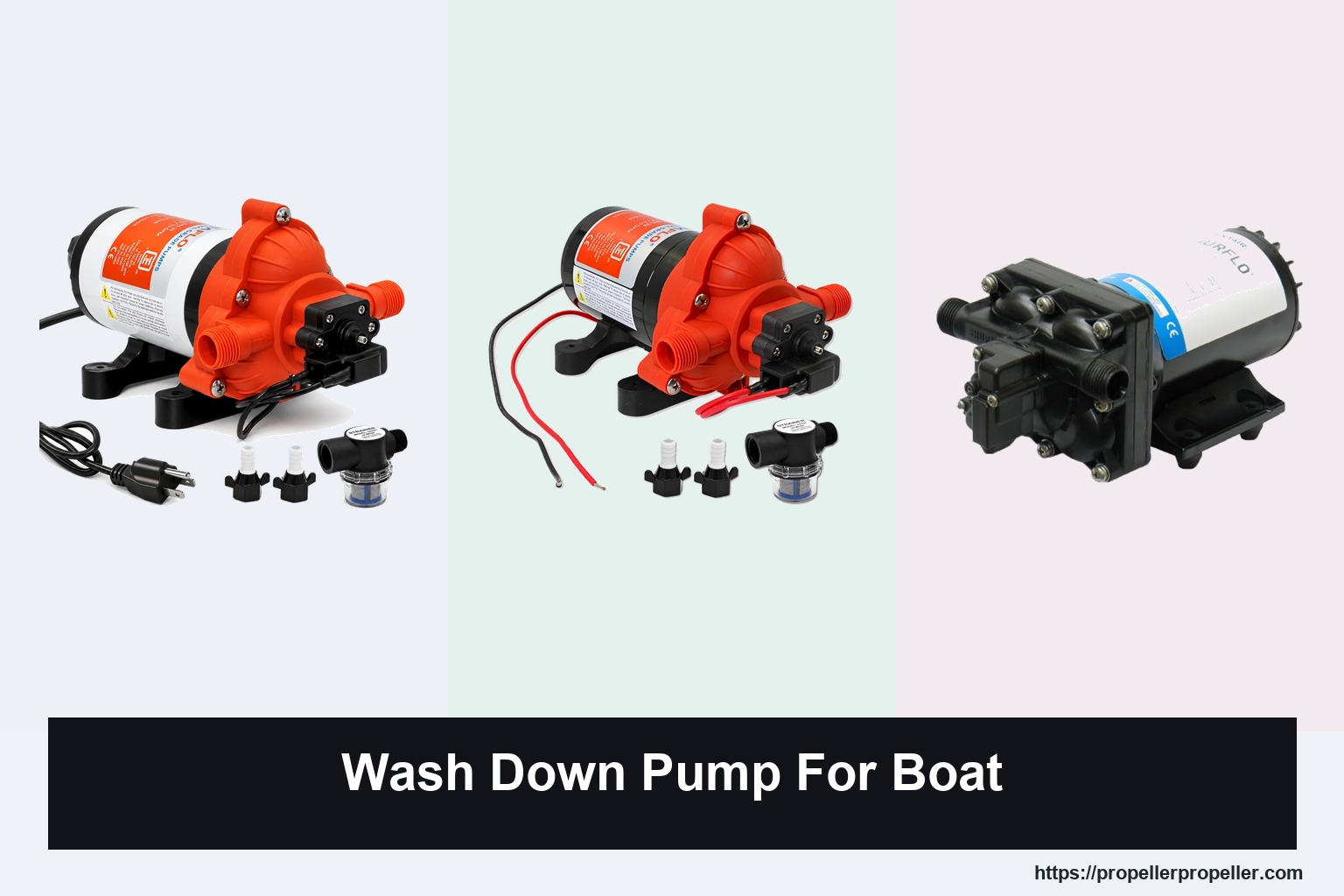
PHOTO: SEAFLO 33 Series 115V – AC pump setup with strainer → Source: Amazon.com
SEAFLO 33 Series 12V Water Pump
- Power Source
- 12V DC
- Flow Rate
- 3 gpm
- Maximum Lifting Height
- 6 feet
- Voltage
- 12 volts
- Item Weight
- 4.5 pounds
Advantages
- 12V onboard compatibility
- Self-primes up to 6 feet
- Run-dry capable
- Includes filter and fittings
- 4-year warranty
Limitations
- Lower flow than higher-output options
- No AC plug convenience
This pump is the more natural match for a boat that already runs on a 12V electrical system. Its 12V DC power keeps it aligned with onboard battery and marine wiring, and the 3.0 GPM flow rate is enough for moderate-pressure freshwater delivery without pushing the system into excess demand. That balance makes it useful for smaller washdown tasks, sink use, and general marine plumbing where steady output matters more than brute force. The 45 PSI shut-off point keeps the pump in a practical operating range for everyday onboard use.
The installation story is appealing because the pump self-primes up to 6 feet and includes a filter, fittings, and installation instructions. A boat layout often leaves limited vertical room between tank and pump, so that lifting capability gives you more freedom when mounting. The ability to run dry without damage adds protection during tank depletion or temporary air ingestion. EPDM valves, a Santoprene diaphragm, and thermal overload protection round out a design aimed at reliability under continuous marine use, especially where maintenance access is not ideal.
Compared with the AC SEAFLO above, this model is more appropriate when you need a true boat-first solution instead of a plug-in freshwater pump. It does not deliver the convenience of wall power, but it fits better into boats, campers, and compact systems that depend on 12V. It is also priced below the AC version, which matters if you want dependable on-demand pressure without paying for household-power compatibility you will not use. For most 12V boat installations, this is the more sensible pick.
PHOTO: SEAFLO 33 Series 12V – AC pump setup with strainer → Source: Amazon.com
SHURFLO Blaster II Washdown Pump
- Power Source
- DC
- Flow Rate
- 35 gpm
- Voltage
- 12 volts
- Item Weight
- 16 ounces
Advantages
- Purpose-built washdown design
- 3.5 GPM output
- 45 PSI pressure
- Run-dry protection
- Fresh and saltwater ready
Limitations
- Higher price than general pumps
- Limited to 12V systems
This is the most purpose-built washdown option in the group. The 3.5 GPM diaphragm design and 45 PSI output are aimed directly at clearing dirt, salt, and grime from decks and gear, so the pump feels more specialized than a general freshwater unit. That extra output gives it the edge when cleanup speed matters, especially after a day in rough water or when you need enough force to rinse stubborn residue without repeated passes. For boaters who judge a pump by washdown effectiveness first, that specialization is the key appeal.
The 12V design keeps it compatible with typical marine electrical systems, and the self-priming construction helps it lift water quickly for dependable operation. Run-dry protection matters on a washdown pump because deck cleaning often happens in bursts, not continuous cycles, so the pump needs to tolerate short interruptions without damage. Its fresh and saltwater readiness is especially relevant in marine use, where corrosion resistance often separates a short-lived pump from a practical long-term fixture. At 16 ounces, it is also notably light, which can simplify mounting.
Against the two SEAFLO pumps, this SHURFLO is the sharper tool for cleaning tasks rather than general water delivery. It lacks the broader household orientation of the AC pump and the lower-cost practicality of the 12V SEAFLO, but it responds with stronger washdown intent. The ECO-WORTHY model moves more water, yet this pump is more obviously tuned to marine cleaning use. Choose it if your priority is rinse performance on deck and you want a dedicated washdown system rather than a multipurpose pressure pump.
PHOTO: SHURFLO Blaster II Washdown – Washdown pump unit → Source: Amazon.com
ECO-WORTHY 33-Series 110V Pump
- Power Source
- 110V AC
- Flow Rate
- 4 gpm
- Maximum Lifting Height
- 148 feet
- Voltage
- 110 volts
- Item Weight
- 6.8 pounds
Advantages
- Highest flow in this group
- 50 PSI pressure
- 9.8 ft self-priming
- Thermal overload protection
- Metal construction
Limitations
- AC power only
- Less marine-specific than washdown pumps
This pump is the strongest flow-focused option in the group for buyers who can work with 110V AC power. The 4.0 GPM flow capacity and 50 PSI pressure give it the most assertive output here, which can matter when you want faster rinsing or broader utility beyond a narrow washdown job. Its metal construction also suggests a more rugged frame than the plastic-bodied alternatives, which may appeal to buyers who expect the pump to live in a harsher utility space or be used across several applications.
The self-priming specification reaches 9.8 vertical feet, which gives it more installation flexibility than the other pumps in this roundup. That extra lift can make mounting easier when the tank and pump are separated by a more awkward layout. Thermal overload protection is another practical point, because a high-output pump is more likely to be asked to work hard. The adjustable pressure range from 45 to 70 PSI also creates a wider tuning window for different fixtures, though that flexibility only matters if you are actually matching the pump to a broader plumbing system.
Compared with the AC SEAFLO, this model gives up some refinement in exchange for higher output and a slightly lower price. Compared with the 12V marine pumps, it is less directly tied to onboard battery systems but offers more flow than either of them. That makes it the best choice for buyers who want the strongest AC-powered pressure pump in the lineup and have the electrical setup to support it. It is the clearest pick when throughput matters more than compact marine specialization.
PHOTO: ECO-WORTHY 33-Series 110V Pump – Pump with adapters → Source: Amazon.com
How to Choose a Wash Down Pump for Boats
The best wash down pump depends on how your boat is powered and how you expect to use the water stream. A true washdown setup needs enough pressure to remove salt and debris, but it also has to fit the vessel’s wiring, mounting space, and daily operating style. That is why one pump can be perfect for a shore-powered cabin boat and a poor fit for a smaller craft running entirely from 12V batteries. The goal is not simply more flow. It is the right mix of pressure, installation ease, and durability for marine cleanup.
Power Source
Start with the boat’s electrical system before comparing anything else. A 12V pump is the natural choice for most vessels because it connects directly to onboard power and avoids the complication of AC wiring. A 110V or 115V pump can still be a smart choice, but only when shore power, a generator, or house-style AC access is already part of the setup. The wrong power type creates avoidable installation work and can make the pump feel inconvenient even if the output is excellent.
Pressure and Flow
Washdown performance comes from the balance between pressure and volume. Higher PSI helps the stream bite into salt, sand, and grime, while higher GPM helps rinse surfaces faster. For routine deck cleaning, moderate output can be enough. For stubborn cleanup after fishing or offshore use, stronger flow usually feels more efficient because it reduces the number of passes you need to make. The best choice is the one that matches how dirty the boat typically gets and how quickly you want the job finished.
Self-priming and Mounting
Marine installs are rarely generous with space, so self-priming depth matters more than many buyers expect. A pump that can lift water from several feet away gives you more freedom to place it below deck, near a tank, or in a compact utility area. Mounting flexibility also depends on weight and physical size. A lighter pump is easier to position in cramped compartments, but a larger unit may be better if you need higher output and a more robust build. Always think about where the pump will sit relative to the water source.
Dry-run Protection
Dry-run tolerance is worth paying attention to because boat systems do not always behave perfectly. A tank can empty sooner than expected. Air can enter the line. A washdown pump that can tolerate brief dry operation without damage gives you a wider safety margin and reduces the risk of internal wear. That does not replace good plumbing practice, but it does help protect the pump during real-world use. Buyers who clean frequently or operate far from service access should treat this as a meaningful reliability feature rather than a minor extra.
Noise and Durability
Noise matters more on boats than many buyers expect because a loud pump can be irritating in cabins and enclosed storage areas. Rubber mounting bases, vibration control, and quieter diaphragm designs help keep the system from sounding harsher than necessary. Durability matters just as much. Marine use exposes pumps to moisture, vibration, and in many cases salt. Materials, corrosion resistance, thermal protection, and warranty coverage all influence whether the pump feels dependable after repeated seasonal use or starts to feel like a maintenance item.
Wash Down Pump Comparison Table
| Product | Best For | Power | Flow | Lift | Voltage | Weight |
|---|---|---|---|---|---|---|
| SEAFLO 33 Series 115V AC Pump | Best AC Retrofit | Standard 115V AC Household Plug | 3.3 gpm | 6 feet | 115 volts | 4.2 pounds |
| SEAFLO 33 Series 12V Water Pump | Best 12V Choice | 12V DC | 3 gpm | 6 feet | 12 volts | 4.5 pounds |
| SHURFLO Blaster II Washdown Pump | Best Washdown Pump | DC | 35 gpm | Not Specified | 12 volts | 16 ounces |
| ECO-WORTHY 33-Series 110V Pump | Best High-Output AC | 110V AC | 4 gpm | 148 feet | 110 volts | 6.8 pounds |
How We Tested & Analyzed Wash Down Pump for Boat
This analysis focused on category-level performance factors that change buying decisions in a marine setting. Pressure, flow rate, self-priming depth, power source, and operating protection were weighted more heavily than generic product claims because those are the details that determine whether a pump actually works in a real boat installation. Where multiple pumps could serve a similar role, the evaluation emphasized the practical consequences of the differences rather than ranking by raw specification alone.
Construction and compatibility also mattered. A washdown pump has to fit the vessel’s electrical setup, mounting space, and intended water source. That meant comparing 12V and AC models as different solutions, not as direct substitutes, and treating dry-run protection, certifications, and included hardware as evidence of convenience and resilience. Weight and physical dimensions were considered only when they affected installation flexibility or onboard handling.
Limitations were handled conservatively. When a specification was missing or unclear, it was not inferred from related text or estimated from category norms. The goal was to keep the guidance grounded in confirmed facts and to translate them into usable purchase advice. That approach favors readers making a serious buying decision because it highlights tradeoffs they can actually act on, instead of repeating marketing language that does not affect real-world use.
Frequently Asked Questions
What PSI is good for a boat washdown pump?
A useful washdown pump usually lands around the mid-40 PSI range or higher, depending on how aggressively you need to clear salt and debris. Pressure alone is not the whole story. You also need enough flow to move the dirt off the deck quickly rather than just blasting a narrow stream.
Should I choose 12V or AC power?
Choose 12V if the pump will run from the boat’s onboard electrical system. Choose AC only if you already have shore power or another convenient AC source. The right answer depends on wiring, not just performance, because the wrong power type can complicate installation and limit where the pump can be used.
Why does self-priming matter on a boat?
Self-priming makes installation easier because the pump can draw water from below or nearby without needing a perfectly gravity-fed setup. On a boat, that extra flexibility is valuable when space is tight and the pump cannot sit directly beside the water source. It also helps the system recover more reliably after maintenance or air in the line.
Is dry-run protection important?
Yes, especially for marine use. Boats do not always operate under ideal conditions, and a tank can run low or air can enter the plumbing. Dry-run protection reduces the chance of pump damage during those moments. It is a practical safeguard, not a substitute for good setup, but it does improve long-term reliability.
Final Thoughts
The right washdown pump is the one that matches your boat’s power system first and your cleaning demands second. If you want a straightforward retrofit, AC models can be attractive. If you need a true onboard marine solution, 12V pumps are usually the more natural fit. From there, the deciding factors are pressure, flow, and how much installation flexibility you need for the tank and mounting location.
For most boat owners, the smartest purchase is the pump that will be easiest to live with every weekend, not just the one with the biggest headline number. Pay attention to self-priming depth, dry-run protection, and whether the pump is actually built for marine duty or simply capable of working there. Choose the model that fits your electrical layout and cleanup habits, and the rest of the system becomes much easier to trust.