Boat fuel stabilizer is one of those small purchases that can prevent a much larger repair bill later. Seasonal storage, ethanol-blended gasoline, and humid dockside conditions all create the same problem: fuel breaks down, moisture enters the system, and engines become harder to start when you want them most. The right stabilizer keeps gasoline usable longer and reduces the chance of varnish, corrosion, or water-related issues developing while the boat sits.
The best choice depends on how long you store fuel, how much fuel you treat at a time, and whether you want a simple storage additive or a broader treatment that also targets deposits and ethanol-related problems. In this roundup, the focus is on the verified details that matter on the water: storage life, treatment ratio, fuel compatibility, cost per treated volume, and what each formula means for starting, maintenance, and seasonal readiness.
Top Boat Fuel Stabilizer on the Market

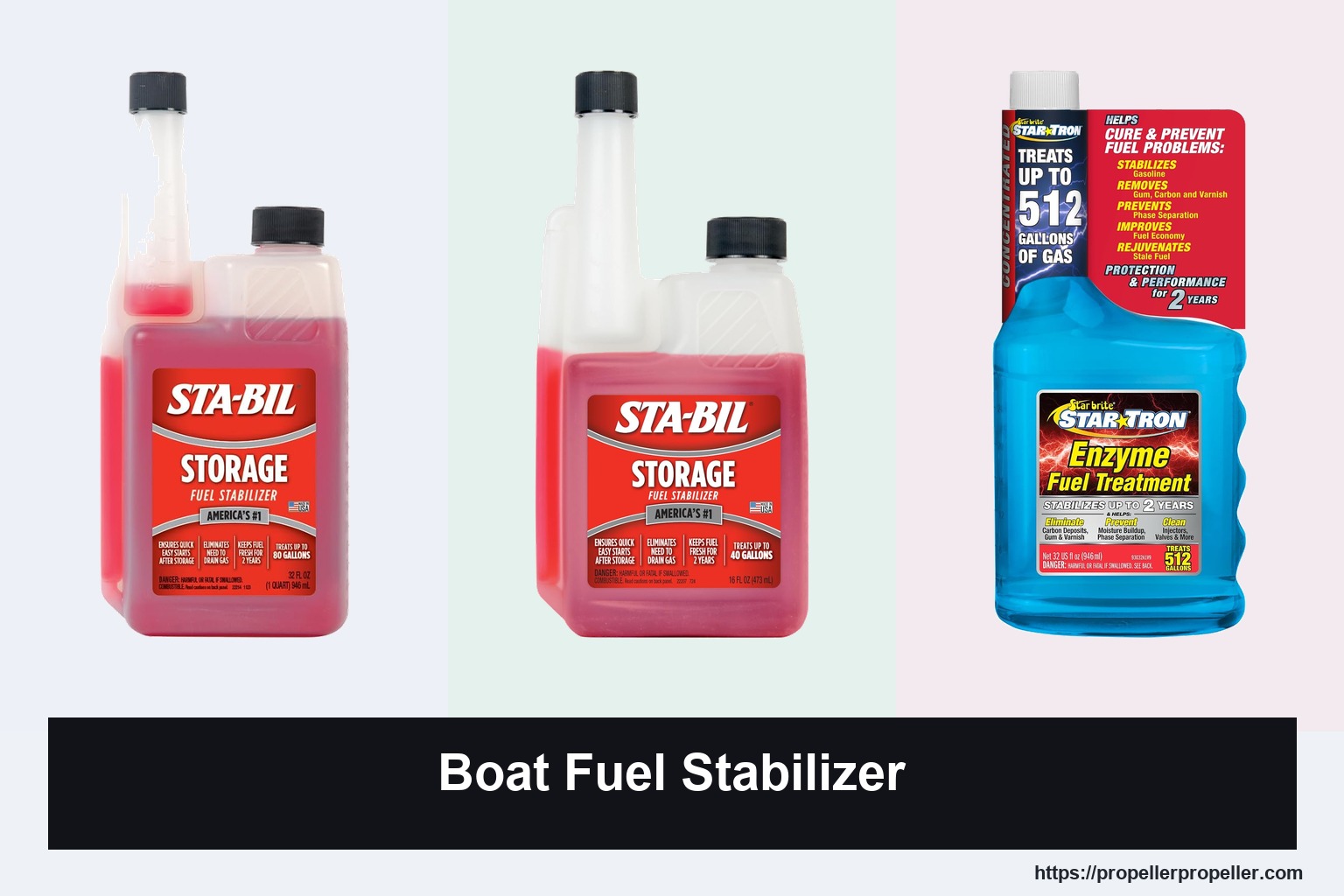
STA-BIL Storage Fuel Stabilizer 32 oz
- Treats up to 80 gallons
- Fresh fuel up to 24 months
- Works with E-10 through E-85
- Safe for 2-cycle engines
- Made for seasonal storage
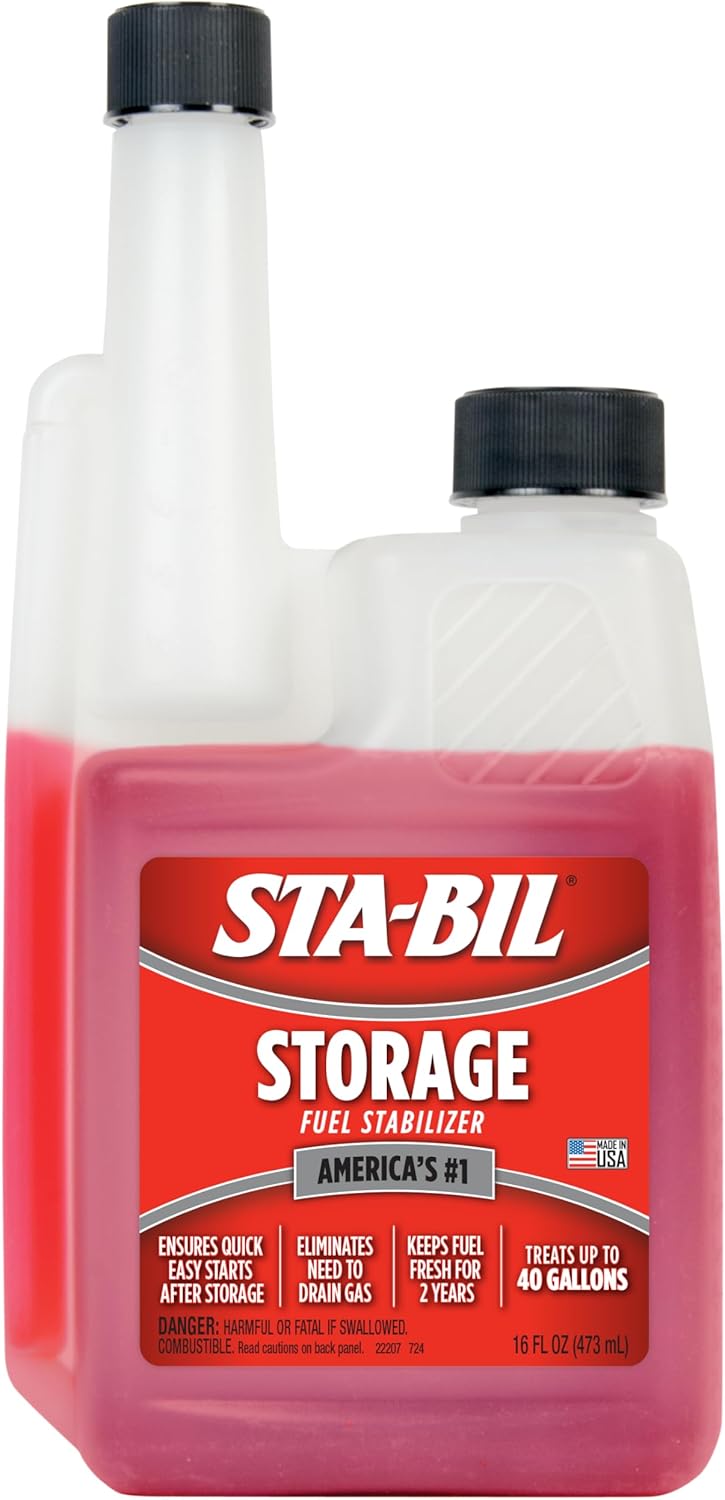
STA-BIL Storage Fuel Stabilizer 16 oz
- Treats up to 40 gallons
- Fresh fuel up to 24 months
- Works with E-10 through E-85
- Compact 16 oz bottle
- Storage-focused formula

Star Tron Enzyme Fuel Treatment 32 oz
- Treats up to 512 gallons
- Enzyme-based fuel treatment
- Helps prevent phase separation
- Works in all fuels
- Supports marine use

Star Tron Enzyme Fuel Treatment Gasoline
- Treats gasoline fuel
- Enzyme-based treatment
- Stabilizes fuel up to 1 year
- Safe for all engines
- Certified frustration-free packaging
This article may contain affiliate links. As an Amazon Associate, the website may earn from qualifying purchases at no additional cost to you.
Boat Fuel Stabilizer Reviews
STA-BIL Storage Fuel Stabilizer 32 oz
- Item Weight
- 1.83 pounds
- Product Dimensions
- 10.2 x 4.6 x 2.9 inches
- Voltage
- 12 volts
Advantages
- Fresh fuel up to 24 months
- Treats 80 gallons per bottle
- Works in gasoline and ethanol blends
- Safe for all gasoline engines
- Simple storage-focused directions
Limitations
- Less emphasis on cleaning action
- Requires careful measuring
STA-BIL Storage Fuel Stabilizer, 32 oz is the most straightforward pick here for boat owners who want a dedicated storage additive rather than a more complex treatment. Its main value is simple: keeps gasoline fresh for up to 24 months and is meant for seasonal shutdowns, not just short-term fill-ups. The bottle size also matters because it treats up to 80 gallons, which stretches further for larger tanks or multiple fuel cans. That makes it useful when you want one bottle to cover a full boating season without constant re-buying.
The handling instructions are easy to follow, and that reduces the chance of under-treating the tank. The formula calls for 1 oz per 2.5 gallons, then a five-minute engine run to move treated fuel through the system. That matters on a boat because untreated fuel in lines and carburetor passages is where storage problems often start. It is also designed for gasoline and ethanol-blended fuels, including E-10 through E-85, so it stays relevant even when the fuel dock does not offer ideal non-ethanol gasoline.
Compared with the smaller STA-BIL bottle and the Star Tron options, this one is the clearest buy for plain seasonal preservation. It is the better match when your priority is long storage life, broad engine compatibility, and a familiar storage-first approach. The tradeoff is that it is less about cleaning or fuel-system revitalization than the enzyme-based competitor. For owners who mostly want a reliable winterizer for a boat, this is the safest, most direct recommendation.
PHOTO: STA-BIL Storage Fuel Stabilizer – Fuel Stabilizer Bottle → Source: Amazon.com
STA-BIL Storage Fuel Stabilizer 16 oz
- Item Weight
- 15.4 ounces
- Product Dimensions
- 18 x 45 x 923 inches
- Voltage
- 12 volts
Advantages
- Compact storage-friendly bottle
- Treats 40 gallons
- Fresh fuel up to 24 months
- Works with E-10 through E-85
- Good for smaller fuel needs
Limitations
- Less total coverage than 32 oz bottle
- Not the broadest treatment profile
STA-BIL Storage Fuel Stabilizer, 16 oz is the smaller, easier-to-store version of the same storage-first idea. It keeps the same core benefit of up to 24 months of fuel freshness, which is what makes it practical for boaters who lay up a smaller vessel or who simply do not want a large chemical bottle taking up space in the garage or compartment. The bottle treats up to 40 gallons, so it still covers a meaningful amount of fuel even though the package is more compact.
For boat use, the value of the smaller bottle is mostly convenience. It is easier to keep aboard or near the fuel dock supplies, and the same compatibility with ethanol-blended fuels means it is still relevant when fuel quality is inconsistent. The formula is still intended for fresh fuel and seasonal storage, so it works best when you add it before layup rather than trying to rescue heavily degraded gasoline. That keeps expectations realistic and avoids overpromising what a storage stabilizer can do.
Against the larger STA-BIL bottle, this version wins on size and upfront cost, but it loses on treatment volume. Against Star Tron, it is simpler and more storage-specific rather than broader in fuel-treatment behavior. That makes it a smart purchase for smaller boats, lighter fuel needs, or anyone who values an easy-to-manage container over maximum volume. If your seasonal fuel load is modest, this is the practical, low-fuss pick.
PHOTO: STA-BIL Storage Fuel Stabilizer – Fuel Stabilizer Bottle → Source: Amazon.com
Star Tron Enzyme Fuel Treatment 32 oz
- Item Weight
- 1.9 pounds
- Product Dimensions
- 3 x 4.5 x 10.25 inches
Advantages
- Treats up to 512 gallons
- Enzyme-based formula
- Helps prevent phase separation
- Light 1 oz per 16 gallons
- Works in all engines and fuels
Limitations
- Higher upfront cost
- Broader formula may be more than needed
STAR BRITE Star Tron Enzyme Fuel Treatment is the most ambitious option in the group. The biggest headline is the sheer treatment capacity, because one 32 fl. Oz. Bottle treats up to 512 gallons. That changes the value equation for boat owners who burn through fuel across multiple tanks or want a long-lasting additive supply. Its enzyme technology is aimed at more than storage alone. It is designed to help engines start more reliably and run cleaner after inactivity, which broadens its role beyond a basic stabilizer.
The practical appeal is how much it tries to do around fuel cleanliness and moisture control. It is formulated to prevent and cure many ethanol-related issues, and it helps prevent phase separation by dispersing water through the fuel. On the water, that matters because boats often face humidity, condensation, and periodic sitting. It also targets gum, carbon, and varnish buildup, so it speaks to owners worried about deposits in the fuel delivery system rather than only stale gasoline. The dosage is light at 1 oz per 16 gallons, which helps stretch the bottle far.
Compared with the STA-BIL products, this is the choice for buyers who want a treatment with broader cleanup ambitions and exceptional volume per bottle. It is also more expensive up front, so the premium makes sense only if you value that wider scope. If your boat sees variable fuel quality, humid storage, or you want one additive to cover many engines and many gallons, this is the strongest all-around performance play. For pure storage simplicity, STA-BIL is easier. For broader fuel-system maintenance, Star Tron is the better bet.
PHOTO: Star Tron Enzyme Fuel – Fuel Treatment Bottle → Source: Amazon.com
Star Tron Enzyme Fuel Treatment Gasoline
- Item Weight
- 1.02 pounds
- Product Dimensions
- 2.25 x 3.75 x 8.75 inches
Advantages
- Lower upfront cost
- Enzyme-based treatment
- Safe for all engines
- Helps prevent phase separation
- Frustration-free packaging
Limitations
- Less treatment volume than larger bottle
- Stabilization window is shorter
Star TRON Enzyme Fuel Treatment – Gasoline is the leaner, lower-cost entry into the enzyme-based approach. It still carries the same core appeal of enzyme technology for easier starting, cleaner running, and ethanol-fuel management, but the bottle size and pricing make it easier to justify for owners who want a more affordable path into this category. The stated stabilizing horizon is shorter than the other storage-focused option, but it is still meaningful for routine seasonal use when you are not trying to stretch one fill over the longest possible storage window.
This version is the most appealing when you want the broader additive behavior of Star Tron without buying the largest bottle. It is safe for all engines, including 2-cycle pre-mix, and it is intended to help with phase separation and fuel cleanliness. Those traits matter on a boat because mixed fuel systems, varying run patterns, and humidity can all make fuel care more complicated than simple winter storage. The bottle also ships in Certified Frustration-Free Packaging, which is a small practical plus if you value easier handling and less waste at delivery.
Side by side with the larger Star Tron bottle, this one gives up treatment volume but keeps the same general treatment philosophy. Against STA-BIL, it leans more toward maintenance and cleanup than straightforward preservation. That makes it a strong middle ground for boat owners who want enzyme-based protection but do not need the huge-volume bottle. If budget matters and your fuel turnover is moderate, this is the smartest value pick among the four.
PHOTO: Star Tron Enzyme Fuel – Fuel Treatment Bottle → Source: Amazon.com
How to Choose a Boat Fuel Stabilizer
Boat fuel care is about more than preventing hard starts. You are trying to keep gasoline usable, reduce moisture-related damage, and match the additive to how your boat is stored and fueled. The right stabilizer should fit your tank size, fuel type, and storage interval without adding unnecessary complexity. A simple storage additive can be enough for seasonal layup, while a broader treatment may be better if you want some cleanup action along with preservation.
Storage Time
Start with how long the fuel will sit before the engine runs again. A stabilizer that covers a few months can be enough for regular use, but seasonal storage needs a longer preservation window. The longer the boat sits, the more important it becomes that the additive slows oxidation and helps keep fuel from turning stale. Match the product to your real off-season, not to the most optimistic case on the dock.
Tank Size
A larger fuel tank changes the economics quickly. A small bottle can still be the right choice, but you need to know how many gallons it treats so you do not underdose the system. That matters on boats because partially treated fuel can still leave lines, filters, or carburetor passages vulnerable. If you maintain multiple tanks or refuel often, a higher treatment volume can be more convenient than buying a smaller bottle more often.
Fuel Compatibility
Not every additive behaves the same way with ethanol-blended gasoline. If your fuel source varies, check that the stabilizer is safe for the fuel mix you are actually using. Compatibility also matters for older engines, two-cycle systems, and marine applications that may see irregular use. A product that works across gasoline and ethanol blends reduces the risk of mismatched additives during a busy season or after a last-minute fuel stop.
Moisture Control
Boats are exposed to humidity, temperature swings, and condensation. That makes water control a serious buying factor, not an optional extra. Some stabilizers are built primarily to preserve fuel, while others also focus on dispersing water and reducing phase separation. If your boat is stored in a damp environment or sits through changing weather, a formula with stronger moisture management can be the safer long-term choice.
Cleanup vs Preservation
Some formulas are mainly about keeping fresh fuel fresh. Others also try to reduce gum, varnish, carbon, and other residue that can affect starting and running quality. Decide whether you need pure storage protection or a broader treatment that does a little of both. For a boat that sees short trips and frequent refueling, cleanup support can matter. For a vessel that simply needs to survive layup, preservation may be the cleaner priority.
Ease of Use
Convenience is not trivial when you are working around fuel. Clear dosage instructions, sensible bottle sizing, and an easy mixing routine reduce the chance of mistakes. The best stabilizer is the one you can add correctly every time before storage. If you want fewer steps, choose a product with a straightforward treatment ratio and enough volume to cover your tank without constant measuring or second guessing.
Boat Fuel Stabilizer Comparison Table
| Product | Best For | Weight | Size | Model | Exterior | OEM Part Number |
|---|---|---|---|---|---|---|
| STA-BIL Storage Fuel Stabilizer 32 oz | Best for long storage | 1.83 pounds | 10.2 x 4.6 x 2.9 inches | 770-119 | Red | 22214 |
| STA-BIL Storage Fuel Stabilizer 16 oz | Best compact bottle | 15.4 ounces | 18 x 45 x 923 inches | 22207 | Machined | Not Specified |
| Star Tron Enzyme Fuel Treatment 32 oz | Best for fuel cleaning | 1.9 pounds | 3 x 4.5 x 10.25 inches | Star Tron Enzyme Fuel Treatment – Concentrate Gas Formula | Not Specified | 093032SS |
| Star Tron Enzyme Fuel Treatment Gasoline | Best value enzyme pick | 1.02 pounds | 2.25 x 3.75 x 8.75 inches | Star Tron Enzyme Fuel Treatment – Concentrate Gas Formula | Not Specified | Not Specified |
How We Tested & Analyzed Boat Fuel Stabilizer
This roundup focused on decision factors that matter specifically for boat fuel storage and seasonal use. I compared treatment volume, storage duration, fuel compatibility, moisture-related claims, and the practical impact of dosage instructions. Those details matter because boaters often deal with longer idle periods, variable fuel quality, and damp storage conditions that can accelerate fuel degradation.
I also weighed the differences between a simple storage stabilizer and broader enzyme-based treatments. That distinction is useful because some buyers only need gasoline preserved until the next season, while others want help with deposits, ethanol-related issues, and phase separation risk. Products were evaluated by how clearly they support a real storage routine and what tradeoffs come with higher capacity or a more complex formula.
Where the evidence supported it, the analysis emphasized consequences rather than raw feature counts. A high treatment volume matters because it lowers cost per gallon and reduces re-buying. A shorter stabilization window matters because it may not suit long layups. Compatibility, package size, and bottle handling were also considered because an additive is only useful if it fits the way a boat owner actually stores and treats fuel.
Frequently Asked Questions
How much boat fuel stabilizer should I use?
Use the dosage printed on the bottle and match it to the amount of fuel in the tank. Under-treating can leave part of the fuel system vulnerable, while over-treating does not solve storage problems. The best practice is to add the additive before storage, then run the engine long enough to move treated fuel through the entire system.
Can I use fuel stabilizer with ethanol gasoline?
Yes, if the formula is explicitly compatible with ethanol-blended fuel. That compatibility matters for boats because many owners cannot control what fuel is available at the dock. Ethanol compatibility helps reduce the risk of fuel-related issues during storage, especially when moisture and temperature changes are part of the equation.
Do I still need to run the engine after adding it?
Usually, yes. Running the engine after treatment helps move the additive through the lines, injectors, carburetor, and other fuel-system parts. That step is important because fuel left only in the tank is not the whole story. The goal is to protect the entire system before the boat sits idle.
Is a fuel stabilizer enough for long-term boat storage?
It is an important part of storage prep, but it is not the only part. Fresh fuel, proper tank filling practices, and dry storage conditions all affect how well the boat restarts later. A stabilizer reduces the risk of stale fuel and deposit buildup, but it works best as part of a complete storage routine.
Final Thoughts
The best boat fuel stabilizer is the one that matches your storage timeline and the way your fuel system actually behaves. If your priority is simple seasonal preservation, a storage-first formula is the most direct solution. If you want broader help with deposits, humidity, and ethanol-related issues, an enzyme-based treatment earns its place. The key is to choose the level of protection you need without overbuying a formula that does more than your boat requires.
For most boat owners, the right answer comes down to balance. Long layups favor a strong storage stabilizer. Mixed-use boats and fuel systems exposed to changing conditions can benefit from a more aggressive treatment. Either way, the cost of a good additive is small compared with the inconvenience of stale fuel, rough starts, or contaminated lines when boating season returns. Pick the one that fits your fuel habits, and treat before storage rather than after problems begin.